


Is Your Faith Strong Enough to Keep Going When the Road Gets Rough?


Following Jesus is no guarantee of a worry-free life. In fact, a walk of faith may take us down some rough roads. So why should we continue on God’s path? Pastor Mike Fabarez describes the great hope we have in following Jesus.
Mike Fabarez: I can work real hard to make my experience here now nice and cozy, but if I do and I try to keep my life here, the Bible says I'm going to lose it. But if I'm willing to lose it, the Bible says I'll not only find it, but I'll be able to go into this place that 1 Peter talks about, the inheritance of God. And if you wonder why God sometimes kicks the stool out from underneath you here in this life, it's because He wants you to get your focus off of the here and now, and He wants you to get it on the then and there.
Dave Drew: Following Christ may lead us into some thorny trials and tribulations. So why should we continue to eagerly walk in faith, knowing there may be rough roads ahead? Well, that's our topic today on Focal Point.
And before we get started, if you're new to Focal Point, be sure to contact us and ask for a free copy of Pastor Mike's brand new booklet, Do the Right Thing. It complements our current series called Ambitious Faith, and it's yours when you say hello for the first time at focalpointradio.org. Well, now here's Pastor Mike with today's message.
Mike Fabarez: Psalm 119. Look at verse 104, the last verse. 104. Probably familiar with verse 105, but look first at 104. "I gain understanding from your precepts." What are those? The written word of God. For David, it was looking back on everything the prophets had written and all that Moses had recorded in the Pentateuch, and he says, those are your precepts, those are your rules. I gain understanding from those precepts. Therefore, I hate every wrong path.
And I understand that's a negative, but let's start with that. You'll know the roads you're not supposed to go down, according to this verse, if you are familiar with God's precepts. If you're getting His word into your brain, if the Bible is a daily part of your life, you'll start to say, that's the wrong path. You'll begin to see it. He will enlighten that for you.
And not only will you see the wrong path and learn to despise the wrong path, look at now verse 105. The Bible will also become for you a light to know the right path. "Your word is a lamp to my feet, and it's a light for my path." He may not, like he didn't do this with Abraham either, give you the whole roadmap. He will certainly show you what the next step is. And the light and illumination of understanding God's word will make His path clear to you.
But again, verse 106, it starts with a resolve. This "anything, anyplace, anytime" resolve. He says, "I've taken an oath and I've confirmed it, that I will follow your righteous laws." I want to do what you say, I want to go where you want me to go, I want to live on your timetable. But it begins with, let's put it down this way, letter A: biblical directives.
We've got to get the biblical directives as the posts, as the guide of my life, and I got to say I got to get in the word. Don't think you're going to know God's will for your life, number one, if you're not willing to do it, no matter what it is, and number two, if you're not in His word understanding His biblical directives. It starts with that.
Well, will it be easy? Well, what happened to Abraham? Let's go find out. Back to Hebrews chapter 11. Didn't turn out so great for Abraham. The first few steps were kind of painful. Actually, if you look at the text in verse number 8, it started with uncertainty. He didn't even know where he was going. Hebrews 11:8. He was like a stranger in a foreign country. He lived in tents, as did Isaac and Jacob, who were heirs with him of the same promise.
Look at verse 13. He had to live by faith. He didn't even receive the things that he thought he was going to get, the things that were promised about the Promised Land. He never fully realized it. He only saw them and welcomed them from a distance. And they admitted—Abraham, Sarah, Jacob, Isaac—that they were aliens and strangers on earth.
That doesn't sound like a wonderful plan for your life, see? That doesn't sound like the path is primrose and perfect and broad and wide. It sounds like a narrow road. It's so crystal clear in this text that he is a man who's walking right in the center of God's will but suffers some difficult consequences, so that what he needs is the patience that is spelled out for us throughout the whole book of Hebrews but specifically in chapter 11.
The faith that's able to say, I can wait on the fulfillment and gratification of God's promises. When it comes to the Christian life and God's call for you, you need to patiently bear the difficulties because the path He's called you to walk down will have them. There's no mistaking it, and you and I should not be surprised by them. Abraham, I'm sure, had his hard days thinking, is this really the path for me? You will have them too. But do not lose heart and do not be surprised. The bumps mean you're on the right road.
1 Peter chapter 4. Remember what's going on in Peter's day. Nero's in charge. The church is being persecuted. There's a lot of suffering, and these people are supposed to be the privileged children of God, and God is supposed to love them and have a great plan for their life. What's going on? Verse number 12. 1 Peter chapter 4, verse 12. "Dear friends, don't be surprised at the painful trial that you're suffering, as though some strange thing were happening to you."
Man, that's helpful right there. I just got to know when it's hard, it shouldn't be a surprise to me. Am I on the wrong path? No. "Rejoice that you participate in the sufferings of Christ." Because here's the problem: when Christ walked the right path for His life, what kind of reception did He get? A good one or a bad one? They crucified Him.
And then He turned to His disciples and He said this before He went to the cross. He said, "No servant is above his master." Remember this? "If they hated me, they're going to hate you. If they didn't accept my word, do you think they're going to accept your word?" He said, "No, the world would love its own if you were still of the world, but I've chosen you out of the world."
So you're going to have some trouble. And when you experience that trouble on the narrow path, just remember you're participating in the sufferings of Christ. And if you participate and align yourself with that, and if you recognize this is what Christ's life was filled with, you can be overjoyed when His glory is revealed. Because for Christ, it was the cross before the crown. And for us, it'll be the same thing.
And when I get there and finally get to see the fruition of our faith and the fulfillment of our desires spiritually, the Bible says, much like Christ, we'll be able to throw our hats in the air and say, this is what it was all about: the cross before the crown. "If you're insulted because of the name of Christ," verse 14, "you're blessed."
As a matter of fact, when you incur the trouble on the path God calls you to, you're not only blessed, but the spirit of glory and the Spirit of God rests upon you. I'd much rather have that than a nice easy life. I'd rather have the support and the encouragement of the Holy Spirit, the Spirit of glory resting on my life, than to be able to say, yeah, you know, I kind of led my own life and my own path and kind of made sure I avoided all the suffering and trials of the Christian life.
If you suffer, it shouldn't be because you're a bad person, verse 15, not because you're murdering people or stealing stuff. But, verse 16, if you suffer as a Christian, do not be ashamed, but praise God that you bear that name. If it wasn't an easy path for Christ, it won't be an easy path for us. It wasn't an easy path for Abraham. It won't be an easy path for us.
So what do I do? Bottom of this whole section, verse number 19. 1 Peter 4:19. "So then, those of you who suffer according to God's will," which means you're on the right path, doing what God wants and you're struggling, "all you should do is commit yourself to your faithful Creator and keep walking down the path. Keep doing the good thing. Continue to do good."
The Christian life that God has chosen for you, if you're willing to say anything, anytime, anyplace, will take you down some roads that'll get pretty narrow. There might be some thorns, there might be some scars, there might be some problems, but you and I ahead of time need to say we're going to bear all that patiently.
Is it going to be this drudgery and oh, it's terrible? No. As a matter of fact, you can bear it with joy. Let me show you a strange juxtaposition of joy in the midst of trials. And it comes from a passage you usually only hear at funerals. So this will be refreshing because it's not a funeral, but I want to turn you to Psalm 23, okay?
So turn to Psalm 23. Here's David, who was not living a really favored life when it comes to the people around him, right? Saul's trying to kill him, he's on the run half of his life. When he becomes the king, his life is plagued with all kinds of problems. You know David's life is tough. And yet in the midst of this, he writes this passage, this song, because to him, this is the thing that gives him joy.
This is the thing that gives him an inner peace which surpasses all comprehension, because for him, it's not about the external setting of his life. It's about something that he knows that's going on in terms of the leadership of his life, and he says in verse number 1, "Yahweh is my what? Shepherd. He's guiding me."
The reason you can bear this patiently, and not only patiently but with joy, even when it's hard, is because you're not walking this path alone. If you do the right thing, if you do what God wants you to do, the Bible says you can be assured that the Spirit of God, the Spirit of glory rests on you. Another way to put it: you're holding the hand of your shepherd and he will lead you down this path.
And it'll feel like this, bottom of verse 1: you won't be in want. Ultimately, you'll say, you know what, if I got this, I got everything I need. I got God's support, I've got God's leadership in my life, and it's like verse 2, He makes me lie down in green pastures. And it's like He's leading me beside still or quiet waters. He's restoring my soul. He guides me in paths of righteousness for His name's sake.
And some of you are throwing a flag on the play right now. Well, wait a minute, that sounds pretty good. That sounds like a good life. That doesn't sound like what you've been teaching us. Keep reading. That's his experience, but here's the reality. Verse number 4. "Even though I walk through the valley of the shadow of death."
Even though I'm walking through that, I fear no evil. Why? Because you're my shepherd, you are with me. Your rod and your staff—rod was the short stick they knocked the sheep with to keep them in line, and you know the shepherd's staff, right, was the thing they used to keep the sheep in line—your rod and your staff, they comfort me. I know I'm on the right path, and when I start to step off, you correct me.
"You prepare a table before me." And I have this feast with you, I commune with you, in the presence of all my friends. Is that what it says? In the presence of all my enemies. Do you see that the green pastures and the still waters is an internal experience of David, though he walks through the valley of the shadow of death? And that the table that God builds for him where he's able to be sustained and to grow and to be fortified in his walk with God is done in the presence of his enemies.
Perspective. He says, "You anoint my head with oil." You crown me. Ultimately, that was the sign of God's authorization for leadership in David's life. "My cup, it overflows. Surely goodness"—and that's not from his enemies, obviously they're trying to kill him—"and love will follow me all the days of my life."
Why? Because the Lord is my shepherd. It's a spiritual relationship with God that keeps him going, patiently, joyfully going. And the ultimate perspective is this: "I'll dwell in the house of the Lord forever." That's the long-term perspective. Is that the perspective of Abraham? Think about it.
What was the perspective of Abraham? Well, it's not real good. I got to the Promised Land and there was a famine. I got kicked out of the Promised Land, I had to go to Egypt. Now I got in trouble with Pharaoh, now I'm back up—all kinds of trouble. Splits with Lot. He's got problems in warfare. He can't have a child, which was the whole point of him going there to populate this place.
And the bottom line is he's looking for something beyond this life. He never gets to live in the palace in Canaan. He ends up saying, really, I guess my hope is pinned in another place. And just like David, it may be through the valley of the shadow of death, it may be a table surrounded by enemies, but my ultimate hope is the fact that I'm going to dwell in the house of the Lord forever.
I know that's not a fully created, full-orbed understanding of the end times, but from a New Testament perspective, it becomes crystal clear. And that is that the Bible says He has prepared a place for us. Look at our text again, Hebrews chapter 11. Abraham even had a sense of it in verse 10, "Looking forward to the city with foundations whose architect and builder is God."
That's not found in Canaan. That's found in heaven. That's found in another dimension. Verse 14. People who say such things, they know that they're aliens and strangers here on earth. They're looking for a country of their own. They don't want to go back, they're not about the old place.
Verse 16. They're longing for a better country. You underline this, right? A heavenly one. Therefore God's not ashamed to be called their God, for He has prepared a city for them. Now I know some of you are starting to go, oh boy, Mike talks about this all the time. Oh, he's always talking about the next life, the next world, the next—you know what?
The most practical thing I can do for your life now is to get your hopes pinned on the next life. That's the best thing I can do for you. Because if you start thinking the Christian life is about building your kingdom here and now, you will be sorely disappointed. Isn't that what Jesus kept telling us? Store up for yourselves treasure in heaven, right?
Colossians chapter 3, verses 1 through 3. If you've been raised up with Christ, keep seeking the things above. Set your minds on things above, not on the things of the earth. The most useful you can be, the most godly, the most productive you can be on earth, only takes place when you are fully, completely fixed in your hope in the next life. It's not about this life. It's about the next life.
It's about being in that place that God will prepare for us that's going to come out of heaven. Remember that text in Revelation 21? Like a bride adorned for her husband. Here comes a 1500 mile cube city called the New Jerusalem that's going to be dropped out of heaven for us.
And if our hope had been pinned on the old earth, you're going to be sorely disappointed because you're going to realize I put all my marbles in the old earth, and I really should have been focusing on this one when our faith is realized. And here it comes, it says, like a bride adorned for her husband.
And we're going to stand there like blushing grooms at the end of the aisle as here comes God's ultimate fulfillment and gratification of everything we ever wanted. And it's not going to be found in Canaan, and it's not going to be found in your job, and it's not going to be found in your pleasures or your vacations or whatever it is we aspire to here on earth. It's going to be found there, in that next life.
God has prepared a city for us, and if we would fix our hope there, bottom of verse 16 says He's not going to be ashamed to call us His God. Number three, if you haven't already written it down: you and I need to focus on our ultimate destination. Which is not about a wonderful life here and now. It's about a completed life then and there.
It's about when God says in Revelation 21, "Now the dwelling of God is among men." C.S. Lewis put it well when he said, "If I find in myself a desire which no worldly experience can satisfy, then the most probable explanation is I was made for another world." That's true of you as well.
He goes on to say, "I must keep alive in myself the desire for my true country, which I shall not find until after my death. I must never let it get snowed under or turned aside. I must make it the main object of life to press on to that other country and to help others do the same." Is that the resolve of your life? Or is it all about this life?
Lewis was a very successful, accomplished Oxford Don. And yet he recognized this is not what it's about. It's about me being so fixed on the next life that everybody who comes in contact with me is being pulled into a focus about eternity. And if our hope is not there, we'll be sorely disappointed.
The simplicity of the Christian life is follow me, and the ultimate gratification and fulfillment of the Christian life is when our hope is realized, when the New Jerusalem comes out of heaven and we get to live in the presence of God. Until then, we get our job done here and, as 1 Peter says, we hasten the day of the Lord. 1 Peter chapter 1.
And this is the problem in a prosperous nation like ours: is that we can start to think it's about now. It's not about now. Paul says if we hoped in Christ in this life only, we are of all men to be pitied. You got to feel sorry for us. It's about a hope in eternity. Verse 3. 1 Peter 1:3.
"Praise be to the God and Father of our Lord Jesus Christ who in His mercy has given us new birth into a living hope." And that's about the future. It's based on and purchased by the resurrection of Jesus Christ from the dead. And into an inheritance that's not here, that can never perish, spoil, or fade.
Could Canaan perish, spoil, or fade? Yeah, and it did many times over. But the kind we're looking for is kept in heaven for us. And Abraham had enough sense to look beyond this life to say that's where my hope ultimately is. And it's through faith? That's the key ingredient. Are shielded by God's power until the coming of the salvation that is ready to be revealed in the last time.
We haven't realized it yet. In this you should greatly rejoice. You do greatly rejoice, even though now for a little while you've had to suffer grief in all kinds of trials. That's normative for the Christian life. These have come. Why's all this trouble? Why now? Why's the road so narrow?
"So that your faith"—which is about the future, the hope of the future—"of greater worth than gold, even though refined by the fire, may be proved genuine." That's the point. We want to be proved genuine in our faith that may result in praise, glory, and honor when Jesus Christ is revealed.
Takes faith. Though you haven't seen Him, you love Him. Though you don't see Him now, you believe in Him and you're filled with an inexpressible and glorious joy because you're receiving as the goal of your faith the salvation of your souls.
And without stealing thunder from chapter 12 of Hebrews, just remember it's about following the pattern of Christ. And Christ had to go through the cross to get to the crown. He is the author and perfecter of our faith, which means for me I got to say the same thing. I got to go through the cross now, I got to bear the cross now, I got to follow Christ through some pretty narrow streets.
But it's about pinning my hope on the future in the hope and the glory and the inheritance that will be revealed in the last time. So for me, I can work real hard to make my experience on earth here nice and cozy, but if I do and I try to keep my life here, the Bible says I'm going to lose it.
But if I'm willing to lose it and say I will follow you, I will do anything, I will go anywhere, I will do it at any time, the Bible says I'll not only find it, but I'll be able to go into that place that 1 Peter talks about, the inheritance of God. Knowing that God is not ashamed to be called my God because I have had my hope in the next life.
And if you wonder why God sometimes kicks the stool out from underneath you here in this life, it's because He wants you to get your focus off of the here and now and He wants you to get it on the then and there. Are you focused on that? If you are, you won't be worried about what it will cost you to follow Christ. You'll say, I'll do it. Doesn't matter what it costs me.
Anything. Anyplace. Anytime. What are your options? What are your options? You want to fight God? You're going to lose. Not a good idea. You want to run from God's will? Here's one word for you: Jonah, okay? You don't want to do that. Just do what God wants.
And I guarantee if you're going, well, I have no idea what it is, back to the four indicators. You're probably not in the word. You're probably not looking for God's providence in your circumstances. You're probably not checking in with the Holy Spirit in your life for confirmation. And you're probably not seeking wise counsel.
But if you'd start doing those four things and then boldly step out and just follow His path, just know it may be tough. But it'll be worth it. Because in the end, you'll see that your faith will be realized like Abraham's when you receive a rich welcome into the kingdom of God.
Let's not be afraid to say to God this morning, anything, anyplace, anytime. I'm ready. I'll do Your will. And watch what He'll do with a church filled with people like that. He will turn the world upside down.
Why? Because we're trying to fix the world? No. We're trying to get more people in the ark so that we can get our work done, fill the church up and go home. That's what it's all about. So let's get to the work, making sure that we're ready to say God anything, anyplace, anytime. Let's pray.
God, what a challenge in this last verse to think about the fact that You can be embarrassed to be called our God if our hope is not fixed on eternity. So I pray as it's inverted in the text and it should be for us, I hope, that our hope is so clearly fixed on the next life that we are ready to do whatever it takes in this world to stand up for You, to follow You, that You look at us and You say, I'm not ashamed to be called their God because I have prepared a city for them.
I've got a home for them, it's picked out, and their heart is in the right place. And God, if our heart is in the next life, we won't think twice about sacrificing something in this life. So God give us that. Give us that kind of open-handedness toward You that says whatever You want me to do, wherever You want me to go, whenever You'd like me to do it, I'll do it.
And let us follow Your lead because I know if You can get a church mobilized like that that's ready to do Your will at the drop of a hat, You will change things. You will make a dent in the gates of hell because we will advance the kingdom into places that people have before never been able to advance it.
We want to make a difference. We want to see the ark filled up. We want to see every seat taken so that we can get on to the ultimate fulfillment of our lives, and that is when the dwelling of God is among men. We want to see Your will done on earth. Use us to get it accomplished. We pray in Jesus' name. Amen.
Dave Drew: Encouragement to answer God's call anytime, anyplace, anywhere. You're listening to Focal Point, in a message titled Boldly Following God's Path for My Life. It's part of a series from Pastor Mike Fabarez called Ambitious Faith, and you can find these lessons anytime by going online to focalpointradio.org or download the free Focal Point app and subscribe to the podcast.
And today, we have a brand new featured resource that connects beautifully with the territory we've been covering in Hebrews. It's called Songs of the Son by Daniel Stevens. The premise is this: the Psalms aren't just poetry about human emotions. They're songs about Jesus.
Some speak directly of Him. Some open a window into the conversation between the Father and the Son. Stevens works through the specific Psalms that Hebrews itself cites, reading each one twice: first on its own terms, then through the lens Hebrews provides.
And what comes into focus is a Christ who was there all along, hiding in plain sight. If studying Hebrews has sharpened your appetite for seeing Jesus in the Old Testament, Songs of the Son gives you the tools to keep going.
Make Songs of the Son yours when you support Focal Point with a gift today. Reach us by phone at 888-320-5885 or give online at focalpointradio.org. You can also send your donation by mail. Just write to us at Focal Point, Post Office Box 2850, Laguna Hills, California 92654.
This program exists because listeners have decided that faithful, text-driven Bible teaching is worth investing in. If that's you, thank you. You're a real and vital part of what keeps this ministry moving forward.
And if you've been thinking about giving on a regular basis because what you're hearing is genuinely shaping how you read scripture and live your life, we'd love to have you join us as a Focal Point partner by setting up a monthly donation of any amount. Sign up as a Focal Point partner today by calling us at 888-320-5885 or by going to focalpointradio.org.
Well, I'm Dave Drew. Next time, Pastor Mike begins a message about trusting God when hope seems lost. That's Thursday here on Focal Point.
Mike Fabarez: Hi, Pastor Mike here. God's word promises it'll never return void. So I wonder, how is God's word moving in your heart right now? Drop us a line. Let us know. We'd love to hear from you. We'd love to be praying for you here. Just go to focalpointradio.org.
And then be sure to join us again tomorrow right here as we continue to explore the depths of scripture. We'll see you then. Today's program was produced and sponsored by Focal Point Ministries.
Featured Offer
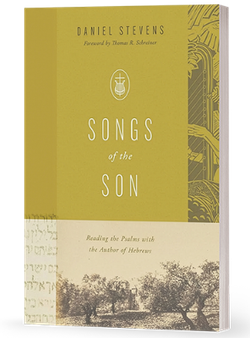
Jesus isn't just a New Testament figure. He appears prominently throughout the Old Testament...and you can see it most poignantly in the ancient song book of Israel: The Psalms. Explore and appreciate the connections in the Psalms to the Messiah in the New Testament that point to his supremacy.
If you want to gain a profound understanding of the Messiah in the Old Testament, be sure to request the book Songs of the Son by Daniel Stevens.
Past Episodes
- A Closer Relationship with God
- A Controversial Baby
- A Lesson for Losers
- A Life of Thanksgiving
- A Painful Path
- A Sharp Sword
- A Thankful Thanksgiving
- A Time for Severity
- A Unified Church
- A Unique Child
- Adding to Your Faith
- All You Need
- Almost a Christian
- Am I Really a Christian
- Amazing Conversions
- Ambassadors
- Ambitious Faith
- Ask Pastor Mike
- ATAPAT
- Call for Help
- Christ Changed Everything
- Christian Friendships
- Christian Love
- Christianity in Real Life
- Christians on Trial
- Christmas
- Christmas 2021
- Christmas 2023
- Christmas 2024
- Christmas and Worldly "Heroes"
- Christmas Clarity
- Christmas Controversy
- Christmas Courage
- Christmas Eve Service
- Christmas Generosity
- Christmas Giving
- Christmas Messages
- Christmas Presents
- Christmas With Compass
- Christ's Kingdom Forecast
- Christ's Resurrection
- Christ's School of Prayer
- Christ's Triumphal Entry
- Chronic Life Aches
- Colossians
- Complete Redemption
- Confrontation
- Connectedness
- Consumer Christianity
- Convenient Christianity
- Count Your Spiritual Blessings
- Countercultural Christians
- Courageous Endurance
- Couriers for Christ
- Dark Days
- David and Goliath
- Dear Abby
- Decisions, Decisions
- Defeat of Death
- Desert Instructions
- Designed to Grow
- Detours
- Did it Really Happen?
- Discernment
- Don't Forget
- Don't Miss It
- Don't Quit
- Drink Your Milk
- Easter
- Easter 2018
- Easter Message
- Encouraged
- Enemies of Grace and Revenge
- Enemies, Grace and Revenge
- Enlisted
- Envy
- Evangelism 101
- Evangelism and the End of the World
- Expanding Your Ministry
- Faith, Stress and Money
- Faithful to God
- FEAR & Fears
- Fear of God
- Finish Well
- First Corinthians
- First Quarter Review
- Friends? Who Needs 'Em
- From What I Believe to How I Think
- Generosity
- Get Ready
- Gifts For Jesus
- Give It Up
- God as Father
- Godly Confidence
- God's Big Plan
- God's Church
- God's Expatriates
- God's Investment in You
- God's Plan for You
- God's Work in Evangelism
- Good Friday
- Good Friday Message
- Gospel Advance
- Gospel Crazy
- Gospel Impact
- Gospel Lessons from the OT
- Grow Up
- Growing Up
- Guarding the Gospel
- Happiness & Christianity
- Head Games
- Hebrews
- Hell, Fire and Floods
- Hitting God's Target for Your Life
- Holiness
- How God Works in You
- How the Truth Sets Us Free
- How to Argue
- How to Forgive
- How to Get Eternal Life
- Hyperopic Christianity
- In Search of God's Will
- Incredible Love
- Indignation
- Infant from Bethlehem
- Instructions for Sinners
- Internal Warfare
- Israel's Greatest Hits Cont'd
- Israel's Greatest Hits- Study in Psalms
- Israel's Greatest Hits Vol II
- It's a Big Decision
- Lap #2005
- Learning to Lead
- Lessons on Grace
- Life as a Target
- Life With A Purpose
- Life's Defining Moments
- Life's Last Enemy
- Living a Lie
- Luke
- Made Right with God
- Make a Difference
- Marriage
- Money Madness
- Money Matters
- Moody Bible Institute Founder's Week
- More than a Creed
- More Than Friends
- Moving Forward
- Obstacles on the Road to Christ
- Octogenarian Wisdom
- Old School Christmas
- Old Testament School of Marriage
- One Plus God
- Our Fight with Sin
- Our Need for Representation
- Parenting
- Passing the Baton
- People Tools
- People Who Make a Difference
- Persistant Prayer
- Plugged In
- Pointing People to Christ
- Politicking
- Post Christmas Contentment
- Power Plays
- Powerful Praying
- Prayer 101
- Prayer Warrior
- Prelude to the Cross
- Preparing for the Kingdom
- Presenting Christ
- Privilege and Responsibility
- Project Reciprocity
- Prompted by Love
- Purposeful Praise
- Pursuing Holiness
- Saints Who Lie
- Salvation Is A Big Deal
- Set Free to Live Right
- Sexual Disasters
- Sexual Sins & Sanctified Bodies
- Silent Night
- Sin is REALLY Bad
- Slaying the Family Dragons
- Sold Out Servants
- Something Greater
- Soul Warfare
- Special
- Special Christmas Message
- Special Easter Message
- Spiritual Detours
- Spiritual Investments
- Spiritually Prepared
- Stay Out of Trouble
- Staying in Step
- Sticktoitiveness
- Strained Relations
- Summer Fruit
- Taking Christ to Work
- Temptation
- Thanks God
- Thanksgiving
- The Ancestry of Christ
- The Balance of Biblical Love
- The Bible and Your Salvation
- The Big Assignment
- The Big Questions
- The Black and White on Gray Areas
- The Common Good
- The Costs and Benefits of the Incarnation
- The Door
- The Entry of a King
- The Experience of Every Christian
- The First Christmas Gifts
- The Gap
- The Gospel
- The Gospel According to Abraham
- The Harsh But Good News
- The Hazards of Prosperity
- The Hazards of the Church
- The Infant from Bethlehem
- The Joy of Salvation
- The Next World Order
- The Non-Negotiables
- The Old Testament School of Marriage
- The Reliability of the Bible
- The Resurrection Response
- The Royal Task
- The Same Ol' Stuff
- The Sins Christians Tolerate
- The Supremacy of Christ
- The Torn Curtain
- The Truth About Christmas
- Those Words at the Altar
- Tips for Zealots
- Transformed
- War Zones & Peace Treaties
- Warning
- Water from the Rock
- Weirdos?!
- What's Your Problem
- When Feelings are King
- When Frogs Become Princes
- When God Makes a Promise
- When God Seems Weird
- When Life Hurts
- When Life is Tough
- When Life Takes A Left Turn
- When People are to Blame
- When the World Gets In the Way
- Where You're Planted
- Why the Son Became One of Us
- Wisdom & Maturity
- Wisdom From Proverbs
- Wisdom's Toolbox
- Wise Decisions
- Working the Plan

Video from Pastor Mike Fabarez
Featured Offer
Jesus isn't just a New Testament figure. He appears prominently throughout the Old Testament...and you can see it most poignantly in the ancient song book of Israel: The Psalms. Explore and appreciate the connections in the Psalms to the Messiah in the New Testament that point to his supremacy.
If you want to gain a profound understanding of the Messiah in the Old Testament, be sure to request the book Songs of the Son by Daniel Stevens.
About Focal Point
About Pastor Mike Fabarez
Pastor Mike is a graduate of Moody Bible Institute, Talbot School of Theology (M.A.) and Westminster Theological Seminary in California (D.Min.).
Mike is heard on hundreds of radio programs across the country on the Focal Point radio program and has authored several books, including Raising Men Not Boys, Lifelines for Tough Times, Preaching That Changes Lives, Getting It Right, Praying for Sunday, and Why the Bible?
Mike and his wife, Carlynn, reside in Laguna Hills, California and they have three children, Matthew, John and Stephanie.
Contact Focal Point with Pastor Mike Fabarez
info@fpr.info
Focal Point
P.O. Box 2850
1-888-320-5885