


Does God’s Word Truly Penetrate Your Heart?


Does God’s word actually pierce your heart? Pastor Mike Fabarez addresses the second indicator of genuine salvation—how scripture impacts our lives. We’ll examine why comfortable Christianity might signal a dangerous problem, and discover what it means when God’s word truly penetrates.
Pastor Mike Fabarez: Piercing, does that sound like it feels good? Doesn't look like it feels good, and I know when it happened it didn't feel good. And yet the Bible says right here, my word does that. It pierces, it convicts us, it judges the thoughts and attitudes of our hearts.
Dave Drewie: Today on Focal Point, Pastor Mike addresses the second test of genuine salvation, examining how Scripture impacts our lives. He’s revealing why comfortable Christianity might signal a dangerous problem and what it means when God’s Word truly penetrates and transforms us. It’s part of our series called Am I Really a Christian?, which you can revisit or share anytime online at focalpointradio.org.
I’m Dave Drewie. Now here’s Pastor Mike with part two of a lesson titled Working and Trusting to Prove the Reality of My Faith.
Pastor Mike Fabarez: In Hebrews chapter four we've been studying the author's concern, which is ultimately God's concern, that all of us enter God's rest. Get on the barge, get on the boat, get on the ark. And if you do, you will be saved. Now the future is what's of concern. And he says enter that rest. He says we ought to be concerned that we're not in that rest and you need to be sure that you are.
And we've looked at that genuine faith. We needed to understand that it was something we couldn't earn, we couldn't pay for, we couldn't do enough good things to find a place on this barge. We had to be confident that God has done the work for us. Now that was the first 10 verses.
The last seven verses of Hebrews chapter four, I'm sensing that there is a clear shift in the passage between verse 10 and verse 11 where no longer are we looking at entering the ark. Now we're looking at getting in that place of being saved and awaiting our future salvation. There is seven rests inferred or mentioned in the fourth chapter of Hebrews. The ultimate rest is where we're headed. That's salvation.
As a matter of fact, we're still talking about spiritual rest and we're still talking about the safety that we have with Christ because of the future impending judgment. But what's happened between verses 10 and 11 is a shift between getting into the ark and the journey that we have once we're in the ark until we come out on the other side at God's ultimate rest. Getting into the rest is a one-time thing. We trust Christ, we get into the ark, we get into the barge, we have our spiritual rest.
Now this doesn't sound like a one-time event. Let's start at the bottom of the passage. We'll work back, we'll read the whole thing in a minute, but let's just work backwards through the text. Look at verse number 16. Hebrews chapter 4, verse 16. Let us then approach the throne of grace with confidence so that we may receive mercy and find grace to help us in our time of need.
I suppose you could think in some eschatological way of the ultimate time of need, but that sure sounds like an invitation for an ongoing help from God, does it not? Look up in verse 15. Verse 15, it speaks of Christ, and we're supposed to have some hope here because the sympathetic high priest knows about our weakness in that—look at middle of verse 15—he was tempted in every way as we are, yet without sin.
Which is the goal for this journey, to be more and more like Christ. We have many seasons and many instances and many circumstances of ongoing temptation, and Christ wants to be the sympathetic high priest who helps us through those many steps and incurrences and episodes of temptation. Keep going back up. Look at verse number 14. Therefore, since we have a great high priest who has gone through the heavens, Jesus the Son of God, let us hold firmly to the faith we profess.
Look at verses 12 and 13, these famous verses about the Word of God. Now the concern of the Word penetrating my life and judging the thoughts and attitudes of my heart, verse 12, is something that should be of concern to me because of verse 13. Nothing in creation is hidden from God's sight, and everything is uncovered and laid bare before the eyes of him to whom we must give an account.
Do we give an account for one episode in our lives or do we give an account for the entire going of our lives? The entire going, the entire thing. There's an ongoing concern here. Back up to verse 11. Let us therefore make every effort to enter that rest. I don't think that's the seat on the ark anymore. I think that now is we want to enter the rest, we want to sail through this thing, we want to safely arrive at God's ultimate rest so that no one will fall by their example, this Old Testament example, of disobedience.
This was not just a one-time disbelief at Kadesh Barnea that we've spent so much time looking at in Numbers 14, but it was an ongoing—they sat down to eat and drink as Paul said and they got up to play—they were disobedient, disobedient, disobedient. Now you got your seat on the ark, that seat that was there for you. Enter God's rest. You're there. Now here's the thing: don't fall, don't stumble, don't fall in the pattern of disobedience.
And the word *spoudazo*, "make every effort," is a word used 11 times in the New Testament, and almost every single time it's talking about me living the ongoing diligent life of obedience. Back to our original point: if you wanted to know you were in the ark going to be safe from the coming judgment in Noah's day, you could look around at your cell, your stall, or whatever and say, "I feel safe. I'm here. I'm in it."
If you want to be sure you're a Christian, what are the objective things that I can look at that say I'm here? Let's work through the passage. Three things in our text that verify the reality of your faith. You want to verify your faith? You want to make sure it's real, the reality of saving faith? Then here's what you should look for. Number one on your outline: an increasing obedience. A diligent walking, moving through the Christian life and saying, "I'm adding to my faith."
If I'm really in this thing, if I'm really in spiritual rest, if I have a place on God's invisible barge in the New Covenant, I will have the experience of working to do what is right and I will be seeing increasing success in that. *Spoudazo*. Obedience. The hallmark of having a seat on the ark, very clear in Scripture. Two passages I'll just send them home as homework for you: First John chapter 3.
First John 3 is very clear: the hallmark of the Christian life is a changed life and in increasing measure. That's one passage you should study. How about this one? Second Corinthians chapter 3 is another one. You should be able to see increasing progress. Now, did I say perfection? Help me now. Pastor Mike said all Christians have to be perfect if they're real Christians. Is that what I said? No.
The Bible says if you claim to be without sin, you're a liar and the truth's not in you. If you claim you never make any sinful decisions. The point, though, is you will have a continual progressive success at being obedient in the Christian life. And if you see that, it's like reaching out and feeling the cypress wood on the panel of your stall in the ark. It's a very good sign that you're saved.
Paul said you ought to test yourself to see if you're of the faith. The place that Scripture always goes is: is your life changing? Verify your faith by that increasing obedience. Cruise control? No, not exactly. God will get it done, but you're going to have to work at it. *Agonizomai*. You're going to have to fight the good fight of pursuing righteousness, godliness, faith, love, endurance, and gentleness.
Verses 12 and 13. Now again, this is often divorced from the rest of the passage. Big mistake. The point here is, verse 13, bottom of the verse, we're going to give an account to God. But now he gets into my relationship with God's Word. Take a look at it, verses 12 and 13. For the Word of God is living and active. It's sharper than any double-edged sword. Now here's the key verb in the sentence: it penetrates or pierces, even to dividing soul and spirit, joints and marrow. It judges the thoughts and attitudes of the heart.
Now why would that be important to me on this journey of faith? Because nothing in creation is hidden from God's sight. You're not going to pull a fast one on God. Everything is uncovered and it's laid bare before the eyes of him to whom we must give an account. And we're going to give an account for this journey. You sat there on the ark. What did you do? And there's going to be a time of reckoning and accountability.
Second Corinthians 5 makes that clear. We're going to have to answer before Christ at the Bema seat of Christ. We're going to have to give an account for our lives. Now the key indicator here is this work of God's Word in my life. It now is something that I recognize to be penetrating or piercing my life, and it's judging the thoughts and attitudes of my life so that one day, I trust, the accountability time for my life is better off because now I'm being changed, not just against the backdrop of some subjectivity, but against the backdrop of the objective teaching of God's Word.
Now let's put it this way. You want to verify the reality of your faith? Number two on your outline, let's jot this down: you will verify the reality of your faith by exactly where the writer of Hebrews goes in this text. By convicting encounters with God's Word. You will verify the reality and saving quality of your faith by convicting encounters with God's Word.
I mean the text is saying here we are, we're in this place, this spiritual rest that we have, heading to God's ultimate rest. And now all of a sudden we're talking about the Bible, God's Word, penetrating our lives and judging us so that we'll stand one day and give a better account for our lives than we would if we didn't have that relationship with God's Word. Now here's the thing. If you want to know you have a place on the spiritual invisible ark of the New Covenant... maybe I shouldn't say the New Covenant because now you're thinking Raiders. Don't think that. Maybe you didn't think that and I put that in your mind. I'm sorry. Erase that.
The ark, I'm talking about the barge. That's why I like the word barge. The barge, the New Covenant barge. That doesn't sound very good, though, does it? Barge. Anyway. How do you know you got a place there? Because your relationship with God's Word has changed. And those of us that know what it's like to think through our relationship with God's Word before we got a seat on the ark and after we got a seat on the ark, you go, "Yeah, that's right. That makes sense."
In Ephesians chapter 2, it says that we are dead to God. Remember that text? We're dead in our transgressions and sins. God is dead to us, we're dead to God, and there's this boom, it's like it's dead. You know what? The same reality is true of what God says. God's Word is dead to us. As a matter of fact, picture if you would Jesus telling the story of the seed and the sower. Remember that story? Sometimes they call it the Parable of the Four Soils.
Now the thing about that parable is that the seed is the same in every soil, right? The seed gets tossed and there's no difference there. It's the same powerful seed, fruit-bearing seed. The problem is it doesn't bear fruit 30, 60, 100-fold except for in one soil. The difference is not the power of the Word, which Jesus said the seed represents. The difference is in the cultivated soil or the rocky soil or the shallow thorny soil or the pavement that's hard-packed that the birds just come along and take it.
And that's the difference. Jesus can sit on a hillside by the Sea of Galilee, preach a sermon, and you got people over here it radically impacts. It penetrates and pierces their heart and their lives are changed. Then you got people that go, "That was a really good sermon. I want to hear more," but when it gets tough, they fall away. Then you got people over here that really, they just kind of sit and go through it, but they really love the world and they love their idols more than God so they're not going to be in this thing long-term.
And then you got people over here going because they don't get it and they don't care. And Jesus says the Word is the same in all cases. The difference is these people are ultimately dead to the Word of God. But these people now have been prepared by God and they're not dead to the Word. But they were at one time. But God got them on the ark and now because of the conviction and piercing judging nature of God's Word, their lives are different.
As a matter of fact, here's a passage to jot down and you know this text: First Corinthians chapter 1. Jot down verses 18, 22 through 24 if you're taking notes. First Corinthians 1:18, 22 through 24. And you've heard this many times but listen to it: the message of the cross is foolishness to those who are perishing. Remember that text? They don't get it. To them it's not only don't they get it, they think it's stupid. But to those of us who are being saved, here it comes: it is the power of God.
Wow, that was powerful. He says it again. The Jews, they're demanding miraculous signs and the Greeks, they're looking for quote-unquote wisdom. But we're preaching Christ crucified and guess what it does? It stumbles the Jews and it makes the Gentiles think we're idiots. But to those whom God has called, both Jews and Greeks, he's called people out from both groups, Christ is the power of God and the wisdom of God.
The Word of God is no longer dead to them. And you and I need to recognize if you think you're in the spiritual ark, test your relationship to the Word of God and you will know, "Yes, it verifies my faith. It's real." Or perhaps you're like three of the four soils who either don't get it at all—and I doubt you're in that category or you probably wouldn't be here—but you got the other two soils who kind of play around with it, but they never really bear fruit in this thing.
Or you got the people that really get it because that Word penetrates deep into their life. It judges the thoughts and intentions of their life and it's an evident sign that they are really saved. They're on the ark. They've got a place on the barge and they're going to make it safely through unto God's eternal rest. First Thessalonians chapter 1. What a great text this is.
Now remember, they're going and preaching. They're preaching sermons. They're talking about God's truth. Start in verse 4. For we know, brothers, loved by God, that he has chosen you. We know you're on the ark. Why? Because our gospel came to you not simply with words. Now it was a sermon, right? They were words. But it also came with power, with the Holy Spirit and deep conviction. And if you think that means some kind of Channel 40 miracle hour, that's not what he's talking about here.
The point is they were deeply convicted. They were the fourth soil. You know how we lived among you for your sake. You became imitators of us and of the Lord and in spite of suffering you—check this out—welcomed the message with joy given by the Holy Spirit. And that's really odd because it's deeply convicting them. It's piercing their hearts. It's bringing in their hearts a judgment of their thoughts and intentions and yet they're glad to have it. Why? Because God's at work in their life.
And not only that, here's what it did: it changed their lives. You became a model to all believers in Macedonia and Achaia. And the Lord's message rang out from you. Not only in Macedonia and Achaia, your faith—that's what it's all about—in God has become known everywhere. Therefore we don't need to say anything about it. We don't have to prove it. You've proved it already. Verse 9.
For they themselves report what kind of reception you gave us and they tell—check this out—how you turned to God from idols. That's called repentance. To serve the living and true God and to wait for his Son from heaven. You're on the ark. Whom he has raised from the dead, Jesus, who rescues us from the coming wrath, which doesn't come with water this time. But you got a place on the invisible barge. And it's proven by the way you embrace these words. You welcomed them and it changed you.
Look across the page. First Thessalonians 2. I quote this one all the time. It's a great word. Verse 13. We also thank God continually because when you receive the Word of God, which you heard from us, you accepted it, you embraced it, not as the word of men, but as it actually is, the Word of God. Now note this phrase, you should underline it: "which is at work in you who believe." Same concept in Hebrews chapter 4. It is living and active. It does work in your life.
It changes you. It pierces you. It's not, "Oh, that was interesting." It's not, "Oh, that made me feel good." It's not, "Oh, what did he say?" It's the people who say, "That did something in my life." Whether it's preached or read, it's something that transforms you. I mean the word itself, *piercing*. Piercing, does that sound like it feels good? "Let's go get pierced," right? I see these people that are very pierced and I'm thinking that doesn't feel good.
Doesn't look like it feels good and yet that's the word here: to pierce like with a sword, with a weapon. To pierce. Here's a great commentary not only on Jeremiah's day but on ours. And this is the second passage I said I'd have to turn you to. Jeremiah chapter 23. By the way, Jesus's words are often described as a two-edged sword in the Book of Revelation, in the seven postcards to the churches.
Not only that, in the first chapter of Revelation, Jesus comes and out of his mouth comes a sharp two-edged sword. The words he says, they penetrate, they pierce. Jeremiah. Now in Jeremiah's day, you got to know before we read this that the people were all into, "I want to have a message that makes me feel good." Do you know a culture like that anywhere? Do you think we live in an American culture that just wants to, "Pat me on the back, preacher. That's what I want. We want more feel-good stuff"?
And that was going on all over the place in Jeremiah's day. As a matter of fact, let's jump in the middle of this chapter. Look at verse number 16. Jeremiah chapter 23, verse 16. This is what Yahweh Almighty says: "Do not listen to what the prophets are prophesying to you. They fill you with false hopes. They speak visions from their own minds, not from the mouth of Yahweh. They keep saying to those who despise me, 'Yahweh says you will have peace. God loves you. Everything will be fine.'
And to all who follow the stubbornness of their hearts they say, 'No harm's going to come to you. God loves you too much to bring you any trouble.'" Verse 18. "But which of them," speaking of the preachers, "has stood in the counsel of Yahweh to see or hear his word? Who has listened and heard his word?" Then he talks about the coming wrath in verses 19 and 20. Look at verse 21. "I didn't send these prophets, yet they've run with their message.
I didn't speak to them, yet they've prophesied. But if they had stood in my counsel, they would have proclaimed my words to my people and they would have turned them from their evil ways and their evil deeds." You know why that's not a popular message? Because it hurts, right? You're changing things. You're moving me from what I like. Evil, but it feels good. It's fun. It's pleasurable. I'm moving from that to doing what's right.
Verse 23. "Am I only a God nearby," which by the way is the exact emphasis of Hebrews chapter 4? We're going to give an account to God. He sees us. Everything's laid open in front of God. "Am I not a God far away? You can't hide from me. Can anyone hide in secret places so that I cannot see him?" declares Yahweh. "Do I not fill the heavens and the earth?" declares the Lord. And then God says you should have known the difference. Verse 25, 26, 27, 28.
And then he characterizes his Word. Look at verse number 29. "Is not my Word like fire?" declares the Lord. "Like a hammer that breaks a rock in pieces?" "Therefore," declares Yahweh, "I'm against the prophets who steal from one another words supposedly from me." What's the difference? The words that weren't from God were appeasing people, putting a false salve on people's aches and saying, "It's okay. It's fine. Let's get together and have another discussion about how loved we are and how everything's just fine."
And the Bible says, "Now wait a minute. When I speak a word to people even in this loving New Testament context, James chapter 1, it is to change us and conform us to the image of the Son. That's why it's going to feel painful and uncomfortable. It's going to sting." As a matter of fact, it's not just a sword, look how he describes his Word here: Fire. High. Does that sound—"He threw some fire at us today."
Now that usually wouldn't be a compliment about your pastor's sermon on Sunday, right? "He was preaching fire," right? Or how about this one: a hammer. "He slammed us with a hammer this Sunday." Does that sound good? That's not a high-five moment, right? "Thanks for the hammer, man. You knocked us right upside the head, Pastor. That was great." And yet the Bible says right here, my Word does that. It pierces, it convicts us, it judges the thoughts and attitudes of our hearts.
Dave Drewie: You’re listening to Focal Point with Pastor Mike Fabarez and today’s message titled Working and Trusting to Prove the Reality of My Faith. We’ll conclude this lesson tomorrow, but in the meantime, you can revisit or share any of these messages by going to our website, focalpointradio.org. Understanding why we can trust Scripture matters profoundly, especially in a culture that constantly questions biblical authority.
That’s why we’re offering Dr. Erwin Lutzer’s compelling book, Seven Reasons Why You Can Trust the Bible. In this revised and expanded edition, Dr. Lutzer tackles the Bible’s claims about itself, its historical reliability, prophetic predictions, and even addresses alleged contradictions and the harmony between science and Scripture. Request Seven Reasons Why You Can Trust the Bible when you support Focal Point with a generous donation today.
Call our team at 888-320-5885 or give online at focalpointradio.org. Or if you’d rather send your donation by mail, just write to us at Focal Point, Post Office Box 2850, Laguna Hills, California 92654. Again, that’s P.O. Box 2850, Laguna Hills, California 92654. At Focal Point, our mission is to equip you with God’s truth so you can stand firm in your faith.
But fulfilling this calling depends on support from listeners like you. You can make a one-time gift or sign up for monthly giving as a Focal Point partner. As a partner, you’ll receive hand-picked resources from Pastor Mike each month and your consistent support helps us expand our reach to new communities across the world. Call 888-320-5885 to become a Focal Point partner today or give online at focalpointradio.org.
And before we say goodbye, let me invite you to stay connected with us. No matter where you go or what your schedule looks like, just download the free Focal Point app from your favorite app store, subscribe to our podcast, or follow us on social media at facebook.com/pastormike and x.com/pastormike. Well, I’m Dave Drewie and that’s all our time for today. Join us tomorrow when Pastor Mike Fabarez unveils the third and final indicator of saving faith: trusting Christ as our sympathetic high priest. That’s Thursday on Focal Point.
Pastor Mike Fabarez: Pastor Mike here. I pray today’s message will help you live out your faith with truth and love. After all, that’s the kind of biblical faith that changes lives and transforms a crooked culture. But if you haven’t truly surrendered your life to Christ, then I’d like to invite you to get in touch. We’d love to pray with you and help you discover God’s plan of salvation. Visit focalpointradio.org.
Featured Offer
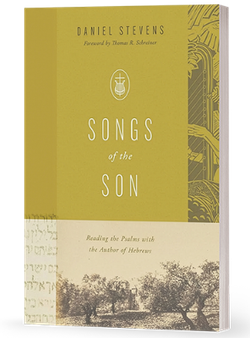
Jesus isn't just a New Testament figure. He appears prominently throughout the Old Testament...and you can see it most poignantly in the ancient song book of Israel: The Psalms. Explore and appreciate the connections in the Psalms to the Messiah in the New Testament that point to his supremacy.
If you want to gain a profound understanding of the Messiah in the Old Testament, be sure to request the book Songs of the Son by Daniel Stevens.
Past Episodes
- A Closer Relationship with God
- A Controversial Baby
- A Lesson for Losers
- A Life of Thanksgiving
- A Painful Path
- A Sharp Sword
- A Thankful Thanksgiving
- A Time for Severity
- A Unified Church
- A Unique Child
- Adding to Your Faith
- All You Need
- Almost a Christian
- Am I Really a Christian
- Amazing Conversions
- Ambassadors
- Ambitious Faith
- Ask Pastor Mike
- ATAPAT
- Call for Help
- Christ Changed Everything
- Christian Friendships
- Christian Love
- Christianity in Real Life
- Christians on Trial
- Christmas
- Christmas 2021
- Christmas 2023
- Christmas 2024
- Christmas and Worldly "Heroes"
- Christmas Clarity
- Christmas Controversy
- Christmas Courage
- Christmas Eve Service
- Christmas Generosity
- Christmas Giving
- Christmas Messages
- Christmas Presents
- Christmas With Compass
- Christ's Kingdom Forecast
- Christ's Resurrection
- Christ's School of Prayer
- Christ's Triumphal Entry
- Chronic Life Aches
- Colossians
- Complete Redemption
- Confrontation
- Connectedness
- Consumer Christianity
- Convenient Christianity
- Count Your Spiritual Blessings
- Countercultural Christians
- Courageous Endurance
- Couriers for Christ
- Dark Days
- David and Goliath
- Dear Abby
- Decisions, Decisions
- Defeat of Death
- Desert Instructions
- Designed to Grow
- Detours
- Did it Really Happen?
- Discernment
- Don't Forget
- Don't Miss It
- Don't Quit
- Drink Your Milk
- Easter
- Easter 2018
- Easter Message
- Encouraged
- Enemies of Grace and Revenge
- Enemies, Grace and Revenge
- Enlisted
- Envy
- Evangelism 101
- Evangelism and the End of the World
- Expanding Your Ministry
- Faith, Stress and Money
- Faithful to God
- FEAR & Fears
- Fear of God
- Finish Well
- First Corinthians
- First Quarter Review
- Friends? Who Needs 'Em
- From What I Believe to How I Think
- Generosity
- Get Ready
- Gifts For Jesus
- Give It Up
- God as Father
- Godly Confidence
- God's Big Plan
- God's Church
- God's Expatriates
- God's Investment in You
- God's Plan for You
- God's Work in Evangelism
- Good Friday
- Good Friday Message
- Gospel Advance
- Gospel Crazy
- Gospel Impact
- Gospel Lessons from the OT
- Grow Up
- Growing Up
- Guarding the Gospel
- Happiness & Christianity
- Head Games
- Hebrews
- Hell, Fire and Floods
- Hitting God's Target for Your Life
- Holiness
- How God Works in You
- How the Truth Sets Us Free
- How to Argue
- How to Forgive
- How to Get Eternal Life
- Hyperopic Christianity
- In Search of God's Will
- Incredible Love
- Indignation
- Infant from Bethlehem
- Instructions for Sinners
- Internal Warfare
- Israel's Greatest Hits Cont'd
- Israel's Greatest Hits- Study in Psalms
- Israel's Greatest Hits Vol II
- It's a Big Decision
- Lap #2005
- Learning to Lead
- Lessons on Grace
- Life as a Target
- Life With A Purpose
- Life's Defining Moments
- Life's Last Enemy
- Living a Lie
- Luke
- Made Right with God
- Make a Difference
- Marriage
- Money Madness
- Money Matters
- Moody Bible Institute Founder's Week
- More than a Creed
- More Than Friends
- Moving Forward
- Obstacles on the Road to Christ
- Octogenarian Wisdom
- Old School Christmas
- Old Testament School of Marriage
- One Plus God
- Our Fight with Sin
- Our Need for Representation
- Parenting
- Passing the Baton
- People Tools
- People Who Make a Difference
- Persistant Prayer
- Plugged In
- Pointing People to Christ
- Politicking
- Post Christmas Contentment
- Power Plays
- Powerful Praying
- Prayer 101
- Prayer Warrior
- Prelude to the Cross
- Preparing for the Kingdom
- Presenting Christ
- Privilege and Responsibility
- Project Reciprocity
- Prompted by Love
- Purposeful Praise
- Pursuing Holiness
- Saints Who Lie
- Salvation Is A Big Deal
- Set Free to Live Right
- Sexual Disasters
- Sexual Sins & Sanctified Bodies
- Silent Night
- Sin is REALLY Bad
- Slaying the Family Dragons
- Sold Out Servants
- Something Greater
- Soul Warfare
- Special
- Special Christmas Message
- Special Easter Message
- Spiritual Detours
- Spiritual Investments
- Spiritually Prepared
- Stay Out of Trouble
- Staying in Step
- Sticktoitiveness
- Strained Relations
- Summer Fruit
- Taking Christ to Work
- Temptation
- Thanks God
- Thanksgiving
- The Ancestry of Christ
- The Balance of Biblical Love
- The Bible and Your Salvation
- The Big Assignment
- The Big Questions
- The Black and White on Gray Areas
- The Common Good
- The Costs and Benefits of the Incarnation
- The Door
- The Entry of a King
- The Experience of Every Christian
- The First Christmas Gifts
- The Gap
- The Gospel
- The Gospel According to Abraham
- The Harsh But Good News
- The Hazards of Prosperity
- The Hazards of the Church
- The Infant from Bethlehem
- The Joy of Salvation
- The Next World Order
- The Non-Negotiables
- The Old Testament School of Marriage
- The Reliability of the Bible
- The Resurrection Response
- The Royal Task
- The Same Ol' Stuff
- The Sins Christians Tolerate
- The Supremacy of Christ
- The Torn Curtain
- The Truth About Christmas
- Those Words at the Altar
- Tips for Zealots
- Transformed
- War Zones & Peace Treaties
- Warning
- Water from the Rock
- Weirdos?!
- What's Your Problem
- When Feelings are King
- When Frogs Become Princes
- When God Makes a Promise
- When God Seems Weird
- When Life Hurts
- When Life is Tough
- When Life Takes A Left Turn
- When People are to Blame
- When the World Gets In the Way
- Where You're Planted
- Why the Son Became One of Us
- Wisdom & Maturity
- Wisdom From Proverbs
- Wisdom's Toolbox
- Wise Decisions
- Working the Plan

Video from Pastor Mike Fabarez
Featured Offer
Jesus isn't just a New Testament figure. He appears prominently throughout the Old Testament...and you can see it most poignantly in the ancient song book of Israel: The Psalms. Explore and appreciate the connections in the Psalms to the Messiah in the New Testament that point to his supremacy.
If you want to gain a profound understanding of the Messiah in the Old Testament, be sure to request the book Songs of the Son by Daniel Stevens.
About Focal Point
About Pastor Mike Fabarez
Pastor Mike is a graduate of Moody Bible Institute, Talbot School of Theology (M.A.) and Westminster Theological Seminary in California (D.Min.).
Mike is heard on hundreds of radio programs across the country on the Focal Point radio program and has authored several books, including Raising Men Not Boys, Lifelines for Tough Times, Preaching That Changes Lives, Getting It Right, Praying for Sunday, and Why the Bible?
Mike and his wife, Carlynn, reside in Laguna Hills, California and they have three children, Matthew, John and Stephanie.
Contact Focal Point with Pastor Mike Fabarez
info@fpr.info
Focal Point
P.O. Box 2850
1-888-320-5885