


What Guides Us Through Today’s “My Truth” Culture?


Pastor Mike Fabarez continues a study in John 14, examining Jesus’s claim to be the truth. In a culture obsessed with “my truth” and personal feelings, how do we navigate doubts and confusion? Pastor Mike shows us why trusting Christ as the source of truth brings clarity when we’re uncertain and confidence when questions arise.
Guest (Male): You have doubt, that's fine. Christ, I can answer your questions. I am the truth. You should believe what I'm telling you. This is a theme throughout the New Testament, that Jesus is the truth, and he's telling the truth. And if he says, "I'm going to go on this way, which includes my death, my burial, and my resurrection," I'll give you a place in the Father's kingdom.
Guest (Male): Today on Focal Point, Pastor Mike Fabarez continues a study in John 14, examining Jesus' claim to be the truth. In a culture obsessed with my truth and personal feelings, how do we navigate doubts and confusion? Pastor Mike shows us why trusting Christ as the source of truth brings clarity when we're uncertain.
Before we get started, remember you can always revisit or catch up on any of these daily programs by visiting focalpointradio.org. Here's Pastor Mike with his lesson, The Only Path to the Good Life and Making Sure You're on It.
Pastor Mike Fabarez: I want us to look at a passage this morning that makes it as clear as it can be. Jesus is going to appeal to you. If you're in the popular line, maybe it's time for you to get in the right line, and it's all here in John chapter 14. These are familiar words to you if you've grown up in church or even just been exposed to Christian culture. Let's take a look at verse 1. We'll read verses 1 through 6. "Let not your hearts be troubled. Believe in God; believe also in me. In my Father's house are many rooms. If it were not so, would I have told you that I go to prepare a place for you? And if I go to prepare a place for you, I will come again and take you to myself, that where I am, you may be also. And you know the way to where I'm going."
And Thomas—got to thank God for Thomas—Thomas says to him, "Lord, we don't know anything about what you're talking about. Lord, we don't know where you're going, and how in the world could we know the way if we don't know what you're talking about?" And Jesus said, "Good question, Thomas, but here's the answer: I'm the way, I'm the truth, and I'm the life, and no one's going to come to the Father except through me."
Jesus was facing the end of his life here. He's talking at the Last Supper about his own upcoming death. But he's not afraid. He knows where he's going. As a matter of fact, he wants us to know where we're going. He needs to make sure that you're sure that you're standing in the right lane and you're going to end up in the right place, so that you can face your own demise with courage.
Number one on your outline if you're taking notes: he calls himself in verse 6, "the way." Verse 1 tells us we need to trust in God, trust also in him, and he is the way. So let's "trust the way"—that's Jesus—number one, for courage in death. I want you to never fear death if you're standing in the right line. But you need to say, "Am I really queued up for a place where God says, 'I will give you all the unmitigated blessings that you have been really made to enjoy'?"
This is a new earth where everything that your heart truly desires, without any of the corruption of those desires, is going to find its fulfillment in the presence of God. In his presence, there's fullness of joy, and at his right hand, there are pleasures forevermore. And you need to trust Jesus to get there because here's what the Bible says about you and I getting there on our own: we can't do it. This is fundamental. We can never earn this place. We can never say, "I've been good enough to go to this place." We can never qualify for this place.
Jesus has to come and do it himself. I need to turn you to a passage. I know it's an Old Testament text, and it's steeped in some Old Testament history, but please go with me to the Old Testament book of Isaiah. Let me show you why Jesus came and he's the way and why he says in verse 6 he's the only way. Isaiah chapter 59. Let's go to the middle of this chapter. Take a look at verse 14. "Justice is turned back, and righteousness stands far away; for truth has stumbled in the public squares, and uprightness cannot enter. Truth is lacking," verse 15, "and he who departs from evil makes himself a prey."
But just know that if you are maligned for doing what's right, middle of verse 15, the Lord sees it, and he's displeased with it. He's displeased that in our culture, we don't really applaud real justice. And he saw, verse 16, that there was no man, and he wondered if there was no one to intercede. Where is the person who can stand up and fix this problem? And this is the point of half of the Bible: you can't solve this problem. There is no one that you can follow.
Do you ever notice that in the Bible, the heroes of the Bible are always seen as having feet of clay? You never find that in Assyrian history. You won't find that in Babylonian history. You won't find that in Egyptian history. But in biblical history, in Israeli history, think about this: you find these people like David, and you start to put your hand on your face, going, "I can't believe it. He's a Peeping Tom. I can't believe it. He's not only an adulterer, he's going to kill this gal's husband by a ruse. This is terrible."
Or Noah, blameless in his generation. Oh yeah, except for he's getting drunk and doing some weird things that we can't even quite understand, but it's not good and it's perverse after the flood incident. Or Job, he's blameless in his generation, but still, we can't get through the book of Job without reading how he's suicidal and cursing the day of his birth and he's so angry at everybody. These are our heroes. Solomon, at the peak of Israel's wealth and its prominence, he's there bowing down to other gods because he's built a harem that's leading his heart astray into idolatry.
There's only one hero in the Bible, ultimately. Even though we can aspire to reflect the good traits of all the biblical heroes, they're "heroes" in quotations. The real hero is the one that's never done anything wrong. And there's only one who can say, "I am the way," because you can't be the way. Keep reading. "There was no man," in the middle of verse 16, "so then his own arm brought him salvation, and his righteousness upheld him." This is a theme throughout Isaiah.
The only way that God is going to provide salvation is for him to do it himself. And he sends his own son, in the weird complexity of the triune God that the Bible reveals that is—this God who was and is and is to come, this trinity of persons who exist in one essence—sends the second person of the Godhead to perform what no man could perform. There's nobody to intercede for human beings. So we can't do it ourselves. We need a way to get to God. We need a way to be accepted to God.
We need a way for my life to be seen as acceptable to get a ticket into this house of God, to get a place there. How do I get a place there? I love the way this ends, though. Verse 18: "According to their deeds, he will repay them: wrath to his adversaries, repayment to his enemies; to the coastlands he will render repayment. So," everyone, even in judgment, "are going to fear the name of the Lord from the west and his glory from the rising of the sun. For he will come like a rushing stream that the wind of the Lord drives."
Everything Jesus said is all this stuff that's going to happen about taking care of the sheep and the goats, dealing with the popular line or the small line over here. It's all going to happen in a moment. In a moment, it's going to begin in a moment when Christ comes back as he says in our passage in John chapter 14. He's going to come back and receive us to be with him, that wherever he is, we'll be with him. And to the rest of the world, if you read the book of Revelation from chapter 6 all the way to chapter 19, here comes the wrath, the judgment, the vengeance, the payment, all that stuff that's talked about in verse 18.
But for us, "a redeemer," verse 21, "will come to Zion and to those in Jacob who turn from transgression," declares the Lord. I hope today you might consider getting in a different line than you're in if you find yourself in the popular line and not the unpopular one. That you turn from transgression. Now, I understand what's true about you up there in verse 15 will be true: you'll make yourself a prey. You'll put a target on your back. But you'll have a redeemer that will come to you, someone who will pay the price for you.
The way that Jesus is going, by the way, is the way to the cross. That's where he's headed, to be crucified. "As for me," verse 21, "this is my covenant, my promise"—that's what covenant means—"with them, says the Lord. My Spirit that is upon you and my words that I have put in your mouth shall not depart out of your mouth or out of the mouth of your offspring or out of the mouth of your children's offspring, says the Lord, from this time forth and forevermore."
God has always had a remnant of people standing in the small line, the line that no one wants to get in. And they have—I just love this picture of—their having children that are following in the line, you're having grandchildren that are rising up and following in that line. It's an amazing, wonderful covenant promise of God: I'll be your redeemer. And the only way to redeem these people is for the strong arm of the Lord to do it himself. And here's Jesus, who comes born of a virgin in Bethlehem as he enters into time and space to fulfill all righteousness in how he lives, and then to go to a cross which he's about to go to.
And he's saying, "I'm going. I'm the way. This is the way for you to get right with the Father. And you've got to believe in God and believe, trust also in me. Don't be troubled. You've got a place here, and you should be assured of that so that you can have confidence." If you get killed in a car accident today, I want you to be confident you know exactly where you're going. Because one day, it won't just be a disembodied spirit in the presence of God, the great Spirit.
No, it'll be one day you'll get a resurrected body and put on a new earth where righteousness dwells. And all the desires of your life, the true and pure desires of your life that you don't even know—they've never been fully dusted off or sorted out or somehow having sifted out some of the things that are less than—but the greatest and the best pleasures and joy and riches and happiness will be given to us in that place. I hope you have courage in death. You will if you trust the way. He is the way.
It certainly requires your penitent trust. Back to our passage now, John chapter 14. He says, "And you know the way that I'm going." Now, if you were very careful about listening to Christ—which we have the advantage of seeing all these four Gospels repeating—that he's going to be crucified, that he's the Lamb of God that takes away the sin of the world, that he's going to be crushed as it says in Isaiah 53 as a guilt offering, all this that Jesus has told them, they should know the way.
Now, Thomas isn't always where he needs to be in his thinking, and he says, "I don't know. We don't know where you're going, and how can we know the way?" Now, look up at chapter 13. Scroll up to chapter 13, verse 36. Simon Peter says, "Lord, where are you going?" And Jesus says, "Where I'm going, you cannot follow. Not now, at least, but you will follow afterwards." And Peter said—if you're talking about death now, you can see read between the lines here—"Lord, why can I not follow you now? I will lay down my life for you. I'm ready to die if you've told us about being betrayed and rebuked and handed over to the Romans by the Pharisees, the scribes and all that. Just know, I'm willing to die for you."
But just like Isaiah 59 says, verse 38, we know Peter can't do it. We know that. Jesus answered, "Will you lay down your life for me? Truly, truly, I say to you, the rooster will not crow until you've denied me three times. You're not going to do this. I'm going to do this for you, and I'm going on this way." And Thomas goes, "I don't know what you're talking about." Now, are there answers to this? There are answers to this. But he doesn't start answering in repeating chapter 13.
Jesus says to him, "I am the way," and here's the second thing: "I am the truth." You've got doubts? You don't understand? It's confusing to you? Listen, I'm the source of the answer to you. I'm the answer. And you need to trust in me. And if you trust in me and you find yourself right related to me, you'll get the answers, at least all the answers that are answerable. You'll get them. I'm the truth. Stick with me. Sometimes it's not about what you know; it's about who you know.
If you have a good IT person, that's helpful. I know a lot of us think they just turn things off and turn them back on. But sometimes they actually have to do some heavy lifting and start clicking on the mouse and the keyboards, and they figure things out. So you may not know what's going on, but if you know the right person, hopefully he knows what's going on or she knows what's going on and we'll get this thing fixed. That's great.
Sometimes I just need to make sure I know the right person to get the right answers. But this statement that he is the truth is a very interesting one and a helpful one. Let's just put the point up and then let's talk about it a little bit. Number two: you need to trust in the truth. And of course, Jesus says he is the truth. Trust in the truth for clarity in doubt. And there's not a Christian in the room who hasn't, if they're honest with themselves, said, "I doubt some of this. I'm not sure."
Thomas was known for doubting, wasn't he? When Jesus rose from the dead and all his trusted allies said, "Hey Thomas, he was here, he was just here," he said, "No, no, no, no, no. I'm not going to believe unless I see him for myself, if I touch his body, if I can see his scars, put my hand where the spear went. I'm not going to believe that he's alive." Now, I know we'd like to say, "Oh Thomas, you should have just believed your colleagues."
But Jesus shows up in a great tender act of mercy to say, "Hey, I'll make a special visit here." And he was making all kinds of visits for over a month. He was making visits to all kinds of people, sometimes to crowds over 500 people at a time. Jesus showed that he was resurrected multiple times over and over to people. But he decided out of a great care for Thomas, his doubting apostle, to show up and say, "Here I am." And he responds, if you know the text, he says, "My Lord and my God. You are the King. You are the one I should be trusting. You are the truth."
Earlier, he'd been saying, "I don't even know where you're going." Well, now I know where you're going. You died. And I didn't know it included you becoming alive, even though you said if I go the way I'm supposed to go, I'll come back and receive you. I guess life is implied in that after death, but here, he says he didn't get that. All I'm saying is it's fine for you to be an honest Thomas and say there are things I don't understand.
Things about Christianity that are hard for me to compute, whether it's the eternality of God, whether it's the triunity of God, whether it's how to reconcile God's sovereignty and our human responsibility and culpability. I understand those are some difficult things. There are difficult things in any discipline. This has some difficult things. But he says, "Trust me because I am the truth." And as 1 Corinthians chapter 1 says, "If we trust in Christ, he comes, he becomes for us the wisdom of God."
And he says the debaters of the age, the philosophers of the age, the smart people in the ivory towers, they don't have the answers that lead to salvation, but Christ has the answer because he is the way and he's also the truth. Now, truth is in big trouble these days. Have you noticed that? Especially if we've appended a personal possessive pronoun to the word truth. That's become very popular in the last 25 years. We start talking now about "my truth." My truth.
And you have your truth, and I have my truth. Well, that's a silly juxtaposition of words. None of us should ever, ever tolerate someone saying, "This is my truth." No, you can say, "This is my preference." Like chocolate ice cream is the best ice cream. You can have that preference. But you cannot say it is your truth. All you're saying is it's true that this is my preference. You can say that. But truth by definition is a clear, logical statement, an indicative statement about something that represents reality, something that is true.
And a generation ago, a great defender of Christianity, a Presbyterian who became a great defender of Christianity, Francis Schaeffer, used to put it this way: You better make sure that you don't qualify truth in religious terms as something that doesn't have the same rules as any other area of life. Because you don't want your doctor or your accountant talking about, "Well, this is my truth." I don't care what your truth is. Is the tumor cancerous or not? Is this stock crashing or not? Should I sell? Should I invest? We need truth.
And what I want to know is something that is objectively true. I don't care what you think about it; I don't care what you feel about it. And in our day, it's all about intuition. It's about feelings. And I just have to blame this on the societal decay and the weak-mindedness of people saying, "Well, I don't really want to think too hard." When it comes to theology, it's the same way. A lot of bumper sticker theology—I don't want to think too hard about it.
But you do need to realize, just because some of us in culture are lazier than our forefathers, we can't start saying because I feel this instead of thinking it through, "I feel this, therefore it is my truth." It doesn't matter what you feel. As a matter of fact, I've got a verse for that. I've got a verse for almost everything. Here's a verse: Proverbs 14:12. "There is a way that seems right to man." You know what that means? I feel that this is the right way. But its end is the way to death.
You stand in the wrong line and you say, "Well, this is my truth." Buddhism, Hinduism, Islam, Zoroastrianism, Baha'i, the Baha'i faith. You can say whatever you want. You may like the bells and smells or whatever. But it doesn't matter. What matters is that you have the truth. And what is the truth? Let's just start with theism and atheism and the little squishy middle that everyone likes to claim: agnosticism.
Here's the fact: either there is a God who created us or there isn't. Either we are just the debris of a cosmic explosion a long, long, long time ago, or there is a God who fashioned the cells and the DNA of your body. There's one or the other. And you can sit there and wave a white flag and say, "Well, I'm agnostic. I just don't know." But it doesn't really remove you from the question. If there is a God, you need to figure that out. You need to come to some conclusion.
People say, "Well, there are some questions about it." If you have doubts, that's fine. Christ, I can answer your questions. I am the truth. You should believe what I'm telling you. This is a theme throughout the New Testament, that Jesus is the truth, and he's telling the truth. And if he says, "I'm going to go on this way, which includes my death, my burial, and my resurrection," I'll give you a place in the Father's kingdom. I'll give you a place in the Father's economy.
I'll give you a place of acceptance with the perfect God who created you. So we need to get to the place where we say we cannot treat religious truth claims as something like choosing your favorite ice cream. You have to see it as either the statements are corresponding to some concrete reality or they're not. Now, when I say concrete, I mean that in an abstract sense, that there is a God, or that there is a Jesus that lived 2,000 years ago, that lived a perfect life and really never died and was really born of a virgin.
And then you need to start asking some philosophical questions about that. I mean, I can understand that people are saying, "Well, I don't get that because I don't know. I've seen people die, but I've never seen anybody come back from the dead." And I realize that. Then you have to start asking, "Well, if there is a God who made the rules of physics and biology, I mean, could that God choose to reverse that or put that on hold for whatever he wants to do to prove that he is God?"
As a matter of fact, that's the only reason really, when it comes down to it, what we see in the Bible in a very small list of miracles. I know you think miracles are on every page, but they're not. God is breaking into time and space to say, "I'm going to show you that I'm the creator of your life." And Jesus is presenting himself that way with every miracle he performed, including the biggest one of all, that he rose from the dead after he was biologically and physically dead for three days in a tomb.
That is important that we recognize we cannot "feel" our way into truth. The world's elite doesn't get it. 1 Corinthians chapter 1, I mentioned that, but you should read that whole section, verses 18 all the way to the end of the chapter, verse 31. And that beautiful move from you can look in the world for answers, the ultimate answers about the ultimate questions, and you're going to get yourself to the place where you realize it's not going to deal with the real issues.
Or you can get to a historical Jew who lived in the first century in the Middle East, who lived in your place and died in your place and said, "I am the truth." And that truth, even though it may not be exhaustive, it is something that is adequate, adequate for you to know everything about that you need to know for this life and lining up for the next. 2 Peter chapter 1 verse 3: "All things pertaining to life and godliness." He's given us enough instructions to follow the Good Shepherd and be prepared to step into his presence.
Well, just like the first one, if he's the way, we need to trust him. This is true about the truth. If he is the way, it's also true about the truth. We need to trust in him. "Let your hearts not be troubled. Believe in God, believe also in me because I am the truth." And we have to get to that place. If you have questions, great. If it needs investigation, investigate it. As a matter of fact, investigate the resurrection. That has caused many of our best defenders of the Christian faith throughout church history; that has been the cause of their conversion, is saying, "I'm going to disprove this." Great. Have at it, and go for it. And we need to see that it doesn't turn you into another defender of Christianity as it often does.
John chapter 14, he says, "I'm the way, I'm the truth," and then there's the third one: "I am the life. I'm the life. No one comes to the Father except through me." And what we need in this world, which attaches to verse 1 here, is the ability to hang on to this faith, to have the vibrant resolution in our own hearts to hold fast to this, as it says in the book of Hebrews, firm until the end. And God says, "I'll grant you this life. I'll give you life. I will grant you life to be able to have something going on in your life that is going to allow you to find a confidence that will give you courage in death and clarity in doubt, but it'll also give you comfort in difficulty."
Guest (Male): You're listening to Pastor Mike Fabarez on Focal Point. We're getting ready for Easter with a message titled, The Only Path to the Good Life and Making Sure You're on It, and we'll conclude this important lesson tomorrow. So be sure to listen then. You can also access these teachings online at focalpointradio.org or download the Focal Point app to your mobile device.
And before we wrap up today, we want to put this month's featured resource in your hands: a book that couldn't be better timed right here on the eve of Easter weekend. It's titled The Unfolding Mystery: Discovering Christ in the Old Testament by Edmund Clowney. With Resurrection Sunday just around the corner, this is exactly the kind of book that gives the Easter story its full weight. Clowney walks you through the pages of the Old Testament, showing how every thread, every figure, every sacrifice, every promise was pointing forward to Jesus all along. It's a rich, rewarding read that will permanently change the way you see both testaments and deepen your awe of the Christ at the center of it all.
Request your copy of The Unfolding Mystery when you make a gift to Focal Point today. Reach our team by phone at 888-320-5885 or give online at focalpointradio.org. And if you'd rather send your donation by mail, just write to us at Focal Point, P.O. Box 2850, Laguna Hills, California 92654. Your gift goes a long way, whether it's a one-time contribution or an ongoing monthly commitment as a Focal Point partner.
Partners are the backbone of this ministry. Their steady month-to-month support is what keeps sound biblical teaching on the air and reaching new listeners across the country. And as a partner, you'll receive Pastor Mike's personally chosen monthly resource sent straight to your door. Take that step today by calling us at 888-320-5885 or join online at focalpointradio.org.
Dave Drewery: Well, I'm Dave Drewery, inviting you to come back next time for the conclusion of our message titled, The Only Path to the Good Life and Making Sure You're on It. That's Thursday on Focal Point with Mike Fabarez.
Pastor Mike Fabarez: Pastor Mike here. I pray today's message will help you live out your faith with truth and love. After all, that's the kind of biblical faith that changes lives and transforms a crooked culture. But if you haven't truly surrendered your life to Christ, then I'd like to invite you to get in touch. We'd love to pray with you and help you discover God's plan of salvation. Visit focalpointradio.org. Today's program was produced and sponsored by Focal Point Ministries.
Featured Offer
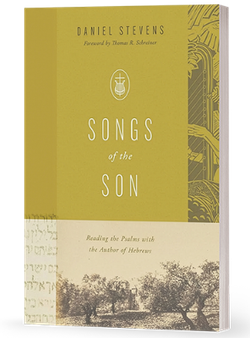
Jesus isn't just a New Testament figure. He appears prominently throughout the Old Testament...and you can see it most poignantly in the ancient song book of Israel: The Psalms. Explore and appreciate the connections in the Psalms to the Messiah in the New Testament that point to his supremacy.
If you want to gain a profound understanding of the Messiah in the Old Testament, be sure to request the book Songs of the Son by Daniel Stevens.
Past Episodes
- A Closer Relationship with God
- A Controversial Baby
- A Lesson for Losers
- A Life of Thanksgiving
- A Painful Path
- A Sharp Sword
- A Thankful Thanksgiving
- A Time for Severity
- A Unified Church
- A Unique Child
- Adding to Your Faith
- All You Need
- Almost a Christian
- Am I Really a Christian
- Amazing Conversions
- Ambassadors
- Ambitious Faith
- Ask Pastor Mike
- ATAPAT
- Call for Help
- Christ Changed Everything
- Christian Friendships
- Christian Love
- Christianity in Real Life
- Christians on Trial
- Christmas
- Christmas 2021
- Christmas 2023
- Christmas 2024
- Christmas and Worldly "Heroes"
- Christmas Clarity
- Christmas Controversy
- Christmas Courage
- Christmas Eve Service
- Christmas Generosity
- Christmas Giving
- Christmas Messages
- Christmas Presents
- Christmas With Compass
- Christ's Kingdom Forecast
- Christ's Resurrection
- Christ's School of Prayer
- Christ's Triumphal Entry
- Chronic Life Aches
- Colossians
- Complete Redemption
- Confrontation
- Connectedness
- Consumer Christianity
- Convenient Christianity
- Count Your Spiritual Blessings
- Countercultural Christians
- Courageous Endurance
- Couriers for Christ
- Dark Days
- David and Goliath
- Dear Abby
- Decisions, Decisions
- Defeat of Death
- Desert Instructions
- Designed to Grow
- Detours
- Did it Really Happen?
- Discernment
- Don't Forget
- Don't Miss It
- Don't Quit
- Drink Your Milk
- Easter
- Easter 2018
- Easter Message
- Encouraged
- Enemies of Grace and Revenge
- Enemies, Grace and Revenge
- Enlisted
- Envy
- Evangelism 101
- Evangelism and the End of the World
- Expanding Your Ministry
- Faith, Stress and Money
- Faithful to God
- FEAR & Fears
- Fear of God
- Finish Well
- First Corinthians
- First Quarter Review
- Friends? Who Needs 'Em
- From What I Believe to How I Think
- Generosity
- Get Ready
- Gifts For Jesus
- Give It Up
- God as Father
- Godly Confidence
- God's Big Plan
- God's Church
- God's Expatriates
- God's Investment in You
- God's Plan for You
- God's Work in Evangelism
- Good Friday
- Good Friday Message
- Gospel Advance
- Gospel Crazy
- Gospel Impact
- Gospel Lessons from the OT
- Grow Up
- Growing Up
- Guarding the Gospel
- Happiness & Christianity
- Head Games
- Hebrews
- Hell, Fire and Floods
- Hitting God's Target for Your Life
- Holiness
- How God Works in You
- How the Truth Sets Us Free
- How to Argue
- How to Forgive
- How to Get Eternal Life
- Hyperopic Christianity
- In Search of God's Will
- Incredible Love
- Indignation
- Infant from Bethlehem
- Instructions for Sinners
- Internal Warfare
- Israel's Greatest Hits Cont'd
- Israel's Greatest Hits- Study in Psalms
- Israel's Greatest Hits Vol II
- It's a Big Decision
- Lap #2005
- Learning to Lead
- Lessons on Grace
- Life as a Target
- Life With A Purpose
- Life's Defining Moments
- Life's Last Enemy
- Living a Lie
- Luke
- Made Right with God
- Make a Difference
- Marriage
- Money Madness
- Money Matters
- Moody Bible Institute Founder's Week
- More than a Creed
- More Than Friends
- Moving Forward
- Obstacles on the Road to Christ
- Octogenarian Wisdom
- Old School Christmas
- Old Testament School of Marriage
- One Plus God
- Our Fight with Sin
- Our Need for Representation
- Parenting
- Passing the Baton
- People Tools
- People Who Make a Difference
- Persistant Prayer
- Plugged In
- Pointing People to Christ
- Politicking
- Post Christmas Contentment
- Power Plays
- Powerful Praying
- Prayer 101
- Prayer Warrior
- Prelude to the Cross
- Preparing for the Kingdom
- Presenting Christ
- Privilege and Responsibility
- Project Reciprocity
- Prompted by Love
- Purposeful Praise
- Pursuing Holiness
- Saints Who Lie
- Salvation Is A Big Deal
- Set Free to Live Right
- Sexual Disasters
- Sexual Sins & Sanctified Bodies
- Silent Night
- Sin is REALLY Bad
- Slaying the Family Dragons
- Sold Out Servants
- Something Greater
- Soul Warfare
- Special
- Special Christmas Message
- Special Easter Message
- Spiritual Detours
- Spiritual Investments
- Spiritually Prepared
- Stay Out of Trouble
- Staying in Step
- Sticktoitiveness
- Strained Relations
- Summer Fruit
- Taking Christ to Work
- Temptation
- Thanks God
- Thanksgiving
- The Ancestry of Christ
- The Balance of Biblical Love
- The Bible and Your Salvation
- The Big Assignment
- The Big Questions
- The Black and White on Gray Areas
- The Common Good
- The Costs and Benefits of the Incarnation
- The Door
- The Entry of a King
- The Experience of Every Christian
- The First Christmas Gifts
- The Gap
- The Gospel
- The Gospel According to Abraham
- The Harsh But Good News
- The Hazards of Prosperity
- The Hazards of the Church
- The Infant from Bethlehem
- The Joy of Salvation
- The Next World Order
- The Non-Negotiables
- The Old Testament School of Marriage
- The Reliability of the Bible
- The Resurrection Response
- The Royal Task
- The Same Ol' Stuff
- The Sins Christians Tolerate
- The Supremacy of Christ
- The Torn Curtain
- The Truth About Christmas
- Those Words at the Altar
- Tips for Zealots
- Transformed
- War Zones & Peace Treaties
- Warning
- Water from the Rock
- Weirdos?!
- What's Your Problem
- When Feelings are King
- When Frogs Become Princes
- When God Makes a Promise
- When God Seems Weird
- When Life Hurts
- When Life is Tough
- When Life Takes A Left Turn
- When People are to Blame
- When the World Gets In the Way
- Where You're Planted
- Why the Son Became One of Us
- Wisdom & Maturity
- Wisdom From Proverbs
- Wisdom's Toolbox
- Wise Decisions
- Working the Plan

Video from Pastor Mike Fabarez
Featured Offer
Jesus isn't just a New Testament figure. He appears prominently throughout the Old Testament...and you can see it most poignantly in the ancient song book of Israel: The Psalms. Explore and appreciate the connections in the Psalms to the Messiah in the New Testament that point to his supremacy.
If you want to gain a profound understanding of the Messiah in the Old Testament, be sure to request the book Songs of the Son by Daniel Stevens.
About Focal Point
About Pastor Mike Fabarez
Pastor Mike is a graduate of Moody Bible Institute, Talbot School of Theology (M.A.) and Westminster Theological Seminary in California (D.Min.).
Mike is heard on hundreds of radio programs across the country on the Focal Point radio program and has authored several books, including Raising Men Not Boys, Lifelines for Tough Times, Preaching That Changes Lives, Getting It Right, Praying for Sunday, and Why the Bible?
Mike and his wife, Carlynn, reside in Laguna Hills, California and they have three children, Matthew, John and Stephanie.
Contact Focal Point with Pastor Mike Fabarez
info@fpr.info
Focal Point
P.O. Box 2850
1-888-320-5885