


Pastor Mike’s Testimony


Mike Fabarez as an author and our Bible teacher here on Focal Point. But in this special edition of Ask Pastor Mike, we’re getting up close and personal with Pastor Mike to learn about his journey of faith in his own words! Get to know your Bible teacher and how God is working in the Fabarez family.
Dave Drew: Welcome to Focal Point. I'm Dave Drew, your host, and it's time for us to cap off the week with another informal one-on-one time with Mike Fabarez. If you don't know much about our Bible teacher, you're in for a real treat today.
Pastor Mike is here to share his personal story about coming to know Jesus and his call to the ministry. Without any further delay, let's join Focal Point's executive director, Jay Worton, inside the pastor's study.
Jay Worton: Thank you, Dave. Pastor Mike, today's question is specifically about you. One of our listeners has asked, and we've had this a number of times, to hear your story. How did you become a Christian?
Pastor Mike Fabarez: I was fortunate enough to be raised in a Christian home. A solid, stable home life with a Christian father, Christian mother, and one older brother. I was brought to church from the time as far back as I can remember and got involved and went through the whole experience of youth group and kids' ministries and all of that.
I reached high school when I was required by my father, who wasn't overbearing and didn't have a ton of rules, but the one rule he had that I can remember was a big one: you're going to go to Christian college for one year before you go to college. So, he sent me off to Bible college, and I wasn't real pleased with that at the time. I certainly didn't feel like I needed it. I had other ambitions, things I wanted to do, but I thought, okay, I'll obey my father.
Off to Bible school I went, which in this case, because my brother was a graduate of Moody Bible Institute, I was sent off to Chicago where I didn't know anybody. I was just dropped off as a freshman in downtown Chicago on their downtown campus. I was going to put in my year and then come back to Southern California where I was raised and get on with my life. I viewed it more as a prison sentence than an opportunity to learn God's word.
Well, I got there and got involved in just the regular paces of what it was to have your first year of Bible education and I just thought, "Wow, what is all this?" Not to mention I had a roommate there in the dorm that was so on fire for Christ. I looked at his life, and he'd get up in the morning and he'd read the Bible and he'd pray at night. He just did all these things, not because they were assigned or expected, not because his parents asked, "Did you read the Bible today?" but because he wanted to.
I saw his life and I had all these assignments and I realized there's something wrong with my Christianity. The problem with my Christianity was a kind of conformity to the Christian culture. It was a kind of conformity to what I think the church expected and what my parents expected. I like to call it a Christianity from the outside in, which is no Christianity at all.
I reached a breaking point after about six weeks on campus where I either said, "I've got to get out of here because it's way too uncomfortable for me to be a non-Christian in a Christian school," or I need to do business with God and really confess that I'm not where I should be. I didn't know what I was doing. My theology was not real strong, but I remember getting down on my knees in my dorm room and I just called out to God.
I said, "I don't know what exactly I need to do, but I need to have you be the real deal in my life and it needs to be organic. It needs to be from the inside out and not the outside in." I don't know what my fumbled prayer was, but I prayed to God and everything changed that day. I woke up the next day with a new desire to do what I was asked to do and to start doing things I wasn't asked to do.
I didn't just share my faith because I had a paper on it or read the Bible because it was an assignment, but because I had this newfound love for it. I can see a lot of people in my situation who grow up in churches and they kind of go through the motions of Christianity. They're not some huge flagrant hypocrite; they just fit into a kind of cultural Christianity.
But there needs to be that real transformation of the heart, and that's what God did in my life way back there as a freshman in Bible college. Everything changed. I didn't know what had happened until I kept studying the Bible to recognize I didn't hit Christianity 2.0 at that point. I actually became a Christian. I stopped being a part of the crowd of Christians and I became really a genuinely converted, transformed person from the inside out.
And of course, you hear people's testimonies and you think it was all smooth sailing from there. Of course it wasn't. There were lots of issues and problems and failures along the way. But when it comes to the changed relationship with God, it ceased to be that kind of fitting in for the expectations of those around me to really living for one reason and one purpose: living for an audience of one, as we like to say.
Jay Worton: Maybe you could talk a little bit more about how you ended up becoming a pastor. Certainly, you had other loves before you were going to Bible school, and that was not your first choice, but what led you to the pulpit?
Pastor Mike Fabarez: One of the reasons it was so hard for me to go to Bible school was I had received a scholarship to do what I really loved to do, and that was music: performance music, jazz, and orchestral music. All kinds of things I was dabbling in that I loved. When I became a Christian, I thought, "Well, I love music, so I guess I'll do music for God." Everyone said, "Well, that's what you're going to be doing because that's the thing you're good at, that's the thing you love to do."
I remember sitting in a sermon at Moody Church in downtown Chicago where my pastor at that time, Erwin Lutzer, preached this great sermon about the importance of not dabbling in a lot of things, but doing the one thing God has called you to do and doing it really well with proficiency and excellence. I started saying, "God, I don't think this is the one thing. I don't think it's just baptizing my music passion and doing it for God."
I know many people God keeps in the same thing that they were in before they became Christians, but for me, I had to say, "God, I'll do anything for you. What is that one thing?" When I was a Bible student out there, they required you to do all kinds of things in terms of ministry to serve people in elder homes and care facilities and preach on the streets even and do door-to-door evangelism. One of the things that you had to do several variations of was teaching.
You had to teach a Sunday school class, you had to do some teaching in some kind of pulpit setting. When I did those things and the more I taught and was assigned to teach, the more I just thought, "This is the one thing that seems to be the most fruitful." It ultimately became the passion of my heart to try and take things I was learning in school and make those understandable, whether I was teaching a junior high class or a college-age class, just to make that something that would come alive and be real applicable and understandable to whomever I was preaching to.
That is what grew this love for preaching the word. I never thought I'd be a pastor, but doors just opened and opportunities were kind of put right in front of me. I just did whatever I could do with this kind of budding gift that God had given me that I needed to develop.
Jay Worton: So, when you surrendered your life to Christ, you didn't know where you were going to end up. Talk a little bit about that, what you were thinking through and how you went through that process.
Pastor Mike Fabarez: I was just reading a passage in Hebrews that talks about Abraham being called out to go to a place he didn't know where he was going. That's hailed in Hebrews 11 as this great step of faith. It didn't feel like any great step of faith in my mind, but it was that sense in which I didn't know where I was going to be used or where I was headed, but I did know it wasn't going to be what I had been doing.
Sometimes God makes that clear to you. This is not what God wants me to do with my life, the things I'm doing now, but I have no idea what he wants to do with my life. I certainly had to say to God, "Whatever you want me to do, I'll do anything in any place at any time." It has become the catchphrase around here: ADAPAT. Anything, any place, any time.
If you're around Compass Bible Church, you've certainly heard that: ADAPAT. Anything, any place, any time. That is what I learned to kind of live out early in my Christian life, and I know it's the way God would have us all live to determine the path that God has for us. That certainly is an integral part of my testimony and story.
Jay Worton: Well, thank you, Pastor Mike. I know there's a lot more there to it, but I appreciate you sharing your testimony with us. We're going to finish this conversation with a message you gave from the series ADAPAT called "Our Struggle to Say Anything."
Pastor Mike Fabarez: There are certain days of our childhood we never forget. One of mine was my first day of junior high. Filled with trepidation, I approached the buildings there at the corner of the school. Of course, you want your mom to drop you off far from the front of the school, but she got closer than I was comfortable with.
Nevertheless, I took my deep breath, had my lunch sack in one hand, had my notebooks in the other, and I stepped out of the car right into a puddle of standing water. I basically launched myself, literally, with all my notebooks and lunch flying in different directions, face down. A perfect belly flop right in the standing water in front of the school.
And you know how compassionate and understanding junior high students are, right? They all rushed over to see if they could help. No. It was one of those moments that will live on in your memory. They jeered and they laughed and they mocked and they pointed. It was just unbelievably embarrassing. So of course, I quickly scurried up and I crawled into my mom's car and I said, "Take me home. I'm skipping junior high."
I was done. I could not imagine going back. Well, my mom, of course, was compassionate and gracious and took me home, gave me a chance to put on some dry clothes, get a new sack lunch. I vaguely remember a stop maybe at the donut shop to help coax me back to start my junior high career that day.
But that story I thought of when I was reading through John 21 here because it feels a lot like the story of John 21 where we meet Peter at the donut shop, if you will, with Christ after falling flat on his face in Caiaphas's courtyard, denying Jesus three times. You remember that story.
He is now after the crucifixion, after the resurrection. Jesus makes, in the book of John, the third appearance in the post-resurrection ministry of Christ. He shows up while Peter is out, not preaching, not leading the disciples, but fishing, his old career. Pick it up with me in John 21, verse number 15, as Jesus talks to the demoralized Peter about what in the world he's doing.
Verse 15: "When they had finished breakfast, Jesus said to Simon Peter, 'Simon, son of John, do you love me more than these?' And he said, 'Yes, Lord, you know that I love you.' And he said, 'Feed my lambs.' He said a second time, 'Simon, son of John, do you love me?' And he said to him, 'Yes, Lord, you know that I love you.' And he said, 'Tend my sheep.' And he said to him a third time, 'Simon, son of John, do you love me?' Peter was grieved because he had said a third time, 'Do you love me?' And he said to him, 'Lord, you know everything; you know that I love you.' And Jesus said, 'Feed my sheep. Truly, truly, I say to you, when you were young, you used to dress yourself and walk wherever you wanted; but when you are old, you will stretch out your hands and another will dress you and carry you where you do not want to go.'"
John adds, "This he said to show by what kind of death he was to glorify God." And after saying this, he said, "Follow me." Whether you recognize it or not with a quick read-through of those verses, this is a battle of the wills between Jesus, the Lord of life, saying to Peter, whom he had chosen to be the quarterback of the early church, a rock on which he was going to begin this movement of concentric circles in the book of Acts.
He says, "You've got to get to work here." Feed my lambs, verse 15. Tend my sheep, verse 16. Feed my sheep, verse 17. You've got a job to do, and it's not fishing. The job is for you to get off of this fishing thing and get back into the pulpit. It's ironic that Peter is having a showdown with Christ about his future and he's calling him Lord, and yet he's really not all that excited to do what he says.
I know the exchange may not be as tangible as this one, but we all struggle at times in our life with the will of God. There's that fork in the road and you know what Christ wants of you and you're struggling to do it. I know there are things you don't want to do. I understand there are things that are scary. I understand sometimes in your life there are understandable reasons for you to balk at the will of God. But it's time for us to recognize that we really have no right to say to God, "I don't want to do it."
Back to our text, John chapter 21, verse 15. It's interesting the discussion is not, "Hey, listen, you need to go to school," or in this case, "You need to feed my sheep." Now, he does say that. "You need to tend my sheep; you need to feed my lambs." This is not a discussion, though, or a question that says, "Don't you like preaching better than fishing?" That's not what he says. "Don't you like preaching? Don't you think that's a good idea? Don't you think you'd be a good preacher?" That's not what he says.
The question he asks three times in verses 15, 16, and 17 is, "Do you love me?" Now, that's an interesting approach to this. Do you love me? Your love for Christ needs to be questioned when you're balking at the will of God. But he begins the question in verse number 15 with a comparative: "Do you love me more than these?"
Do you love me more than these? What's the comparison? What are the "these"? Pick up any commentary that's of any size at all and they're going to say there's at least three seemingly logical contextual options for that. Do you love me more than these?
The first one, if you want to think about it in terms of the context, would be, "Hey, you're out here fishing." That's what verses 1 through 3 say. He's out fishing when he is called now by Christ to tend sheep, feed sheep, which is the analogy for him to be the pastor, which is what he's going to do and what he's eventually going to obey and do.
The question is, "Do you love me more than these?" What has he just done? He's hauled in a big catch of fish. He's been out all night fishing. Do you love me more than the nets, the boats, the career? Do you love me more than that thing you're doing right there? Do you love me more than these? That's the first logical contextual option.
The next one is, "Do you love me more than these?" What else is around? If you look up in the context, verse 2, Peter's there, Thomas is there, Nathaniel's there. You've got the sons of Zebedee, that's James and John are there, and two other disciples. You've got a whole team of disciples. Maybe he's saying, "Do you love me more than you love these guys?" Peter's never known for loving the other disciples. There's no passage about, "Oh, I really love Nathaniel; he's such a great guy." Most people dismiss that, but logically, it's at least grammatically possible.
The third one is, and most commentators would like to say this must be it because of the preceding context of Peter proclaiming his superior love for Christ. Some people would say Jesus is asking the question, "Do you love me more than these disciples love me?" Now, that would be an odd question to consider, and maybe we should, but let's start with the first one: "Do you love me more than these things, this career, this thing you're doing right now?"
It is the thing that holds a lot of us up, isn't it? Peter seems to be more comfortable, as I said, in a fishing boat than he is in a Christian pulpit. So perhaps we need to think that through. When you consider your love for Christ, ask yourself the question: "Do I love him more than the stuff that I want to do? Do I love him more than that?"
By the way, when I am supposed to supremely love God, the triune God, more than anything else, when something else supplants that, do you know the Bible word for that? Idolatry. It's even called this in the Bible: adultery. This is a problem.
Well, the second option these commentators toss around and clearly contextually could be possible is, "Do you love me more than you love these guys—Nathaniel, James, John? Do you love me more than you love them?" Now, that would be a weird thing to say in the immediate context it would seem because it's not those guys that said to Peter, "Hey, let's go and fish." As you'll see up there in verse number 3, it was Peter that said, "I'm going fishing," and they said, "We'll go with you."
So that's a weird question to ask and probably not what Jesus had in mind. But before we leave that option too quickly, I think we should at least spend a moment there thinking that that is a serious problem that Jesus did talk about often. And that is: "Do you love me more than you love other people?"
As a matter of fact, when I start talking about "Do you love Christ supremely more than anything?" some of you, if you really were honest and giving that a little thought here in the last few minutes, your mind didn't go to a career or an activity; your mind went to a person. And by the way, as we'll see in this text and in many others, and I should kind of round this discussion out, if you're starting to get a view of God—perhaps because you haven't been taught this—that God sure seems to be really jealous, so focused, so controlling, so domineering. He wants all of our attention; he wants to be first.
What kind of Christ is that? Let me make this very clear to you. When Jesus wants to be first, it's not so that he can just look down on all the peons and all his slaves and go, "Look at me; I'm in charge now." He's not an egomaniac. But note this carefully. When he says to people, "Deny yourself, take up your cross and follow me," he's quick to follow that up with this: While that may feel like you're losing your life, he says if you choose to keep your life, you'll lose it. But if you are willing to lose your life, you will find it.
There's something about the loss of all these things that we cling to that really allows us to find our lives. There's nothing better for a human being to do than to find the right ordering of his life, which begins with letting God be God. Which means that you in your heart need to realize there's nothing better that can happen for your life than for you to get all the idols out of the way and to let the Lord be the Lord and let your agenda take a second place to his. Re-evaluate your love for Christ. Do you love Christ more than the things that you love? Do you love Christ more than the people that you love?
And lastly, as strange as it may seem, it may be exactly what Jesus had in mind when he said, "Do you love me more than these?" It may have exactly meant the fact that "Do you love me more than Nathaniel loves me? Do you love me more than Thomas loves me? Do you love me more than James loves me? Do you love me more than John loves me?" Why would Jesus ask that?
Now, I've already told you that in the story of Peter just before he takes the belly flop in the algae pond, he said to Jesus, "You know what? If everybody else falls away"—this is Matthew 26 now—"if everybody falls away, I won't." In the parallel passage, he even adds this: "If I have to go to prison for you, I'll do it. If I have to die with you, I'll do it."
Now, what was he doing in that passage? Comparing his loyalty to the other disciples, saying, "I love you more. Even if all these losers aren't going to love you or be loyal, I will." Which, of course, Jesus says, "No, you won't. You're going to stumble, you're going to fall. Before the rooster crows, you're going to deny me three times." Remember that? And that's what he did. "No one could love you more than I love you."
It's that comparative language. I don't know if this is what's in view; I suppose that it is what's in view in Jesus's mind when he asks him the question. But all I know is it's where he wants Peter to go back to. I know that in part because Jesus later addressed an entire church in Revelation chapter 2, the church at Ephesus, and he said in essence the very same thing: "You've left your first love."
It's a kind of love that was supreme and it's a kind of love that you can't help but think is comparative. It's a kind of unparalleled commitment that you think you have, and there's nothing wrong with that. Even as new Christians, I hope some of you have looked at your life and said, "Wow, no one could love Christ the way I love Christ." Which you know is not analytically, technically, objectively true, but it's the feeling in your heart.
And what was it like for you, by the way, if you're the Peter here in the room thinking, "Yeah, there was a time where I was willing to say, 'I will go to the ends of the earth for Christ, I'll do anything for Christ, I'll die for Christ, my commitment to Christ is superior to anybody in this small group, I'm ready to do it. If everyone else falls away, I won't.'" He says, "Remember the things you did in that period of your life. Remember where you've fallen from, repent and do the deeds you did at first. Start acting like that again."
I guess the upshot of all this is to look at this passage and recognize that while it's a historic snapshot of a narrative with Jesus and Peter, it was recorded for your sake and mine. In other words, you need to see this text and envision you having breakfast with Christ and him looking at you and saying, "Do you love me? Do you love me?" And if you love him and you trust him, I think you're going to be willing to do whatever it is that he says.
Dave Drew: Anything, Lord, no matter what you ask. You're listening to Focal Point and a challenging message from Pastor Mike Fabarez titled "Our Struggle to Say Anything." You can hear the full uncut version anytime at focalpointradio.org or simply download the free Focal Point app to your mobile device and take these messages with you anytime, anywhere.
And listen, here at Focal Point, we truly depend on the generous kingdom-focused commitment of brothers and sisters in Christ to help us deliver these Bible teaching programs to audiences throughout the globe. We're working hard to connect with fresh communities through the truth of Scripture, and you can advance that vision right now by becoming a Focal Point partner. This team of ministry-supporting listeners makes every one of these daily episodes possible by sustaining our work with a regular monthly contribution.
As you embrace our dedication to faithful, sequential Bible teaching, join us as a Focal Point partner today. Reach out to us at 888-320-5885 or contribute online at focalpointradio.org. And when you give, we'll express our gratitude by sending you Mark Hitchcock's *The Revelation Answer Book*. This easy-to-read guide tackles the urgent questions Christians have about prophetic events, exploring subjects like the rapture's timing, the antichrist's character, and what heaven actually holds.
Dr. Hitchcock's straightforward scriptural teaching converts Revelation's mysteries into concepts you can understand and communicate. Request *The Revelation Answer Book* when you donate today by calling 888-320-5885 or donate online at focalpointradio.org.
And here's an exciting opportunity. Journey with Pastor Mike this September on a Christian cruise discovering New England and Canada. Departing September 19th through the 26th, you'll explore historic destinations including Boston, Halifax, and Quebec City. Enjoy daily Bible teaching, worship featuring Grammy winners Keith and Kristyn Getty, and breathtaking autumn landscapes. Cabins are filling quickly, so secure yours today at focalpointradio.org. Well, I'm Dave Drew and we'll see you next time right here on Focal Point.
Featured Offer
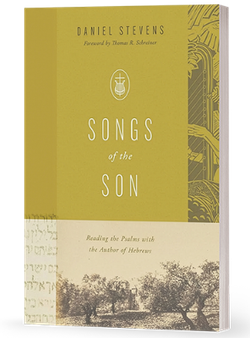
Jesus isn't just a New Testament figure. He appears prominently throughout the Old Testament...and you can see it most poignantly in the ancient song book of Israel: The Psalms. Explore and appreciate the connections in the Psalms to the Messiah in the New Testament that point to his supremacy.
If you want to gain a profound understanding of the Messiah in the Old Testament, be sure to request the book Songs of the Son by Daniel Stevens.
Past Episodes
- A Closer Relationship with God
- A Controversial Baby
- A Lesson for Losers
- A Life of Thanksgiving
- A Painful Path
- A Sharp Sword
- A Thankful Thanksgiving
- A Time for Severity
- A Unified Church
- A Unique Child
- Adding to Your Faith
- All You Need
- Almost a Christian
- Am I Really a Christian
- Amazing Conversions
- Ambassadors
- Ambitious Faith
- Ask Pastor Mike
- ATAPAT
- Call for Help
- Christ Changed Everything
- Christian Friendships
- Christian Love
- Christianity in Real Life
- Christians on Trial
- Christmas
- Christmas 2021
- Christmas 2023
- Christmas 2024
- Christmas and Worldly "Heroes"
- Christmas Clarity
- Christmas Controversy
- Christmas Courage
- Christmas Eve Service
- Christmas Generosity
- Christmas Giving
- Christmas Messages
- Christmas Presents
- Christmas With Compass
- Christ's Kingdom Forecast
- Christ's Resurrection
- Christ's School of Prayer
- Christ's Triumphal Entry
- Chronic Life Aches
- Colossians
- Complete Redemption
- Confrontation
- Connectedness
- Consumer Christianity
- Convenient Christianity
- Count Your Spiritual Blessings
- Countercultural Christians
- Courageous Endurance
- Couriers for Christ
- Dark Days
- David and Goliath
- Dear Abby
- Decisions, Decisions
- Defeat of Death
- Desert Instructions
- Designed to Grow
- Detours
- Did it Really Happen?
- Discernment
- Don't Forget
- Don't Miss It
- Don't Quit
- Drink Your Milk
- Easter
- Easter 2018
- Easter Message
- Encouraged
- Enemies of Grace and Revenge
- Enemies, Grace and Revenge
- Enlisted
- Envy
- Evangelism 101
- Evangelism and the End of the World
- Expanding Your Ministry
- Faith, Stress and Money
- Faithful to God
- FEAR & Fears
- Fear of God
- Finish Well
- First Corinthians
- First Quarter Review
- Friends? Who Needs 'Em
- From What I Believe to How I Think
- Generosity
- Get Ready
- Gifts For Jesus
- Give It Up
- God as Father
- Godly Confidence
- God's Big Plan
- God's Church
- God's Expatriates
- God's Investment in You
- God's Plan for You
- God's Work in Evangelism
- Good Friday
- Good Friday Message
- Gospel Advance
- Gospel Crazy
- Gospel Impact
- Gospel Lessons from the OT
- Grow Up
- Growing Up
- Guarding the Gospel
- Happiness & Christianity
- Head Games
- Hebrews
- Hell, Fire and Floods
- Hitting God's Target for Your Life
- Holiness
- How God Works in You
- How the Truth Sets Us Free
- How to Argue
- How to Forgive
- How to Get Eternal Life
- Hyperopic Christianity
- In Search of God's Will
- Incredible Love
- Indignation
- Infant from Bethlehem
- Instructions for Sinners
- Internal Warfare
- Israel's Greatest Hits Cont'd
- Israel's Greatest Hits- Study in Psalms
- Israel's Greatest Hits Vol II
- It's a Big Decision
- Lap #2005
- Learning to Lead
- Lessons on Grace
- Life as a Target
- Life With A Purpose
- Life's Defining Moments
- Life's Last Enemy
- Living a Lie
- Luke
- Made Right with God
- Make a Difference
- Marriage
- Money Madness
- Money Matters
- Moody Bible Institute Founder's Week
- More than a Creed
- More Than Friends
- Moving Forward
- Obstacles on the Road to Christ
- Octogenarian Wisdom
- Old School Christmas
- Old Testament School of Marriage
- One Plus God
- Our Fight with Sin
- Our Need for Representation
- Parenting
- Passing the Baton
- People Tools
- People Who Make a Difference
- Persistant Prayer
- Plugged In
- Pointing People to Christ
- Politicking
- Post Christmas Contentment
- Power Plays
- Powerful Praying
- Prayer 101
- Prayer Warrior
- Prelude to the Cross
- Preparing for the Kingdom
- Presenting Christ
- Privilege and Responsibility
- Project Reciprocity
- Prompted by Love
- Purposeful Praise
- Pursuing Holiness
- Saints Who Lie
- Salvation Is A Big Deal
- Set Free to Live Right
- Sexual Disasters
- Sexual Sins & Sanctified Bodies
- Silent Night
- Sin is REALLY Bad
- Slaying the Family Dragons
- Sold Out Servants
- Something Greater
- Soul Warfare
- Special
- Special Christmas Message
- Special Easter Message
- Spiritual Detours
- Spiritual Investments
- Spiritually Prepared
- Stay Out of Trouble
- Staying in Step
- Sticktoitiveness
- Strained Relations
- Summer Fruit
- Taking Christ to Work
- Temptation
- Thanks God
- Thanksgiving
- The Ancestry of Christ
- The Balance of Biblical Love
- The Bible and Your Salvation
- The Big Assignment
- The Big Questions
- The Black and White on Gray Areas
- The Common Good
- The Costs and Benefits of the Incarnation
- The Door
- The Entry of a King
- The Experience of Every Christian
- The First Christmas Gifts
- The Gap
- The Gospel
- The Gospel According to Abraham
- The Harsh But Good News
- The Hazards of Prosperity
- The Hazards of the Church
- The Infant from Bethlehem
- The Joy of Salvation
- The Next World Order
- The Non-Negotiables
- The Old Testament School of Marriage
- The Reliability of the Bible
- The Resurrection Response
- The Royal Task
- The Same Ol' Stuff
- The Sins Christians Tolerate
- The Supremacy of Christ
- The Torn Curtain
- The Truth About Christmas
- Those Words at the Altar
- Tips for Zealots
- Transformed
- War Zones & Peace Treaties
- Warning
- Water from the Rock
- Weirdos?!
- What's Your Problem
- When Feelings are King
- When Frogs Become Princes
- When God Makes a Promise
- When God Seems Weird
- When Life Hurts
- When Life is Tough
- When Life Takes A Left Turn
- When People are to Blame
- When the World Gets In the Way
- Where You're Planted
- Why the Son Became One of Us
- Wisdom & Maturity
- Wisdom From Proverbs
- Wisdom's Toolbox
- Wise Decisions
- Working the Plan

Video from Pastor Mike Fabarez
Featured Offer
Jesus isn't just a New Testament figure. He appears prominently throughout the Old Testament...and you can see it most poignantly in the ancient song book of Israel: The Psalms. Explore and appreciate the connections in the Psalms to the Messiah in the New Testament that point to his supremacy.
If you want to gain a profound understanding of the Messiah in the Old Testament, be sure to request the book Songs of the Son by Daniel Stevens.
About Focal Point
About Pastor Mike Fabarez
Pastor Mike is a graduate of Moody Bible Institute, Talbot School of Theology (M.A.) and Westminster Theological Seminary in California (D.Min.).
Mike is heard on hundreds of radio programs across the country on the Focal Point radio program and has authored several books, including Raising Men Not Boys, Lifelines for Tough Times, Preaching That Changes Lives, Getting It Right, Praying for Sunday, and Why the Bible?
Mike and his wife, Carlynn, reside in Laguna Hills, California and they have three children, Matthew, John and Stephanie.
Contact Focal Point with Pastor Mike Fabarez
info@fpr.info
Focal Point
P.O. Box 2850
1-888-320-5885