


How Can Reevaluating Sin Strengthen Our Faith?


In order to forge a stronger, deeper, and more meaningful relationship with God, we have to reevaluate our former relationship with sin. Pastor Mike Fabarez asks us to reexamine our connection to our old nature so we can move toward Christ.
Mike Fabarez: There should not be a continuation in deliberate sin. Why? Because if anyone is in Christ, he is a new creation. There is a fundamental change in my life that begins a process of starting to say no to sin so that my life has a completely different relationship to sin after conversion than it did before.
Dave Drewy: Welcome to Focal Point with author and pastor Mike Fabarez. I am your host, Dave Drewy. In order to have a stronger, deeper, and more meaningful relationship with God, we have to re-evaluate our former relationship with sin.
Are we continually breaking our association with sin, or are we still treating it like a friend? Today, Pastor Mike Fabarez challenges us to re-examine our connection to our old nature. It is another message in our mini-series in Hebrews called A Closer Relationship with God.
Mike Fabarez: For the sake of my kids, I am very grateful that the makers of Tylenol and Advil have perfected a good-tasting pain reliever. You can get it in grape, you can get it in cherry, now you can get it in strawberry, and they now even have, believe it or not, bubblegum-flavored Tylenol.
For all my kids' bumps and bruises and all their childhood boo-boos, they do not seem to mind anymore when I go to the medicine cabinet and pull out one of their sugar-laden elixirs. They are okay with it.
But I found that when they encounter a physical problem, an ailment that is a little more serious, when they have to be taken to the emergency room or at a doctor's visit, and something there is just not right, I found that the doctors seem to have a little different solution. As a matter of fact, I found that the more severe the problem, the more distasteful the solution.
When my kid comes in and there is really something at stake, something really at stake in his health, he does not reach for some good-tasting syrup. He pulls out a syringe and a needle, much to the chagrin of my children and their mother.
The remedies in God's word are much the same. Some weeks we can waft into church and we can have all of our spiritual bumps and bruises attended to. We can get patched up for another week of life and Christian living, and it can all be done with a fairly good-tasting sermon.
But then every now and then we encounter texts in Scripture that are dealing with issues that are much more serious, much more profound, that deal with ailments that go much deeper. Unfortunately, those are sermons that are much harder to swallow.
Some well-meaning pastors, and I completely understand, though I do not agree, seek to just avoid this unpleasant experience altogether. They do that very creatively, and I envy them sometimes. They pick brand new passages from all different parts of Scripture from week to week in their churches and strategically avoid these passages that deal with the sting of a scalpel or a syringe.
But the problem is if you live on a diet of feel-good sermons, you might come to the conclusion that God can deal with every spiritual problem with bubblegum-flavored Tylenol. And he cannot, and he has not, and he does not.
Bible says our primary ailment is quite serious. It is terminal, actually. Good news is in the book of Hebrews as we have seen, he has a solution. The problem is any real or true or deep understanding of that solution leads us to see some themes that are a bit more graphic and distasteful than the average churchgoer is used to.
But when you resolve to attend a church that moves passage by passage through a book of the Bible and verse by verse, you end up hitting some of these head-on. We have run smack-dab into the middle of one of those texts.
If you have your Bibles, I want you to open once again to the book of Hebrews. I want you to open up to the 10th chapter. We left off in this text after seeing in verse 22 that our primary calling is, once we get right with God, to seek with all of our might to draw near to God.
Then last week we saw in those great and familiar verses in verses 24 and 25 that we need each other in that quest, and that you and I ought to help each other in that quest, not just on Sundays. But we ought to be meeting more regularly. As a matter of fact, verse 25 ends: we ought to be doing it all the more as we see the Day approaching, capital D.
Which brings him into another thought here under the inspiration of the Holy Spirit. This text is written for us to bring us to think about that Day. He says this beginning in verse 26 where our text for the morning begins.
He says if we deliberately keep on sinning, you know, after we have received the knowledge of the truth. We know what this thing is all about. We understand the purpose of the crucifixion. We get this thing called sin and its consequences. We know what this thing means if we are to be redeemed and forgiven. We get all that. We understand it.
If we keep on deliberately sinning, then no sacrifice for sins is left. We do not have it. We are not a part of it. We do not get the benefits of it. As a matter of fact, we are left in verse 27 with only a fearful expectation of judgment and of raging fire that will consume the enemies of God.
He then makes an argument by comparison from lesser to greater. He says in verse 28 anyone in the Old Testament, if they rejected the law of Moses, they died. It was a capital offense to thumb your nose at the truth of the prophet. You died without mercy.
No one cried over you. They said, "Man, he deserves it. If he is going to turn his back on the prophetic word, he should be killed." They were killed without mercy on the testimony of two or three witnesses. It is all it took is two or three people to say yes, he thumbs his nose at the truth of what God has revealed through Moses.
He says if that is the way it was dealt with in the old covenant, how much more severely do you think a man deserves to be punished who has, now again this is all hinged under verse 26, a deliberate life of sin after knowing what this is all about? They are trampling the Son of God underfoot.
They have treated as an unholy thing, like it was no big deal, the blood of the covenant that sanctified him, that set him apart. More on that later. And who has insulted the Spirit of grace? Grace was all about the free forgiveness that comes in the shadow of the cross, that God will forgive you, you do not earn it, you get it granted to you.
All of that, he says, is grace. But you know, when you continue to deliberately sin after understanding this equation, you insult the Spirit, capital S, of grace. For we know him who said, now quoting Deuteronomy 32, "It is mine to avenge; I will repay," and again, "The Lord will judge his people."
We know him, do we not? If we do, you need to understand verse 31. It is a dreadful thing to fall into the hands of the living God. Now those are verses that they do not choose very often for the daybreak cards at the Christian bookstore. They are not the subscript after your Christian friend writes you on an email.
These are hard words. They are serious words. They are words that speak to the depth of the sin problem. It is there. These texts should not be dismissed. Just because of the modern self-imposed biblical censorship of a lot of Christian circles, it does not mean these are not true.
They are very true. Not only are they true because they are throughout the Scriptures, they make perfect sense if we know anything about the problem of sin. Because it is not just a cute Bible verse that we teach our children, that the wages of sin is death.
It has so much to do not just with a coffin and a lifeless body. It has a lot to do with what happens to a person after their death when they have to meet an accountability called judgment before the living God. That is a serious issue.
The Bible calls it the second death. The first death you thought that was bad. The second death is having to account for your life and then having to pay in retribution and having to face God and to be paid back for the sins of your life. That is a terrible thing.
Now salvation was all about removing the problem of sin. It was about taking the penalty of sin off my account. It was about somehow relating to a holy God and having that God embrace me even though in my life I have sinned. How does that work?
Well, that is what the book of Hebrews has been all about. Embrace Christ our great High Priest. If you do, because of his own sacrifice, not the animal, not the blood of a bull or a goat, but because of his own substitutionary sacrifice, you can be completely forgiven.
This passage brings us back to the core of that. It is not just about embracing the remedy for sin. It is about recognizing that when we embrace the remedy for sin, it changes everything about how we feel about sin and how we interact with sin and how we deal with sin in our lives.
The text says, "Man, let's get back to the core issue." It is a sin issue, and we need to realize that that is a big deal. If there is any flavor or feel that we get from the intention of this text, it is number one for us all to stop and just start to take sin seriously again. Because it is certainly being taken seriously in this text.
Let's take it seriously. Let's understand that that is what the gospel is all about. And not only is it about removing the consequences of sin, it is about God saying, "Now that I have removed the consequence from your life, you will no longer face the judgment in a place called the lake of fire, now I want you to treat sin differently."
He does not leave us to our own devices to try and fight sin. He changes us internally. We teach our children this verse, do we not? Second Corinthians chapter 5 verse 17. You know it. You do not need to turn there but at least jot it down because it fits well in this context.
There should not be a continuation in deliberate sin. Why? Because if anyone is in Christ, he is a new creature, a new creation. The old, all that old stuff, it is gone and the new, the new stuff, the new patterns of life, the new behaviors, the new appetites, the new desires, those things have come.
Does that mean that my life the moment I trust in Christ I never sin again? No, obviously that is not what the text says. As a matter of fact, that is not what Scripture teaches. But it does say there's a fundamental change in my life that begins a process of starting to say no to sin so that my life has a completely different relationship to sin after conversion than it did before.
Let me take you to a prime passage in the New Testament. First John chapter 3. Just go to the end of the book, the book of Revelation, and turn back a few short books and you will find First John chapter 3. I want you to look at this and to get a big breath of context here.
So let's just start in verse 1. First John chapter 3, it is such an important text. It is one of those avoided texts of the New Testament. Not the first few verses, but the heart of the text. Unfortunately, we do not hear much of this anymore.
Because here is the problem with modern theology so often. We like to interpret biblical texts based on our experience. We do not like to interpret our experience based on the text. And that is an unfortunate turnaround in the modern Alice in Wonderland Christian community we often live in.
We like to go to the text with preconceived notions about what I know and what I feel and what I have experienced. We say, "Well, then that text cannot really mean that," when in reality, God has called us to be good students of God's word who can rightly handle the word of truth. Then we say my life must be submitted to that text and if that is what the text means and that is what it says, then it applies to me.
The first section of the text, we do not struggle too much with. Take a look at these familiar words when he says, "How great is the love that the Father has lavished on us." Isn't that a great text? He just poured it out on us. That we should be called children of God, adopted, a changed relationship to the living God. And that is what we are. John just revels in that. We are, we are children of the King.
The reason the world does not know us, the reason we are not fitting in very well down here, the reason there is persecution in the early church is, you know what, they did not know him either. They crucified him. Dear friends, now we are children of God. We have actually changed now.
Now there's a whole eschatology that's going to come, though, because what we will be, it hasn't been yet made known. We are not realized in the place of the new Jerusalem. We haven't been redeemed in our body, but our spirit has been redeemed. Our judicial standing before God has changed and therefore we are children of God.
Now we haven't arrived. But look at this. It says we know that when he appears, now it is all going to be perfect. We will be like him, for we shall see him as he is.
So what does that mean? We are unchanged? No, it does not mean that at all. As a matter of fact, verse 3, everyone who has this hope, who knows they will be perfect standing in God's presence, not just with a redeemed heart but a redeemed body, with no impulses for sin, with no temptation from the devil, you know, if that is our hope, you know what happens?
If we have that hope in him, we purify ourselves just as he is pure. That is the process. Justification is being called a child of God by God himself. You are now adopted into my family. Sanctification, this process of being set apart, is saying I know that I am headed to a place of perfection.
But now you have changed my heart. And because I am hoping for that ultimate culmination of the Christian message, this place called the new Jerusalem, in the process, I am being purified. I am less like I was before I became a Christian this year than I was last year because my life is changing. Because I have that hope and therefore I purify myself. My life is changing. It is becoming more like Christ.
Then he says let's talk about that. You want to talk about purity and sin? Everyone who sins breaks the law. In fact, I mean, that is what sin is. It is lawlessness. It is breaking the rules.
But you know that he appeared so that he might take away our breaking of the rules, our sin. And by the way, the one we say we follow, there's no sin in him. No one who lives in him, who says I am a child of God, we follow Christ, no one who lives in him keeps on sinning.
No one who continues to sin, if their relationship to sin is unchanged, has either seen him or known him. You do not. I mean, you are kidding yourself. Dear children, do not let anyone lead you astray.
Do not let anybody with some deceptive theology or some nice philosophy or some bumper sticker Bible truth confuse you. Do not let anyone lead you astray. He who does what is right, okay?
And the Greek has five tenses. We have three: past, present, and future. They have five in the ancient Greek language, Koine Greek. And one of them is a tense that speaks of a continual linear action.
There's one that speaks of just a simple action. But there's one that speaks of a continuous action, and that is the tense chosen here by the Holy Spirit. If we do what is right, if it is a continuous action. It does not mean that we are sinless.
Obviously, we are in the process of being purified according to verse 3. But if I do what is right, if that is the pattern of my life, if that is the new stuff that has come, then you know what, I am righteous. That means I am a child of God. It proves that just as he is righteous.
Verse 8, he who does what is sinful, he who continues same tense in that pattern of sin, who has a relationship with sin just like he had before he claimed to step into this relationship with God. Well, you know what, he is really not a child of God. If you want to talk about his parental leadership, it is really not God. It is God's enemy, the Diabolos.
Because the devil has been sinning from the beginning. The reason the Son of God appeared was to destroy the devil's work. Can you see how that's much more broad than just the consequences of my sin? The devil's work is a work that he works in his children, if you will, if I am of the devil. It is a pattern and lifestyle of sin.
The Son of God did not just come to change my relationship to the lake of fire. He came to change my relationship to daily acts of sin. He came to destroy the devil's work.
Look at verse 9. No one who is born of God will continue to sin. And it is not that he has left us to our own devices to pull ourselves up by our bootstraps, though there is effort involved in living Christ-like. The Bible says you are going to be changed. Why? Because God's seed remains in him. He's changed you.
His Holy Spirit is in you. Your heart is different. You are changed. And he cannot go on sinning because he has been born of God. And that is a radical internal change.
This is how we know who the children of God are and who the children of the devil are. Anybody who has got a testimony or has walked the aisle or has been baptized in a church is a child of God. Is that what it says? Correct me now if I am wrong. It does not say that, does it?
No. He who does not do what is right is not a child of God, nor is anyone who does not love his brother. We know the difference between them. We know who the children of God are and who the children of the devil are, and it is based on what is your continuing relationship with sin? Is it different?
Now here are a bunch of people sitting here in the first century receiving the letter to the Hebrews and they are reading it in their worship and they are saying, "Wow, you know what? I do not know where I stand in my relationship with sin." Obviously, there were two parties in this church.
And we have already seen the distinction drawn for us in chapter 6. Do you remember in chapter 6? We have two kinds of people sitting in church. They both look good. They both look Christian. They both sing the same Christian songs. They both claim to be followers of God. But there are some that are phony and counterfeit and there are some that are real.
And the distinction is drawn here with a clarity in chapter 10 of Hebrews. And that is: what is your continuing relationship with sin? Is it changed or is it different? Do you continue to deliberately sin the way you did prior to coming to Christ, or is something internally changed in you?
Do you no longer continue in that pattern because God's seed abides in you, because as Second Corinthians 5:17 says, you are a new creation in Christ, because as First John 3 says, you have been born of God? Is there a different relationship that you have with sin?
Now here is the problem. Back to Hebrews chapter 10. The problem is I am preaching to a group that is a lot like that first-century audience. It is a composite group. There are real Christians and there are phony Christians.
And the writer of Hebrews, he starts to, if you read the whole book in one sitting, he starts to sound a bit schizophrenic. Because he is going back and forth with this great incredible boom-boom-boom. You guys need to get this right. And then he will say, "Oh, but you know what, those of you that are," he's got this whole now different soft side.
Oh, we've got a merciful High Priest and he sympathizes with our weakness. Hey, if you go on and continually deliberately sin, you know that you are not saved and you are going to face God's judgment. Oh, and but you know we expect better things concerning you, things that accompany salvation. Remember those earlier days, that is where our passage is going to go in verse 32.
Remember those earlier days of devotion and you remember how you started. What is the deal? The deal is that when you deal with issues this serious, you have got to recognize that you have got two groups in your audience. And the same thing goes for us. There are two different groups here.
And here is the problem. When I speak about your relationship with sin, because Christians cannot be sinless in this life, it is only a process of purification, every Christian here can think of sin in their life. And now I preach about continuing sin and it freaks the real Christians out because you have a sensitive heart, because you know God, because his Spirit lives in you, and because you can think of sin that you have committed this week, and it freaks people out.
Please remember the rest of the book of Hebrews. As a matter of fact, I turn you to 10 but go back to 2 and chapter 5 and chapter 4. Let's just at least look at chapter 2 verse 17. Remember that? That the High Priest that we have is made like his brothers. That is verse 17 of chapter 2.
At least circle it or mark it. I am speaking now to the real Christians. I do not want you to be paralyzed by this text. I want you to recognize that God recognizes that there is a continuation, a punctiliar continuation of sin in our lives that hopefully is getting less and less as the years go by.
But he recognizes the fact. He is a merciful High Priest. Why? Because he walked in the shoes that we walked in. For this reason, he, our great High Priest, had to be made like his brothers. That is why God was made like us.
Not just to make atonement for sin, but that he could become a merciful and faithful High Priest in service to God, and that he might make atonement for the sins of the people. He's got to make atonement for sin. And you know what it does to him? He realizes the battle that you and I face with sin on a daily basis. He recognizes that. He sympathizes. He knows that. He knows the weakness of humanity. He recognizes that.
Dave Drewy: It is not an easy lesson to hear, but the Bible challenges us to carefully consider our relationship with sin. That is the key takeaway today from Mike Fabarez on Focal Point in a message titled Motivated by the Fear of Being Phony.
There's more waiting for you when you head to focalpointradio.org. And if you reach out to us today for the first time, we'd like to put something in your hands at no charge. It's a booklet Pastor Mike wrote himself called Phony Christianity. If you've spent any time wondering how genuine faith actually looks different from a convincing imitation, this booklet gets right to the heart of it.
Claim your free copy of Phony Christianity the first time you contact us by calling 888-320-5888 or writing to us online at focalpointradio.org. Missed part of today's program? Well, pull up the podcast and subscribe to get these daily broadcasts delivered right to your device or download the free Focal Point app for even more content.
Now before we wrap up, we want to tell you about this month's featured resource. It's a book that has quietly shaped the spiritual lives of believers for decades: The Pursuit of God by A.W. Tozer. In a handful of chapters, Tozer manages to cut through every layer of religious routine and go straight after the real thing: a raw, unmediated knowledge of God himself.
Tozer writes with an intensity that is hard to shake. If the themes we've been sitting with in this series have been stirring something in you, this book gives that stirring a direction. Request The Pursuit of God when you stand behind Focal Point with a financial gift or by signing on as a monthly Focal Point partner. Call 888-320-5888 or get started online at focalpointradio.org. You can also reach out through the mail by writing to us at Focal Point, P.O. Box 2850, Laguna Hills, California 92654.
Well tomorrow, Pastor Mike picks right up where he left off, continuing the series A Closer Relationship with God. Don't miss part two of our message, Tuesday on Focal Point with Pastor Mike Fabarez.
Mike Fabarez: Pastor Mike here. Ever wish you could corner your pastor and challenge him with your toughest questions about the Bible, about faith? Well, now you can. Send me your questions. Head on over to focalpointradio.org and click on "Ask Pastor Mike" or send me a note on facebook.com/pastormike or twitter.com/pastormike. I can't wait to hear from you.
Dave Drewy: Today's program was produced and sponsored by Focal Point Ministries.
Featured Offer
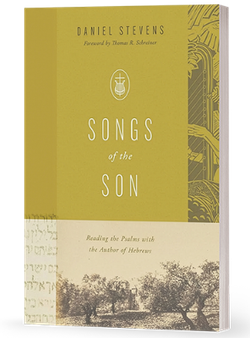
Jesus isn't just a New Testament figure. He appears prominently throughout the Old Testament...and you can see it most poignantly in the ancient song book of Israel: The Psalms. Explore and appreciate the connections in the Psalms to the Messiah in the New Testament that point to his supremacy.
If you want to gain a profound understanding of the Messiah in the Old Testament, be sure to request the book Songs of the Son by Daniel Stevens.
Past Episodes
- A Closer Relationship with God
- A Controversial Baby
- A Lesson for Losers
- A Life of Thanksgiving
- A Painful Path
- A Sharp Sword
- A Thankful Thanksgiving
- A Time for Severity
- A Unified Church
- A Unique Child
- Adding to Your Faith
- All You Need
- Almost a Christian
- Am I Really a Christian
- Amazing Conversions
- Ambassadors
- Ambitious Faith
- Ask Pastor Mike
- ATAPAT
- Call for Help
- Christ Changed Everything
- Christian Friendships
- Christian Love
- Christianity in Real Life
- Christians on Trial
- Christmas
- Christmas 2021
- Christmas 2023
- Christmas 2024
- Christmas and Worldly "Heroes"
- Christmas Clarity
- Christmas Controversy
- Christmas Courage
- Christmas Eve Service
- Christmas Generosity
- Christmas Giving
- Christmas Messages
- Christmas Presents
- Christmas With Compass
- Christ's Kingdom Forecast
- Christ's Resurrection
- Christ's School of Prayer
- Christ's Triumphal Entry
- Chronic Life Aches
- Colossians
- Complete Redemption
- Confrontation
- Connectedness
- Consumer Christianity
- Convenient Christianity
- Count Your Spiritual Blessings
- Countercultural Christians
- Courageous Endurance
- Couriers for Christ
- Dark Days
- David and Goliath
- Dear Abby
- Decisions, Decisions
- Defeat of Death
- Desert Instructions
- Designed to Grow
- Detours
- Did it Really Happen?
- Discernment
- Don't Forget
- Don't Miss It
- Don't Quit
- Drink Your Milk
- Easter
- Easter 2018
- Easter Message
- Encouraged
- Enemies of Grace and Revenge
- Enemies, Grace and Revenge
- Enlisted
- Envy
- Evangelism 101
- Evangelism and the End of the World
- Expanding Your Ministry
- Faith, Stress and Money
- Faithful to God
- FEAR & Fears
- Fear of God
- Finish Well
- First Corinthians
- First Quarter Review
- Friends? Who Needs 'Em
- From What I Believe to How I Think
- Generosity
- Get Ready
- Gifts For Jesus
- Give It Up
- God as Father
- Godly Confidence
- God's Big Plan
- God's Church
- God's Expatriates
- God's Investment in You
- God's Plan for You
- God's Work in Evangelism
- Good Friday
- Good Friday Message
- Gospel Advance
- Gospel Crazy
- Gospel Impact
- Gospel Lessons from the OT
- Grow Up
- Growing Up
- Guarding the Gospel
- Happiness & Christianity
- Head Games
- Hebrews
- Hell, Fire and Floods
- Hitting God's Target for Your Life
- Holiness
- How God Works in You
- How the Truth Sets Us Free
- How to Argue
- How to Forgive
- How to Get Eternal Life
- Hyperopic Christianity
- In Search of God's Will
- Incredible Love
- Indignation
- Infant from Bethlehem
- Instructions for Sinners
- Internal Warfare
- Israel's Greatest Hits Cont'd
- Israel's Greatest Hits- Study in Psalms
- Israel's Greatest Hits Vol II
- It's a Big Decision
- Lap #2005
- Learning to Lead
- Lessons on Grace
- Life as a Target
- Life With A Purpose
- Life's Defining Moments
- Life's Last Enemy
- Living a Lie
- Luke
- Made Right with God
- Make a Difference
- Marriage
- Money Madness
- Money Matters
- Moody Bible Institute Founder's Week
- More than a Creed
- More Than Friends
- Moving Forward
- Obstacles on the Road to Christ
- Octogenarian Wisdom
- Old School Christmas
- Old Testament School of Marriage
- One Plus God
- Our Fight with Sin
- Our Need for Representation
- Parenting
- Passing the Baton
- People Tools
- People Who Make a Difference
- Persistant Prayer
- Plugged In
- Pointing People to Christ
- Politicking
- Post Christmas Contentment
- Power Plays
- Powerful Praying
- Prayer 101
- Prayer Warrior
- Prelude to the Cross
- Preparing for the Kingdom
- Presenting Christ
- Privilege and Responsibility
- Project Reciprocity
- Prompted by Love
- Purposeful Praise
- Pursuing Holiness
- Saints Who Lie
- Salvation Is A Big Deal
- Set Free to Live Right
- Sexual Disasters
- Sexual Sins & Sanctified Bodies
- Silent Night
- Sin is REALLY Bad
- Slaying the Family Dragons
- Sold Out Servants
- Something Greater
- Soul Warfare
- Special
- Special Christmas Message
- Special Easter Message
- Spiritual Detours
- Spiritual Investments
- Spiritually Prepared
- Stay Out of Trouble
- Staying in Step
- Sticktoitiveness
- Strained Relations
- Summer Fruit
- Taking Christ to Work
- Temptation
- Thanks God
- Thanksgiving
- The Ancestry of Christ
- The Balance of Biblical Love
- The Bible and Your Salvation
- The Big Assignment
- The Big Questions
- The Black and White on Gray Areas
- The Common Good
- The Costs and Benefits of the Incarnation
- The Door
- The Entry of a King
- The Experience of Every Christian
- The First Christmas Gifts
- The Gap
- The Gospel
- The Gospel According to Abraham
- The Harsh But Good News
- The Hazards of Prosperity
- The Hazards of the Church
- The Infant from Bethlehem
- The Joy of Salvation
- The Next World Order
- The Non-Negotiables
- The Old Testament School of Marriage
- The Reliability of the Bible
- The Resurrection Response
- The Royal Task
- The Same Ol' Stuff
- The Sins Christians Tolerate
- The Supremacy of Christ
- The Torn Curtain
- The Truth About Christmas
- Those Words at the Altar
- Tips for Zealots
- Transformed
- War Zones & Peace Treaties
- Warning
- Water from the Rock
- Weirdos?!
- What's Your Problem
- When Feelings are King
- When Frogs Become Princes
- When God Makes a Promise
- When God Seems Weird
- When Life Hurts
- When Life is Tough
- When Life Takes A Left Turn
- When People are to Blame
- When the World Gets In the Way
- Where You're Planted
- Why the Son Became One of Us
- Wisdom & Maturity
- Wisdom From Proverbs
- Wisdom's Toolbox
- Wise Decisions
- Working the Plan

Video from Pastor Mike Fabarez
Featured Offer
Jesus isn't just a New Testament figure. He appears prominently throughout the Old Testament...and you can see it most poignantly in the ancient song book of Israel: The Psalms. Explore and appreciate the connections in the Psalms to the Messiah in the New Testament that point to his supremacy.
If you want to gain a profound understanding of the Messiah in the Old Testament, be sure to request the book Songs of the Son by Daniel Stevens.
About Focal Point
About Pastor Mike Fabarez
Pastor Mike is a graduate of Moody Bible Institute, Talbot School of Theology (M.A.) and Westminster Theological Seminary in California (D.Min.).
Mike is heard on hundreds of radio programs across the country on the Focal Point radio program and has authored several books, including Raising Men Not Boys, Lifelines for Tough Times, Preaching That Changes Lives, Getting It Right, Praying for Sunday, and Why the Bible?
Mike and his wife, Carlynn, reside in Laguna Hills, California and they have three children, Matthew, John and Stephanie.
Contact Focal Point with Pastor Mike Fabarez
info@fpr.info
Focal Point
P.O. Box 2850
1-888-320-5885