


How Does Conviction Reflect True Devotion?


It’s uncomfortable to admit when we’re wrong or when we’ve made a mistake. But could a proper awareness of our sin be an indicator that we’re truly following God? Pastor Mike Fabarez explains how godly conviction is a marker of authentic faith!
Guest (Male): Today on Focal Point with Pastor Mike Fabarez.
Pastor Mike Fabarez: You want to look at the fruit in your life? Ask yourself, how conscious of sin am I in my daily life? Do I see it? Do I feel it? Does it grieve me the way it grieves the Spirit?
If the Spirit's not in your life, you won't have that grieving. If the Spirit dwells in you, you've got increasing conviction of sin. God is helping through His Spirit, your spirit. Together, God is working to overcome sin in your life.
Dave Drewy: It's uncomfortable when we're confronted with our mistakes. We don't like being reminded of what we've done wrong. But could a proper awareness of our sin be an indicator we're truly following God?
Today on Focal Point, Mike Fabarez continues a miniseries called Almost a Christian. Last time, we saw that a true follower of Jesus has a God-ward focus. Now, Pastor Mike explains that another marker of real faith is a godly conviction over sin. The message is called Examining the Difference That Really Matters.
Pastor Mike Fabarez: Hebrews chapter six, I think you'd have to agree, has prompted us to take a good internal look at where we're at with God. Because it started in verses four and five with some real stark realizations. And that is that you can have lots of good things going on in your life and not be saved.
People can look at you and go, "Look at him. Churchgoer, gives in the offering, volunteers for service projects." But in reality, there is a sense in which you can't tell just by looking at it. You've got to get beneath the surface. There has to be some evaluation that's honest, transparent, authentic, that says to God, like the psalmist, "Search me, God. I need some help. Help me evaluate what's going on inside of me."
He now analogizes the congregation that he's writing to and he says, "Really, there's two kinds of people here. Two kinds of churchgoing people. There's the land, verse number seven, that drinks in the rain often falling on it and it produces a crop that's useful to those for whom it is farmed and it receives the blessing of God.
But land, verse eight, that produces thorns and thistles, it's worthless and it's in danger of being cursed and in the end, it will be burned." Then he says, "I know this has been heavy and this has been serious." Verse number nine, "Even though we speak like this, dear friends, we're confident of better things in your case, things that accompany salvation."
He's just come off the negative analogy of a land that's not producing fruit. Good fruit, at least. It's producing stuff, but it's not good stuff. And he says, "We don't expect that from you. We expect that key phrase, bottom of verse nine, 'things that accompany salvation.'" And that's been a key for us understanding this whole text.
What are we talking about? Well, we've just looked at verses four and five and saw all these wonderful benefits, all these wonderful things that can happen to you in church that God will do in your life just by associating with the right people. And so, there are all these benefits.
There's the teaching of God's Word, there's the conviction of sin, there's the steering of your life through all the challenges because you've got the right instructions. That's great. You're soaking in the benefits of God, the grace of God. Producing a crop. If we really get into chapter six of Hebrews, we find out that it's going to be hard to distinguish fruit because they're going to be sitting there looking the same.
If we can analyze what's going on underneath, we can find out that some of this fruit is selfish and some of this fruit is God-centered. It's God-ward. Can I go to church with a God-ward focus? Absolutely. Can I go to church with a me-ward focus? Yeah, I can do that. Can I pray a prayer with a God-ward focus? Yeah, I can do that.
Could you do it with a me-ward focus? Yeah, you can do that too. Bible study, giving money in the offering, all of that. You can do it all with a me-ward focus. If you don't believe it, ask a group of people in the first century called the Pharisees. They were great at it. They did all the right things. They didn't have the right heart. They were focused on themselves.
Please recognize that the Christian life is not about doing these good things. That's the external shell and it looks good. It's about making sure that the motive underneath it all is God-ward, God-centered, God-focused. And that's a radical shift because people can go to church all the time with the wrong motive.
Think about it. Think about our appeal in the average gospel presentation. The appeal in the average gospel presentation is, "God will benefit you. Won't that be great?" And in reality, here's what the Christian life is all about. Second Corinthians 5:15. I quote this all the time. It's the most under-quoted passage in all the Scripture.
That's why I'm going to make you turn to it. Second Corinthians chapter five. Take a look at this text. You don't see it on Dayspring cards. It's not framed in the Christian bookstore. And yet, it ought to be because it's one short, terse verse that helps us understand in short phrases what the Christian life is all about.
And yet, we don't hear much about it. Second Corinthians 5:15. Look at it. "And He who died for all—He died for all—that those who live for Him should no longer live for"—what's the word?—"themselves, but"—you know who you're supposed to live for?—"for Him who died for them and was raised again."
Think about that. That is the Christian life. He died for all that those who live should no longer live for themselves, but for Him who died for them and rose again. I'm supposed to live for Christ. Now, here's the problem. It is so easy to say, "Christ is the center of my life," when in reality he's nothing more than your favorite pill.
It's like people say, "I'm into this for all the me reasons and I'm so thrilled with what Christ is doing for me that I've taken Him out of the medicine cabinet and I put Him on the mantle of the fireplace. Look, we're into Jesus." Why? Because He's so wonderful for us. He's changed our lives.
When in reality, the Christian life is summed up this way. He died for us so that we wouldn't live for ourselves anymore. He died for us so we'd live for Him. That's the God-ward focus. And you can look at the shell of your life and you can say, "I'm doing this, this, this, and this," and you can say, "That's what Christians do."
And in reality, yeah, that is what Christians do, but maybe they do it with a different motive. And it's so important that we check our motives. The point of Christianity is that God is the center. He's the hub, we're a spoke. We are not taking Christ and God as a nice self-help program for us to enhance our lives.
The point is He's God and He needs to be God in our lives and in our family and in our relationships and in our work. He's in charge, He's the center. Take a look at First Thessalonians 1. Drop down to verse number seven. He said, "You became"—this is Paul talking to the Thessalonian church—"a model to all believers in Macedonia and Achaia."
Now, whatever he's going to say, we're going to say, "This is good. This is the right Christian life right here." Well, what kind of template were they? Verse eight. "The Lord's message it rang out from you not only in Macedonia and Achaia, but your faith in God has become known everywhere.
Therefore, we don't need to say anything about it, for they themselves report what kind of reception you gave us." They tell how you—now note this, underline it—"turned to God from"—what?—"idols." What's an idol? Anything else that's the hub of my life except for God. That's an idol.
Whatever the center of your life is, if it's not the triune God, that's idolatry. "But you've turned from your idols," and they were various and sundry, "and now you've turned to God to serve the living and true God, and to wait for His Son from heaven, whom He raised from the dead—Jesus, who rescues us from the coming wrath."
Our Christian life, our orientation now is to the horizon of the coming Son. Like sitting on a dock waiting for the ship, saying, "That's what my life is all about. The coming Son, He's my redeemer and He's coming to save us. And my focus is to serve God." That's what the Christian life is, a model for the Christian life.
Instead, today, our testimonials with our favorite story of a converted Christian is often the, "Look at the great things God did for me. I used to be here and now I'm here and isn't it great? You need to try Jesus too. Try Jesus." Like He's some new fruit drink or something. Jesus is the King of the universe and everyone will bow naked before Him one day. Try Him? I don't get it.
We're not supposed to try Him. We're supposed to serve Him. He's the King. He died for us so that we wouldn't live for ourselves anymore, but we'd live for Him who died and rose again. There's another soil, land, if you will. That's what he calls it in verse number eight. Land number two, I'll call it.
Now, look at the elements here. There are three elements here, but one that's assumed. And if it's not in there, it doesn't make any sense. The comparison and the contrast between verses seven and eight is between two lands, who we can safely assume—which is the point of verses four through ten—drinks in the rain just like the other land.
Now, he doesn't repeat that. He says in verse seven, "The land drinks in rain often falling on it and produces a crop." Verse eight, he says, "But land that produces thorns and thistles." What's the assumption here? That people in the pews in the first century listening to this sermon say, "Yeah, they're sitting right next to me in receiving all the same benefits of church that I am. They're drinking in the rain as well."
Then it says three more things. What do they produce? Well, they produce thorns and thistles, it says. So they're not producing a crop, they're producing something like the richest, most vibrant things in my garden. They're called weeds. Robust. "Look at that, when did you plant that, honey?" "Well, I didn't." It's a weed. They're producing something, it's just not real fruit.
Then two things. What's the response? "You're in danger of being cursed." That's what the next phrase says. That land is in danger of being cursed, and in the end, it's burned. What's that all about? Let's try and piece this one together. Land that drinks in the rain, we've already covered that. That's the benefits of verses four and five.
And the point is everybody here in this composite group in the first century, you've got people that are bearing fruit and people that aren't, but they're all sitting there receiving the same benefits. So certainly on a different level with a different orientation, but they got the same benefits.
"Produces thorns." What's that? Well, in comparison to what we've just seen and what we see in the normal usage of the concept and analogy of fruit in Scripture, thorns must be disobedience. If fruit and crops is an obedience and a God-ward focus, this must be a selfish focus. This must be sin, classic sin. Genesis 3, "I'm in it for me." That's what that represents.
"In danger of being cursed." Here's where commentators struggle a little bit. What are we talking about? "In danger of being cursed and then it gets burned." Are these the same thing? Let me say they're not the same thing. Now, I know this is a parable right here. We're doing the best to understand these components.
But "in danger of being cursed," and I don't want to read too much into that word, but the curse of the Scripture is given for us in Genesis 3. We call that the curse. And what was the essence of that? "In the day you eat of the fruit, you will surely die." Now, there were two kinds of death that the Scripture makes very clear.
As a matter of fact, the book of Revelation says you're all going to go through the first one, death. That's called biological death. The second one is the one you don't want. The second death. That's literally what it's called in the book of Revelation. And that's a place of outer darkness. He calls it the lake of fire.
It's a place where you get retribution for your sin. Well, the danger of being cursed, ultimately, you could say, well, there's two components to that. And I think they're both listed here. This is the analogy usually in Scripture about the final one. This one, clearly the first one because they're in danger of it. Common grace is life.
Here are these people that are—if you look at verse six again—they are crucifying the Son of God all over again and subjecting Him to public disgrace. And in doing that, see, with your sin, here's the thing. You're in danger of being cursed. What are we talking about? Let me propose this. We're talking about death, physical death.
You're in danger of getting annihilated. You're in danger of, as the Scripture says later, insulting the Spirit of grace. And God might just take you out. You're in danger of that. Now, common grace prevails for most people, but you're in danger of that. You better watch out, man. Producing thorns and God's giving you all this good stuff.
It's like the farmer who's ready to curse the ground or Jesus cursing the fig tree. It should be producing fruit, but it's not. Look at the advantages of this. And you're not producing fruit? You're in danger of being cursed. You're in danger of death. In the end, it'll be burned. Does that seem obvious? I mean, that's an obvious analogy.
We're talking about no salvation. Retribution. Hell. In the end, it'll be burned. Now, I'm going to learn from this and I'm going to make sure, "Hey, I don't want to fall into any of this. I don't want to be this. I want to live in verse nine, 'better things concerning me, things that accompany salvation.'"
So what's the focus here? Well, this would certainly be my focus. I want to make sure that my life doesn't produce thorns. Right? I don't want to produce thorns. I don't want the reality of my life to receive all this blessing and not produce good work, good deeds, service to God, God-ward orientation.
Let's put it this way. Number two. We've got to look for more victory over sin. And I put it this way because the thorns is a pattern of production of someone's life, which is a process, obviously. The Christian life is defined in Scripture as a kind of progression from salvation, which we call justification, made right before God, and then we begin a process of what we compare it to, sanctification.
I am now growing up in my faith. And as I grow up in my faith, I should be changing. I quoted this many times, but at least jot it down. Second Corinthians chapter three, verse 17 and 18. Second Corinthians 3:17 and 18. You can remember this text. It's the text that says that because of God's Spirit in our lives, we are being—here's how it's put—transformed into His likeness, Christ-likeness, with an ever-increasing glory.
The point is God's work in us is moving us from, "He kind of looks like Christ," then, "Yeah, he looks more like Christ," to, "Yeah, he looks even more like Christ." Or to put it in the words of First John. This one, let's turn to this one. First John chapter two. First John is a fascinating epistle.
It is so short, and it's like John takes all this theology from the Gospel of John and puts it into this little five-chapter book. And in chapter one, he's setting us up. He's talking about the fact that we are not without sin. That even Christians, we are punctuated by sin.
But if we confess our sins, He's faithful and just to forgive our sins and cleanse us from all—our relationship with God can be patched. But don't think, don't claim you're without sin. Whoever claims he's without sin, hey, he's lying. Chapter three says what? If your life is characterized by continual sin, then you're not saved.
What stands between chapter one and chapter three? Chapter two. What's chapter two talking about? Look at this great discussion of the progression and growth of the Christian life. We call it sanctification. Drop down to verse 12. First John 2:12. Now, you've got to sort this out.
He doesn't put it in a linear fashion for us, but he starts with children. "I write to you, dear children," do you see it? "Because your sins have been forgiven on account of His name." Hey, isn't that great? Your sins are forgiven. Good little pat on head, good kids. Then he says to the other end of the spectrum, "I write to you, fathers, because you've known Him who is from the beginning," which is how he started his Gospel, John 1:1. Remember?
The complexities of this deep God and man, you know Him. Oh, you got your sins forgiven. Oh, you know Him. What's in between? "I write to you, young men," bottom of verse 13, "because you've overcome the evil one." Do you see what's between having my sins forgiven and deeply and intimately knowing God? I'm overcoming Satan in my life.
"I write to you, dear children," he repeats this now, "because you've known the Father. Your sins are forgiven. You know the Father, isn't it great? You've been introduced to God." Verse 14. "I write to you, fathers, because you've known Him who is from the beginning." He repeats that phrase. You've got this profound intimacy with God.
Now, verse 14. Look at this. Here's the focus. "I write to you, young men," which is where the audience of First John was. They needed to be strong. And that's what it says. "You are strong and the Word of God lives in you, and you have overcome the evil one." See that?
What stands between spiritual infancy and spiritual maturity? God's Word is abiding in you even more deeply, you're overcoming sin and temptation in your life, you're growing. You will see, if you're sanctified and being sanctified, more and more overcoming of sin. Thorns and thistles, disobedience.
Because the moment I'm justified, I'm not instantly and completely sanctified. God has a process for me to start on. Look for more victory over sin. And that's what we should see. Which, by the way, let me say this. If real fruit in my life is a continual progress of being more and more like Christ and overcoming more and more sin, doesn't it necessitate that I'm aware of sin in my life?
I've got to be aware of it. Now, here's the thing. I've known people that go to church and do all the right things. They're in church, they sing the songs, they know the Bible verses, but when you ask them, if you get to know them and you're under the surface and you try to find out, "Tell me about the sins you struggle with." "I don't know."
You can quickly discover some of these people have no consciousness of sin at all. And if you're growing to know the one who was from the beginning, guess what you're aware of increasingly in your life? Sin. You want an example of that? Isaiah chapter six. Isaiah six. Here's the prophet. Remember the story?
He's now shown a vision of God Almighty on the throne, exalted, train filling the temple. And the first thing Isaiah says is what? "Woe to me. I am ruined. I'm a man of unclean lips and I live among a people of unclean lips." What does he instantly see? His own sin and the sin of his people.
You cannot come to know increasingly this great God with increasing knowledge and intimacy if you don't have an increasing awareness of sin. And as you do, God will show you more and more victory over that sin. And it's a process because once you get those things taken care of, God shows you more and you're cleaning up more and more.
And God is helping through His Spirit, your spirit. Together, God is working to overcome sin in your life. But you've got to be aware of it. That's a good thing. You want to look at the fruit in your life? Ask yourself, how conscious of sin am I in my daily life? Do I see it? Do I feel it? Does it grieve me the way it grieves the Spirit?
If the Spirit's not in your life, you won't have that grieving. You're left to your conscience. If the Spirit dwells in you, you've got increasing conviction of sin. And if God is in you, there's an increasing process of sanctification. More victory over sin. Now, the real thing about this text is not just the thorns.
It's that the thorns are being produced when you're watering it all the time. My garden, it's not much of a garden. My weed palace is watered every morning and I don't know why. I should turn it off. But I'm investing water on the flower bed and it's producing weeds. It's not all that way, mostly in the backyard.
The problem and the tension is the fact of the combination of these two things. I want to see less thorns in my life and thistles, disobedience. But the real travesty of all of this is that he is talking to people that go to church every Sunday. The juxtaposition of the benefits versus the product is what is concerning in this text.
And if you look at people sitting in the pew getting the blessing of God every week and still producing sin, I'm thinking to myself, what kind of sin can they be producing? What is this sin? It's got to be a kind of sin that Jesus talked about all the time. It's called hypocrisy. It's called the kind of sin which looks okay on the outside, but underneath it's not good at all.
Think about that. Jesus told how many stories about people that struggled with this problem. He said, "You Pharisees are like white-washed tombs." Now, think about that. We put a dead body in here, we embalmed it the best we could and there it is. And I'm sure inside it's a mess.
But you know what? It's white-washed. We sure put a nice glossy paint coat on it last week. See the tomb? Looks pretty, doesn't it? Don't open it. That's hypocrisy. As a matter of fact, I've given you this before, but hypocrisy is a transliteration of the Greek word. It's a compound word. Hupo is the prefix.
Hupo is the preposition "under." And the second half comes from the word krino, the verb krino, which in Greek means "to judge" or "assess the truth." Hupo means you've got to get under some kind of veneer, some kind of facade, some kind of external to see the real deal, to judge accurately what it is.
It is the outside of the coffin and the inside, which, as Jesus put it, is full of dead men's bones. That's hypocrisy. It looks good on the outside but it's not real good on the inside. Classic hypocrisy is what he's addressing in this text because there they sit every Sunday drinking in the rain and all the benefits of church.
But there's sin in their life. What kind of sin could that be? Flagrant? Probably not flagrant. It's probably the kind that's secret. It's the kind that people can't see. It's the kinds of things that are going on inside that cannot be seen by the person sitting next to you, but you know they're happening. That's what we're talking about here. It's called hypocrisy.
Dave Drewy: It's our prayer that you're experiencing a God-induced change in your life today. This is Focal Point and you're listening to a message from pastor and Bible teacher Mike Fabarez titled Examining the Difference That Really Matters.
You know, some topics draw our attention more than others, but understanding God's promises ranks among the most vital subjects for believers. That's why we want to send you Herbert Lockyer's comprehensive work All the Promises of the Bible.
This thorough resource catalogs every divine commitment found in Scripture, organizing them by topic and showing their relevance to modern life. Lockyer explores promises about guidance, comfort, strength, eternal life, and countless other themes.
Whether you're seeking encouragement during trials, clarity for decisions, or simply a deeper appreciation of God's faithfulness, this book reveals how God's Word speaks directly to your circumstances through promises that never fail.
Request your copy of All the Promises of the Bible when you donate today by calling us at 888-320-5885 or donate at focalpointradio.org. Or send your donation by mail by writing to Focal Point, Post Office Box 2850, Laguna Hills, California 92654. And here's something else you won't want to miss. Pastor Mike has details about a special trip coming up this fall.
Pastor Mike Fabarez: Thanks, Dave. I'd like to invite you to join me September 19th through the 26th, 2026, on a Christian cruise through New England and Canada. We'll sail Holland America's Zaandam, known for its elegance and exceptional hospitality, to historic cities like Boston, Halifax, and Quebec City.
We'll gather for devotional times in God's Word followed by thought-provoking Bible teaching throughout our journey. Grammy-winning musicians Keith and Kristyn Getty will lead us in worship. You'll enjoy the stunning autumn landscapes as we explore charming coastal villages, all while building friendships with like-minded believers.
It's a unique opportunity to deepen your faith and see some of the most beautiful scenery on the eastern seaboard. Space is limited, so don't wait to sign up. Secure your cabin today at focalpointradio.org.
Dave Drewy: I'm your host, Dave Drewy, inviting you to join us for our weekly appointment in the pastor's study as we ask Pastor Mike about what it takes to raise a godly family in the midst of a godless culture. We're getting some biblical guidance for strengthening family ties. Friday, on Focal Point.
Pastor Mike Fabarez: Pastor Mike here. You know, we live in a culture where every point of view demands affirmation. It'd be easy to tell people what they want to hear, but we must teach the Bible accurately, unapologetically, and without compromising and without editing. God's Word is true. If you want to send me a question, I encourage you to get in touch with us at focalpointradio.org.
Guest (Male): Today's program was produced and sponsored by Focal Point Ministries.
Featured Offer
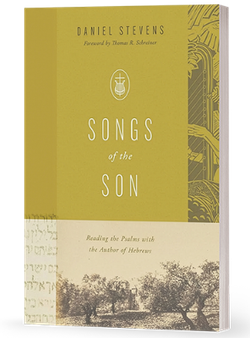
Jesus isn't just a New Testament figure. He appears prominently throughout the Old Testament...and you can see it most poignantly in the ancient song book of Israel: The Psalms. Explore and appreciate the connections in the Psalms to the Messiah in the New Testament that point to his supremacy.
If you want to gain a profound understanding of the Messiah in the Old Testament, be sure to request the book Songs of the Son by Daniel Stevens.
Past Episodes
- A Closer Relationship with God
- A Controversial Baby
- A Lesson for Losers
- A Life of Thanksgiving
- A Painful Path
- A Sharp Sword
- A Thankful Thanksgiving
- A Time for Severity
- A Unified Church
- A Unique Child
- Adding to Your Faith
- All You Need
- Almost a Christian
- Am I Really a Christian
- Amazing Conversions
- Ambassadors
- Ambitious Faith
- Ask Pastor Mike
- ATAPAT
- Call for Help
- Christ Changed Everything
- Christian Friendships
- Christian Love
- Christianity in Real Life
- Christians on Trial
- Christmas
- Christmas 2021
- Christmas 2023
- Christmas 2024
- Christmas and Worldly "Heroes"
- Christmas Clarity
- Christmas Controversy
- Christmas Courage
- Christmas Eve Service
- Christmas Generosity
- Christmas Giving
- Christmas Messages
- Christmas Presents
- Christmas With Compass
- Christ's Kingdom Forecast
- Christ's Resurrection
- Christ's School of Prayer
- Christ's Triumphal Entry
- Chronic Life Aches
- Colossians
- Complete Redemption
- Confrontation
- Connectedness
- Consumer Christianity
- Convenient Christianity
- Count Your Spiritual Blessings
- Countercultural Christians
- Courageous Endurance
- Couriers for Christ
- Dark Days
- David and Goliath
- Dear Abby
- Decisions, Decisions
- Defeat of Death
- Desert Instructions
- Designed to Grow
- Detours
- Did it Really Happen?
- Discernment
- Don't Forget
- Don't Miss It
- Don't Quit
- Drink Your Milk
- Easter
- Easter 2018
- Easter Message
- Encouraged
- Enemies of Grace and Revenge
- Enemies, Grace and Revenge
- Enlisted
- Envy
- Evangelism 101
- Evangelism and the End of the World
- Expanding Your Ministry
- Faith, Stress and Money
- Faithful to God
- FEAR & Fears
- Fear of God
- Finish Well
- First Corinthians
- First Quarter Review
- Friends? Who Needs 'Em
- From What I Believe to How I Think
- Generosity
- Get Ready
- Gifts For Jesus
- Give It Up
- God as Father
- Godly Confidence
- God's Big Plan
- God's Church
- God's Expatriates
- God's Investment in You
- God's Plan for You
- God's Work in Evangelism
- Good Friday
- Good Friday Message
- Gospel Advance
- Gospel Crazy
- Gospel Impact
- Gospel Lessons from the OT
- Grow Up
- Growing Up
- Guarding the Gospel
- Happiness & Christianity
- Head Games
- Hebrews
- Hell, Fire and Floods
- Hitting God's Target for Your Life
- Holiness
- How God Works in You
- How the Truth Sets Us Free
- How to Argue
- How to Forgive
- How to Get Eternal Life
- Hyperopic Christianity
- In Search of God's Will
- Incredible Love
- Indignation
- Infant from Bethlehem
- Instructions for Sinners
- Internal Warfare
- Israel's Greatest Hits Cont'd
- Israel's Greatest Hits- Study in Psalms
- Israel's Greatest Hits Vol II
- It's a Big Decision
- Lap #2005
- Learning to Lead
- Lessons on Grace
- Life as a Target
- Life With A Purpose
- Life's Defining Moments
- Life's Last Enemy
- Living a Lie
- Luke
- Made Right with God
- Make a Difference
- Marriage
- Money Madness
- Money Matters
- Moody Bible Institute Founder's Week
- More than a Creed
- More Than Friends
- Moving Forward
- Obstacles on the Road to Christ
- Octogenarian Wisdom
- Old School Christmas
- Old Testament School of Marriage
- One Plus God
- Our Fight with Sin
- Our Need for Representation
- Parenting
- Passing the Baton
- People Tools
- People Who Make a Difference
- Persistant Prayer
- Plugged In
- Pointing People to Christ
- Politicking
- Post Christmas Contentment
- Power Plays
- Powerful Praying
- Prayer 101
- Prayer Warrior
- Prelude to the Cross
- Preparing for the Kingdom
- Presenting Christ
- Privilege and Responsibility
- Project Reciprocity
- Prompted by Love
- Purposeful Praise
- Pursuing Holiness
- Saints Who Lie
- Salvation Is A Big Deal
- Set Free to Live Right
- Sexual Disasters
- Sexual Sins & Sanctified Bodies
- Silent Night
- Sin is REALLY Bad
- Slaying the Family Dragons
- Sold Out Servants
- Something Greater
- Soul Warfare
- Special
- Special Christmas Message
- Special Easter Message
- Spiritual Detours
- Spiritual Investments
- Spiritually Prepared
- Stay Out of Trouble
- Staying in Step
- Sticktoitiveness
- Strained Relations
- Summer Fruit
- Taking Christ to Work
- Temptation
- Thanks God
- Thanksgiving
- The Ancestry of Christ
- The Balance of Biblical Love
- The Bible and Your Salvation
- The Big Assignment
- The Big Questions
- The Black and White on Gray Areas
- The Common Good
- The Costs and Benefits of the Incarnation
- The Door
- The Entry of a King
- The Experience of Every Christian
- The First Christmas Gifts
- The Gap
- The Gospel
- The Gospel According to Abraham
- The Harsh But Good News
- The Hazards of Prosperity
- The Hazards of the Church
- The Infant from Bethlehem
- The Joy of Salvation
- The Next World Order
- The Non-Negotiables
- The Old Testament School of Marriage
- The Reliability of the Bible
- The Resurrection Response
- The Royal Task
- The Same Ol' Stuff
- The Sins Christians Tolerate
- The Supremacy of Christ
- The Torn Curtain
- The Truth About Christmas
- Those Words at the Altar
- Tips for Zealots
- Transformed
- War Zones & Peace Treaties
- Warning
- Water from the Rock
- Weirdos?!
- What's Your Problem
- When Feelings are King
- When Frogs Become Princes
- When God Makes a Promise
- When God Seems Weird
- When Life Hurts
- When Life is Tough
- When Life Takes A Left Turn
- When People are to Blame
- When the World Gets In the Way
- Where You're Planted
- Why the Son Became One of Us
- Wisdom & Maturity
- Wisdom From Proverbs
- Wisdom's Toolbox
- Wise Decisions
- Working the Plan

Video from Pastor Mike Fabarez
Featured Offer
Jesus isn't just a New Testament figure. He appears prominently throughout the Old Testament...and you can see it most poignantly in the ancient song book of Israel: The Psalms. Explore and appreciate the connections in the Psalms to the Messiah in the New Testament that point to his supremacy.
If you want to gain a profound understanding of the Messiah in the Old Testament, be sure to request the book Songs of the Son by Daniel Stevens.
About Focal Point
About Pastor Mike Fabarez
Pastor Mike is a graduate of Moody Bible Institute, Talbot School of Theology (M.A.) and Westminster Theological Seminary in California (D.Min.).
Mike is heard on hundreds of radio programs across the country on the Focal Point radio program and has authored several books, including Raising Men Not Boys, Lifelines for Tough Times, Preaching That Changes Lives, Getting It Right, Praying for Sunday, and Why the Bible?
Mike and his wife, Carlynn, reside in Laguna Hills, California and they have three children, Matthew, John and Stephanie.
Contact Focal Point with Pastor Mike Fabarez
info@fpr.info
Focal Point
P.O. Box 2850
1-888-320-5885