


Can You Follow God Even When You Don't Understand Where He's Leading?


As we go about life, it’s only natural to use our judgment and common sense. But when something doesn’t line up with our logic, it’s also natural to resist! Pastor Mike Fabarez helps us grow in our trust of God, even when it doesn’t make sense.
Pastor Mike Fabarez: Follow his counterintuitive instructions. The real stumbling block for me is thinking, well, God, this one doesn't apply here. That's my own understanding, and it's being wise in my own eyes. God, don't I know better about 21st-century life than you? And the answer is no. His timeless word is applicable to your life and mine. Let's just do it, even when it's counterintuitive.
Dave Drury: From a young age, we're taught to sharpen our minds and think carefully about our decisions and actions. But every now and then, we're asked to do something that doesn't fit with our logic. We're called to simply obey.
Today on Focal Point, Pastor Mike Fabarez continues a study in Hebrews 11. Last time, we looked at the importance of trusting God even when it doesn't make sense. Are you willing to let God make the rules? It's not easy. That's why Pastor Mike says it's going to take ambitious faith.
Pastor Mike Fabarez: You and I will never follow Christ perfectly. I understand that. You will not obey Christ perfectly. I get that. We will fail. But you dare not obey Christ selectively. Get that? That's different.
You and I may not obey Christ perfectly, but let's not obey Christ selectively. Because if you think it's about, well, those work for me, I like those, those make sense—oh, but God, those commands don't make sense. And that doesn't work for me now. And those are old commands, and I'm sure that you would update them by now if you had a new version of the Bible out, but I'm not going to do those because those are antiquated. If you're going to pick and choose, you've got a problem.
Here's the problem, by the way. Turn back to Luke chapter 6. I quote this from time to time. You've heard me say this, and I'm sure you've read it. Look at verse 46. We're denying the "let God be God" in our lives when we don't follow His instructions consistently across the board. It doesn't mean we're going to do it perfectly, but when we don't do it selectively, we're doing the right thing. When we do it selectively, we've got a problem.
Look at verse 46. He says, "Why do you call me Lord, Lord, and not do what I say?" It's that simple. It is so simple. And here's the question for you. Ready? Is He really in charge of your life? Is He Lord for you? I mean, Jesus Christ, you said, "I'm going to follow you." Do you really have that commitment to follow Him? Or do you have a nice line drawn in the sand that says, well, I'll do it up to here?
Or is He really Lord for you, even when the command doesn't fit in your brain so well? Even when you think, well, I don't know if that would really work for me now, or that may cost me something? Is He your Lord, really? I mean, we need to think about that. Is He going to be God for you? If He is, then let's keep all of His commandments. If for nothing else, because God is God.
Well, that was pretty heavyweight to start the sermon. We haven't even read Hebrews 11 yet, but let's do that now. Because you'll see that you're never going to work your way through verse 30 unless we start with that foundational agreement. Hebrews chapter 11, verse number 30, takes us back into the biblical chronology.
We've worked our way from the earliest chapters of Genesis in Hebrews 11 all the way through the patriarchs' lives. We've looked at Moses and the Exodus and the Red Sea. And now, as the baton is passed in the biblical chronology of the Old Testament to Joshua, we now get a picture of the most important battle that Joshua would fight.
As he goes as an arm of God's retribution on sinful people who are throwing their babies in the fire, to conquer Canaan, the most important battle of all was the battle for Jericho. The Bible reminds us in verse number 30 that by faith the walls of Jericho fell after the people had just gotten the best ancient Near Eastern big catapults and the big rod that rammed into the gates.
They had all this really great new weapon that they had just come up with in 1445. It shot these pellets at the wall. And after they got all that, is that what happened? No, what did they do to win this city? Marched around it. Now again, if you grew up in church and if you've been around for a while, you're really handicapped. And I'm sorry.
Because all of us, we let that sit in our mind without really snickering at it. Because we think, oh yeah, I know that flannelgraph story, walls fell down, marched around, great. No, that's not great. That's really weird, right? Think about it. That's odd. That doesn't even make any sense. Did God tell them to do that? Yeah, absolutely.
Because if they had it up to themselves to do it the way they wanted to do it, they wouldn't have done it this way. As a matter of fact, look at it, Joshua chapter 6. And you've got to know these are some of the most bizarre instructions that God could give for a group of fighters that knew that they had to take this city.
If you could conquer Jericho, then you could start, you could use that as a base and you could start to take the northern part and then you could start to take the southern part. So this was the most critical battle that we were going to fight. And you're out there sharpening your bows and arrows and your swords, you're ready to fight.
And you know this is going to be hard because they've heard about it. I mean, there's been spies sent in and out and everything, and they were just—they were ready for you. The gates were barred, the shutters were closed, everybody—they were shut—that's what it says. Look at verse number one in Joshua 6. It was shut up tight because of the Israelites. They knew they were coming. So there was no surprise.
They were in a defensive posture. No one went out of the city and no one came in. They were ready to dig in. And like ancient warfare, you know sometimes that can take forever. Here they're going to go and they're going to cut off the water supply perhaps and they're going to build some siege ramps and maybe try and take these walls.
And so they're there going, okay, what do we do, Joshua? What's God's instruction? Because we're going to follow God's instruction. And the Lord said to Joshua, verse number two, "Hey, see, look at that shut-up city, that big gigantic fortress in the middle of the promised land. Hey, I've delivered Jericho into your hands. Hey, look, it's like it's a done deal. And the king and all of its fighting men, they've already lost."
And I'm going, "Okay, how? Are they just going to hand over the keys to the city? How's that going to work?" Well, here's what you're going to need to do. Now you're ready for the military strategy of God. And here it comes. It's a marching band. It is. Look at verse 3. March around the city once with all the armed men.
Now that sounds good, maybe that'll intimidate them a little, psychological warfare, that'll be good. Do it for six days. Oh, and by the way, have the seminary grads carry trombones around, and they can go "doot-doot-doot" as they march around the city. Have the priests carry trumpets and rams' horns in front of the ark. You've got the religious box, carry around the ark of the covenant, carry around the tablets and all that.
Just carry that around, have the overweight, pale, pasty guys with the books, the scrolls, have them take their little musical instruments out and they're going to blow the trumpet. Have them march around the city seven times on the seventh day. And with the priests trying to blow the trumpets, Pastor's playing trombones—picture that—when you hear them sound the long blast on the trumpets, then have all the people go, "Woo-hoo!"
Just do that. Then the walls of the city will collapse and all the people will go up, every man straight in. All the walls are going to come down. Now you're Joshua, you're in the war room. What are you going to do at that point? I'm going to go, "God, that's great advice. And I know you're really good at writing scripture and all that.
And thanks for the sun and the moon. But we'll handle this one. We're going to take care of our military. We know ancient Mesopotamian warfare. We know something about killing people. And obviously you're not good at that. So we'll do it our way. Because I'm sure that worked in some other time, maybe in the Garden of Eden or something, but it ain't going to work now.
Because we live in the real world, God, and we're not going to follow your instructions about some silly trumpet-playing priest. It's not going to work for us. But thanks, but no thanks." Don't we do the same thing? I mean really, we pick up this book called the Bible and we read it and we teach it to our kids. We've got our little Bible story books, we read, "Oh, that's really cool, that's great, that keeps us on the straight and narrow."
And then we go to work and we roll up our sleeves and we say, "Okay, now how do we conquer this?" That's great advice, God, but what does God really know about business in Orange County? Really? Does He know much about business strategy? Probably not. But thanks, it's great, I'm sure it worked in Bible times with guys in sandals, but doesn't work for us.
Or parenting? The precepts of bringing up children? Well, that was good maybe in the olden days where everybody was a shepherd boy and all that. But we're in the 21st century now, right? I mean, we have computer-age kids. So I'm sure those were great principles back then, but we're kind of in a different age now. That's not how we live.
It's kind of antiquated, isn't it, God? We do that to Him, don't we? Really, think about it. Because we think somehow God doesn't understand our world. Because when He gives instructions, sometimes we say, "That doesn't make sense. If I live that way at my office, God, I'll lose clients. I won't be one of the guys; they won't have my back. I'll never make partner there if I do those things.
Come on, God. You can't expect me to live like some Sunday school boy at work." Yeah, it's what He's asking you to do. It's what the Bible says. And if you're not willing to do it, He's got a question for you. It's found in Luke chapter 6. "Why do you call me Lord, Lord, and not do what I say?" Don't say that I'm your king if you're not going to obey me.
This happens in subtle ways, too. And we need to watch out for it. Let's jot down the principle, though, because we kind of blew by it. But you need to follow God's counterintuitive instructions. Because there are plenty that are, by the way. Let's just list a few. Instructions that just seem so archaic, antiquated, they don't really make much sense to me.
How about this? If you're a follower of Jesus Christ, get in your conservative bathing outfit and get into an inflatable blue pool and get in front of people with a microphone and tell them about how you're a follower of Christ. And then you'll have some overweight seminary grad dunk you in water. How about that? Do that.
Well, can't I be a Christian and not do—now I've learned a little bit that water baptism doesn't save you, so I don't see why that's important. Doesn't really make sense to me. Did Jesus command every follower of Christ to demonstrate that externally by getting dunked in water? Well, can't I just kind of do that on my own, in the shower? I don't know. My wife can do it in the backyard, in the pool or something.
Does the Bible say this, that we're to go out and make disciples of all the nations, baptizing them? Baptizing what? A disciple that has been made. You were not born a disciple, you realize that, right? You became a disciple when you put your trust in Christ and you said, "I'll follow you." Have you done that yet? Have you? How'd you feel?
It was like, "Ah." You know why that felt so good? It wasn't because the water was purified or anything. It had nothing to do with it. Here's the one reason it felt good to you: because you were being obedient to Jesus Christ. That's why it felt good. Yeah, you know why? Because it was obedience.
And there are some of you right now that are not experiencing that blessing of obedience because you're saying, "It doesn't make sense to me. I'll obey God, but let's talk about things that are really necessary, and that one doesn't seem like it." Have I pounded you on—enough? You know who you are, right?
Who say, "I'm a follower of Christ," but you've never been baptized? And you follow that path, God says it'll be a path of blessing. It'll be a path of spiritual prosperity for you. So let's be obedient to that. That's one that doesn't make sense, I think. That's a counterintuitive command. And a lot of us are writing it off and rationalizing it because, well, I don't get it.
How about this one? And we mentioned this one earlier. How about giving money to God? Let's talk about that one. Oh, see, Ethel, I told you he was going to do that. They said at that announcement boy said that they didn't care about our money, but here we go, they're going to pass the plate again. If you're visiting, we're not interested in your money. We are just glad that you're here.
Fantastic. But you do know if you claim to be a follower of Christ, God says that you're supposed to be giving proportional to your blessing and how God has been blessing you. But the bottom line is this: the Bible says, 2 Corinthians chapter 8 and chapter 9, Galatians 6:6, we could go all over the Bible, that you are commanded to take your hard-earned money and as an act of worship to God, put that in the bag.
And now there's a lot of you that bag comes by every week and you go, "Oh, pass it by." And you know what you're thinking? "Not a good time for me now. It's not a season of my life, not now." And it wouldn't make sense for us. Well, maybe I'll find a few bucks somewhere, find a couple bucks, but we're not going to write checks that are like proportional to our income because that just doesn't make any sense.
And here's a verse for you if that's your thinking: "Why do you call me Lord, Lord, and not do what I say?" Jesus has got a question for you. Is it about money? It's not about the money. It's about your obedience to God. How about those of us that at work—we've talked about this one already too—but we live a different life at work.
We live by a different set of rules. We don't live by Sunday school rules because those rules, if you applied them at work, it wouldn't happen. And I've got to—I've got to fit in there or I'm never going to be able to provide for my family. And so we say, "I'll obey you, but it stops at the office door." Little conviction there?
Hopefully you're not an unbaptized, non-giving, compromising businessman. At this point, people are leaving. I see them. But there's conviction here for all of us. Because at some point we look at scripture and we say, "That doesn't make sense." And the Bible would say follow His counterintuitive principles and His instructions anyway. Is He not your God?
And if He is your God, then obey Him. "Why do you call me Lord, Lord, and not do what I say?" I said this creeps in in subtle ways. I think of Naaman. Remember Naaman in the Old Testament? Turn in your Bibles to 2 Kings chapter 5. Here's an example of a guy that you think—and you might find yourself in his sandals because when it comes down to it, a lot of us have preconceived ideas about how the Christian life is supposed to work.
And when God doesn't take us down the path that we think that He should, the "expected" Christian path, then we start to throw a flag on the play. And that's exactly what Naaman did. And what God is looking for is a real kind of humble, simple obedience to just say I'll do whatever God's word says, even if it's not what I expect.
Look at verse number one, 2 Kings chapter 5. "Now Naaman was the commander of the army of the king of Aram. And he was a great man in the sight of his master and highly regarded because through him Yahweh had given victory to Aram." Now, we don't think about that. That's a whole other sermon, I realize, but even people outside of the covenant community of God, if they experience success, guess where it comes from?
Different sermon, but interesting insight. He was a valiant soldier, but he had one problem. What was his problem? He had a health problem. He had leprosy. Now remember, if you've been through my teaching on GT-1s and GT-2s, God things, breaking of natural law, you need to understand this is one of the three rashes of the miraculous in scripture.
We had Joshua and Moses—that was one rash of the miraculous and from that came the writing of the early part of the Old Testament. You had Elisha and Elijah and miraculous supernatural events, and by that I mean the suspension of natural law, and out of that came the classical period of all the prophets. And then you had Jesus and the apostles, and out of that you had the New Testament.
And that's a whole other sermon, and hopefully you've heard that. If not, you can get the CD. But the point is we are right in the middle of the second rash of the breaking of natural law to where you could go to someone—in this case, Elijah or Elisha—and you could have something stupendous and miraculous take place.
And that was happening and they heard about it. And it says in verses 2 through 8 that they have—go through all this rigmarole because they'd heard about all the miraculous things that were happening. Bottom line is, drop down to verse number nine. Naaman is convinced to go and to get help from the prophet Elisha.
So he goes with his horses and chariots—big, important, valiant, mighty man—and he stops at the door of Elisha's house. "Hey Elisha, you're the miracle man! I hear you're healing people just with a touch of your hand. I got leprosy, help me out!" And Elisha's busy doing something, right? Reading a magazine, writing something, preparing a sermon, and he didn't even get up out of his desk chair.
Look at verse 10. He sends a messenger. Now, that ain't very nice. The secretary goes down and says, "Oh yeah, you know, Elisha's heard you got leprosy, that's great. Here's what Elisha says: go wash yourself seven times in the Jordan River and your flesh will be restored to you and you'll be cleansed. So okay, hope that helps, see you later."
And Naaman's going, "That ain't what I expected. I mean, if God's going to do something, this is my expectation. And you know what? You're not meeting it right now, Mr. Prophet Bible man. I'm not liking this." And look at what the next verse says. Naaman went away angry. He was mad. And he thought, "Surely he would come out to me! At least I wouldn't get a secretary!
And he would stand and we'd have this big flash of verbiage at us: 'In the name of Yahweh his God!' He would do something, maybe wave his hand over the spot on my body. I mean, that's what I expect, and he would cure my leprosy. I mean, if I'm just going to go dunk in a river somewhere—I mean, aren't Abana and Pharpar, the rivers of Damascus, aren't they better than any of these lame rivers over here in Israel?
Come on, man. I could go wash in one of—if it's just about a bath, I can take a bath back home, right?" And he's torqued. So he turns, bottom of verse number 12, and he went off in a rage. He went off in a little tiff, a little huff. He's mad. "Forget it then. If God's word isn't going to do the kind of thing or direct me to do the kind of thing that I think is appropriate in this situation, I'm leaving."
Now, thank God for Naaman's servants. Or at least Naaman should be thinking that. Because one of his servants is scratching his head going, "Wasn't the goal to get healed here? Wasn't the goal to see God's blessing? Now, if you wanted God's blessing and the prophet came out and said, 'Well, let's go through this whole rigmarole and we'll have this big event, we'll gather everybody together,' and he makes you jump through hoops, wouldn't you have jumped through those hoops?
I mean, come on, if the prophet told you some great thing, you would have done it. How much more then if he tells you a simple thing, something basic like just go wash and be cleansed? I mean, come on, Naaman, think about it. Isn't the goal here to be in step with whatever the prophet says? Stop putting your preconceived ideas about what you expect God's word should say and just do what God's word says.
And what God's word says is go dunk in the Jordan River seven times. And somewhere between verse 13 and 14, Naaman goes, "Yeah, I guess the whole point was, yeah, that. So okay." And he went down and he dipped himself in the Jordan seven times. Number seven, he comes up, just as the man of God had told him.
That's a key phrase, underline it: "as the man of God had told him." He kept God's word here; he did what God's prophet said. And his flesh was restored and became clean like that of a young boy. Now what's the point? Do what God's word says. Do it. "Well, it's not what I think it should say." If you and I were to write our own Bible, would it be different than this one? Yeah.
But remember what I said about God. He's smarter than you, right? He's got a reason for all this stuff. And I know some of the stuff doesn't seem to fit in the 21st century. Let's follow His word anyway. And then we'll get to heaven and we'll figure out whether we should have been smarter and done what we thought was right or whether we should have stuck to the instructions.
I want to stick to the instructions. Don't you? Let's do it. That's why this is all about God's word. That's why at Compass Bible Church the Bible is central. It's about saying this is His word, we're going to keep it. Why? Because God is God. And even when His rules seem odd to me, they don't fit in my little pea brain, I'm going to keep His commandments anyway.
That should be our commitment. Are we going to keep them perfectly? No, we're going to stumble and fall. But let's not try and keep them selectively. Follow His counterintuitive instructions. And there are several, whether they relate to your kids, your business, your giving, whatever it is, your service to the King.
You're going to be to the place where you should be able to recall the fundamental memory verse of our childhood, which after John 3:16 is probably Proverbs 3:5 and 6. Am I right? What did that say? Proverbs 3:5 and 6. You remember that? "Trust in the Lord with all of your heart." And remember this phrase: "Lean not on your own understanding."
In all your ways. How many of your ways? Well, not at work. Yeah, no, no, in all your ways acknowledge Him. That means do what He says. And He will make your paths straight. That's Proverbs 3:5 and 6. And the key phrase in that first verse is "not your own understanding." Lean not on your own understanding.
And most of us stop at verse 6, but if you were to quote verse 7—because I must have gone to extra credit school as a kid—but I had to learn verse 7. And verse 7 says, "And don't be wise in your own eyes. Shun evil. Do what is right." What's the point? The real stumbling block for me is thinking, well God, this one doesn't apply here.
That's my own understanding. And it's being wise in my own eyes. God, don't I know better about 21st-century life than you? And the answer is no. His timeless word is applicable to your life and mine. Let's just do it, even when it's counterintuitive. Follow His counterintuitive instructions. Bottom line, trust and obey. That's the bottom line.
Even when you're thinking, I don't know where this is going to take us. They walked around the city seven times and the walls came down. And God said, "See? Just do what I say. Just do what I say."
Dave Drury: There's a great deal of joy to be found in obeying God. What's He calling you to do today? This is Focal Point, and you're listening to a message from Pastor Mike Fabarez called "Embracing the Unconventional and the Unexpected." It's part of the series *Ambitious Faith*, and every lesson from this study is waiting for you at focalpointradio.org. The free Focal Point app puts that entire library right in your pocket, ready whenever you are.
Before we go, we want to put something worthwhile in your hands. It's a book Pastor Mike has selected called *Songs of the Son* by Daniel Stevens. It's a theological and devotional walk through the Psalms, written to show how this ancient book, as unfiltered and searching as it is, points straight to Jesus. The Psalms are more than relatable verse. They carry the weight of who God is, what Christ came to accomplish, and how His voice moves through scripture from first page to last.
It's the kind of book that sends you back to passages you've read a hundred times and makes you feel like you're seeing them clearly for the first time. We'll send you a copy of *Songs of the Son* today when you make a donation to Focal Point or sign up as a monthly Focal Point partner. However you choose to give, it's your generosity that keeps this Bible teaching on the air, bringing it to people who need it.
Call us at 888-320-5885 or give online at focalpointradio.org. You can also reach us by mail by writing to us at Focal Point, Post Office Box 2850, Laguna Hills, California, 92654. And if this is the first time you're getting in touch, we have something set aside for you at no cost. Pastor Mike's booklet, *Do the Right Thing*, takes a look at the courage required to hold to biblical truth when the culture pushes back hard. It's yours free just by calling 888-320-5885 or contact us online at focalpointradio.org.
I'm Dave Drury, don't miss the conclusion of our message on embracing the unconventional and the unexpected Tuesday on Focal Point with Pastor Mike Fabarez.
Pastor Mike Fabarez: Hi, Pastor Mike here. God's word promises it'll never return void. So I wonder, how is God's word moving in your heart right now? Drop us a line, let us know. We'd love to hear from you, we'd love to be praying for you here. Just go to focalpointradio.org. And then be sure to join us again tomorrow right here as we continue to explore the depths of scripture. We'll see you then.
Dave Drury: Today's program was produced and sponsored by Focal Point Ministries.
Featured Offer
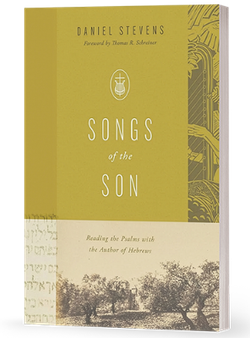
Jesus isn't just a New Testament figure. He appears prominently throughout the Old Testament...and you can see it most poignantly in the ancient song book of Israel: The Psalms. Explore and appreciate the connections in the Psalms to the Messiah in the New Testament that point to his supremacy.
If you want to gain a profound understanding of the Messiah in the Old Testament, be sure to request the book Songs of the Son by Daniel Stevens.
Past Episodes
- A Closer Relationship with God
- A Controversial Baby
- A Lesson for Losers
- A Life of Thanksgiving
- A Painful Path
- A Sharp Sword
- A Thankful Thanksgiving
- A Time for Severity
- A Unified Church
- A Unique Child
- Adding to Your Faith
- All You Need
- Almost a Christian
- Am I Really a Christian
- Amazing Conversions
- Ambassadors
- Ambitious Faith
- Ask Pastor Mike
- ATAPAT
- Call for Help
- Christ Changed Everything
- Christian Friendships
- Christian Love
- Christianity in Real Life
- Christians on Trial
- Christmas
- Christmas 2021
- Christmas 2023
- Christmas 2024
- Christmas and Worldly "Heroes"
- Christmas Clarity
- Christmas Controversy
- Christmas Courage
- Christmas Eve Service
- Christmas Generosity
- Christmas Giving
- Christmas Messages
- Christmas Presents
- Christmas With Compass
- Christ's Kingdom Forecast
- Christ's Resurrection
- Christ's School of Prayer
- Christ's Triumphal Entry
- Chronic Life Aches
- Colossians
- Complete Redemption
- Confrontation
- Connectedness
- Consumer Christianity
- Convenient Christianity
- Count Your Spiritual Blessings
- Countercultural Christians
- Courageous Endurance
- Couriers for Christ
- Dark Days
- David and Goliath
- Dear Abby
- Decisions, Decisions
- Defeat of Death
- Desert Instructions
- Designed to Grow
- Detours
- Did it Really Happen?
- Discernment
- Don't Forget
- Don't Miss It
- Don't Quit
- Drink Your Milk
- Easter
- Easter 2018
- Easter Message
- Encouraged
- Enemies of Grace and Revenge
- Enemies, Grace and Revenge
- Enlisted
- Envy
- Evangelism 101
- Evangelism and the End of the World
- Expanding Your Ministry
- Faith, Stress and Money
- Faithful to God
- FEAR & Fears
- Fear of God
- Finish Well
- First Corinthians
- First Quarter Review
- Friends? Who Needs 'Em
- From What I Believe to How I Think
- Generosity
- Get Ready
- Gifts For Jesus
- Give It Up
- God as Father
- Godly Confidence
- God's Big Plan
- God's Church
- God's Expatriates
- God's Investment in You
- God's Plan for You
- God's Work in Evangelism
- Good Friday
- Good Friday Message
- Gospel Advance
- Gospel Crazy
- Gospel Impact
- Gospel Lessons from the OT
- Grow Up
- Growing Up
- Guarding the Gospel
- Happiness & Christianity
- Head Games
- Hebrews
- Hell, Fire and Floods
- Hitting God's Target for Your Life
- Holiness
- How God Works in You
- How the Truth Sets Us Free
- How to Argue
- How to Forgive
- How to Get Eternal Life
- Hyperopic Christianity
- In Search of God's Will
- Incredible Love
- Indignation
- Infant from Bethlehem
- Instructions for Sinners
- Internal Warfare
- Israel's Greatest Hits Cont'd
- Israel's Greatest Hits- Study in Psalms
- Israel's Greatest Hits Vol II
- It's a Big Decision
- Lap #2005
- Learning to Lead
- Lessons on Grace
- Life as a Target
- Life With A Purpose
- Life's Defining Moments
- Life's Last Enemy
- Living a Lie
- Luke
- Made Right with God
- Make a Difference
- Marriage
- Money Madness
- Money Matters
- Moody Bible Institute Founder's Week
- More than a Creed
- More Than Friends
- Moving Forward
- Obstacles on the Road to Christ
- Octogenarian Wisdom
- Old School Christmas
- Old Testament School of Marriage
- One Plus God
- Our Fight with Sin
- Our Need for Representation
- Parenting
- Passing the Baton
- People Tools
- People Who Make a Difference
- Persistant Prayer
- Plugged In
- Pointing People to Christ
- Politicking
- Post Christmas Contentment
- Power Plays
- Powerful Praying
- Prayer 101
- Prayer Warrior
- Prelude to the Cross
- Preparing for the Kingdom
- Presenting Christ
- Privilege and Responsibility
- Project Reciprocity
- Prompted by Love
- Purposeful Praise
- Pursuing Holiness
- Saints Who Lie
- Salvation Is A Big Deal
- Set Free to Live Right
- Sexual Disasters
- Sexual Sins & Sanctified Bodies
- Silent Night
- Sin is REALLY Bad
- Slaying the Family Dragons
- Sold Out Servants
- Something Greater
- Soul Warfare
- Special
- Special Christmas Message
- Special Easter Message
- Spiritual Detours
- Spiritual Investments
- Spiritually Prepared
- Stay Out of Trouble
- Staying in Step
- Sticktoitiveness
- Strained Relations
- Summer Fruit
- Taking Christ to Work
- Temptation
- Thanks God
- Thanksgiving
- The Ancestry of Christ
- The Balance of Biblical Love
- The Bible and Your Salvation
- The Big Assignment
- The Big Questions
- The Black and White on Gray Areas
- The Common Good
- The Costs and Benefits of the Incarnation
- The Door
- The Entry of a King
- The Experience of Every Christian
- The First Christmas Gifts
- The Gap
- The Gospel
- The Gospel According to Abraham
- The Harsh But Good News
- The Hazards of Prosperity
- The Hazards of the Church
- The Infant from Bethlehem
- The Joy of Salvation
- The Next World Order
- The Non-Negotiables
- The Old Testament School of Marriage
- The Reliability of the Bible
- The Resurrection Response
- The Royal Task
- The Same Ol' Stuff
- The Sins Christians Tolerate
- The Supremacy of Christ
- The Torn Curtain
- The Truth About Christmas
- Those Words at the Altar
- Tips for Zealots
- Transformed
- War Zones & Peace Treaties
- Warning
- Water from the Rock
- Weirdos?!
- What's Your Problem
- When Feelings are King
- When Frogs Become Princes
- When God Makes a Promise
- When God Seems Weird
- When Life Hurts
- When Life is Tough
- When Life Takes A Left Turn
- When People are to Blame
- When the World Gets In the Way
- Where You're Planted
- Why the Son Became One of Us
- Wisdom & Maturity
- Wisdom From Proverbs
- Wisdom's Toolbox
- Wise Decisions
- Working the Plan

Video from Pastor Mike Fabarez
Featured Offer
Jesus isn't just a New Testament figure. He appears prominently throughout the Old Testament...and you can see it most poignantly in the ancient song book of Israel: The Psalms. Explore and appreciate the connections in the Psalms to the Messiah in the New Testament that point to his supremacy.
If you want to gain a profound understanding of the Messiah in the Old Testament, be sure to request the book Songs of the Son by Daniel Stevens.
About Focal Point
About Pastor Mike Fabarez
Pastor Mike is a graduate of Moody Bible Institute, Talbot School of Theology (M.A.) and Westminster Theological Seminary in California (D.Min.).
Mike is heard on hundreds of radio programs across the country on the Focal Point radio program and has authored several books, including Raising Men Not Boys, Lifelines for Tough Times, Preaching That Changes Lives, Getting It Right, Praying for Sunday, and Why the Bible?
Mike and his wife, Carlynn, reside in Laguna Hills, California and they have three children, Matthew, John and Stephanie.
Contact Focal Point with Pastor Mike Fabarez
info@fpr.info
Focal Point
P.O. Box 2850
1-888-320-5885