


Are Tattoos Biblical?


From the tiniest cross on an ankle to a colorful, full-body display, tattoos are becoming increasingly prevalent, even among Christians. So, what does the Bible say about this trend? Pastor Mike Fabarez answers the question: “Should Christians get tattoos?”
Announcer: From the tiniest word on an ankle to a colorful full-body display, tattoos are becoming increasingly prevalent, even among Christians. So what does the Bible say about this trend? Well, that's our subject on today's Ask Pastor Mike, so stay tuned.
Dave Drewy: Welcome to Focal Point. I'm your host, Dave Drewy, and we're ready to kick off another informal Q&A session with our pastor and Bible teacher, Mike Fabarez. Now today's subject is the cause of much debate across our nation, especially within churches: Is it right for Christians to get tattoos?
Believe it or not, the Bible has something to say about this trend, and it's going to surprise some of you, I guarantee. So let's join Executive Director Jay Worten for this colorful edition of Ask Pastor Mike.
Jay Worten: Well, thank you, Dave. Pastor Mike, we've got a good question today. What does the Bible say about getting tattoos or body piercings? Can a Christian get a tattoo or be pierced?
Pastor Mike Fabarez: Well, this is a common question these days, it seems, with the popularity of all this. A lot of people will quote Leviticus that talks about marking and cutting the body, but you've got to take the context of that and clearly put that in front of us and say, "Well, that had to do with the cultic ritual for the pagan gods of Canaan," and it's certainly not talking about someone putting a fish or an ichthus or a cross on their arm. That's certainly not what's in view.
So we can't quote Bible verses and say, "Well here, it's expressly prohibited in the Bible." As a matter of fact, you'll see throughout biblical history without much comment at all when it does come up, people have earrings and you assume there's piercings and whatever. It's certainly not a primary concern in the Bible. So it's one of those situations, sometimes we call them gray areas, where you've got to make a decision not based on an express prohibition in the Bible, but is this a wise thing for me to do? How's it going to affect other people? You've got to make decisions based on something other than quoting a chapter and a verse in the Bible.
Jay Worten: Pastor Mike, what are some of the questions a Christian might ask themselves before getting a tattoo or getting a piercing?
Pastor Mike Fabarez: This obviously has to do with so many things in terms of the effect that it has on others, what it is, and plus the permanence of these things. I think it is important for people to think through. It's like if I moved into a house and said, "Whatever you put on the wall right there can never come down for the entirety of the life of this house." You'd think long and hard before you put something permanent up on the wall.
So there are obviously wisdom issues on this. I know pastors come out and they give their opinion on this all the time, and I like to stay away from that because I can't sit here and weigh in on the fact that this is some kind of grievous sin, because in certain areas, culture, or sub-culture, it's not an issue at all. I think it comes down to what you're doing, what you're putting on, and how you've thought it through and all the rest. It's an issue of wisdom, and certainly if you're young, you should be consulting a lot of people before you make decisions that have a permanence to them, and certainly this is something that does.
Jay Worten: Talking about that permanence and young people, what about teenagers that may be living at home and they're asking their parents about getting a tattoo or getting a piercing? How should we handle that with our children?
Pastor Mike Fabarez: Well, I don't know the laws across the country, but I know here in California, you can't get a tattoo. It's illegal to give a minor a tattoo. It might even be a higher age number than that, than 18. I don't know what the age is, but it's illegal. So I'd defer to Romans 13. When something is illegal, I don't care if your parents think it's cool, you cannot do what the government has said you can't do, as long as what they say you can't do in no way keeps us from obeying the Bible. Since there's nothing in the Bible that says you've got to get a tattoo, then when the government says you can't, I should be a respectful citizen and say, "Hey, I can't do it."
It's like drinking. People talk to me about drinking all the time as one of these gray areas, and often it comes from people that are under the drinking age. And I think that is a silly question. We can't even have the debate of what it means to drink as a gray area until you pass the age of whatever country or state you live in. So it's important that we recognize that there are some categories where this shouldn't even be a question of, is this okay to do, because it's not.
Jay Worten: Well, thank you, Pastor Mike. Certainly, there are a lot of opinions on this topic, and we appreciate your conversation today. Let's continue this discussion by looking at how to make godly decisions about other gray areas besides just tattoos and piercings. This message is titled "Sorting Out God's Orders from Our Opinions."
Pastor Mike Fabarez: Now we're used to as Christians having the non-Christian yell at us and say stuff like, "Chill out, stop with all your rules, need to live a little bit, have some fun, loosen up, if it feels good, do it." We're used to hearing that from non-Christians, but the problem with modern Christianity is we're hearing a lot of that from Christians and churchgoers.
They look at people like you and they say, "Oh, you're just so uptight about the Bible, always having to examine everything and to think about this and discern that." It's too much work. Just got to go with the flow. Need to go with the flow, go with the flow, grace. Just need to dance to the music of grace. Just do that. And you don't need to be thinking about your steps and counting to see if you're doing it right. Just flow, baby. Flow.
Now that may play well and give a lot of goosebumps and oohs and aahs from that kind of over-sentimentalized Christian subculture that we see so much of these days, but it is not biblical. Let me just say that as clearly as I can say it. It is not biblical. And let me show you why. Ephesians chapter 5, verse 15 does not call us to a carefree Christian life floating along on the clouds of some kind of theological feeling or reaction. It is about looking at our lives carefully. It couldn't be said anymore grammatically intensive than it's said right here in verse 15.
In Ephesians 5:15, he takes a verb that is nowhere else in the New Testament, modified by an adverb, and look at it here. Grammarians put a little star by this verb because it's a unique construction, very strong, very intensive. Look what it says, verse 15. It says you've got to look carefully. You need to examine. You need to look hard. You need to be diligent. You need to be methodical. You need to look at this with a kind of discernment you've never had.
What? How you live, how you walk. That's his little analogy for life. The decisions you make, not as unwise but as wise, making the best use of the time. Why? Because the days are evil. There's no time for just winging this. This is high time to make every decision count. Verse 17: "Do not be foolish, but understand what the will of the Lord is." You need to think about it, you need to figure this out, you need to give it thought and attention, and you need to be someone who gives it a lot of your care.
To use the dance metaphor, by the way, it's a great little Hebrew word study perhaps sometime you might want to do. It's in Psalm 119, might want to jot it down, look it up later. Psalm 119, verse 59, he says this, the psalmist: "When I ponder, when I think," literally in Hebrew, "when I count my ways, I turn my feet to your testimonies." The word of God has to direct every step of the Christian life as I give care and attention to how I live.
Look carefully, then, how you walk. You're still in Ephesians? Go back up to verse 8. He says at one time you were darkness, now you're light in the Lord. Walk as children of light. Live like that. Well, what kinds of things? Well, the fruit of light is found in all that is good, right, and true, and try to discern what the will of the Lord is, or what is pleasing to the Lord. Figure it out. Think about it. Give it some thought.
The world and even some churches and Christians may encourage you to live carefree. The Bible is calling you to live carefully. That's different. Consider your steps. Live circumspectly, discerningly, because the days are evil. You want to bring glory to God, you want to end this life with a life that garners the approval of God, that kind of "Well done, good and faithful servant." We need to be looking carefully to the decisions we make.
And some people say, "Well, that's great. That's what I want to do, but it's all about the black and white of scripture. And if it's not prohibited or it's not commanded, then I'm on my own." And I can understand that mindset because the Bible has a lot to say about how we're to live, what we're supposed to do—the black and white, the clearly and expressly commanded and prohibited. Go back to Romans. The end of the chapter, you'll see there some very expressed and clear commands from the scripture.
Take, for instance, a look at, speaking of walking, living our lives with that analogy, walking, the way we make decisions. Look at verse 13, Romans 13:13: "Let us walk properly as in the daytime." Now he lists some things that have always been clearly and expressly prohibited in scripture: orgies, drunkenness, sexual immorality, sensuality. Those things are clear. They're obvious. Someone says after church, "Hey, we're going to an orgy. Want to go?" You say, "No. The Bible says no. I can't do that. It's against the scripture."
"Let's go get drunk tonight." No, drunkenness. I can't do that. "Let's go have sexual immorality. Meet you at seven." No, the answer's no. It's sinful. That's clear. Quarreling, same way. Jealousy, don't do it. Those are clearly expressed commands in the Bible. But look at verse 14, starts to open the door a little bit that there ought to be care given to more than just the expressed commands of the Bible. "But put on the Lord Jesus Christ and make no provision for the flesh to gratify its desires."
Understand we have a lot of freedoms in the Christian life, but those freedoms need to be carefully considered. Sometimes in a congregation like ours, we're going to have people that are going to come to this conclusion and people that are going to come to that conclusion. And chapter 14's going to say you need to make sure that all of you have thought carefully about these things, and it may be so that at the end of the day we come to different conclusions on some matters that aren't expressly talked about in scripture. Understand that.
But you need to have an attitude up front that's going to say we're all going to think carefully about it, which is what the whole 14th chapter is about. We're all going to try to discern what the will of the Lord is. That's what the whole 14th chapter of Romans is about. We're going to work at that, but in the meantime, we're not going to be throwing rocks at each other. And that's how it starts. Look at verse 1, chapter 14. We're going to look at the first six verses today, that's all we'll have time for.
He says, "As for the one who is weak in faith"—now that sounds like a slam, but it's not a slam. As a matter of fact, he's going to say, "Hey, you need to embrace this person. Welcome him, but not to quarrel over opinions. One person believes he may eat anything, while the weak person believes he can only eat vegetables." And that's his decision. That's what he's decided. "Now let not the one who eats despise the one who abstains, and let not the one who abstains pass judgment on the one who eats, for God has welcomed him."
Who are you to pass judgment on another servant? It is before his own master that he stands or falls, and he will be upheld, for the Lord is able to make him stand. Then he gets back to some gray areas in their church. One had to do with food, verses 2 and 3. Now he's going to bring up people that have concerns about the calendar, verse 5: "One person esteems one day as better than another, while another esteems all days alike. Each one should be fully convinced in his own mind."
You've got to think about it. You've got to discern it. You've got to give it care. You've got to work it through some biblical evaluation, which we're going to deal with in the chapter and he provides the ingredients for that as we move through this chapter. Then he explains something about the motives here. "The one who observes the day, he observes it in honor of the Lord. And the one who eats, he eats in honor of the Lord, since he gives thanks to God, while the one who abstains abstains in honor of the Lord and gives thanks to God."
So we've got two issues on the table here. And they may be issues that you're thinking, if you come at this with a modern mentality, "Wow, some weird people in that church." They're worried about what day it is and they're worried about what to eat, and they think that has some relationship to their relationship with God. Well, that's the problem. We can't fully identify with the specifics of their issues because maybe we don't sympathize or understand their struggle with Old Testament ceremonial laws.
So let's think for a minute with a little bit of empathy and sympathy that these guys were struggling with two issues on the table, food and days. Those were important to them because we've got a church that, as the crow flies, would be a long flight. You've got 1,400 miles from Jerusalem to Rome. This is a first-century church in the middle of the first century in Rome that is the hub of society. These are mostly non-Jewish people, Gentiles we call them, that make up the church.
But apparently, because it is the hub of society in the day, there's a lot of Jewish people there in that town too, and the people that had been reached with the gospel of repentance and faith in Christ, they were both Jew and Gentile in the church. And you've got some people with that Jewish background that grew up with all the Old Testament ceremonial laws that included rules about food and days. Those were the two issues that we're dealing with in the church here, the issues that he's going to address.
And then you've got a lot of Gentile people, a lot of people that didn't go to Sabbath school, never had a dietary restriction. They are in the church too, and they're looking across the way going, "You're not eating the bacon for breakfast. What's wrong with you? Why don't you do that?" That is the issue here. Some people grew up with Saturday worship. Romans get saved, the new tradition of the church was Sunday worship. Some people struggled with what day they worshiped on, and that was a big deal.
Some people grew up with looking at Tishrei the 10th, which was Yom Kippur, or Nisan the 14th, the Passover. Those are important days on the calendar for any Jew that grew up in a Jewish culture. And now in Rome, we're Christians, there's nothing in the New Testament about those. As a matter of fact, there's a reason those have become irrelevant, and people struggled with: You feel like that's still important and you don't think that's important? And they started casting aspersions, they started despising one another and passing judgment on one another. He says don't do that.
We need to empathize with the problem and the principle from their problem that now will help me define what my debatable issues are. Sympathize with the ceremonial laws. Here's what you need to know about the ceremonial laws. They are distinct in the Old Testament from the moral laws. That's very important. There are three primary bodies of laws in the Old Testament. You have the ceremonial laws, which had to relate to rituals and worship.
They dealt with things like the sacrificial system, the Levitical priesthood, clean and unclean rules relating to foods and seeds and clothing and materials and all those things that symbolically showed the separation of Israel from the nations. Those were the ceremonial laws. Then you had the civil laws. And those were, when they came out of Egypt, they would go to court in Egypt if they had a dispute, and a little fender bender with their camel, they would say, "Well judge, he backed into me." They'd do all that.
Now we don't have that. We don't have courts because we're wandering around in the desert and we're going to create a new society, a new nation in the land of Canaan. And so they needed a civil set of laws, judicial laws. What's the restitution rate? What do we do when we catch someone in the act of stealing an ox? All those laws then are laid out. And that was provisional for the nation of Israel. What did I say back when we were dealing with this, are we a nation among nations or are we an international organization?
We said the church of Jesus Christ is an international organization, therefore the civil laws are not applicable. We learned in Romans 13 because we live under the laws of our nation. And in the first century, we saw that they were deferring to the laws of Rome and they submitted to the governing authorities of Rome and the Roman Empire, and they lived without the applicability, at least the direct applicability, of the civil law. So civil law, ceremonial law, all of those related to worship.
And then there were the moral laws of God. The moral laws of God that dealt with how you live. They dealt with decisions that were right and wrong, not because they were simply prescribed, but because they reflected the character, the moral character of God. That's the moral law of God. And that's an important set of distinctions that is important for us to make as Christians. Because when someone says to you, when you quote some kind of moral law, they'll say, "Oh, you're getting that from the Bible. Well, you don't keep these rules, do you?"
"What does the Bible say about fabrics? You can't have this fabric with that fabric or you can't take that seed and plant it next to that seed and you can't do this and you can't do that and you've got these issues of clean and unclean and how about the food and all that stuff? You don't do any of that, so therefore let's toss the whole thing out." The Bible's very clear. And by the way, if all of those rules were still in vogue, we'd have to keep them. And we'd do it. You'd have to do exactly what the Bible said.
You'd have to check the tag on your shirt to see if you were breaking the unclean and clean rule. And that's what we would all do. But God says all of those were for one primary purpose. If you want to write down some references, here's one to write down. The first one might be the whole book of Hebrews. There's a big reference, chapter 1 through chapter 13. But how about this to be specific? How about chapter 10, verse 1?
All of these ceremonial laws, that's the context—the temple, the tabernacle, the ark of the covenant, the Levitical priesthood—they were all a shadow of the good things that were to come. And Christ came and fulfilled them and then made all of those, as chapter 9, chapter 8, chapter 6, chapter 10 say, made those passé. He rescinded those ceremonial laws. They're no longer valid or in vogue and you don't have to keep them. As a matter of fact, they're done. God no longer holds you responsible to keep the ceremonial laws of God. That's what the Bible teaches.
Want to look at one yourself? Here's a good one. It's Colossians chapter 2. Colossians chapter 2, let's go to verse number 16 and 17. The same principle again, over and over and over again we see this in the Bible. When it relates to the ceremonies that separated the peoples for the sake of a national distinction and a religious kind of distinction as it related to their ceremonies of worship and their rituals of food and washings and days, those are all rescinded in Christ.
Verse 16 and 17, Colossians 2:16 and 17: "Let therefore no one pass judgment on you in questions of food or drink, or with regard to festival or new moon or a Sabbath. These are a shadow of the things to come, but the substance belongs to Christ." We see it over and over and over again. The reason we keep the moral law and not the ceremonial law is because the Bible says ceremonial law was to lead us to the reality of Christ. When Christ comes, ceremonial law is passé.
But what a lot of people do, the whole topic is this: If the Bible doesn't say it, command it, or prohibit it, I'm cool, I'm on my own and off I go. Don't want to think about God anymore. I'm going to go live my life. Here's the thing. You need to think about God, and you need to ask: Before I go to poker night or buy that outfit or spend the money on that luxury car or go to this particular place for a vacation with my family or I do this thing or have that thing done, can I honor the Lord in this?
Can I really with a clear conscience honor God in this? Because no matter if the thing is allowable, as soon as your motive is one that is using that in some way as a provision for the flesh, but it's something that in some way it's got a wrong thing pushing that, then you know it's wrong and there's no question about it. The motive is critically important. A motive can make that thing at least in the first area of filtering this question out, it can make that area acceptable in terms of my motive at least.
But motive will not in any way salvage an expressed moral command. In other words, if you do the right thing with the wrong motive or you do a neutral thing with the wrong motive, it's wrong. Did you catch that? If you do the wrong thing with the right motive, it doesn't redeem the wrong thing. In other words, put it this way. Are you ready? Jot it down this way. Never waver on God's moral law. Never. We can never waver on God's moral laws.
Those cannot be salvaged by a good motive. If I said, "Hey, you know what? Let's just ask. Here's—it's been a bad sermon, but—prostitution. What does the Bible say? Do not join yourself to a prostitute, if you do, you become one flesh with her. Don't do that. So you know that is sin, right? That's sin. That's a moral law of God." So if I said, "Listen, we're going to go up after this sermon, a little men's activity, we're going to go up to Santa Ana and we're all going to spend the afternoon bedding down with prostitutes."
"But here's the thing—oh don't worry, you're a little concerned about that? Our motives are really good. Motives are really good. Perfectly good. As a matter of fact, we're going to do a lot of evangelism. We're going to take up kind of getting it right and why the Bibles—and we're going to pass those out and between sessions we're going to talk about the Lord." So don't worry, our motives are good. Do you see what I'm saying? What if I really had good motives?
Doesn't matter how good my motives are. If it is expressly prohibited, you cannot do it. Or if it is expressly commanded, you cannot not do it. And people all the time try to play with God's moral laws that way. It is a moral law not to forsake the assembling of yourselves together. You have to have some connection to the local church. You should know who your pastors are. Those are moral laws in the New Testament. And if you go, "Well, my motives are right. I was hurt and don't feel right about it, so I just kind of float around or I do internet church or I just watch David Jeremiah on TV or whatever."
That does not count. I don't care how good your motive is. There can be things that you can try and write off because your motive is going to salvage it. Your motive does not salvage sinful behavior. But your motive can be a great indicator whether you should proceed with some of these gray areas. Do you follow that? That's very, very important. You cannot salvage a sinful behavior with a good motive. These are important decisions. Don't discount them. Keep that at the forefront of your mind.
Dave Drewy: You're listening to Focal Point and a message from Pastor Mike Fabarez titled "Sorting Out God's Orders from Our Opinions." It's part of our larger conversation on what the Bible says about tattoos and body piercings. And to listen to the complete three-part message, you can find it online at focalpointradio.org. You can also listen through our free mobile app, available in your favorite App Store. And if you have your own question you'd like to ask Pastor Mike, you can submit it online at focalpointradio.org or send us your question through Facebook at facebook.com/pastormike. We'd love to hear from you.
Well here at Focal Point, we're passionate about helping you explore and understand scripture, especially when it comes to controversial topics and issues. And we want to equip you to reach and teach others. But this program wouldn't exist without support from friends like you who give to help us reach wider audiences with Pastor Mike's hard-hitting, no-holds-barred Bible teaching. Are you ready to take that step right now? Well, give us a call and make a generous donation today by calling 888-320-5885 or visit focalpointradio.org.
And when you give today, we'll say thanks by sending you Dr. Erwin Lutzer's powerful book, Seven Reasons Why You Can Trust the Bible. In this revised and expanded edition, Dr. Lutzer presents seven foundational arguments for scripture's reliability, covering the Bible's claims about itself, its historical accuracy, prophetic predictions, and even the harmony between science and scripture. Request Seven Reasons Why You Can Trust the Bible when you donate today. Call our team and give over the phone at 888-320-5885 or give online at focalpointradio.org.
And make plans to join Pastor Mike's live teaching sessions every Tuesday through Thursday at 1 p.m. Central. Share your questions in real time and get biblical answers on the spot. Text LIVE to 90398 for session reminders or find all the details at focalpointradio.org/live. Well, I'm your host, Dave Drewy. Be sure to come back again next time as we continue exploring God's word right here on Focal Point. Today's program was produced and sponsored by Focal Point Ministries. Transcribed by High Digital. All rights reserved.
Featured Offer
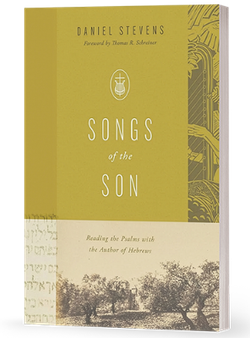
Jesus isn't just a New Testament figure. He appears prominently throughout the Old Testament...and you can see it most poignantly in the ancient song book of Israel: The Psalms. Explore and appreciate the connections in the Psalms to the Messiah in the New Testament that point to his supremacy.
If you want to gain a profound understanding of the Messiah in the Old Testament, be sure to request the book Songs of the Son by Daniel Stevens.
Past Episodes
- A Closer Relationship with God
- A Controversial Baby
- A Lesson for Losers
- A Life of Thanksgiving
- A Painful Path
- A Sharp Sword
- A Thankful Thanksgiving
- A Time for Severity
- A Unified Church
- A Unique Child
- Adding to Your Faith
- All You Need
- Almost a Christian
- Am I Really a Christian
- Amazing Conversions
- Ambassadors
- Ambitious Faith
- Ask Pastor Mike
- ATAPAT
- Call for Help
- Christ Changed Everything
- Christian Friendships
- Christian Love
- Christianity in Real Life
- Christians on Trial
- Christmas
- Christmas 2021
- Christmas 2023
- Christmas 2024
- Christmas and Worldly "Heroes"
- Christmas Clarity
- Christmas Controversy
- Christmas Courage
- Christmas Eve Service
- Christmas Generosity
- Christmas Giving
- Christmas Messages
- Christmas Presents
- Christmas With Compass
- Christ's Kingdom Forecast
- Christ's Resurrection
- Christ's School of Prayer
- Christ's Triumphal Entry
- Chronic Life Aches
- Colossians
- Complete Redemption
- Confrontation
- Connectedness
- Consumer Christianity
- Convenient Christianity
- Count Your Spiritual Blessings
- Countercultural Christians
- Courageous Endurance
- Couriers for Christ
- Dark Days
- David and Goliath
- Dear Abby
- Decisions, Decisions
- Defeat of Death
- Desert Instructions
- Designed to Grow
- Detours
- Did it Really Happen?
- Discernment
- Don't Forget
- Don't Miss It
- Don't Quit
- Drink Your Milk
- Easter
- Easter 2018
- Easter Message
- Encouraged
- Enemies of Grace and Revenge
- Enemies, Grace and Revenge
- Enlisted
- Envy
- Evangelism 101
- Evangelism and the End of the World
- Expanding Your Ministry
- Faith, Stress and Money
- Faithful to God
- FEAR & Fears
- Fear of God
- Finish Well
- First Corinthians
- First Quarter Review
- Friends? Who Needs 'Em
- From What I Believe to How I Think
- Generosity
- Get Ready
- Gifts For Jesus
- Give It Up
- God as Father
- Godly Confidence
- God's Big Plan
- God's Church
- God's Expatriates
- God's Investment in You
- God's Plan for You
- God's Work in Evangelism
- Good Friday
- Good Friday Message
- Gospel Advance
- Gospel Crazy
- Gospel Impact
- Gospel Lessons from the OT
- Grow Up
- Growing Up
- Guarding the Gospel
- Happiness & Christianity
- Head Games
- Hebrews
- Hell, Fire and Floods
- Hitting God's Target for Your Life
- Holiness
- How God Works in You
- How the Truth Sets Us Free
- How to Argue
- How to Forgive
- How to Get Eternal Life
- Hyperopic Christianity
- In Search of God's Will
- Incredible Love
- Indignation
- Infant from Bethlehem
- Instructions for Sinners
- Internal Warfare
- Israel's Greatest Hits Cont'd
- Israel's Greatest Hits- Study in Psalms
- Israel's Greatest Hits Vol II
- It's a Big Decision
- Lap #2005
- Learning to Lead
- Lessons on Grace
- Life as a Target
- Life With A Purpose
- Life's Defining Moments
- Life's Last Enemy
- Living a Lie
- Luke
- Made Right with God
- Make a Difference
- Marriage
- Money Madness
- Money Matters
- Moody Bible Institute Founder's Week
- More than a Creed
- More Than Friends
- Moving Forward
- Obstacles on the Road to Christ
- Octogenarian Wisdom
- Old School Christmas
- Old Testament School of Marriage
- One Plus God
- Our Fight with Sin
- Our Need for Representation
- Parenting
- Passing the Baton
- People Tools
- People Who Make a Difference
- Persistant Prayer
- Plugged In
- Pointing People to Christ
- Politicking
- Post Christmas Contentment
- Power Plays
- Powerful Praying
- Prayer 101
- Prayer Warrior
- Prelude to the Cross
- Preparing for the Kingdom
- Presenting Christ
- Privilege and Responsibility
- Project Reciprocity
- Prompted by Love
- Purposeful Praise
- Pursuing Holiness
- Saints Who Lie
- Salvation Is A Big Deal
- Set Free to Live Right
- Sexual Disasters
- Sexual Sins & Sanctified Bodies
- Silent Night
- Sin is REALLY Bad
- Slaying the Family Dragons
- Sold Out Servants
- Something Greater
- Soul Warfare
- Special
- Special Christmas Message
- Special Easter Message
- Spiritual Detours
- Spiritual Investments
- Spiritually Prepared
- Stay Out of Trouble
- Staying in Step
- Sticktoitiveness
- Strained Relations
- Summer Fruit
- Taking Christ to Work
- Temptation
- Thanks God
- Thanksgiving
- The Ancestry of Christ
- The Balance of Biblical Love
- The Bible and Your Salvation
- The Big Assignment
- The Big Questions
- The Black and White on Gray Areas
- The Common Good
- The Costs and Benefits of the Incarnation
- The Door
- The Entry of a King
- The Experience of Every Christian
- The First Christmas Gifts
- The Gap
- The Gospel
- The Gospel According to Abraham
- The Harsh But Good News
- The Hazards of Prosperity
- The Hazards of the Church
- The Infant from Bethlehem
- The Joy of Salvation
- The Next World Order
- The Non-Negotiables
- The Old Testament School of Marriage
- The Reliability of the Bible
- The Resurrection Response
- The Royal Task
- The Same Ol' Stuff
- The Sins Christians Tolerate
- The Supremacy of Christ
- The Torn Curtain
- The Truth About Christmas
- Those Words at the Altar
- Tips for Zealots
- Transformed
- War Zones & Peace Treaties
- Warning
- Water from the Rock
- Weirdos?!
- What's Your Problem
- When Feelings are King
- When Frogs Become Princes
- When God Makes a Promise
- When God Seems Weird
- When Life Hurts
- When Life is Tough
- When Life Takes A Left Turn
- When People are to Blame
- When the World Gets In the Way
- Where You're Planted
- Why the Son Became One of Us
- Wisdom & Maturity
- Wisdom From Proverbs
- Wisdom's Toolbox
- Wise Decisions
- Working the Plan

Video from Pastor Mike Fabarez
Featured Offer
Jesus isn't just a New Testament figure. He appears prominently throughout the Old Testament...and you can see it most poignantly in the ancient song book of Israel: The Psalms. Explore and appreciate the connections in the Psalms to the Messiah in the New Testament that point to his supremacy.
If you want to gain a profound understanding of the Messiah in the Old Testament, be sure to request the book Songs of the Son by Daniel Stevens.
About Focal Point
About Pastor Mike Fabarez
Pastor Mike is a graduate of Moody Bible Institute, Talbot School of Theology (M.A.) and Westminster Theological Seminary in California (D.Min.).
Mike is heard on hundreds of radio programs across the country on the Focal Point radio program and has authored several books, including Raising Men Not Boys, Lifelines for Tough Times, Preaching That Changes Lives, Getting It Right, Praying for Sunday, and Why the Bible?
Mike and his wife, Carlynn, reside in Laguna Hills, California and they have three children, Matthew, John and Stephanie.
Contact Focal Point with Pastor Mike Fabarez
info@fpr.info
Focal Point
P.O. Box 2850
1-888-320-5885