


What Will the End of the World Be Like?


Everything that has a beginning also has an end. And that includes our world! But have you ever wondered, What will the end be like? Pastor Mike Fabarez offers an introduction to the conclusion of human history. Catch a glimpse of the final chapters.
Guest (Male): Today on Focal Point with Pastor Mike Fabarez. In reality, our Christian life is more than the here and now. We are going to be raised the way that Jesus was raised. He wasn't raised as a spirit or a phantom. As a matter of fact, he told his skeptical disciples, "Touch me and see I have flesh and bone." The Bible says that's the same resurrection we can anticipate. If the dead are not raised, then this whole thing is a crock and it's a waste of time.
Everything that has a beginning also has an end, including our world. But have you ever wondered how it will all end? Because so many books and movies and TV programs paint a grim picture of the world's finale. So today on Focal Point, Pastor Mike Fabarez offers an introduction to the conclusion of human history. The final chapters are not something we need to fear but look forward to with excitement. Pastor Mike calls this message A Crash Course in the End of the Book.
Pastor Mike Fabarez: Well, if you've been paying attention, God has certainly been challenging us to grow up in the book of Hebrews. It came to a real apex in chapter five by saying you ought to be teachers by now. I mean, maybe not of the deep things of God, but if you've been a Christian for a while, you ought to be teachers at least about the basics.
So if someone came in here and said, "Hey, we need a teacher downstairs real quick," there ought to be at least five or six topics we ought to be able to go off on and talk about and fill in the gaps for a brand new Christian or maybe for a junior high or high school group that you say, "Yeah, I can teach on that." The Bible says in chapter six of Hebrews, "Here's at least six things and you ought to be able to stand up and articulate what these things mean and something about how they're applied."
We saw them naturally fall into pairings. We saw the first two in Hebrews chapter six, verse two, that we ought to know something about repentance and faith, actually the end of verse one. In the end of verse two, we ought to know something about what he calls the instructions about baptisms and the laying on of hands.
And then lastly this week, we see our final pairing. The first pairing was something about how to enter the Christian life. We ought to know that. We ought to know what it means to turn from sin and to trust in God, specifically in a new covenant perspective in Jesus Christ for what he's done for us on a cross.
Last week we looked at the concept of baptisms, our standing before God being in Christ. We ought to be able to articulate that. We ought to be able to have some knowledge of that. And we ought to be able to, as distinguished by that first-century ceremony laying on of hands, know something about making progress in the Christian life to the place of being commissioned into fruitful ministry.
So we ought to know something about repentance and faith and justification and sanctification. And then take a look at chapter six, verse number two as he gives us the third category, the third pairing on the basic curriculum, item number five and six. Bottom of verse two says, "the resurrection of the dead and eternal judgment."
There ought to be a knowledge that we have about these two things that lie beyond this life. They lie beyond the Christian life. We ought to be able to have those things settled in our mind enough so that if someone said, "Hey, I need some instruction on that," you say, "Okay, I can do that. Let me tell you a little bit about resurrection of the dead and eternal judgment."
The Bible goes so far as to say if you don't have these things clear in your mind, what are you doing calling yourself a follower of Christ? I mean, literally, that's where we go in 1 Corinthians chapter 15. If you're not clear about the basics of what happens beyond this life, the Bible says people ought to pity us. If we don't have that figured out and settled in our own mind, and if it's called into question in your thinking, you're not even really qualified to call yourself a Christian because we've got to have this figured out.
At least well enough to say we know what this Christian life is headed toward. We know what's going to happen beyond the grave, at least the basics. Let's make sure we have those things mastered. We're going to look at these two words and again in context remind ourselves the goal is to get past this, not to dwell on this and not to be constantly ingesting these basics. But they ought to be settled so that we can move past them.
Look at verse one again where he says, "Guys, let's leave the elementary teachings about Christ. Let's get past that and let's press on or go on to maturity. And let's not lay again," look at the word, "the foundation." These are foundational things: repentance from acts that lead to death, faith in God, entry into the Christian life, instruction about baptisms, our standing before God, and the laying on of hands, commissioning into ministry, justification, sanctification, position, progress.
That was last week. And then these two: the resurrection of the dead and eternal judgment. And then this little caveat. He says, "And God permitting we will do so." Now, he's not going to do so in the book. He is going to press on to talk about Melchizedek. But I think the advantage we have in going through this book a chapter at a time, a verse at a time, a section at a time, we can stop and say, "Are we sure we have these things covered?"
So tonight, what I want to do is to step back and say, "Okay, what are these basics? And what do they mean?" If you found the worksheet, let's just start by figuring out how the subtitle connects with the subject. Do you see the subject up there? I always put the subject, at least one or two topics basically that this message is about and where to file them in your file cabinet.
Next to the topic or subject or whatever we call it, it says eschatology. Let's just make sure we have that down because here is a category that books, if you buy a book about Christian belief or Christian doctrine or Christian theology, it's going to have a section that's labeled eschatology. Let's just make sure we know how that connects to the subtitle.
Because what we're going to do is what we're prompted to do by this list, and that is have a quick crash course in the end of the book. Those two are really synonymous: the end of the book and the word eschatology. Because when it comes to the aspects of the majors of the Christian faith, they always have the "ology" at the end. Christology is the study of Christ. That's an easy one.
Bibliology is the study of the biblia, the book, the Bible. Angelology is the study of angels. Angelology, bibliology, Christology. Eschatology, then, is the study of the eschatos. If you said that, that's absolutely right. Eschatos is the Greek word in Scripture that is translated the end or the last. Jesus presents himself in Revelation chapter one and he says, "I am the protos kai eschatos." I am the protos, the first, and I am the eschatos. I am the last. I am the beginning and I am the end.
And what he's saying there is he's about to unfold what's going to happen in the end. "You know what? I got it all figured out. I got it all wired. I've been there, done that. I'm the beginning and the end." He is the eschatos. Eschatos means the end, the conclusion, the final. So when we talk about the study of the end things, the end-time things, the word for that that you'll find in all your Christian books that have any categorization or systematizing of Christian doctrine is eschatology.
Crash course on the end of the book: eschatology. And let's figure out the kinds of things that the writer of Hebrews says we ought to have these things mastered. I put it this way on your outline. Number one, we ought to master at least these two basics about your future. And the first one is described this way in verse number two. Look at it again. "the resurrection of the dead."
And we immediately when we hear phrases like that start to think about life after death. That's really not what's being communicated here, though. Look at it again. The resurrection of the dead. Resurrection, anastasis, to bring something up of the dead is not talking about your conscious existence after life, although that's true too.
Jesus is dying on a cross. He looks to the thief next to him who puts his trust in Christ and he says, "Today you'll be with me in paradise." Today you will be with me in paradise. Now, here's the thing. Jesus's body and the thief's body were both on a cross. And by the end of the day, Jesus's body was in a tomb and who knows how long there. The thief's body hung on the cross. So we're not talking about bodies there. But that's conscious life after death.
What we're talking about here is the anastasis, the bringing up of the dead. What are we talking about here? Bodies, biological units. Letter A, pointy finger number one, when it comes to this, let's just summarize it this way. To be real specific, we need to master the truth in our minds and be able to think through the fact that you and I will both have a second physical life.
We're going to have another one. So that whole Budweiser slogan doesn't really work. You only go around once in life. You go around twice in life, not just spiritually but physically. You will have a second physical life. That's what the word resurrection means. It's not talking about your spirit knowing what's going on the day after you die. It's talking about what's going to happen to that body right there.
I mean, we're not talking about just what's going to happen to it when it gets to the mortuary. We're talking about what's going to happen to it down the road. What's going to happen way down the road? Will that DNA ever see a physical existence again? And the Bible says, "Yeah, it will." As a matter of fact, it's going to have a physical existence that's going to last forever. The resurrection of dead bodies.
Let's look at a couple of passages just to drive this home. Acts chapter 24, verse 15 is a key passage and it's one that will help us see the breadth of this topic in Scripture. So once you write it down, please turn with me to Acts chapter 24. In Acts, Paul is being accused of inciting a riot and he's put on trial before Felix. And here he is before this Roman magistrate trying to plead his case.
And he talks about the fact that his teaching about the resurrection of Christ has caused a big stir. But he says, "I'm not saying anything that's really bizarre here." As a matter of fact, he says, let's get a little context and start in verse 14. He says, "I admit I worship the God of our fathers as a follower of the Way." That's what they used to call the early followers of Christianity, of Christ.
"Which they call a sect. I believe everything that agrees with the law and is written in the prophets. I believe the stuff the Old Testament says. And I have the same hope in God as these men, that there will be a resurrection of both," here we broaden the topic, "of both the righteous and the wicked. So I strive always to keep my conscience clear before God and man."
Point is, we're going to live again. You don't only go around once in life, so grab all the gusto you can. You go around twice in life, therefore you ought to be really thoughtful about how you live this one. "I'm going to strive to keep my conscience clear before God and man." Resurrection of the righteous and the wicked.
Here's the thing. We always in church, it seems to be just hoping to be positive, I guess, to be focused on the resurrection of Christians. You do realize a passage like this makes it very clear there will be a physical, biological second life for both Christian and non-Christian. For both the righteous person and the unrighteous person, the wicked person as Paul calls it. A resurrection of both.
Therefore, it kind of changes my perspective on this life. I look at my coworkers, I look at my friends, I look at my neighbors and I think about the reality that it's not just, "You know what? I hope you can go to heaven with me. And if you don't, well, you miss out and who knows you might just evaporate somewhere in some celestial place." No, the reality is you and I will both be physically resurrected. We're both going to have a second physical life. When this physical life is done, we'll have a second one.
Another passage that may be helpful, that really is the passage I was quoting earlier as I was just discussing with you the essential nature of the teaching of the resurrection is this one: 1 Corinthians chapter 15. Let's take a look at a good section of this, a paragraph, as Paul tries to say this is so essential. If we don't know it and if we don't affirm it and if we're not confident about it, then people ought to say you guys are kooks.
Because in reality, our Christian life is more than the here and now. And if it's not more than the here and now, you really picked the wrong religion because it's kind of a pathetic thing for us to be following these principles and trying to be these followers of some way, some truth, some better life because in reality it's not a whole lot better than everybody else's. But the hope is it will be at the resurrection.
1 Corinthians chapter 15, look at verse number 12. He says, "If it is preached that Christ has been raised from the dead," I mean, if that's what you heard, if that's what the apostles have gone around saying, if that's what all these witnesses, 500 of them, have testified to, "then how can some of you say there is no resurrection of the dead? How come you think that the bodies that we live in aren't going to be resurrected?"
"If there is no resurrection of the dead, then not even Christ has been raised. And if Christ has not been raised," underline these words, "our preaching is useless and so is your trust, your faith." Well, it's just a waste of time. Let's do something else with Sundays. It doesn't really matter. More than that, we're found to be false witnesses about God because we were going around telling everybody that God raised Christ from the dead. He physically, bodily raised him.
But he did not raise him if in fact the dead aren't raised. Verse 16: "For if the dead are not raised, then Christ has not been raised either. And if Christ has not been raised," here it is again, a good phrase to underline, "your faith is futile and you're still in your sins." Because the whole point of this Christ dying on a cross thing was to take the sin problem away. And the wages of sin is death, and if he did that, there ought to be a resurrection of the dead. He ought to reverse the death problem.
"If only in this life," look at these poignant words, verse 19, "if only in this life we've hoped in Christ, then we are to be pitied more than all men. We ought to be just seen as a pathetic bunch of people. But," verse 20, "Christ has indeed been raised from the dead, the prototype, the firstfruits of those who have fallen asleep."
That's their euphemism for death. We are going to be raised the way that Jesus was raised. And he wasn't raised as a spirit or a phantom. As a matter of fact, he told his skeptical disciples, "Touch me and see I have flesh and bone. A spirit doesn't have flesh and bone as you see that I have."
As a matter of fact, to prove it, what did he do? Constantly in his post-resurrection appearances, he kept eating. Why? Because you can't eat if you're Casper the Friendly Ghost, right? It just goes in there and you go like this and nothing happens. You need teeth to eat. You need a tongue to eat. You need an esophagus to eat. You need a stomach for somewhere for that food to go.
Jesus had all of that because he was bodily, physically resurrected. Now, you thought you just killed him last Friday. Well, they did, but now he's alive again. Now it's Sunday and he's alive. What kind of life? A physical life. He was dead physically, now he's alive. Now what happened during that middle time? Was he alive? Sure he was in spirit. His spirit was conscious after death, but his body was in a grave starting to decompose.
But you know what? That thing came back to life. That's called the resurrection. And the Bible says that's the same resurrection we can anticipate. And if the dead are not raised, then this whole thing is a crock and it's a waste of time. Resurrection: you will have a second physical life. If you just want to sum it up in the basics, let's just be sure we know that.
We can talk about it, we can understand it in its biblical and historical perspective as Christ being the prototype of what this physical resurrection is all about. And the problem is this has gone on for, at least from our perspective, at least 2,000 years, and most of the church is dead biologically. They're biologically dead.
The bodies of former churchgoers and people who have trusted in Christ, I mean their DNA and biological matter scattered all over the planet. Most of the church is dead. So God says, "I'm going to resurrect all those people." Where does it say that? Passages like 1 Thessalonians chapter four. He's going to resurrect those who are part of the church.
Okay, now note this. This is Resurrection 1.1. Just jot down 1.1. What's 1.1? Well, we'll get to what 1.1 is. But just jot down Resurrection 1.1. It is the time when God brings back to life those who had put their trust in Christ during the period of the church, from Acts chapter two to Revelation chapter three. Don't think about Casper the ghost or translucent bodies or these cotton ball clouds and people. It's not about that. It's about being physically alive again.
Secondly, there's this word in this phrase in Hebrews 6:2 that we ought to have this concept mastered: "eternal judgment." Judgment: the evaluation and accountability of life. I put it this way, pointy finger number two, letter B: You will be held accountable for your decisions.
Paul says, "I strive to keep my conscience clear before God and man. I want to make the right decisions." Why? Because I'm going to be resurrected. And that resurrection is going to last forever. And therefore the reward or the repayment for my decisions is going to last forever. That's why the word eternal is connected with this word judgment. Your repayment for decisions rendered here are going to have lasting and eternal dividends.
Therefore, wow, that changes the way I live. I need to understand that I'm going to have a second physical life and that my decisions I will be held accountable for. Now, we don't spend a lot of time doing our quiet times or garnering devotional thoughts from Ecclesiastes generally speaking because it's a lot of negativity.
And Solomon, in looking at all these things in the world, goes, "Wow, there's a lot of bummer things in this world." But every now and then, the value of Ecclesiastes is against a backdrop of what he calls meaningless stuff, he pops in with a truth and says, "But you know what? Here's a truth from heaven. Here's a truth that really changes our perspective on this."
And in Ecclesiastes chapter three, he's lamenting the fact that bad people prosper and good people suffer, which is a problem we've all dealt with. And ultimately he pauses and in verse number 17, he stops and says, "Yeah, but then I remembered this. Here's the biblical truth that all of the Old Testament taught and here is the preacher, Solomon—that's what he's called in Ecclesiastes—he's going to now give a perspective-building thought."
He says this: "I thought in my heart," verse 17, "God will bring to judgment both the righteous and the wicked." There will be an evaluation, an accountability for both the righteous and the wicked. "For there will be a time for every activity," time for evaluation that is, "and a time for every deed." There will be an evaluation or judgment of every deed.
Now, think about that. Every activity, every behavior, every deed, everything that I do, I'm going to be evaluated, whether I'm a Christian or a non-Christian. There will be an evaluation of both. Now again, we don't like to think of it that way. We like to think resurrection for Christians and judgment for non-Christians. The Bible's very clear. Resurrection of the dead and eternal judgment applies to both Christian and non-Christian, righteous and wicked. We will all be held accountable for our decisions and we will all have a second physical life.
As a matter of fact, turn back to the book of Proverbs. Proverbs chapter 14, verse 14. I just want to add these words to it. And I love the Proverbs and the Psalms are so helpful because Hebrew poetry doesn't rhyme words, it rhymes thoughts. And therefore, sometimes we get great verbs stacked right on top of each other and it helps us kind of round out our thinking of these things.
And take a look at Proverbs 14:14 when he's speaking of judgment. He uses two great verbs that'll help us catch it. And we often see this in Jesus's teaching too, that judgment is often helpfully illustrated by monetary words. "The faithless," those that don't trust God, those that don't do things for God, people that aren't righteous, "they will be fully," here's the verb, "repaid for their ways. And then the parallelism: and the good man, the righteous man, in our case from a New Testament perspective the Christian man, he will be rewarded for his." Repayment, reward. There's the concept.
What is judgment about? It's not just God sitting on his celestial tribunal stroking his beard going, "Hmm, that was a pretty good thing. No, that was a really good thing. And that thing over there, bad thing. Oh, that thing really bad thing." He doesn't just evaluate. He now assigns a retribution to each thing, a renumeration for each thing.
All of these deeds: this goes in the good category, this goes in the great category, this goes in the okay, this is barely above average, these are below average, and now he's paying back. The righteous get paid back. The wicked get paid back. There is a renumeration for all deeds and decisions. You don't go around once in life, grab all the gusto. You go around twice in life, physically. Therefore you ought to be really thoughtful because you will be eternally judged. What does that mean? Your judgment will have eternal ramifications. It will linger on through eternity. Now, those are the basics.
Guest (Male): We're learning about some of the basic doctrines of Christianity today with Mike Fabarez on Focal Point. We're taking a foundational look at the resurrection and the judgment of the dead. Don't forget, if you're unable to join us here on the program, you can always download the messages from our website. Look for them online at focalpointradio.org.
The book of Revelation can feel intimidating. Symbols, judgments, and cosmic battles that seem impossible to decode. And that's why we want to send you Mark Hitchcock's helpful resource, The Revelation Answer Book. This accessible tool removes the guesswork from prophecy, addressing the questions that have puzzled you. What's God's schedule for the last days? Who will the Antichrist be? What unfolds during the tribulation? When will the thousand-year reign start? Dr. Hitchcock's concise teaching turns bewilderment into clarity, revealing how these prophetic elements connect in God's sovereign blueprint.
Request your copy of The Revelation Answer Book when you give to Focal Point today. Call our team at 888-320-5885 or give online at focalpointradio.org. Or if you'd rather send your donation by mail, just write to us at Focal Point, Post Office Box 2850, Laguna Hills, California 92654. At Focal Point, we're committed to grounding you in scriptural truth. But accomplishing that mission requires financial backing from listeners like you.
Whether you contribute once or pledge ongoing support as a Focal Point partner, your generosity creates genuine impact. Partners receive handpicked resources from Pastor Mike each month, and your consistent giving enables us to bring this teaching to communities we've yet to serve. Become a Focal Point partner today by calling us at 888-320-5885 or join online at focalpointradio.org.
Just getting to know Focal Point? Well, we'd love to send you a complimentary resource. Get Pastor Mike's brand-new booklet on Revelation called What Happens Next? when you contact us for the first time. Simply call 888-320-5885 or reach out online at focalpointradio.org. We'll pick up where we left off in our study of Hebrews tomorrow. Don't miss any of this fascinating study about the end times. That's Thursday on Focal Point.
Pastor Mike Fabarez: Pastor Mike here. I pray today's message will help you live out your faith with truth and love. After all, that's the kind of biblical faith that changes lives and transforms a crooked culture. But if you haven't truly surrendered your life to Christ, then I'd like to invite you to get in touch. We'd love to pray with you and help you discover God's plan of salvation. Visit focalpointradio.org.
Guest (Male): Today's program was produced and sponsored by Focal Point Ministries.
Featured Offer
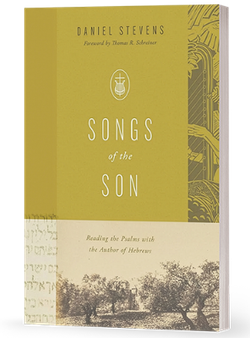
Jesus isn't just a New Testament figure. He appears prominently throughout the Old Testament...and you can see it most poignantly in the ancient song book of Israel: The Psalms. Explore and appreciate the connections in the Psalms to the Messiah in the New Testament that point to his supremacy.
If you want to gain a profound understanding of the Messiah in the Old Testament, be sure to request the book Songs of the Son by Daniel Stevens.
Past Episodes
- A Closer Relationship with God
- A Controversial Baby
- A Lesson for Losers
- A Life of Thanksgiving
- A Painful Path
- A Sharp Sword
- A Thankful Thanksgiving
- A Time for Severity
- A Unified Church
- A Unique Child
- Adding to Your Faith
- All You Need
- Almost a Christian
- Am I Really a Christian
- Amazing Conversions
- Ambassadors
- Ambitious Faith
- Ask Pastor Mike
- ATAPAT
- Call for Help
- Christ Changed Everything
- Christian Friendships
- Christian Love
- Christianity in Real Life
- Christians on Trial
- Christmas
- Christmas 2021
- Christmas 2023
- Christmas 2024
- Christmas and Worldly "Heroes"
- Christmas Clarity
- Christmas Controversy
- Christmas Courage
- Christmas Eve Service
- Christmas Generosity
- Christmas Giving
- Christmas Messages
- Christmas Presents
- Christmas With Compass
- Christ's Kingdom Forecast
- Christ's Resurrection
- Christ's School of Prayer
- Christ's Triumphal Entry
- Chronic Life Aches
- Colossians
- Complete Redemption
- Confrontation
- Connectedness
- Consumer Christianity
- Convenient Christianity
- Count Your Spiritual Blessings
- Countercultural Christians
- Courageous Endurance
- Couriers for Christ
- Dark Days
- David and Goliath
- Dear Abby
- Decisions, Decisions
- Defeat of Death
- Desert Instructions
- Designed to Grow
- Detours
- Did it Really Happen?
- Discernment
- Don't Forget
- Don't Miss It
- Don't Quit
- Drink Your Milk
- Easter
- Easter 2018
- Easter Message
- Encouraged
- Enemies of Grace and Revenge
- Enemies, Grace and Revenge
- Enlisted
- Envy
- Evangelism 101
- Evangelism and the End of the World
- Expanding Your Ministry
- Faith, Stress and Money
- Faithful to God
- FEAR & Fears
- Fear of God
- Finish Well
- First Corinthians
- First Quarter Review
- Friends? Who Needs 'Em
- From What I Believe to How I Think
- Generosity
- Get Ready
- Gifts For Jesus
- Give It Up
- God as Father
- Godly Confidence
- God's Big Plan
- God's Church
- God's Expatriates
- God's Investment in You
- God's Plan for You
- God's Work in Evangelism
- Good Friday
- Good Friday Message
- Gospel Advance
- Gospel Crazy
- Gospel Impact
- Gospel Lessons from the OT
- Grow Up
- Growing Up
- Guarding the Gospel
- Happiness & Christianity
- Head Games
- Hebrews
- Hell, Fire and Floods
- Hitting God's Target for Your Life
- Holiness
- How God Works in You
- How the Truth Sets Us Free
- How to Argue
- How to Forgive
- How to Get Eternal Life
- Hyperopic Christianity
- In Search of God's Will
- Incredible Love
- Indignation
- Infant from Bethlehem
- Instructions for Sinners
- Internal Warfare
- Israel's Greatest Hits Cont'd
- Israel's Greatest Hits- Study in Psalms
- Israel's Greatest Hits Vol II
- It's a Big Decision
- Lap #2005
- Learning to Lead
- Lessons on Grace
- Life as a Target
- Life With A Purpose
- Life's Defining Moments
- Life's Last Enemy
- Living a Lie
- Luke
- Made Right with God
- Make a Difference
- Marriage
- Money Madness
- Money Matters
- Moody Bible Institute Founder's Week
- More than a Creed
- More Than Friends
- Moving Forward
- Obstacles on the Road to Christ
- Octogenarian Wisdom
- Old School Christmas
- Old Testament School of Marriage
- One Plus God
- Our Fight with Sin
- Our Need for Representation
- Parenting
- Passing the Baton
- People Tools
- People Who Make a Difference
- Persistant Prayer
- Plugged In
- Pointing People to Christ
- Politicking
- Post Christmas Contentment
- Power Plays
- Powerful Praying
- Prayer 101
- Prayer Warrior
- Prelude to the Cross
- Preparing for the Kingdom
- Presenting Christ
- Privilege and Responsibility
- Project Reciprocity
- Prompted by Love
- Purposeful Praise
- Pursuing Holiness
- Saints Who Lie
- Salvation Is A Big Deal
- Set Free to Live Right
- Sexual Disasters
- Sexual Sins & Sanctified Bodies
- Silent Night
- Sin is REALLY Bad
- Slaying the Family Dragons
- Sold Out Servants
- Something Greater
- Soul Warfare
- Special
- Special Christmas Message
- Special Easter Message
- Spiritual Detours
- Spiritual Investments
- Spiritually Prepared
- Stay Out of Trouble
- Staying in Step
- Sticktoitiveness
- Strained Relations
- Summer Fruit
- Taking Christ to Work
- Temptation
- Thanks God
- Thanksgiving
- The Ancestry of Christ
- The Balance of Biblical Love
- The Bible and Your Salvation
- The Big Assignment
- The Big Questions
- The Black and White on Gray Areas
- The Common Good
- The Costs and Benefits of the Incarnation
- The Door
- The Entry of a King
- The Experience of Every Christian
- The First Christmas Gifts
- The Gap
- The Gospel
- The Gospel According to Abraham
- The Harsh But Good News
- The Hazards of Prosperity
- The Hazards of the Church
- The Infant from Bethlehem
- The Joy of Salvation
- The Next World Order
- The Non-Negotiables
- The Old Testament School of Marriage
- The Reliability of the Bible
- The Resurrection Response
- The Royal Task
- The Same Ol' Stuff
- The Sins Christians Tolerate
- The Supremacy of Christ
- The Torn Curtain
- The Truth About Christmas
- Those Words at the Altar
- Tips for Zealots
- Transformed
- War Zones & Peace Treaties
- Warning
- Water from the Rock
- Weirdos?!
- What's Your Problem
- When Feelings are King
- When Frogs Become Princes
- When God Makes a Promise
- When God Seems Weird
- When Life Hurts
- When Life is Tough
- When Life Takes A Left Turn
- When People are to Blame
- When the World Gets In the Way
- Where You're Planted
- Why the Son Became One of Us
- Wisdom & Maturity
- Wisdom From Proverbs
- Wisdom's Toolbox
- Wise Decisions
- Working the Plan

Video from Pastor Mike Fabarez
Featured Offer
Jesus isn't just a New Testament figure. He appears prominently throughout the Old Testament...and you can see it most poignantly in the ancient song book of Israel: The Psalms. Explore and appreciate the connections in the Psalms to the Messiah in the New Testament that point to his supremacy.
If you want to gain a profound understanding of the Messiah in the Old Testament, be sure to request the book Songs of the Son by Daniel Stevens.
About Focal Point
About Pastor Mike Fabarez
Pastor Mike is a graduate of Moody Bible Institute, Talbot School of Theology (M.A.) and Westminster Theological Seminary in California (D.Min.).
Mike is heard on hundreds of radio programs across the country on the Focal Point radio program and has authored several books, including Raising Men Not Boys, Lifelines for Tough Times, Preaching That Changes Lives, Getting It Right, Praying for Sunday, and Why the Bible?
Mike and his wife, Carlynn, reside in Laguna Hills, California and they have three children, Matthew, John and Stephanie.
Contact Focal Point with Pastor Mike Fabarez
info@fpr.info
Focal Point
P.O. Box 2850
1-888-320-5885