


What Do Justification and Sanctification Mean?


Justification and sanctification are two words often discussed in the halls of seminary but rarely heard in everyday conversations. Pastor Mike Fabarez explains what these two words mean and why they serve as the very foundation of our faith. Learn the importance of justification and sanctification.
Pastor Mike Fabarez: Sanctification, it's a setting apart from something and a setting apart to something. Do you see that that's a process? When I become a Christian, I'm not looking a whole lot like Christ. But the longer I go in the process, it's called sanctification, the more I should be looking like Christ, which means the less I'm looking like my old self.
Dave Drewry: Justification and sanctification. Two words that might echo down the halls of a seminary, but are not often heard in our everyday conversations. But what may seem like two academic words actually have immense practical value for us right now.
Today on Focal Point, Mike Fabarez explains what these two words mean and why they form the foundation of our Christian faith. It's not only theologians who need to grasp these truths. So let's join Pastor Mike as he delivers a crash course in justification and sanctification.
Pastor Mike Fabarez: We're going to try to, as we start this, get ourselves reacquainted with what has been affectionately called in our study the elementary curriculum. And if these are things God says you've got to have wired to be healthy, we want to make sure and take the effort and the energy to say we're going to make sure that we've got these things wired and mastered in our lives.
So now we're dealing with instruction about baptisms and the laying on of hands. Instruction about baptisms, laying on of hands. Clearly, a ceremony of some kind in view. So let's look at this box right here. If you think through what baptism is, and even because it's plural, it helps us realize we're talking about this ceremony you might picture of dunking someone in water.
There's another pattern in the New Testament that's a ceremony that relates to the laying on of hands. And that's when pastors get around people and they lay their hands on them and they put people in ministry. What's being solemnized here? Well, as it relates to baptisms, it's having been placed in Christ. That's what we're saying.
For instance, in Acts chapter 10, verse 47, Peter's going, "Hey, these people are now in Christ. They've been placed into the family of God. They're under the allegiance of Jesus. Now, let's solemnize that with this ceremony of dunking them in water." People who had been set apart to do ministry, God says I want these people to do this. So we are solemnizing the fact that these are God's choices to lead in particular areas of ministry.
And in that regard, what they're trying to do as church leaders is simply recognize that these people have been set apart by God to do a particular task. Okay. Prerequisite, it's called justification. I have to be someone that the church leaders who dunk me in water are convinced that I'm justified. That I am now cleansed of my sin before God. That I'm no longer headed for condemnation before a holy God.
That I've had my sin nailed to the cross. That I'm now rightly in Christ. And I've got to be justified before I go through the ceremony of baptism. That's the prerequisite in scripture. We see it throughout the book of Acts. What is the requirement here that I've got to be convinced of before I lay my hands on someone? For instance, 1st Timothy 5 says don't lay your hands on people hastily.
Be thoughtful about it. Because you've got to make sure they got the right kind of heart and they're the right kind of people. What does it require? What do I have to make sure has been happening in their life? Sanctification. Sanctification is the word as we'll talk about here in just a minute, where they have made some progress in the Christian life, and I feel like that's the right kind of person to do the job.
Okay. We're talking about in justification your position before God. That God looks at me and says that guy's forgiven. That guy's had his sin taken away. His resume that was dotted with all these black marks, it's now gone. He's judicially, forensically, legally, however you'd like to say it, his position now before God is right.
Sanctification, I'm talking about progress. Has this guy made progress in spiritual growth? Has he come along? Has she come along far enough to where we say yes, you're the kind of person that is able to be commissioned to lead. You can do some things. You can even, even if the service is menial, like it seems to be in Acts chapter 6 to serve tables, are you godly enough and are you, you have the right attitude, the right motives enough, you've made enough progress in your spiritual growth now to pass out food to those widows in need?
Yes, we're going to set you up as an exemplary model of servanthood. Well, great. We've got to make sure you've made progress in the Christian life. Timeframe, how long does it take to get judicially and forensically right with God? It's instantaneous. The timeframe as it relates to justification is immediate, instantaneous, and it's a one-time event. If my sins are nailed to the cross because of repentance and faith, it's done. I'm justified.
What about sanctification? Progress in the Christian life. Oh, that takes a while. That's continual. As Paul said of Timothy, make sure your progress is evident to everybody. Keep right on growing. Keep right on maturing. Okay. Turn if you would to Romans chapter 6. I want you to look at this text and to show you that when scripture speaks of the important baptism, or when in Ephesians Paul says there is one baptism, the baptism in view is the baptism of being placed into Christ.
That's the salvific one. That's the one that saves you. That's the one that takes your sin and nails it to the cross. In 2nd Corinthians chapter 5, I have to die with him. How do I die with him? I have to be placed into him and he's already died on the cross. I have to be in him somehow. I need to be, one of Paul's favorite phrases, en Christos, in Christ.
I need to be somehow placed into almost a metaphysical relationship with Christ. That I am now him, I'm in him. And because I'm in him, if he died and already paid for hell, then I've already paid for hell. Okay, I've died with him. Being placed into Christ. Look at this in Romans chapter 6, verse number 1. Verse 1: What shall we say then? Shall we go on sinning that grace might increase?
You might think that, if grace really does cover all sin it doesn't matter how bad the sin is. Well then, what does it matter? Matter of fact, let's just let God be more gracious and sin more. And he says verse 2: No, that's stupid. By no means. We died to sin. How can we live in it any longer? Now wait a minute, died to sin? I didn't die to sin. When did I die to sin? Or do you not know, verse 3, that all of us who were, here it comes, baptized into Christ Jesus.
I need to be placed into Christ so that all of my sin is placed into a place where God's punishment is poured out. That's the cross. I need to be baptized into Christ. And if I'm baptized into Christ, guess what, I am baptized into his death and that means I've already paid for sin. I've died to sin. We were therefore buried with him through being placed into death, baptized into death, in order that, just as Christ was, here's the great metaphor, raised from the dead.
He was literally raised, I am metaphorically and judicially, forensically raised from the dead through the glory of the Father, then we too may live a new life. Look at chapter 8, verse 1. It all leads up to this statement, this is the apex, the crowning verse of all of Romans. Here it comes. Romans 8:1: We memorized it as kids. Remember this? Therefore, there is now no condemnation for those who are in... what does that mean? Baptized into, placed into, Christ Jesus.
You don't want to go to hell, that's how you do it. You've got to be placed into Christ. How do I get placed into Christ? Oh, you want to talk about entering the Christian life? Two words: repentance and faith. Right? That's how we start this thing. The reality of being placed. The question for you is: Have you repented of your sins and put your trust in Christ?
Are you sure that you're in Christ? Because if you're not in Christ, it's not a very safe place to be. You need to be in Christ. How do you do it? Repent of your sins. Put your trust in Christ. Oh, there's a ceremony that comes with it. Pressure for all you unbaptized people. You've got to be placed into water now. Does that save me? No. But see, if I asked it this way it would be a trick question: Does baptism save you?
Yes, but no. But yes, but no. Because you've got to ask this follow-up question: Which baptism are you talking about? Did you catch that? You have to ask a follow-up question: Which baptism are you talking about? There's two baptisms that we can instruct you on in scripture. All the other ones, here's the New Testament instruction: forget them. Pharisaic washings, we don't care about.
The instruction about baptisms is only two. One saves you and one is a picture of that salvation. Both are required, by the way. Both are commanded. But one is the one that saves you, the other one is the one that solemnizes your saving. Baptism is for those who are already saved. Matthew 28: Go therefore and make disciples of all nations, baptizing them. Them refers to what noun? Disciples.
I don't baptize people to make disciples. I make disciples and then I baptize them. What's a disciple? Someone who's in Christ. Therefore, baptism does not save me, but once I'm saved, I'd better get baptized. Why? Because God told you to. tough! Do it anyway. Obedience is obedience. Obey God. God told you to be baptized. Christ said it.
If you haven't been baptized and you say I'm justified, prove it. Obey Christ. Christ said you need to be baptized in water. Oh good, I'll just do it in my Jacuzzi in my backyard, my wife can do it. She'll baptize me, I'll baptize her. Bad idea. That's like me saying my kids joined the Cub Scouts. They never really went to the meeting and took the Weeblo pledge or whatever it is.
They just my two boys just kind of did the pledge to each other to get in the club. It's not how it works. You need somebody with the big uniform on, with the big scarf and the big hat to say raise your right hand, you want to get into this club? Here's how it works. But I'm already in the club. Yeah, you are, but Christ said go through the ceremony to solemnize your getting into the club.
My mom wrote the check already, it's paid for, I'm in the club. Go through the ceremony. You've got to do it. Well, I'm going to do it to myself. Can't do it to yourself. Well, I'm going to have my friend do it. Can't have your friend do it. You've got to do it when the church is assembled, when you have leaders of the church dunking you in water to say hey, this person's dunked into Christ.
Oh, I got baptized after I became a Christian in another church. Great, done, finished. But if you haven't been after you became a Christian, then you need to do it. 1st Peter chapter 3, because that needs to clarify one thing, everybody's going to bring this up. Let's clarify 1st Peter 3:21 for all your Church of Christ friends or people who think differently about baptism.
There's a clear biblical distinction between the ceremony and the reality. The reality is a baptism by the Holy Spirit into Christ. That saves you. There's another one that's by a pastor into water. That's the ceremony. Those are the two baptisms in scripture that we need to be instructed about. One obediently solemnizes the other.
In 1st Peter chapter 3, some people stumble over this text because it says right there baptism saves you. I've already conceded that point. Baptism does save you. Which one, though? 1st Peter chapter 3, verse 21. Talking about the flood, you had an ark, went through the flood, isn't that interesting? They were saved through the flood, through the water, all that, interesting. Water.
Oh yeah, that's the baptismal ceremony. Got it. Verse 21: And this water symbolizes baptism that now saves you also. Not the removal of dirt from the body. Not that one. Not the splish-splash one. But the pledge of a good conscience toward God. That's crying out to God in repentance and faith. It saves you by the resurrection of Jesus Christ.
It saves you, what saves you? The baptism of being placed into Christ. Not being placed into water by a pastor, but being placed into Christ by the Holy Spirit. Another name for that in the scripture is the baptism of the Holy Spirit, which is not a Pentecostal invention or a charismatic thing. That means the day I cried out with a good conscience, a pledge of a good conscience to God, "God, save me," I was then by the Holy Spirit, my files were taken out of my file cabinet and they were placed into Christ.
That's baptism of the Holy Spirit into Christ. There's another baptism that'll wash off any gunk that you might have on your body at the time. It's the baptism by a pastor into water. That's not what he's talking about here. Is that clear in the text? The water symbolizes baptism which now saves you also, not the removal of dirt from the body but a pledge of a good conscience toward God.
It saves you by the resurrection of Christ Jesus because he did all the work. Ceremonial baptism with water is a kind that may physically wash some of the dirt off your body. But Peter says I'm not talking about that one. The saving comes with the baptism that instantaneously accompanies a pledge of a good conscience toward God, when one seriously cries out to God in repentance and faith.
He is placed into the family of God, he is placed into Christ by virtue of his death and resurrection. So, if you're not justified, repent of your sin and put your trust in Christ. Make sure you've been justified. That'd be a good thing. All in favor of that? I'm in favor. Let's get justified. Make sure you have been, one-time event, happens instantaneously. Then you do the ceremony that celebrates the instantaneous justification.
This one, continual process. We need to, number three, make sure you are being sanctified. Make sure you're being sanctified. Sanctified, we use that word because it's translated into English that way, but it comes through Latin. And in Latin, the word hagios or holy in its various forms was translated into the word sanctus. That's the Latin word for holy. Sanctus means holy.
Holy means, if you look it up in a dictionary, to be set apart. That's why when people build a church and they got a lot of money and they don't build a multi-purpose room, they call the room that they worship in the sanctuary. And that means you can't play basketball here. Can't park your RV here. You can't play bingo in here. This is the sanctuary. We never build those in Southern California because we can't afford to have a building that's a sanctuary.
In the Old Testament they had a true sanctuary. Real estate prices were low. And it was a place where they worshipped. Now bring your friends and say I want to park my camels here in the sanctuary, what are they going to tell you? No. We will poke you in the eye with a hot iron. You can't do it. Why? Because this is the sanctuary. What does that mean? Set apart.
Not for camel parking, not for bingo, not for falafel eating, that was hard to say, I shouldn't have started that sentence. It is only for worship. Then actually in the sanctuary or the tabernacle or the temple they had another room that we call in English sometimes the inner sanctum. It's also an old radio show, I think. The inner sanctum. What's that mean? Sanctum, sanctuary, sanctus.
Sanctum means that's the holy of holies. That's the special room. You can't even really worship in there. As a matter of fact, 364 days a year, all you do is just let the ark of the covenant sit in there. Once a year you can go on Yom Kippur and have a special little thing where you confess all that, but no it's a special, special room. It's set apart within the set apart room.
That help you with words like sanctity, sacred, all these words come from sanctus. Or how about this word: saint. You know what a saint is? It ain't... that's not right, Catholics. It's not that. What's a saint? It's a Christian. A holy one. What is a holy one? Someone who's set apart. No canonization required. All you have to do is repent of your sins and put your trust in Christ and if you are justified, you become a saint.
That's why if you look just linguistically through the New Testament for the word sanctification, you will find that sometimes sanctification refers to justification: being set apart judicially and forensically one time. But then, most of the time it says but then it's a process of practically becoming sanctus, holy. Two parts to this on your worksheet.
There's the process. Let's put it out this way. The process of sanctification is simply, just remember the word holy, it's the process of becoming increasingly holy. And here's the other side of becoming holy as it relates to sanctification and laying on of hands: it means now I'm more useful to God. I am becoming increasingly holy and at various points along the process of becoming holy, I become increasingly more qualified to do more things for God.
Because if I'm less holy I'm not qualified to do things for God. The more holy I am, the more I am like Christ, the more doors of opportunity open up for me and not only opportunity but responsibility before God to do things in the body of Christ. But let's quickly in this section look at a few passages. Let's start with Romans chapter 12, verse number 1, 2, and 3. Actually we'll stop at verse 2.
You will see in Romans chapter 12 that sanctification is a process. Which by the way, if you're really schooled in theology, will rule out certain theories of sanctification. Keswickian sanctification, if you don't know what that is, don't worry. It's not shoe polish. If you know what it is, doesn't work in this model. Wesleyan. Now some of you know what that is. The Wesleyan theory of sanctification. This doesn't work.
Sanctification is a process as clearly stated in Romans chapter 12, verses 1 and 2. Let's look at it. "Therefore I urge you, brothers, in view of God's mercy," which was what chapter 11 was all about, "offer your bodies as living sacrifices," now here's an important word that in Latin is translated sanctus, what's the word? "Holy and pleasing to God, which is your spiritual act of worship." Now I offer myself to God but you know what, here's the holy thing's kind of a process. How do I know? Verse 2.
"Do not conform any longer to the pattern of this world, but be transformed," here's a process now, "by the renewing of your mind." And the more you renew that and the more you're, and the less you're conformed to this world, you'll be able to test and approve what God's will is, his good, pleasing and perfect will. And all of us who've experienced something on the journey of sanctification know that just is a process.
And the farther I get up this hill, the more I see clearly his good, pleasing and perfect will. 2nd Corinthians chapter 3. It has a moral aspect to it. I now become more like Christ. Look at it this way. Sanctification, sanctus, sanctuary, sanctified, saint, all those things, it's a setting apart from something and a setting apart to something.
And in a moral sense, it's setting apart from sin and setting apart to Christlikeness. As this passage will say clearly, 2nd Corinthians chapter 3, verse 18. 3:18. Now the imagery here is Moses coming off the mountain, his face was glowing, so he put the veil on because it kept going away and it was like a light bulb or one of those glow sticks and it starts to kind of mellow out, it's not as bright anymore.
It's not how it was though, or should be with us. Verse 18: "And we who with unveiled faces all reflect the Lord's glory, are being," process now, "transformed into his likeness with ever-increasing glory, which comes from the Lord who is the Spirit." Do you see that that's a process? When I become a Christian, I'm not looking a whole lot like Christ.
But the longer I go in the process, it's called sanctification, the more I should be looking like Christ, which means the less I'm looking like my old self. Which was characterized by selfishness, self-absorption and sin. Now no longer. My sin may not be your sin but we're all into that thing living for ourselves. Not there. I'm being set apart from that and I'm being set apart to be more like Christ, reflecting his glory as I'm transformed into his likeness.
Doesn't mean you look like him obviously because we don't even know what he looks like. It means that I'm acting like him, I'm speaking like him, I'm thinking like him. Therefore, it becomes easier for me to see what his good, perfect will is in this world.
Dave Drewry: You're listening to Focal Point with Pastor Mike Fabarez and a message titled "A Crash Course in Justification and Sanctification." We'll continue tomorrow, but if you'd like to hear today's lesson again, visit our website, focalpointradio.org. And don't forget to download the Focal Point app, absolutely free and carry these daily Bible lessons with you no matter where life takes you.
And during this month we're helping you understand the powerful truths contained in the Bible's concluding book by featuring Mark Hitchcock's invaluable resource, The Revelation Answer Book. This thorough guide addresses the biggest questions Christians have about Revelation, from grasping the Rapture and Tribulation to recognizing the Antichrist and decoding prophetic imagery.
Dr. Hitchcock eliminates the mystery with straightforward scriptural answers that reveal God's design for what's ahead. We'll send you The Revelation Answer Book when you support Focal Point through a generous donation. It's how we say thanks for supporting this ministry. Reach us at 888-320-5885 or give online at focalpointradio.org.
Or if you prefer sending your donation by mail, write to Focal Point, Post Office Box 2850, Laguna Hills, California 92654. Again, that's PO Box 2850, Laguna Hills, California 92654. Your contribution, whether a single gift or regular monthly partnership as a Focal Point partner, enables us to broadcast verse-by-verse Bible teaching throughout the country.
As a partner you'll get specially selected resources from Pastor Mike arriving monthly, while your consistent partnership provides the foundation we need to broaden our ministry. Become a Focal Point partner by calling 888-320-5885 or become a partner online at focalpointradio.org.
First time connecting with Focal Point? We'd be thrilled to hear from you and we'd like to welcome you with a free resource. Request Pastor Mike's latest booklet on Revelation titled "What Happens Next" when you reach out for the first time. Call 888-320-5885 or get in touch online at focalpointradio.org.
Well, I'm your host, Dave Drewry, and tomorrow Pastor Mike continues today's study. Join us for the conclusion of "A Crash Course in Justification and Sanctification" Tuesday on Focal Point.
Pastor Mike Fabarez: Pastor Mike here. I pray today's message will help you live out your faith with truth and love. After all, that's the kind of biblical faith that changes lives and transforms a crooked culture. But if you haven't truly surrendered your life to Christ, then I'd like to invite you to get in touch. We'd love to pray with you and help you discover God's plan of salvation. Visit focalpointradio.org.
Dave Drewry: Today's program was produced and sponsored by Focal Point Ministries.
Featured Offer
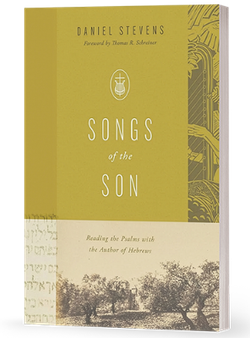
Jesus isn't just a New Testament figure. He appears prominently throughout the Old Testament...and you can see it most poignantly in the ancient song book of Israel: The Psalms. Explore and appreciate the connections in the Psalms to the Messiah in the New Testament that point to his supremacy.
If you want to gain a profound understanding of the Messiah in the Old Testament, be sure to request the book Songs of the Son by Daniel Stevens.
Past Episodes
- A Closer Relationship with God
- A Controversial Baby
- A Lesson for Losers
- A Life of Thanksgiving
- A Painful Path
- A Sharp Sword
- A Thankful Thanksgiving
- A Time for Severity
- A Unified Church
- A Unique Child
- Adding to Your Faith
- All You Need
- Almost a Christian
- Am I Really a Christian
- Amazing Conversions
- Ambassadors
- Ambitious Faith
- Ask Pastor Mike
- ATAPAT
- Call for Help
- Christ Changed Everything
- Christian Friendships
- Christian Love
- Christianity in Real Life
- Christians on Trial
- Christmas
- Christmas 2021
- Christmas 2023
- Christmas 2024
- Christmas and Worldly "Heroes"
- Christmas Clarity
- Christmas Controversy
- Christmas Courage
- Christmas Eve Service
- Christmas Generosity
- Christmas Giving
- Christmas Messages
- Christmas Presents
- Christmas With Compass
- Christ's Kingdom Forecast
- Christ's Resurrection
- Christ's School of Prayer
- Christ's Triumphal Entry
- Chronic Life Aches
- Colossians
- Complete Redemption
- Confrontation
- Connectedness
- Consumer Christianity
- Convenient Christianity
- Count Your Spiritual Blessings
- Countercultural Christians
- Courageous Endurance
- Couriers for Christ
- Dark Days
- David and Goliath
- Dear Abby
- Decisions, Decisions
- Defeat of Death
- Desert Instructions
- Designed to Grow
- Detours
- Did it Really Happen?
- Discernment
- Don't Forget
- Don't Miss It
- Don't Quit
- Drink Your Milk
- Easter
- Easter 2018
- Easter Message
- Encouraged
- Enemies of Grace and Revenge
- Enemies, Grace and Revenge
- Enlisted
- Envy
- Evangelism 101
- Evangelism and the End of the World
- Expanding Your Ministry
- Faith, Stress and Money
- Faithful to God
- FEAR & Fears
- Fear of God
- Finish Well
- First Corinthians
- First Quarter Review
- Friends? Who Needs 'Em
- From What I Believe to How I Think
- Generosity
- Get Ready
- Gifts For Jesus
- Give It Up
- God as Father
- Godly Confidence
- God's Big Plan
- God's Church
- God's Expatriates
- God's Investment in You
- God's Plan for You
- God's Work in Evangelism
- Good Friday
- Good Friday Message
- Gospel Advance
- Gospel Crazy
- Gospel Impact
- Gospel Lessons from the OT
- Grow Up
- Growing Up
- Guarding the Gospel
- Happiness & Christianity
- Head Games
- Hebrews
- Hell, Fire and Floods
- Hitting God's Target for Your Life
- Holiness
- How God Works in You
- How the Truth Sets Us Free
- How to Argue
- How to Forgive
- How to Get Eternal Life
- Hyperopic Christianity
- In Search of God's Will
- Incredible Love
- Indignation
- Infant from Bethlehem
- Instructions for Sinners
- Internal Warfare
- Israel's Greatest Hits Cont'd
- Israel's Greatest Hits- Study in Psalms
- Israel's Greatest Hits Vol II
- It's a Big Decision
- Lap #2005
- Learning to Lead
- Lessons on Grace
- Life as a Target
- Life With A Purpose
- Life's Defining Moments
- Life's Last Enemy
- Living a Lie
- Luke
- Made Right with God
- Make a Difference
- Marriage
- Money Madness
- Money Matters
- Moody Bible Institute Founder's Week
- More than a Creed
- More Than Friends
- Moving Forward
- Obstacles on the Road to Christ
- Octogenarian Wisdom
- Old School Christmas
- Old Testament School of Marriage
- One Plus God
- Our Fight with Sin
- Our Need for Representation
- Parenting
- Passing the Baton
- People Tools
- People Who Make a Difference
- Persistant Prayer
- Plugged In
- Pointing People to Christ
- Politicking
- Post Christmas Contentment
- Power Plays
- Powerful Praying
- Prayer 101
- Prayer Warrior
- Prelude to the Cross
- Preparing for the Kingdom
- Presenting Christ
- Privilege and Responsibility
- Project Reciprocity
- Prompted by Love
- Purposeful Praise
- Pursuing Holiness
- Saints Who Lie
- Salvation Is A Big Deal
- Set Free to Live Right
- Sexual Disasters
- Sexual Sins & Sanctified Bodies
- Silent Night
- Sin is REALLY Bad
- Slaying the Family Dragons
- Sold Out Servants
- Something Greater
- Soul Warfare
- Special
- Special Christmas Message
- Special Easter Message
- Spiritual Detours
- Spiritual Investments
- Spiritually Prepared
- Stay Out of Trouble
- Staying in Step
- Sticktoitiveness
- Strained Relations
- Summer Fruit
- Taking Christ to Work
- Temptation
- Thanks God
- Thanksgiving
- The Ancestry of Christ
- The Balance of Biblical Love
- The Bible and Your Salvation
- The Big Assignment
- The Big Questions
- The Black and White on Gray Areas
- The Common Good
- The Costs and Benefits of the Incarnation
- The Door
- The Entry of a King
- The Experience of Every Christian
- The First Christmas Gifts
- The Gap
- The Gospel
- The Gospel According to Abraham
- The Harsh But Good News
- The Hazards of Prosperity
- The Hazards of the Church
- The Infant from Bethlehem
- The Joy of Salvation
- The Next World Order
- The Non-Negotiables
- The Old Testament School of Marriage
- The Reliability of the Bible
- The Resurrection Response
- The Royal Task
- The Same Ol' Stuff
- The Sins Christians Tolerate
- The Supremacy of Christ
- The Torn Curtain
- The Truth About Christmas
- Those Words at the Altar
- Tips for Zealots
- Transformed
- War Zones & Peace Treaties
- Warning
- Water from the Rock
- Weirdos?!
- What's Your Problem
- When Feelings are King
- When Frogs Become Princes
- When God Makes a Promise
- When God Seems Weird
- When Life Hurts
- When Life is Tough
- When Life Takes A Left Turn
- When People are to Blame
- When the World Gets In the Way
- Where You're Planted
- Why the Son Became One of Us
- Wisdom & Maturity
- Wisdom From Proverbs
- Wisdom's Toolbox
- Wise Decisions
- Working the Plan

Video from Pastor Mike Fabarez
Featured Offer
Jesus isn't just a New Testament figure. He appears prominently throughout the Old Testament...and you can see it most poignantly in the ancient song book of Israel: The Psalms. Explore and appreciate the connections in the Psalms to the Messiah in the New Testament that point to his supremacy.
If you want to gain a profound understanding of the Messiah in the Old Testament, be sure to request the book Songs of the Son by Daniel Stevens.
About Focal Point
About Pastor Mike Fabarez
Pastor Mike is a graduate of Moody Bible Institute, Talbot School of Theology (M.A.) and Westminster Theological Seminary in California (D.Min.).
Mike is heard on hundreds of radio programs across the country on the Focal Point radio program and has authored several books, including Raising Men Not Boys, Lifelines for Tough Times, Preaching That Changes Lives, Getting It Right, Praying for Sunday, and Why the Bible?
Mike and his wife, Carlynn, reside in Laguna Hills, California and they have three children, Matthew, John and Stephanie.
Contact Focal Point with Pastor Mike Fabarez
info@fpr.info
Focal Point
P.O. Box 2850
1-888-320-5885