


A Christian Funeral


We’ve all lost loved ones, and we often struggle with what to say to comfort grieving families—especially if their faith is unknown. But facing death and helping others through it is a necessary part of life, and so Pastor Mike Fabarez discusses how to deal with final rites.
Dave Drewie: Funerals are a time of gathering in for both Christians and non-Christians. Today on Focal Point, we're having a conversation with Pastor Mike Fabarez about how to navigate memorial services on this edition of Ask Pastor Mike.
Welcome to another Q&A session with Pastor Mike Fabarez on Focal Point. I'm Dave Drewie. None of us are immune to losing a loved one, and we've all wondered what to say to comfort grieving families, especially if we aren't sure of their faith.
As hard as it is, facing death and helping others through this final rite of passage is a necessary part of life. We're joining Executive Director Jay Wharton and Pastor Mike to hear some thoughts about this sensitive subject. Jay?
Jay Wharton: Thanks, Dave. Pastor Mike, I know you've officiated a lot of funerals, both Christian funerals and non-Christian funerals. What's the difference between a Christian funeral and a non-Christian funeral? How do people act differently? How would you expect them to act differently at a Christian funeral versus a non-Christian funeral?
Pastor Mike Fabarez: The Bible gives us some direction on that. In 1 Thessalonians 4, it says that we shouldn't be grieving like the rest of the world. It describes the difference between us and the world that has no hope. There's some concern about saying it so bluntly because Christians do have hope, but non-Christians like to artificially manufacture hope.
I have preached at a lot of non-Christian funerals. We're always talking about how Bob's playing golf now or he's out fishing on the celestial oceans. There's always this great sense of hope that seems to immediately come out of nowhere, even if Bob was the most rank person in town. There's a lot of false hope.
At the core of the heart of a non-Christian, if he's honest with himself, there isn't hope. They know that this is just a lot of trite little sayings and platitudes that don't really mean anything. But for us, there is hope because we know that Christ has literally, physically, biologically died, just like the person sitting there—at least the body that's laying there in the coffin—and he came back to life.
Not the same, as he says in 1 Corinthians 15, but he came back in a glorified body. We know that when our loved one dies who trusts in Christ, they're going to come back like Christ did, who's called the firstfruits of those who have trusted in Christ. We are sitting at a funeral knowing that the way Christ came back from the dead is the way this person will come back from the dead and he or she will live eternally.
Jay Wharton: Talk about grieving a little bit. Certainly, it's sad when we lose a loved one, whether you're a non-Christian or a Christian, but is it appropriate for a Christian to grieve?
Pastor Mike Fabarez: As a matter of fact, what I'm going to say is probably not going to be well received by a lot of people, but I don't think there's enough grieving at Christian funerals. We've started to mirror ourselves after the non-Christian funerals, who usually are playing games in trying to placate their own grief by doing all these celebrations of life that are filled with frivolity and laughter and humor and who can tell the best jokes during the eulogies.
To me, that's not at all helpful for us when we're saying goodbye to a loved one here on earth and really grappling with the profundity of death. Death is a terrible thing. It's an enemy. It is the enemy, the last enemy that Christ will conquer for us. It is something that if we follow the biblical pattern, we ought to grieve.
We ought to grieve the loss of a person, always tempered with hope, but I'm coming at a time of losing a loved one. I don't want to sit here and make this some kind of party. It needs to be a time of grieving, a time of grappling with the emotions of mourning and loss. That's appropriate. It can be overdone, obviously, but I think we need to take time to cry.
We need to take time to mourn the loss of it. We need to take time to see the seriousness of the problem of death—that the wages of sin is death and that because of sin that hung Christ on a cross, we're sitting here staring at the immobile body of someone we loved. That should be a serious thing. It should be something that's tempered with sobriety and should be something that causes us to tearfully say goodbye and say this is a difficult thing.
Jay Wharton: Is that what the Bible is talking about when it says it's better to be in the house of mourning rather than at a party?
Pastor Mike Fabarez: When Solomon writes that in Ecclesiastes, the point is that the living that are there listening at a funeral will take to heart that they are mortal. That doesn't happen at a party. That's the contrast. At a party, everyone's living it up and having fun and joking around. They don't think about their own demise.
If we don't think about our own demise, as the end of that book, Ecclesiastes, ends, we won't remember that God is the judge of all things. What matters is to fear God and keep his commandments. That assumes from our perspective that we put our trust in Christ, but we want to live for Christ.
I want to have that sense at a funeral. The opportunities for that loved one to live for Christ is over. To put gold, silver, and precious stones on his resume is over. That to me is the end of an era, a very important era of opportunity. I do think there needs to be a time where we all reflect on the fleeting nature of life.
Think about the time of your death, as Jonathan Edwards said in one of his resolves. We need to think often of our own dying. That's not morbid. That's something that helps us keep on track to live for Christ, to maximize every opportunity, to make the most of the time because the days are evil, to quote Paul in Ephesians.
We want to see the funeral be a time that is sober enough and one that is applicable enough for the people in the congregation who are there mourning the loss of a loved one to think about their own mortality and their own investment in kingdom events, whether it's a full Christian funeral or not.
If it's a non-Christian funeral that I'm preaching at, I always want to make sure that I bring it back to the only hope that we have. There may not be much hope here—not that I'm going to emphasize that and pour salt in that wound—but I am going to say all of us are going to end this way. Our lives will come to an end and we need to be ready to meet our Maker. We always want to share the Gospel and that's going to be a time of sobriety for a non-Christian crowd. Even for a Christian crowd, there should be sobriety there that every opportunity for serving Christ is now over for this person and it will be for us soon.
Jay Wharton: Let's turn that around as maybe an attendee at a funeral, whether it's Christian or non-Christian. What are the things that we should be out looking to do as Christians at either of these two venues? What do I say to this person at a Christian funeral and what should I be looking to do at a non-Christian funeral?
Pastor Mike Fabarez: In Christian funerals, there's too much redirection. Everybody's trying to redirect. We're trying to take grief away by just trying to be humorous. We're trying to take the reality of loss away by talking about just all the good times. We're trying to somehow mitigate the problem without really putting our arm around someone and addressing the problem and looking face-to-face at the problem.
The problem of death is a serious problem. I think as Christians, there's comfort to be had not only in knowing that where we're seeing our loved one go is to a victorious place—we recognize to live is Christ, to die is gain—but the point of me standing there with you and being a consolation to you as someone who feels your pain, who understands your loss, and doesn't keep turning attention away.
There's too much of "let's not do anything to make you feel bad" when in reality, let's find comfort in facing this together. For non-Christian funerals, you go to a non-Christian funeral, the end of opportunity is over for the Gospel with that person. In my mind, all I can do is celebrate any kind of common grace that was had because of this person's life.
Then I want to make sure that we do a lot of what Ecclesiastes says and we turn that opportunity thinking about death into an opportunity to share the Gospel. Always want to talk about the need for us to be ready to meet our Maker. That is a separate conversation from really thanking God or at least celebrating if they're non-Christians and being grateful for the good things that this person that's now deceased has done in life, in work, in the world.
Even non-Christians obviously are recipients of some level of common grace. Gospel sharing at non-Christian funerals, putting your arm around a person that's grieving at a Christian funeral, and just not ignoring the realities, acknowledging them, being a comfort by being there and walking through that with them. That means not just trying to deflect and distract.
Jay Wharton: Thank you, Pastor Mike. That's great biblical counsel in that regard. We're going to keep this conversation going with a message you did from a series called Life's Last Enemy. This message is entitled A Few Preliminaries When Talking About Life After Death.
Pastor Mike Fabarez: Every school had one. It was every average kid's goal to avoid him at all costs. I really tried, but alas, one day I stood toe-to-toe, face-to-face with the school bully. Do you remember him? He was the guy everybody feared, and I along with everyone else lived with a great deal of respect for what he could do to me and my face were I ever to cross him.
I worked hard. I didn't want to cross that guy. One day, inadvertently I did. I didn't mean to, and thankfully it was in class because my life was spared by the teacher who came up to break us up. He saw the skirmish, the fight was brewing and separated us. The teacher started to untangle my shirt from his muscular fist and as he was peeling his hands off my shirt, the bully leaned over and growled. He said to me, "Hey, punk. After class, you're mine."
I had never prayed for class to be prolonged, but that day I was praying to the god of time to just stop it for a while. Have you ever had an experience like that where trepidation, fear, anxiety grips your heart about some inevitable event that's just around the corner?
Unfortunately, that describes the state of mind of a lot of people in our world. Millions and millions and millions of people so desperately want to see this clock just stop. They're praying for it. They're hoping for it. While a lot would admit that this life isn't all that great and it has a lot of problems, they much prefer the life they've got than the vagueness and mystery and the unknown of what lies ahead when their time is up and the bell rings for them.
Job 18 freely admits that death is the king of fears. Spurgeon was quick to respond that it is also the fear of kings because no one is exempt. We don't like to think about it and the average person likes to avoid it, but innately we know that this isn't going to last forever here on earth.
The good news of the Bible is, and the whole point of the Christian message is, that we don't have to face this inevitable event by ourselves. God has an answer for us, that there's someone there to face it with us, which by the way reminds me of my adolescent body that shook in fear as I watched the clock that day.
I remembered as I sat there and my thoughts began to reform in my head that my second cousin of all people, who was an upperclassman and very strong and big—my heart started to be calm just a little bit. Sure enough, the clock clicked, the bell rang, and I walked quickly out the door as fast as I could and my eyes were scanning the hallways for my second cousin. Where is he? Where is he?
About that time, I felt the right hook of the bully. He just clocked me from behind. He came around from behind and hit me right here. Thankfully, I didn't go down. I spun around as my head was ringing and guess who I saw? I saw my cousin and I saw his friends.
The picture of solidarity and deliverance that day was amazing. I'll tell you what, the show of strength in the hallway that day, that bully, the school bully, never bothered me again. You know what? That's exactly what God is saying to us. I have for you someone who has defeated this enemy. It is an enemy. I'm not going to candy-coat that. It's a bad thing, but there's someone that has beat this thing.
He's beat it and though you'll have to walk out and though you've got to go through the mystery and uncertainty of crossing the threshold of this life, and though none of us are looking forward to that, be it in a hospital room or in a car accident—we're not looking forward to it—we walk through it with someone who's conquered it and there's hope for us. That's the Christian message.
The wages of sin, rebellion, is death—relational, biological, spiritual if you will, and physical. It was an intrusion. It's bad. The Bible says it is our enemy. It stinks. I say that to you because that's how the Bible presents it. The world doesn't do that. The world tries desperately to try and find a nice place for this in their mind. They try to file this somewhere good.
Have you ever been to a funeral where you hear these people tossing around all these clichés and platitudes and "Oh, it's just, you know, it was their time and it's okay"? I love this one. I hear the preacher stand up and say, "Well, you know, death is just a part of life."
Think about that for like five seconds. Death is really like not a part of life. Death is like antithetical to life. Death seems to me to be the opposite of life. It's bad and we need to recognize that God views it that way. It is our enemy, it stinks, it's rotten, and we should not talk about trying to fit it into this "it's okay, let's try and embrace it and accept it." I don't accept it, how about you?
I'm not into it. It's bad and it's time for us to recognize that that's the way the Bible presents it and we need to recognize that we're kind of mad about it. It's not good. I don't accept it. We need to recognize that that's the whole point of the Christian message—the intrusion of death was going to be rectified by Christ.
From Genesis chapter 4 to Revelation chapter 22, we have God's unfolding plan of how he's going to rectify the situation. You would agree with me, wouldn't you, that in Genesis 4 God didn't show up and hand Adam and Eve the playbook? He didn't do that. As a matter of fact, Adam knew very little about how God was going to fix the problem.
Then we had years and years go by and Noah knew a little bit more, and Abraham knew a little bit more than Noah knew, and of course Moses knew a whole lot more than Abraham knew. Beyond that, we've got the prophets come along. Isaiah, he knows a lot more about how God's going to solve the problem than David knew.
Then the apostles come along when the ultimate revelation, God's answer, comes in person to solve the problem and they knew a whole lot more. Every time these books unfold before us, we have an increasing understanding of how God's going to solve the problem. We call that progressive revelation.
Progressive revelation. We've come a long way from Solomon out there on a rock lamenting his life and the common destiny of everyone to Jesus talking about two places, very real, very specific, and Paul now talking about the reality of this life and how he is not just some homogenized whole, but in reality reflecting the two parts of the creation story—he is hardware and software.
In Genesis 2, do you remember that statement in verse 7? It says God created Adam from the dust of the earth. Talk to your doctor, talk to the biologist. We are made—our chemical composition is all the stuff you find in rocks and dirt and minerals. It's just the stuff of earth. That's all this is. The bottom line is this physical unit is just the stuff of the earth.
It says God created Adam from the dust of the earth and then here's the key thing: he blew in him the breath of life. He blew in him—spirit. He now has something that's noncorporeal. It's not tangible. It's not hardware. It's software, if you will. That software doesn't take up space, it doesn't have weight, it doesn't have mass. It's information. It's a living animated information that now the Bible says he becomes a living soul. He becomes a living person. He becomes a living being.
What does he have? Two parts: physical, spiritual. The spiritual is who he really is because what he is is software. What he resides in and functions and expresses himself through is hardware. Now that's a very important distinction that a lot of the ancients missed and a lot of false teachers today miss.
In the Bible, we're clearly two parts. In those two parts, Paul says there's two different plans here. The resurrection in 1 Corinthians 15 deals with the bodily part, the hardware part. But if we're thinking about life after death, recognize this: we don't have to wait till the resurrection to be conscious after our death.
Take a look at 2 Corinthians chapter 4, drop down to the bottom of the passage, verse 16. Though outwardly we are wasting away—that's the hardware, it's not what it was eight years ago. Inwardly though, software, we're being renewed day by day. Why? Because as Christians relationally now, spiritually, the death thing's been taken care of. We can relate to God. He hears us, he responds to us.
Our light and momentary troubles are achieving for us an eternal glory that far outweighs them all—all the hassles of the external. So we fix our eyes not on what's seen—the external, the hardware, the reality of this world—but on what's unseen, because that's the real important part. For what is seen is temporary, but what's unseen is eternal.
Chapter 5, verse 1: "For now we know that if the earthly tent we live in is destroyed"—that's hardware. If it dies—and they were threatening to kill Paul, they would eventually cut his head off one day—he says, "It's okay. We have a building from God, an eternal house in heaven, not built by human hands. Meanwhile, we groan, longing to be," note this, "clothed with our heavenly dwelling."
That's 1 Corinthians 15. I want the resurrected body. Because when we are clothed, we will not be found naked. We're never going to have to be disembodied again. For while we're in this tent, we groan and we're burdened because we do not wish to be unclothed—no one's looking forward to the day of their death or that auto accident or that cancer that gets us. We're not looking forward to that.
But to be clothed, rather I'd like to be here for the rapture and just get instantly changed, that'd be much better, with our heavenly dwelling. Now, it says verse 5: "It is what God has made us for, this very purpose, and he's given us his Spirit as a deposit guaranteeing what is to come. Therefore, we're always confident and we know that as long as we are home in the body"—us, the real me, the software in this hardware, this shell, this case—"we are away from the Lord."
It's a long-distance relationship. We live by faith, not by sight. We are confident, I say, and we'd prefer to be—now note this, underline it in your Bibles—we'd prefer to be away from the body, though it's really nice to have this hardware encased around us. I'd much rather be away from the body and at home with the Lord.
That's why in Philippians 1, Paul can say, "For me to live is Christ and to die is gain." That doesn't make any sense if he doesn't immediately go consciously to be with God. I prefer to be away from the body and be at home with the Lord. So we make it our goal to please him, whether we're at home in the body or away from it.
The Bible is really clear. The minute you die, you walk through the threshold of death, you spiritually will be in the presence of God. You will be there because that's what the Bible teaches. You can prooftext around that from Old Testament laments and despondent statements of the psalmist, but you cannot ignore the clear propositional revelation of Scripture.
The hope is future. In Corinthian culture, the Greeks liked to talk about the fact that God didn't care about the body. As a matter of fact, it was dispensable and disposable and it didn't matter what you did with it. They said this: "Food for the stomach and stomach for food, but God will discard them both." Paul's response is, no he won't.
Resurrection is coming. Your body is sacred, it's important what you do with it. 1 Corinthians 15 elaborates on that and he says, yes, God has a future for the body. Will there be a period of what we call in theology the intermediate state, where you're disembodied or as Paul puts it, naked? Yes, there will be. But you'll get the new hardware back. It will be recreated.
You and I need to anticipate a refurbished body. Anticipate a refurbished body. If that doesn't sound quite as exciting as you would have hoped—refurbished—just know this: it will be retooled to the manufacturer specifications of Genesis 1 and 2, not the one you had down here on earth, under the cursed sinful subject to decay specifications. That's different.
God is going to recreate and refurbish our bodies once we carefully and respectfully set them aside after our spirit, our software leaves them. That's called separation of biological death. I'm going to now have that body resurrected, remade, refurbished one day because God did not call you to be a disembodied spirit.
Yet that's what we sometimes think of and teach our children about heaven. That is not what we're going to be. That's a short-term stop on God's plan. Heaven, is that your ultimate home? No, no, no. As a matter of fact, Revelation 21 says you'll get a brand new heaven and a brand new earth. Guess where God's going to put us? Not in heaven. Put us back on the earth. A new earth, with a 1500-mile cube called the New Jerusalem.
It's weird, it's bizarre, it's as high as it is long, but the point is we're going to live in this new kind of place with new kinds of capabilities, in bodies that reflect the original specs of Genesis 1 and 2, refurbished into something brand new in the likeness of Christ. I'll tell you what, that hope's a whole lot more tangible for us, and I think it will change the way we view our future. Set your minds on things above. That's the point.
Dave Drewie: A powerful and timeless reminder of the hope we have in Christ. You're listening to Focal Point and a message from Pastor Mike Fabarez called Life's Last Enemy: A Few Preliminaries When Talking About Life After Death. You can hear the full unedited version of this message when you go to focalpointradio.org.
Today, Pastor Mike said we're being prepared for a new place with new capabilities on a new earth unlike anything we've seen before. That truth is certainly more assuring than just believing in the best. When it comes to something as serious as death, it's important we get the full truth as it's revealed in Scripture, not someone's wishful fantasy.
That's why Focal Point is here—to provide you with biblical answers to the hard questions. If you've been blessed and strengthened by this program and you want more people to discover solid biblical truth on important topics such as today's, we encourage you to join with us by making a donation.
When you give, we'll say thanks by sending you one of Mike's recommended books called The Revelation Answer Book by Mark Hitchcock. You'll find clear biblical insights on prophecy and end times events, from the Rapture to Christ's return. It's a tool that builds your confidence in God's plan for the future while deepening your faith.
Request The Revelation Answer Book with your gift today. Call 888-320-5885 or donate at focalpointradio.org. Monthly giving—that's what keeps this ministry steady. Our Focal Point Partners form the bedrock that lets us broadcast week after week, reaching seekers who need authentic biblical answers.
Even modest monthly gifts add up to significant kingdom impact. Become a Focal Point Partner by calling 888-320-5885 or visit focalpointradio.org. I'm your host, Dave Drewie, inviting you back next time for another in-depth study of Scripture right here on Focal Point. Today's program was produced and sponsored by Focal Point Ministries.
Featured Offer
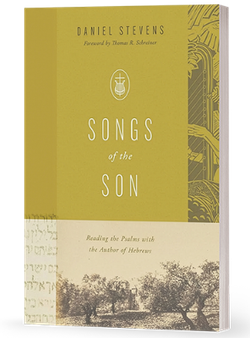
Jesus isn't just a New Testament figure. He appears prominently throughout the Old Testament...and you can see it most poignantly in the ancient song book of Israel: The Psalms. Explore and appreciate the connections in the Psalms to the Messiah in the New Testament that point to his supremacy.
If you want to gain a profound understanding of the Messiah in the Old Testament, be sure to request the book Songs of the Son by Daniel Stevens.
Past Episodes
- A Closer Relationship with God
- A Controversial Baby
- A Lesson for Losers
- A Life of Thanksgiving
- A Painful Path
- A Sharp Sword
- A Thankful Thanksgiving
- A Time for Severity
- A Unified Church
- A Unique Child
- Adding to Your Faith
- All You Need
- Almost a Christian
- Am I Really a Christian
- Amazing Conversions
- Ambassadors
- Ambitious Faith
- Ask Pastor Mike
- ATAPAT
- Call for Help
- Christ Changed Everything
- Christian Friendships
- Christian Love
- Christianity in Real Life
- Christians on Trial
- Christmas
- Christmas 2021
- Christmas 2023
- Christmas 2024
- Christmas and Worldly "Heroes"
- Christmas Clarity
- Christmas Controversy
- Christmas Courage
- Christmas Eve Service
- Christmas Generosity
- Christmas Giving
- Christmas Messages
- Christmas Presents
- Christmas With Compass
- Christ's Kingdom Forecast
- Christ's Resurrection
- Christ's School of Prayer
- Christ's Triumphal Entry
- Chronic Life Aches
- Colossians
- Complete Redemption
- Confrontation
- Connectedness
- Consumer Christianity
- Convenient Christianity
- Count Your Spiritual Blessings
- Countercultural Christians
- Courageous Endurance
- Couriers for Christ
- Dark Days
- David and Goliath
- Dear Abby
- Decisions, Decisions
- Defeat of Death
- Desert Instructions
- Designed to Grow
- Detours
- Did it Really Happen?
- Discernment
- Don't Forget
- Don't Miss It
- Don't Quit
- Drink Your Milk
- Easter
- Easter 2018
- Easter Message
- Encouraged
- Enemies of Grace and Revenge
- Enemies, Grace and Revenge
- Enlisted
- Envy
- Evangelism 101
- Evangelism and the End of the World
- Expanding Your Ministry
- Faith, Stress and Money
- Faithful to God
- FEAR & Fears
- Fear of God
- Finish Well
- First Corinthians
- First Quarter Review
- Friends? Who Needs 'Em
- From What I Believe to How I Think
- Generosity
- Get Ready
- Gifts For Jesus
- Give It Up
- God as Father
- Godly Confidence
- God's Big Plan
- God's Church
- God's Expatriates
- God's Investment in You
- God's Plan for You
- God's Work in Evangelism
- Good Friday
- Good Friday Message
- Gospel Advance
- Gospel Crazy
- Gospel Impact
- Gospel Lessons from the OT
- Grow Up
- Growing Up
- Guarding the Gospel
- Happiness & Christianity
- Head Games
- Hebrews
- Hell, Fire and Floods
- Hitting God's Target for Your Life
- Holiness
- How God Works in You
- How the Truth Sets Us Free
- How to Argue
- How to Forgive
- How to Get Eternal Life
- Hyperopic Christianity
- In Search of God's Will
- Incredible Love
- Indignation
- Infant from Bethlehem
- Instructions for Sinners
- Internal Warfare
- Israel's Greatest Hits Cont'd
- Israel's Greatest Hits- Study in Psalms
- Israel's Greatest Hits Vol II
- It's a Big Decision
- Lap #2005
- Learning to Lead
- Lessons on Grace
- Life as a Target
- Life With A Purpose
- Life's Defining Moments
- Life's Last Enemy
- Living a Lie
- Luke
- Made Right with God
- Make a Difference
- Marriage
- Money Madness
- Money Matters
- Moody Bible Institute Founder's Week
- More than a Creed
- More Than Friends
- Moving Forward
- Obstacles on the Road to Christ
- Octogenarian Wisdom
- Old School Christmas
- Old Testament School of Marriage
- One Plus God
- Our Fight with Sin
- Our Need for Representation
- Parenting
- Passing the Baton
- People Tools
- People Who Make a Difference
- Persistant Prayer
- Plugged In
- Pointing People to Christ
- Politicking
- Post Christmas Contentment
- Power Plays
- Powerful Praying
- Prayer 101
- Prayer Warrior
- Prelude to the Cross
- Preparing for the Kingdom
- Presenting Christ
- Privilege and Responsibility
- Project Reciprocity
- Prompted by Love
- Purposeful Praise
- Pursuing Holiness
- Saints Who Lie
- Salvation Is A Big Deal
- Set Free to Live Right
- Sexual Disasters
- Sexual Sins & Sanctified Bodies
- Silent Night
- Sin is REALLY Bad
- Slaying the Family Dragons
- Sold Out Servants
- Something Greater
- Soul Warfare
- Special
- Special Christmas Message
- Special Easter Message
- Spiritual Detours
- Spiritual Investments
- Spiritually Prepared
- Stay Out of Trouble
- Staying in Step
- Sticktoitiveness
- Strained Relations
- Summer Fruit
- Taking Christ to Work
- Temptation
- Thanks God
- Thanksgiving
- The Ancestry of Christ
- The Balance of Biblical Love
- The Bible and Your Salvation
- The Big Assignment
- The Big Questions
- The Black and White on Gray Areas
- The Common Good
- The Costs and Benefits of the Incarnation
- The Door
- The Entry of a King
- The Experience of Every Christian
- The First Christmas Gifts
- The Gap
- The Gospel
- The Gospel According to Abraham
- The Harsh But Good News
- The Hazards of Prosperity
- The Hazards of the Church
- The Infant from Bethlehem
- The Joy of Salvation
- The Next World Order
- The Non-Negotiables
- The Old Testament School of Marriage
- The Reliability of the Bible
- The Resurrection Response
- The Royal Task
- The Same Ol' Stuff
- The Sins Christians Tolerate
- The Supremacy of Christ
- The Torn Curtain
- The Truth About Christmas
- Those Words at the Altar
- Tips for Zealots
- Transformed
- War Zones & Peace Treaties
- Warning
- Water from the Rock
- Weirdos?!
- What's Your Problem
- When Feelings are King
- When Frogs Become Princes
- When God Makes a Promise
- When God Seems Weird
- When Life Hurts
- When Life is Tough
- When Life Takes A Left Turn
- When People are to Blame
- When the World Gets In the Way
- Where You're Planted
- Why the Son Became One of Us
- Wisdom & Maturity
- Wisdom From Proverbs
- Wisdom's Toolbox
- Wise Decisions
- Working the Plan

Video from Pastor Mike Fabarez
Featured Offer
Jesus isn't just a New Testament figure. He appears prominently throughout the Old Testament...and you can see it most poignantly in the ancient song book of Israel: The Psalms. Explore and appreciate the connections in the Psalms to the Messiah in the New Testament that point to his supremacy.
If you want to gain a profound understanding of the Messiah in the Old Testament, be sure to request the book Songs of the Son by Daniel Stevens.
About Focal Point
About Pastor Mike Fabarez
Pastor Mike is a graduate of Moody Bible Institute, Talbot School of Theology (M.A.) and Westminster Theological Seminary in California (D.Min.).
Mike is heard on hundreds of radio programs across the country on the Focal Point radio program and has authored several books, including Raising Men Not Boys, Lifelines for Tough Times, Preaching That Changes Lives, Getting It Right, Praying for Sunday, and Why the Bible?
Mike and his wife, Carlynn, reside in Laguna Hills, California and they have three children, Matthew, John and Stephanie.
Contact Focal Point with Pastor Mike Fabarez
info@fpr.info
Focal Point
P.O. Box 2850
1-888-320-5885