

187: Worship through Grief What happens when love is rebuilt on loss?


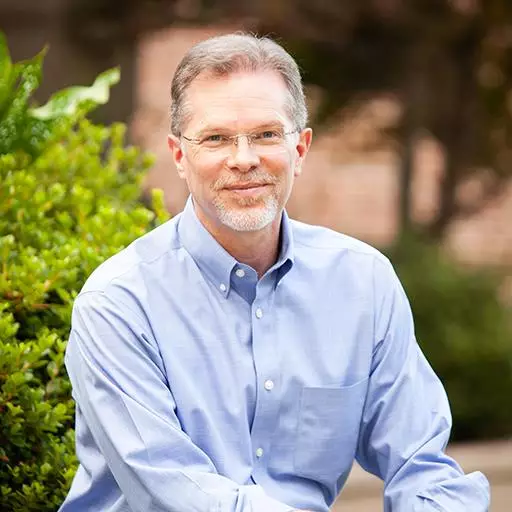
Ron Deal sits down with Matt and Kari Perkins—two widowed parents who formed a blended family of seven kids after profound loss. This episode names the hard truth: you don’t “get over” grief—you worship through it, and grow with it. Honest, hope-filled wisdom for blended families navigating grief, faith, and second chances.
Matt Perkins: No one’s expecting you to have all the answers. They just want to be heard. They want to be seen. Sometimes they just want some vocabulary to even understand and process what they are walking through. I wish I would have known that 15 years ago because I didn’t grieve these significant losses; I just kept on going.
Ron L. Deal: Welcome to the FamilyLife Blended podcast. I’m Ron Deal. We help blended families and those who love them pursue the relationships that matter most. The best opportunity you have to be encouraged in your family's journey and get connected with others is coming up in less than two weeks. It's free.
Blended & Blessed 2026 is happening Saturday, April 18th. You can attend virtually from anywhere in the world or you can join the live audience in Oklahoma City. We're going to be at Crossings Church. Davy and Christy Blackburn, Kathy Lipp, Cheryl Shumake, Gayla Grace, myself, and MC Brian Goins will be contributing to the live event.
You can watch from the comfort of your home virtually, of course. Even better, your church can host the event for an audience of any size for free. Don’t miss it. Go to blendedandblessed.com to register or just look in the show notes and we'll get you connected. I would love to meet you at this event. If you can come to the live audience, that would be fun to see you there.
Hope in the Journey is the theme for Blended & Blessed this year. We’ve got a little hope for you even before then on our podcast today. I'm going to be talking with Matt and Carrie Perkins. Both of them were widowed prior to marrying and then forming their blended family, originally with seven children and now with seven grandchildren.
We may get an update; who knows, maybe they have more. Matt is a worship leader. Together, Matt and Carrie have created a resource for individuals and churches called Grief to Growth. Matt and Carrie, welcome to the FamilyLife Blended podcast.
Matt Perkins: Thanks so much for having us. It's great to be here.
Ron L. Deal: How many children did you guys have when you got married?
Matt Perkins: I had two girls.
Carrie Perkins: I have five boys. So, seven in total.
Ron L. Deal: Seven in total. Did I get the grandchildren thing correct? Is it seven at this point?
Matt Perkins: As of right now, it's seven.
Ron L. Deal: I realize this is how things roll. They do change, don’t they? Two and five. We always talk about on this program that the blended family marriage is the middle of the story. It’s not the beginning of the journey. Carrie, would you mind just backing up a little bit? Would you go first and tell us what preceded the two of you getting together?
Carrie Perkins: My late husband and I were serving in ministry in California. He was a children's pastor. In 2015, he was speaking at our service for adults because he was always in children's. We had been married almost 21 years. We had been serving in ministry since we got married because he was called into the ministry at 17.
That Sunday, November 22, 2015, he was speaking and walked off the stage from the first of a few services. He collapsed and passed away shortly after. He had a heart condition we didn't know he had, so he passed away suddenly. Our lives were turned upside down.
Ron L. Deal: Deeply shocking.
Matt Perkins: One of the important parts of that is she had five boys, but they were actually with number five. They had just gotten him in January and were in the process of adoption. There were a lot of moving parts in that.
Ron L. Deal: Did I get that right? You had just adopted your fifth or were in the process when your husband passed away?
Carrie Perkins: We were in the process. We had been working through that for about a year and a half, almost two years. He was six years old when we met him, and we finally brought him to our home in January 2015. He was six years old, and we had him in our home for 10 months when my husband passed away. It was very devastating. He was definitely a light in our house who just kept us all together. This little boy's sense of humor brought such light in our home in such a dark time.
Ron L. Deal: He was six when your husband passed away. Approximately how old were the other boys?
Carrie Perkins: The youngest biologically was 14 years old, and the oldest was 19.
Ron L. Deal: So you had a bunch of teenagers and a six-year-old. Testosterone ruled the roost. Now you're a single mom and you're grieving. You've got your own horrible heart journey to wrestle through and you're trying to help them manage that loss of their dad. How would you describe those early years?
Carrie Perkins: It wasn't just that. It would have been fine to try to figure that out as a family, but what was added to that was this wasn't just a private thing that happened. This was such a public thing because our church was a larger church in our town. He not only passed away at church and in front of all of those people, but it still was something that impacted so many families because he was a children's pastor to hundreds.
It was so devastating not just for our family, but for our church family. That was really difficult. Our children saw it on the news, so it was something that we had to also live out publicly. It was a difficult time.
Ron L. Deal: That adds a whole another layer there. It's not like there was just a private journey, but everywhere your kids go, I'm sure there's people who are responding to them or avoiding the subject. All of the above comes with that.
Difficult journey. We've talked about these kinds of transitions a lot on this program. What we know is that the grief continues even to this day, well into even a new marriage and new blended family. We don’t forget the people that we love. They walk with us in one form or another. How we make space for that is the kind of thing we're going to be talking about here. Matt, why don't you give us your story?
Matt Perkins: I was a worship pastor really all of my career. We had just moved to California in 2014. I was in Orlando prior to that and serving in a great church there. There's the transition when you first move to a completely new area. You don't know people, you don't have family there. Navigating through that process, my wife, a few months after we were out here in California, was diagnosed with an aggressive, rare form of breast cancer called triple-negative breast cancer.
We went through that process of going, "Okay, we know we are where we're supposed to be." We can understand that, but now we have a new layer of challenges. We were just getting to know these people and they're getting to know us, and now we're doing that with chemo treatments. We had two daughters, so navigating that all while being new to this area.
I think it's one thing when you're living out your grief and navigating life on your own in your own family. It doesn't mean it's less difficult. You just have another layer of complexity that I think it becomes difficult when people are trying to navigate their own loss and then now they have to help other people navigate theirs.
She was going through all of the chemo treatments, and then seven months after her diagnosis, she passed away. We had been in California less than a year. It was a lot of times of just saying, "Okay, at that time my daughters were 19 and 15 when Marybeth passed away." A lot of it was just going, "Okay, I don't really have any answers."
One of the things that I kept going back to when we're walking through difficult transitions is I don't think we give enough thought to things that had happened in our lives before. I had just turned 14 when my dad suddenly passed of a heart attack. I remember being the youngest of six and how my mom navigated that process. There were some things that I didn't really know, and I would let them know I don't know how, but I do know that we're going to make it through this because I've seen it in my own life.
Navigating that process, having open conversations with them, like even when it was coming up to that time of just leaning in and asking my daughters questions for advice just so I knew how they felt about this. Family coming in from different parts of the country and just letting them know we have to talk about this because everybody's going to have opinions. We've walked this 24/7, so how do we navigate this?
Ron L. Deal: You stumbled your way forward as a family. Grief is one of those things where you don't have a guidebook for that. There's no blueprints. Everybody grieves a little bit differently, so you're just like, "Well, what do we do? How do we do this? What does it look like for us?" Stumbling forward is as good as it gets.
Seven of your kids were all grieving in their own unique, individual ways, maybe connecting with other people, maybe not. Some people isolate, some people connect and talk together with others. They all had their own journey with the difficulties of it all. Were there what were some of the big things for either of you that stood out about kids and reactions over the first couple of years?
Matt Perkins: One of the reactions or one of the things that navigating is knowing that grief can show up at any given time in any given way. Whether you're on the way to some event that you were looking forward to, it could just be one little trigger that sets it off. Now you've just jumbled all the cards again. I think that's where we would end up being a lot, and so it was always navigating the unexpected, but also having the trust of knowing all of us are for each other. At the end of the day, knowing that we had each other's best interests in mind, we just all processed differently.
Carrie Perkins: When you have boys and you're trying to figure out how to navigate my own in front of my boys was extremely difficult for me. It was something that I would just be washing dishes and start to cry. One of them would come over and try to take over. I'd tell them, "No, let me do it. I'm sorry, but I can't control these tears. They're just here."
But then it would happen to one of them and they didn't know how to respond to that either. It was just really having that conversation whenever those things would happen, or if two were getting at each other, realizing it was just that today was just a difficult day for one of them and the other one just triggered that. It varied with my children because all seven of them have such different personalities. They all were either super quiet and you had to keep paying attention to one because he was way too quiet or way too loud and too much. One wanted to talk a lot about it, and the other one didn't want to talk at all. You had to find the balance. I think we experienced that both.
Ron L. Deal: I'm sitting here holding your Grief to Growth Pathway material, the small group guide that you've created for people whatever that grief journey is. Let's get behind that. What motivated you to put together this thing? We're going to talk about the pathway here in a minute, but what motivated you to put the work in to design this for other people?
Matt Perkins: Sometimes we felt like anywhere we went, people would ask about the novelty of the seven kids and all of this. We were talking a lot about blended families, but we were speaking at a church down in South Florida five years ago. We started just talking about how you're not going to get over your grief, and if that's the goal, it's not going to work. You're going to be disappointed. How do we move forward with our grief?
It was after the service that people started coming up and just asking the most transparent questions. We would respond to them. We were on our flight home and just saying there's a lot of people that have gotten to the blended family prior to processing some of the loss to where it's like, "Hey, I have this void in my own life for my emotional needs," and so then we jump into a relationship and now it changes the game even more.
We started looking at it and honestly we wanted to do something that would be a program that we would want to be a part of. I had just gone through some coaching certification things and started looking at it and going, "You know what? What if we approach grief and loss and also understanding that it's not just about death?"
There's people that are dealing with different elements of loss based on where they're at. It wasn't just death as their only loss. For a lot of people, if there was a divorce, there's that loss that they're grieving. Most likely there's some financial loss, now there's some social loss because now the friends circle doesn't work like it used to. We just started looking at it and just saying what if we did something that included creativity? We do some different projects as a part of that and really we just tried it, saying this might not work, but our goal is to not screw people up and just see what they think.
Carrie Perkins: We both went through grief counseling. That's how we met, through our counselor. But finding that there wasn't a lot of resources that I felt were for my age or something that I could really relate to during that time. How could we help other people walk through this? We still get asked several times just how do you do this or how does this work? I just had a lady come up to me the other day and said she's walking with a friend who's walking through a bad divorce and has her kids but she doesn't know what to do. Just being able to help other people, that trip was a tipping point. We had already felt the desire of how can we help other people? I don't want to waste my pain. I don't want to waste what God has done and how He's shown up for our families.
Matt Perkins: And getting to the point where you can sometimes look like the only way that I'm qualified to do this is if I have all the answers. Nothing could be farther from the truth. No one's expecting you to have all the answers. They just want to be heard. They want to be seen. Sometimes they just want some vocabulary to even understand and process. This is what I'm walking through. I wish I would have known that 15 years ago because I didn't grieve these significant losses; I just kept on going.
The goal isn't to get back to zero, what we think would be normal. It's looking at it and saying how do we approach this from any factor in our lives that we have this loss? How do we take one step forward today? What's my next step? I think once you start doing that, you give people permission to say you don't get back to normal when you stop crying every day or when you can pay your bills. That's your normal right now. How do you take action steps to move forward?
Ron L. Deal: What I love about what you're saying is to me this is the biblical model. Second Corinthians chapter one, starting in verse three, "Praise be to the God and Father of our Lord Jesus Christ, the Father of compassion and the God of all comfort, who comforts us in our troubles, so that we can comfort those in their trouble with comfort that we received from God."
There's this network of comfort that starts with God, extends into me, Him to me, me to others. That's what you're doing. You're just basically saying we want to journey with you and you don't have to be an expert. You don't have to have all the answers. It's helpful if you're connecting with people who are on this same comfort road and we're just going to support each other as we go forward with that. I love that.
That has been huge for us. My wife and I lost one of our sons when he was 12. We're coming up on 17 years without him. Every day is a step forward in that journey for us. Finding early on it was the people who had lost a child and were 10 years ahead of us that saved us because they provided the comfort they had received to us. We're now in a season where we're trying to pass that on to other people whenever we get an opportunity. I love the model and I love what you guys have done with this.
I want to go back to Matt, something you just said because I think for the blended families that are watching and listening right now, you keyed in on something. It's the idea that people sometimes move into new relationships before they have really grieved. I don't want people to hear grieve as in, "Well, you're going to finally finish someday and then it's over and you move in." No, we carry our grief with us, but have you spent any time grieving? Have you given yourself space and permission? Have you given your children space and permission? Frequently people move into a new relationship when they really have not had space to grieve. What kind of difficulties have you seen with others that can create?
Matt Perkins: Those are some of the things that we navigated. We were pastoring in the same town. Marybeth died in the end of July. Eddie passed away in November. We didn't know each other, but both of our churches were very recognizable and people knew about our stories. We saw it even as we started talking and we would see other people in our churches or just other people that we knew.
They would have a significant loss, whether it was a divorce or a death or something, and when they move into that new relationship, it's difficult anyway if you're navigating this, but if you're navigating this with kids, then what was so heartbreaking was seeing people that would jump into a relationship and then all of a sudden they realized this is not going well. The relationship and the marriage didn't last.
Now you're just adding these layers of emotional things and everything with it. When we don't stop to look at how are my kids in this process, how is our extended family, how is our late spouse's family? That was important to us. It wasn't just about us, but how do we move forward so that we don't get down the road and our kids hate us and God because of what we just put them through? How do we navigate this together as a unit?
Ron L. Deal: I'm imagining somebody's listening, watching right now and they're going, "Yep, that's us. We jumped too early. Here we are. We've got at least one kid, maybe more, who's reacting pretty harshly and strongly to all this and they've closed the door."
One of the things I might say to that person is this is repair and it's hard and it's difficult and you're going to try to repair with that child. One of the things we suggest is in those circumstances, it's really important for the biological parent to take the lead on that repair, on that focused time and energy with that child to try to connect, try to regain trust, try to grieve together. The child's investment in any time of great distress is primarily in their biological parent, not necessarily in new step-parent, new step-siblings, and so on. Go back to the basics, start there, see if you can't make some progress over time and then begin to see if that opens the door for that child to be more welcoming, more open, more relaxed, if I could say it that way, with the other step-family members. Just wondering if you've got a thought or a suggestion you would add to that.
Carrie Perkins: First of all, I would just say it's not too late. Don't just think, "Oh, it's too late for us." You can start that repair at any point. It's just going to take some time and patience. I think what you're saying is so vital is looking at who can do that. Maybe the biological parent connecting with that child and taking that time with them.
The one thing that really helped me because when we would have some issues with maybe one child who was pushing away from us or one of us, it would frustrate me because as a mother of boys, everything had to be structured. They had a dad who was a coach and not only was he the children's pastor of a bunch of other children, he was a coach as well. He was their coach; he coached their friends. He was a well-known person in that also and very athletic.
I was like, "Okay, you need to stop being this way. You need to do it this way." I wanted to just change that. It wasn't until one conversation that we had where Matt said it was super important for me and it really just stopped me as the biological mother of saying, "Okay, I just need to keep pouring into them and be patient, pray for them." I might not see it overnight, but I can just keep being there. I can show up and sit on the end of their bed and ask them how their day was even if they don't want to respond to me because they're teenagers and they don't really want to talk. "Nothing" doesn't work in our family. You can't just say "nothing." We have those kinds of conversations and that goes both ways. When they ask us questions, it's not "nothing." We have to give them the same respect back as well.
Matt Perkins: I know Carrie would because she was adamant about they need to show respect. I don't want them acting like this or whatever. Really just I had to go back to my own life as 14-year-old that lost his dad. My mom remarried a couple years later. Our lives really paralleled each other in a lot of ways.
I know that my response or enthusiasm or lack thereof of her stepping into this new relationship and I was like a teenager going, "What does she need? Why?" I had just mentioned in that moment of going, "They may come around and it may be before they leave the home, it may be after, and then it also may be that they never come around to accept this, how we are as a family." But if I am consistent, then at least they can know when he says something, I can know that it's true.
You have to keep investing and you can't expect to take a withdrawal when you're the parent here, whether it's a step-parent, bonus parent, whatever you biological parent. There was one story that really helped me in this process and it was before we got married because I was seeing each other but it was kind of just started out of just because we felt like nobody understood us and so we would talk.
I went to a funeral and there was a lady that was in our worship ministry. She was older and her husband had died and it was her second marriage. Her first husband passed away and now she was widowed for the second time. Her son got up to talk and he said, "When my dad passed away, he wanted me to make sure that my mom experienced the love again of somebody." And so he started talking and he said, "And I didn't like this new guy. I didn't like him." He's talking about the guy that passed away. He said, "Because his approach was different, how he communicated was different, everything was different." He said, "But I learned to love him by watching him love my mom."
That stuck with me and I walked away and I think it was even when I was asking the boys. I took them to a coffee shop when I was going to ask them, "Hey, I would like to marry your mom and I want to propose, but I would like your guys' blessing." We went around that picnic table outside of Starbucks and everybody's sharing what they thought about it.
That was the thing that I said. I said, "I can't guarantee so many things about this. I have no guarantees. But the one thing that I hope is I hope that you would at least see the way that I will love your mom and I will take care of her and if nothing else, if I can be an example to that, we call it a win."
I think so much of the blended family is if you get hurt over every little thing and you want to throw somebody else under the bus because of what somebody else's trigger was, it is when you talk about our spiritual walk and dying to self. Walking in a blended family is a consistent part of saying this is not about me. Matt, this is not about you. You have to give them space.
Ron L. Deal: This is particularly true, as you're pointing out, for the adults. I think a lot of adults walk into this situation going, "Yeah, but I'm helping here. I'm the good guy. I'm paying bills and I'm doing laundry and I'm cooking meals and I'm getting nothing in return, so forget it." No, no, you’ve got to put on your thick skin and you've got to recognize that that daily sacrifice day after day is the investment, the ongoing investment that may or may not pay off exactly how you want it and it certainly is not going to pay off as quickly as you'd like to see it.
But it is the right thing to do. That's what you can control. You can't control their responses and reactions, but you can absolutely control how you posture yourself in response to them. By the way, wow, that was a big thing sitting around the picnic table asking them for their blessing.
Matt Perkins: You have no idea how scared I was to go and talk to these boys. What I so appreciate, man, we are blessed. I am so thankful for all seven of our kids. But one of the things that when we were talking around the table, a lot of them would say, "A big thing for us is for the youngest who had gone through all of this loss, he's experienced more loss than any of us put together."
They were like, "As his brothers, we can't be his dad. Are you going to be his dad?" And then another one just looking and going, "Well, what do we do if this doesn't work?" I'm like, "That's not an option. For any of our families, we're not quitting on anything. That's not happening." So they all had from, "I really don't like this and I don't see why you need to do this." We had all of it. That was probably one of the most nervous days for me.
Ron L. Deal: It's an honest moment. This is why we have preparing to blend resources for couples that are engaged, planning to get married, to include the children in dialogue and conversation like you did spontaneously on your own. We really recommend it because you've got to open the dialogue. Even if they're not truthful with you at that point in time, you've at least opened the conversation to how are we going to be family with one another? We're going to have to figure this out together. That is part of the journey of becoming family. Did that conversation influence the timing of it in any way?
Matt Perkins: I had actually bought a ring and I sat on that ring for a while. I would have conversations with the girls of just saying, "Hey, what do you think about this?" including them in the conversation because you can learn so much from your kids if you just listen.
Carrie Perkins: And be ready for what the honesty will be. What they say, you have to be okay with that because that is huge. Sometimes you don't want to hear what they have to say, necessarily, but it's good for them to be able to say it and you to be able to take it.
Ron L. Deal: And I think so much of what they say that's not super exciting, "Yes, guys, go get married. You have my full blessing." If there's any hesitation in kids, it's a statement of their grief in part. This is pain finding its way out in "I don't know how I'm going to feel about new family, new changes, more unwanted change. Nobody asked for this." All of that kind of stuff rolls up for kids, and that's where it shows up as hesitation.
Matt Perkins: I think even on our wedding in our wedding ceremony, because we had all four of our families represented from late spouses' families, some of Marybeth's family, Eddie's family, and then we had all seven of our kids that were standing up with us. Even in that row of seven kids and us, there was grief all the way around. Some of it, it was, "I'm excited for this day," and others are going, "Why in the world did you make me stand up in front of all these people?" Which we didn't make them. We gave them the option, but they did it.
Ron L. Deal: The bitter always travels with sweet. Even though there's some good things happening at that moment in your family's journey in that wedding, there's also some bitter with it. They have to travel side by side. It's just the way it rolls. I want to ask you guys a little bit about your pathway, your model. Six phases in your model. Let's just take a minute and sort of talk about what they are, describe them, and what about these in particular is useful or helpful for blended families to keep in mind. Problem, Pain, Paralysis, Perspective, Purpose, Pursuit. What's Problem and Pain? What are those about?
Matt Perkins: The problem is when you're faced with the loss. When we talk about our Grief to Growth Pathway, it really applies to any area of our life. When there's the problem, that's when that impact or a significant loss happens. If that's a divorce, if that has been a job loss, whatever that might be, it's identifying what is that problem, but also understanding that loss takes place in so many layers of loss that happen.
Usually, if people come to one of our seminar or class or whatever, the biggie is what got them to the door. It's when we start to identify and say, "I don't know if you understood that this is a part of loss, too." Empty nest, retirement, the way that life used to be with our family before the blend. There's all of these different layers.
That's identifying the problem. Then we talk about the pain and that is when the reality of the loss sets in. That's when we talk about emotions and how do you identify and have vocabulary to really process what you're feeling. Emotions has been one of the big things that we talk about.
Carrie Perkins: It wasn't my favorite week to talk, but now it's one of my favorites because having to learn my own emotions and what they look like and identify what I'm feeling, whether it's that day, that hour, that minute and giving words to what they're feeling. That's something super helpful.
Ron L. Deal: For you, Carrie, that's been a journey to be able to put words on your pain and be able to describe that in any way that's helpful. Now you're saying you actually value being able to do that.
Carrie Perkins: It's been a journey for me. But I think it's been super helpful. It's helped me to be able to help other people as I'm feeling what I was feeling and they'll say, "I'm not sure what..." and we're able to just talk about it and I can share my feelings when I did not care to do that for a long time.
Ron L. Deal: Sometimes the pain doesn't show up until another life circumstance bubbles it up. We were talking about wedding a minute ago. That's a classic in a blended family journey where you finally see the pain in children, but not always even then depending on the age of kids. If they're really young, it could be a few years and a different circumstance that arises. Transition with school or moving into high school and pressure socially or maybe somebody's leaving the home and going to college or launching out on their own or having their own child or having their own wedding. All of those are moments where the reality of the problem, whatever happened way back when, that is coming up for me again in a fresh way. That's sometimes when you see the pain, which blindsides us as parents. We didn't see that coming in our kids, but here it is. Dig into it a little bit.
Matt Perkins: When we talk about paralysis, it's how do you get unstuck because when you get to that point and going, "Oh my gosh, is this going to work? What do I do? This hill is too big to climb." I talk a lot of times about the roundabouts. Where we live, they have caught on to the idea of roundabouts. If you're watching your navigation, you're like, "Do I jump off here? Do I wait? Do I do..." and I think you can start to second guess everything and you get stuck in that process.
It's how do you identify those things and then how do you get unstuck. Then we talk about perspective, which is seeing your loss in a new light. We do these pouring art paint projects as a part of a group, so we reference back to all of these different elements. The different colors of the paint we equate to emotions and there's layers of these emotions.
When you pour it and just put it onto this canvas and you pick that cup, everything is running. It's like the control freaks have a real hard time with that. They're like, "I wanted the blue," or, "I wanted the package of what I was thinking it was going to be a Hallmark movie and it's not looking like that."
There's going to be a mess. Emotions will run. Then you see that and you look at it going, "I was focused on the mess, but God's creating something completely new." A lot of times we'll have them when we talk about perspective, take that picture and just turn it 90 degrees. What do you see on that? I think sometimes it's a matter of stepping back from our loss and really looking saying what is God doing in this process? What is happening in my own life?
Then we talk about purpose, and that's where we set hope goals. They're holistic, they're observable. By holistic, you're not just trying to fix the one issue that's bugging you that day. "My emotional needs, I feel like is all depleted. How do I overcompensate?" It's looking at where you are as a whole. They're observable and it's all about progress, not perfection.
How do I take one step? If I trip up and I fall back, it doesn't mean that I go all the way back. It's, "Okay, I just have to get back up." We just teach them how to set micro-goals. That pile of clothes that you just don't want to move because there's so many emotions attached to it. How can you take one step forward to just process? Doesn't mean you have to move those clothes, but take a step.
Then when we look at pursuit, it's living life as a mosaic. One of the beautiful things about a mosaic and what gives it depth and dimension is the brokenness. It's all of these broken pieces. If we quit hiding our scars, but we start looking at them and saying this is who made me who I am.
I'm going to embrace all of Carrie's past. I'm going to honor Eddie with both to her and with the boys because they had a good dad. Nobody has to pretend that didn't exist in their lives. I want to embrace that because that makes us stronger if we can continue to grieve as a family and realizing at the holidays there are two people missing at this table and everybody has a different idea of what that looks like.
How do we live our lives forward? What do we do with what we have been given? We can't waste it. As Carrie said, I don't want to waste that pain. How do we utilize this to help other people, to help our kids, to invest in them? Just saying our lives don't look the way we thought they would. That doesn't mean it's bad. It doesn't mean that it's second rate. It's just we walked through some difficult days. Now we have each other to lean on and go, "Okay, I'm going to be there for you."
Ron L. Deal: That second-class thing is alive and well. People really feel that, in particular when they're having a hard day. Relationships are hard, something's going on with a kid, you're not feeling great about life, and all of a sudden it's like, "Yeah, no, this is the family that should have never been." That's the point where you key in on the purpose that you mentioned a minute ago. God's doing something. I got to trust Him in this. May not have been the way we designed it, but we're living with Him as best we can. We're resting in that notion that He's in this with us and that we're not alone. We may not understand all the whys, and I'm quite certain this side of heaven we never will. But we know Who we can hold on to and rely on.
One more question. You're in worship ministry. That's a big part of who you are. What do you say to somebody who's going, "Okay, this pathway looks good and we know it's not linear, by the way, it's cyclical. You're going to cycle back through all these things again and again." How in the world do I do that when I don't feel good about it or have got some guilt because of the divorce? Whatever that stuff is that gets in the way, how do you worship in the midst of the pain?
Carrie Perkins: That's kind of how we as I was working through just because I helped lead worship at our church as well. That was something that I did on the side of children's. It was really difficult for me to get back up there and continue leading and helping other people lead them with music worship. It was a very difficult time for me months after and into that next year.
I didn't want to listen to anything for a while. I didn't want to listen to music. I didn't want to hear anything people would send me stuff and I would say "thank you" but not listen to it. But then I started slowly trying to listen to those things and we'd have those conversations later on just saying how did you do it? He had to get back up there. That was his occupation. That's what he does for a living is leading worship. How did you do that? I just couldn't.
Hearing that sometimes you just that was one of the ways that honestly when I got up there and I finally did it. One thing I'd back up and say is when I was asked to come back and be back on the worship team, it was difficult because I'd have to walk right through the area where I watched them try to save him. That was very difficult to walk backstage and see that area again and walk up those stairs. It was one of those moments where I had people surrounding me. I had friends and they were, "Are you okay? You don't have to do this." And I did it. Once I did it that one time, it was not necessarily easier every time. It was just one of those moments where I said thank you God for allowing me to be able to get back up and to serve You and to know He was right there with me. It was difficult for me at first and like I said we talked and I was like I don't know how to do this but I know I don't even know how you did it.
Matt Perkins: It is difficult to all my life, that's what I've been involved in worship ministry. I think there are times when you're leading, if you lead through your brokenness, through your vulnerability, because at the end of it, our worship isn't about whether we're feeling it, whether, "Hey, God, I'm going to put it on hold for this week."
There was a guy that had stopped me right before I was going on to a platform to lead worship. It was just one of those abrupt things. He had an attitude. He was coming for me. It was shortly after. He goes, "How do I know you're not a phony?" That was his lead-in. I'm like, "What do you mean?" He goes, "Well, I see you and you'll be singing about these songs of healing or you'll have a smile on your face and how do I know that you're just not a complete fake?"
I probably shouldn't throat punch this guy since I am one of the pastors. If I push God away, our prayers weren't answered in the way that we chose. Marybeth was healed in a different way than what we wanted. But that's all I had was God at that moment. If we want to hold everything and we see that with with kids, especially in a blended family and you see something and something's not not right with one of the kids. They're not talking. "What's wrong?" "No, I'm good. I'm good." And finally you're like, "I want to drag it out of you."
I think sometimes that's the way God is looking going, "Look, I know you're dealing with this. If you just come to me with it and just be honest, I can take it." God's big enough to handle our pain. He's big enough to handle our grief and our loss. Just the fact that we can be open and just say there are times that I would lead through a sound check and I would cry the whole way through. We had the team and all of that and I would just let them know, "Guys, I'm good, don't worry about me, but this sound check is more of a this is my time."
There were other times when you're leading and it's a large church, "Okay, I can't just fall apart. Now's my time to lead them." But it's also letting people know that I'm not perfect. I deal with emotions and pain. When you come to that point with an openness and transparency of just saying I hurt just like you guys do, but the only thing I have is God. He's still a healer. He still can provide. He can still give joy. It takes a while to where you don't have to feel guilty about those joyful moments. Sometimes we're always playing this game of tug of war in our head with what we're walking through in life. It's just saying, "God, I am broken today and I don't know what to do. I don't know how to handle the emotions of the other people around me. Just help me today."
Sometimes it's just getting through that next hour, that next afternoon or the next day. Then you start, the grief doesn't leave. The waves still come in; they just don't crash as hard. We just look at it and say I'm going to embrace those moments because I'm thankful for that. To sit down with your children and pray that very same prayer: "God, we're broken. We don't know what to do. We're just calling upon You, asking You to join us here." Pray to the God of all comfort, as we read in Second Corinthians One, and ask Him to do what only He can do when those moments come.
Ron L. Deal: Matt, Carrie, thank you so much for being with me today. I appreciate you sharing your story and appreciate this resource, the Grief to Growth Pathway. You're going to help a lot of people with this.
Matt Perkins: Thanks for having us on. We so appreciate it.
Ron L. Deal: To our listener or viewer, if you want to learn more about Matt and Carrie and that pathway, check the show notes. We'll get you connected. Don't forget to subscribe, post a comment, or tell a friend about FamilyLife Blended. Invite a friend to join you for Blended & Blessed. It's free Saturday, April 18, 2026. Join us and thousands from around the world as we share hope for the journey.
I'm Ron Deal. Thanks for listening or watching and thank you to our production team, donors, who make this podcast possible. FamilyLife Blended is part of the FamilyLife Podcast Network, helping you pursue the relationships that matter most.
Featured Offer

Join sites around the globe on April 18th as we unpack strategies crucial to building unity in your stepfamily. With some of today’s most trusted and respected experts, Blended & Blessed will challenge, inspire, and encourage you. Over 40,000 people have experienced the event over the past eight years!
Past Episodes

Featured Offer
Join sites around the globe on April 18th as we unpack strategies crucial to building unity in your stepfamily. With some of today’s most trusted and respected experts, Blended & Blessed will challenge, inspire, and encourage you. Over 40,000 people have experienced the event over the past eight years!
About FamilyLife Blended®
About Ron L. Deal
Contact FamilyLife Blended® with Ron L. Deal
email@familylife.com
http://www.familylife.com/
FamilyLife ®
100 Lake Hart Drive
Orlando FL 32832
1-800-FL-TODAY
(1-800-358-6329)