
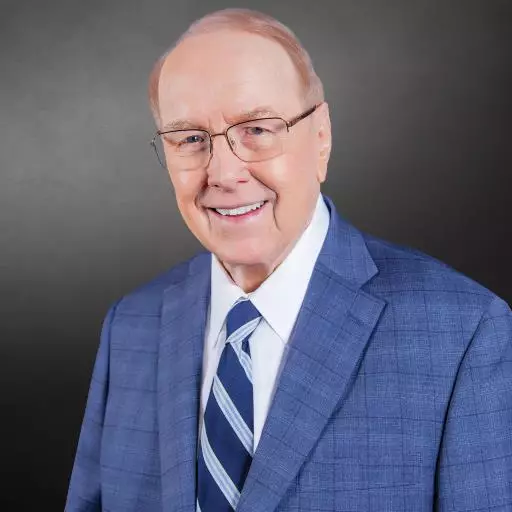
Help for Parents of Prodigal Children - I


Allison Bottke is a best-selling author and speaker. Her written works include the acclaimed God Allows U-Turns compilation book series, the God Answers Prayers series, and the best-selling Setting Boundaries series from Harvest House Publishers. With a passion to assist people who long to experience the writing dreams of their hearts, Allison also works one-on-one with a limited number of writers every year. She has been on the faculty at several national writing conferences, including Jerry Jenkins’ Writing for the Soul conference.
Dr. James Dobson: Welcome everyone to Family Talk. It's a ministry of the James Dobson Family Institute, supported by listeners just like you. I'm Dr. James Dobson, and I'm thrilled that you've joined us.
Roger Marsh: Well, welcome to Family Talk Weekend. I'm Roger Marsh. Thanks for making time during your weekend to take us along or to have us with you at home. Family Talk is a listener-supported broadcast outreach, and your prayers and financial partnership make these programs possible. Well, we have a great program in store for you today, so let's jump right in.
Allison Botke: The definition of insanity is repeating the same behaviors and expecting different results. I found myself standing in my son's kitchen after the SWAT team raided his home, pouring out liquor bottles, cleaning up, and I stood back and went, what am I doing? It's just getting worse and worse and worse. I'm thinking I'm helping. This is clearly not helping. That's what we have to reach as parents. And then I had to turn the spotlight on me, because the problem isn't our adult dysfunctional kids. Yes, they have problems, they do, but the problem is the part I kept playing in bailing him out. The problem was my rescuing him all the time.
What about my heart? What about me as a mom made me do this when clearly it wasn't helpful? So I had to look at that and see what I had to do differently. And as a mom, I had to do things differently. I had to stop writing the checks. I had to stop the money flow. I had to do hard things and be prepared for the consequences.
Roger Marsh: Well, that's a bold and eye-opening statement from Allison Botke, and she knows firsthand what it's like to have a prodigal child and then to have to ask yourself the question, what role did I, as a parent, play in raising this child? Welcome to this special edition of Dr. James Dobson's Family Talk. I'm Roger Marsh, and if you find yourself in this situation where you are resonating with what Allison had to say, you definitely want to be with us for the next couple of broadcasts. Allison is the parent of a son by the name of Chris, who went through a season of rebellion that actually wound up landing him behind bars.
And even though we know raising godly children is not easy, it's even more difficult on parents, especially when those kids either didn't have faith or walk away from their faith. But then when they make choices and we find ourselves doing everything we can to try to help them out, quote unquote, and then it turns out that what we're doing to quote unquote help actually winds up doing more harm than good, it's very, very difficult to face that music. But Alison Botke has done so, and she's done so with aplomb, as it were. She's written a number of books. She's been a best-selling author for years.
Her Setting Boundaries series has sold more than a quarter million copies. She's the author of the best-selling book, Setting Boundaries with Your Adult Children, which will be the theme of our conversation today, and the follow-up to that, How to Connect with Your Troubled Adult Children. And both of those books are available in our resource center at drjamesdobson.org/familytalk. Okay, let's get into part one of this conversation. We encourage you, if you are listening with young children, to use discretion as to how to handle this program, either to be listened to live as you're hearing it, or to go back and listen to it online at DrJamesDobson.org or also on our stream at OnePlace.com.
And now let's get into part one of how to set boundaries with your adult children and our guest Allison Botke. Here now is Dr. James Dobson to start today's edition of Family Talk.
Dr. James Dobson: We sat in my office a few minutes ago, and I got just a deep appreciation for what you're trying to do, because you're not writing in a vacuum. You're not pulling this out of nowhere and saying, maybe this would be helpful to people. You have lived it, and in fact, it comes out of your childhood. And so what was your childhood like?
Allison Botke: I did. My parents were divorced when I was young, and I was the middle child. I tease about that. I was the middle child. But, I mirrored what I learned about parenting. You know, I didn't know what it was like to have two parents around. I didn't know, I had a real skewed view of parenting and of love and of just life in general. So when I became a parent at a very young age, now without the Lord, without direction, I was really a mess.
Dr. James Dobson: Yeah, and you had one son, his name is Christopher.
Allison Botke: Christopher, I s- yes.
Dr. James Dobson: And you acknowledged making some pretty serious mistakes with him. And he made a few of his own. And Christopher is now in prison.
Allison Botke: Yes, he is.
Dr. James Dobson: For what?
Allison Botke: Oh gosh, breaking and entering, dealing drugs, any number of, there's a whole list.
Dr. James Dobson: So when you talk to parents about the pain of a dysfunctional child that you're personally responsible for in some cases. You know what? And in other cases, the parents did what looks like an outstanding job. You know, nobody does it perfectly because you can no more be a perfect parent than you can be a perfect human being. But there are parents that do it better than others, and sometimes those that do it very, very well still have dysfunctional children.
Allison Botke: Yes, they do. The children do make their own choices. Absolutely right. the ones that I really am speaking to are the parents that are trying to make the choices, not trying. We're making choices for our children. I'm talking about enabling. I'm talking about the difference between helping and enabling. I didn't know what that was. A lot of parents don't know what that is, and there is a very definite difference.
Dr. James Dobson: Well, let's talk about it. Tell us the difference between enabling and helping.
Allison Botke: Helping is doing something for someone that they are not capable of doing themselves. Enabling is doing something for someone that they can, and most often should be doing for themselves.
Dr. James Dobson: Yeah, and enabling is often involved in bailing them out and giving to them and looking the other way and taking the blame and not holding them accountable and that whole area. That's not helpful, is it?
Allison Botke: It's not helpful. No, it's not, but often, at least I know my from my experience as a mom, I didn't want my son to hurt. I didn't want him to experience the consequences of his actions. It didn't dawn on me that I was stopping a train of growth that he had to go through. Sometimes our kids have to hurt to grow. Sometimes that's what, God uses to make them become the people he wants them to be. And I kept getting in there and stopping that progression. I kept getting in there, and I thought I was helping, so I didn't want him to go through, any of these things I went through. I was guilty because of how I raised him.
I was a teenage mom. I made a lot of mistakes. So any number of reasons I kept coming in, just in time, so he didn't have to feel the pain or the anguish or any number of things that he really needed to feel to become a responsible adult.
Dr. James Dobson: Yeah. describe the teen years for Christopher. Do we have his permission to talk about him?
Allison Botke: Yes, we do. We do. And he's do- you know, God has used prison to bring some amazing people around in their U-turns. We know this. I mean, look how many people in the Bible have had to spend years in prison, and that's where my son is. He's closer today to the Lord than he ever has been. So there's, you know, there's... It's a different life, but yes, we have his permission. it's an interesting relationship that he and I have now, but you asked about his teen years. You know, we don't, as parents, all of a sudden, when our kids are 20, 30, 40, start this habit. Parents that are enablers have started when they're young, and I did start when he was young.
I didn't want him to, experience the pain of his actions. I was always coming to his rescue. Any number of things there, you know, I would go
Dr. James Dobson: You'd intercede for him at school.
Allison Botke: Of course, of course, because I was helping, and I was a real helpful mom. I was right in there because I, you know, he didn't have a dad, and, you know, and I mean, I gave, I had more excuses. So, I mean, it was over and over. But through that, doctor, I also, you know, I wasn't a believer then. I was living a life that was really a mess. I was not mirroring, you know, he had a mom that was so confused. I was working, partying. I was into drugs and alcohol. I was a mess, and I was being a mom and trying to be a mom, and he saw, you know, somebody that was so out of touch. He didn't have anything to really, there was no faith in his, I raised him not to believe in God.
I told him there wasn't a God. I mean, this was, I believed in New Age and tarot cards and astrological charts, and I was so open-minded, my brain slipped out. You know, I mean, there was no foundation. So when he started running away from home, it wasn't, you know, it made perfect sense. I mean, why live in that kind of an environment when your mom is, you know, do as I say, not as I do. you know, that was
Dr. James Dobson: I, Allison,
Allison Botke: It was a mess.
Dr. James Dobson: when you were sitting in my office, I looked at you and you had gigantic tears
Allison Botke: You're going to start it again.
Dr. James Dobson: in your eyes, and your mascara is a little bit smudged today here in the studio because, yeah, don't, please don't apologize for it. I know how it got there. And you were talking about your conversion to Christ. How old were you when you found the Lord?
Allison Botke: I was 35 years old. And my son was a teenager. He was 18, and he was in juvenile detention center the day that I walked into a church and realized that everything I was trying to fill that empty space with wasn't working.
Dr. James Dobson: And how did you come to know that there was an answer?
Allison Botke: Well, I, we hired a Christian secretary in my office who listened to Christian radio. I'd never listened to Christian radio before, and she would play it in the background, I would listen. So I started putting it on in my car, and there was this radio program by some doctor named Dobson. So I started listening to him, you know, and I was, I was
Dr. James Dobson: That was the first Christian program
Allison Botke: The first Christian talk show I ever listened to. And I listened to you, and I thought, well, he's got some, there's some good points here. There's some good points here. and then I started listening more and more. I listened to more Christian music, and that's how the Lord began to soften my really hard heart. He used Christian music and your radio program, and yes, that's why you got my big crocodile tears going.
Dr. James Dobson: You were 35?
Allison Botke: 35 years old. Yeah, and I walked into a church that night. There was a service. It was Wednesday night, 20 after 7. The pastor's message was for me. He talked about being empty, being lost, being alone, stuffing our hearts with work, money, drugs, food, partying, whatever, you know. I said, well, okay, God, if you're really up there, you're really, you know, do something with my life because I sure have messed it up, and I've messed up my son's life too. He's 18 years old in juvenile detention center. Actually, he was 17, he was going to be 18 in about 2 days. So then he becomes an adult, and the problems become escalated because he's no longer in juvenile detention centers.
He's now going to be in jails if he keeps up what he's doing. And I couldn't control him, and I thought that was my job. I had to control him. I had to fix him.
Dr. James Dobson: But in that service, you yielded to him?
Allison Botke: I did. I said, God, I'm here. Fix me, fix him, do, you know, it's...
Dr. James Dobson: What did he do in response?
Allison Botke: My life absolutely changed. It wasn't easier. I say that often to people. my life didn't suddenly become joyful and happy and easy. However, I had a new direction. I had a, you know, there was a navigator. I had no navigation. I didn't know, you know, I started reading the Bible. I became convicted of how much sin was in my life. I didn't know that word sin. I began to be convicted. You know, the lifestyle I'd lived for so many years, you know, everything was great. There was no right and wrong. If it felt good, do it. You know, you just tolerate everything. So God really changed my life in convicting me.
That was the first thing, you know, whoa.
Dr. James Dobson: You know, the scripture says that's what happens when you draw near to him. Isaiah said in the year that King Uzziah died, I saw the Lord high and lifted up, and his train filled the temple, and I said, woe is me, I'm a man of unclean lips. There is something about coming into his presence that you recognize your need for a savior, you recognize the need for cleanness, and you recognize your sin, and that's what you did.
Allison Botke: Oh, in a big way, and I really adopted 2 Corinthians 5:17 that says, therefore, if anyone is in Christ, he is a new creation. The old has gone, the new has come, and I hung on to that, that the old was gone. I didn't have to live that way anymore. And through that came a different relationship with my son, you know, and it wasn't easy, it wasn't overnight. I mean, he was 18, and we just, you know, my growth took a lot of years. I'm still growing, trying to figure out how to be, you know, a mom to this very strong-willed child.
Roger Marsh: It's never easy to face the fact that we can possibly raise a child who could turn out to have a situation where their prodigal season gets so bad that everything we do to try to help makes it worse. But today here on Family Talk, our guest Allison Botke is sharing with Dr. James Dobson about how to set boundaries with your adult children to keep that from happening, and she's speaking from personal experience. And now let's continue with the conclusion of today's edition of Family Talk, Dr. James Dobson's conversation with author Allison Baathke.
Dr. James Dobson: You
Roger Marsh: have
Dr. James Dobson: mentioned the relationship between a mother and a child several times, referring to yourself, but also others. Do you think women are more vulnerable emotionally to this particular error with their kids of being enablers?
Allison Botke: You know, I normally I would say yes, I think so, and yet the more I've been out speaking, I found a lot of dads. There's a lot of men out there that just, you know, that really want to help, to help their kids too. You know, they want to, they, and they really want to come to the rescue, and they often come to the rescue with the checkbook. You know, that's, you know, there's a lot of men, but I guess I do, I would say yes, it's women. I would. We have that mommy heart, you know, we just don't want our kids to hurt, and that's what it comes down to. We really don't want them to hurt. And
Dr. James Dobson: Well, the short answer is yes, right?
Allison Botke: Yes. Thank you. Thank you, doctor.
Dr. James Dobson: It's true.
Allison Botke: Jackie, yes.
Dr. James Dobson: Not that men don't feel much of the same things. Men are fully capable of feeling guilty and of recognizing that they have made mistakes with their kids, but a mother and a child have a special bond, and there's nothing quite like it in the whole universe.
Allison Botke: Absolutely. And an added component of that are how many single moms are raising their kids. And the single mom component really, because we think we need to be everything. And we're guilty, and there's a lot of things going on there.
Dr. James Dobson: You write in your book about fear and guilt being the root cause of much of the enabling that goes on out there. Elaborate on that.
Allison Botke: Yes, if I was so fearful that if I didn't come to my son's rescue, if I didn't bail him out, if I didn't let him crash in my house, that he would overdose, he would rob somebody and go to jail for the rest of his life, someone would kill him. You know, the fear is very real when you are involved in a world of drugs and alcohol and crime, it's a very real fear.
Dr. James Dobson: You never know when there's going to be a knock on the door at night and you're asked to come down to the morgue. That haunted you,
Allison Botke: Yes, it haunted me.
Dr. James Dobson: you said in the book.
Allison Botke: Every time the phone rang, I would think somebody's calling to tell me my son is dead, you know, and that's a horrible way to live, and it's a horrible way, and so many parents feel that. We know if we aren't there, if we don't rescue them, they could die, and it's a real consequence.
Dr. James Dobson: Of course it is.
Allison Botke: It is a real consequence.
Dr. James Dobson: Ah. And that went on for many years and still really continues today, doesn't it?
Allison Botke: Dozens of years. well, today he's in prison. I still
Dr. James Dobson: You still worry about him?
Allison Botke: I'm very- yes, I am. But today I have a different feeling in my heart because I realize that the choices he's making are his choices. I've no longer coming in and bailing him out, and I haven't for many years, but it took a progression of time to get to that point.
Dr. James Dobson: Okay, Allison, how do you get to that point? We're talking to people right now who know they made terrible mistakes. They will admit them. Some of them wallow in the guilt of that recognition. How in the world do they get beyond that and lay that down and say, Lord, I did the best I could. It wasn't good enough. I failed. Will you help me? Will you take this? I can't carry it anymore. I'm going to give it to you. Were you able to do that?
Allison Botke: Amen. Yes, yes, I was. I had to get to that point and then develop steps that helped me get through that because I had the realization one day that nothing I was doing was helping. The definition of insanity is repeating the same behaviors and expecting different results. I found myself standing in my son's kitchen after the SWAT team raided his home, pouring out liquor bottles, cleaning up, and I stood back and went, what am I doing? I'm doing, it's just getting worse and worse and worse. I'm thinking I'm helping. This is clearly not helping. And we have, that's what we have to reach as parents.
And then I had to turn the spotlight on me. Because the problem isn't our adult dysfunctional kids. Yes, they have problems, they do, but the problem is the part I kept playing in bailing him out. The problem was my rescuing him all the time. What about my heart? What about me as a mom made me do this when clearly it wasn't helpful? So I had to look at that and see what I had to do differently. And as a mom, I had to do things differently. I had to stop writing the checks. I had to stop the money flow. I had to do hard things and be prepared for the consequences. So, you know, I got
Dr. James Dobson: Especially when it sometimes brings anger, great anger. And even more dysfunctional behavior when you do that. You let go, and they're so angry they go out and do even more.
Allison Botke: And for my son's case, you know, he would go for a year, I wouldn't even know where he was. I didn't know if he was alive, I didn't know where he was. So it was a never-ending drama, and it took a lot of years before he was gone for a long time, and I wouldn't be feeling guilty when he came back, or I wouldn't be trying to, you know, keep him there with, you know, money or whatever it was. I finally realized, you know, Chris, you're living your life. I love you. I'm praying for you, but I can't continue this way. I had to look at my marriage, you know, a lot of people lose their marriages over this.
You, I mean...
Dr. James Dobson: They do.
Allison Botke: It's a horrible situation when you allow your adult children and their choices to affect you.
Dr. James Dobson: To destroy your life.
Allison Botke: Exactly.
Dr. James Dobson: And if you, the mom particularly, are a somewhat compliant woman who has never confronted people in this way, and then you're dealing with the one that you love more than anybody on earth, you gave birth to that child, you watched him or her suffer through the teen years, you've been through that whole route. How in the world do you get to that point where you say, you're on your own? You know, I love you as much as I ever did, but it's no longer my responsibility. Now, I started to say, you've been speaking all over the country. Let's suppose you're standing in front of 500 people, 1,000 people right now, and all over the room they're crying because they recognize your pattern in their lives.
What do you say? What are you saying?
Allison Botke: First of all, never underestimate the power of God to restore your children and that God has a plan for their life. And when we come in and rescue them, we are playing God. That is what really helped me tremendously when I realized, you know, something has got to happen in his life, and I am stopping that from happening. So I need to sit back and trust God. Trust that God is in control. Trust that God is in control.
Dr. James Dobson: The moment you do that, you feel better, don't you?
Allison Botke: I- yeah, absolutely.
Dr. James Dobson: That's the interesting thing about love must be tough. There is a need to take this step with somebody you love, and it's the hardest thing in the world to do, but your own relationship with that individual confirms in your heart that it's right, and you begin to recognize that it's right and do better.
Allison Botke: Exactly, and
Dr. James Dobson: And feel better, yeah.
Allison Botke: And I don't know, I started looking at it this way. I don't know that this situation, this issue my son is going through isn't, you know, the sharpening that he needs for some amazing thing God's going to do in his life. I mean, what if Paul's mother would have not let him walk the road to Damascus, you know, and said, no, Saul, you're not going there. I'm walking it for you. I mean, I don't know what, you know, my son may have this amazing life that God's got planned for him. Who am I to keep stopping it? And that's what I was doing.
Dr. James Dobson: Alison, you're absolutely right. I'm absolutely convinced that it's true.
Allison Botke: But there's a but coming there.
Dr. James Dobson: The but is you've got a 16 year old who's on cocaine, and you, you know, you love that child so much, letting him go and get into all this trouble is very, very difficult.
Allison Botke: It is very difficult, and there's something different, though, with the 16-year-old. They're still a minor. I am dealing with the adult children. It's a different thing legally in our country. the 16-year-old
Dr. James Dobson: But even there, you bail him out over and over and over again, he's not going to learn the lessons.
Allison Botke: Exactly, exactly.
Dr. James Dobson: Yeah. Well, we're out of time for today, Allison. I want to start right here next time by asking you to walk people through these steps. You say there are 6 steps to hope and healing, and let's hear what they are. Very practical approaches to getting out of this
Roger Marsh: trap of giving and enabling Yes. somebody that you love. Amen. How grateful we are to have parents like Allison Botke who have done the heavy lifting for us with regard to finding help in your relationship with your troubled adult child. And today here on Dr. James Dobson's Family Talk, she's been in studio with us to share with Dr. Dobson about setting Boundaries with Your Adult Children. That was a book that she wrote in 2018 after her son Chris had made some poor choices and wound up behind bars. Now, after that book was released, she followed up with another resource for parents called How to Connect with Your Troubled Adult Children, Effective Strategies for Families in Pain.
We have both of those resources available for you in our resource center. Go to drjamesdobson.org/familytalk and find out information on how you can get those resources online. That's drjamesdobson.org/familytalk. In addition, you can also contact our resource center by calling 877-732-6825, and a member of our constituent care team will be happy to pray with and for you, hear your story if you're dealing with a situation with a troubled adult child. Also help you get connected to resources like either of Allison Baathke's books on this subject, or you can also get a copy of the audio CD featuring both part 1 and part 2 of Dr.
James Dobson's conversation with Allison Baathke on the issue of how to connect with your troubled adult children. Again, you can call 877-732-6825. That's 877-732-6825. And be sure to check out the Dobson Digital Library while you're online with us at drjamesdobson.org. You can search through thousands, literally thousands of files, resources, books, articles, blogs, videos, radio broadcasts, and more, all based on certain subjects that are easy to search, and then you can go ahead and pull up whatever your specific issue is. We have thousands of resources, literally, to help you there. The Dobson Digital Library is accessible when you go to drjamesdobson.org.
Now, one of the primary reasons why we're able to present the ministry resources to you that we do and make so many of them available without cost is because of your prayers and faithful financial support here at the Dr. James Dobson Family Institute. Well, thanks so much for listening today. Be sure to join us again next time right here for the conclusion of our powerful conversation with Allison Botke discussing finding help for troubled children and parenting your adult children well during those troubling seasons. Now for Dr. James Dobson, his wife Shirley, and all of us here at the JDFI, I'm Roger Marsh.
Thanks for listening. Join us again next time right here for another edition of Dr. James Dobson's Family Talk. This has been a presentation of the Dr. James Dobson Family Institute.
Featured Offer

Amid the busyness of the Christmas season, take time to reflect on the greatest gift of all—Jesus Christ.
In just 3–5 minutes a day, explore God’s promises, the miracle of the Incarnation, and the lasting hope we have through our Savior.
Make time for what matters most this Christmas.
Sign up to receive this free 12-day devotional series in your inbox.

Featured Offer
Amid the busyness of the Christmas season, take time to reflect on the greatest gift of all—Jesus Christ.
In just 3–5 minutes a day, explore God’s promises, the miracle of the Incarnation, and the lasting hope we have through our Savior.
Make time for what matters most this Christmas.
Sign up to receive this free 12-day devotional series in your inbox.
About Family Talk Weekends
Family Talk is a Christian non-profit organization located in Colorado Springs, Colorado. Founded in 2010 by Dr. James Dobson, the ministry promotes and teaches biblical principles that support marriage, family, and child-development. Since its inception, Family Talk has served millions of families with broadcasts, monthly newsletters, feature articles, videos, blogs, books and other resources available on demand via its website, mobile apps, and social media platforms.
The Dr. James Dobson Family Institute (JDFI) is a Christian non-profit ministry located in Colorado Springs, Colorado. Founded initially as Family Talk in 2010 by Dr. James Dobson, the organization promotes and teaches biblical principles that support marriage, family, and child development. Since its inception, Family Talk has served families with broadcasts, monthly newsletters, feature articles, videos, blogs, books, and other resources available on demand via their website, mobile apps, and social media platforms. In 2017, the ministry rebranded under JDFI to expand its four core ministry divisions consisting of the Family Talk radio broadcast, the Dobson Policy and Education Centers, and the Dobson Digital Library.
Dr. Dobson's flagship broadcast called, “Dr. James Dobson’s Family Talk," is aired on more than 1,500 terrestrial radio outlets and numerous digital channels that reach millions each month.
About Dr. James Dobson
Dr. James Dobson is the Founder Chairman of the James Dobson Family Institute, a nonprofit organization that produces his radio program, “Dr. James Dobson's Family Talk.” He has an earned Ph.D. from the University of Southern California and holds 18 honorary doctoral degrees. He is the author of more than 70 books dedicated to the preservation of the family including, The New Dare to Discipline, Love for a Lifetime, Life on the Edge, Love Must Be Tough, The New Strong-Willed Child, When God Doesn't Make Sense, Bringing Up Boys, Bringing Up Girls, and, most recently, Your Legacy: The Greatest Gift. Dr. Dobson served as an associate clinical professor of pediatrics at the University of Southern California School of Medicine for 14 years and on the attending staff of Children’s Hospital of Los Angeles for 17 years in the divisions of Child Development and Medical Genetics. He has advised five U.S. presidents and served on eight national commissions. Dr. Dobson has been married to Shirley for 64 years, and they have two grown children, Danae and Ryan, and two grandchildren.
Contact Family Talk Weekends with Dr. James Dobson
540 Elkton Drive
Suite 201
Colorado Springs, CO 80907
877.732.6825