
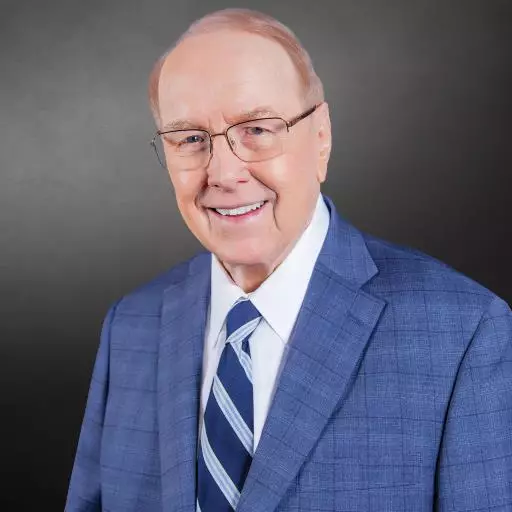
Cleaning House: Raising Responsible Kids


Is your home becoming a palace of entitlement? On today’s edition of Family Talk, Dr. James Dobson and author Kay Wills Wyma discuss her eye-opening book entitled, Cleaning House. After realizing her five children expected to be served at every turn, Kay embarked on a 12-month experiment to teach them responsibility and a strong work ethic. Proverbs 22:6 says, “Start children off on the way they should go, and even when they are old, they will not turn from it.”
Dr. James Dobson: You're listening to Family Talk, the radio broadcasting division of the James Dobson Family Institute. I am that James Dobson, and I'm so pleased that you've joined us today. Well, welcome to Family Talk Weekend. I'm Roger Marsh. Thanks for making time during your weekend to take us along or to have us with you at home. Family Talk is a listener-supported broadcast outreach, and your prayers and financial partnership make these programs possible. Well, we have a great program in store for you today, so let's jump right in. Well, welcome to Dr. James Dobson's Family Talk. I'm Roger Marsh, and you know, many children are growing up in today's me-centered society.
They're struggling with entitlement issues. They've created lengthy lists of perceived rights and privileges, which only feed their unhealthy desires for excess. Now, our culture not only fails to discourage this mentality, but oftentimes actively promotes it. So how can we as parents and grandparents teach our children gratitude, responsibility, and moral character? Well, today here on Family Talk, we're revisiting a classic conversation with author Kay Wills Wima, mother of five, who took on this challenge in her own home. After discovering the extent of entitlement in her household, Kay embarked on a 12-month experiment to transform her children's attitudes, and her journey led her to writing the book called Cleaning House, a mom's 12-month experiment to rid her home of youth entitlement.
Kay's insights have appeared in the New York Times, the Huffington Post, and Thriving Family Magazine. As a graduate of Baylor University, having earned her master's in management from Thunderbird School of Global Business, she brings both practical wisdom and professional expertise to this important topic. Now, this conversation was recorded in front of a live studio audience, so you'll enjoy hearing their reactions to the comments that Doctor and Kay make throughout the broadcast as well. Here now is Dr. James Dobson to introduce our guest Kay Wills Wima on this special edition of Family Talk.
We have an author here today that I have been looking forward to having at Family Talk. Her name is Kay Wills Wima, and she has written a book called Cleaning House, a mom's 12-month experiment to rid her home of youth entitlement. So we see where you're coming from very, very quickly. You've got 5 kids.
Kay Wills Wima: I do, and apparently I had a home full of entitlement.
Dr. James Dobson: And, they give us their ages.
Kay Wills Wima: Well, right now they're 15, 13, 11, almost 12, 10, and 5. Is that 5 kids?
Dr. James Dobson: Yeah, and you've given them pseudonyms to protect their identities here today. Tell us what those pseudonyms are.
Kay Wills Wima: Well, I did that for so many reasons, partly because, you know, a few of them are teenagers, and that's the last thing they want is to be embarrassed by their mother. I wanted, when people read it, not to be married to my kids, because really it's a lot of personality types. And I noticed even with mine, as they grow, they morph into different personalities. And so when I did it, I really hit what the personality type was at that time. So one of the kids' name is Boxter, and he's named that because he believed at 16 that he would be driving a Porsche that somehow he thought we might give him, which was an absolutely incorrect assumption, but he mused aloud that he wanted that thing, and that's all it took.
And so I laughingly named him Boxter, that he's always looking for something to fill his, that deepest desire, and that's to fit in and be accepted. And so he's borderline mortified that he's even in it at all. But I've explained to them over and over, and have included them in along on the ride, because I don't want to do anything to hurt them. so much of this book was stuff that I learned and about me, and I was as honest about me as I was with any conversation that I had with the kids. And most of the conversations we had are the same conversations that everyone is having in their car. And that's a big reason too why to give them pseudo names and
and they are different personalities. You know, one of the kids, she steps up and does everything without complaining. I named her Barton, you know, after Clara Barton, who was always there to help. And one of my kids is very quick to point out at any time when I fall outside of the boundaries, like if I'm driving and it's speed limit of 35 and I'm going 37, somehow from the very back of the car, she can see that it's 37 and will inform me. And one day I tried to explain to her it's OK to go 2 miles over the speed limit. I was like, what are you doing? Telling your kid that they can speed? I was like, never mind, it's not OK to go 2 miles over the speed limit.
Dr. James Dobson: Kay, isn't it incredible the differences in temperament and personality
Kay Wills Wima: Oh, yes.
Dr. James Dobson: between your kids? You got 5 kids.
Kay Wills Wima: I do, so I've got everything. I really do.
Dr. James Dobson: I have for the first 25 years that I was a psychologist, I had parents ask me the same question over and over again. I got 2 kids, they're very, very different. How come I raised them the same? They're not the same kids. They were born different, right? They were different at the moment of birth.
Kay Wills Wima: They come out the way they are.
Dr. James Dobson: Absolutely.
Kay Wills Wima: They really do. And what a- okay, so what a neat thing to know. From the very minute they're born, you are not in control. And, do you really want to be? Do we really think that we want to be God and that we know the best thing for them at all times? And at the crux of what's in this book is, I guess, calling out a parent's desire to be in control of everything. And so we go in and manipulate, and we finagle, and we do everything we think we can so that they would have that, quote, self-esteem or self-worth because of whatever we've done to cherry pick teams for them to be on, to make them think that they have to be on a certain team to be accepted or to make certain grades to be accept- all these things that we've put as the pinnacle of what parenting is, is that their self-esteem be good, and yet we go in behind them and take everything away that actually could give them good self-esteem.
And that's a lot of confidence and independence that, quite frankly, comes with trying and failing and trying and getting back up.
Dr. James Dobson: Kate, tell us those other pseudonyms. I don't want to leave that incomplete.
Kay Wills Wima: Our last little ones. One of them is named Fury because he is. He's a very spirited young child, but, on the other end, just like that stallion and those wonderful children's stories, when that horse got on it, there was nothing stopping that horse, and it's the same with this kid. Once we get through that whining, really tough, bad attitude, which thank you for writing books on that too, of a strong-willed child.
Dr. James Dobson: Is he one of those?
Kay Wills Wima: Yes, he is. But you know, there's tenacity that comes in that.
Dr. James Dobson: There is.
Kay Wills Wima: The hard part is parenting a kid like that because you don't want to break them, but hey, they have to learn to live within boundaries because they're happy within the boundaries. And, but boy, they like to be doing a lot of stuff and, you know, to watch him step up to the plate on these tasks and do them, and then to see that confidence that's in that kid, oh! And then there's Jack, who we do call Future Hoarder of America, for obvious reasons.
Dr. James Dobson: How old is he?
Kay Wills Wima: He's 5 right now, but he does leave treasures for us everywhere. And where we live, people have personal trainers in just about every aspect of a child's life. Any given day, you can go to the park that's a block away from us and see a 5-year-old out there with a soccer coach teaching them how to kick the ball, but you don't see kids out playing soccer because everything's organized based on the team and the sport and what activity you're running to next, next, next, next, next.
Dr. James Dobson: So the bottom line of that is that you don't want parents to micromanage. You don't want them to be involved in everything, especially those things that the child can do for himself or herself.
Kay Wills Wima: I think that's key. But society gives you the exact opposite message. Society is telling you, yes, you must be involved in every single aspect. And you know, I had great parents, but it's funny to have written some of this, and I'm honest about things that I've learned even from the way that I grew up, that I did walk out of the house not having a clue how to cook. When John and I got married, I had, I honestly had never gone through a grocery store and filled a cart. I knew where the cereal was and the yogurt, and that was about it. And so I stood at the end of an aisle thinking, what in the world do I do?
I'd never cooked. My sweet mom had never really taught us how to cook anything besides cookies. And, and so it was hard. Our first part of marriage, thankfully, someone gave us a waffle iron as a gift, and I made waffles, I'm not joking, at least 3 times a week for several months. It was, pathetic. But it's, you know, even growing up a little bit that way, because we, I think they too wanted to have time for us to be able to do things like study or be interested in sports and that kind of thing. And when mom was at the beginning of her child rearing age, there was a book that was very popular at that time that was written by Dr.
Spock, a very well-intentioned pediatrician who did what where we sit right now is probably a culmination of what he encouraged parents to do, and that is child-centered parenting for the self-esteem of a kid. And mom said that when she read that book, which was wildly popular when she was having us, she said, I picked it up, I read it, and I thought something is really wrong with this, and she put it back down. But most of her friends didn't. I've had people ask me, well, is this the parents' fault that we're doing this? I think a lot of it is just a society that's been marinating in a very, very skewed philosophy of parenting that's just off.
And the water's been warm, and the water's now boiling. And so we read articles about parents being involved in their child's employment efforts, and it sickens you, and you think, how could that be? Well, the reason why it is because they started when they were little bitty, and they started doing all their kids' homework for them because they didn't want their feelings to get hurt if they had a B and their neighbor had an A, and they made sure they were on certain teams or included in certain carpools or, and then they filled out every college application because they knew full well that their child would be competing against some other parent or expert having filled out their application.
It just goes on and on, and it would be easy to judge and go, oh, I can't imagine that someone would go into that place of employment, you know, but for the grace of God, it might be me, you know? And that's where I sat when I started this, really just a frustrated mother because I couldn't believe all the clutter that was in these rooms when I walked in after that mind-numbing Porsche conversation, and every dish was on the table for breakfast.
Dr. James Dobson: That really had an impact on you.
Kay Wills Wima: Boy, it was a bad day. I think if they could go back and relive that, they would. But I sat on my couch and I called my sister-in-law, Chris Wills, and they live in Atlanta, and I started talking to her about it, and she told me about her kid who had taken out the garbage that morning. She had, it was his week to do it. His definition of taking out the garbage was picking up the bags and putting them at the back door. That was taking the garbage. The whole week, she didn't take it out to the garbage can, she just let it pile up, and she watched him that morning crawl over a mountain of garbage to get out the door because they have seven kids.
And I thought if that's going on with the golden child, who let's just say is just terrific in every way, it's happening everywhere. And I sat on my couch thinking, I am raising my kids to think that they are owed and that they need to be served, and they're looking to the state to do it.
Dr. James Dobson: This book really is autobiographical for you, isn't it?
Kay Wills Wima: It is autobiographical, and it really is living it with me in the moment. It's not something I looked back. It's a lot of what happened in the moment.
Dr. James Dobson: Kay, I got so interested in the topic for your book that I didn't give you much of an introduction, but you have had some really impressive responsibilities in your life. You worked at the White House for a while.
Kay Wills Wima: I did.
Dr. James Dobson: And you also worked for Dan and Marilyn Quayle,
Kay Wills Wima: Yes, sir.
Dr. James Dobson: the Vice President of the United States. How did you come about that?
Kay Wills Wima: Probably through a lot of hard work and some great family that had gotten involved. For me, I was an advanced person. I traveled all over the country, and with the Vice President, you get to travel international, so I did a lot of international travel, and I loved it. It was a hard job, though. It was something that you were in the public eye all the time. Working for Dan Quayle was a delight, but I tell you, people were looking at you all the time to find where he could mess up.
Dr. James Dobson: So there is a place to open some doors for your kids, right?
Kay Wills Wima: Absolutely.
Dr. James Dobson: That's not always a bad thing.
Kay Wills Wima: I don't think that's a bad thing at all, and it's something that's gone on for years. And that's a part of relating, you know, the fact that we have the, we know that there's communication issue with this generation too, because they have a hard time speaking to individuals, to people versus texting. And so, yes, there's a lot about relationships that are great. It's a- if we were supposed to be on this earth alone, I think he would have stopped with Adam, you know, and he didn't because it's a beautiful part of life. And I guess part of this too, I'm not saying just, you know, kick them out the door and good luck with you.
It's training. Training is not doing it for them. Yeah, and you sit back and you help them and you encourage them and you watch them and teach them. I think the problem is that we've taken training and made it do it for them, and that's where I think our biggest problem is because we're just emasculating a generation. And I want to be so careful of this not being an indictment on parents because it is a way that we've lived life because we've been groomed to do that too. And I think there are personalities that are more procrastinators than others, and I've noticed that in my house. You know, I have the go-to people that do it and the ones that don't.
And then enter in just housework. It's mundane. It never stops. You know, I told one the other night, it's your turn to do the dishes. I did the dishes this morning, and you know what? He had done the dishes that morning, but guess what? You do the dishes 4 or 5 times, you know, a week for sure, and all that stuff that is so good to lean into because work is that way.
Dr. James Dobson: Yeah. The title of the book is Cleaning House, a mom's 12-month experiment. It's loaded with good stuff, Kay. I tell you, I'm impressed with this book, and I hope many of our listeners will get it. you wrote this book as a result of an experiment that your subtitle describes, and it took place in your own home. You saw something that you didn't think was healthy, and you set about changing it. Summarize that for us.
Kay Wills Wima: What I really saw were my kids looking to me to serve them at every single turn, and it disturbed me. It disturbed me because I felt like they were looking to the state to serve them, and I don't believe in that ideology. And so, when I witnessed that, and I would have thought of myself as someone that didn't do that. I never was a mother that hovered at the playground going from opening to opening so my kids wouldn't fall. I kind of felt like if they were going to fall, they would learn to never do it again, you know, it would hurt. And so it surprised me that I was effectively doing that in my house and that it needed to change.
Dr. James Dobson: Where you were doing everything for the kids.
Kay Wills Wima: You bet. I mean, moms and dads do it all the time.
Dr. James Dobson: Kay, I'm pushing your book back towards you because I'm about to ask you a question that you may need your own book to answer. You listed 12 things in that book. Maybe you remember them all, but 12 things that you didn't want your kids to leave home without knowing. Now, you want to consult your book, or can you remember
Kay Wills Wima: Well, I remember most of them.
Dr. James Dobson: Read them all. Here we go.
Kay Wills Wima: Well, Operation Clutter Control, Kitchen Patrol, Grounding Time, which was yard work, Working for a Living, Domestic Dirty Jobs, Roll Tide, which is laundry, and The Handyman can, the entertainers, I really wanted them to learn how to host a party. Team players, which was them finding something and working together. Runner's world, teaching them how to do errands because that's a part of life. It's about others. We had a whole month of service and ladies and gentlemen, which I wanted them to know a little bit about manners. We started very low. you know, my kids weren't making their beds, and I know I did that when they were little.
I'm not quite sure where it stopped, but I'm fairly certain it started along the time where I kept telling myself, it's so much easier just to do it myself.
Dr. James Dobson: Yeah, yeah.
Kay Wills Wima: that, so we had to start there with beds and clutter. Here's an interesting thing that I think we forget. When your kid organizes their own room, they tend to keep it clean, and yet we as mothers go in and color code drawers and have labels on things and go in and clean it all up and then wonder why everything's out on the floor the next day. Well, it's when they own it, it's incredible. I, I, you could go into a certain teenage girl's bathroom and see still an organized drawer that she did several months ago, which let's just say that that's quite the feat. But from there, we went to the kitchen, did, had them learn how to cook and clean and go to the grocery store.
We did, work outside in the yard, which let me just say, I'm terrible. Anything green coming into our house, it's a death sentence. So it proved to me that you don't have to be an expert at something to do it. So I didn't know how to do the yard. We all figured it out together. And we, you know, I made them get jobs. The ones that could get a job had to get a job. My 14-year-old with his friend proved to me very quickly that places don't hire 14-year-olds. They called everywhere, and they really did, which was, you know, pathetic, but which is another thing for society that you can't hire a kid to help you out.
It really benefits everybody, but there are great youth centers that will hire a child. They don't pay them, but we stepped in and rewarded them with what we thought was sufficient. Then we moved on to what I call domestic dirty jobs, which was the Lysol involved items.
Dr. James Dobson: Are these among the 12 items you talked about?
Kay Wills Wima: These are all, this is task 5. This was one of those jobs, the domestic dirty jobs where they really clean the bathroom, that I realized, as I should have at the beginning, that all of these tasks have others on the, on the other side of it. There's an enormous amount of other-centeredness that comes along with all of this, which truly is the secret sauce to life.
Dr. James Dobson: You know, one of the wonderful things about work as a child is that, it teaches you the discipline necessary to stay with something. When I was about 11 years of age, a businessman gave me a big stack, maybe 500 handbills, and said, I want you to go put these under the windshield wiper of everybody in this whole section of town.
Kay Wills Wima: Wow.
Dr. James Dobson: And I was out there for 2 hours. It felt like 40 hours. And when I got back, he paid me 50 cents. 25 cents an hour. You can bet I spent that money very differently than I would have if I'd have gotten it for Christmas. And I learned that work is hard. And you stay with it. You know, dad stay with it for 8 hours. I was out there for 2 hours and thought I was going to die, but I learned something from that.
Kay Wills Wima: Well, I love that you brought up the worth of the money. When you work for it, it means a lot, and I have watched that with the kids. We did provide financial incentive for them because we needed, we needed that. You know, every family has to do that as they see fit. I have noticed that our kids have spent none of their money. They've been tempted, but they walk into stores that they used to walk in and ask me to buy them several things. They walk in and leave. And I've watched a kid actually count out the difference in money if he bought one size versus another. They have to go ask for help to get what they need, and then when they check out, they look at the receipt because they really genuinely care about it because it was their hard-earned money.
Dr. James Dobson: What great training. I think I was 12 when I got a job mowing the lawn, and I got 35 cents for mowing this yard, and my mother came after I'd done it and looked over the job I'd done and said, go knock on the door and give them their 35 cents back because you did such a terrible job. You're going to learn to do things right, and then you mow the lawn without 35 cents. That's what she did to me, but it'd been a whole lot easier for her to have ignored that.
Kay Wills Wima: One thing about this chore and just the family, it's such a test tube for society. So you have them being involved and being an integral part, which is a key thing for kids these days. They're looking for everything to fill that void. They go on to these games where they're playing with people they don't even know, and who knows who they are because they're just, they're searching for a place to fit and to be anchored. And it it's the power of being a part of something that, and we all have it in our home. We have a place for them to belong, and it's so good.
Dr. James Dobson: You know that what you have written here and the fact that you did it, and you did it for a year, is very impressive to me. That's what every parent ought to be doing. It's a lot of hard work, and many wives are working themselves outside the home. And when they come home, they, they've still got a lot of work to do. So not everybody can do that, but where they can, it's a good project.
Kay Wills Wima: Wow.
Dr. James Dobson: The title of the book is Cleaning House, a mom's 12-month experiment to rid her home of youth entitlement. Sounds like you did that very, very well. this book is published by Waterbrook, and I think this is going to be a big bestseller. Thanks for coming and talking to us about it, and what are you working on now? You got other projects for your kids? And are they saying, oh no, mom's at it again?
Kay Wills Wima: Isn't that the truth? They're so sweet to put up with me.
Roger Marsh: I just so appreciate you guys. Thank you for all you do for just us as parents. I just, I for one appreciate what you do. Thank you very much. Teaching children responsibility and gratitude isn't just about making them do chores. It's about helping them discover their own capabilities and worth beyond the me first mindset of modern culture. Today here on Family Talk, Kay Wills Weima has been sharing with us how small changes at home can make a profound difference in shaping our children's character. Kay is the author of the outstanding book called Cleaning House, a mom's 12-month experiment to rid her home of youth entitlement, and we have information about that resource in addition to the complete audio from today's presentation available on our website right now.
If you missed any portion of the broadcast or you want to share these insights with other parents, go to drjamesdobson.org/familytalk. Also, I want to tell you about a wonderful free resource from the Dr. James Dobson Family Institute. We have partnered with the Bible app by YouVersion to bring you inspiring reading plans that fit your busy schedule. There are lots of reading plans for busy parents and for marriages. These brief devotionals offer practical guidance for raising children with strong character and genuine gratitude. Now, to access these free reading plans, all you have to do is go to the Bible app on your phone or tablet and search for Dr.
James Dobson. These bite-sized devotionals might be just what you need to bring fresh perspective to your parenting journey, and there are more than 50 of them to choose from. Again, go to the Bible app by you version on your smartphone or your tablet and search for Dr. James Dobson. If today's program was an encouragement to you in your parenting journey, please consider partnering with us. Your gift of any amount helps us continue sharing biblical truth with families all across the country and literally all over the world. You can make a secure donation at drjamesdobson.org. You can call your donation in over the phone at 877-732-6825, or if you'd prefer, you can write to us.
Our ministry mailing address is Dr. James Dobson's Family Talk, PO Box 39000, Colorado Springs, Colorado, the zip code 80949. I'm Roger Marsh. On behalf of Dr. Dobson and all of us here at JDFI, thanks so much for listening. Join us again next time right here for another edition of Dr. James Dobson's Family Talk.
Announcer: This has been a presentation of the Dr. James Dobson Family Institute.
Featured Offer

Raising boys can be wonderfully rewarding—and uniquely challenging. Our free 10-day email series, Bringing Up Boys, will equip you with trusted, biblical guidance drawn from Dr. James Dobson's best-selling book.

Featured Offer
Raising boys can be wonderfully rewarding—and uniquely challenging. Our free 10-day email series, Bringing Up Boys, will equip you with trusted, biblical guidance drawn from Dr. James Dobson's best-selling book.
About Family Talk Weekends
Family Talk is a Christian non-profit organization located in Colorado Springs, Colorado. Founded in 2010 by Dr. James Dobson, the ministry promotes and teaches biblical principles that support marriage, family, and child-development. Since its inception, Family Talk has served millions of families with broadcasts, monthly newsletters, feature articles, videos, blogs, books and other resources available on demand via its website, mobile apps, and social media platforms.
The Dr. James Dobson Family Institute (JDFI) is a Christian non-profit ministry located in Colorado Springs, Colorado. Founded initially as Family Talk in 2010 by Dr. James Dobson, the organization promotes and teaches biblical principles that support marriage, family, and child development. Since its inception, Family Talk has served families with broadcasts, monthly newsletters, feature articles, videos, blogs, books, and other resources available on demand via their website, mobile apps, and social media platforms. In 2017, the ministry rebranded under JDFI to expand its four core ministry divisions consisting of the Family Talk radio broadcast, the Dobson Policy and Education Centers, and the Dobson Digital Library.
Dr. Dobson's flagship broadcast called, “Dr. James Dobson’s Family Talk," is aired on more than 1,500 terrestrial radio outlets and numerous digital channels that reach millions each month.
About Dr. James Dobson
Dr. James Dobson is the Founder Chairman of the James Dobson Family Institute, a nonprofit organization that produces his radio program, “Dr. James Dobson's Family Talk.” He has an earned Ph.D. from the University of Southern California and holds 18 honorary doctoral degrees. He is the author of more than 70 books dedicated to the preservation of the family including, The New Dare to Discipline, Love for a Lifetime, Life on the Edge, Love Must Be Tough, The New Strong-Willed Child, When God Doesn't Make Sense, Bringing Up Boys, Bringing Up Girls, and, most recently, Your Legacy: The Greatest Gift. Dr. Dobson served as an associate clinical professor of pediatrics at the University of Southern California School of Medicine for 14 years and on the attending staff of Children’s Hospital of Los Angeles for 17 years in the divisions of Child Development and Medical Genetics. He has advised five U.S. presidents and served on eight national commissions. Dr. Dobson has been married to Shirley for 64 years, and they have two grown children, Danae and Ryan, and two grandchildren.
Contact Family Talk Weekends with Dr. James Dobson
540 Elkton Drive
Suite 201
Colorado Springs, CO 80907
877.732.6825