
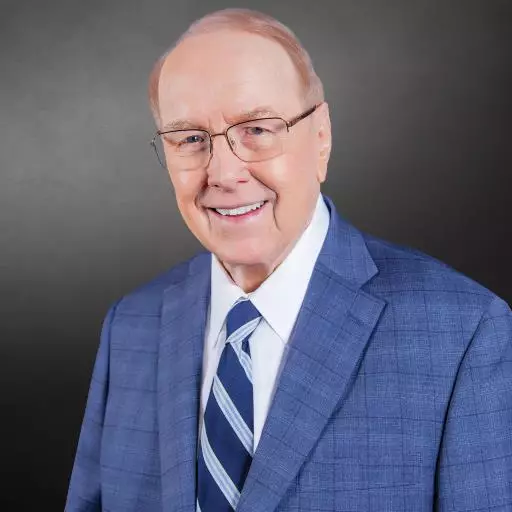
Raising Boys: Wounded Spirits - II


Every classroom has children who face daily ridicule and rejection. On today’s edition of Family Talk, Dr. James Dobson addresses the critical issue of wounded spirits in boys and girls. He explains why parents and teachers must intervene when they see signs of depression, anger, or emotional distress in children being bullied. Learn how to protect vulnerable kids and create safer environments for all.
Dr. James Dobson: Hello everyone, you're listening to Family Talk, the radio broadcasting ministry of the James Dobson Family Institute. I'm Dr. James Dobson, and thank you for joining us for this program.
Roger Marsh: Well welcome to Family Talk Weekend. I'm Roger Marsh. Thanks for making time during your weekend to take us along or to have us with you at home. Family Talk is a listener-supported broadcast outreach, and your prayers and financial partnership make these programs possible. Well, we have a great program in store for you today, so let's jump right in.
Welcome to Family Talk. I'm Roger Marsh. In the rush of daily life, it's easy to miss the struggles our children face. Between work deadlines, school schedules, and endless activities, parents can often overlook the emotional battles their kids are fighting, especially their sons. Some say that dealing with bullies is simply a part of growing up, that parents should just stay out of it and let the kids work things out themselves.
But Dr. James Dobson strongly disagrees. Listen to what he shares from his own teenage years.
Dr. James Dobson: When I was 14, I ran around with kids older than me, and then I began taking flak from these kids. I remember one day when it had just really been a terrible day for me. I cried all the way home. My good dad was there and he sat me down and we talked about it. And you see, what he did is he talked me down from the precipice.
But many kids don't have that. There is nobody at home and nobody cares. And so these tensions grow and they get more angry, and there's a kind of a rage that develops inside.
Roger Marsh: Well today here on Dr. James Dobson's Family Talk, we're bringing you the conclusion of a classic presentation from Dr. Dobson's Bringing Up Boys DVD series. He addresses what he calls wounded spirits, those deep emotional hurts that can mark a child for life if left unaddressed. You'll hear Dr. Dobson share the warning signs every parent needs to watch for. And you'll also hear honest questions from concerned moms and dads in the audience as well.
Now before we get into today's broadcast, I want to remind you that recently a group of dear friends established the historic Dr. James Dobson Memorial Matching Grant. It provides matching funds through December 31st, 2025, for up to $6 million. Now this incredible gift is a remarkable memorial and a statement of confidence for the only organization entrusted by Dr. Dobson to carry out his legacy and expand his work to new generations and geographies.
There are many organizations that Dr. helped get launched and they are offering tributes to him, which we greatly appreciate. But the James Dobson Family Institute is the only organization that Dr. Dobson has deemed as the one to carry out his legacy and expand that work. Now this means every dollar that you donate will be doubled and it places practical biblical wisdom into the hands and homes of countless families for years to come. So make your gift count twice. Go to drjamesdobson.org for more information on how you can take advantage of the Dr. James Dobson Memorial Matching Grant. That's drjamesdobson.org.
Now as I mentioned on our last program, today's broadcast also deals with some graphic and mature content related to school violence and other sensitive topics. So parental discretion is definitely advised. Now let's join Dr. James Dobson sharing from this impactful presentation on wounded spirits and how to protect our children.
Dr. James Dobson: We are just down the road from Columbine High School in Littleton, Colorado, where that horrible massacre took place on April 20th, 1999, when Eric Harris and Dylan Klebold killed 13 people and then turned the guns on themselves. And if you look at the circumstances there, you find exactly the same pattern that's taken place elsewhere.
I have a quote in front of me from the videotape of the actual killing. And Dylan Klebold said, "This is for everyone who teased me." There we go. There's the linkage. Eric Harris said, "Your children have humiliated me. They've embarrassed me. They will all be dead blankety-blank-blank. I am God and I determine what is true." You see again the linkage to this assault on the self-esteem, the assault on confidence, the assault on personhood that's taken place in the schools.
Let me offer some advice to parents who have kids in that situation and what should you do when you're beginning to see it happen with your kids. There's this bickering that goes on between kids. That's inevitable. It takes place between siblings. That's not what I'm talking about.
When you begin to see your son or daughter start to unravel, when you see signs of depression, when you see sleep deprivation, when you see them having eating problems, when they're chewing their nails, when they're highly volatile, when they're very, very emotional, when you see and hear them talking with their friends about the anger that they feel and revenge and things of that nature, then you better intervene.
Now parents have and teachers have, for some reason that I've never understood, felt for a long time that kids grow from this and they have to learn to cope with this, and so we really shouldn't do anything, they'll work their way through it and they'll be better for it. I disagree strongly. When you see it happening, you've got to step in to help these kids, especially those who can't defend themselves. Especially when you've got a boy or girl that looks a little different or doesn't cope quite as well with school academically or otherwise, and you just know they're really getting wounded and getting hurt, I'd get them out of there.
I taught school for a number of years when I was 24 to 27. I learned a lot about kids during that time. And I made up my mind from the beginning of that experience that those kids were not going to tear up the most vulnerable kids. And I said to them right at the beginning, especially when they began picking on the little boy or the taller girl or the overweight kid or the one that's hurting some way, and I'd wait until it happened and then I was right on the backs of those kids.
And I would say, wait a minute, who makes you think you hung the universe? There are things about you we could all laugh at, too. I know some of those things. I could share them and we would all laugh. But you know what? I will never do it. And you know why? Because it hurts to be taunted and laughed at. You're not going to do that in this class. You do it here, you're going to fight with me because we're going to treat each other with dignity and respect.
I found that when I did that, every kid in the class just kind of you could almost audibly hear them sigh. Because if Johnny is safe, then I must be safe. And if we're safe, I don't have to fight. If I don't have to fight, I don't have to bully anybody. And you can tone that down if you take the time to do it and if you realize what's at stake here.
I wish I had an opportunity to take a microphone and go around this room and talk to every one of you and ask what your stories are. I would guess almost all of you have a story like that. Almost all of you have a moment when the whole world crashed in around your ears. What I'm saying to you is that adolescents are very unpredictable and very volatile, and you must stay tuned into what's going on in their minds.
Suicide comes out of nowhere frequently and parents had no clue that this was going on. And did you know that four out of five suicides are committed by boys? It is very common and usually it's because of wounded spirits. Well, let's talk about it. Anybody here have a child with a wounded spirit? Were any of you wounded as a child, maybe in adolescence or high school or even before, and that memory still burns within you? Let's hear from your perspectives. Anybody have a question or comment? Yeah, back here.
Guest (Female): Dr. Dobson, my boys are 16 and 17 now and I've taught them to protect the underdog. They've had their own bullying instances where they were bullied. And my boys are very strong and they're doing very well. But my oldest boy has been taking up for the underdog several times this year, just to have them side with the bullies that were bullying them against my son. And so his spirit is being wounded in a way I don't know what to do about.
Dr. James Dobson: See, that's what I'm talking about. You have two or three kids, at least one of them is going to be going through this. I gave an illustration going to a wedding where they had all these helium-filled balloons. And at the end of the wedding, they turned those loose and there are all these different colors. And I stood there and watched them as they ascended into the sky.
And what struck me is that some of those balloons went right to the sky and in a matter of a few seconds they were just a tiny little pinpoint of color. And there were others that bounced along just over the treetops and you wondered if they were even going to make it. And some of them didn't. And that's the way kids are. Some of them are born buoyant. Some of them are born tough. Some of them are born invulnerable. And there are others that carry their feelings on their sleeve.
And when you have a youngster like that that you're beginning to witness, you've got to step in. Hopefully, when a child is younger, you can teach him some skills and abilities with which to compensate when that moment comes, whether it is band, whether it is in my case tennis. My dad taught me to play tennis when I was eight years old. And if you'd have asked me when I was in the last year of high school who are you, I'd have said I'm the best tennis player in this school, because that became me. If you don't give your kids something to help them deal with those moments, it can be pretty difficult. In your case, it happened for a noble purpose. That's wonderful. You should commend him for that. But it hurts just as much when it is for a noble reason as if it's not. And I think you just help him get through it.
I did a series of tapes called Preparing for Adolescence where I tried to get kids ready for this, because everybody goes through it. And one of the tapes, the first one in fact, deals with this assault on confidence that occurs in the adolescent years. It might be helpful to even listen to that, even though it's for younger children. Okay, right here.
Guest (Female): Dr. Dobson, my question is regarding my almost 16-year-old son. He's very aggressive and interesting, jokes about his physique as having a one pack.
Dr. James Dobson: One pack? You all know what a six pack is? You've got these three sets of muscles right here. He's got a one pack. I haven't heard that before.
Guest (Female): My question is this. He's very verbal but sometimes and humorous, but sometimes his temperament can rise just right through the roof, I'm sure like mine. But when is the best time to address an attitude? Obviously not in the moment, but what would you suggest about the timing of when you should talk to him?
Dr. James Dobson: Timing is everything. If you need to talk to your kids about something that's going to be delicate, don't do it when something has just gone wrong. Don't do it when they're already angry, and don't do it when they're not able to cope with what's going on in that day. Pick a Saturday morning and say, you know what, Jack, I want you to give me 20 minutes Saturday morning. I'm not going to ask you to work. I just want 20 minutes of your time and there's something that I just want to say to you from my heart. And you give me 20 minutes and then you schedule it and then come back to him and talk about that.
By the way, you mentioned the one pack and the humor. That's one of the ways that kids deal with this. Some deal with it with rage and anger. Some deal with it with humor. And so the clown, like Woody Allen or some of those people, you can look at them and know where they learned how to do what they do. They learned through humor. And most comedians have developed that defense mechanism to the point that they turn it into a profession. So humor itself disguises sometimes what's going on inside and then you trigger it and bam, there it comes and that's what you're talking about. Okay.
Guest (Male): Dr. Dobson, I've seen how discovering their sexuality can just destroy a spirit. And I wonder if you could address the sensitive subjects of a little boy exploring his body and how that will not turn into obsessive masturbation.
Dr. James Dobson: At what age?
Guest (Male): Well, right now five, but as growing up with that.
Dr. James Dobson: You know, we have a steady stream of mail that comes from mothers who are very concerned about what they call masturbation, which is not really masturbation at that age. And sometimes it's at three or four or five. And what's really happened is they've discovered the good feeling place. And there is no moral or physical or physiological or emotional harm to it.
The only difficulty you can get in is if you begin to overreact to it and make it a big deal. It's important to explain to him there's some things we don't do in public. You know, you don't go to the bathroom in the middle of the road. There are some things you don't do in public and you really shouldn't fondle yourself like this, people will make fun of you. But I think if you just stay back a little bit, that will go away.
As for pornography, that is a bigger problem. I had a father call me who has a 16-year-old son who came to him in tears because he is already addicted to pornography and he can't stop it. He cannot stop it. He's embarrassed about it. He doesn't want his mother to know and doesn't want anybody to know, but I have a good relationship with him and he told me. And you know where he found it? On the internet. And you know what he saw on the internet? Those freebies that are put on the internet to entice people to buy pornography.
The truth of the matter is pornography is, as you know, very, very addictive. It is probably more addictive than cocaine. One exposure of that nature to a 13, 14, 15-year-old boy can grab him and hold him for life and mess up his marriage and mess up everything that comes after. And it's already happened by the time they're 16 or 17 years of age and it is very difficult to treat.
The only way to treat it really is to be in the hands of somebody who knows that problem and can help with accountability groups, somebody that can support the determination to stay away from that stuff. There's no way to estimate how widespread it is and it's in this room because it's everywhere and because you can hardly escape it, including that 16-year-old boy the father talked to me about. If you're going to use the internet, you're going to find it. And if you're trying to avoid it, how in the world do you stay away from it? It's the result of a culture that has fallen into moral decline. Okay, right here.
Guest (Female): Dr. Dobson, I have a question kind of referring to what the lady spoke to about pornography. We have five sons and just about the time I think that I've seen it all, my 11-year-old son called me in the room and he said he's really concerned about the pictures that he sees when we're walking through the grocery store and that they're really bothering him. And so we prayed about that that night. But if you could have any suggestions, because I think the commercials that our sons are seeing on TV are hurting them a lot more and those magazines than we really realize.
Dr. James Dobson: Oh, I strongly agree with you. And as a matter of fact, the larger problem that you're referring to is this kind of filth throughout the culture. I've used this illustration many times. Some of you may have heard it, but it explains it the best of anything I can do.
Culture is like a river. It's like the Colorado River. It's flowing in only one direction and it's white water and it's going fast and the current is strong. And that's the current of culture. You try to go against it and you're going to have to do everything you can to oppose it, because you relax for one minute and it'll carry you a mile downstream. And your hat's blown off and your billfold's gone and your shoes are wet and you're being carried down. It is just very, very difficult to work upstream against the culture.
That's what we're called to do. I talk in this book, Bringing Up Boys, about how parents have this very difficult task of raising their kids with the whole culture at war with the value system they're trying to teach. That's exactly what happens and we are victims of it to some degree. We need to use our influence, we need to determine how we spend our money. And that's why I believe in boycotts. They don't always work, but maybe they will. At least somebody will know we're here and I feel better for having caused them to think about it. If that's all I can do, I will do that because we have really gone into kind of a moral free fall. Right here, okay.
Guest (Male): I work primarily with older students. My kids aren't that old yet, but with teenagers coming out of high school and stuff. And I see in a lot of the teens that I work with, and boys in particular, a real lack of focus once they hit sort of the end of the high school time and they've had all their parent, you know, their parents driving them and all that driving force and then they just come to this place where they don't know what they want to do with their life.
Dr. James Dobson: Well, it depends on the age that that individual is. It's not uncommon after high school for those that aren't going on to college to be a little confused about what comes next and they don't really want to do the kind of work they can get and for the salary that they're offered and so they're kind of lost. And there is a period where their wheels spin a little bit.
But then several years later, it becomes a different kind of problem because it becomes a lifestyle. And they get out of college and want to come home. And parents are very frustrated by this because the kid is just sitting there waiting for a dish to rattle and plunking on a guitar and hoping something happens, the phone will ring or whatever. And when you get to that point, I have a real simple solution for him. Help him pack. Get him out. Let him find out what life's all about. And maybe, maybe even let him get hungry like the prodigal son did. There comes a time when you've got to let them face life. And the military is another real good answer to that. Who's next? Okay.
Guest (Male): Hi, Dr. Dobson. My question is what can fathers do for their sons and their daughters to give them confidence and a resilience to overcome some of these things that when they're bullied, that they have a spirit of strength that doesn't affect them. Or if it does, it's not long-lasting and they can withstand it and they can go on because they know who they are. But what can fathers do specifically for their kids?
Dr. James Dobson: Well, you're answering your own question and it's a wonderful place to end because there's so much that fathers can do. You're not going to protect them from all the pain in life, but when you see them really struggling, you do need to be there. And you do something with them. You hunt together, you fish together, you put your big arms around them and you tell them you love them and that you're proud of them.
You know, there is an innate need in every boy to measure up in the eyes of his father, unless the father has forfeited that right. You ask all the boys in the country who's their hero, a high percentage of them would say he's my dad. We need that. We need the approval of our dads. So even if they're getting literally killed emotionally in school or in the social world, there is a place, there's a safe place where this man that I admire most knows that I'm with him, he's with me, and he cares about me and he's going to stand with me. And the two of us together are going to make it.
Roger Marsh: A profoundly moving reminder from Dr. James Dobson that every boy needs to know his father is standing with him, that together they are going to make it through whatever challenges come their way. You've been listening to Dr. James Dobson's Family Talk, featuring a timeless presentation from Dr. Dobson on helping children navigate wounded spirits. If you missed any part of today's program or if you'd like to share this message with another parent, simply visit drjamesdobson.org/familytalk. And if you're interested in diving in a bit deeper on this topic, be sure to check out Dr. Dobson's book, Bringing Up Boys. You'll find it in our online store when you go to drjamesdobson.org.
As we conclude today's edition of Dr. James Dobson's Family Talk, I want to share some extraordinary news with you. Recently, a group of dear friends established a historic matching grant for the Dr. James Dobson Family Institute. The Dr. James Dobson Memorial Matching Grant provides matching funds now through December 31st, 2025, for up to $6 million. Now, this gift is an incredible memorial and a statement of confidence for the only organization entrusted by Dr. Dobson to carry out his legacy and expand his work to new generations and new geographies. We literally want to take this work all over the world.
Every gift, large or small, will be matched dollar for dollar. So let me break it down for you. If you are considering making a donation of $10,000, $25,000, maybe even $50,000, please know that that $50,000 donation becomes $100,000 because of the Dr. James Dobson Memorial Matching Grant. Such an incredible opportunity. A $50 donation becomes $100. You can do the math. Your generous gift today will help us continue providing the kind of biblical wisdom and practical guidance that you heard on today's program.
And to take advantage of this extraordinary matching opportunity, you can give securely online at drjamesdobson.org. That's drjamesdobson.org. You can also give a gift over the phone. A member of our constituent care team is standing by to take your call at 877-732-6825. That's 877-732-6825.
Well, I'm Roger Marsh and on behalf of all of us here at the James Dobson Family Institute and Family Talk, thanks so much for being with us today. Be sure to join us again next time right here for another edition of Dr. James Dobson's Family Talk.
This has been a presentation of the Dr. James Dobson Family Institute.
Featured Offer

Amid the busyness of the Christmas season, take time to reflect on the greatest gift of all—Jesus Christ.
In just 3–5 minutes a day, explore God’s promises, the miracle of the Incarnation, and the lasting hope we have through our Savior.
Make time for what matters most this Christmas.
Sign up to receive this free 12-day devotional series in your inbox.

Featured Offer
Amid the busyness of the Christmas season, take time to reflect on the greatest gift of all—Jesus Christ.
In just 3–5 minutes a day, explore God’s promises, the miracle of the Incarnation, and the lasting hope we have through our Savior.
Make time for what matters most this Christmas.
Sign up to receive this free 12-day devotional series in your inbox.
About Family Talk Weekends
Family Talk is a Christian non-profit organization located in Colorado Springs, Colorado. Founded in 2010 by Dr. James Dobson, the ministry promotes and teaches biblical principles that support marriage, family, and child-development. Since its inception, Family Talk has served millions of families with broadcasts, monthly newsletters, feature articles, videos, blogs, books and other resources available on demand via its website, mobile apps, and social media platforms.
The Dr. James Dobson Family Institute (JDFI) is a Christian non-profit ministry located in Colorado Springs, Colorado. Founded initially as Family Talk in 2010 by Dr. James Dobson, the organization promotes and teaches biblical principles that support marriage, family, and child development. Since its inception, Family Talk has served families with broadcasts, monthly newsletters, feature articles, videos, blogs, books, and other resources available on demand via their website, mobile apps, and social media platforms. In 2017, the ministry rebranded under JDFI to expand its four core ministry divisions consisting of the Family Talk radio broadcast, the Dobson Policy and Education Centers, and the Dobson Digital Library.
Dr. Dobson's flagship broadcast called, “Dr. James Dobson’s Family Talk," is aired on more than 1,500 terrestrial radio outlets and numerous digital channels that reach millions each month.
About Dr. James Dobson
Dr. James Dobson is the Founder Chairman of the James Dobson Family Institute, a nonprofit organization that produces his radio program, “Dr. James Dobson's Family Talk.” He has an earned Ph.D. from the University of Southern California and holds 18 honorary doctoral degrees. He is the author of more than 70 books dedicated to the preservation of the family including, The New Dare to Discipline, Love for a Lifetime, Life on the Edge, Love Must Be Tough, The New Strong-Willed Child, When God Doesn't Make Sense, Bringing Up Boys, Bringing Up Girls, and, most recently, Your Legacy: The Greatest Gift. Dr. Dobson served as an associate clinical professor of pediatrics at the University of Southern California School of Medicine for 14 years and on the attending staff of Children’s Hospital of Los Angeles for 17 years in the divisions of Child Development and Medical Genetics. He has advised five U.S. presidents and served on eight national commissions. Dr. Dobson has been married to Shirley for 64 years, and they have two grown children, Danae and Ryan, and two grandchildren.
Contact Family Talk Weekends with Dr. James Dobson
540 Elkton Drive
Suite 201
Colorado Springs, CO 80907
877.732.6825