
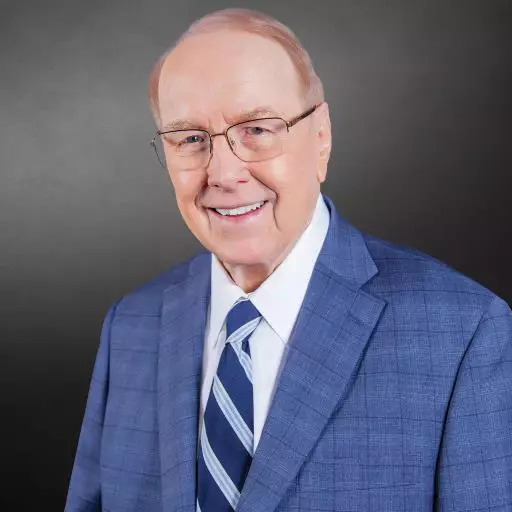
Making the Most of Ordinary Days, Part 2


Busy parents often think that memory-making is one more task on an impossible list. On today’s edition of Family Talk, Dr. James Dobson continues his joy-filled conversation with Gloria Gaither and Shirley Dobson about their book, Making Ordinary Days Extraordinary. They reveal how both children and parents benefit from taking time to slow down and be fully present with the ones they love.
Roger Marsh: Well, welcome to Family Talk Weekend. I'm Roger Marsh. Thanks for making time during your weekend to take us along or to have us with you at home. Family Talk is a listener-supported broadcast outreach, and your prayers and financial partnership make these programs possible. Well, we have a great program in store for you today, so let's jump right in.
Dr. James Dobson: You're listening to Family Talk, the radio broadcasting division of the James Dobson Family Institute. I am that James Dobson, and I'm so pleased that you've joined us today.
Roger Marsh: Well, welcome once again to Dr. James Dobson's Family Talk. I'm Roger Marsh, and on today's program, we're revisiting a treasured conversation featuring Dr. James Dobson, his wife Shirley Dobson, and their dear friend Gloria Gaither. Back in the early 1980s, these two women wrote a beloved book together called Let's Make a Memory. 22 years later, they teamed up again for a new offering called Making Ordinary Days Extraordinary. Their message is a timely one for busy parents that the small, simple moments with our children often become the ones that matter the most. So, sit back and listen now, even if your day's been rather hectic up to this point.
You'll hear Dr. Dobson talking with Shirley Dobson and Gloria Gaither about making the most of ordinary days right now on Family Talk.
Gloria Gaither: Jim, the point in this book is that parents are just frantic today to get everything done. Bosses expect more out of their employees now, and you know, the pace of living is just so much faster. And the whole point of us doing this book was to make simple things cuz parents don't have time to sit around and think of something creative. So, all they have to do is just flip through this book. There will be a very simple idea that doesn't cost anything that will make a memory in their family. You know, it will last a lifetime.
Dr. James Dobson: Gloria, what are some of your favorite suggestions within the book?
Gloria Gaither: Well, probably the all-time big winner in our family over all these years and now with my grandkids is is the corn starch clay. It can it it it has been whipped up in all kinds of places, on vacation, in rented cottages, out at our log cabin, at home in my kitchen. And it's just a combination and the recipe is in this book of corn starch and soda, which you always have around the house. You can put divide it in parts, put food coloring in it, or you can use cookie cutters, you can roll it out like dough, you can shape hangers, you can poke holes in these if you want to make flat ornaments.
You can put them in the oven real quick and dry them out. We have done everything under the sun with with corn starch clay.
Dr. James Dobson: The kids like making the the clay too.
Gloria Gaither: The clay. They up on By the time they're two, I've got them up on a stool helping to stir the clay at the stove with my arms around them so they don't get hurt. We used to save baby food jars and do a collection of what we called soil diaries. And I would just pack a bunch of baby food jars in my bag, and wherever we went, we've got red soil from Georgia, we've got sand, white sand from Florida. And here they all lined up. We put little gingham tops and and tied ribbons around the tops of the jars when we got home, and they all have little labels.
And even yet, there's all these pretty little jars and all these pieces of soil that we brought home all over the world.
Dr. James Dobson: What I hear you saying, Gloria, is that especially with regard to your grandkids now, you prepare for those visits whether they are vacations or whether they come into your house. You have thought through something for these kids to do that will make a memory.
Gloria Gaither: I just keep this stuff in case.
Dr. James Dobson: Ah.
Gloria Gaither: And and a lot of times they happen on the spur of the moment, but they always know that at Grandma's house, there's going to be stuff.
Dr. James Dobson: Ah.
Gloria Gaither: And there always is stuff to do that.
Dr. James Dobson: Shirley, you used to have tea parties with and she absolutely loved them, described them.
Gloria Gaither: Well, when she was about 4 years of age, we'd take all of her stuffed animals and we put them on a She had a little table in her bedroom with four little chairs and we put these the mouse and the bear and the rabbit and these chairs. And then I would take out my fine China cups, breakable saucers and and I would make the tea and we'd have a little tea party. And and it was a way of teaching manners to her, but also just it was it's a sweet memory and she remembers it to this day.
Dr. James Dobson: Have set a table. I also enjoyed doing something with Ryan. He was really heavily in the guns, you know. He had all of these toy guns. And we would take his little guns and I would put his stuffed animals all over the house. We turn out off all the lights and then come around and and with a flashlight and look for big game. You know, we go big game hunting. And he loved that. Simple little thing, like you said, Gloria, doesn't have to cost much. It can be very very simple, but kids at 3 or 4 or 5 years of age just love those things.
Gloria Gaither: Bill's favorite thing is camping out on under the dining room table, which is about as much roughing it as he can take, actually. But he loves to put a great big blanket over the whole huge dining room table and then they get peanut butter sandwiches and crawl in under there with all the kids all bring their their toys and then they camp out under the dining room table. Then the kids are begging Grandpa to have a camp out under the dining room table. Dads are very very important in this process. They may think of different things to do with the kids than the moms might.
Bill's always coming in from the yard to the back porch where the kids are sitting or playing and making some strange noise and he has gotten from that some really unusual nicknames like Uncle Moose whatever animal he's trying to be and and he and he makes funny noises and especially at night so that the kids are half scared and half know that it's got to be Papa. But um it's very important, I think play is how children learn. It's their work. So, we should take play seriously.
Shirley Dobson: Another idea in the book for single dads I think would be fun and and that is hop along the penny trail. That's where you just take a penny and you take your kids out and you have the youngest one flip it first, heads or tails. Tails, you go left. You can say we're going to go a block or you can say we're going to go two blocks this way. And then when you get to the end of the two blocks, you give another child and have them flip it again and then if it's heads, they go right.
And it takes them all over the city. And then you look for things like let's find the coolest car or let's find the you know, the the ugliest pet or the cutest pet. And then you just come home and talk about the things that you saw on this unscheduled little walk.
Dr. James Dobson: Dena and I used to look for Volkswagens. She would try to see the Volkswagen before I did and we would would count them, you know. And this one, she was 3 or 4 5 years of age. And she loved that game too. I also used to take Dena on Saturday to the local school and play in the sand pile with her. She loved it when her dad played in the sand pile. And I would make castles and taught her what a moat was and what a draw bridge was. She still talks about that today. She was 5 years old.
She still talks about it today.
Shirley Dobson: Again, we hope that our listeners enjoy this book. We hope they all implement it.
Dr. James Dobson: Gloria, the title of the book is Making Ordinary Days Extraordinary. What makes a day extraordinary? Is it just activity? What is it that makes it special?
Gloria Gaither: You make it special. What we're talking about is is a parent's gift of themselves. And that 's always translated for kids in time, in doing something together where they're focused in on them. Whether it's a game that you bought, but you stop and play it with them, what they really need is you. I know they're begging for $100 tennis shoes, but what they really want is you.
Shirley Dobson: My hairdresser, I was talking to him about this book, and he said, I 'm so busy. I get home late. I'm tired. I mean, how do you implement these ideas? Well, one thing you can do is you have to put it on the calendar. It's not just going to happen. I mean, pick one day in the weekend of that month that you're going to do something as a family, that you're going to make that an extraordinary Sunday.
Gloria Gaither: I guess I'm kind of a fly by the seat of my pants person and Shirley's a better planner than I am by far. But one of the things that I love in this book and it's more indicative of how I operate is spontaneous walks that happen with kids. Um a walk doesn't take any planning at all. And you get dishes done and the sun's not quite down yet and you go for it. I always grab a lunch bag. I keep a bunch of lunch bags in the pantry and we each take one and find treasures on the way.
And when we come back, we do things with them. One of the things is pretty soon we'll be having the leaves starting to turn on the trees. And we collect bright colored leaves and we come home and and take the iron and press them between two sheets of wax paper and then trim them any way we want, poke holes in them and hang them and I have a side light to our back door and we hang them. I have permanent nails up there above the side light where we can hang things and we make stained glass.
Things like that that don't take a lot of planning fit my kind of life better because I've had to find that home is portable. I've raised kids in green stinky dressing rooms in you know, basketball arenas and I've raised kids on buses and in motels. And if it can't be done without planning, it probably doesn't get done in my life. And my life has just been crazy, but I really do keep a craft bag packed so that I can do these things. I love what Shirley just said about planning. However, we blocked out a week to have a vacation at home.
And Bill and I told our secretaries, do not book anything that week. We want to stay home and we do not want to be interrupted. And we all did a family vacation at home. And we just didn't book anything. So, our house is fun enough and our yard is fun enough and you know, we can take the paddle boat and go fish on the creek. But the thing is stuff happens and it gets nickeled and dimed into lunches and can you have breakfast with this person and could you do this one meeting at 2:00? And you're right.
Sometimes you just have to get real intentional about it.
Dr. James Dobson: What you're saying, Gloria, is that you you really can't use the excuse of being busy. You can find a way to do this if it's important to you. You find a way to do it. You find a time for it if it's really that important. Shirley, do you remember the the night that you made the Chinese food with Ryan?
Gloria Gaither: He came home from school one day and he said, Mom, he said, I know cooking Chinese food is a lot of work, but if you'll cook Chinese food tonight, I'll help you. And he said, I'll go to the market with you, we'll get the vegetables, and I'll help you cut them up. And I said, okay, Ryan. So, we did that. So, we spent quite a bit of time together chopping up all these vegetables and and when we had a really good time and a lot of good conversation. And so we had this wonderful Chinese meal.
And if you remember, you came home from work and and we just ate until we thought we couldn't hold another bite. And then I turned to Jim and I said, boy, I am sure glad this isn't the night we're invited to Fu Kong Lee's house. And Jim said, Shirley, I think this is the night. I said, you've got to be kidding. We ran to the calendar. Sure enough, it was that night and we were 30 minutes late. And so we called him on the phone and we said, you know, we're we got tied up, but we're on our way.
And so we went over to Fu Kong Lee's house and she had cooked a nine course Chinese dinner and invited other people to come. So, anyway, we politely took a little bit of everything and
Dr. James Dobson: She'd say once some more whatever it was. And and I would say, no, thank you. I'm really full. And she would spoon it onto my plate and we just sat there and ate. I'm telling you, you know, we should have told them. We should have just been honest. We were a year later, but we faked it and I've never been so full. I didn't even think I could walk out of that house that night. So,
Gloria Gaither: You know, another story about food before we forget this topic. I I have this raspberry cake I have made ever since our kids were tiny. And everybody loves it. There has never been one single crumb left to have the next day. They just it just is always gone. So, every birthday, we have raspberry cake. But this is a funny emotional moment when they cut Suzanne's wedding cake and they took out the first piece and there was this bright raspberry colored cake. I mean, it wasted us all. We was like, oh, she's got raspberry cake for her wedding.
And and that was just such a beautiful salute, I think, to a family memory that we had all done as a family since she was a tiny little girl. And it started because she has a birthday on the 15th of December. And I made up my mind that it wasn't going to get mixed up with Christmas. So, we never used Christmas wrapping for her birthday presents and I wanted to have something that wasn't Christmasy for her birthday. So, that's how the raspberry cake started. So, when she in this June wedding cut the cake and then it was her birthday, it was like a wonderful way to say thank you, Mom, for making my day always special.
And it was also that she had loved it so much she wanted to share it with her.
Dr. James Dobson: Did you cry?
Gloria Gaither: Yes. Bet you cried.
Shirley Dobson: Now, Gloria, you know, everybody in Radio Land's going to want your raspberry cake recipe.
Dr. James Dobson: We're we're coming down to the end of the second program here and I I I would like to just try to put it into words the way I feel about this book and this project because we're the stage of our lives where that activity with children, at least our children, is a memory. We made a wonderful memory with them. And as we look back on it, it is the warmest experience in my life to have had that privilege of raising two human beings and teaching them about God and introducing them to his principles and and helping them learn to carry his responsibility and reaching out to others and all those things that we tried to do, taking them to church.
There were times when I had been out speaking the whole weekend. I came home so worn out that I could hardly crawl into bed. And we got up on Sunday morning and we took those kids to church because that's what we did. And it's paid off and those kids are grown now and they love the Lord. And as I look back on it, there is not one single memory that I can add to that legacy. It's all in the book. Everything is done. I can't go back and change one thing. There were days when we didn't do it right.
You know, we've we've given examples here of when we did things right. It didn't always go that way. There were times when we were simply too tired, too busy, there were too many demands. And I regret it today. What in the world was I doing that was more important than that? You know, to to make time for those little kids when they were small and and even in the teen years when they didn't need us quite as much. You know what I'm trying to say.
Gloria Gaither: You know, Jim, you've said a just a really vital thing just then because I think we tend to think we need to do this because the kids need it. I've got to find time to do this cuz the kids need it. The truth is we need to find time because we need it too. And when we look back at our lives, the things we did with the kids will be some of of the most important days and important moments of our whole life, not that the kids needed it, we needed it. Kids give us perspective and they put things back right.
Kids know what's eternal and they'll tell you if we listen.
Dr. James Dobson: You have five grandchildren. Grandparenting is a little different than parenting and yet, boy, it is so important, isn't it? I mean, that you can make a You make a contribution to those kids there that that really can't be made by parents in the hubbub of every day living.
Gloria Gaither: Yes, and I think they think you know everything and you are a bottomless resource of you know, everything they need, wisdom, stuff to do, fun, you know, Grandma can fix it, whatever it is. I've heard someone say long time ago that the generation gap is only between succeeding generations. And I think that's really true. I I think there's seldom a generation gap between children and their grandparents because you by then are smart enough to become a kid again.
Dr. James Dobson: And that's what it takes, doesn't it? You get out on your hands and knees with those kids that you were talking about.
Gloria Gaither: Well, I got inline skates for my birthday.
Dr. James Dobson: I got to see that. That I have to see. We loved bicycles, didn't we, Shirley?
Shirley Dobson: We did. And I speaking of how tired we were, I remember that Sunday that you'd been on a trip and you'd come home and you really needed to rest and but you took Dena out on a bike ride in the afternoon and of course it didn't turn out as as well as we'd hoped because I if I remember right, her foot got stuck in the spokes and both of you went head over heels on the pavement but
Dr. James Dobson: Yeah, in fact, Gloria, that story is in your book what my parents did right. Dena shared that. Yeah, she was only 2 years old and she stuck her foot into the spoke. She was sitting on the bar in front of me and the two of us went head over heels and landed in the street and cuddled her up in my arms and ran to the house crying myself and both of us were crying and and took care of her and nursed her and fortunately her foot was not broken but it was sure
Shirley Dobson: I would just like to add what Gloria said that you know, when you come to the end of your life and you look back, it won't be the plaques on the wall or or the achievements or in your case, Jim, the books that you've sold that you know, you'll remember. It's really who loved you and and who you loved and what you did in the service of the Lord. Those are the things that are going to count.
Dr. James Dobson: Everything else is wood, hay, and stubble. Gloria, any last thing to the parents who are out there about this book?
Shirley Dobson: I just would say two words, think forever.
Dr. James Dobson: Yeah.
Shirley Dobson: There'll be a lot of voices calling for your attention. And at the end of the day, you're going to be tired and your back will ache and you will sometimes lie there in bed and say, what made me so tired? And trust me, if you can come up with one or two things that will live forever, you've done a good day.
Dr. James Dobson: Gloria, you and Bill wrote an incredible song. We have this moment to hold it at. Quote the lyrics of that song.
Shirley Dobson: We have this moment to hold in our hands and to touch as it slips through our fingers like sand. Yesterday's gone. Tomorrow may never come. But we have this moment today.
Dr. James Dobson: Could you sing that a cappella?
Shirley Dobson: I just would really like to urge you to let yourself be interrupted. I really would like to repeat what I said about kids know what's eternal. And when they're pulling on you, sometimes they are telling you something really important. I remember one time Benji caught me in the middle of it. It's a long story and I'll make it really short, but it was one of those days and Shirley knows what I mean by one of those days and I we had supper late and I was exasperated and I was not in a good mood and nobody else was and dinner was a disaster and the phone rang and I was disgusted at Bill cuz he kept getting up to answer it instead of letting it ring and finally everybody got out of my way and I'm unloading the dishwasher and I'm slamming the dish towel and I'm thinking, you know, now I still have all this other stuff to do and I've got to do a load of wash and everybody's deserted me and I need to clean up the kitchen all by myself.
And I was having a big pity party. And this little guy came down across our living room and into the dining room and into the kitchen where I was. He said, come out here, Mommy. And so I started I can't. I'm just one person. I mean, I you know, you've heard the speech and he had heard it before too and didn't feel obliged to hear it again. So, he turned in turned on his little heels and started back across the kitchen, across the dining room, and out the front door. And as he got to the front screen door, he turned back over his shoulder and he said, okay, Mom, but you're going to miss it.
Well, you know, kids know how to get to their mother. So, I've heard his little voice echoing, put the dish towel down and shut the dishwasher and followed him across the living room and into the front hallway and opened the screen door. And when I opened the door, he heard me and he was about halfway down our hillside. And he turned and his little face just broke out in a big old grin and he just waved his hand like this and there was the most gorgeous sunset you had ever seen. The black willow trees were silhouetted against that sunset and the geese were restless flying up across it and a jet stream had gone from the horizon diagonally across that sunset leaving this beautiful magenta ruffle across the sky.
And he looked up back at me and he said, look, Mom, there's a ladder clear to heaven. And I just gathered him up in my arms and we sat there on the hillside and watched the sunset and disappear. And you know how long that took? About maybe 7 minutes.
Dr. James Dobson: You would have missed it.
Shirley Dobson: I almost missed it
Dr. James Dobson: Yeah.
Shirley Dobson: for dishes. And trust me, that would not have been a good trade-off. But that little guy, he didn't know how to say it. He just sensed the stress in our family and at the table and in that room and knew that what I needed was a sunset. And he was right.
Dr. James Dobson: How many of us miss the memory because we're too busy to notice it?
Shirley Dobson: too busy to notice it. And I almost was.
Dr. James Dobson: Shirley and Gloria, thank you for writing this book. This one's called Making Ordinary Days Extraordinary. Shirley, you want to make a memory with me tonight? We'll go out to dinner and we'll sit and talk and be dreamy eyed again and draw all these
Shirley Dobson: Oh, I thought you were going to go home and make dinner, Jim.
Dr. James Dobson: That's no memory. That's a disaster. Make me Chinese food. How would that be? Yeah, Gloria, would you tell Bill hello for us and give him my regards. I have great respect and and appreciation for him and for the work that you all do.
Shirley Dobson: I will do that. Thank you, Jim.
Roger Marsh: You've been listening to Dr. James Dobson's Family Talk as we've been revisiting Dr. Dobson's warm conversation with Gloria Gaither and Dr. Dobson's wife Shirley Dobson about making lasting memories with the children we love. Here at the Dr. James Dobson Family Institute, we're committed to preserving and promoting the institution of the family and the biblical principles upon which it is based. Dr. Dobson literally gave his life to that mission. And today, we carry his timeless wisdom forward to reach a new generation of families. And we invite you to partner with us in that work. To make a secure donation online, go to drjamesdobson.org.
Or if you'd like to speak with a member of our constituent care team, you can call 877-732-6825. That's 877-732-6825. Well, I'm Roger Marsh and on behalf of all of us here at Family Talk and the Dr. James Dobson Family Institute, thanks so much for joining us today. Be sure to tune in again next time right here for another edition of Dr. James Dobson's Family Talk, the voice you trust for the family you love. This has been a presentation of the Dr. James Dobson Family Institute. Hello friends, Roger Marsh here. In today's rapidly changing world, the Dr.
James Dobson Family Institute remains committed to our founding mission to preserve and promote the institution of family and the biblical principles on which it is based. Thanks to your prayers and faithful support, we're reaching millions through our daily Family Talk broadcasts, online resources, and policy initiatives. As President Reagan wisely said, freedom is never more than one generation away from extinction. And that's why we are working tirelessly to uphold faith, strengthen families, and protect our God-given freedoms. Thank you for standing with us in this mission. Together, we're making a difference for generations to come.
Guest (Male): With today's Dr. Dobson Minute, here's Dr. James Dobson.
Dr. James Dobson: A few years ago, my wife and I hired a plumber to install a gas barbecue unit in the backyard and then we left for the day. When we returned, we both observed that the barbecue was mounted about 8 in too high. Shirley and I stood looking at the appliance and our reactions were quite different. I said, yes, it's true. The plumber made a mistake. The barbecue unit is a bit too high. By the way, what are we going to do for dinner tonight? Now, I could have lived the rest of my life without even thinking about that barbecue unit, but to Shirley, it was a big deal.
Why? To a woman, especially a homemaker, a house is an extension of herself. That's why a husband would be wise to recognize this differing perspective and to remount the barbecue unit if that's what it takes.
Roger Marsh: For more information on this topic, visit drdobsonminute.org.
Featured Offer

A new school year brings fresh opportunities—and new challenges. Between homework, activities, sports, and busy schedules, it's easy to lose sight of what matters most.
Our free 3-day email series, Back-to-School Wisdom for Parents, will equip you to navigate the coming months with greater confidence and intentionality.

Featured Offer
A new school year brings fresh opportunities—and new challenges. Between homework, activities, sports, and busy schedules, it's easy to lose sight of what matters most.
Our free 3-day email series, Back-to-School Wisdom for Parents, will equip you to navigate the coming months with greater confidence and intentionality.
About Family Talk Weekends
Family Talk is a Christian non-profit organization located in Colorado Springs, Colorado. Founded in 2010 by Dr. James Dobson, the ministry promotes and teaches biblical principles that support marriage, family, and child-development. Since its inception, Family Talk has served millions of families with broadcasts, monthly newsletters, feature articles, videos, blogs, books and other resources available on demand via its website, mobile apps, and social media platforms.
The Dr. James Dobson Family Institute (JDFI) is a Christian non-profit ministry located in Colorado Springs, Colorado. Founded initially as Family Talk in 2010 by Dr. James Dobson, the organization promotes and teaches biblical principles that support marriage, family, and child development. Since its inception, Family Talk has served families with broadcasts, monthly newsletters, feature articles, videos, blogs, books, and other resources available on demand via their website, mobile apps, and social media platforms. In 2017, the ministry rebranded under JDFI to expand its four core ministry divisions consisting of the Family Talk radio broadcast, the Dobson Policy and Education Centers, and the Dobson Digital Library.
Dr. Dobson's flagship broadcast called, “Dr. James Dobson’s Family Talk," is aired on more than 1,500 terrestrial radio outlets and numerous digital channels that reach millions each month.
About Dr. James Dobson
Dr. James Dobson is the Founder Chairman of the James Dobson Family Institute, a nonprofit organization that produces his radio program, “Dr. James Dobson's Family Talk.” He has an earned Ph.D. from the University of Southern California and holds 18 honorary doctoral degrees. He is the author of more than 70 books dedicated to the preservation of the family including, The New Dare to Discipline, Love for a Lifetime, Life on the Edge, Love Must Be Tough, The New Strong-Willed Child, When God Doesn't Make Sense, Bringing Up Boys, Bringing Up Girls, and, most recently, Your Legacy: The Greatest Gift. Dr. Dobson served as an associate clinical professor of pediatrics at the University of Southern California School of Medicine for 14 years and on the attending staff of Children’s Hospital of Los Angeles for 17 years in the divisions of Child Development and Medical Genetics. He has advised five U.S. presidents and served on eight national commissions. Dr. Dobson has been married to Shirley for 64 years, and they have two grown children, Danae and Ryan, and two grandchildren.
Contact Family Talk Weekends with Dr. James Dobson
540 Elkton Drive
Suite 201
Colorado Springs, CO 80907
877.732.6825