

Assyria and The Good Samaritan
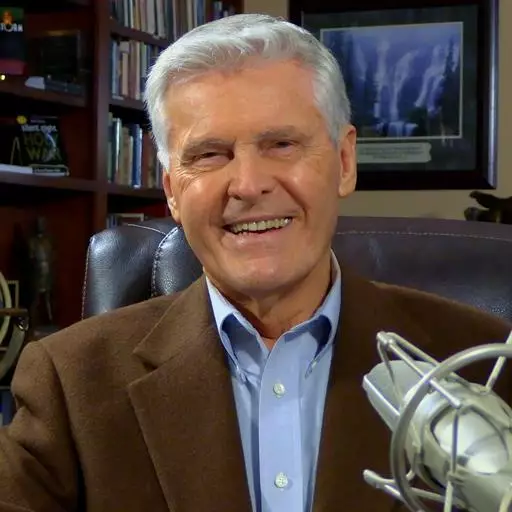
Ron Susek: Hello friend of FaithWalk, have you ever thought of what it would be like to have lived in the day of Jesus and met him on the street? If that occurred, what question would you ask him? We're going to talk about that. One man did meet him and did ask him a question, and the answer is revolutionary. Stay with me, I'll be right back.
Guest (Male): Finding and knowing God is a FaithWalk. The Bible says that without faith, it is impossible to please God. Our hope lies in the coming Messiah, who will establish God's peaceful kingdom on Earth. This is FaithWalk with Ron Susek. Dr. Ron is an evangelist committed to encourage and equip your FaithWalk as we pass through these turbulent end-time days, awaiting that soon-coming kingdom. Here again is Ron Susek.
Ron Susek: Well my friend, I'm sure that we've all heard of the story of the Good Samaritan, but I'm going to tell you right now this story is jam-packed. It is loaded with insights, and I want to do my best today to share some of those with you. I think that they'll prove to be very meaningful and very helpful and beneficial in your life.
So let's just plow right into the parable. It's found in Luke chapter 10, verses 25 to 37. And our good friend Will—you know Will, he's our buddy down in North Carolina who puts these programs together, and we treat him well because when he's controlling things, he can make you look good or he can make you look bad. Will will be putting things up on the screen for you to see today, and I hope they prove to be helpful.
It begins this way: "On one occasion an expert in the law"—now that's an interesting person, an expert in the law, probably the religious law as well as the law of the land—"an expert in the law stood up to test Jesus. 'Teacher,' he asked, 'what must I do to inherit eternal life?'" That's got to be the ultimate question on the lips of anyone sane. How do I get into heaven? How do I make sure I don't go to hell? How do I make sure that I'm going to be accepted in heaven?
The response was, "What is written in the law?" Jesus questioned. "What is written in the law? Tell me. How do you read it?" And the lawyer answered, "Love the Lord your God with all your heart, with all your soul, with all your strength, and with all your mind." That's found in Deuteronomy 6:5. He knew his law.
That's a huge task. Loving God with all your heart, soul, mind, and strength. That's a big piece of it. And then Jesus answered, "You've answered correctly. Do this and you will live." Do this? We're talking about some enormous commitment here.
And then, "But he wanted to justify himself. So he asked Jesus, 'And who is my neighbor?'" Maybe there's a loophole out of this. This sounds too binding. I've got to love God with all my heart, soul, mind, and strength, and love my neighbor as I instinctively, naturally love myself? Look out for my well-being, want the best for myself, and want the breaks in life? Who is this neighbor?
Now we get into the real weeds of this thing. Verse 30: "In reply Jesus said, 'A man was going down from Jerusalem to Jericho when he was attacked and robbed by robbers. They stripped him of his clothes, beat him and went away, leaving him half dead.'"
What's your response when you find yourself looking at someone in desperate need, beyond being able to help themselves? Do you simply say, "That's really sad," or "I hope someone does something"? Or are you the kind of person that rolls up your sleeves and jumps right in and does whatever is possible?
Well, along comes—according to Jesus, along comes a priest. I want to fill this in so this makes a lot of sense to you. A priest is a descendant of Levi, and they offered sacrifices and tended to the temple business. They were the top people in Judaism—the priest, the high priest.
In verse 31 we read, "A priest," Jesus said, "happened to be going down the same road, and when he saw the man, he passed by on the other side." Obviously, here he is, a priest, maybe even a high priest, and he does not love the man as he loves himself. He does not even know the law. He's not obeying the law of God.
I say that because I'm really troubled that the higher up people go in religious circles, we have all kinds of layers of importance, generally the further they get away from the Great Commission. They're building a little empire out of their own fantasy. I'm friends with a lot of them, but I get troubled when I see someone wearing robes and walking along with a staff with that off-in-the-distance horizon look in their eyes, not acknowledging anyone around them. There's something wrong here, my friends.
Jesus said a priest saw the man and went to the other side of the road. In other words, someone else take care of this problem; I'm important. And then along comes a Levite. What's a Levite? He's also a descendant of Levi. All priests are Levites, but not all Levites are priests. They assisted the priest with temple duties, guarded the temple, played music, and served the gatekeepers among other tasks. They were handymen in a sense.
And here's what Jesus said about the Levite: "So too a Levite, when he came to the place and saw him, passed by on the other side." That's interesting. He didn't love the man as he loved himself. If he were the man lying there broken and beaten and bloody, and maybe with some broken bones, he would surely appreciate a priest or a Levite coming and kneeling down to put salve on his wounds to help him up.
Then comes along a Samaritan. Now this story gets really interesting. A Samaritan. I need to give you some background to understand the seriousness of what Jesus is saying. A non-Jewish implant by Assyrians over 700 years prior to Jesus is what we're talking about when we talk about a Samaritan.
I'm going to ask our good friend Will to put up the map that we've been using so that I can give you a little bit of a lay of the land. You see on that map the upper region which is blue and the lower region which is kind of gold-ish. The upper region is Israel; the ten tribes of Israel lived there. The lower region that is gold-ish is Judah, and that's where Jerusalem and Benjamin were a little kingdom.
Samaria was the capital of Israel in the north, and Jerusalem was the capital of Judah in the south. How did Samaria get its name? This really has nothing to do with what I'm saying today, but I think you'll find it interesting. It's named after the man whose mountain they bought from him. He had a similar name—it's a bit of a derivation—but they named the capital of the northern ten tribes, which was now known as the region of Israel, Samaria. That's how it got its name.
So that brings it down to commonality, doesn't it? So he sees a Samaritan, someone from Samaria. Now, who is this person? He's not a priest, not a rabbi, not a Levite. Who is he? Probably a Gentile. That's why this story begins to really cause the Jewish people in that day to twist their nose up and say, "What? Wait a minute. What are you talking about, Good Samaritan?"
The background is this: back in the days of King Ahaz about 700 years earlier, Israel in the north and Samaria were going to combine together to attack the nation of Judah. Jews in the north attacking Jews in the south. Crazy stuff. But there were tensions between those two nations. We talked about that in a previous program.
As a result of those tensions, war was about to break out and King Ahaz in Jerusalem is terrified. Both he and his people are quaking like trees in a windstorm, according to the Bible. As a result, God says to him through Isaiah, "Don't worry about it. They're just smoldering ends of a fire. They're not going to attack you. I'll see to that." And Ahaz just absolutely could not believe God.
But then God said, "In 65 years I'm going to wipe out of my sight the northern ten tribes because they are serving other gods, they are disobeying me, and they're using the high places that I told them to end and tear down. They won't come down to Jerusalem like they're supposed to and offer sacrifices. I'm going to take them away."
So he sent the Assyrians to them. The Assyrians took the ten tribes and scattered them across Assyria. Then they implanted Gentiles. This is so important to history. Get a handle on this. Try to remember this. You're going to understand your Bible better once you get these basics.
All of these Gentile nation people, from different nations by the way, came down and lived in the Jewish homes and worked the Jewish fields, and that now became their territory. An unbelievable name change took place that Isaiah must have foreseen in a prophecy when he called it the Galilee of the Gentiles. It was Israel; now it's the Galilee of the Gentiles.
That was extremely important because Jesus launched and ended his ministry in the Galilee. Why? Because he is the savior of the nations, plural. Every person on earth has equal access to Jesus Christ. No one has an advantage. No Jew, no Gentile, no wealthy person, no important person. No one has an advantage to come to God other than to come to the cross humbly bowed, confessing our sins and repenting of our sins.
Then God separates us from our sins as far as the east is from the west. God writes our names down in the Lamb's Book of Life. Incredible. Everyone. A person in horrible poverty, a person in prison, a person in high places, a wealthy person. All people have equal access to God if you take it.
That's the background to what Jesus is saying and why what he was saying was a shock to many of the people that were listening. In verse 32 he said, "But a Samaritan"—now you remember who it is, it's a Gentile—"as he traveled, came where the man was and when he saw him, he took pity on him."
Isn't that interesting? What a difference from the priest and the Levite who with hardened hearts and pride in their gait went to the other side of the street. Here comes a Gentile, gets on his knees by the man. In verse 34, "And he went to him and bandaged his wounds, pouring on oil and wine. Then he put the man on his own donkey, brought him to an inn and took care of him."
This was not a hand-off. This man got involved, probably got some blood on his clothes, got some oozing wounds that he had to wipe off and put ointment on them. Then verse 35, "The next day he took out two denarii"—that was, by the way, an average day's wage—"and gave them to the innkeeper. 'Look after him,' he said, 'and when I return I will reimburse you for any extra expense you may have.'" This man was not only putting his personal body on the line for this man, giving money for it and giving money to those who would help him help the man.
Verse 36: "Which of these three do you think was a neighbor to the man who fell into the hands of the robbers?" Now the questioning lawyer was really against the wall. Verse 37: "The expert in the law replied, 'The one who had mercy on him.' Jesus told him, 'Go and do likewise.'"
A parable is a story with a literal application. Mark that down. When Jesus told a story, it was not a bedtime story that you just read about and then go to sleep and wake up the next morning and go on with life. No. A parable given by Jesus is a story with a literal application. And the literal application is: Mr. Lawyer, go and do like the Good Samaritan. Give yourself. If you love your neighbor as yourself, tend to their need when they are in crisis. You are there.
There are some great lessons to be learned out of this. They are so significant. Number one: God loves every single race equally. Red, yellow, black, white, doesn't matter. God loves every human equally. You cannot love God and hold a bias against another race. You cannot love God and hold a bias against another race.
Every day on television we hear the biases flowing back and forth. When someone doesn't have a bias, they're accused of having a bias anyway. Everybody is striving to be more important than you. I'm greater because I have greater genetics, I have greater abilities, I'm smarter, I'm better looking, I'm this, I'm that. My friend, don't look forward to being in the kingdom because this man asked a question: "What must I do to be saved?" How do I get into the kingdom? Jesus told him.
Number three: an expert in the law asked, "What must I do to inherit eternal life?" and heaven accepts those who love God and all people. Now understand, that's not salvation. That's a result of salvation. If you're a Christian and you do not love your neighbor as yourself, and if you're not striving to love God with your whole heart, soul, mind, and strength, you better take a back step and say, "Am I only a card-carrying Christian? Am I only a Christian by label and I will end up in hell?" Chances are the answer is yes. Read the parable. I'm not writing it; I'm just telling you about it.
My friend, we need to do a check on our hearts constantly. King David used to pray, "Search me, O God. Search me." I can't find out all about myself by introspection. I can't find out all about myself by going to a psychiatrist or psychologist or a counselor or even to church. God, you search me and see if there are unpleasant things in me that are not acceptable to you that cannot be allowed into heaven.
My friend, I don't like that prayer for one reason: God keeps finding stuff. But oh, that puts us in the great position of confessing it, turning away from it, asking God to give us the power to change. No, you can't change yourself. Oh yes, we have what we call in psychology behavioral change. You can do a measure of behavioral change, but no one on earth can change the heart. You can't even change your own heart.
Oh, you can alter a little bit here or alter a little bit there. But I'm talking about down deep inside, the profound motivations that are down deep inside. You can't change that. All you can do is confess it as God shows it to you. God, I see that I'm totally selfish. I see that I'm self-bound. I see that I have biases. I see that I think I'm superior. I see that I put people down to try to get them down to my level because I don't want anyone to be above me. God, I'm beginning to see my selfishness, my greed, my anger, my bitterness. I'm beginning to see it, but my God, I can't get it out of me.
That's why Jesus died on the cross. Because when you come to God confessing those sins, when you finally see them and you reckon with them, God the Holy Spirit, as Jesus takes your sins away, plants in you a literal new creation. A literal new creation. It's a creation of the nature of Jesus Christ.
Now your old nature is still there, and it's going to fight against that new nature. That's the war that you face. Every Christian does. I'm telling you from the highest-ranking Christian in position of power to the janitor, to the man on the street, to the man who never goes to church. That's the war of the heart. That's the war of the heart between those two natures.
Then you have to decide which nature am I going to respond to and obey at all costs. There are many times when you have to go against that old nature and refuse to listen to it and say, "Yes, God, I know what you're doing. Change me."
The rule of today's world is to rule by superior power. You've heard the phrase over and over again: peace through strength. That's again that form of superiority. I know you have to do that in this world because if you don't, you'll be walked on by another nation who's using the slogan peace through strength. "I want a piece of you, and I want a piece of you, and I want a piece of you so I'm stronger."
And I understand how it's meant properly—peace through strength. But here's what I'm trying to say. God's kingdom will be ruled by people humbly serving one another. Not peace through strength, but peace through humility and service. We can do that here on earth today as individuals and as church bodies. But I understand why governments cannot do it because there are evil nations that would walk all over you. You would be the man on the roadside hoping a Good Samaritan came along to salvage you.
Listen carefully. Do you want to be in heaven? You don't have to wait on the nation to turn to God. You don't have to wait on the whole world to turn to God. You can become that. That's what Jesus said to the lawyer. Don't look around and say, "Hey, who's first?" No. You asked me, Mr. Lawyer, what you'd have to do to be in the kingdom of God, and I'm telling you what it is for you.
And that is, just as you said: love the Lord your God with all your heart, soul, mind, and strength, and love your neighbor as yourself. As you do that, asking God for his power because you're going to need that, you're now following the one who in this world whereby people use each other, abuse each other, and speak horribly of each other. Listen to the people on our news channels speaking of people on the other side of a political position or a political party. Listen to how the filth that flows out of the mouths of comedians as they mock things. Oh, my friend, we are swimming in a cesspool.
It was true in Jesus' time as well, not quite as radical as today because we're nearing the end and it's getting worse. But despite what the world was doing, Jesus was riding a donkey—not a great big mighty steed, which was a mark of humility. Jesus did not wear a robe that was laced with all kinds of decorative religious things and a great crown on his head; he wore common clothes.
He did not go to the high circles of religion to find his followers. He went to fishermen, average people, common people, uneducated people, and said, "Follow me. I'll make you fishers of men. I'm going to do great things through you. You're average, you're common. Just follow me, because I can do this in you and through you." Jesus was walking through this world riding a donkey, carrying a towel, and getting on his knees and washing feet.
Are you doing that? That's what Jesus said is the criteria to this lawyer of how to enter the kingdom of God. In other words, it's not that those good works save you, but those good works flow out of one who has been saved. Salvation comes by the grace of God. It is when we finally recognize how self-oriented we are and we repent of that and confess that. Now God can take our sins away as far as the east is from the west.
Now God empowers us by the Holy Spirit and that new nature to literally begin to conduct ourselves like Jesus Christ in situations that we at one time would have crossed over to the other side of the street and walked on by, even snickered. Oh, think of the riots you are seeing today on television. Think of the protests, the horrible things said on placards, the burning of buildings, the destruction of property, and the cursing of one another.
My friends, you're looking at people that are not going to be in the kingdom because the kingdom will only be built on those people who today, having confessed their sins and sought the mercy of God, get on a donkey, carry a towel, get on their knees, and wash feet. Helping other people, loving them as sacrificially as you will love yourself.
That's huge, isn't it? But the great thing is it's possible. If something's in you saying, "Ron, I'm hearing you, and I want to be sure that I'm in the kingdom. I want to be one of those people that's becoming like Jesus today, not just when I get to heaven. I want to start becoming like him today. Ron, how do I do that?"
Let me give you a prayer. I want you to pray this after me, but think this through and make it your personal prayer. Let's pray this together: Dear God, on the basis that Jesus died for me, I'm trusting your forgiveness for all my sins. I'm asking you for the power to live committed to you, obedient to your will, from now until I meet you in heaven. I pray in Jesus' name, Amen.
If you prayed that prayer, I'd surely love for you to get in touch with me. Just let me know you did. I want to rejoice with you and I want to pray for you. My friend, I know that you know that what I'm doing with television is not a freebie. It's not. I need help. If you're saying, "Ron, I like what you're doing and what you're saying. I want to stand with you and help you get this message spread around the world because Jesus told us to go to all the world and preach the gospel," simply go to faithwalk.org and hit donate. I would really appreciate your help, but above all, I would really appreciate your prayers.
Great to be with you today. Can't wait until the next time we're together next week. God bless you and always remember his name is Immanuel: God is with us.
Guest (Male): Well, thanks for being with us today, and we hope you'll join us again next month as we find courage for the journey in our FaithWalk.
Featured Offer
“Return of the Martyrs” by Ron Susek explores the spiritual significance of Christian martyrdom throughout history and its ongoing impact. Martyrs, those who willingly die for their faith, serve as ultimate witnesses to Christ, inspiring others and strengthening the Church, as seen in examples from Stephen and Polycarp to modern missionaries. While martyrdom brings deep suffering to families and witnesses, it ultimately demonstrates love for God surpassing worldly hatred.

Video from Ron Susek
Featured Offer
“Return of the Martyrs” by Ron Susek explores the spiritual significance of Christian martyrdom throughout history and its ongoing impact. Martyrs, those who willingly die for their faith, serve as ultimate witnesses to Christ, inspiring others and strengthening the Church, as seen in examples from Stephen and Polycarp to modern missionaries. While martyrdom brings deep suffering to families and witnesses, it ultimately demonstrates love for God surpassing worldly hatred.
About FaithWalk Radio
About Ron Susek
Ron Susek is an ordained minister, evangelist, a former television and radio Bible teacher on “Impact” and “FaithWalk: Courage for the Journey”, as well as founder of the Susek Evangelistic Association. He has over forty years of experience in Christian ministry and desires to share as much as he can with people around the world from his years of study, writing and preaching. Ron’s passion is simple: To preach the pure gospel of Jesus Christ, whether it be in North America or other parts of the world. He holds two honorary doctorates: one from Inalta Seminary in Jakarta, Indonesia, for his work in poverty-stricken countries; and the other from Lancaster Bible College in Lancaster, Pennsylvania.
As a best-selling Christian author, Ron has written several books, including Firestorm, a hands-on book designed to help prevent and overcome church conflict. The response to Firestorm led to the development of a mediation division at Susek Evangelistic Association dedicated to assisting churches in avoiding and overcoming conflict as well as vision casting. His other books include God Will Answer, a book devoted to effective prayer, Holding Nothing Back, a moving story of how God changed the heart of a Hitler youth and Silent Night, Holy War, an amazingly fresh insight into the birth of Jesus Christ.
Throughout Ron’s years of ministry, he has earned the respect of his peers, such as Dr. Mark Bubeck, Dr. Erwin Lutzer, Dr. Donald Hubbard; as well as many of those who have gone to be with the Lord – Dr. Jerry Falwell, Dr. D. James Kennedy, and Dr. Stephen Olford. Through his years of training and practice, Ron has brought frontline leadership to the following fields: Helping churches overcome major conflicts known as firestorms, Guiding church leaders in growth while minimizing the risk of a firestorm, Teaching biblical truths that have brought countless people into freedom that is intended for all who know Christ, Training pastors in personal development, Conducting evangelistic outreaches through local churches, Conducting Great Commission Summits on the African continent and the U.K.
Ron is married to sacred recording artist Diane Susek.
Contact FaithWalk Radio with Ron Susek
https://faithwalk.org/
P.O. Box 3007
Gettysburg, PA 17325