
Oneplace.com

From Beating Yourself Up to Befriending Your Younger Self: Practical Tools for Real Change

April 13, 2026
00:00

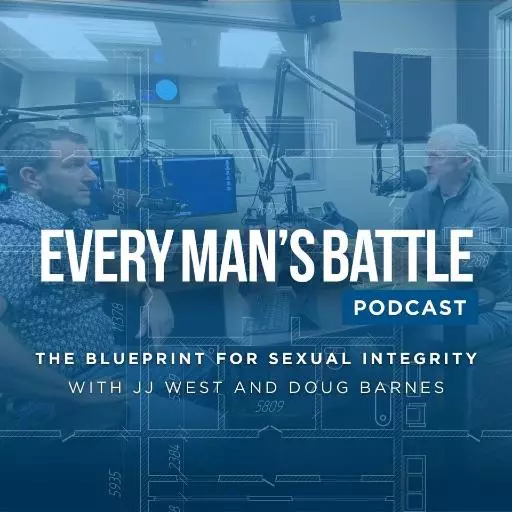
📻 𝙀𝙫𝙚𝙧𝙮 𝙈𝙖𝙣’𝙨 𝘽𝙖𝙩𝙩𝙡𝙚 𝙋𝙤𝙙𝙘𝙖𝙨𝙩 – 𝐄𝐩𝐢𝐬𝐨𝐝𝐞 𝟏𝟓 𝐒𝐡𝐨𝐰 𝐍𝐨𝐓𝐄𝐒

In Part 2 of the Key Elements of Transformation series, licensed counselors JJ West and Doug Barnes draw on Gabor Maté’s insight that the real question is not “Why the addiction?” but “Why the pain?” They show how sexual acting out is a flawed attempt to soothe unaddressed childhood wounds, and they model a compassionate, curious way of revisiting those stories instead of piling on more shame.

You’ll learn:

  1. Why slowing down, journaling, and tracing your last relapse backward in time helps identify emotions, thoughts, and needs that drove the behavior.
  2. How JJ’s and Doug’s own stories of public shame and insignificance still echo in adulthood—and how compassionate re‑parenting of their younger selves changes their responses today.
  3. Practical first steps for processing acting out (journaling, naming needs, seeking legitimate ways to meet them) and why doing this work in community—through groups like Sustained Victory and other men’s sexual integrity meetings—is essential for lasting transformation.


🎟 Use code 𝐄𝐌𝐁𝐏𝐎𝐃 to save $100 when you register for the Every Man’s Battle Intensive, and ask about scholarships so finances don’t keep you from the help you need.


📧 𝐁𝐎𝐍𝐔𝐒 𝐂𝐎𝐍𝐓𝐄𝐍𝐓 𝐅𝐎R EMAIL 𝐒𝐔𝐁𝐒𝐂𝐑𝐈𝐁𝐄𝐑𝐒

Want extra content to encourage your integrity, delivered via email each month?

👉 Email EMBpodcast@newlife.com with “Bonus Content” in the subject line to receive exclusive Every Man’s Battle Podcast resources.​

Have questions or feedback, or want JJ and Doug to address your specific struggle in a future episode?

👉 Email EMBpodcast@newlife.com with “Podcast Question” in the subject line.

☎️ Need prayer, a counselor, or help finding a group?

👉 Call 800‑NEW‑LIFE or visit NewLife.com for counseling, groups, and faith‑based sexual integrity resources.


🎟 𝐒𝐏𝐄𝐂𝐈𝐀𝐋 𝐎𝐅𝐅𝐄𝐑 – 𝐄𝐕𝐄𝐑𝐘 𝐌𝐀𝐍’𝐒 𝐁𝐀𝐓𝐓𝐋𝐄 𝐈𝐍𝐓𝐄𝐍𝐒𝐈𝐕𝐄 & 𝐌𝐄𝐍’𝐒 𝐆𝐑𝐎𝐔𝐏𝐒

If you’re tired of beating yourself up after each relapse and ready to learn why you keep going back, the Every Man’s Battle Intensive is a crucial next step. This 3‑day, in‑person workshop combines teaching, story work, small‑group interaction, and practical tools so men can address both behaviors and the pain beneath them.

After the weekend, Sustained Victory and other New Life men’s sexual integrity groups offer the ongoing support, accountability, and compassionate community needed to keep processing wounds, needs, and triggers in real time.


💵 Concerned about cost? Scholarships are available because New Life does not want finances to be the reason you stay stuck. When you call 800‑NEW‑LIFE, ask about assistance for Every Man’s Battle and ongoing groups.

Use code 𝐄𝐌𝐁𝐏𝐎𝐃 when you register to save $100 on your Every Man’s Battle registration.


🎧 Discover more ways to listen & watch:

👉 Every Man’s Battle Podcast hub: https://newlife.com/podcasts/every-mans-battle/

👉 New Life LIVE & other podcasts: https://newlife.com/podcasts/

#EveryMansBattle #SexualIntegrity #Transformation #GaborMate #ChildhoodWounds #CompassionateInquiry #Journaling #SustainedVictory #NewLifeMinistries

Guest (Male): Welcome to the Every Man's Battle podcast, brought to you by New Life Ministries. In this podcast, you'll hear honest conversations and encouragement for living a life of sexual integrity. In every episode, licensed marriage and family therapist JJ West and licensed professional counselor Doug Barnes break the silence around sexual integrity struggles that millions of men face but rarely discuss openly. Each episode offers practical strategies and genuine hope to dissolve the shame and isolation that keeps men trapped in destructive cycles. Let's get to today's episode.

JJ West: Hey everybody, welcome back to the Every Man’s Battle podcast. Thanks again for listening. I'm JJ West, and I'm in studio with Doug Barnes. We get to be together face-to-face, which is wonderful. So, happy podcast day! It's going to be a great day. I'm looking forward to today because we get to continue our discussion that we started last week, which is: what are the key elements of transformation?

We dove in talking about Gerald May's take on how surrender and grace are key elements. It has to be grace-saturated, and we have to be able to learn to surrender. It's grace that motivates that surrender. We started there, then we jumped into Jay Stringer's work from his book, *Unwanted*, and how it's so important that we, with curiosity, look at our story of brokenness.

Whatever it is that we are looking for in our broken acting out—whether it's the pornography, the strip clubs, the massage parlors, or the whatever—specifically what I'm looking for tells a lot about my brokenness. There's an element of my story, and not just my story of sexual brokenness, but my life story. We have to examine that. It's important for us to examine that. If we don't examine that, then we continue to repeat the same patterns and wonder why we are like this.

Doug Barnes: Exactly. Or we try to push it away so that I just move on with my life, but that part never gets healed. It keeps coming back up.

JJ West: Today we're going to continue that discussion, which I'm super excited about, because we are going to talk about stuff from Gabor Maté and Larry Crabb. We’re going to talk more about these key elements of transformation so that we start to really experience transformation. As we said last week, it can't just be behavioral change. It can't just be this transactional, "Okay, I'm just going to stop this behavior and that'll take care of everything." There has to be a transformation on the inside.

As I said last week, and you agreed, I love Gabor Maté’s writing. He thinks very deeply about addiction. I'm actually just wrapping up the book *In the Realms of Hungry Ghosts*, which is a fascinating read. It's his work with drug addicts in Vancouver as a physician helping them. One of the things that he talks about is this idea of having compassion—having a compassionate look at these wounds.

He has a great quote: "The question is not why the addiction, but why the pain?" Addiction is always trying to soothe the pain. It’s always trying to soothe pain, numb pain, eliminate pain, whatever. It's trying to fix it. So my addiction is actually my solution to a problem. I don't have an addiction problem; I have an addiction solution to a problem. His encouragement to us is to look with compassion at those wounds that are beneath the addiction, not just the behavior up top that we're trying to stop, but what is the pain underneath that I'm trying to soothe by those addictive behaviors?

Doug Barnes: He has such a tender heart. Compassion is part of his makeup, who he is. All you have to do is either watch a video from him or listen to his voice; it's very calming, very soothing. Compassion is a part of that.

So he exemplifies the internal attitude that we're talking about here. If you're trying to figure out what it means for me to be compassionate with my wounds underneath, the pain underneath—that soft, gentle voice, that relaxed approach, that curiosity that we talked about last week rather than contempt—all of that is what we mean by having a compassionate inquiry into these wounds.

So many of these wounds, if not all of them—though all is probably a stretch—but most of them begin in childhood. You've heard it in your office, and I've heard it in my office: "Why do I need to go back? I can't change it. I can't do anything about it. Why don't I just pony up and get a stiff upper lip, and we'll fight through this and move our way through?" They're missing this piece of it. Our lives are at such an anaerobic pace. It's not just aerobic; I'm not just using heart and lungs and cardiovascular. I'm going beyond my capability, which starts to then eat away at our resilience and the way that we need to slow down to be able to have that compassion.

That hurt little kid in all of us screams for some help. If I'm just fighting through it, I've quieted his voice, or her voice as the case may be. We do that through addictions, through work, through food, through exercise, and so on. It's being able to slow down enough—and that's what I'm finding really hard just over the past six months to a year, getting folks to slow down.

That's so hard to slow down. When you talk about Maté's voice and he exudes that, you can hear it in his voice, just how he's slow and quiet and methodical. He’s a deep thinker. I would love to be that deep with how I view my own life. But these wounds, that hurt little kid inside of me needs me to come around him and put my arms around him, not put him in a cage in the corner and say, "Sit down and be quiet and I'll throw you some crumbs every now and then."

But that's how we are. We are just so contentious over that wounded boy, that wounded child. It's pulling him close to you like you would your own kids when they're hurt. You pull them up and you hold them close so they hear your heartbeat, you hear theirs, and they match your breathing. We do that sometimes at the Intimacy in Marriage workshops. It's a simple exercise, but it's so effective.

We do that metaphorically with that wounded kid that's in all of us. Can I just be honest with myself and say that kid is inside of me and I need to nurture him? I don't need to berate him and punish him. All of that happened back then. I don't need to keep doing it. I need to pull him alongside and say, "You know what? No one protected you when blank. No one asked you how you were doing when you were late for school and got detention, and you were the only one in there and the bully came out and beat you up that day." We rarely take the time to go back into that childhood place, that wounded place, because it hurts.

JJ West: I was thinking about it just the other day. I was out for a walk and I was listening to one of Maté’s books and this whole idea of these wounds in our childhood and his quote about addiction being a flawed attempt to solve a problem. I started thinking about some different moments in my childhood.

In fourth grade, as a class, there was a big lost and found in the cafeteria. As a class, we all go down to the cafeteria, we go through the stuff in the lost and found, collect our things if we had anything there, and head back to the classroom. I didn't see anything that was mine. I go back to the classroom, and about ten minutes after we get back, the teacher says something very derogatory and angry toward me and my best friend in elementary school, Larry.

We had both left our jackets. Our jackets happened to have been in the lost and found. Neither one of us saw them, neither one of us picked them up and brought them back to the classroom with us. She berated us for being so careless, so foolish, and brought us to the front of the class, put our jackets over our heads, and made us walk back to our desks with our jackets over our heads.

I get a little bit emotional now thinking about it. It's been a long time since I was in fourth grade, but that moment of public shaming and wanting to hide from that—I wanted to be anywhere but there in that moment. There are so many times where when I am wanting to act out in some way, there's at least a part of me that is wanting to hide from what I perceive to be a public shaming. What I perceive to be: "I didn't meet the expectation." There was some expectation that everybody was going to walk through that line and find all of their things and bring them back. It was a simple expectation. "This was not hard to do, JJ. You should have been able to do this."

When I get in those kind of environments in my adult life where I realize, "Oh my gosh, I missed that. I should have done that and I didn't do it. I forgot to reply to that email. I didn't give myself enough time to prepare for X, Y, or Z event that I'm speaking at even." All of a sudden, it's going to be known. It's evident to the world around, to my sphere, that I blew it. The scarlet S for stupidity. For me, it was: "How could I be so stupid to not do this the right way?" Shame.

I have to learn to pay attention to that because otherwise I'm just locked in. "Oh, I want to look at porn today. Oh, I want to act out sexually in some way today. What's wrong with me? I'm just..." It kicks off that negative narrative. These things I've typically thought up either on my own or was helped out by others around me, especially as kids because kids are cruel. They help us in that negative narrative. So we're listening to all these other voices come into play and that leads us to that dysfunction because it's there. How do I want to soothe myself? That goes back to exactly: I want to soothe the pain.

Doug Barnes: That's one thing to do to ourselves, but in fourth grade, the way that kids look at that and then the way that I look at myself from that. I can just picture it: walking back, step after step after step back to your desk. That must have been excruciating.

JJ West: It was awful. Every one of us has tons of stories like that. Every one of us has things—multiple things usually—in our world where we felt that shame. We felt powerless, we felt incompetent, we felt insignificant somewhere. We internalized it as: "This means there's something wrong with me." Not like I can as an adult look back and go, "Oh my gosh, that was a horrible thing for that fourth grader." I won't say her name—I still remember her name, but I won't say it on air.

That was a terrible thing for her to do. It was unprofessional and uncaring. She’d be fired today if somebody did that. I can look back at that now as an adult and say that was her issue, that wasn't my issue. But as a child, as a fourth grader—which is nine or ten years old—I can only internalize that as: "I deserved this. I was stupid. I didn't pick up my jacket when I was told to."

Since our brains don't fully develop until 19 to 25 years old—some of us a little later—that memory sticks inside of us. But we don't have a defense against that. That's why those memories, those ways that we try to soothe ourselves from memories like that, we remember those because they're locked inside of us.

I could come up with others similar to that, but mine is more of a global insignificance. Being the baby of my family, I grew up in a family of avoiders. I'm not an avoider. I wear my emotions on my sleeve. I am a little bit more animated. I expressed my emotions openly. So as a kid, especially going back into elementary school, so many times I would want to be a part of a group—the need to belong—because in my family, it was always those four and me. It wasn't, but that's how it felt. No one in my family addressed that, and so it felt that way.

That's what makes this important, because throughout just growing up—whether it was in a group with musicians, a group with academics, a girlfriend, a peer group, or an athletic team—there's always this part of me that felt that I don't measure up, that I don't really matter that I'm here, that I don't fully belong.

That's why looking back, when I played baseball, I was a catcher. I got the ball every single pitch. I was somebody. I was important. You can't pitch without a catcher. I wanted to have the ball; I wanted to be the one. I was a catcher through high school because I loved it. I really loved when guys tried to take me out at home plate, which was the more fun part. But the point was, I chose that not because of just playing baseball, but because I wanted to be in the moment. People were always watching. Because then if somebody saw me, I was somebody.

I would take that even into relationships where the wounding ruined the relationships because I so wanted to be seen that it became a "me," not a "we." That insignificance didn't come after I got married. It didn't come after I became a Christian. It happened really early. I paid some folks a lot of money to get this. Through a lot of therapy, I've been putting these puzzle pieces together. So that childhood wounding is so important, and I really urge folks to contemplate that. There's more to this than just soldiering through and pushing through. I can do that, but the situations will continue to repeat themselves. We need to be able to stop and have someone walk through us and teach us how to be compassionate with that kid. Teach us how to put our arm around him and go, "You know what? You did your job. You protected me. Okay, your job's done now."

Guest (Male): You all have done me an excellent service through this referral network of counselors. For over 35 years, New Life has been the most trusted name in Christian counseling. I found a counselor through New Life Ministries and it's just been outstanding. If you need a counselor, whether in person or virtual, New Life can help. We have a nationwide network of licensed Christian counselors. Call us today at 1-800-NEW-LIFE. That’s 1-800-639-5433. To get someone that's competent, that's good at what they do, it's been like day and night compared to what I've had before. 1-800-NEW-LIFE.

JJ West: Let's bring that to very practically in the present. Okay, so I've just acted out in the last 24 hours. I'm trying to now go back and examine what happened. Okay. So this idea of if the addiction, if the acting out is trying to soothe pain, what does that look like? How do I practically examine that reality, that truth, that the acting out was trying to soothe pain and I've just acted out today, yesterday? What am I supposed to do? Am I supposed to just go, "Oh, well, that was soothing some pain. Check, done. I don't feel the pain anymore, so I'm good." Practically, what does it look like to take that information? What am I supposed to do with that?

Doug Barnes: That's a great question. How I would approach that is, again, I need to stop. First of all, I'm pulling out my journal and I'm walking through the moment of impact, the moment that I want to act out. From the moment of acting out, I need to now be backing myself up 5 minutes, 10 minutes, 15 minutes, 20 minutes, maybe 30 minutes, maybe two hours. I don't know. But in increments of time, I'm backing myself up and I'm thinking back: okay, what was going on internally?

I need to figure out what was happening externally to me too, because that sometimes comes into play. Often times the external is triggering what's going on internally. You may be walking through a store and you see some kid clowning around, laughing and joking, but he had his jacket over his head as he's walking down the aisle and you're going, "Right. Oh." All of a sudden I'm having a flashback. Exactly.

So that could be something external. But we need to be able to as quickly as we can—because the longer we wait, the more it begins to fade—go back and say: what was happening internally? One of the ways to do that is what was I feeling? Really, not "I'm feeling good." "Good" is not a feeling. So the first part is to be aware of what are the true emotions that go on right before and during I'm acting out.

What are the emotions that are there? Because by definition, if I'm acting out, I'm wanting to change the way I feel. How do I know this? Because I'm trying to soothe pain. There's a painful emotion; there's something happening on the inside. There's a need. What need was I trying to meet? Or what pain was I trying to soothe by that acting out? What's going on inside?

I see "need" as the next step. I think this is one of the hardest things: shame, needs, wounds. I think those are three of the hardest pieces. We may need to do a show on that because I think those are three of the hardest places for us to go into and to get real. We don't want to. It's like the third rail on the subway; you don't want to touch it. There's too much going on there. Let me just go back to work, let me just go to the gym, let me just put on the TV, anything but looking at those wounds, those needs, and that shame because that becomes too painful.

For me, the first step is going back and looking at what was I feeling. Then I'm thinking through, okay, as I was feeling blank—disappointment, abandonment, I don't know, they're all different—but I need to look at what was that negative emotion. Then I think through what thoughts were spinning. This gets into preoccupation. What thoughts were spinning in my head as I was really experiencing that emotion? Those two things combined are repeating themselves from earlier in my life. It may be I was a senior in college and then I go—I need to take that back further. Okay, so then these go back to I was a senior in high school, and then I was in eighth grade. Oftentimes it is repeated because the enemy keeps doing the same thing over and over. He's crafty, but he's not creative. He doesn't come up with new material. So it's the same wound that keeps getting hit in all these different scenarios.

As clinicians, we talk about "first, worst, and last." What was the last time that happened? What was the worst time that happened? Then can I go back as far as I can to get the first? Sometimes we get there; sometimes we don't. But if I've got my journal, I'm writing all of this out. "But I don't do journals well." Okay, even journalists don't do journals well, but that's not the point. The point is I need to be writing because my brain subconsciously begins to process when I can't have someone to process it with: an accountability partner, a coach, clinician, pastor, ministry leader, whatever, best friend.

That journal becomes my external person to process it. Write that all out, put it away, take a few deep breaths, and then in an hour, two hours, half a day, I come back and I read through that. It's almost like writing down our dreams. Everybody says you need to write down your dreams. Who does that? Most of us don't. Some of us do, and that's awesome. For me, that's the start. Then I go into—because at the apex of me acting out, that need that was there—I need to get a list of needs now. I need to be looking through and I'm reading through my journal and I'm looking at my need sheet. I'm trying to match up: what could I possibly have been needing?

And to add: how are those needs met legitimately in my life? How could I meet that need legitimately as opposed to trying to meet it in illegitimate ways by my sexual acting out, which never meets the need? It never did, never did, never will. That's where other behaviors come into play, like work, food, gambling, whatever. I think we have to slow down enough to quiet our brain because when that dopamine surge and that adrenaline—all those chemicals get dumped into our body—it speeds us up and we're just looking for the sigh at the end. When that's done, okay, back to normal, and we get back in our normal life until the cycle starts over until it comes back. It just keeps repeating, wash, rinse, and repeat, and it never gets clean.

What I love about this, and what I want to come back to, is we started today by talking about how important it is to have compassion, to have a compassionate inquiry into this. The reality that there are these wounds underneath, this pain underneath, that we're trying to soothe by our acting out. All of that journaling, all of that taking the steps back, going back 5, 10, 15, 20 minutes, 24 hours, 36 hours, 72 hours—all of that is done in the context of this compassionate inquiry. I'm going back to those wounded places with compassion, like someone who loves their child and sees them hurting and goes, "Oh, I want to comfort you. I want to hold you. I want to remind you that it's going to be okay. I know that that hurts. Of course it hurts. It should hurt. And I'm here, and we're going to get through this." That's the approach to this.

It segues into what we will bring up in our next episode, Part Three—maybe the final part, who knows—of Key Elements of Transformation, which is the importance of community. When community is not available, I want to use my journal as that kind of external voice, if you will, and even as a way to connect with God and with my heart. But it's so vital that I'm doing this recovery work in the context of community because so many times that's where I see that compassionate face, that gentle voice on display for me, especially for those of us who maybe didn't grow up in environments where that was ever on display.

For many of us, it's like, "Okay, I hear you saying I should be compassionate, but I don't even really know how to do that because I grew up in an environment where you better rub some dirt on it and get back up. Quit your crying or I'll give you something to cry about." We want to make sure that we're doing all of this in the context of a healing community, which we'll talk about on our next episode of the podcast where we continue our discussion on these key elements of transformation.

Hey, I mentioned last week, I'm going to say it again. You've heard us say, "Hey, there's an email list: embpodcast@newlife.com." If you're on that email list, you get bonus content. It's a great way to ask us questions, a great way to interact with us, give us feedback. "Hey, that episode was terrific! More on that." "That episode stunk! Don't ever do that one again." Give us feedback. We want you to sign up for the email list to do that, to get the bonus content, and to interact with us. Later on in the season, I know we're going to do an episode where we answer some of the questions that have come in through the email. If you're not on that, you don't get to participate in that. You don't get to pass on the questions, you don't get to give us the feedback, you don't get to actually take an active role in shaping the direction of the podcast to hopefully meet your needs.

If you're missing out, there's a really simple cure: sign up for the email list. It's embpodcast@newlife.com. If you put in the subject line "Bonus Content," you'll automatically be added. Or if you have questions, like I said, or if you have feedback for us, we'd love to hear it. Thanks again, guys, for listening. We are so honored and humbled by this process because we're just two yahoos, but we have stories of brokenness. We're extremely grateful that as we share our stories of brokenness, that it's useful to those who also have stories of brokenness to find healing. We say it all the time: we're two beggars who found some bread and we're just saying, "Hey, come over here and eat, guys." So thanks for listening. Until next time, let's keep walking in integrity.

Guest (Male): Thanks for listening. This podcast is one of many ways we can encourage and help you. If you're looking for more help, visit us at newlife.com or call 1-800-NEW-LIFE. To receive bonus content exclusive to EMB podcast email subscribers, send an email to embpodcast@newlife.com with the words "Bonus Content" in the subject line. If you have a comment about this podcast, we'd love to hear from you too. Drop us a line at embpodcast@newlife.com. And please remember to review, like, and share the podcast as it helps others find us. See you next week.

This transcript is provided as a written companion to the original message and may contain inaccuracies or transcription errors. For complete context and clarity, please refer to the original audio recording. Time-sensitive references or promotional details may be outdated. This material is intended for personal use and informational purposes only.

Featured Offer

Every Man’s Battle Intensive

Use discount code EMBPOD to save $100 when you register for the Every Man's Battle Intensive. The Every Man’s Battle Workshop is the place where men engage in the battle to get back their sexual integrity. In this intensive three-day workshop you’ll work with licensed Christian counselors who will arm you with the weapons you need for victory. The enemy may have wounded you, but the battle is not over. Register today. Too much is at stake not to take action.

Past Episodes

About Every Man’s Battle Podcast

Becoming a man of sexual integrity is an ongoing process, and we can help you on the journey. New Life's EVERY MAN’S BATTLE PODCAST can assist you on the pathway to becoming the man you hope to be. As all things sexual integrity; EVERY MAN’S BATTLE PODCAST is for EVERY MAN!

Use discount code EMBPOD to save $100 when you register for the Every Man's Battle Intensive.

Click here to learn more about integrity.

About JJ West & Doug Barnes

JJ WEST
JJ is a Licensed Marriage and Family Therapist in private practice in Orlando. With a Master’s and Specialist degrees in Counselor Education, JJ began private practice after years of working with children, adolescents and families in outpatient settings. In 2009, he became an Every Man’s Battle Workshop facilitator, taking over as the main presenter in 2022. Before becoming a therapist, he worked for several years with college students in both Christian ministry and church settings. JJ is married with 2 adult children; and enjoys outdoor adventures, traveling to other cultures, good movies, and Florida State sports.


DOUG BARNES
Doug is a LifeCoach and Licensed Professional Counselor with Supervisor status working in private practice in the Dallas Ft. Worth Metroplex; working primarily with men and couples in finding restoration and redemption from sexual brokenness. His journey into becoming a clinician began in his teens and cultivated into a road to healing in his early twenties after the death of his father. He has worked with Every Man’s Battle Intensive Workshops as a facilitator since 2006. His passion is to give other men what God has given him—freedom. Doug has been married for 31 years and has 2 sons. He is a rollercoaster junkie, runner, all around fitness gym rat, and sometimes even breaks out his guitars to play.

Contact Every Man’s Battle Podcast with JJ West & Doug Barnes

New Life

P.O. Box 1029

Lake Forest, CA 92609-1029

Phone Number

(800) NEW-LIFE (639-5433)