

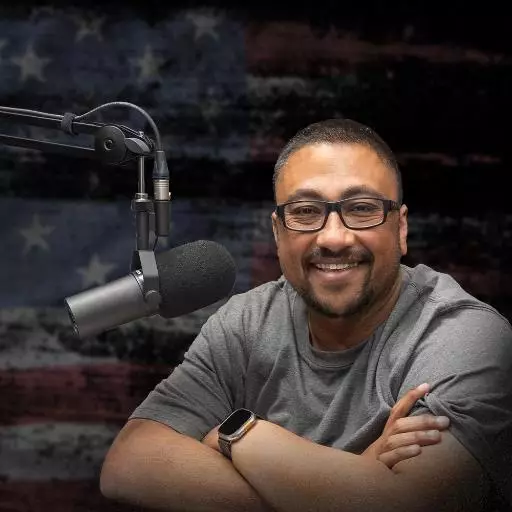
Israel and America are About to Converge
In this episode of Countdown 2 Eternity, Pastors James and Tom expose the truth about what America actually receives from its alliance with Israel, why the $3.8 billion talking point ignores the far greater military, technological, intelligence, and economic return, and how Iran’s aggression is pushing the Gulf states into a deeper security relationship with Israel and the United States. From the NDAA and Israeli technology protecting American troops to the growing military integration of the UAE, Bahrain, Kuwait, and potentially Saudi Arabia, the geopolitical landscape is shifting quickly, and the stage is being set for what the Bible says is coming.
Narrator: Welcome once again to Countdown to Eternity with Pastors James Kaddis and Tom Hughes, a weekly radio ministry from Calvary Chapel Signal Hill. Together, Tom and James examine current events and connect what's going on in our world to Bible prophecy.
James Kaddis: Well, hello, my dear brothers and sisters. I want to welcome you to another fine episode of Countdown to Eternity because I've got Tom Hughes with me. The great Tom Hughes. We've got a lot of stuff to talk about.
Tom Hughes: James, we do have a lot of stuff to talk about. You know what's so weird? I've just got to ask you this. This is really weird. Every single thing you comment on, there are people who absolutely hate Israel and hate Jews who just come out of the woodwork. They take the title of an article and spin it to something that is not true. Then they say, "Look, it's the Jews and they're controlling everything."
The lies are astounding. I want to talk about that. We have America being taken over by Islamists and socialists. That's what's really happening. We are being distracted by all these people on social media saying, "Look at the Jews, look at the Jews." I believe all these anti-Semites are the ones who are complicit in this. You've got to wonder if they're actually what they really are. They're really communists themselves. They want to point the finger at them in order to get about their plans.
All of these white leftists that we used to think were on the right, their true colors are coming out. I'm looking at this going, "What is going on?" So, I don't know exactly where we want to start today, but we have some things that we have to inform people. We've got the truth on this stuff. We've got to confront the lies with the truth. Let me just throw this out. Do you want to start with the NDAA?
James Kaddis: Yes. It's called the National Defense Authorization Act. Look, the NDAA thing is just outright stupid. The way people are reacting, especially the Jew-haters, is just hilarious. The summary of the NDAA is that it's an annual law that actually sets America's policies and, in essence, authorizes military programs and spending. Everybody is literally freaking out because Israel is mentioned in the NDAA, which, by the way, gets mentioned every single year.
The big issue with this one is the fact that—let me back up because there's context that has to be understood here. Our founding fathers had it within their minds for the wheels of justice to spin slowly. The idea behind defense purchasing, the idea behind the sales of arms, the idea behind the exchange of arms was designed for one very specific purpose. It was designed to slow things down a little bit so that nothing could be done corruptly or easily. There was a process involved, and that process was specifically a safety mechanism.
The NDAA over the years has developed to prevent a lot of issues that have come up over the years from actually happening. Regarding Israel, what it regularly does—this is what it commonly does—is authorize US military assistance to Israel. Not just assistance like, "I'm going to give you money. Here you go, take the money, buy weapons from us, give us the money back, put it back into our economy."
It is assistance that allows us to park our assets in that most critical part of the world so that we have the freedom to move about anywhere we need to, anywhere near the Caspian, the Red Sea, the Dead Sea, the Persian Gulf, or the Mediterranean. That's number one. It also deals with something that we have already been stuck to for the better part of thirty-plus years, and that's the joint missile defense system that we have, including the Iron Dome, including David's Sling, including the Arrow, and including what we call the Patriot system.
The NDAA covers that. That's part of what it does every single year. We've been doing it every single year for longer than some of these snot-nosed Jew-haters have been alive. It also talks about weapons development, which is probably the area that they're having a bigger problem with. With respect to weapons development, there is a process that you have to go through to push the parts through, to push designs through, to push advancements through, to give people what they need to be able to build. It's always gone through a system.
What's being proposed here—which, by the way, is not unusual. Again, it's not unusual. It is to create an officer—by the way, not an Israeli officer. We're not talking about somebody who has direct contact with the Jews. We're talking about an American military member who is an officer whose whole job is to stand as an expeditor. Stand as somebody who basically is in charge of going through all of the things necessary in order to cause the flow of weapons to go back and forth, or designs or anything like that.
The whole purpose behind what we do in the NDAA with Israel is to give Israel the ability to have some level of qualitative military advantage. People don't understand. If Israel doesn't have a military advantage in that part of the world, America is done. The whole idea is to give them this—we call it a QME—this qualitative military edge over all of the adversaries that we have in the region. Israel does that for us. So, what it does is authorize all the programs that I just described while separate appropriations legislation will continue to provide the actual funding.
This has nothing to do with even the funding. All this does is allow the appropriation of hardware and design mechanisms. It has nothing to do with the money. They're completely separate. It's always been that way. So all the guys that are getting out, including some of the Bible prophecy guys that are losing their minds—they just don't know what they're talking about. They don't know what they're talking about.
Tom Hughes: Let me put some number facts in here. Years ago, I interviewed UN Ambassador Yoram Ettinger, one of David Howell's friends. We were in Jerusalem. This was probably 2015 or 2016. He said what people don't understand is the value that the US gets out of Israel is tremendous. If it wasn't for Israel doing what they do, the US would have to have a permanent aircraft carrier right there off the coast of the Mediterranean, which would cost far more than any of the money that is given to Israel.
What people think is money just given to Israel—that's not a fact. The US gives Israel $3.8 billion a year. That's under 9% of Israel's defense budget. Israel funds the rest of it itself; 91% is funded by Israel itself. That $3.8 billion is required to be spent on American weapons, supporting American jobs and manufacturing. The return is roughly $40 billion back into the US economy.
But it gets even better because Israel doesn't just buy American weapons. It upgrades them into things that the US didn't even have. The US helped fund Iron Dome, but Israel used it to build SkyHunter interceptors for the Marines. The Pentagon was ready to write off the F-35. Israeli engineers worked with Lockheed Martin to fix the F-35. Israel was the first to fly the F-35 in combat in 2018. Today, that program supports 290,000 American jobs and generates $72 billion a year in US economic output and holds a $173 billion order backlog. Without Israel, none of that happens. We could go a lot further into this because there's a lot more. But these are things that nobody will ever talk about. That $3.8 billion actually transfers into billions upon billions upon billions for the US economy and the US weapons manufacturers and plane manufacturers.
James Kaddis: Yes. Also, there are other things that come as a result of this that benefit the United States that almost nobody knows about because it's not reported. We're going to make a list of those things. The reality of it is we could spend the rest of this show actually talking about it. By the way, what you just mentioned are all things covered under the NDAA. They are necessary to the defense budget. You can't even complete the defense budget without that.
Tom Hughes: Totally. Okay, throw this in there. The US has given Ukraine over $75 billion.
James Kaddis: The number is almost $300 billion, brother. It's because the media is not reporting all of the other hush money that got sent over to him near the end of the Biden administration. The reason why Ukraine is just surviving is because of all the hardware we gave them that we directly gave to them. That was all Biden. Biden did all of that. It's just absolutely crazy.
Tom Hughes: Can I throw out some more numbers? The US defends allies with troops on the ground, spending $80 billion a year, 750 bases, over 80 countries including Japan, Germany, and South Korea. Israel needs zero American soldiers. Zero. We see $80 billion there. We all know families or friends that have kids that are over in one of these other countries on a US base. $80 billion a year just on that alone.
James Kaddis: I can go down the list, and some of the stuff that isn't even talked about—like you just will not hear—this is a big one. There is at least a $200 billion benefit that comes back our way as a result of the simple relationship we maintain with Israel. It's not reported because it's not quantitatively understood. That's the problem that we have here.
If you look at the percentage of money that you said was spent by Israel, it's 91%. If I remember, that number was somewhere in the neighborhood of 142 billion shekels. I have to go back and look at the exact number. I looked at it two days ago because of the exchange rate.
The thing that people have to understand, like with the F-35 issue—because people are going to debate you on the F-35 issue. They're going to say, "No, the F-35 program wasn't saved by Israel. There's no viable evidence because of it," so on and so forth. But what nobody understands or knows regarding that fact is there were a series of things that we needed to do with respect to automation that we could not complete had it not been for Israel's contribution to the AI engineering side of it.
There are things about the F-35s that a lot of people don't know. I personally—I know I'm going to sound like a typical prophecy guy, but it's true—I personally can't tell you why I know so much about what I know, but I can tell you this: Israel is responsible for a whole lot more than people think in a good way, not in a bad way.
Bro, it's interesting how you just talked about the SkyHunter. Let's take the SkyHunter conversation just a little forward. Let's talk about Arkansas. Here's something people don't think about. When they think of Israel, they don't think Arkansas. But Arkansas took a $1.25 billion contract. It was Raytheon who partnered up with Rafael and they took this contract. This was in 2025 to build Tamir missiles here in the United States. Not only missile kits, but the testing equipment that was all produced in this brand-new built Arkansas facility. By the way, at the prompting of the President.
The capability that the Marines have as a result of this SkyHunter technology takes it a step further because the development time for it on our end was dramatically reduced, which saved us billions and billions of dollars. How about the David's Sling system? Let's go over that for just a second. The David's Sling system supports American companies like you won't even believe. It was jointly developed by Rafael and Raytheon again. RTX actually says that teams in nearly 30 American states manufacture components of the interceptor and the firing system. That's no joke.
Then SkyCeptor is a whole other thing because SkyCeptor grew from David's Sling, which is, by the way, part of the President's new Dome system that he's actually building. It's called the Stunner interceptor. It was developed for David's Sling, produced by the SkyCeptor variant, which of course is a lower-cost interceptor that was designed against ballistic cruise missiles. That opens up the door to take one-quarter of the money that we spend to intercept missiles and do it better than we did with the higher-cost missiles.
How about this? How about Trophy protects American Abrams tanks? That's something people don't think about. The US Army adopted Israel's combat-proven Trophy active protection technology to defend Abrams tanks against anti-tank missiles and rockets. We have saved people's lives. It has already saved people's lives. We know it.
How about the Iron Fist? It protects Bradley vehicles. People don't realize that. Israel's active protection technology has been tested and integrated to improve all of the survivability of American Bradley fighting vehicles. That's Israeli technology. There are so many things. How about Spike NLOS for the Apache range? That's a big, big deal. AH-64E Apache helicopters are dramatically affected by those missiles that are attached to it courtesy of Israel. We don't have it if it's not for Israel.
Think about that. That Spike NLOS tool that I'm talking to you about that's attached to those AH-64 Apaches provides approximately four times the range of Hellfire missiles. The Army is open about it. They report that Spike can engage targets at distances approaching 30 miles, depending on the configuration, while providing literally live video allowing operators to redirect or even abort the missile that was fired from the helicopter. That's all Israeli technology.
The way we evaluate things in our army now came from Israel's army technology that they utilize for evaluating positions, evaluating radar, missile systems, electronic warfare, munitions, defensive systems—all of that. Every bit of that, we have that real-time combat performance information that comes from Israel anywhere in the Middle East.
By the way, I should note this because you talked about it, so since you opened the door, I should probably bring it up. We got a lot of operational lessons from the F-35. Israel became the first country to announce operational combat use of F-35s in 2018. Remember when they did that? That was Syria. Its experience gave Lockheed Martin and American defense planners information that laboratory testing would never have been able to accomplish—ever.
For example, what do you do with an S-300 that shoots you from this angle that you didn't anticipate? What about a bird strike? What happens? Because that's what happened in one of those operations in 2018. Remember that whole story? Bro, it is unbelievable. The missile defense lessons that we've learned from Israel alone are unbelievable. They give us all of their data. They tell us all about it. Perhaps the most valuable asset that we get from them is intelligence. We know everything that we know about ISIS, we know most of what we know about Iran. We know so much about all of these things without having to develop or build a duplicate intelligence system. That in and of itself is remarkable.
Perhaps one of the most significant areas is cybersecurity. Nobody's talking about that. Cybersecurity happens to be one of the greatest benefits that we get from Israel in our relationship, or energy technology. That's a big one because they were forced into it. There is so much that's here that is unbelievable. So when we talk about interoperability, when we talk about regional deterrence without any American occupation or American force, when we talk about Israel buying far beyond the aid allocation that we give them, when we talk about all of the American equipment that receives global exposure—not just in the testing arena, but also in the marketing arena—all of the things that are directly attributed to our relationship with Israel and even indirectly, it literally stands for hundreds and thousands of American jobs, hundreds of billions of American income and money, and the stability that we experience as a result is remarkable.
Tom Hughes: It's almost like somewhere in the Bible it says God will bless those that bless Israel. The investment that the US makes in Israel—that $3.8 billion is an investment that has a payoff for the US that is unimaginable when you look at investments that you can make in this world. It's just astounding.
By the way, this is also interesting, as you know, but as you go throughout Israel's history, anti-Semitism has always been here. We can see it's just raising its ugly head. It was really bad in the US even pre-World War II. But nevertheless, as you follow Israel's history, you go back to the time of Egypt when they were in Goshen. So they're in Goshen and what happens? Another Pharaoh comes up and says, "Hey, wait a minute, these Jews are a problem. They're more industrious than we are. They seem to be making advances. They're going to overtake us."
So what does he do? He enslaves them. But if you look at the story of Israel and anti-Semitism came around, whether it be the Dark Ages, the Inquisition, or the time of the Roman Empire, Israel's always been in this position—the Jews have always been in a position to start to become self-sufficient. They've had to. They've had to develop business. They've had to work on their own. They've had to figure out a way that they can survive. And they have always done it.
What that has done, it has propelled them to advance in business, advance in technology, in virtually every industry that you can think of—the medical field and so forth. So you come to where we are today and you look at weapons. What is happening? As many people in the US are saying Israel shouldn't have any money, what this is going to do is push Israel into a position—Netanyahu's already said, "This is what we're going to do. We're going to be manufacturing our own weapons, we're going to be doing this and so forth."
It's going to push Israel into a position to develop even more and more and more. This is what they have always done, to the point where the day will come when Zechariah chapter 12, verse 3 will be fulfilled, when the people of Israel raise up—it'll be like Zechariah says, a mighty army. All the people are going to be like David was against Goliath. Israel has been forced into this all of their existence, and we are watching it right now. Just with the money they've been given, what they're able to do, and now the US is toying with the idea. Imagine when Trump is gone. I can only imagine where this whole thing could turn against Israel. JD Vance has made it very clear with some of the things that he said on Joe Rogan and elsewhere. In my mind, he certainly has. I look and go, I'm very concerned about his comments and his relationship with certain people who are anti-Israel and anti-Semitic. But you look at this, Israel's just been pushed into this position where they will excel. The Jew is not going away. Israel is not going away, but they will raise up just as Zechariah chapter 12 prophesies they will do.
James Kaddis: I want people to throw away the argument that every dollar produces some kind of a mathematically proven ten-dollar return or fifteen-dollar return for what we spend with Israel. That is such an inconsequential portion of the argument that we throw out when it comes to the money that we invest in Israel. The greatest returns that we get from spending that money cannot be calculated. It's almost impossible to quantify into numbers. We spend that $3.8 billion and the United States receives American manufacturing, it receives jointly developed weapons that we've talked about, it receives battlefield testing, it receives intelligence that's completely priceless.
We spend more than $3.8 billion for intelligence and sometimes unreliable intelligence. We get technology, we get regional military capability, and literally, the annual contribution that we make only covers a very small portion of not only the return that we get, but also Israel's defense budget, which means Israel's not rising and falling on us. We're the bigger beneficiaries of it all. I don't understand why that's not seen. Wasn't it JD Vance who said in that Joe Rogan interview—I think it was there—he said just recently that he was challenged on Trump just being manipulated by Netanyahu? He said, "I've been with Trump. Trump does whatever Trump's going to do. Nobody's going to tell him what to do."
I want to shift gears for a second. JNS reported, and I think the Wall Street Journal did too, that Bahrain and Kuwait carried out secret Iran airstrikes. Persian Gulf monarchies carried out airstrikes on Iranian drone and missile storage depots.
James Kaddis: Okay, but let me get this straight. JNS is saying this, and they're saying that Kuwait and Bahrain did this secretly?
Tom Hughes: That's what they said. The strikes mark the first time that the two countries conducted offensive operations inside the Islamic Republic and follow a similar round of unacknowledged strikes carried out by Saudi Arabia and the UAE earlier in this war. The UAE reportedly provided Bahrain and Kuwait with targeting intelligence and provided defensive air cover for the strikes. Wow. As you look what's happening with the Gulf States, what do you think about this?
James Kaddis: Well, the geopolitical implications of this alone are stunning. What I think is hilarious is the average person will read this and go, "Oh, okay, well, whatever." Most people don't even know where Kuwait is on the map. They don't know where Bahrain is on the map. But the implications that it carries for just the area of the Arabian Peninsula alone are remarkable. It is so consequential because it has everything to do with all of the other countries that surround it. It affects Iraq, it affects the UAE, specifically the UAE in some pretty big ways. It affects all portions of the southern area of the Arabian Peninsula.
So, the implications of this are really, really, really important and there's a reason why. First of all, the Gulf States have all officially—the GCC—they have officially crossed a major line. There's no other way of putting it. They are literally in the no-turning-back stage. That has to be understood. They would no longer be just simply intercepting Iranian missiles that come their way or hosting American forces. They're now conducting offensive operations inside Iran, which creates consequence with respect to the declaration of war.
Iran's attacks have actually produced the exact opposite of what Tehran anticipated would happen. Instead of frightening the Gulf States, which they fully believed they could do based on the behavior of the Gulf States before, prior to Trump—that's the word there, prior to Trump—they're now not distancing themselves from America and Israel. They're getting closer to America and Israel.
I feel vindicated because I said from the very beginning when Trump went to the Gulf States to go do his tour and visit all these guys, he was anticipating something like this. He was building a deeper security infrastructure within the GCC that would stick together and would stand against potentially Iran or anybody else. I think he was staring down the barrel of a battle between Pakistan and India at the time and didn't know where that was going to go, especially as it related to arm sales and energy sales. I think he was considering what was happening with China. He knew he needed to have the GCC on his side, which is why he did what he did.
By the way, here's the big part of this that they didn't anticipate. One of the greatest geopolitical implications of all of this has been the United Arab Emirates. They have become literally the operational hub for supplying all kinds of things. They're now beginning to supply intelligence. When I say intelligence, I'm not saying they're the ones going out and getting intelligence. They're facilitating the relationships that exist between the multiple countries that are gathering intelligence because it happens to be in one of the most unique parts of the region.
They're doing that. Their withdrawal from OPEC had some huge implications with the ability to stabilize oil. They actually stabilized the price of oil in areas outside of the Middle East. That was something that Iran wanted—the opposite of what Iran wanted. That's very, very important. By doing this and providing air cover, which is something that they've also been doing through the proxies—I call them proxies, but through their relationships with the United States for areas like Abu Dhabi. They're at the center of everything in the network, which is something that they did not want. Iran wanted to destroy Abu Dhabi's ability to be able to do anything within the UAE because that's the only way to go around the Persian Gulf—to go straight through the UAE and out the other side before you hit Oman to go outside into the ocean to get into either the Red Sea or the Mediterranean.
That's something that they were hoping would never happen. They were actually trying to destroy it. This is a massive, massive deal that's even bigger than what we perceived could happen with the Abraham Accords. The UAE and Bahrain alone now have full-blown military relationships with Israel. Compute that for a second, everybody. Israel has operators in the UAE firing their Iron Dome. Think about that for a second.
Kuwait doesn't have it yet, yet Kuwait is privately participating in that behavior and in that same security architecture that we've been talking about, which means their military integration is now going beyond what normalization would do. Normalization deals with the simple things, travel, the economic issues. It doesn't deal with the military issues. Kuwait is taking it further and saying, "I want to participate," which, by the way, they are the most surprising participant in all of this. Why? Because Kuwait has historically been, amongst the Gulf States, the most resistant to any normalization and, by the way, the most publicly supportive of the Palestinians. Now they're basically ignoring it all.
Now they're not even thinking about the two-state delusion anymore. Saudi Arabia is about to run in that arena. So where's Qatar fall into this? Well, Qatar is just going to go wherever the money is. Qatar is the whore of the GCC. I have felt that for quite some time. But what I find fascinating is the geopolitical shape that's taking place because biblically you know it has to, right? We know this is where the money's going to be, this is where the power's going to be. We know there's going to be these peace initiatives and we know Iran is going to just become a proxy of Russia in the future before Ezekiel 38 takes place.
Think about this too, Tommy, because this is important that you bring that up, especially with Ezekiel 38. One of the greatest geopolitical implications of this, and this is something I wanted to say as a good sort of way to wrap the present here, is the fact that the GCC, the division inside the GCC is becoming far greater. Let me give you an example of this. The UAE and Bahrain appear to be more willing to confront Iran. Saudi Arabia is increasingly being forced into the confrontation. That's because of what's happening with the Yemeni Houthis, that's because of what's happening on their shores on the Persian Gulf side. Kuwait may be involved whether or not it chooses to deny or acknowledge it.
What that leaves with Qatar and what that leaves with Oman is that they end up seeking the neutrality phase because they're only concerned about where the dollar is going to drive them. That's going to put them on the outskirts. So the big win here is that it creates a massive pathway towards Saudi normalization. That's the issue here. Saudi Arabia doesn't need to suddenly embrace Israel's ideology anymore. They're not obligated to do it. They don't have to wait until the two-state delusion comes to share. They don't have to do any of that. The fact that they're sharing military intelligence and military powers, that necessity alone allows normalization to become a nothing.
That's why the President is making it easy for Saudi Arabia to save face because he's basically saying now, in light of all of this—and most people don't make this connection—if you want the nuclear power to power your AI facilities as we agreed in the MOU, now in the formal war agreement, you must normalize with Israel. Saudi Arabia is going to say, "Okay, we'll do it." Why? Because now it saves face.
The Kingdom of Saudi Arabia no longer has to say, "Well, we're going back on our word." They're saying now, "No, we're looking out for the interests of our country and we will remain committed to the cause of the Palestinian movement." But they're going to demand some function of normalization, especially within Judea Samaria. And if they don't accomplish that purpose, then it's a wrap. It's no longer the classic "give up East Jerusalem and everything will be fine." That's the bigger picture. Yeah, it is hard to ignore the prophetic issue. It's hard to ignore the Ezekiel 38 issue because the stage is being set.
Tom Hughes: And we're not there yet.
James Kaddis: No, of course we're not there yet, but the stage is being set. Hey, we're out of time.
Tom Hughes: We're way out of time.
James Kaddis: But there's a lot here. There's a lot to talk about, bro. I've got a big mouth. I do. Okay, see everybody.
Tom Hughes: All right guys, we love you. God bless you. This had to be a quick ending. We can't do the official, "Whoa, thank you for joining us." We love you guys. Keep fighting the good fight.
Narrator: You're listening to Countdown to Eternity with Pastors James Kaddis and Tom Hughes online at countdown2eternity.com. You can listen to this episode again right there at countdown2eternity.com. I should also mention Tom Hughes is online at hopeforourtimes.com. Take a look at his available resources and some of the top stories at hopeforourtimes.com.
Pastor James has a new book called *The Last Book*. Revelation isn't a book of fear, it's a book of hope. *The Last Book* is a guide to Revelation giving you what you need to know about Revelation, the Rapture, and the end times. Learn what the Bible says about the days we're in and what God's promise is for believers in *The Last Book* by James Kaddis. Available right now at countdown2eternity.com or amazon.com.
If you'd like to support what we're doing at Countdown to Eternity, there's a place to give at countdown2eternity.com, then click the give tab. Then join us next time when the Countdown to Eternity continues. This program is brought to you by Calvary Chapel Signal Hill.
Featured Offer
As the world races toward its final chapter, Scripture has already revealed every detail. Revelation is God's message of warning, hope, and promise to prepare us for what's coming. Pastor James Kaddis walks you through Revelation Chapters 1-10 with boldness, urgency, and verse-by-verse simplicity. As biblical prophecy unfolds before our eyes, Pastor James shows why now more than ever we must live wholeheartedly for God, anchored in truth and awake to the times. Drawing on his deep understanding of Middle-Eastern culture, Bible prophecy, and the Old Testament, Pastor James reveals how the Book of Revelation is Jesus unveiling what is to come, and how every word connects back to the foundations laid by the prophets. Along the way, he dispels the myths, misconceptions, and fear-based teachings that often cloud this powerful book. Most of all, he highlights the extraordinary promise God gives us: a unique blessing for all who read, hear, and take to heart the words of the Book of Revelation. Clear, compelling, and deeply hopeful, this book will help you understand the world we live in and current events through a biblical lens, so you can prepare your heart for what lies ahead.
Past Episodes

Featured Offer
As the world races toward its final chapter, Scripture has already revealed every detail. Revelation is God's message of warning, hope, and promise to prepare us for what's coming. Pastor James Kaddis walks you through Revelation Chapters 1-10 with boldness, urgency, and verse-by-verse simplicity. As biblical prophecy unfolds before our eyes, Pastor James shows why now more than ever we must live wholeheartedly for God, anchored in truth and awake to the times. Drawing on his deep understanding of Middle-Eastern culture, Bible prophecy, and the Old Testament, Pastor James reveals how the Book of Revelation is Jesus unveiling what is to come, and how every word connects back to the foundations laid by the prophets. Along the way, he dispels the myths, misconceptions, and fear-based teachings that often cloud this powerful book. Most of all, he highlights the extraordinary promise God gives us: a unique blessing for all who read, hear, and take to heart the words of the Book of Revelation. Clear, compelling, and deeply hopeful, this book will help you understand the world we live in and current events through a biblical lens, so you can prepare your heart for what lies ahead.
About Countdown 2 Eternity
About James Kaddis
James Kaddis:
Pastor James Kaddis is the founding and Senior Pastor of Calvary Chapel Signal Hill in Signal Hill, CA. By the grace of God, Pastor James has been serving in the ministry for over 25 years. Since 1996, he has also served as a police chaplain. Pastor James has a background in the areas of theology, network engineering, computer forensics and law. He previously served as an Assistant Pastor at Calvary Chapel Downey and the Dean of the Calvary Chapel Bible College, Downey Extension. He is also considered an expert in the field of Computer Networking and Security, and has extensive experience working in that field with both law enforcement and other types of professional organizations. Pastor James represents the first generation in his family to be born in the United States to parents that were both born and raised in Egypt, and learned Arabic as a second language in his home. This background has been used by the LORD to give James a love for Biblical languages. In April of 2016, Pastor James married his beautiful wife Nicole, and is overwhelmed by the privilege to serve the LORD by her side! His teaching ministry spans across the nation through the “Light on the Hill” radio ministry.
Contact Countdown 2 Eternity with James Kaddis
Email:
radio@calvarychapelsignalhill.com
Mailing:
1200 East 29th Street
Signal Hill, CA 90755
Instagram:
https://www.instagram.com/countdown2eternity/
Facebook:
https://www.facebook.com/countdown2eternity/
Telephone:
562-804-5509