

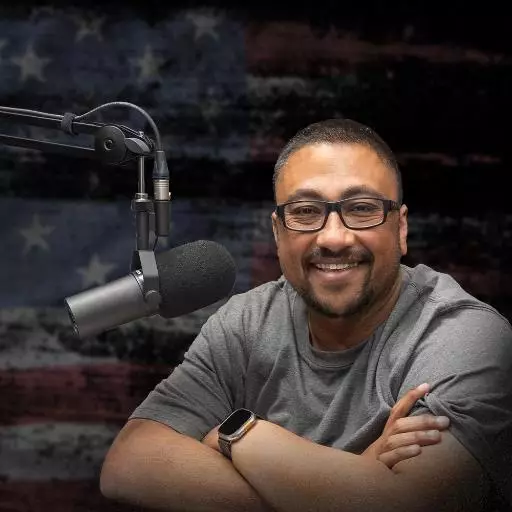
IRAN Just Made A HUGE Mistake


On this episode of Countdown 2 Eternity, Pastor James Kaddis and David Tal discuss what has been the elephant in the room over the last several days. An ultimatum was issued, and the threat of kinetic action appears to have been enough to bring Iran to the negotiating table. After agreeing to a ceasefire, Iran has now made the critical mistake of violating that agreement, raising serious questions about what comes next. We break down what this means, why this moment is so significant, and how quickly things could escalate from here, while also examining a major development involving Turkey and Syria that could dramatically reshape the region and impact everything currently unfolding in the Middle East. Don’t miss this exceptionally informative episode!
Guest (Male): Hello and welcome to a very special Countdown 2 Eternity. Today, Pastor James Kaddis is joined by David Tall, and together they'll give us a good idea of what's really going on in the Middle East. With Bible in hand and an open heart, let's join Pastor James and David for this edition of Countdown 2 Eternity.
James Kaddis: Well, hello, my dear brothers and sisters. I want to welcome you to another episode of Countdown 2 Eternity, and I have called in some big reinforcements for the show today because things are heating up in the Middle East. Folks, I'm going to tell you this right now: it's all about to change in the Middle East. We are under the gun, and times are changing rapidly.
Now, I am with David Tall. For those of you who are listening on the radio audience that do not know him, David is a commander in the Israeli Defense Force, a major, a very dear friend of mine. We do a lot of work together, and we are going to talk about some significant issues that are touching Turkey, Syria, and yes, listen to this, how all of that dramatically complicates what's going on in the Persian Gulf with Iran.
This is going to be a very important show. Now, I want to say this right off the bat: we are recording this on Monday night, and we know that history may dramatically change by Tuesday night. But what we share about will be extraordinarily valid. It just may accelerate all the much more. So with that said, David, how are you?
David Tall: I am fine. I just feel like I'm on the upper rows of a very interesting baseball game, trying to see who. We're down to ball three, strike two, and the final pitch is going to be coming up in a moment that actually makes or breaks this whole dynamic. It really feels like that right now.
There is a whole reshift of the geopolitical situation in the Middle East. If we go back the day before the 7th of October, let's say the 6th of October 2023, there was a reshuffling where Saudi Arabia, some of the Gulf states, and the UAE were starting to cuddle up to Israel as a result. I don't know if you remember that amazing trip that President Trump did to Saudi Arabia, and everybody was all excited. There were billions of dollars, and the other team, the bad guys, the bullies in the neighborhood, saw this happening and decided that if they didn't do something now, then this was going to happen and they were going to get completely sidelined.
When I mean the bullies, I'm going to say Iran as the main instigator of this, but using their proxies in Yemen, using their proxies in Sudan, using their proxies in Gaza, using their proxies in Iraq, and using their proxies in Lebanon. Basically, they were putting together a system where they could take on Israel and, in extension, the United States in some kind of all-out ring of fire attack where Israel would have no choice but to throw in the towel, say "Uncle," and reach some kind of an agreement that would be almost. They were talking about the dismantling of Israel. So that was the plan on the 6th of October.
Then the 7th of October happened, and everything changed. Here's the thing a lot of people don't really realize: the 7th of October was a fatal mistake on the side of the Iranians. I know it sounds harsh to say it like that, but they were supposed to do this coordinated attack. The whole ring of fire was supposed to explode together. Because Hamas saw us getting too close to Saudi Arabia, Hamas in Gaza decided to push the button before the whole ring of fire was ready.
The readiness of the ring of fire, what Iran was waiting for, we know today, was a nuclear option. Think about the 7th of October with a nuclear Iran. It would have changed the geopolitical dynamics completely. But somebody pushed on the 7th of October. We were totally surprised. Israel went through a total disaster, but we've crawled out from underneath there. Hamas is completely destroyed. Gaza is destroyed. There's a yellow line—we call it the new yellow line—inside Gaza, which probably might be the border long-range in Gaza. I don't see Israel giving it back unless something very different happens.
Hezbollah in the north got into the war late and didn't get into it with all of its abilities. Over the two years after the 7th of October, we've actually whittled away at Hezbollah until the pager attack and Nasrallah's killed. So Hezbollah is less than it was. It's still an issue. In the long term, Iran finds itself literally losing its ring of fire. They had no choice but to use some kind of an excuse to go head-to-head with Israel. That brought them head-to-head with the United States. Right now, we are at, I'm going to say, the ninth inning, the last batter, and the question is: do they give in, or does the West give in? We're literally on that pivot point right now. By the time you hear this podcast, you'll know which way it happened.
James Kaddis: Well, I'll go on record with saying I do not believe the West will give in under the leadership of President Donald Trump, especially after the tweet that he wrote on Easter. If you understand, if you know, you know where he ends by saying "Praise be to Allah."
Which, by the way, a lot of people thought he was losing his mind by writing that tweet. I'm actually going to go on record in saying he absolutely did not lose his mind in doing that. I think he was absolutely calculated. The thing that's interesting is when you hear people who are not citizens of this country, who really don't care about what's at stake, like Piers Morgan or cuckoos like Candace or Tucker who continue to lie about reality, the reality of it is, not only do they not have the best interests of the United States at hand in front of them, but they also do not understand the Middle Eastern mindset.
When you see the president actually do what he did, as a matter of fact, even the way he wrote the phrase "Praise be to Allah" actually was him playing against Islam, or that flavor of Islam, with the Black Muslim cult of Islam. Which is very interesting, and a lot of people don't see that. It was a level of trolling that so many people who have no understanding of what's going on in this region will never understand. But those of us who are familiar not only with Semitic languages but those of us that are familiar with the culture associated with those languages understand perfectly how remarkably calculated that statement actually was.
Yes, I don't agree with the language. Fair enough. But I also think that the language was designed to communicate a very distinct purpose. Do you want to talk about that for just a second, and then we're going to jump into Syria?
David Tall: Okay. I think that President Trump did not really internalize in the beginning the concept that I put up a video about a week and a half ago called *Muqawama*, the resistance. It's not by chance that Iran and Hezbollah and basically all of the Arab world calls this war against the US "the resistance," which is as much a theological and spiritual term as it is an actual term.
We know about the resistance in Cuba. We know about the resistance in France against the Nazis in World War II. But this is something deeper. This is the Muslim concept of resistance against evil, resistance against the other, resistance against ungodliness in their mind. The concept of this resistance goes much deeper than a geopolitical idea. That's why the Hamas never gave in. They were pounded into the dust; they never gave in. The Hezbollah is losing operatives or losing terrorists, two, three, ten, every day. Their neighborhoods in Beirut are being decimated, but they're not giving in. The villages, the Shiite villages in Southern Lebanon, have all been reduced to rubble and everybody's moved out. There are a million and a half refugees inside Lebanon. They're not giving in, and the same is for Iran.
Think about the Houthis. What holds them together is this spiritual, almost messianic fervor. They're going to go down fighting for this resistance, this *Muqawama* that they believe in. It doesn't matter how much they're going to get hit, how much they're going to lose, and how many are going to die. They believe that our weakness and our willingness to suffer in the name of Allah is our greatest asset. We're seeing that in the whole ring of fire. One more thing on this: if you read your Bible, this is spiritual.
James Kaddis: Yeah, of course. It's spiritual on their side. What the West isn't understanding is that it's spiritual on our side too. Can you go back and maybe add to the observation I make with respect to the tweet of the president? I'd like to go there before we transition into Syria because this has everything to do with everything you've just talked about: the resistance, what happened with Hezbollah, with Hamas, with Egypt even, talking about what's been happening with respect to the Kurds and how that dramatically affects everything in Northern Syria, specifically Southern Turkey. So go back to the tweet. What were your thoughts on that? Because it was by far arguably the most unhinged text the president has ever sent in history.
David Tall: I don't know about history, but it was a gang warfare kind of event more than it was a political, democratic event. What Trump is doing, and has been doing since day one because nobody knows what's going on, and the question is, if he's serious or if he's being pulled or if he is actually being calculated in this. I tend to believe that he's calculated, but he might let his anger get out there.
I grew up in Arab neighborhoods, okay? I don't know if you connect to this term. You have a neighbor brawl with somebody, and one of the guys goes and says, "I'm going to beat you up." He says to his friends, "Hold me back so that I don't kill him. Hold me back." I think what Trump is saying is, "I'm about to let everything go on them. I'm about to let everything go. Tell me to stop. Tell me to stop. Hold me back. Don't let me do what I'm going to do to them."
That is something that the Middle Eastern mind can understand very well. It is a challenge to their pride that he is saying, "You're going to get me going on this, and just to make sure that you understand, Allahu Akbar," which means that is the battle cry of any terrorist before they press the button on the suicide bomb. I've seen Syrian tank commanders walk out of their positions yelling "Allahu Akbar" before they go to a different place. What I'm trying to say is, I can do the "Allahu Akbar" thing too. He is mocking them and triggering them in any way, shape, or form. He is putting them down on a very personal and base level.
The idea is that it's not enough just to win them militarily; he has to humiliate them. If the United States of America does not humiliate this radical, crazy, mullah-led "we are the ones who are going to bring in the Mahdi," if he doesn't humiliate them, just beating them into the ground is not enough. You know this, James; this is our culture. They need to be humiliated as much as they need to be defeated militarily. That is something that I think he's doing.
James Kaddis: Yeah, and I also think that the use of the language was very calculated. I actually believe that President Trump was not unhinged even a little bit when he did this. He was not angry, he was not under the consumption of alcohol—he doesn't drink alcohol—he wasn't using drugs, no one jacked his account and put that there. I think he did that very uniquely, very consequently, and very specifically.
I think that he did that to make several statements. Number one, he did it to make the statement that NATO will not manipulate him in seeking to deal with what he needs to in the Middle East. He also made it very, very clear that he will not adapt to the philosophy or the heart or the mind of Europe, specifically the French and specifically the UK, with respect to how they continue to coddle this fundamental Islam that they continue to coddle.
The other thing that I would also say that he is doing: when he says specifically, "Praise be to Allah," he's not saying "Allahu Akbar." He's not even going so far as to repeat the type of war cry that you just mentioned. As you said explicitly, perfectly, he's mocking it. When he says, "Praise be to Allah," he is mimicking how the American Black Muslim movement actually speaks when they say "Praise be to Allah," understanding that the Black Muslim movement in the heart and Middle East, especially with Iran, is very much hated by them.
The point behind it is, I don't care what you think, I don't care what your culture says, because your culture is a death cult, and I can promise you, the appearance of me being unhinged is me simply telling you that I will not be controlled, moved, or motivated by anything political. And by the way, for the extra super spiritual, legalistic Christians who will go so far as to say that the president was wrong for doing this, let me just simply say this: I don't agree with the cursing. I simply don't. However, let me just make myself clear.
You would also have to go back to Elijah, and you would have to say that he himself was an evil man because he mocked the false god of Baal. He mocked the god of the prophets of Baal. So to say that as our leader, seeking to do that, fully understanding the culture and how it works, be very careful. Because you can hate President Trump, you can say he's crazy—I love him, I think he's very calculated, I think he's extraordinarily smart, I think he knows the Middle East better than literally 95% of the people around him—and I think that he did this for a very unique and specific reason, and that is to put the literal fear of God inside these people.
Make no mistake about it: when they see this language being used by the president of the United States, I'm not that I like the use of the F-word, but keep this in mind. Those were choice specific words that were used directly to communicate what may be one of the most aggressive messages ever sent, explaining the fact that he will indeed destroy their internal infrastructure and so much more if they do not free up the Strait of Hormuz. That's a big deal. And if Iran is going to give in to it, let's just say they're going to; this will be the best chance ever for them to do it.
David Tall: This is him saying, "Let's negotiate an agreement." I can't help but bring up David and Goliath in the Valley of Elah, where Goliath actually ridiculed the God of Israel. When David took him on, he took him on not only for military reasons and political reasons; he took him on because they actually ridiculed the God of Israel. Our spiritual pride was here.
I think this is what he did. He's speaking Middle Eastern-ese, not Western-ese. I think that is what most people need to see and understand about this kind of dynamic. He's speaking their language, not your language. And that, I think, we have to give him credit for. He's saying, "If you don't reach an agreement, I'm going to go berserk on you. I'm going to bring down everything possible." He's acting like a crazy man to emphasize and get that through.
I can see the mullahs in Tehran saying, "Ah, he's not going to do it. The Europeans are going to tell him not to do it. His people are going to tell him not to do it." And he says, "No, I'm crazy enough to do this." I don't think it's his craziness; he is actually portraying this. Just so you know, I'm crazy enough to pull out all the stops. It's going to be interesting to see what's going to happen.
James Kaddis: Yeah, I agree. Now, things as we speak are growing far more complicated than we could possibly imagine because of what is happening in Syria. It actually affects what's happening in the Middle East, specifically in the Persian Gulf, and it brings in what I have called the effective colonizing of Syria by Turkey. So talk about this problem. Bring this up; this is important because it's something I don't want our people to not be informed about.
David Tall: Okay. Do we have time? I just want one more thing before we move out of Iran. What happened the last couple of days? Everybody knows about the F-15 that was downed and the two pilots were rescued. I need people to understand that that could have gone this way as much as it went that way. Today we're celebrating a great rescue mission. We're celebrating a great military. We're celebrating something amazing.
But it's not impossible that a plane will be shot down or a couple of American soldiers would be caught—God forbid—or an Israeli pilot would fall into the hands of Iran and this whole thing shifts to something completely different. Think about an American pilot being paraded through the streets of Tehran, wounded and bleeding, or an Israeli pilot being paraded. You get a whole shift in dynamic. What I'm trying to say is, I think President Trump realized now, after this event, that it is on knife's edge and it could explode in his face, and he has to receive or decide what needs to be happening now. We dodged the bullet, James, with that pilot. We literally dodged a bullet big time.
James Kaddis: Yeah, I would agree. But I would also state the fact that I do not believe by any stretch of the imagination that the president is being reactive here. I think that all of this is part of a very specific methodology that is a small part of a much larger plan. I think that yes, we are talking about a complete miracle over this wizzo that they lost. I think that's a very, very important thing to state.
But there is a bigger issue at hand, and there's a new issue here that's about to show its face in the Strait that we have to talk about that involves Turkey and Syria. I'm guaranteed the president is making these calculations, understanding what this problem may actually be.
David Tall: So here's the basic. Again, I'm going to do this visually. If you look at a map of the Middle East, the eastern part of the Mediterranean Sea, that's where Israel is. Just to the north of Israel is Lebanon and, in extension, Syria and Turkey further to the north of that. To the south of Israel is Egypt, and you go down later deeper into the African continent. To the east of Israel is directly Jordan, and a little bit further is Saudi Arabia, and then you come into the Gulf areas.
If you go even further across the Indian Ocean, you're going to connect to India, and further east to Vietnam, Cambodia, China, Korea, and Japan. What I'm trying to say is that the Middle East is this connector between the markets of Europe and the West and the manufacturing centers of India and China. We're sitting in the middle, and the whole Strait of Hormuz, which is a choke point, a naval choke point, the Bab-el-Mandeb, which is a naval choke point.
In between those, you also have Saudi Arabia, UAE, Oman, Israel, Jordan. Things need to go from the East to the West, from India and China to Europe and the United States. The question is what the route is going to be that allows them to move across this Middle East buffer zone. Until now, mostly ships carrying goods through the Red Sea, the Suez Canal, and up to the West. But everybody is realizing now that these naval choke points, including the Strait of Hormuz, which is becoming an issue, are non-reliable. Everybody's looking for a recalculation of the route, like you have in your GPS when one way gets stuck, it'll recalculate the route.
There are a couple of routes that are coming up right now from India to Europe or from China/India to Europe. One route is the Israeli corridor, which is a combination of mostly Saudi Arabia, Jordan, and Israel, which is what allows fuel to go through, goods to go through, and doesn't go through any of those choke points. Saudi Arabia, Jordan, and Israel are relatively stable societies, countries, nations—call it what you want. A big investment would see a return.
On the other hand, the opposition forces, which was basically Iran, didn't want to allow this to happen. So that's the geopolitical reason for what's going on. But Turkey and Syria also sit on that corridor, also sit on that route. If you look at a map, you can go from Turkey into Syria, and you can go from Syria probably to Iraq in order to connect to the Persian Gulf port in Southern Iraq. If you want to do something like that, you still got to go through Iraq, and you still have to go through the Persian Gulf.
But Syria and Turkey are realizing that the instability in the southern part of the Middle East gives them an opportunity that if they open up a pipeway, fenceway, gateway, then they will be able to supply the needs of Europe without going through the mess in the Middle East. That's why Turkey has been very, very quiet while all of this is going on. This is a nation that thought it was going to be a major power in the Middle East, and surprisingly, they've been silent about what's going on.
They were even quiet when Iran fired rockets at American bases on Turkish soil that were intercepted on the way. We're now realizing that they're planning or plotting a corridor that outflanks the Saudi-Jordan-Israel kind of corridor. It's an outflank not only of a geographical corridor but of a political corridor on the other side.
Israel has ongoing—we signed a $7 billion contract with the Greeks yesterday to supply them weapons. Greece is part of Israel's corridor, so is Cyprus. We have very good ties with India, which is more on the Israeli corridor. On the other hand, the Turks and the Syrians are closing their ties with Pakistan, which is going to be on their side. The main issue is Iran. We'll have to see where that goes.
James Kaddis: Yeah, and I think that it's a very intricate playing piece that's going on right now because I think the general assumption that Erdogan is making is that Trump is going to allow him to continue this proverbial colonizing because him and Jolani are working pretty well together. Obviously, they're working in cahoots and what they have just recently done even with the integration of some of these Kurdish rulers now taking government positions in this regime of Jolani's is making some very clear statements.
So the issue here is that I think Erdogan is going out of his way to take credibility away from the NATO infrastructure as it relates to Middle Eastern overtones. I believe that NATO is willing to acquiesce with that in opposition to what Turkey is doing, as well as the United States of America, simply because eventually, I believe Erdogan's whole goal is to get NATO to believe that Erdogan is acting favorably towards Israel so that it can execute the leverage that it needs to with Azerbaijan as well as any assets that might be in the Baltics that have a closer relationship with Israel. That can get complicated, but I think if he plays his cards right, he's going to grow in stature in Syria, which I have mixed feelings over.
I mean, I have really mixed feelings over because what does that do with Israeli security? We know what the end game is. Obviously, we know that Syria becomes the stomping grounds for the King of the North. But what does that look like, bro? Like, that to me is—like, what happens with Israeli security at that point?
David Tall: Before we go into Syria, because I got something to say about that and Israel news is talking about something that nobody else is talking about—I'll get to that in a minute—I want to stress something else. The world, Israel included, Turkey included, is looking at NATO from behind, meaning we all believe NATO's going to fall apart soon.
James Kaddis: Yeah, not valid. That's right. I would agree, 100%.
David Tall: So Turkey is asking itself, "Wait a minute. What's going to happen?" NATO was supposed to be Turkey's patron in the fight against the Soviet Union, but it was also giving it credibility in the fight against all of its foes or all of its adversaries in the Middle East. The thing is, NATO's going to fall apart. NATO is nothing. From the American point of view, NATO is not worth the cost of the business cards for the people that are in NATO. 100%, I agree.
It was Marco Rubio who said very clearly, "We need allies like Israel that we can trust that they're going to come to our aid when we need." Do you know that there were Israeli forces on the ground with the rescue of those American pilots?
James Kaddis: Yes, we do know that. And actually, somebody had made mention of their existence in this operation, and they provided some air support as I understand it.
David Tall: No, air support, yes, but actually Shaldag and Sayeret Matkal were on the ground in Iran, which is happening. Now, there were no Turkish forces on the ground. There were no Saudi forces on the ground. There were no Jordanian forces on the ground helping to extract that American pilot. It was Israeli forces.
So the United States is realizing that they need allies like Israel. Turkey is realizing that if they want to be a player, NATO is not going to give them the weight that they want, and they're actually adding on or trying to add on the weight that they're looking for. Again, we are on a show that's called *Countdown 2 Eternity*, and we know what the prerequisites are to the final event.
Do you understand that we are looking at a possible hinge point where there's peace in this part of the Middle East, but there's a growing axis of Northern Middle Eastern elements that are slowly, slowly coming together as Iran falls apart?
James Kaddis: Yeah, bro, it's becoming so obvious now. And if NATO disintegrates, like I actually think it may, then it also gives way for the strengthening regionally of what we call Magog. I mean, it doesn't get more obvious than this. So this is a big deal, and what's playing out right now with Turkey and Syria has a massive effect on the Strait of Hormuz, has a massive effect on what's going on.
And by the way, we haven't even talked about this, but this is all while Saudi Arabia is looking for a new bypass mechanism that goes north of the Persian Gulf through Iraq, and the Iraqis are willing to work through it if incentivized properly. That's a big deal. And by the way, with the desire of the Kurds in the north who are friendly to the United States to want to get involved and make that work, and at the request of the president of the United States saying, "Stay the heck away." You can't make this stuff up.
David Tall: What we haven't mentioned in all of this is who's watching from the sidelines.
James Kaddis: Okay, now that's also a good one because now we get introduced to Pakistan. We get introduced to India. We get introduced to clearly North Korea. We get introduced to South Korea. We get introduced to what's going on in the South China Sea and the nations affected by it, which by the way, the Philippines are trying to be pro-Israeli through and through because of what they know is at stake. And then we have the China problem, and the China problem is deeply consequential here.
David Tall: There's two aspects that I've been following the China problem lately. Number one is that China's military standing, their military capabilities, the capabilities of their weapon systems has been totally demolished here. Iran was a substate of the Chinese military establishment, and nothing that the Iranians got from China is worth the money that they paid for the shipping. They got nothing out of their Chinese assets.
Now, that is actually, more than anything, one, impacting the Chinese military industry, but more than that, it is impacting the concept. China had to show that it was a tiger, and we're seeing more and more that it's a paper tiger, which means that they're going to be much less of a threat in the future than they were until now. China is less of a threat for the United States than they were now.
And if President Trump gets his hands on the tap of the Strait of Hormuz, he's controlling both Iran and China at the same time. A lot of people think that that's what he's basically doing. If the end of this conflict means that the United States has control over what goes in and out of the Strait, then he has control of Iran, but he also has control of China. And if he's got control of Venezuela and of Iran oil on both sides, he's actually cut China off from its oil assets.
James Kaddis: Yeah, in a big way. And I think that one of the things that isn't being really spoken about or isn't being discussed is the fact that he also made in the press conference that happened earlier today, he made some very aggressive statements with respect to Japan, in essence not wanting to stand out and help, or sorry, not Japan, South Korea.
And then talked about the fact that we have 50,000 troops in Japan whose whole subject is or whole purpose is to protect South Korea from the threat of the North Koreans. And he basically said, "I have a great relationship with the North Koreans. Why am I even there?" And then went on to talk about American assets and American positions in very key strategic areas comprised of NATO targets where he basically said, "Why are we there?"
Look, and I would argue this: I would argue that they practically had an Article 5 moment take place over the last several weeks, and none of them responded. So if Article 5 doesn't work when there's a legitimate attack taking place on assets from countries that are tied to Article 5, why in the world do you stay in NATO? There's no purpose.
David Tall: Again, like he can say, "I have a good relationship with the North Koreans, so I don't need a military there." He could say the same thing: "I have a relationship with Putin, and I'm willing to give up my NATO bases. I don't need them. The United States doesn't need them."
The United States doesn't need the oil. If you look at this from a geopolitical point of view, we are doing the world a favor paid for by the United States of America. Ever since World War II, the Pax Americana, or the freedom of the seas, has been paid for and funded by the American taxpayer. And now, when that is being shaken up for all kinds of reasons, the rest of the world doesn't want to step up and go to fight.
Instead of NATO becoming German, NATO is becoming French. And the joke goes that in a war between Israel and America and Iran, the French were the first to surrender. And look, I've said this before, and I'll say it again. I think it's critical that this tweet be looked at and understood for what it really is. It is not the president going unhinged; it's not the president being crazy. It's the president communicating a very significant message because he understands what's at stake. And it's time that we analyze it using smart thinking and explain it for what it really is. And I think that's an obligation that we carry. It's a critical obligation, and it's one that we cannot forget. We just can't. David, I'm going to give you final words because we're out of time.
David Tall: Pray. Pray. Ladies and gentlemen, people, God-fearing, Bible-reading people, you have to see the writing on the wall right now. You have to see it. It's there. I feel like the guys at the banquet, and they're seeing the handwriting on the wall, and everybody's going, "Oh, what's going on? Oh, what's going on?"
Yes, we know what's going on. we can see what's going on. It's happening as we speak. And I think we're getting closer and closer to a pivotal or a critical moment. If Iran comes out of this waving a flag, then China is on its way to winning the next major confrontation. If Iran comes out of this subdued and humiliated, then I think we've put the radical Islam element in a coffin for a while, and we'll start talking about the Biblical ramifications of that, meaning the Middle Eastern peace that will actually bring on what we're talking about in end times. And we're getting closer to eternity.
James Kaddis: Amen to that. And we're here to tell you, guys, we are near that time. Literally, we are seeing so many things come to life, and it is important. David, what a great conversation. I think it's amazing. If you are watching this conversation and you were not able to see the live show that we did yesterday, meaning Tuesday, please come and watch it. We will discuss all of this stuff a lot more at length. May God richly bless you. On behalf of David Tall, this is James Kaddis. We do sincerely hope that you enjoyed watching this or listening to it as much as we've enjoyed making it. We love you guys so much. Keep fighting the good fight, and remember: Christ could come at any moment. We love you. God bless you.
Guest (Male): That's Pastor James Kaddis and David Tall on Countdown 2 Eternity. You can replay this informative program when you visit countdown2eternity.com. That's countdown the number 2 eternity.com. Or listen to us wherever you get your podcasts and at oneplace.com. By the way, you can find David Tall on Instagram and YouTube at The Balagan Connection. That's spelled B-A-L-A-G-A-N.
These are exciting times to be living in. Prophecy is being fulfilled right before our eyes, and we want to keep you informed, not only on this program but through social media as well. Follow James Kaddis and Countdown 2 Eternity on Instagram and look for our YouTube channel under James Kaddis. I also want to make mention of jameskaddis.com. There you can watch our latest live shows and videos.
Whether you're a long-time listener or new to the program, we want to hear back from you. We'd like to receive your thoughts, questions, and prayer requests. Email us through the website at countdown2eternity.com. By the way, if you'd like to support this ministry, that's the place to turn: countdown2eternity.com. And thank you in advance for whatever the Lord leads you to do. Then join us next week when we'll have another prophecy update for you here on Countdown 2 Eternity. This program is brought to you by Calvary Chapel Signal Hill.
Featured Offer

As the world races toward its final chapter, Scripture has already revealed every detail. Revelation is God's message of warning, hope, and promise to prepare us for what's coming. Pastor James Kaddis walks you through Revelation Chapters 1-10 with boldness, urgency, and verse-by-verse simplicity. As biblical prophecy unfolds before our eyes, Pastor James shows why now more than ever we must live wholeheartedly for God, anchored in truth and awake to the times. Drawing on his deep understanding of Middle-Eastern culture, Bible prophecy, and the Old Testament, Pastor James reveals how the Book of Revelation is Jesus unveiling what is to come, and how every word connects back to the foundations laid by the prophets. Along the way, he dispels the myths, misconceptions, and fear-based teachings that often cloud this powerful book. Most of all, he highlights the extraordinary promise God gives us: a unique blessing for all who read, hear, and take to heart the words of the Book of Revelation. Clear, compelling, and deeply hopeful, this book will help you understand the world we live in and current events through a biblical lens, so you can prepare your heart for what lies ahead.
Past Episodes

Featured Offer
As the world races toward its final chapter, Scripture has already revealed every detail. Revelation is God's message of warning, hope, and promise to prepare us for what's coming. Pastor James Kaddis walks you through Revelation Chapters 1-10 with boldness, urgency, and verse-by-verse simplicity. As biblical prophecy unfolds before our eyes, Pastor James shows why now more than ever we must live wholeheartedly for God, anchored in truth and awake to the times. Drawing on his deep understanding of Middle-Eastern culture, Bible prophecy, and the Old Testament, Pastor James reveals how the Book of Revelation is Jesus unveiling what is to come, and how every word connects back to the foundations laid by the prophets. Along the way, he dispels the myths, misconceptions, and fear-based teachings that often cloud this powerful book. Most of all, he highlights the extraordinary promise God gives us: a unique blessing for all who read, hear, and take to heart the words of the Book of Revelation. Clear, compelling, and deeply hopeful, this book will help you understand the world we live in and current events through a biblical lens, so you can prepare your heart for what lies ahead.
About Countdown 2 Eternity
About James Kaddis
James Kaddis:
Pastor James Kaddis is the founding and Senior Pastor of Calvary Chapel Signal Hill in Signal Hill, CA. By the grace of God, Pastor James has been serving in the ministry for over 25 years. Since 1996, he has also served as a police chaplain. Pastor James has a background in the areas of theology, network engineering, computer forensics and law. He previously served as an Assistant Pastor at Calvary Chapel Downey and the Dean of the Calvary Chapel Bible College, Downey Extension. He is also considered an expert in the field of Computer Networking and Security, and has extensive experience working in that field with both law enforcement and other types of professional organizations. Pastor James represents the first generation in his family to be born in the United States to parents that were both born and raised in Egypt, and learned Arabic as a second language in his home. This background has been used by the LORD to give James a love for Biblical languages. In April of 2016, Pastor James married his beautiful wife Nicole, and is overwhelmed by the privilege to serve the LORD by her side! His teaching ministry spans across the nation through the “Light on the Hill” radio ministry.
Contact Countdown 2 Eternity with James Kaddis
Email:
radio@calvarychapelsignalhill.com
Mailing:
1200 East 29th Street
Signal Hill, CA 90755
Instagram:
https://www.instagram.com/countdown2eternity/
Facebook:
https://www.facebook.com/countdown2eternity/
Telephone:
562-804-5509