

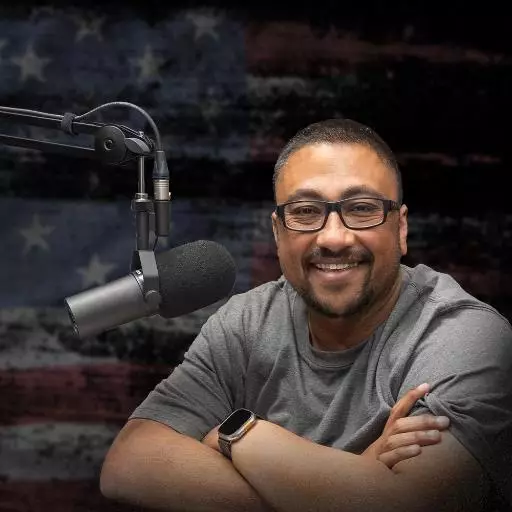
Iran Just Walked into a Trap in Jordan


In this episode of Countdown 2 Eternity, Pastor James and Tom will discuss how Iran’s attack on a U.S. military base in Jordan did far more than strike one military installation. It pulled Jordan directly into the conflict, exposed every Arab government hosting American forces, hardened regional alliances against Iran, and may have created the conditions for something huge that will transform the Middle East. They will also examine what this means prophetically, why it may be moving the region closer to the prerequisites for Ezekiel 38, remarkable discoveries being made in Israel, and why George Orwell’s 1984 may have had a point.
Announcer: Welcome once again to Countdown 2 Eternity with Pastors James Kaddis and Tom Hughes, a weekly radio ministry from Calvary Chapel Signal Hill. Together, Tom and James examine current events and connect what's going on in our world to Bible prophecy.
James Kaddis: Well, hello, my dear brothers and sisters. I want to welcome you to another episode of Countdown 2 Eternity, and we got a doozy for you. Listen, we have war extending itself into the rest of the Middle East. We're going to talk about that briefly, specifically as it relates to Jordan. We have some discoveries in Israel that are remarkable that we are going to talk about. And folks, I think the book 1984 had a point. There was something about that was right. So with that said, I have the great Tom Hughes with me. And this, brother, this is going to be a fun one.
Tom Hughes: We are going to have some fun. Before we even start, I didn't even know you were going to mention 1984. I just happen to have a quote from George Orwell in this book that I got right here, where he talked about the dystopian nightmare that is coming. He says this in the quote, 1984. That's weird I had this here. Isn't that funny?
During times of universal deceit, telling the truth becomes a revolutionary act. That's a quote from Orwell's 1984 book. And man, telling the truth is a revolutionary act. All right, I don't even know what you're going to do. I was actually going to do something else since you used a voice that wasn't yours.
Here's one. It's AOC. Did you see that over the weekend talking like a southerner? AOC and what's her name, Ocasio-Cortez? I don't even know her first name. She's talking like she's from the South and she's just got some cornbread and stuff. AOC in a campaign speech.
James Kaddis: She's a stinking bartender with the IQ about the size of my shoe from New York. And now she's talking about, "I'm a southern bell and we're going to get ourselves some..." What did she say? Something about cornbread and watermelon without the peeling? She actually did. You got to wonder. Remember Kamala Harris would do that stuff?
Tom Hughes: Oh, my goodness, brother. Is it in their blood? Pretty soon she's going to show up with blackface. I'm sorry. What's wrong with these people? So I heard that Kamala Harris is still leading the polls as the front runner for president in some polls. Did you hear about that?
James Kaddis: It's just ridiculous. I hope she's the front runner. I hope she's the person that the Democratic Party has to put up. That's going to be great. I cannot wait for word salad come 2027. She'll come out with her southern accent and then she's going to reflect on the trees, and then we're going to reflect on the leaves and the sap, and if the sap... I'm going to get myself in trouble. And the yellow school bus. A yellow school bus because it's yellow. It's yellow. I do declare. I do declare.
Tom Hughes: Hey, all right. You do need to be on "You Can't Make This Up" with me. We would have a blast. All right, let's shift over to something more serious. And then we're going to look at everything you said regarding Israel. Unbelievable discoveries that are being made, absolutely over the top. So check this out.
Jordan, over the weekend, the whole thing with the attack at the US base by Iran in Jordan over the weekend. I met somebody when we were in Idaho, by the way. I'm so tired of going places and people tell me, please tell James I said hi. Will James please come here? I told you I was in Singapore and the people did that to me.
James Kaddis: You see, you hear that everybody? Tom is tired of you all.
Tom Hughes: I didn't say that. I'm tired of you all asking for James everywhere I go. I can't fit James in my suitcase in case you're wondering. It ain't going to happen. All right, so Jordan, over the weekend, US military base gets attacked by Iran. You look at this and go, man, what is coming?
James Kaddis: Jordan being attacked, the US military base in Jordan being attacked by Iran, presents a series of questions. The only question worth answering, and one that we're going to answer right now, is how does that affect the region? That is perhaps the most consequential question to bring up because the analysis that drives that question is going to tell us what we can expect in the future, whether it be short term or even long term.
I think when you focus on what may be deeply consequential with respect to the geopolitics of it, it's pretty remarkable. Let me start off by simply saying this, because I think it's very easy to lose sight of this. This attack is going to change a bunch of things. It's going to change the region specifically because Iran has, in essence, now demonstrated that no country hosting American forces can consider itself safe outside of the war.
Their direct missile and drone attack, and if I remember correctly, I believe the region was in Muwaffaq. It's where I believe it was, the Muwaffaq Salti Airbase. It killed two American service members and we presume the other ones that are missing are dead. That's just the assumption. It's not merely just some missile passing through Jordanian airspace towards Israel, which is something that we see on a regular basis. It is an act of aggression against sovereign Jordanian territory.
That's where this becomes a problem. Jordan has been, literally officially as of this moment, pulled into the conflict. Jordan has tried to remain a very stable American ally in multiple contexts without becoming a primary battlefield. Now that's changed. Iran has just changed that neutrality, or let me just say this, they've made that attempt at neutrality to become increasingly more difficult. That's probably the better way of putting it.
King Abdullah now is required. He has to. He doesn't have a choice. He's now required to defend Jordanian territory while still managing the population problem that all of this presents. By the way, that population problem is consequential because there's a massive anti-American sentiment within the Jordanian population that a lot of people aren't going to really talk about.
And the United States is under immense pressure to retaliate, not just in some normal, metered way, but to retaliate in a way that says, we will officially defend the sovereign territory of the Hashemite Kingdom of Jordan. And that's not going to be an easy thing for America to do. And the part that becomes deeply consequential in all of this is every single country that's now hosting American forces is now exposed.
But let me help you out because a lot of people are not going to make the connections on the countries. That means Bahrain. That means Kuwait. That means by far every member of the GCC. We're talking about Qatar, Saudi Arabia, the United Arab Emirates. Iraq is now exposed to it. Jordan, of course. Egypt is exposed to it. And the reason why Egypt is exposed to it is because of the position that we have in the Sinai that a lot of people don't talk about or even know about that relates to the Suez Canal.
There's a lot of things like this that are going to become... and by the way, this could potentially affect Libya. This could potentially affect what happens in the security with respect to the southern portion of the Arabian Peninsula. This could affect everything that relates to Oman. This could affect this whole area where the strait is, where Djibouti is. There's so many issues that this could potentially affect.
And that also is difficult, can be very difficult, because now Israel's eastern security has become ten times more important than it ever has been, which means there's going to be an induction of Syrian forces as well as Jordanian forces to be able to maintain the kind of DMZ that they need to, especially with respect to the area of maintaining sovereignty in the Golan Heights where we actually call it the security zone.
The other thing that's really important to understand is Iran, whether or not anybody wants to admit it, is actually testing America's air defenses. They're doing it. They're making sure that that ends up happening. And the other thing that I would speak to is the fact that the internal situation within Jordan now, the internal stability, could come under pressure.
Iran is harmless in one respect when it comes to Jordan, but this action could help to overthrow the Jordanian military if things get unstable enough. Now is that likely? No, highly unlikely. But there's a variable within Jordan that we have to consider, and that's the Palestinian population and the existing economic pressure that's happening within Jordan within the confines of the Palestinian population that's in Jordan. This is going to bring out some of that nonsense.
And I don't think it was an accident that Iran actually hit the Judea Samaria portion of Israel targeting Palestinians. I think they did that on purpose because of the attempt at targeting the strength of America's security forces that are in Jordan right now that are specifically designed to mitigate the problem in Judea Samaria, especially as it relates to its proximity location-wise to Jordan.
So all of that to say that diplomacy has just become much harder with the countries that we have diplomatic relations with. And the economic consequences are going to spread far beyond Jordan in many ways because these expanded attacks bring risks to things like regional airports, to military installations, pipelines. That's a big one we've been talking about lately. Ports or oil facilities. All these areas, especially as it relates to commercial shipping.
We have a problem. There's a problem that it's created, not only just in this area of Jordan, but this little funnel hole in Al-Faw that's there in the southern portion of Iraq, the peninsula that just got created for receiving shipping and in through the Persian Gulf and of course outside the Strait of Hormuz. It's going to create a lot of problems.
So if I were to put it in the clearest way possible, Iran's attack did a whole lot more than strike an American base in Jordan. It wasn't just an American base being struck. It literally transformed Jordan from a country located near the war into territory that's now directly involved in it. And that's something that we have to understand. They're not going to be removed from it. And the problem is every single Arab government that is hosting any affiliation right now with the United States is basically being... Iran is reiterating the fact that they are now legitimate targets.
What Iran doesn't realize that's going to do is it's going to harden the regional alliances that exist, the ones that exist against Iran, and it's going to increase pressure for American retaliation, meaning all it's going to do is make it harder for President Trump to hold back in beating the snot out of them. And what he's going to end up doing is he's going to end up carpet bombing them in a way where the IRGC is not going to survive what happens next. And I can already tell you right now the Kurds, the Iranian Kurds, as well as some of the other forces that are mounting up, they're getting ready to want to overthrow the IRGC.
I actually think this was the trap that President Trump wanted everybody to walk into, specifically Iran. That's what I think. I think the MOU made that possible. But that's what we're seeing now, and that's why Jordan is so deeply consequential to the overall picture.
Tom Hughes: James, thank you so much for all of that. I think it's really insightful. I was going to ask you what you thought, and you started to go down that path. So I'm going to go a little bit further. But first of all, whether or not it was a trap that Trump had set or this is the way things have developed, regardless, this is the way it's going.
And what I see is the same thing that you just said, that we are watching the development of the hardening of the Gulf states. For example, you mentioned the Al-Faw peninsula/port that is being built that they call Babylon. I think that is very fascinating. As you read all of the builders of that port, they're actually calling it Babylon in Southern Iraq.
And then so you watch Jordan, you watch Egypt, all of these things. I believe the same thing. The result is going to be, look, we're done with Iran. Dubai is done with dealing with the problems of being afraid at the airport. They want to all get back to business. They're looking at the economic threats that they're facing plus just these types of threats that you're going to bomb us. I see them all getting together and saying, we've had enough. And we have got to shut down Iran. I think it was a major strategic mistake by Iran to do this inside Jordan to this US military base.
I also find this interesting. In Daniel chapter 11, speaking of the time when Antichrist rises up, the Bible talks about this verse 41 and says, "He," that being Antichrist, "shall enter the glorious land," that be Israel, "and many countries shall be overthrown; but these shall escape from his hand: Edom, Moab, and the prominent people of Ammon." That's Jordan.
And so I find it fascinating when we look at all of the nations that are being talked about right now daily in the news getting more and more. What is it? It's all of the territories that are mentioned in the Bible. Israel being the epicenter and the surrounding whether it be Arab or Turkish or Persian or whatever Egyptian, whatever those nations are around them and the people groups. They're the ones that are being talked about right now. They're the ones where we find in the Bible that are the prominent places in the last days.
The only reason why the West becomes prominent in last days is because Antichrist rises up out of the West. But it is these territories, and they're the ones, as we see there in Daniel chapter 11, that find victory over Antichrist. That is just a mind-blower when you put that together, put Isaiah 19 in there where the people of Egypt and the people of Assyria will worship the Lord of Israel in the last days. There's no way anybody could write the script except for the Lord.
James Kaddis: Well, and the amazing thing is, it paves a very keen, distinct, open, direct way into the scenario by which the prerequisite is created for the existence of Ezekiel 38. Because peace will come as a result of this for a little while.
Tom Hughes: Right. And again, let's reiterate, James and I are not saying Ezekiel 38 is tomorrow. There's still people that are saying insane stuff. Israel has to be in that place of peace, which what you just said is so spot on because this... I mean, I look at this, I just see a huge strategic mistake by Iran in doing this. But it will create this. God is sovereign. And He is proven He is sovereign. He will move the hearts of the king like the rivers of water wherever He wants them to move. And I think this is going to develop into something huge that will transform everything to bring Israel to that eventual place of peace that they need to be.
James Kaddis: That's a thousand percent right. And I actually think that this is being driven deeper into the inevitability. I'm not going to even say the possibility. It's the inevitability of boots on the ground in Iran. And if there are boots on the ground in Iran, I don't believe they'll be American boots. I actually think that they'll be the boots that are already on the ground. And I actually think that the President will manage to, probably for the first time in human history in or around the Persian Gulf or the Arabian Peninsula, where he's going to have troops from other countries on the ground there dealing with the problem with Iran.
By the way, the stakes are too high. And I think countries like those represented by the GCC would be more than happy to participate in something like that if they know they get the appropriate air support and if they know they'll be able to turn the status of the country into a condition by which they now have a new trade partner, a peace partner, and a, for lack of a better term, a much more open function of regional stability that they've always been looking for. Their value just goes through the roof. OPEC gets saved, in essence, if this happens, and things begin to change. Which by the way, it would be interesting because BRICS as an organization ends up getting deeply challenged if that happens because it would rely upon the conflict that exists within the region that dramatically affects OPEC or OPEC Plus in order for that to happen. Which is why this is going to become very interesting. And by the way, I think is also the same reason why we're going to see attempts at peace being subverted very quietly by countries like China and Russia. So it's a very interesting picture.
Tom Hughes: It is, James. And I think I mentioned when I was here last week, I had just returned from Singapore. And the thought is, you can see the Asian money. They're talking about technology and blockchain and everything else, and there's an awful lot of money there. But I think I mentioned it here, when I asked specifically to certain people that were in the room, where's all the money going? And it was the Gulf states. That is the area where everything is going to be pouring into, the billions and trillions.
So with all of that at stake, these leaders in OPEC and the leaders of these Gulf state nations, then you bring in Jordan, you bring in Egypt, everything that you said to me, James, was just such a mind-blower. It is rapidly approaching the place that the Bible says, and we don't know from day to day exactly what's going to happen. But we do know what the end result's going to be. And I agree, it's going to be boots on the ground, but I don't see it being American boots on the ground. And we also know from Ezekiel 38, what else do you have? Boots on the ground.
And people have just assumed that means American boots on the ground. It does not mean that. America isn't even involved. It's an arrogant assumption. I agree. Well, it is. Don't you think that too often that too much of when it comes to even Bible prophecy, people, they interpret it through the eyes of America instead of the biblical understanding of what's actually taking place?
James Kaddis: Yeah, and it's hugely erroneous. There is a deeply consequential problem with associating Middle East diplomacy that's based on a patriarchal infrastructure with American diplomacy that has no real foundation or awareness of deeper cultures. And that's a very dangerous, sad, bad thing to say. It sounds very hurtful.
But we look at diplomacy as Americans as being extremely transactional, where diplomacy in the Middle East has everything to do with family, identity, the bigger picture, like the Twelfth Imam in the case of Iran. So with that condition, it produces several issues that are very unknown to the Western world that everybody should know about this Mideast diplomatic process, if you want to call it one.
I think that laying that out sometimes is a very helpful thing to do because if you understand the perspective of how they process it in the Middle East and the things to be concerned with there, it's going to very much change the way you look at things.
I'll give you one quick example of this. The Cold War is such an interesting picture of this. Because when the Cold War was fought with Russia, we know that Russia didn't want to die. Their desire to preserve some level of diplomacy was built on the mechanism where everybody involved didn't want to nuke themselves to death. And they knew that the end result of nuclear war would be that everybody dies and they didn't want that.
Let me give you another example of this. American diplomacy, and this is just true, most people don't understand it, American diplomacy is going to ask a question like this. What agreement can we reach right now at this moment? But if you're looking at Mideast diplomacy, I'm serious, these are the questions they're going to ask. Who are you? While America is saying, what agreement can we reach right now, in the Middle East they're saying, who are you? Who do you represent? Can you even be trusted? Will you remain loyal? What does this agreement say about our honor or our people? Not necessarily your honor, your people, our honor, our people, our history, our future.
That produces a significant amount of realities the Western world almost always misses. The first one and perhaps the most consequential one, and somebody should probably say this to the negotiating team in the Trump era, relationships must come before agreements. You're not going to set up any agreement with anybody in the Middle East unless you have a solid, good relationship. It's not just go in there, wham, bam, thank you, and then you're all good.
But here's the bigger one. And this is the one that a lot of people don't see, but it exists within the Middle East. Honor is not just some mechanism of personal pride. If public humiliation takes place with another Middle Eastern country, it can make any type of materially beneficial agreement impossible. It just won't work. So Western negotiators will think of offering some kind of an escape route, but it's not enough. If the other side has already suffered any type of public humiliation, it's going to feel compelled to retaliate and there's going to be no other way around it. You're not going to do it.
Saving face, by the way, in any kind of diplomatic agreement is a complete strategic requirement. The West doesn't understand that. They'll never understand that. That's why we lose elections over people that try to help the other side save face. It gets misinterpreted by the general public and everybody loses.
And here's probably the biggest part of this that everybody doesn't recognize, and this is the most consequential part of Western diplomacy versus what we see in the Middle East. The individual is connected to a much larger identity when it comes to Arab diplomacy. It doesn't exist that way in the United States. In the United States, I hate to say this, but it's like every man for himself. The American political culture tends to emphasize this sort of autonomous individual. Middle Eastern societies, they don't work that way. They never have worked that way. They place a greater weight on all kinds of things.
If you have a negotiator that's representing a country in the Middle East, he's not going to believe that he's acting for himself or even for his government. He's going to go in there believing that he represents everything on top of that. He represents his family, he represents his religious community, his tribe, his clan. He stands as a representative of Allah, his ethnic group. The ancestry discussion is a big one, but perhaps the most consequential one is future generations and what he's mandated to do based on what the Quran tells him. So you just can't rewrite history with Arabs. There's just no such thing.
And here's the other part that the West just screws up and will never get right, the fact that you can't even be diplomatic if you don't know how to be hospitable.
Tom Hughes: It's so fascinating about this. I don't want to bring up Singapore too much, but when listening to the people there, it's a very similar mindset of everything you just described with the Arab culture. I'll give you an example. So primarily the people are Buddhists and it's a secular nation. But they have family principles that are very similar to what you're going to find in the Arab community.
In fact, when I asked the question to the pastor who led, who invited me over there, I said, what happens with homeless people? He goes, well, we don't have them. I said, so what do you do about people who aren't working? He goes this, you don't work, you don't eat. That's a biblical principle, yet they're not a Christian nation. It's this type of thinking that the West does not understand. And plus, they're operating 2,000, 3,000-year-old people groups, where the West is so much younger.
James Kaddis: And brother, this is why Marco Rubio's State Department's diplomacy and Trump's diplomacy is widely unpopular by many Americans right now because this diplomatic core that belongs to President Trump and under the leadership of Marco Rubio understands those principles thoroughly. Everything that I just talked about, those guys haven't missed any of that. They get it. They totally get it.
Here's the problem. J.D. Vance, I may argue, misses some of that. But Rubio doesn't. But here's the problem. This is where the big stumbling block comes in, and I'm not going to argue that this relates to the functional inability of our diplomats to be able to handle this. It's a real conundrum. The best minds in the world don't know how to solve for this.
And here's the main X-factor that nobody thinks about when it comes to Iran because Iran is different from all the other Arab countries. It's not really an Arab country, but you know what I mean. Iran adds an explicitly theological dimension to this that's very different from any of the overwhelming majority of the Islamic world. Iran is not simply another Persian nation-state pursuing some kind of ordinary interest. The Islamic Republic, the IRGC very specifically, understands itself through what we would call a revolutionary Shiite Islamic thinking. It's very eschatological.
So its leadership speaks in terms of resistance and martyrdom and divine justice and opposition to what they call the arrogant powers. That's one that they've been using a lot because it's all riddled in their holy books. But they speak in terms of preparation for the eventual appearance of Al-Mahdi. That's what they're thinking about, their Twelfth Imam.
And that's the problem. So it doesn't mean that every Iranian that's out there feels this way. And it certainly doesn't mean that every Iranian decision is an irrational attempt to trigger this apocalypse because there's a whole section of these people that don't agree with triggering an apocalypse and actually have their doubts about Al-Mahdi. These are things that are very, very important.
So again, I believe that Iran's acceptance of the MOU was a literal trap that they walked into because even though they're treating diplomacy as a pause within the context of their acceptance of this MOU, that instrument fails because of the mindset of what they think eventually becomes the culmination of the expression of what happens at the end of all of this. They're looking at this through eschatological eyes that blinds them from being able to understand that there's a real possibility that some reasonable diplomacy can fix things.
So the danger here is not that the Middle Eastern people are incapable of any type of transactional diplomacy. They are. They're totally capable of it. But this section of people that we're talking about here is a very, very different picture.
By the way, if you really want to understand this and you want to recognize what this really means, there's an example that we have of history. America may believe that it's negotiating over sanctions. They may believe that they're negotiating over territory or oil or security guarantee. All that stuff. They may believe that that's the negotiation. I think that the Rubio State Department sees through this a little bit. But the other side here actually believes it's negotiating over their honor and their identity and their religious obligations, what they call their family survival and all those other things.
The reality of it is if we misunderstand what the other side believes is actually being negotiated, we're never going to offer anything of any real value that's going to bring anything to that head. So diplomatic ignorance within this context is making this so much harder of a war to fight. It's becoming a regional catastrophe. And by the way, I'm going to argue this. Some people will think I'm wrong. If President Trump sticks to his guns with respect to the aggressive position he's taking right now, he dramatically increases the chance of success.
Tom Hughes: If he sticks there. I would if he sticks there. I personally, I know you and I disagree on certain things about the MOU and things like that. Get that. But he has to stay the course at this point. And I do believe personally, I know we don't have time to get into it because I got to check out, but I want J.D. Vance... I personally believe is a problem for the Trump administration. That's my thinking.
James Kaddis: I'm very worried about J.D. Vance.
Tom Hughes: Yeah, okay. And so maybe we can talk about... I'd like to pick your brain on that next time. I really wanted to get into Israel, the things that are being discovered that are, I mean, we've talked before about Temple Zero, Melchizedek temple, Processional Road. These amazing things. There are things that have been discovered right now that are not yet been made public that are absolute mind-blowers all over the news. Last couple of days has been these massive beams that have been discovered, but there's things even bigger than that that have been uncovered that have not been made public and I think we need to talk about because God is moving this world towards His conclusion. We can see it happening with everything that we're talking about today and you also see what's happening in Israel with these things. God is showing himself to the entire world that this word is 100% true and the archaeology is just off the charts about what's happening there. We've got to do a program next week on these things.
James Kaddis: Okay, I'd be happy to do it, bro. I think it would be a lot of fun.
Tom Hughes: Great. Okay, thanks for letting me be with you today, James. It was great.
James Kaddis: It was awesome. You too.
Tom Hughes: Oh, by the way, August 13th, we're going to be at your church.
James Kaddis: My church! That's right, Thursday night. We're going to have fun. It's going to be a live prophecy conference, me, you, and David. It's going to be a lot of fun. And then Santa Barbara the end of the month, right?
Tom Hughes: Santa Barbara will be at the end of the month. And we got the KGB stuff going on, the Santa Barbara conference. Whoop-whoop!
James Kaddis: And I'm going to tell you the Thursday prophecy conference is going to be very full, so make sure you plan to be here early because I'm going to go speak at Joe Pedick's church on Saturday before that conference. I'm going to tell them that we're doing the conference, so it's going to be full.
Tom Hughes: Sweet! So what's going on at Joe's?
James Kaddis: There's a men's thing that he's doing, like a men's thing that I'm going to go speak at, which I rarely do, but I'm going to do it this time.
Tom Hughes: Praise the Lord. That's going to be great. All right, see ya.
James Kaddis: Guys, we love you. God bless you.
Announcer: You're listening to Countdown 2 Eternity with Pastors James Kaddis and Tom Hughes online at countdowntoeternity.com. You can listen to this episode again right there at countdowntoeternity.com. I should also mention Tom Hughes is online at hopeforourtimes.com. Take a look at his available resources and some of the top stories at hopeforourtimes.com. Pastor James has a new book called "The Last Book: Revelation Isn't a Book of Fear, It's a Book of Hope." "The Last Book" is a guide to Revelation giving you what you need to know about Revelation, the Rapture, and the end times. Learn what the Bible says about the days we're in and what God's promise is for believers in "The Last Book" by James Kaddis, available right now at countdowntoeternity.com or amazon.com. If you'd like to support what we're doing at Countdown 2 Eternity, there's a place to give at countdowntoeternity.com then click the Give tab. And then join us next time when the Countdown 2 Eternity continues. This program is brought to you by Calvary Chapel Signal Hill.
Featured Offer

As the world races toward its final chapter, Scripture has already revealed every detail. Revelation is God's message of warning, hope, and promise to prepare us for what's coming. Pastor James Kaddis walks you through Revelation Chapters 1-10 with boldness, urgency, and verse-by-verse simplicity. As biblical prophecy unfolds before our eyes, Pastor James shows why now more than ever we must live wholeheartedly for God, anchored in truth and awake to the times. Drawing on his deep understanding of Middle-Eastern culture, Bible prophecy, and the Old Testament, Pastor James reveals how the Book of Revelation is Jesus unveiling what is to come, and how every word connects back to the foundations laid by the prophets. Along the way, he dispels the myths, misconceptions, and fear-based teachings that often cloud this powerful book. Most of all, he highlights the extraordinary promise God gives us: a unique blessing for all who read, hear, and take to heart the words of the Book of Revelation. Clear, compelling, and deeply hopeful, this book will help you understand the world we live in and current events through a biblical lens, so you can prepare your heart for what lies ahead.
Past Episodes

Featured Offer
As the world races toward its final chapter, Scripture has already revealed every detail. Revelation is God's message of warning, hope, and promise to prepare us for what's coming. Pastor James Kaddis walks you through Revelation Chapters 1-10 with boldness, urgency, and verse-by-verse simplicity. As biblical prophecy unfolds before our eyes, Pastor James shows why now more than ever we must live wholeheartedly for God, anchored in truth and awake to the times. Drawing on his deep understanding of Middle-Eastern culture, Bible prophecy, and the Old Testament, Pastor James reveals how the Book of Revelation is Jesus unveiling what is to come, and how every word connects back to the foundations laid by the prophets. Along the way, he dispels the myths, misconceptions, and fear-based teachings that often cloud this powerful book. Most of all, he highlights the extraordinary promise God gives us: a unique blessing for all who read, hear, and take to heart the words of the Book of Revelation. Clear, compelling, and deeply hopeful, this book will help you understand the world we live in and current events through a biblical lens, so you can prepare your heart for what lies ahead.
About Countdown 2 Eternity
About James Kaddis
James Kaddis:
Pastor James Kaddis is the founding and Senior Pastor of Calvary Chapel Signal Hill in Signal Hill, CA. By the grace of God, Pastor James has been serving in the ministry for over 25 years. Since 1996, he has also served as a police chaplain. Pastor James has a background in the areas of theology, network engineering, computer forensics and law. He previously served as an Assistant Pastor at Calvary Chapel Downey and the Dean of the Calvary Chapel Bible College, Downey Extension. He is also considered an expert in the field of Computer Networking and Security, and has extensive experience working in that field with both law enforcement and other types of professional organizations. Pastor James represents the first generation in his family to be born in the United States to parents that were both born and raised in Egypt, and learned Arabic as a second language in his home. This background has been used by the LORD to give James a love for Biblical languages. In April of 2016, Pastor James married his beautiful wife Nicole, and is overwhelmed by the privilege to serve the LORD by her side! His teaching ministry spans across the nation through the “Light on the Hill” radio ministry.
Contact Countdown 2 Eternity with James Kaddis
Email:
radio@calvarychapelsignalhill.com
Mailing:
1200 East 29th Street
Signal Hill, CA 90755
Instagram:
https://www.instagram.com/countdown2eternity/
Facebook:
https://www.facebook.com/countdown2eternity/
Telephone:
562-804-5509