
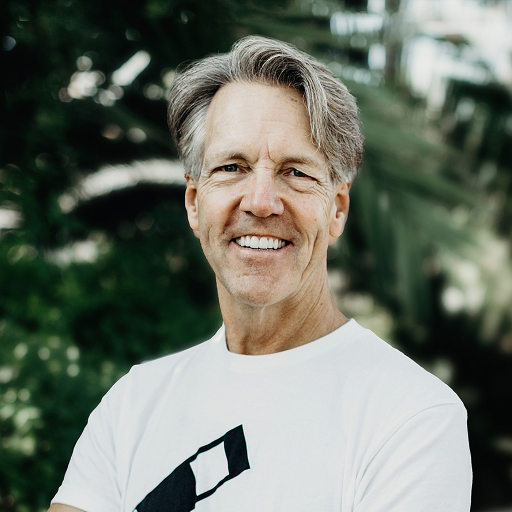
Show Me Your Passport, Please! Part 2


Today on Connect with Skip Heitzig, what difference does it make to believe Jesus could return at any moment? Pastor Skip reveals how that hope motivates you to live with purity, purpose, and urgency for the gospel.
Announcer (Male): This is Connect with Skip Heitzig. Thanks for joining us today. Here at Connect with Skip, our mission is to help you know God's word and apply it to your life through clear, practical Bible teaching and real encouragement every day. And if you'd like to keep growing in your walk with Jesus, sign up for Pastor Skip's free weekly devotional. You'll receive biblical insight, teaching highlights, and exclusive resource offers straight to your inbox, everything designed to help you stay strong in your faith.
It only takes a minute to sign up. Go to connectwithskip.com and join the list today. That's connectwithskip.com. Now, let's dive into today's teaching from Pastor Skip Heitzig.
Skip Heitzig: Many people can sing the same songs, pray the same prayers, engage in the same activities, and at the same time be pseudo-citizens—pseudo-citizens. They speak the language of the court, but Christ is not their King. There's no allegiance to Him.
And you shouldn't be surprised by this. Some of us go, "I can't believe that would happen in a church." Really? You shouldn't be surprised because Jesus said that the good seed is sown in the field and it brings up a crop, but the enemy comes along and sows tares among the wheat. And then Jesus even said, "Not everyone who says to Me, 'Lord, Lord,' will enter the kingdom of heaven."
So apparently, according to Jesus, and Peter, and Paul, and John, and everybody who would contribute to the New Testament, understands that wherever there is something true, there is going to be something counterfeit that will be next to it. Like the Puritan William Gurnall, who said these are people who love God in their mouth, but the world is in their hearts.
Notice how Paul writes about them. He says they are the enemies of the cross of Christ. Wouldn't you like to know exactly who he's talking about? Now I say, "Wouldn't you like to know?" I can't be sure exactly what group Paul is referring to because in Philippi, like just about everywhere else in the New Testament early church, there were two groups that were on the opposite end of the spectrum. Both were problematic.
One we've already noted were the Judaizers. These were people who said you have to keep Jewish law, go through Jewish ritual in order to be saved, keep circumcision. They were the legalists. On the other hand, there were the Gnostics. And the Gnostics were not legalistic. They were antinomian, that is, having no law at all.
And the Gnostics believed that all matter was evil, only the spirit is good, and that you can be saved by aligning your spirit in surrender to God, but you could do anything you want with your body because your body is irredeemable. So in effect, the Gnostics said as long as in your heart you believe in God and follow Christ, you can live any way you want with your body.
That was problematic. So we don't know if he's referring to the legalistic group or the antinomian group, the Judaizers or the Gnostics. Either way, both groups being problematic would fit the description, enemies of the cross of Christ. They are a menace.
Now I just want you to look at this for a moment from a little different angle. Those who may be among us and are not true citizens of the kingdom of God—churchgoers, yes; well-meaning, yes; sincere, yes. They'll go along, they'll come to church, they'll sing the songs, but they're not part of the kingdom yet. Instead of saying, "Get away," how about saying, "Come closer"?
How about saying, "Don't just believe with your mouth. How about really believing in your heart? How about having a true conversion? How about coming to Christ and truly believing Him?" So instead of seeing them as a menace, we could start to see them as a mission.
I'm going to focus my attention, and you know what? Dr. Elton Trueblood noted this: "Our main mission field today, as far as America is concerned, is within church membership itself." Even the Billy Graham Association—Billy Graham said a while back, "Our crusades find the greatest challenge and the greatest response from among church members." That's why he would always invite different churches to his crusades, because he knew a lot of people who came weren't really saved people, but he wanted them to hear the gospel.
So the question you need to ask yourself is: are you an imitation citizen or are you a true citizen? Has your passport, so to speak, been stamped by the blood of Jesus Christ? Have you applied that personally, authentically, really to your own life, or are you hiding behind the mask of some religious group or system?
So citizens walk with partners, watch for pretenders, but here's a third: citizens wait for a place. Verse 20 tells us about that: "For our citizenship is in heaven, from which we also eagerly wait for the Savior, the Lord Jesus Christ." Did you notice the contrast between verse 19 and verse 20? Verse 18 and 19, he describes the pretenders. And the last thing he says in verse 19 is, "who set their mind on earthly things." In contrast to that, "but our" or "for our citizenship is in heaven."
Let me refresh your memory. When Paul opened this letter, he noted that the Philippian believers had two addresses: physical address, spiritual address. To the saints who are in Philippi, in Christ Jesus. You have a physical address, Philippi or Albuquerque. You have a spiritual address, in Christ Jesus. And because you have a spiritual address, you have an eventual address, mentioned here. Your eventual address is in heaven.
Why do I bring this up? Because this helps answer why we as believers get so excited and preoccupied with heaven. You know, I've been accused by unbelievers, "You always talk about heaven. It's like the great escape. You're so heavenly minded, you're no earthly good."
Well, let me tell you why we're so focused on heaven. Because we're citizens of heaven. That's going to be our eventual home. He says, "Our citizenship is in heaven, from which we also eagerly wait for the Savior, the Lord Jesus Christ."
Now look at the word citizenship for just a moment. I'm having you look at it because it's the only place in the New Testament Paul uses this word in this manner. The word citizenship is the word in Greek *politeuma*. *Politeuma* is the Greek word from which we derive our word politics or political affiliation. "For our politics are in heaven. For our political affiliation is in heaven."
You know, I've noticed something about politics. It always divides people. You can have a conversation even among believers. If we started loving on each other and singing together and stuff like we're doing now, if I brought up a political issue, I would divide this nice happy gathering. Always happens. It divides families, divides believers.
And as I grow in the Lord, I am becoming less political and hopefully more spiritual in my outlook. I am much less a Republican, much less a Democrat. And today, when people say, "Well, what are you?" I'm a theocrat. I believe the only hope for this place is when Jesus comes back and rules everything and everyone.
Speaking of which, he says, "from which," verse 20, "we also eagerly wait for the Savior, the Lord Jesus Christ." Now notice something. Our hope is not in the coming of the Lord. Our hope is in the Lord who is coming. I'm not waiting for an event to bail me out. I'm waiting for a person that I know and love. He's coming back. He's my Lord, He's my Savior, and that intimacy will be fully realized at that point.
By the way, one of the ways to tell a person is really a citizen of a kingdom is he or she wants to see the King. They can't wait to see the King. If you're not a citizen of the kingdom of God and you hear a believer say, "Jesus is coming soon," that doesn't excite you. First of all, you think they're wacky. But if you were to actually believe in what they said, "Jesus is coming," you wouldn't go, "Oh great." You'd go, "Oh no. He is?"
Uh-oh. That's not good news to you. But if you are a citizen of the kingdom, it's like, "Yes! Can't wait to see my King." Now, it brings up a question. If you are a citizen of the kingdom, how are you waiting for the King? It says we eagerly wait for Him. Would that describe you? Are you eagerly waiting for Him? Or would you say, "Well, my waiting for Him is sort of like a passive resignation."
"You know, I've heard Jesus is coming for years. My grandma used to say that. So, yeah, Jesus is coming again." Or do you have a bored disinterestedness in His coming? You know, a citizen, once that person is a citizen, when they're away from their homeland, they get homesick.
The first time I traveled overseas, I was so excited. Get on an airplane and have my own passport. It's like, "See? I got a passport." And I was in that country and I loved trying the food and all the customs, but I was there for like a few months. And the first week I was all geeked and excited and tried everything. But you know, after a couple weeks, didn't take long. I started having dreams of hamburgers and stuff, like American things.
And I've gotten better as time has gone on, but I just got homesick. I wanted to have my friends around me again and the things that I was used to. So it is with us in the kingdom of God. We get homesick. One of the great promises Jesus ever made was, "In My Father's house there are many mansions. If it were not so, I would have told you. I'm going to prepare a place"—it's a real place—"for you. And if I go, I will come again and receive you to Myself, that where I am, you may be with Me always."
And so we look forward to that. I feel like, especially the older I get, and I know that heaven is a lot closer now than it used to be, and that the road ahead of me is shorter than the road behind me. I sort of feel like Dorothy in the Wizard of Oz. Remember, she clicked her heels and said, "There's no place like home. There's no place like home." I feel like saying, "There's no place like heaven. There's no place like heaven." That's our home.
Announcer (Male): You're listening to Connect with Skip Heitzig. Every day, your generosity helps reach more people with God's word, changing lives through clear, practical Bible teaching. And this month, as you grow in your own faith and leadership, we want to thank you with a powerful new resource, The Making of a Biblical Leader, a practical guide to leading others by Robert L. Furrow.
This inspiring book, featuring chapters from Skip and Lenya Heitzig, Gary Hamrick, Daniel Fusco, and others, shows how to lead with integrity, humility, and a servant's heart following Christ's example. Request your copy when you give $50 or more to support Connect with Skip Heitzig. Call 800-922-1888 or visit connectwithskip.com/offer. Now, let's return to today's teaching from Pastor Skip Heitzig.
Skip Heitzig: Question: how do we become heavenly citizens? Easy answer. You trust in Jesus Christ who did the work for you on the cross, and He writes your name down, so to speak, in the registry of heaven. I want you to skip ahead a couple verses. Go to chapter 4, verse 3, and just notice the language.
He says, "I urge you also, true companion, help these women who labored with me in the gospel, with Clement also, and the rest of my fellow workers"—now notice this phrase—"whose names are in the Book of Life." By the time you get to Revelation, the Book of Life is called the Lamb's Book of Life or the Book of Life of the Lamb. It's given either way.
Jesus said to His disciples, Luke chapter 10, "Rejoice because your names are written in heaven." You trust Him, and He puts your name down on the logbook. So by the time you die, you show up in heaven and they say, "Oh, we've been expecting you. Your name's here, and you're right on time, by the way. Come on in."
A few years ago, I had a very distinct opportunity. A friend that I know arranged, when we were in Israel once, three of us to meet with the Prime Minister of Israel, Benjamin Netanyahu, in his office at the Knesset. Now, he's the one that put our names down on the registry. He was sort of like the one who was the go-between, but he arranged it.
We were given instructions: be at the Knesset gate, the certain gate at the Knesset at exactly 2:00 PM on a certain day. We showed up. They looked at the registry. Our names had been written down. They asked for our passport to make sure it wasn't altered or mutilated, that I was the person whose name was on the list. And then they said, "Please come in. Welcome."
Now, I was there in the Prime Minister of Israel's office, Bibi Netanyahu, not because I decided I wanted to go, not because I was really sincere and I think I deserved it. I was there solely on the intercession of another person who put my name down on that registry. That's how I get to heaven. I'm there by the merits of another, the intercession of another who put my name down in the Book of Life.
So when you say, "Why are Christians so interested in heaven?" Well, our name is written there. Our Savior lives there. He will return from there. He will take us back to there. Our fellow believers who have died before us are already there, and our inheritance and reward is there. Why shouldn't we look forward to that? Our citizenship is in heaven.
However, please see that heaven is much more than a destination. It's a motivation. It should motivate us. Knowing that our names are written in the Lamb's Book of Life is a motivation for a pure life and a gospel-preaching life. John writes this: "We know that when He shall appear, we shall be like Him, for we shall see Him as He is. And everyone who has this hope purifies himself, even as He is pure."
There's nothing more pure than believing Jesus Christ could come at any moment. When you believe that, when you live with that in mind, it's a motivation. Because you're about to get involved in some enterprise or with another person, and you have this thought: "What if Jesus comes now?" That'll keep you from doing a lot of stuff or it'll get you involved in doing good stuff. It'll motivate you to say, "You know, these people don't know the Lord. I want to make sure they get to heaven." So it's a motivation, not just a destination.
So there are the descriptions of a heavenly citizen. Citizens walk with partners, watch for pretenders, and wait for a place. Let me close on a final note. Citizens will get a promotion. I love Paul. I love the fact that he says, "You know what? Not only are we going to heaven, but let me just put the icing on the cake by saying this: who"—speaking of Christ—"who will transform our lowly body that it might be conformed to His glorious body, according to the working by which He is able even to subdue all things to Himself."
The NSV, the New Skip Version: when you get to heaven, this is getting an upgrade. You're going to get upgraded. Not only are you going to change locations, you're going to change looks. People say, "Well, how am I going to look in heaven?" Easy answer: better. Much better. You're going to get the body you always dreamed of. Paul's word: you'll be transformed.
Poll after poll that I've read has asked people this question: "If you could change one thing about your life, what would it be?" The typical answer is something to do with bodily appearance. "If I could change one thing about my life, I want to be shorter or taller or thinner or this or that." I could say hair color, but you can change that five times before the end of the day.
They want to change something about their outward appearance. And this body image consciousness has even leaked into the young people. Our kids are worried about it. There was a little boy named Johnny who always sucked his thumb, and his mom wanted to break him of the habit. So one day he was sucking his thumb and she said, "Johnny, what good thing could possibly be gotten from you doing that?" And he took his thumb out and held it up and he said, "Well, it is non-fattening."
So I suppose that's an upside. But one day your dream will come true. Every citizen of the kingdom of heaven will get a resurrected glorified body. That is better than any facelift, any skin cream, any Botox, any diet program, any facial reconstruction or stretching. And it's all free.
You'll be transformed. He will transform. Now notice what he says: "our lowly body." So just think about this for a moment. Especially you who are young and you're working really hard and looking really good. You work out, you're a personal trainer, and you want to show the world how to do it right. I applaud you for that. Please, you keep us all in line. But you have but a moment to really enjoy that.
The truth is, your body is a lowly body. You don't believe me? Just wait. It won't take long to convince you, trust me. The King James is even stronger: "who will change our vile body." Or the NASB says, "our body of humility" or "our body of humiliation." So enjoy it for now, but it is a lowly body.
But notice verse 21, the word transform. I'm drawing your attention to that because there's a word in Greek that he uses here, and we get another English word from it. I'm going to say the Greek word and then you'll hear the English: *metaschematizo* is the word. Transform, *metaschematizo*. We get the word schematic. Did you hear it? *metaschematizo*.
We get the word schematic. So when you get to heaven, it's as if the upgrade you get will be a whole new schematic that affects inward and outward constitution, a whole renewed physical structure. At the resurrection, which will occur at the rapture of the church, you will get a resurrected body, and it will be like Jesus' own resurrected body. Notice what he says: "that it will be conformed to His glorious body."
Now when Jesus rose from the dead, He had new capabilities. We discover that when the disciples are in a room, the doors are locked, and Jesus just appears in front of the disciples. Locked doors. He didn't crawl through the window. He didn't knock on the door. "Let me in. I can't get in." He just showed up. "Hi."
How did He do that? Well, He had a whole new capability that He didn't have before. This resurrected body was able to do that. And one day He was walking on the road to Emmaus and walking out several miles from Jerusalem, suddenly shows up in that upper room. And then He's in Jerusalem, suddenly He shows up in Galilee.
So you're going to have new capabilities in this new body. I did a whole series of messages on this. I won't rehash all that. But imagine having a body that will never wear out. Imagine having a body that never gets tired, never gets exhausted. Imagine having a body that is not susceptible to disease, handicaps, atrophy, and aches and pains. Imagine having a body that never gains weight, never loses hair, never gets wrinkles. Hallelujah! Never sags or stoops.
That glorified upgraded body is a guaranteed perk for every citizen of heaven. Benjamin Franklin, when he died, he was buried in Boston, Massachusetts. But interestingly, Benjamin Franklin wrote his own epitaph for when he died years before he died. In fact, he revised it several times, so he must have thought a lot about it. Now this is not on his gravestone, but it is on a plaque at a wall nearby his words.
"The body of Ben Franklin, printer, like the cover of an old book, its contents torn out and stripped of its lettering and gilding, lies here, food for worms. Yet the work itself shall not be lost, for it will appear once more in a new and more elegant edition, corrected and improved by the Author."
What a beautiful way of saying this body, lowly body, is going to get an upgrade, be revised and improved by the Author. So summing it all up, look around for good examples to follow, look out for imitations to avoid, and look up for Jesus to return. Final question: are you sure you're a citizen? Are you sure your faith is personally in Jesus Christ alone? Have you trusted in Him? Has there been a time in your life where you've made that—placed that trust in Him? Is your name written in the Lamb's Book of Life?
Announcer (Male): Thanks for joining us today on Connect with Skip Heitzig. Before we go, remember that your generosity helps share God's word around the world, bringing truth and hope to people who need Jesus. And this month, we'll send you The Making of a Biblical Leader: A Practical Guide to Leading Others by Robert L. Furrow as our thanks for your gift. With chapters from Skip and Lenya Heitzig and other trusted pastors, this book will equip you to lead with integrity and purpose in 2026 and beyond. Give now at connectwithskip.com/offer or call 800-922-1888. Thanks for spending time with us today, and we'll see you next time on Connect with Skip Heitzig.
[Music]
Connect with Skip Heitzig is a presentation of Connection Communications, connecting you to God's never-changing truth in ever-changing times.
Featured Offer

This practical resource offers encouragement for honoring God in your most important relationships. Veterans will find encouraging, Bible-rooted teachings to reconnect with loved ones and the Lord. Newcomers will uncover a mentor whose teachings stand the test of time in Reconnecting with Family.
Past Episodes
- A Red Christmas
- A Time to Build
- Adulting (A Study Through the Book of James)
- Against All Odds
- Alert Prophecy Update
- Always Only Jesus
- Believe
- Best of 2008
- Best of First Friday
- Bloodline: Tracing God's Rescue Mission From Eden to Eternity
- Can God Be Known?
- Celebrations of the Gospel
- Christians in the Crucible of Pain
- Christmas
- Church: A Place...
- Church? Who Needs It
- Crash & Burn
- Easter Series
- Expound
- Expound: Acts
- Expound: Exodus
- Expound: First Corinthians
- Expound: Genesis
- Expound: Holy Spirit
- Expound: John
- Expound: Romans
- Expound: Ruth
- Expound: Second Corinthians
- Expound-Galatians
- Fact-Check
- Fight for the House
- First Friday
- Five Decades of Top Teachings by Skip Heitzig
- From the Edge of Eternity
- Hashtag
- Heart and Soul
- Heaven Below
- History's Last Chapter
- Homeland Security
- Hunting Giants
- Hustle and Grind
- Rediscovering Our Foundations
- Rock Solid
- Rumblings of War and the Prince of Peace
- Running with Champions
- Technicolor Joy: A Study Through Philippians
- The Bible Doesn't Say
- The Bible from 30,000 Feet
- The Biography of God
- The End is Near?
- The House That God Builds
- The Light has Come
- The Passion of Christ
- The Royal Road of Love
- The War Is Over

Featured Offer
This practical resource offers encouragement for honoring God in your most important relationships. Veterans will find encouraging, Bible-rooted teachings to reconnect with loved ones and the Lord. Newcomers will uncover a mentor whose teachings stand the test of time in Reconnecting with Family.
About Connect
About Skip Heitzig
Skip Heitzig ministers to over 15,000 people as senior pastor of Calvary Albuquerque. He reaches out to thousands across the nation and throughout the world through his multimedia ministry. He is the author of several books including The Bible from 30,000 Feet, Defying Normal, You Can Understand the Book of Revelation, and How to Study the Bible and Enjoy It. He has also published over two dozen booklets in the Lifestyle series, covering aspects of Christian living. He serves on several boards, including Samaritan's Purse and Harvest.
Skip and his wife, Lenya, and son and daughter-in-law, Nathan and Janaé, live in Albuquerque, New Mexico. Skip and Lenya are the proud grandparents of Seth Nathaniel and Kaydence Joy.
Contact Connect with Skip Heitzig
Connect
PO Box 95707
1-800-922-1888