
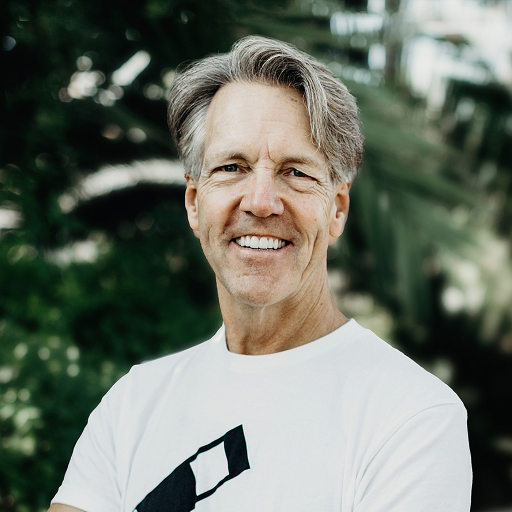
Put On Your Running Shoes Part 2


Today on Connect with Skip Heitzig, why do believers need each other? Pastor Skip explains that just as runners run better together—community is God’s plan for helping you grow stronger in your faith.
Female Speaker: This is Connect with Skip Heitzig. Thanks for joining us today.
Here at Connect with Skip, our mission is to help you know God's word and apply it to your life through clear, practical Bible teaching and real encouragement every day. And if you'd like to keep growing in your walk with Jesus, sign up for Pastor Skip's free weekly devotional. You'll receive biblical insight, teaching highlights, and exclusive resource offers straight to your inbox. Everything designed to help you stay strong in your faith.
It only takes a minute to sign up. Go to connectwithskip.com and join the list today. That's connectwithskip.com.
Now, let's dive into today's teaching from Pastor Skip Heitzig.
Skip Heitzig: Winners become winners because they concentrate on one thing. One thing, they narrow their focus on one thing.
I've discovered something in watching athletes over the years, those who are professional athletes, very proficient, they typically are proficient at only one thing. Rarely do you find athletes that can do as well in multiple sports. Example, when you hear the name Charles Barkley, what sport do you think of? Basketball, great basketball. He's good at that one thing. Have you ever seen his golf swing?
So don't do it now, please, but go home and Google Charles Barkley Golf Swing and watch it, you'll get the point, you'll, oh my goodness. Yeah, this is why he's not in the in the in the golf circuit. But he is great at what he did, that one thing he excels at.
Michael Jordan, same thing, excellent. But he decided after he retired basketball that he was going to try his hand at baseball. Can I just put it this way, a less than impressive record.
Few athletes are good at multiple sports, and it's best they have discovered if they concentrate on one thing. Nehemiah in the Old Testament understood this principle. When he came to Jerusalem, he came to do one thing, to build a wall.
There was a lot of other things that required his attention, but he didn't care. He focused on one thing. He was tempted to meet with different people who wanted to voice their concerns, meet with enemies who wanted to have private meetings with them. And here is his response, I am doing a great work, I cannot stop to come down and meet with you.
To which they probably thought, how rude? I need to meet with Nehemiah. I need to talk to Nehemiah. Nehemiah said, no, I'm about one thing, and that is building this wall.
One of the greatest problems we all have in life is that we tend to spread ourselves so thin and we fail to be effective at one thing. E. Stanley Jones, the great missionary and theologian, said your capacity to say no will determine your capacity to say yes to greater things.
I've discovered that no is a holy word. Skip, can you do this? No. Oh. Why not? Because I'm doing that one thing.
So picture this, college class in a business college. The professor wants to teach time management to his students. So he goes up to the lectern on a class day and he says, class, we're going to have a quiz. He reaches down, gets a gallon, large mouth Mason jar, sets it on the lectern.
Then he takes about a dozen fist sized rocks and places them inside the gallon Mason jar, filling it all the way up to the top. The students watch him. The professor then said, students, is this jar full? And they said, yes. He said, really? He reached down, took a little bucket of pebbles and began to pour the gravel.
The gravel pebbles over the rocks, the rocks, the pebbles found the spaces between the large rocks, and he did that fill it all the way up to the top. And then he asked them again, is the jar full? Well, they were catching on by now. They said, no. He said, good. He reached down again, this time he took sand and poured the sand over the pebbles and over the large rocks all the way up to the brim and it held quite a bit.
And he asked again, he goes, class, is the jar full? And they all in unison said, no. And he said, good. This time he reached down, took some water in a pitcher and poured the water till it went all the way up to the top. Now, he said, do you understand what my point is in this little analogy?
And one very energetic student said, yes, that no matter how full your schedule is, you can always fit more in. He said, no, that is not the point of this exercise. The point is this, if you don't put the big rocks in first, you'll never get them in at all. He was teaching them time management and the priority of putting first things first.
So for Paul the Apostle, Jesus Christ and his will for his life, those are the big rocks. That came first. I'm going to place those first. Everything else takes a backseat. So my question is, what things do you need to say no to, so that you can say yes to what he has for you?
Because the main thing is to keep the main thing the main thing. So a winner needs dissatisfaction, a winner needs concentration. A third essential is that a winner needs direction. Back again to verse 13, brethren, I do not count myself to have apprehended, but one thing, and here it is, forgetting those things which are behind and reaching where?
Forward, moving forward to those things which are ahead. Over the years, you've heard me quote a book called "A Long Obedience in the Same Direction." It's become a Christian classic. I've just loved the title. A long obedience in the same direction. I thought that just epitomizes the Christian life. However, I might add by saying, you need not just a long obedience in the same direction, you need a long obedience in the right direction.
Because you can go a long distance in the wrong direction. A few years ago in 2013, January, a 67-year-old Belgian woman by the name of Sabine Moreau, drove to Brussels, Belgium, 90 miles away, to pick up her friend. She entered the GPS coordinates in her little unit, and then she drove, and drove, and drove, all the way to Croatia, a thousand miles away.
Crossing five international borders, stopping for gas, stopping to rest, stopping for gas, and she drove, and drove. Then she got to Zagreb, Croatia, the capital, and she thought, you know, I think I should turn around. She'd been going a long time in the wrong direction. You need to make sure you're traveling on the right road, in the right direction.
So Paul is reaching forward or reaching ahead to what he calls later on the upward call or the heavenward call. Now, to do that effectively, notice what he says, forgetting those things which are behind. To to run effectively into the future, you need to let go of your past. You need to let go of it. Can you imagine a runner trying to go forward, one direction, while looking that way the whole time?
What's going to happen? Fall flat. You you can't run the Christian race always thinking about your past. And so he says, forgetting those things. Now, in the Bible, forget doesn't mean to lose your memory. It doesn't mean a failure to recall. It actually means don't let it influence you. When it says, forget about it. Forget about it.
It means don't let that past influence your present. Here's an example, God says in the Bible, their sins and their iniquities I will remember no more. That does not mean that God has a bad memory, that he has a memory lapse. It simply means that he no longer is influenced by their past in dealing with them in the present. He doesn't hold their sins against them any longer.
So your past is your past. All the king's horses and all the king's men can't put your past back together again. You've fallen, you've blown it, you've made mistakes. Okay, leave it, learn from it, and go forward. Forgetting those things which are behind. If there's one person in the Bible that epitomizes this better than anybody else, it's Joseph.
Joseph had been mistreated by his brothers, they were jealous, they sold him to the Midianites, the Midianites took him to Egypt. He was falsely accused, he spent time in jail, you know the story. Eventually becomes the second most powerful man in Egypt. And the day comes when his brothers meet him face-to-face. The day when Joseph could have looked at them and thought, you guys have been waiting for a long time for this day.
And now you're going to get yours. No, Joseph had forgotten the past. And he said to them, but as for you, you meant evil against me, but God meant it for good in order to bring it about as it is this day, to save many people alive. If you want to be miserable, live your life looking back over your shoulder.
If you want to live well, look forward, reach forward, forget the past. So you need dissatisfaction, concentration, you need direction. A fourth essential is dedication. Verse 12, you'll notice what he says, not that I've already attained, nor am I already perfected, but I, notice the word, I what?
I press. I press on. I press on that I may lay hold of Christ or that which Christ Jesus has laid hold of me. Verse 14, I press toward the goal for the prize of the upward call of God in Christ Jesus. The idea of press means I exert myself. I work up a sweat.
So think of the Olympics when the camera zooms into the face of the runner, sweat pouring down his or her face. They're grueling look. Am I doing it right? Is that grueling enough? You you can see, they're pressing, man. They're they're working hard. They're exerting themselves. Every fiber of their body, every bit of their strength. But there's something else I want you to see how this fits.
The word he uses for press twice, I press, I press, is the same word he uses back in verse six. So look at verse six for a moment. He's describing his previous life. He's going through the little litany of his pedigree. And in verse six, he says, concerning zeal, persecuting the church. You see that? The word persecuting is the exact same word as I press, I press.
It's the word dioko or diokone.
Female Speaker: You're listening to Connect with Skip Heitzig.
Every day, your generosity helps reach more people with God's word, changing lives through clear, practical Bible teaching. And this month, as you grow in your own faith and leadership, we want to thank you with a powerful new resource, "The Making of a Biblical Leader," a practical guide to leading others by Robert L. Furrow. This inspiring book, featuring chapters from Skip and Lenya Heitzig, Gary Hamrick, Daniel Fusco, and others, shows how to lead with integrity, humility, and a servant's heart, following Christ's example.
Request your copy when you give $50 or more to support Connect with Skip Heitzig. Call 800-922-1888 or visit connectwithskip.com/offer.
Now, let's return to today's teaching.
Skip Heitzig: What he's saying is this, the same energy that I once put into ruining the church, I now put into running the church. The same level of energy I had before I was an unbeliever, and all the stuff I was into, I expend now in the right direction. No one becomes a winning athlete by attending lectures from the coach or looking at YouTube videos. At some point you got to actually get on the track and train and exert and press to be a winning athlete.
I wonder if our lives would be different if we put as much dedication into our spiritual life as we put into golfing, fishing, shopping, social media. I wonder if it would be any different at all or if, oh no, it would be the same. Paul's saying all of the energy I once put into that, I now put into this. I press. I press.
And what does he press for? He says the prize, verse 14, I press toward the goal for the prize of the upward call in Christ Jesus. Now, in The Amazing Race, they got a million bucks for the prize. In the Olympics 2,000 years ago, you know what they got for winning the race? They got a plant stuck on their head. No, they got a piece of ivy, an ivy branch made into a little crown like a, it was a little laurel wreath crown.
They put the crown on the head, and everybody went, awesome, good job. See ya, bye. You got a plant, go home. What kind of a prize do we get? A twofold prize, the prize of knowing our life purpose, verse 12. He says that I may lay hold of that for which Christ Jesus has also laid hold of me. I'm pursuing, says Paul, the reason for which Christ once pursued me.
I want to know why I was saved on the Damascus Road and fully realize in my life the reason that I am on this earth. That's the idea. I want to lay hold of that for which he's laid hold of me. So it's been said, the two greatest days of your life are the day you were born and the day you discovered what you were born for. There's a real prize in knowing why I exist on this earth.
What is God's plan for my life? The second prize is the prize of knowing eternal joy, verse 14. He calls it the upward call or the heavenward call in Christ Jesus. He's called to glory. One day, you're going to cross the ultimate finish line, by death or by rapture, and you're going to be met there by your coach, Jesus, who will receive you into his eternal home.
That's a good prize. The prize of knowing why I'm here on the earth, and the prize of eternal joy in heaven. So you need dissatisfaction, concentration, direction, dedication. Finally, you need collaboration. Collaboration. Look at verse 15. Therefore, let us, I'm going to emphasize a few words here, as many are as mature, have this mind, and if in anything you think otherwise, God will reveal even this to you.
Nevertheless, to the degree that we have already attained, let us walk by the same rule, let us be of the same mind. So he's writing to the Philippians, including them in the running now. Us, we, us, us. Now, we don't exactly know what Paul was referring to when he says, look, there's people who think otherwise, but God will reveal this to them.
It could be that he was talking to them about Judaizers, perfectionists, who said you can by your own works become morally perfect, or on the other hand, some commentators think there were Christians who had grown apathetic, they'd sort of gotten off the racetrack, they're in the bleachers. They said, I've fallen enough times, I'm just going to let go and let God, I'm not going to exert any energy.
I'm just going to mosey my life through, maybe attend church from time to time, and hope I go to heaven. So Paul says, if they think otherwise, I trust that God is big enough to reveal that to them. But the point I want to make is the usage of the word us and we, us and us. And here's the truth, runners do better with other runners.
You can run alone and you can train alone, but you will always do better. You will up your game so to speak when you have other runners who are there to inspire you, encourage you, train you by the the way they run, hold you accountable, come on, pick it up, you can do a little bit better than that. You'll always do better with other runners. Now, some believers have gotten off the track altogether.
They're thinking, you know what, I've tried it, I'm not good at the Christian life, I've stumbled, I've fallen. So now I'm just going to be a spectator from the side of the track, watching you guys run. And not only will I watch you guys run, but if you don't run very well, I'll criticize the way you run. Because I'm really good at observing how people ought to live.
I can't do that myself, and I won't, but I'll make sure you know that you didn't do it right. So that's how Americans do sports, by the way. One sports fan said, sports like baseball, football, basketball and hockey develop your muscles. That's why Americans have the strongest eyes in the world. Right, we're good at watching, we're good at being a spectator.
And we're the dude who says, if that guy strikes out, you're a loser. While we eat our popcorn, and the batter gets struck out. Well, he's on the field, buckaroo, you're not. So, put on your running shoes, get in the race, or for some of you, get back on the track, and stay on track. And just keep going. Oh, but I've fallen, it's okay, just just keep going.
Oh, but I I'm disqualified, just get up and keep going. I'm going to close with the most fascinating illustration, and by the way, a true story. Did you know that the world's longest and toughest race is an ultra-marathon that is 543.7 miles? Running 543.7 miles. It's the ultra-marathon that begins in Sydney, Australia, and ends in Melbourne, Australia.
So in 1983, 150 world-class athletes converge on Sydney to begin this race. They're in shape, man, they got the gear on, you could look at them, these guys are super fit. Up walks into the crowd walks, a 61-year-old toothless potato farmer, shepherd, potato farmer, 61 years old, no teeth, overalls, galoshes over his work boots.
And he comes walking up, and people thought, okay, he's a local guy to watch the race. Oh, no, no, no, no. He wants to run the race. He walks up to the table, demands a number. And they looked at him like, you got to be kidding, right? I mean, you won't make it a mile. They give him number 64. And the gun goes off.
Now, his name was Cliff Young. Cliff Young, here's the backstory, grew up on a farm, 2,000 acre farm, and was in charge as a young guy of watching out and keeping in check 2,000 sheep on 2,000 acres. On that farm they did not have four-wheel drive vehicles, they didn't even have horses. When storms came in, Cliff would go out there and run to herd those sheep.
It sometimes took him two to three days of running around out there to get them all where they needed to be. So the race begins. Cliff Young starts the race, gun goes off. Now, when he begins, everybody starts laughing because this is how they described it. He looked like he had this leisurely odd shuffle. That's how he was running. This is Cliff Young running 500 miles.
In galoshes over work boots. This leisurely odd shuffle, that's how they described it. Okay. Five days, 15 hours, four minutes later, Cliff Young shuffled across the finish line in first place. He won the race. Now, he didn't win it by a few seconds. He didn't win it by a few minutes. The nearest runner behind him was nine hours and 56 minutes behind him, almost 10 hours behind him.
Pray tell, how did he win this race? Well, to run this ultra-marathon, the runners had been conditioned to run 18 hours. 18 hours. Some of us can't run 18 minutes. They would run 18 straight hours and then go to sleep for six hours. Do that for five days, 18, 6, 18, 6, 18, 6. That's how they train. Well, nobody told Cliff Young.
So he ran straight without sleeping for five days, 15 hours, and four minutes, and crossed the finish line in first place, became a national hero. Interestingly, professional runners began to study and experiment with Cliff's shuffle. How did he do that? That's like the weirdest thing ever. He won doing that. And so they started studying it.
Many long-distance runners now have adopted it for its aerodynamic and energy efficiency. Go figure. What's my point? Victory comes by endurance. Hebrews chapter 12, let us lay aside every weight and sin that easily besets us and let's run with endurance the race that is set before us. The Christian life is not a 100 yard dash, it's not even a marathon, baby, it's an ultra-marathon.
And if all you got is this, that's okay. Just keep doing that. I mean, you don't have to impress us with Nike and all this kind of cool stuff, just just just do that. Just keep going. Just keep going.
Female Speaker: Thanks for joining us today on Connect with Skip Heitzig. Before we go, remember that your generosity helps share God's word around the world, bringing truth and hope to people who need Jesus. And this month, we'll send you "The Making of a Biblical Leader," a practical guide to leading others by Robert L. Furrow, as our thanks for your gift. With chapters from Skip and Lenya Heitzig, and other trusted pastors, this book will equip you to lead with integrity and purpose in 2026 and beyond.
Give now at connectwithskip.com/offer or call 800-922-1888. Thanks for spending time with us today, and we'll see you next time on Connect with Skip Heitzig. Make a connection. Make a connection at the foot of the crossing. Cast all your burdens on his word. Make a connection. A connection. Connect with Skip Heitzig is a presentation of Connection Communications, connecting you to God's never changing truth in ever changing times.
Featured Offer

This month’s resource will help you to grow deeper and stand stronger in your faith. You’ll strengthen your prayer life as you learn the perspective Jesus taught for communicating with God. You'll discover how to find joy even in difficult circumstances and explore the life-changing dimensions of forgiveness. Most importantly, you'll be encouraged to stand still and surrender to the One who is in control of every circumstance.
Past Episodes
- A Red Christmas
- A Time to Build
- Adulting (A Study Through the Book of James)
- Against All Odds
- Alert Prophecy Update
- Always Only Jesus
- Believe
- Best of 2008
- Best of First Friday
- Bloodline: Tracing God's Rescue Mission From Eden to Eternity
- Can God Be Known?
- Celebrations of the Gospel
- Christians in the Crucible of Pain
- Christmas
- Church: A Place...
- Church? Who Needs It
- City in Shambles
- Crash & Burn
- Easter Series
- Expound
- Expound: Acts
- Expound: Exodus
- Expound: First Corinthians
- Expound: Genesis
- Expound: Holy Spirit
- Expound: John
- Expound: Philippians
- Expound: Romans
- Expound: Ruth
- Expound: Second Corinthians
- Expound-Ephesians
- Expound-Galatians
- Fact-Check
- Fight for the House
- First Friday
- Five Decades of Top Teachings by Skip Heitzig
- From the Edge of Eternity
- Hashtag
- Heart and Soul
- Heaven Below
- Help!
- History's Last Chapter
- Homeland Security
- Hunting Giants
- Hustle and Grind
- Rediscovering Our Foundations
- Rock Solid
- Rumblings of War and the Prince of Peace
- Running with Champions
- Technicolor Joy: A Study Through Philippians
- The Bible Doesn't Say
- The Bible from 30,000 Feet
- The Biography of God
- The End is Near?
- The House That God Builds
- The Light has Come
- The Passion of Christ
- The Royal Road of Love
- The War Is Over

Featured Offer
This month’s resource will help you to grow deeper and stand stronger in your faith. You’ll strengthen your prayer life as you learn the perspective Jesus taught for communicating with God. You'll discover how to find joy even in difficult circumstances and explore the life-changing dimensions of forgiveness. Most importantly, you'll be encouraged to stand still and surrender to the One who is in control of every circumstance.
About Connect
About Skip Heitzig
Skip Heitzig ministers to over 15,000 people as senior pastor of Calvary Albuquerque. He reaches out to thousands across the nation and throughout the world through his multimedia ministry. He is the author of several books including The Bible from 30,000 Feet, Defying Normal, You Can Understand the Book of Revelation, and How to Study the Bible and Enjoy It. He has also published over two dozen booklets in the Lifestyle series, covering aspects of Christian living. He serves on several boards, including Samaritan's Purse and Harvest.
Skip and his wife, Lenya, and son and daughter-in-law, Nathan and Janaé, live in Albuquerque, New Mexico. Skip and Lenya are the proud grandparents of Seth Nathaniel and Kaydence Joy.
Contact Connect with Skip Heitzig
Connect
PO Box 95707
1-800-922-1888