

Loving Your City Nehemiah 1:1-11 Part 1


Today on Connect with Skip Heitzig, Pastor Skip begins a new series and shows you how loving your city starts with asking the right questions—and seeing opportunities to make a difference for God’s glory.
Guest (Male): Welcome to Connect with Skip Heitzig. We're so glad you've tuned in today. At Connect with Skip, we're passionate about helping you grow in your relationship with Jesus. That's why we share verse-by-verse Bible teaching that’s both clear and practical, so you can live out God's truth wherever He's placed you.
And you can stay connected beyond the broadcast when you sign up for Pastor Skip's free weekly devotional. You'll receive weekly biblical encouragement, exclusive content, and helpful resources to guide you deeper into God's word, delivered straight to your inbox. Signing up is quick, easy, and completely free. Sign up today at connectwithskip.com. That's connectwithskip.com. Now, here's today's message from Pastor Skip Heitzig.
Skip Heitzig: Back in 1965, there was this group, and you may not recognize them—you may have never heard of them, in fact—but this is a group called The Animals. Before you go, "Yep, the name fits them quite well," this is Eric Burdon and The Animals, and they wrote lots of famous songs. "House of the Rising Sun" was one of them.
But they wrote one song that I remember playing on the radio that said, "We gotta get out of this place if it's the last thing we ever do. We gotta get out of this place because, girl, there's a better life for me and you. Somewhere, baby, somehow, I know."
"We gotta get out of this place" is the refrain of a great number of people, actually. People in our country every year relocate to different places. In fact, it is estimated that the average person moves every five years in this country and that the average person will move six times in their lifetime.
Why do people move around? Why do they relocate? Top reasons: education, they want a new job, they want to be closer to their family, their loved ones. They want a change in climate—it's too cold or it's too hot here—so they want to go somewhere else, or a change of scenery.
Other reasons include lack of opportunity in their present location, cost of living, increasing crime rate, sense of stagnation, lack of amenities. "I've got to go up to a place where there's a major league team" or whatever it might be. But for a lot of people, I'm just going to say it's the "greener pasture syndrome."
It's better somewhere else than where I am—the greener pasture syndrome. I have met people who complain no matter where they live. In every place they ever go, something isn't right, which leads me to believe the problem isn't with the place; it's with the person in the place.
Whenever you move, you've got to go with you. You take you with you. And if there's problems going on inside, there's always going to be problems around you on the outside. It's so strange how two people can live in the same exact place and experience it in completely different ways.
One author that I came across put it this way: "There's something deep about the nature of dissatisfaction that it's a human universal, which you will never eliminate by pulling up roots and moving on."
I remember having this conversation with a girl from New Mexico, and she just thought, "If I could only move to New York City. It's where I always want to go. New York City, New York City—that's the lights, man; that's the opportunity." What she doesn't know is one-third of those people who live in New York City want to get out of New York City.
It is so common, this phenomenon, that the Germans have even coined a word for this. It is this word *Fernweh*—I think that's how it's pronounced; you can correct me afterwards if I'm wrong. It means literally, in German, "far-sickness."
Far-sickness: wanderlust, a yearning for distant places, craving to be somewhere else. "I gotta get out of this place if it's the last thing we ever do." Benjamin Franklin noted that contentment makes poor men rich, but discontentment makes rich men poor.
Well, this is a series called City in Shambles, and this first message is called "Loving Your City." Do you love your city? And I ask that because I realize that people are going to be watching this in many different cities across this country and across this world. You live somewhere. Do you love your city?
Now, I think there's a lot of talk today in Christian circles about loving your city, redeeming your city, doing ministry to your city. There's books on it, there's seminars even on it, there's curriculum about it. But a lot of the advice in these Christian circles are basically social action alone.
Paint over the graffiti that's on walls, mow the lawns in the city parks, pick up trash along the highway or freeway. All of that is good, but it can become simply a glorified Kiwanis Club. It has to be something much more than that.
The best way to love your city is to be part of changing your city for the glory of God. And I think that is what this book is about. Nehemiah wants to change the city that he hears about, that he knows about—the city of Jerusalem—for the glory of God.
So this is about being a change agent, a catalyst for lasting, spiritual, redemptive change. Now, as we open up our story in the first chapter of Nehemiah, we discover that Nehemiah is a cupbearer. I'll tell you what that means in a minute.
But he goes in the book from cupbearer to building engineer to eventually the governor of the city of Jerusalem. Now, let me give you a quick little thumbnail background. As this book opens up, the Jews are already back in Jerusalem—50,000, more or less, are back in Jerusalem.
They have been there already for about 100 years, but the walls of the city of Jerusalem that were torn down by the Babylonians are not yet built. In this book, Nehemiah will go back to Jerusalem and will build the walls and the gates of the city of Jerusalem in 52 days.
52 days. Why? Because he loved his city. It all begins with loving your city. And so I'm going to give you four steps to do that as we work our way through chapter one of Nehemiah. Here it is. Jot this down: loving your city begins by asking the right questions.
Loving your city begins by asking the right questions. Look at verse one: "The words of Nehemiah the son of Hachaliah. It came to pass in the month of Chislev"—November, December—"in the twentieth year"—that is, the reign of the King of Persia—"as I was in Shushan the citadel"—Susa, the summer palace in Persia—"that Hanani, one of my brethren, came with men from Judah."
"Watch this: And I asked them concerning the Jews who had escaped, who had survived the captivity, and concerning Jerusalem. And they said to me, 'The survivors who are left from the captivity in the province are there in great distress and reproach. The wall of Jerusalem is also broken down, and its gates are burned with fire.'"
As we begin reading this chapter, a couple of questions emerge based on what we just read. Question number one: why is this Jewish man named Nehemiah doing in Persia? And number two: why is Jerusalem, the city of God, in ruins?
Now, for that, I need to take you back a little further to give you a little more background in history. You will remember that Israel had three kings that formed a united monarchy, three in a row: Saul, followed by King David, followed by King Solomon.
For 120 years, that united monarchy grew, and it grew strong. And under King David, it was the golden era of their history. But something happened. What happened? In 930 BC, the kingdom split into two. It split when Solomon's son Rehoboam had a falling out with another guy named Jeroboam, and one took ten tribes to the north, while the other, the son of Solomon, took the two tribes to the south, and they became independent kingdoms.
As history moved on, they became naughty, bad, practicing idolatry, and God promised that He would punish that idolatry. And He did. In 722 BC, the Assyrian Empire took the ten northern tribes captive. 150 or so years later, in 586 BC, the Babylonian kingdom that took over the world took the two southern tribes captive.
Eventually, the combined forces of the Medes and the Persians took it all—took over the Babylonian Empire, the Assyrian Empire—and so all of those peoples were subsumed under this new empire called the Medo-Persian Empire.
One of the kings named Cyrus, in 539 BC, allowed the Jews to go back to Jerusalem and resettle that town. And so they returned—some of them. Most of them didn't, but some of them returned to Jerusalem.
The first group that went was under the leadership of a guy named Zerubbabel, and they went to work on the town. Unfortunately, people up north called the Samaritans opposed them, so they didn't get very far, even though they managed to rebuild their temple.
Later on, another group came back to Jerusalem, this time under the leadership of Ezra. Ezra looks out and sees their spiritual condition is really poor, so he begins a teaching ministry.
Guest (Female): This is Connect with Skip Heitzig. Your support helps reach people every day with biblical truth that speaks into real life, bringing clarity, strength, and lasting hope. And this month, we’d love to thank you with two resources designed to help you trust God in difficult seasons and move forward with confidence.
When you give today, you’ll receive the *Expound Nehemiah* seven-message series with digital download, along with Pastor Skip’s booklet *Overcoming an Anxious Mind*. These resources will help you see how God is at work even when life feels uncertain, and how to experience His peace instead of anxiety as you follow Him.
Your gift helps extend the reach of Connect with Skip Heitzig, connecting more people to God’s word. Request your resources when you give $50 or more at connectwithskip.com/offer or by calling 800-922-1888. Now, here’s more from Pastor Skip.
Skip Heitzig: Now we have Nehemiah. He is working in the palace of the King of Persia, a king by the name of Artaxerxes Longimanus—don't have to remember his name. Artaxerxes, that's good enough. He is ruling Persia; Nehemiah is working in his court.
You will notice in verse one that he is called "Nehemiah the son of Hachaliah." That really didn't help us much, actually, because we don't even know who Hachaliah is, except that he was Nehemiah's dad.
But because his name is mentioned, we believe he's from the tribe of Judah, and we believe he is a descendant of King David. And it was probably Hachaliah who was taken captive from Judah and placed into Babylon, so that Nehemiah was born in Babylon and he grew up in that foreign country.
Then, if I take you all the way down to verse 11 and look at the very last phrase, it says Nehemiah is writing, "For I was the king's cupbearer." Now, cupbearer does not sound like an impressive position. We think it's sort of like a busboy, dishwasher—kind of like low-level worker around the palace.
Well, if you think that, you've got it wrong because a cupbearer was sort of like the Chief of Staff. He answered to the king, he was an advisor to the king, he had to be knowledgeable in all the affairs of state. In fact, the only one closer to the king, perhaps, was his wife.
And I say perhaps because it could have been that Nehemiah himself was actually closer to this king. His job was to buffer the king, just in case anybody wanted to poison the king by putting poison in the food or the wine. He first tasted it to make sure it wasn't poison, then he gave it to the king. That was his job: to protect the king. If somebody did try to poison the king, he would die first, and then the cupbearer would need a pallbearer.
Now, something else that I think is helpful as we get into this book: Artaxerxes, the King of Persia, is the stepson—listen carefully—of a Jewish woman by the name of Esther. This king is her stepson because Esther was married to Xerxes the First, also called Ahasuerus. She was moved into that place as queen.
That makes Artaxerxes her stepson, and I say that just to help us understand why a Jew like Nehemiah would have such a trusted position within the Persian court. So you will notice in the first three verses that I just read, verse two especially, it says, "And I asked."
Okay, just picture the day. It's a normal day. Nehemiah is going about his business. He sees a group, a reconnaissance group that has gone 900 miles away to Jerusalem. They're now back at the palace in Persia. He just stops and goes, "Hey guys, what's up? What you been doing?"
He goes, "Oh, we've been hanging out in Jerusalem, checking it out." "Well, give me a report." It was a very simple, benign conversation, but it was a turning point. Nothing will be the same after he asks this question. It has been said that big doors swing on small hinges. This is a huge door that is opening.
Now, here's a question: why should Nehemiah care about what is happening 900 miles away in Jerusalem? He's got a great life in the palace. Well, I'm glad you asked. It is said that a Jew never forgets Jerusalem.
A Jew never forgets Jerusalem. Did you know that at a Jewish wedding, there's a canopy called a chuppah, and part of the ritual in the Jewish wedding is to break a glass? The breaking of the glass is a reminder of the destruction of the temple years and years, centuries ago, because they always want to remember Jerusalem and the sufferings of that city, even in a joyous occasion like a wedding.
Also, Jews will pray facing Jerusalem. The psalmist writes in Psalm 137, "If I forget you, O Jerusalem, let my right hand forget its skill. Let my tongue cling to the roof of my mouth, if I do not place Jerusalem above my chief joy." So a Jew never forgets Jerusalem. This was the city of his forefathers, and so he asks this question.
Now, let me just say before we move on to the second: so he asked this question. Some people don't want to ask questions. Better you don't know. And the reason they don't like to ask questions is because if they're given information, it might mean an obligation.
"Now I've got to do something with the information that I just heard about. I am accountable with that information. So I'd rather just not know," is the MO of a lot of people. I remember hearing of a professor who asked his students, "Which do you think is a worse condition in our country: ignorance or apathy?" And one student said, "I don't know and I don't care."
Well, Nehemiah does care, and he wants to know. And so he begins his effort with an inquisitive mind and a listening ear. Loving your city begins with asking the right questions. What are the big problems here? What's the best solution to those problems? How can I be a help in those problems? What can I do for the glory of God? Those kind of questions.
So loving your city begins by asking the right questions. Second step: loving your city includes feeling the right emotion. Once you get the information, how does it make you feel? Look at verse four: "So it was, when I heard these words, that I sat down and wept."
It's a strong emotion. It does not say, "When I heard these words I said, 'Eh.'" "I sat down and wept and mourned for many days; I was fasting and praying before the God of heaven."
Okay, now stop right here and let's just think this through. The city of Jerusalem is 900 miles away from Nehemiah. He's never seen it before. He's never been there. He knows about it, but he only knows about it from hearsay. And he hears that the walls are breaking down, and he falls down and he starts crying.
What's the big deal about walls? Here's the big deal: a city without walls was not a city; it was just an outpost. It was completely vulnerable to attackers and robbers, and he knew that. Now, he could have heard this information and just said, "Okay, well, that's a bummer, but what can I do?"
But we have here the heart of a man of God. He cared. He feels very deeply about this. This moves him emotionally; he has the right emotion. Change begins by caring. First by listening, and then once you receive the information, the truth of the situation, you start caring about it.
I've always been impressed with the fact that in the Gospel of Matthew, it says when Jesus saw the multitudes, He was moved with compassion for them because they were weary and scattered like sheep having no shepherd. It moved Him emotionally.
So how do you feel when you hear of a church splitting? How do you feel when you hear of a couple divorcing? How do you feel when you hear of somebody who's backslidden as a Christian? How do you feel when you hear about the crime rate in this city or the abortion rate in this state?
This is how a lot of people feel: "I'm leaving. I'm going to Texas. I'm moving to Florida. I'm bailing, I'm getting out." Having the right response is vital. When you allow the information you hear to affect the emotion you feel, you're on the right track.
This can be easily illustrated. Let's say we have two roommates, right? They share the same house or apartment. Let's call roommate number one Mr. Clean. He wants everything spick-and-span; he wants everything in order. Let's say the second guy—let's call him Mr. Slob. He doesn't care; socks can be anywhere.
And so they've got problems in the house. The roof is leaking, the faucets are leaking, it's dirty everywhere. Who's going to care: Mr. Clean or Mr. Slob? Tell me. Mr. Clean. Mr. Slob doesn't care; it's another day in paradise for him. But the guy who cares because he's built differently, he's the guy that's going to fix the problem.
Warren Wiersbe said, "What makes people laugh or weep is often an indication of their character." Tears are sometimes a sign of weakness; at other times, they are a sign of strength. I think God wants to break our hearts with the things that break His heart.
When Jesus saw Jerusalem—remember the last time He came into the city—what did He do when He saw the city? He wept. If you know the life and ministry of Jeremiah and the book of Lamentations, when he saw the city of Jerusalem, what did that prophet do? He wept.
Jesus wept over the city, Jeremiah wept over the city, and now Nehemiah weeps over the city. So loving your city also includes feeling the right emotion. Let me give you a third. Loving your city means having the right reaction.
Okay, he feels something really deep. He's heard the information, he's bummed out, he's weeping, he's mourning. It's touching him very, very deeply emotionally. What does he do? Verse four: "When I heard these words, I sat down and wept and mourned for many days; I was fasting and praying before the God of heaven. And I said, 'I pray, Lord God of heaven.'"
First thing he does after he weeps is he prays. Now, something about prayer in the book of Nehemiah. The book of Nehemiah opens with prayer—in fact, the rest of the chapter is his prayer. The book of Nehemiah closes with prayer, and 12 times in this book, Nehemiah is praying.
So from beginning to end and everything in between, it is saturated in prayer over what he cares about, and he cares about the city of Jerusalem.
Guest (Female): We’re so glad you joined us today on Connect with Skip Heitzig. Before you go, here’s a reminder. When you give $50 or more this month, we’ll send you the *Expound Nehemiah* seven-message CD series with digital download, along with Pastor Skip’s booklet *Overcoming an Anxious Mind*, as our thanks.
These resources offer biblical insight and encouragement to help you trust God in challenging seasons and experience His peace as you follow Him. Your support helps keep this Bible teaching ministry on the air, connecting more people to God’s word. Give today at connectwithskip.com/offer or call 800-922-1888. See you next time.
Featured Offer
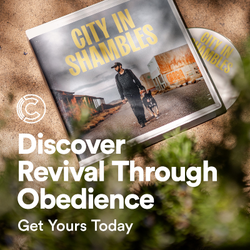
As followers of Christ, we recognize the brokenness around us and may be tempted to give in to feelings of hopelessness and despair. Yet we are called to faithfully seek God regardless of our surroundings and circumstances. This month, take your thoughts and actions captive and continue developing your own resolute faith that will carry you through this life’s difficulties and trials with Pastor Skip Heitzig's City in Shambles, on CD plus digital download.
Past Episodes
- A Red Christmas
- A Time to Build
- Adulting (A Study Through the Book of James)
- Against All Odds
- Alert Prophecy Update
- Always Only Jesus
- Believe
- Best of 2008
- Best of First Friday
- Bloodline: Tracing God's Rescue Mission From Eden to Eternity
- Can God Be Known?
- Celebrations of the Gospel
- Christians in the Crucible of Pain
- Christmas
- Church: A Place...
- Church? Who Needs It
- City in Shambles
- Crash & Burn
- Easter Series
- Expound
- Expound: Acts
- Expound: Exodus
- Expound: First Corinthians
- Expound: Genesis
- Expound: Holy Spirit
- Expound: John
- Expound: Philippians
- Expound: Romans
- Expound: Ruth
- Expound: Second Corinthians
- Expound-Ephesians
- Expound-Galatians
- Fact-Check
- Fight for the House
- First Friday
- Five Decades of Top Teachings by Skip Heitzig
- From the Edge of Eternity
- Hashtag
- Heart and Soul
- Heaven Below
- Help!
- History's Last Chapter
- Homeland Security
- Hunting Giants
- Hustle and Grind
- Rediscovering Our Foundations
- Rock Solid
- Rumblings of War and the Prince of Peace
- Running with Champions
- Technicolor Joy: A Study Through Philippians
- The Bible Doesn't Say
- The Bible from 30,000 Feet
- The Biography of God
- The End is Near?
- The House That God Builds
- The Light has Come
- The Passion of Christ
- The Royal Road of Love
- The War Is Over

Featured Offer
As followers of Christ, we recognize the brokenness around us and may be tempted to give in to feelings of hopelessness and despair. Yet we are called to faithfully seek God regardless of our surroundings and circumstances. This month, take your thoughts and actions captive and continue developing your own resolute faith that will carry you through this life’s difficulties and trials with Pastor Skip Heitzig's City in Shambles, on CD plus digital download.
About Connect
About Skip Heitzig
Skip Heitzig ministers to over 15,000 people as senior pastor of Calvary Albuquerque. He reaches out to thousands across the nation and throughout the world through his multimedia ministry. He is the author of several books including The Bible from 30,000 Feet, Defying Normal, You Can Understand the Book of Revelation, and How to Study the Bible and Enjoy It. He has also published over two dozen booklets in the Lifestyle series, covering aspects of Christian living. He serves on several boards, including Samaritan's Purse and Harvest.
Skip and his wife, Lenya, and son and daughter-in-law, Nathan and Janaé, live in Albuquerque, New Mexico. Skip and Lenya are the proud grandparents of Seth Nathaniel and Kaydence Joy.
Contact Connect with Skip Heitzig
Connect
PO Box 95707
1-800-922-1888