

Galatians 2- Part 3


Today on Connect with Skip Heitzig, Pastor Skip shows your how fear of others leads to hypocrisy—and why Paul boldly confronted Peter to protect the truth of the gospel.
Guest (Male): Welcome to Connect with Skip Heitzig. We're so glad you've tuned in today. At Connect with Skip, our passion is to help you grow in your relationship with Jesus through solid verse-by-verse Bible teaching that's both clear and practical. Every message you hear is designed to strengthen your faith and help you live out God's truth wherever He's placed you.
Did you know that you can stay connected beyond the broadcast? When you sign up for Pastor Skip's free weekly devotional, you'll receive biblical encouragement, exclusive content, and free resources to help you go deeper in God's word, all delivered straight to your inbox. As our thanks for your signing up today, we'll send you a free digital download of a chapter of Skip's book, *Biography of God*.
It's quick, easy, and completely free, and it's a great way to stay rooted in truth every week. Sign up today at connectwithskip.com. That's connectwithskip.com. Now, here's today's message from Pastor Skip Heitzig.
Skip Heitzig: "And when James," verse nine, that's the half brother of the Lord Jesus, James, not James the brother of John—he's already been murdered, decapitated, by Herod in Acts 12. So, when James—this is the half brother of Jesus, leader of the Jerusalem church, author of the book of James. "When James, Cephas, and John."
Cephas was Peter's original name. That's his given name. Jesus gave him the name Peter. Sometimes he is referred to as Peter, sometimes as Cephas. Pastor Skip, Reverend Skip, what should I call you? Skip is my name. Use that. And so, he's just very familiar with Peter. "When James, Cephas, and John"—I love this part, too—"who seemed to be pillars."
You get the language of Paul? You see how he's writing? "I don't know who they were. They don't add anything to me. And these guys who seemed to be something, seemed to be pillars, perceived the grace that had been given to me. They gave me and Barnabas the right hand of fellowship, that we should go to the Gentiles and they to the circumcised."
Now, when Paul used this little word "pillars"—those who seemed to be pillars—I don't know for sure, but because he was a Pharisee, a Jewish rabbi, he knew his Old Testament. Maybe he was just thinking in his mind the Temple of Solomon. You remember the Temple of Solomon? We just studied that. There were out in front of it two pillars, bronze pillars, given names: Jachin, Yakîn, and Boaz. Jachin and Boaz.
"In Him is strength," it means. One pillar means, "And He shall establish." So God will establish and in Him is strength. So these two pillars. Here's what's interesting about the pillars in the temple: they were hollow inside. They were empty inside, and they didn't hold anything up. They were purely ornamental.
So they were there and they were beautiful and they were awesome, but maybe it's just like, you know what? We make a big deal about certain people and put people on pedestals, and even those who seemed to be pillars, like in Solomon's Temple. But I love his conclusion: that they in the end perceived that God had indeed touched my life, given me His grace.
And that is the theme of the book: the grace of God. And he mentions this a lot. He has mentioned it already: the gospel of the grace of God, the gospel of the grace of God, as opposed to earning something, earning salvation. Remember last time we told you grace—G-R-A-C-E—could be seen as an acronym for God's Riches At Christ's Expense.
God's Riches At Christ's Expense. Put another way, grace means unmerited, undeserved, unearned favor: that God loves you and blesses you not because of who you are, but often in spite of who you are and because of who He is and what He has done. And when Jesus died on the cross and said, "It's enough. It's finished. It's paid in full," God took that to the bank and applies that to you.
And so He deals with you not based on what you deserve, but because of His nature, not yours. That's grace, the gospel of the grace of God, that we should go to the Gentiles and they to the circumcised. They desired only, verse 10, so the Jerusalem council was successful. They understood that God had called us to our ministry and that we shouldn't put a yoke on the Gentiles.
Remember the letter that James sent in Acts 15? We don't want to put a yoke on them. Just tell them to stay away from things sacrificed to idols, don't eat blood so they don't offend their Jewish brethren, and fornication—don't do those things. If you do that, you do well. God bless you guys. And so it was resolved.
They desired only, verse 10, that we should remember the poor, the very thing which I also was eager to do. Okay, we love you guys. Have a good life, have a good ministry. We just remember, we're Christians, care for the poor. Now, this is interesting because the church that was poor was the Jerusalem church. So it's like, "Yeah, remember the poor. You know, that's us." Right?
Paul will go to the Gentile world and collect an offering from the assemblies to bring back to the poor in Jerusalem because of the persecution that they have faced in that Jewish capital. They became very impoverished because of it, and Paul's ministry was to them. But so far, so good. "But when Peter had come to Antioch, I withstood him to his face because he was to be blamed."
Okay, let's understand something. The gospel started in what city? Jerusalem. Right? You should shout that one out. Jerusalem. Yeah. Okay, it started in Jerusalem. That's where it started. Jesus was crucified there, met in the upper room, 120, then the day of Pentecost, then it grew and grew and grew. Started in Jerusalem, massive persecution drove them out.
Acts chapter 8, verse 1: that they scattered, the apostles scattered because of the persecution. So they went different places. That's why Saul of Tarsus went after them. But after Jerusalem, the real center of missionary activity wasn't Jerusalem, it was Antioch. Antioch was in Syria. It's still in that region today.
It's not called that anymore, but in Paul's day, it was a very significant city. In fact, it was called the third city in the Roman Empire. The third leading city in the Roman Empire. Number one was Rome, number two Alexandria, Egypt, number three Antioch of Syria. There was about 500,000 people in it at the time of this, the New Testament.
It was very cosmopolitan: Greek, Roman, Jewish. That was the makeup of it. Very learned place, lots of university study there. And that's where the headquarters of Paul the apostle was. Paul and Barnabas. And when Paul went out on his missionary journeys, he wasn't sent out by Jerusalem, he was sent out by the church at Antioch. So, that's Antioch.
"When Peter had come to Antioch." So Peter down in Jerusalem thinks, "Okay, I'm going to go up and visit and see what Paul and the rest are doing up in Antioch and see what I can add to that." So, when Peter had come to Antioch, "I withstood him to his face because he was to be blamed, for before certain men came from James, he would eat with the Gentiles, but when they came, he withdrew and separated himself, fearing those who were of the circumcision," fearing the Jewish people.
I love Peter. I relate to Peter. He was headstrong. If you were to ask Lenya, she would say I am headstrong. If you were to ask my mother, she would have said he's headstrong. So I relate to Peter. Peter just sort of would go in a direction, but Peter often vacillated too. What do I mean? Well, Peter watched Jesus. He saw the ministry of our Lord.
He saw how gracious He was with an adulterous woman and said, "You who are without sin, cast the first stone." How He was so quick to forgive a blatant sinner. Peter saw that, made an impression on him. He loved that Jesus loved the unlovable. He was also there when Jesus had to go through Samaria. Samaritans were hated by the Jews. Jesus loved them.
Jesus led the woman to faith in Himself as Messiah, and she spread the gospel around her town. Peter was there for that. At the same time, Peter had a hard time transitioning to grace. Remember it was Peter who saw the vision of the sheet with unkosher food, and he had the vision three times from the Lord when he was on the rooftop in Joppa and God said, "Kill and eat."
And he said, "No way, I've never eaten anything that's unkosher or unclean." God said, "What I've cleansed don't call common." And all of that was to get his attention so that he might go to the house of a non-Jew named Cornelius, a Gentile, a Roman officer. And the first thing Peter says when he comes to his house, he goes, "You know it's unlawful for me to hang out with people like you."
So yes, Peter saw how loving and open and embracing Jesus was to the down-and-outer and the unlovely, but when it came to his own life, he struggled with it. Now he's beyond Cornelius. He's learned the lesson that I should accept people, but he's now vacillating by playing two different sides.
So, he goes to this town of Antioch and there's these Gentile believers and he goes and he hangs out with them and has meals with them. Jewish people, strict Jews, kept no company with a Gentile, did no business transaction with a Gentile. The least thing they would ever do is eat with one. To eat with a Gentile meant you were becoming one. You're becoming one with them.
That's the idea of communion when we take the bread. You are eating the bread, I am eating the bread, it becomes a part of my body, it becomes a part of your body. We are becoming a part of each other through this ritual. We're sharing a common meal. To eat with someone was considered sacred. So you want to be on the same level. A Jew would not eat with a Gentile, a strict Jew would not.
Guest (Male): You're listening to Connect with Skip Heitzig. Every day, the generosity of friends like you helps reach more people with clear, practical Bible teaching, changing lives as they discover who God really is. And this month, we want to thank you with a powerful resource bundle designed to help you know God more deeply and walk in the freedom He offers.
It features Skip's book, *Biography of God*, a thoughtful, approachable look at God's character, His attributes, and the hope we gain when we understand who He truly is. You'll also receive Skip's six-message CD series, *Expound: Galatians*, a verse-by-verse journey through Paul's call to spiritual freedom. Freedom from legalism, shame, and striving.
We'll send you both resources as our thanks when you give $50 or more to support Connect with Skip Heitzig. Call 800-922-1888 or visit connectwithskip.com/offer. Now, let's return to today's teaching.
Skip Heitzig: But Peter's eating with the Gentiles. Awesome, right? Until the Jewish people, more Jews came from Jerusalem that knew Peter. Then Peter said, "I can't eat at the Gentile table. I'm going to eat at the kosher table now." So, he's acting like, "Yes, I keep kosher law and I don't eat with Gentiles," and he's acting very pious in a way that the Judaizers would have approved of him.
So, Paul saw this as duplicitous and he said, "I called him out. I got in his face. I got in his grill. I didn't care what pillar he is because he was to be blamed." He would eat with the Gentiles, but when they came, he withdrew and separated himself, fearing those who were of the circumcision. And the rest of the Jews also played the hypocrite with him, so that even Barnabas was carried away with their hypocrisy.
Barney! The guy who got me into ministry! The guy who thought, you know, the gospel should go to the Gentiles. Barney even was taken in with that. But when I saw that they were not straightforward about the truth of the gospel, I said to Peter before them all, "If you, being a Jew, live in the manner of the Gentiles and not as the Jews, why do you compel the Gentiles to live as Jews?"
The church celebrated a feast when they took communion, a meal called the agape feast. The agape feast was sort of like you bring a dish, I bring a dish, we all share it together, then we take the Lord's Supper together. It was beautiful. It was great especially for slaves because if you were a slave in those days, this might be the only good meal you have all week.
But if you're Jewish like Peter or like those Judaizers from Jerusalem, you're going to have a hard time with the agape feast, the love feast. It was a beautiful idea, but some of them had a hard time. Verse 15 continues, "who are Jews by nature and not sinners of the Gentiles, knowing that a man is not justified by the works of the law but by faith in Jesus Christ."
Now this is the heart of Galatians right here. How a person is made right before God, justified before God. Not by the works of the law, but by faith in Jesus Christ. "Even we have believed in Christ Jesus, that we might be justified by faith in Christ and not by the works of the law, for by the works of the law no flesh will be justified." Wow.
If you were a religious Jew today, you have a problem. You have a problem because you have no temple. So no sacrifices can be made for your sins. Now they'll say, "Well, God knows we don't have a temple and so, you know, He winks at that." Well, you should know better, Jewish person. You should know what it says in your law: without the shedding of blood there is no remission of sin.
So I often ask a Jewish person, what do you do with your sin? "Oh, well, once a year we have Yom Kippur." Well, you know about Yom Kippur, right? From your Old Testament Bible study. On Yom Kippur, that was the day when the scapegoat was taken and let go in the wilderness, and another goat was laid—the hands laid on by the priest and its neck cut and it bled out, and it was sacrificed for the sin of the nation.
A sacrifice was made for the sin of the nation. The scapegoat took their sins out in the wilderness and was never seen again. Shedding of blood. Today on Yom Kippur, a Jewish person will reflect. It's a day of reflection. That's what they call it. And if you press them, "What do you mean reflection?" "Well, it's a day when we think about our past year, and we think of all the bad things we've done.
But then we meditate on all the good things we've done. And what we hope is that we can think of more good things that we've done than bad things that we've done so that our good things overshadow and outnumber the bad things. And if it does, we're good." Now that is called—that's a perfect definition of self-righteousness.
I have now earned something before God. I have done something. This is the incurable part of humanity. We have this tendency to need to think that we have earned salvation. Instead of just saying, can't earn it, we'll just receive it. We'll just accept that His work is enough. So hard for people to do it. And this is why people will stick and stay in their religion.
It makes them feel good about themselves. I've accomplished something. But Yom Kippur has turned into a sham. It's absolutely meaningless to do anything for them because without the shedding of blood, there is no remission of sin. So Paul, Paul is right. The work done on the cross by the Lamb of God is done. It's finished, and God deals with us based on that.
That's the gospel of grace. So by the works of the law, no flesh will be justified. "But if while we seek to be justified by Christ, we ourselves are also found sinners, is Christ therefore a minister of sin? Certainly not! God forbid! No way, Jose! For if I build again those things which I destroyed, I make myself a transgressor."
See, I make myself a sinner if I am rebuilding the very thing that I saw needed to be undone. Why would I get back under bondage again? "For I, through the law, died to the law that I might live to God." And here's the verse. I love this verse. One of my favorite verses of all time. "I have been crucified with Christ.
It is no longer I who live, but Christ lives in me, and the life which I now live in the flesh, I live by faith in the Son of God, who loved me and gave Himself for me. I do not set aside the grace of God, for if righteousness comes through the law, then Christ died in vain." Jesus died on the cross. My faith in Him, there was a substitution.
When He died on the cross, because I have faith in Him, I died with Him. Because I'm dead, the law has no power. Let's say, let's say I get hard up for money and I go into a grocery store and I pull out a gun and I demand that they empty the cash register and give me all the money. And in the excitement, because I'm not really good at being a robber, I shoot the teller and he dies.
They take me to court, they find me guilty, they gave me a life sentence. If while I'm serving my life sentence in jail, somebody kills me in the prison and I'm dead, are they going to take my dead corpse back into the cell and make me serve my time? "We said life!" "Well, he's dead now, but at least 20 years. Give him 20 years in that condition." No, I'm dead. I'm not mostly dead. I'm all dead.
And because I'm dead, I'm dead to any penalty the law would give me. I'm free. I'm free from the sentence I had to serve. If I am crucified with Christ, I'm dead to the law that condemned me. I don't need to rebuild it. I'm dead to it. I'm free in Christ. I don't have to serve my sentence. So he concludes: I do not set aside the grace of God, for if righteousness comes through the law, then Christ died in vain.
You know how many times people will point to a friend and say, "Oh, but he's so sincere and he's such a good person. God must have forgiven him." And I hear this all the time at—well, I do a lot of funerals. I'm going to do Chip's on Friday, but that's going to be a homecoming for a man who lived by the grace of God.
But you know how so many people will just make a deal of their friend: didn't want anything to do with God, but now it's the funeral, so, oh, they're in heaven now, and it's because they lived a sincere life and because they were so sincere and tried to do good. So? So? But that is the gospel of works. If you're saved by your sincerity or you're saved by your religiosity, then it was stupid to have Jesus come to this earth and die on a cross.
All God needed to do was send Him down, teach people to love each other, pat babies on the head, say hi to people, heal a few people, and that's it. He had to die. And because He had to die, it's the only—it proves that's the only way to get saved. Remember in the garden? "Father, if it's possible, let this cup pass from Me.
Nevertheless, not My will, but Your will be done." What did He mean? If there's any way to get people justified from their sin, saved right with You, if there's any other way, I don't want this. I don't want to suffer. But the fact that He said, "Nevertheless, not My will, but Yours be done," proves there is no other way except the cross.
That's why we boast in the cross. That's why I know the trend with churches today is to not mention the blood, not mention the cross. Paul said, "God forbid that I should boast in anything else except the cross." We want to make much of that because if righteousness comes through the law, then Christ died in vain. He didn't die in vain. He conquered death by resurrection. We also will conquer death by resurrection. "Well, okay, I'll work hard to deserve that." Give it up!
Some of you I know, you could never be good enough. On your best day you couldn't be good enough. So quit trying. Just, "Thank You, Lord, for Your salvation. Thank You, Lord, for Your salvation. Thank You, Lord, for the gospel. God's Riches At Christ's Expense." He made the expenditure. He gave His life. A false religion, a cult, will say you have to give your life for your god. The gospel says your God gave His life for you. What good news that is. Because of that, we can be right, we can be justified.
Guest (Male): We're so glad you joined us today on Connect with Skip Heitzig. Before you go, here's a reminder: as our thanks for your gift this month, we'll send you Skip's book, *Biography of God*, along with his six-message CD series, *Expound: Galatians*. These two resources work together to help you understand God's character more deeply and experience the freedom that comes from the gospel of grace.
Your support helps keep this Bible teaching ministry on the air, connecting more people with God's word. Give today at connectwithskip.com/offer or call 800-922-1888 and request your March resources. See you next time.
Connect with Skip Heitzig is a presentation of Connection Communications, connecting you to God's never-changing truth in ever-changing times.
Featured Offer
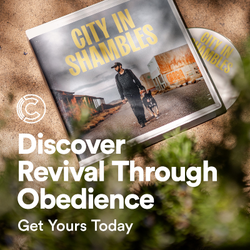
As followers of Christ, we recognize the brokenness around us and may be tempted to give in to feelings of hopelessness and despair. Yet we are called to faithfully seek God regardless of our surroundings and circumstances. This month, take your thoughts and actions captive and continue developing your own resolute faith that will carry you through this life’s difficulties and trials with Pastor Skip Heitzig's City in Shambles, on CD plus digital download.
Past Episodes
- A Red Christmas
- A Time to Build
- Adulting (A Study Through the Book of James)
- Against All Odds
- Alert Prophecy Update
- Always Only Jesus
- Believe
- Best of 2008
- Best of First Friday
- Bloodline: Tracing God's Rescue Mission From Eden to Eternity
- Can God Be Known?
- Celebrations of the Gospel
- Christians in the Crucible of Pain
- Christmas
- Church: A Place...
- Church? Who Needs It
- City in Shambles
- Crash & Burn
- Easter Series
- Expound
- Expound: Acts
- Expound: Exodus
- Expound: First Corinthians
- Expound: Genesis
- Expound: Holy Spirit
- Expound: John
- Expound: Philippians
- Expound: Romans
- Expound: Ruth
- Expound: Second Corinthians
- Expound-Ephesians
- Expound-Galatians
- Fact-Check
- Fight for the House
- First Friday
- Five Decades of Top Teachings by Skip Heitzig
- From the Edge of Eternity
- Hashtag
- Heart and Soul
- Heaven Below
- Help!
- History's Last Chapter
- Homeland Security
- Hunting Giants
- Hustle and Grind
- Rediscovering Our Foundations
- Rock Solid
- Rumblings of War and the Prince of Peace
- Running with Champions
- Technicolor Joy: A Study Through Philippians
- The Bible Doesn't Say
- The Bible from 30,000 Feet
- The Biography of God
- The End is Near?
- The House That God Builds
- The Light has Come
- The Passion of Christ
- The Royal Road of Love
- The War Is Over

Featured Offer
As followers of Christ, we recognize the brokenness around us and may be tempted to give in to feelings of hopelessness and despair. Yet we are called to faithfully seek God regardless of our surroundings and circumstances. This month, take your thoughts and actions captive and continue developing your own resolute faith that will carry you through this life’s difficulties and trials with Pastor Skip Heitzig's City in Shambles, on CD plus digital download.
About Connect
About Skip Heitzig
Skip Heitzig ministers to over 15,000 people as senior pastor of Calvary Albuquerque. He reaches out to thousands across the nation and throughout the world through his multimedia ministry. He is the author of several books including The Bible from 30,000 Feet, Defying Normal, You Can Understand the Book of Revelation, and How to Study the Bible and Enjoy It. He has also published over two dozen booklets in the Lifestyle series, covering aspects of Christian living. He serves on several boards, including Samaritan's Purse and Harvest.
Skip and his wife, Lenya, and son and daughter-in-law, Nathan and Janaé, live in Albuquerque, New Mexico. Skip and Lenya are the proud grandparents of Seth Nathaniel and Kaydence Joy.
Contact Connect with Skip Heitzig
Connect
PO Box 95707
1-800-922-1888