
Ephesians 2 Part 3


Today on Connect with Skip Heitzig, Pastor Skip explains how Christ has torn down every barrier between you and God—so you can draw near and experience real intimacy with Him.
Guest (Female): This is Connect with Skip Heitzig. Thanks for joining us today. Here at Connect with Skip, we love to help you know God's word better and apply it to your life through clear, practical Bible teaching and real encouragement.
And if you'd like to keep growing in your walk with Jesus, sign up for Pastor Skip's free weekly devotional. You'll receive biblical insight, teaching highlights, and exclusive resource offers designed to help you stay strong in your faith, all delivered right to your inbox.
Signing up is quick and easy, and you'll be glad you did. Go to connectwithskip.com and join the list today. That's connectwithskip.com. Now, let's dive into today's teaching from Pastor Skip Heitzig.
Skip Heitzig: You're not saved by good works; you're saved for good works. You see the difference? You don't do anything to earn it. Once you believe and are saved, then God enables you to do those things. Massive difference. He saved you from sin that he might save you for service. He's prepared in advance for you to walk in. Discover what that is, and you'll have joy.
Verse 11: "Therefore, remember that you, once Gentiles in the flesh, who are called uncircumcision by what is called circumcision made in the flesh by hands—that at that time you were without Christ, being aliens from the commonwealth of Israel and strangers from the covenants of promise, having no hope and without God in the world. But now in Christ Jesus you who were once afar off have been brought near by the blood of Christ."
Paul's audience were largely Gentiles in Ephesus. The library that you're seeing, the Library of Celsus, very secular person in history. Ephesus was superstitious with the Temple of Diana, also very secular in learning. There were a few Jews that lived in the city. There was a small colony of Jews, but for the most part, they were garden-variety pagans, just Gentiles.
If they wanted to know God before Christ came, a Gentile would need to go through Judaism, have to convert through Judaism, have to become a proselyte, which included circumcision and a few things like that, a few rituals.
So he's painting a picture of the Ephesian audience that he is writing to. You were once Gentiles in the flesh. You were called uncircumcision by Jewish people, what is called circumcision made in the flesh by hands. So you know, I've told you before that a couple thousand years ago, the Jewish people looked down a lot on non-Jewish people.
We speak of the scourge of anti-Semitism today, and it is a scourge, but 2,000 years ago, there was a reverse of that. The Jews really discriminated against anybody who was not Jewish. They even had statements like "God created Gentiles to provide fuel for the fires of hell." So why are you here, Gentile? God made you so he could throw you into hell and make hell hotter. So they didn't look favorably upon the Gentiles.
He continues in verse 12, "at that time you were without Christ." You as Gentiles had no messianic hope whatsoever. At least the Jewish people with the Old Testament had a messianic hope. The Messiah was prophesied over and over again. They waited for the deliverer to come, the ultimate Messiah who would show up to fulfill the law and the prophet. You had none of that. You were without Christ, without a Messiah.
Being aliens from the commonwealth of Israel. You didn't share in the promises that God gave to the Jewish people. As a nation, they were given promises. "And strangers from the covenants of promise," the Abrahamic covenant, the Mosaic covenant of the law, the Davidic covenant—all the agreements that God made with humanity through the Old Testament, you didn't have that. "Having," look how dark, "no hope and without God in the world."
You know, we who love God and worship God and give praise to God, sometimes we forget the hopelessness people have who don't know God. What made the difference in your life? God. But think of people who live their lives day in and day out: no Messiah, no promises, no covenants, no hope, no God, godless.
But now, verse 13 takes a turn of phrase, sort of like what we just read in verse 4, "But God." Now it's "but now in Christ Jesus you who were once afar off," Gentiles were far off, "have been brought near by the blood of Christ."
Historians tell us that 2,000 years ago there was a cloud, a gray, a dark cloud of hopelessness over the Gentile world. That the Greek and Roman mythologies of the gods and goddesses, the pantheon of gods, the worship system they had, left them wanting more, left them thirstier. People were skeptical over those old mythological tales, and they were primed and ready and ripe for something that provided hope because their religious system did not.
Historians will often mention this cloud of hopelessness that hung around the world, these polytheistic belief systems that did people no good, and people were sick and tired of it. But now, in Christ Jesus, you who were once afar off have been brought near by the blood of Christ.
When a rabbi, Jewish rabbi, was approached by a Gentile who said, "I want to convert to Judaism," there were a couple different ways to do that. You could become a proselyte of the gate or you could become a proselyte of righteousness. A proselyte of righteousness was complete conversion to Judaism. A proselyte of the gate was sort of half so. You didn't get circumcised. You just had to go to the synagogue service, believe in a God, renounce the old gods. But if you want to be fully converted, you had to go through the rituals of Judaism.
If a Gentile approached a rabbi and said, "I want to convert," the terminology is, "We're going to bring you near. You who are afar off will now be brought near. We're going to bring you near to our God through this system, through these rituals." So he's using familiar language when he says you who were once afar off have been brought near, but not by converting to Judaism, but by the blood of Jesus Christ.
"For he himself is our peace." Before I get into that, let me just mention a thought. The picture that Paul paints of the Ephesians: hopeless, without God, without a Messiah figure, without Christ, they had no messianic hope. When a person lives without any Messiah, without any hope, what do they do? Well, in our culture, they make a superhero.
I wonder if, in part, some of the fascination and trend in Hollywood that is followed by so many in recreating the Marvel superheroes—be it Batman, I'm sorry if I'm not specific, you comic fans will rebuke me afterwards—but all of the different messianic figures that we have: Superman, Batman, Aquaman, Spiderman, Superwoman, whatever. All these figures are in part to fill the hole that people in our society feel. They are longing for a Messiah. And if they don't have a Messiah, they'll at least have popcorn and watch a movie for an hour and a half and vicariously enjoy a messianic experience.
Now, verse 14, "for he himself is our peace." And by the way, in Greek it's very emphatic. He alone, he emphatically, he himself is our peace, who has made both one and has broken down the middle wall of separation. Both what? Both Jew and Gentile. Two people who are separated, he's made them one.
This is something that Paul is going to call a mystery. It was kept secret in the Old Testament; it's revealed in the New. How God wanted to abandon the separation, the titles, the identity of Jew and Gentile, and just make the church. So it's not like, "Well, I'm a Jewish believer," or, "I'm a Gentile believer." I'm just a believer. "Well, I'm a Hispanic Christian," or, "I'm a Black Christian," or, "I'm a White Christian." No, you're just a Christian. We're brothers and sisters. And he has made those who were once afar off brought near, those who were separated now one. He has made both Jew and Gentile one and has broken down the middle wall of separation.
Guest (Male): You're listening to Connect with Skip Heitzig. Every day, the generosity of friends like you helps make clear, verse-by-verse Bible teaching available to people searching for truth, purpose, and hope.
And this month, we want to thank you with a pair of powerful resources to help you understand your identity in Christ and God's design for your life and relationships. When you give, you'll receive the Expound Ephesians nine-CD series with digital download, along with Pastor Skip's book, Beyond the Summer of Love. Together, these resources explore the richness of the gospel, reveal your place in God's family, and show how biblical truth brings strength, restoration, and lasting hope to your relationships.
We'll send both resources as our thanks when you give $50 or more to support Connect with Skip Heitzig. Call 800-922-1888 or visit connectwithskip.com/offer. Now, let's return to today's teaching.
Skip Heitzig: In Judaism, there was separation. If you went to the synagogue, you would sit in one place if you were a male, you would sit in another place if you were a female. It was divided on the sides, and then there was a special section for proselytes of the gate, who are interested in Judaism but they haven't fully converted. So there were sections that they could get into.
Now, if you went to the temple in Jerusalem, there also was separation. There were courts. There was the outer court of the temple called the Court of the Gentiles. If you move a little further in, you have the next court called the Court of the Women. That's where Jewish women could go. There was then a closer court called the Court of the Men or the Court of Israel. Jewish men could go to that court, closer than the women, closer than the Gentiles. And then finally, the temple itself, holy place, Holy of Holies, only the priests could go and then the High Priest once a year into the Holy of Holies.
So there were divisions, separation. Now, the outer court, and in Herod the Great's temple, it was a big courtyard, the temple complex. The outer court that took that whole flat mountaintop called the Temple Mount was 35 acres. It's massive, still intact today, you can still see its dimensions.
But the Gentile court was like the nosebleed section. You're like way out there in left field. You don't have good seats. You have to be a Jewish male or a priest, or at least a Jewish woman to get closer. So it was all about separation. Now, if you were a Gentile and you thought, "Man, I'd like to get closer than the nosebleed section. I always have bad seats out here. I can see that there's the temple and people are worshipping, but I'm really interested. I'd like to go hang out there."
As you approached from the Court of the Gentiles toward the Court of the Women, you would come to a wall that was about three feet tall. And on the wall was an inscription every so often around the entire perimeter, balustrade, barricade, that wall. And the sign read this: they've found one of the inscriptions, so this is the translation into English. "No man of alien race is to enter within the balustrade and fence that goes around the temple. And if anyone is taken in the act, let him know that he has himself to blame for the penalty of death that will surely follow."
So it was a notice of caution, proceed at your own risk. If you want to end your life, then try to get near. So you understand the impact of the wall of separation. There was a wall that separated them. God's taken it down. Now the Gentiles can go and have an intimate relationship with the God of Israel that the Jewish person can have. He has taken down the middle wall of separation.
"Having abolished in his flesh the enmity, that is, the law of commandments contained in ordinances, so as to create in himself one new man from the two, thus making peace." What do you do when you have two people that are opposite of each other, two different people, a Jew and a Gentile?
Make a new man called a Christian. One new man. If any man is in Christ, he is a new creation. Old things have passed away; all things become new. He's edging his way into what he will call a mystery. It was something that was kept secret in the Old Testament, revealed in the New. That was God's plan all along, to take away the distinctions, the divisions of Jew and Gentile, and make one new person in Christ, a Christian, a follower of this Messiah, whether you have a Jewish background or a Gentile background. One new man.
Sort of like if you take two metals like copper and tin. When you put them together, you don't have two metals anymore; you have one new metal. You have bronze. The combination of those two metals makes a new metal. And so God takes two different kinds of people, makes just one believer out of them, thus making peace.
"And that he might reconcile them both to God in one body," that is the church, "through the cross, thereby putting to death the enmity. And he came and preached peace to you who were afar off," Gentile, "and to those who were near," Jew. "For through him we both have access by one Spirit to the Father."
I love this, and I love God's design in the church. I do think it's a mistake to segregate into groups too much. I understand the appeal and I understand in some cases the need, but I do remember when I was first a believer in my church at Calvary Chapel Costa Mesa, there were different kinds of fellowships. There was the Young Adults Fellowship, there was the College and Career Fellowship, there was the Single Men's Fellowship. And I didn't go to any of them.
I just went to church because I didn't want to just be around single adults. I was a single adult, but I wanted to be around married people because one day I wanted to get married. I wanted to see what it was like, how they get along, what am I getting into. I wanted the full experience.
I think it is a mistake to narrow one's demographic. I hear churches often talk about, "Well, our demographic is," "Our target audience is," millennials, or over 50, or, "We want a biker church," or, "We want a surfer church." Why? Let's just have a church. Let the bikers and the surfers come together. One new man out of the two.
"Well, bikers don't get along with surfers." Well, they didn't, but they do now. And so when people say, "Who's your target audience?" I say, "I don't have a target audience. Everyone's my target audience." I don't care your age, I don't care your skin color, I don't care if you have dyed hair, blue or red. I don't even mind if you're bald. I don't care if you have tattoos or you have piercings, or you don't have any of those. You are welcome. We have been brought near by the blood of Christ.
"For through him," verse 18, "we both have access by one Spirit to the Father. Now, therefore, you are no longer strangers and foreigners, but fellow citizens with the saints and members of the household of God, having been built on the foundation of the apostles and the prophets, Jesus Christ himself being the chief cornerstone, in whom the whole building, being fitted together, grows into a holy temple in the Lord."
If you make it to Israel, if you come with us on a tour, one of the things you will marvel at is the size of stones that Herod the Great used in building his temple. I say you marvel at it because those stones are 2,000 years old, and many of them are still intact in the same place they were laid.
And when they would build a huge complex like that, they would set the first course with a cornerstone, a foundation stone. And the foundation provided the architectural symmetry for the rest of the building and the unity for the rest of the building. And so they would hew these stones and they would somehow transport them.
And I say somehow because we can show you some stones that are 44 to 45 feet long, 10 feet high, and at least 10 feet deep. and that one single stone weighs about 470 tons. 470 tons. And you think, "My goodness, how did they move those things and put those things into place and then put another one on top of it?" It's a marvel.
Jesus Christ is the first course. He's the foundation stone. Our faith is built not upon Peter and the Vatican, but upon Christ himself. So he's the foundation stone. Upon the foundation stone are the apostles and prophets of the church, and then stone upon stone upon stone—a luminous, massive building. All of us are living stones atop of that building.
It would be like saying Jesus Christ is the slab, and the apostles and prophets are the two-by-four studs—a lot cheaper materials than what they used to have—on top of that, and then you're the window and the batting and the frames.
In whom the whole building, verse 21, being fitted together, grows into a holy temple in the Lord. In whom you also are being built together for a dwelling place of God in the Spirit. No more walls, no more separation. In the end of the 80s, President Ronald Reagan stood in front of the Brandenburg Gate in Berlin when the Berlin Wall was still there, and you remember his famous statement: "Mr. Gorbachev, tear down this wall."
And they clapped for him. The crowd went crazy. In 1989, they took the wall down. The wall that separated East from West. God would say to us, "Tear down the walls." Walls that you have erected. Even in your mind you might think, "Well, I'm a little bit different than others. I'm a little bit better than some of those other people." Tear down the walls. There's one new man, Christian, believer, follower of Christ.
Guest (Male): We're so glad you joined us today on Connect with Skip Heitzig. Before you go, here's a reminder: when you give $50 or more this month, we'll send you the Expound Ephesians series along with Pastor Skip's book, Beyond the Summer of Love, as our thanks.
These resources offer biblical insight and encouragement to help you grow in your faith and experience God's design for your life and relationships. Your support helps keep this Bible teaching ministry on the air, connecting more people to God's word. Give today at connectwithskip.com/offer or call 800-922-1888. See you next time.
Make a connection, make a connection at the foot of the cross. Cast your burdens on His Word. Make a connection, connection. Connect with Skip Heitzig is a presentation of Connection Communications, connecting you to God's never-changing truth in ever-changing times.
Featured Offer
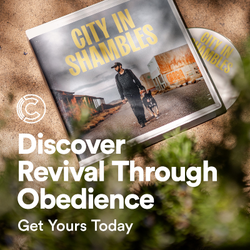
As followers of Christ, we recognize the brokenness around us and may be tempted to give in to feelings of hopelessness and despair. Yet we are called to faithfully seek God regardless of our surroundings and circumstances. This month, take your thoughts and actions captive and continue developing your own resolute faith that will carry you through this life’s difficulties and trials with Pastor Skip Heitzig's City in Shambles, on CD plus digital download.
Past Episodes
- A Red Christmas
- A Time to Build
- Adulting (A Study Through the Book of James)
- Against All Odds
- Alert Prophecy Update
- Always Only Jesus
- Believe
- Best of 2008
- Best of First Friday
- Bloodline: Tracing God's Rescue Mission From Eden to Eternity
- Can God Be Known?
- Celebrations of the Gospel
- Christians in the Crucible of Pain
- Christmas
- Church: A Place...
- Church? Who Needs It
- City in Shambles
- Crash & Burn
- Easter Series
- Expound
- Expound: Acts
- Expound: Exodus
- Expound: First Corinthians
- Expound: Genesis
- Expound: Holy Spirit
- Expound: John
- Expound: Philippians
- Expound: Romans
- Expound: Ruth
- Expound: Second Corinthians
- Expound-Ephesians
- Expound-Galatians
- Fact-Check
- Fight for the House
- First Friday
- Five Decades of Top Teachings by Skip Heitzig
- From the Edge of Eternity
- Hashtag
- Heart and Soul
- Heaven Below
- Help!
- History's Last Chapter
- Homeland Security
- Hunting Giants
- Hustle and Grind
- Rediscovering Our Foundations
- Rock Solid
- Rumblings of War and the Prince of Peace
- Running with Champions
- Technicolor Joy: A Study Through Philippians
- The Bible Doesn't Say
- The Bible from 30,000 Feet
- The Biography of God
- The End is Near?
- The House That God Builds
- The Light has Come
- The Passion of Christ
- The Royal Road of Love
- The War Is Over

Featured Offer
As followers of Christ, we recognize the brokenness around us and may be tempted to give in to feelings of hopelessness and despair. Yet we are called to faithfully seek God regardless of our surroundings and circumstances. This month, take your thoughts and actions captive and continue developing your own resolute faith that will carry you through this life’s difficulties and trials with Pastor Skip Heitzig's City in Shambles, on CD plus digital download.
About Connect
About Skip Heitzig
Skip Heitzig ministers to over 15,000 people as senior pastor of Calvary Albuquerque. He reaches out to thousands across the nation and throughout the world through his multimedia ministry. He is the author of several books including The Bible from 30,000 Feet, Defying Normal, You Can Understand the Book of Revelation, and How to Study the Bible and Enjoy It. He has also published over two dozen booklets in the Lifestyle series, covering aspects of Christian living. He serves on several boards, including Samaritan's Purse and Harvest.
Skip and his wife, Lenya, and son and daughter-in-law, Nathan and Janaé, live in Albuquerque, New Mexico. Skip and Lenya are the proud grandparents of Seth Nathaniel and Kaydence Joy.
Contact Connect with Skip Heitzig
Connect
PO Box 95707
1-800-922-1888