
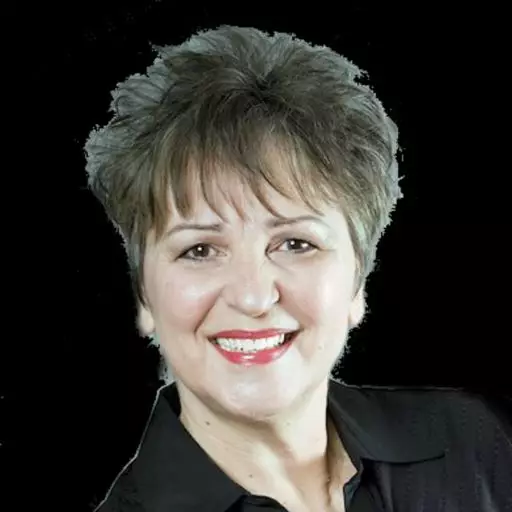
Veterans Day Special


Guests: Lt. Col. Lawrence Weisman, Audrey Russo & Vietnam Veteran Tom Munroe - Hear from a Veteran of the war in Iraq and Afghanistan & a Vietnam Veteran. What affect has the liberal mainstream media had on our Troops? And what we should know about PTSD - the effects and the support that is needed and available. Plus, how can we give honor where honor is due? This is an all-important show.
Announcer: Exposing the changing worldviews behind the issues that are fundamentally changing our nation and world, The Sharon Hughes Show starts now.
Sharon Hughes: Today.
Oliver North: The kid who once wouldn't share a candy bar with his little brother now gives away his last drop of water to a wounded comrade, his only MRE to a hungry Afghan kid, and splits his ammo with a mate in a firefight.
Lawrence Weissman: The military folks out there in general ignore most of the liberal media. They look at it and go, these guys don't know what they're talking about, which is, it's good that they're able to see through that. The general military mass itself is too mature for that.
Audrey Russo: People don't understand that the woundings aren't just the ones that bleed, and after Vietnam, the VA did not do a good job in bringing a lot of those folks back into society. They do a much, much better job now. They understand it better.
Tom Monroe: We see someone do something that is what we consider not right and dangerous, and we just go nuts because we know consequence. But consequence in civilian life is a whole lot different than consequence in military life. We have to make that transition from one to the other, and it is a battle. It is not easy, but there is so much assistance.
Sharon Hughes: Thank you for tuning in to the show today. This is our Veterans Day special, and we make a big deal out of this every year because we value our veterans, because we are all supposed to be giving honor where honor is due. Last week, my husband Dwayne and I attended a big event in our community commemorating the American Legion, and there were close to a dozen World War II veterans there, and we were able to hear from them, hear some of their stories. I was even able to talk directly with a pilot with the Flying Tigers, and also with one Vietnam veteran who, though himself has suffered post-traumatic stress syndrome, is in helping other veterans, encouraging them and helping where he can, both he and his wife.
And we're going to hear from him, as well as from a chaplain who heads up annual stand downs for our homeless veterans. And my friend Audrey Russo, formerly co-host with me when I was in the San Francisco Bay Area. She and her cousin, who has fought in the War on Terror, all that today as we honor all of our brave veterans and troops.
Announcer: You're listening to Sharon Hughes, taking you to the front lines and behind the scenes.
Sharon Hughes: We honor all veterans who served in America's armed forces and their families, and we also remember with deep gratitude all those who paid the ultimate sacrifice of their lives for us. You know, it was President Ronald Reagan who once said that freedom is never more than one generation away from extinction. We didn't pass it to our children in the bloodstream. It must be fought for, protected, and handed on for them to do the same, or one day we will spend our sunset years telling our children and our children's children what it once was like in the United States where men were free. Well, we thank God that there have been brave men and women throughout our history who have stepped up to the plate
Unidentified Speaker 1: with dedication and devotion to defend our freedom and to defend us. It's one of the reasons we started Operation Heartlift here at Changing Worldviews. That's the least those of us here at home, the recipients of the efforts and the sacrifices of our troops, to not only feel gratitude in our hearts, but to express it in very tangible ways. And not only do we want to honor, but we also want to remember to keep the men and women of our nation's armed services in our thoughts and our prayers. So we hope you and your family will find a moment to thank a veteran for their part in helping to preserve our freedom, send an email, send a card, pick up the phone, call a veteran that you know, and let them know how grateful you are.
Now here's Colonel Oliver North and what he has to say
Oliver North: about our veterans, especially our young veterans today. This is a frame taken from my footage on the 6th of April 2003. Baghdad is the smoke pall you see in the background. The Marine unit I'm with embedded is the van, the lead element of the attack on the eastern corridor. We're about 15 miles outside of Baghdad, and a Republican Guards regiment ambushes this Marine rifle company. They spin their Humvees around, and there is a gunfight that occurs between this regiment and this rifle company. And in the midst of the beaten zone, the area where the intersecting bullets are crossing, a United States Navy corpsman I had first met in Kandahar in 2001 rushes into the battlefield right through the fire, drags two wounded Marines out and carries them on his shoulder to a helicopter that's landed in the roadway.
And at this footage right here, I am standing on the ramp of that helicopter. And this corpsman, who's rushed now twice before and brought these two wounded back, now has a third one. And off to the right hand side, as you look at the screen, a Reuters news crew sets up their tripod and they're videotaping him going in and out. And as this guy staggers back into the gunfight, one of them shouts out, hey mate, what did you do that for? Didn't you notice? In other words, you stupid American. Didn't you notice that wasn't a Marine? If you look carefully at that photograph, you'll see that the wounded warrior, who's already been bandaged up by that United States Navy medical corpsman isn't a Marine.
It's a wounded Iraqi soldier, and this US Navy corpsman has rushed into the battlefield to save his life. He says, didn't you notice he was wounded? That's what we do. We're Americans.
Unidentified Speaker 1: Audrey Russo, a good friend and one of my co-hosts when I was in the San Francisco Bay Area, invited her cousin, who is still serving in the military, to tell us what it's like today as a young troop and how they are unmoved, really, by the propaganda that the media puts out about the war that they are engaged in. And we talked to him prior to the election of Donald Trump. Here it is. Lieutenant Colonel Lawrence Weissman and Audrey Russo, thank you for being with me today.
Audrey Russo: Hey Sharon, it's great to be with you.
Unidentified Speaker 1: Your cousin Lawrence has been serving for over 20 years. He's had several stints there in Iraq, hasn't he?
Audrey Russo: Yes, he has. He's been all over the Middle East, but especially in Iraq and Afghanistan.
Unidentified Speaker 1: Why don't you go ahead and introduce him?
Audrey Russo: Well, it's my pleasure. My cousin, who we are very proud of, and it is my honor to introduce you to Lawrence Weissman.
Unidentified Speaker 1: Well, welcome to the show, Lawrence. We're just so glad that you could be with us and would like for you to just share with our listeners, number one, why you have chosen to serve in the military for so long. What do you want to say about the philosophy of a military service member in today's 21st century? What would you like to say?
Lawrence Weissman: It is a long time. I've been in since, I signed on in 1982 and did, you know, a bunch of active duty years there, about 9 of them, but I think I've always been a service oriented person in that sense. For me, the military is something I felt everybody should participate in, be part of, I don't want to say pay their dues, but if we don't maintain that, and that was how I felt even as in my early 20s, that without some kind of structure to maintain that, we're going to lose that. A lot of it goes back to, how should I say it, an interest in history in general. American history for us, because that's what we're mostly taught, it starts way back in the 1700s with the, what I call the Minutemen, the guys that came up out of the fields to make this happen, so that the work that these people started with in the beginning doesn't stop, doesn't fall in vain, so.
Unidentified Speaker 1: And so, obviously, we need more than ever honorable, dedicated people serving in the military because of the situation that we face in the War on Terror today.
Lawrence Weissman: It's somebody or something trying to terminate what we have developed here in this country that's spread to other parts of the world. As we know, we're the longest standing republic where you have freedom, and, even before that, that was always something that was under threat. In my opinion, as I can demonstrate it through 25 years of service, it was worth putting myself in the forefront of maintaining that.
Unidentified Speaker 1: What would you like to say as someone who has served for so many years? You've been in the Middle East, you face what we are dealing with currently. Regarding those that are perhaps Americans that are losing heart in the efforts, anything you'd like to say about that?
Lawrence Weissman: The opinions that are formed are going to be the result of what people are reading or hearing through the various news services. I think it goes down to if everybody was responsible to serve a part, they'd have a better feel for what's going on, how others feel about us as a people. That information is being formed by few. People are not going to find that on their own. So what's happening is you're having fewer people forming the opinions for many, and therein lies a lot of the problem.
Unidentified Speaker 1: It's interesting. These kinds of things are not really being reported by the mainstream media.
Lawrence Weissman: To me, it appears that we've got a slanting view. A lot of the media is not in favor of this outside conflict. They're not looking into how things have happened in the past, how that is going to affect us 10, 50, 100 years down line.
Unidentified Speaker 1: So what do you know personally, being in and out with the troops, of how this affects the morale of the troops?
Lawrence Weissman: Well, can I can speak for myself and friends and the people I've either worked for or if I've commanded. The military folks out there in general ignore most of the liberal media. They look at it and go, these guys don't know what they're talking about, which is it's good that they're able to see through that. No one likes to hear that what they're doing is not what they're supposed to be doing, but the general military mass itself is too mature for that.
Audrey Russo: This is why the morale's so high, and this is why they're doing the job, not that we had any doubt that they were going to do the job, but that's really great news to hear. Then again, you know, we have very intelligent people in the service, which is not exactly what the media believes.
Lawrence Weissman: You speak to that is I've worked in different industries right here. I work in the software, the technical issues that are done here. We have a tremendously educated and intelligent military force in the United States, period, no questions asked. Many of the most dedicated people I have had the pleasure of working with my life are in the military, and the guys I work with are exceptionally bright, dedicated people, and I've been in active duty, reserve, and guard. I'll speak to the reserve and guard. There's people from the electricians, teachers, we have police who come in and serve also, participating, serving in a strong, positive manner.
It's not what you're hearing or seeing from the mainstream media, and I purposefully make sure that when I'm peacetime training or coming back from overseas, I try to make sure that I come back in, that these people say, hey, there's a tan flight suit or there's tan khakis. These are people in service that they see in their neighborhoods, people who live there and work on a regular basis.
Unidentified Speaker 1: Mainstream America supports our troops, are proud of our troops. And just a last thought from you, Lawrence, anything that you would like to say to the American people that are listening to this show about serving, about our nation?
Oliver North: This is a great nation, but it's going to take a continued effort by maintaining strong military, and you're going to have to use that military now and again. And unfortunately, I don't like to say get used to the fact that that's going to happen, but there are parts of the world that don't welcome how we operate here, and we need to protect what we have here, and that needs to be supported.
Unidentified Speaker 1: Well, we agree with you, and we want to thank you for your service, Lawrence. We want to thank you for coming on the show, but particularly for your service and for your dedication, and I know that you are inspiration to your fellow troops, and we just take our hats off to you. Thank you.
Oliver North: Well, thank you very much.
Audrey Russo: Want to say again how very proud we are of him. I know he he's blushing on the other end there, but we are very proud, and I thank you so much. Hooah is what I say.
Unidentified Speaker 1: There you go. I like what Lawrence said. He said, I wear my uniform of the United States Air Force with honor. It's an honor to serve. I wear it home from training during the week. I wear it home from fighting America's war against terror overseas. I wear it so that the people who live in my small town can see that real people who live there are serving, serving with honor and taking the fight for freedom to our enemies. That is the heart of the American soldier. When we come back, more of our Veterans Day special. Stay with me.
Unidentified Speaker 2: You're listening to Changing Worldviews with your host, Sharon Hughes.
Sharon Hughes: When we talk about wars and rumors of wars and the infiltration of our enemies, we can't not think about our troops. And I don't know if you're aware of it or not, but there are 22 suicides a day committed by our troops back from war. Now there's an organization called Mission 22 that is working to help prevent that from happening, working with our troops back from Afghanistan and Iraq. Here, take a listen.
Oliver North: A veteran, the flash of a firework can be a flashback to war. While you're looking for the cereal, he's looking for an ambush. Our soldiers are leaving one battle and coming home to another. We're fighting a war against veteran suicide, and we're losing. In fact, 22 veterans take their own life each day. I know because I was almost one of them. I was US Army paratrooper, Green Beret, eventually in Delta Force. I did 40 months of direct action combat, but I didn't come back the same man who had left two decades before. Everyone says we're glad you're home safe. I wasn't, and many of our veterans are not.
They're still at war. So this is your mission. Help us claim the 22. You can give our vets the hope and encouragement they need to get well, and it's as simple as a post or a tweet. Let's turn every 22 into a show of support. When you do, you're letting our vets know they have an army behind them. It's when the war gets better at suicide.
Unidentified Speaker 2: Your mission begins at Mission22.com.
Sharon Hughes: So I hope you will help Mission 22 or any organizations in your local community, or just personally reach out to those who are back from war that you know of and be a part of saving the lives of our troops who fought to help protect us. This month's special offer is the book How to Overcome the Most Frightening Issues You Will Face This Century. This book has 20 experts in fields of science, politics, warfare, finance, ethics, theology, and much more who offer experienced advice. And you can order online at our website, changingworldviews.com. Just go to the store donate page and you'll be able to order it there.
We'll get it right out to you. Thanks for staying with me on this Veterans Day special show. And now a conversation that I had with a Vietnam veteran who continues to encourage his band of brothers, if you will, having suffered from post-traumatic stress syndrome himself, shares personally what that was like for him, and hopefully that will help those of us who may not be aware or familiar with the effects of war will find this helpful. Well, it's my pleasure to introduce to you Tom Monroe, Vietnam vet. Tom, thank you so much for taking the time to be with us today. My pleasure. Glad to be here.
Tom, I know that you're very involved in our local community here, and so I'd like for you to talk about a couple of things. First of all, why you are involved, particularly connecting with veterans, and number two, some of your own experience as a Vietnam vet suffering from post-traumatic stress syndrome. But first, why are you so involved?
Tom Monroe: Well, the reason I'm involved, one, is it gives me something to do. Being retired, you don't have an awful lot of direction. So being a veteran myself and seeing what I've gone through and seeing so many other veterans going through much worse times, it makes it very easy and rewarding to be able to help even just a little bit someone less fortunate and kind of wandering around aimlessly in life.
Sharon Hughes: And, as we know, because we've talked on the show so many times here about our veterans, whether they are World War II or Korean War, Vietnam War, especially we know that the Vietnam vets were not welcomed home like they were before or are currently. I know you yourself suffered as a result of being in the war, and would you tell our listeners a little bit about your experience? And as a Vietnam vet, obviously you experienced, I know my husband Dwayne experienced really negative things when he came home, crazy nonsense compared to what it should be.
Tom Monroe: Well, when I came home, it was rather lackluster. I came home just before Christmas. I did not feel welcomed, although I did not experience some of the negative stuff that so many other guys did. I just felt that nobody really cared. Coming home was just kind of like, oh well, you're home, so what?
Sharon Hughes: Mm-hmm. And did that have an effect on you apart from the effects of the war that lingered?
Tom Monroe: Not that I can remember, and I don't remember the effects of the war affecting me until later. What happened is I had a job to go back to. So when I got home, you know, I took some time off, all of a sudden the phone started ringing, it was my employer wanting to know when I'm coming back to work and everything else. So that took my focus away from all of the internal strife that was going on. So, you know, I went back to work, had a good time, got married a few years later, raised a family. Then I retired and moved to the foothills in Northern California, and everything fell apart. It was so difficult to enjoy life.
It's like, hey, you're, you're in the golden years. You got a great place to live. You don't have to get up every morning and shower and scrape your face with a razor and go to work. You can do what you want, but there was no happiness. And a friend of mine came to me and said, you know, I'm going to go to stand down and see if I can get free medical care. Well, I didn't really care about medical care because I had it through my corporate benefits and so forth, but when I was there, I met a gal who was working with the Veterans Service Office, who unbeknownst to me did a PTSD screen, and she kind of looked me in the eye and says, you and I need to talk.
Well, so I went and saw her several weeks later or whatever, and she filled out all the claim papers and got me set up with a local veterans therapy group and so forth, and I had one-on-one therapy for about a year and a half, and it showed me things that I had no idea that was going on, and it allowed me to take stock of what was causing me to be the way I was, and with a long learning process and so forth, and being given a lot of tools by the VA therapists and so forth, I was able to basically turn my life around to the point where my wife wasn't ready to throw me out of the house.
Unidentified Speaker 3: Well, and it's interesting that, and I think it's true from others that I've spoken to, that there wasn't this kind of assistance and help or even recognition way back when, like for my father who was in, you know, World War II and the Korean War. I mean, they had effects of post-traumatic stress syndrome too, but nobody was addressing that, and even Vietnam vets, it wasn't really being addressed when they came home, obviously. So we're so grateful that these things are recognized now for our younger men and women that are coming home. If you were to be able to speak to young veterans that are listening in now that may be suffering with the things that you are familiar with, with your own experiential knowledge, so to speak, and what you learned from that year and a half of therapy for post-traumatic stress syndrome.
My understanding is, is a lot of the younger troops, they're not connecting, and so they're not getting help. And I'm so concerned, as I know you are, and so many of us are, that I guess it's like 22 troops a day are committing suicide after they come back from war. So this is a crucial issue and so necessary for them to get help. How would you encourage them along those lines?
Tom Monroe: Well, it's hard to say because each case will be individual. We all handle it differently. The one thing that I learned going through my therapy and so forth was that I never really felt like I came home. It was I left the battlefield on one day and 2 days later I was in Fort Lewis, Washington, a free man again, and had no concept of how to interact in civilian life. So that's what's happening, and the main thing that I got out of therapy was I'm home and I'm safe. So my message to a younger veteran, or any even the older veterans that still have not been able to make the transition is fight your last fight.
We are always taught never to admit fear and so forth and just charge forward. Well, we have a lot of fear of ourselves, and that's what I believe holds most of us back. We have one last mission as a combat veteran, and that is to fix ourselves. There is so much support out there, it's just very difficult because you have to submit and surrender. You submit to your loved ones and accept the assistance and so forth that they have, and surrender to your fear. Most are dealing with the fear of unknown. We see someone do something that is what we consider not right and dangerous, and we just go nuts because we know consequence.
But consequence in civilian life is a whole lot different than consequence in military life. We have to make that transition from one to the other, and it is a battle. It is not easy, but there is so much assistance, and the Veterans Administration also has what I call personality enhancement medication. It's the antidepressants or anti-anxiety medication and so forth. We're all afraid of it, but I can say that once I submitted to it, it made a huge difference. It takes your reaction time from nanoseconds to enough time to assess what's going on rather than just react. As a civilian, we don't have to react right now.
We can analyze the situation and decide the best means to deal with it.
Unidentified Speaker 3: Right. Well, Tom, I want to thank you so much for sharing with our listeners today, and I know that you wrote a prayer back in 2006, and so I know that you didn't just rely on family and just on help and just on medication, but on God, and so thank you again for sharing with us today.
Tom Monroe: All right, thank you very much.
Sharon Hughes: Okay, I mentioned the prayer that Tom Monroe wrote, a proud disabled American veteran. He wrote this back in 2006, and it gives a picture into not only the struggles of those with post-traumatic stress syndrome, but also of holding on to God. Here it is, a daily prayer from a combat veteran. Good morning, Lord. Thank you for getting me through another night with only minor nightmares. Please give me the strength to get through another day without hurting myself, my family, my friends, or any stranger that may cross me. I didn't ask for all this anger. Please help me through the process of learning to deal with it.
I don't want it anymore. Please replace it with my smile, laughter, and happiness from years gone by. Please look after all of my brothers and sisters in arms. We did not ask for this, supporting our government or religion and the values that they think are best. Please keep all of my fallen brothers and sisters happy until I can join them, but please make that a long time from now. Please give me the strength to face another lonely night and awake to ask for the same help tomorrow. Lord, please keep me safe. Thank you, Lord, for the riches you have given me, the greatest country in the world to live in, my health and prosperity, but most of all, the great family you have given me.
I couldn't make it through life without their love and understanding and yours. I'm off to face another day. Please bring peace to our world and look after all your children who are misguided or less fortunate than I. Last but not least, please guide the government and religious leaders of our world. They all need your help. Thank you. Amen. To our
Guest (Female): veterans, we are thankful. For all who served our country with honor and selfless dedication, we honor you and are forever grateful for you.
Sharon Hughes: Thank you for tuning in and spending time with us. I'll give you a little sneak peek of what we'll be talking about next because of all that's going on with governments around the world telling their citizens to prepare for potentially serious events such as this.
Michael Maloof: The critical infrastructures would include the grid, your telecommunications, your energy delivery, such as oil and gas pipelines, your food and water delivery, your emergency services, your space systems, and your financial systems. All of these would be totally compromised and affected and possibly destroyed. And the one thing that I'm really concerned about is the fact that they know about the Eastern Grid. Eastern Grid, we have three grids in the United States, Eastern, Western, and the Texas grid. The Eastern Grid services some 70% of the US population, and if they were to target that, it could dramatically affect a tremendous number of urban centers, and I've talked to other experts in the EMP field, and they just tell me that if we had a catastrophic event, it probably would basically wipe out our cities.
Sharon Hughes: So I hope you'll join me next time as I talk with an expert in this area, Michael Maloof, and until I see you next time, this is Sharon Hughes, saying it like it is and thinking about and being grateful for our veterans.
Announcer: Thank you for tuning in to this episode of Changing Worldviews. You can follow Sharon on social media or listen to her on many online platforms. Just go to our website, changingworldviews.com, for all the links. And until next time, stay informed, stay alert, because we are indeed living in a changing world.
Featured Offer

Past Episodes

Featured Offer
About Changing Worldviews
About Sharon Hughes
Sharon Hughes is the Founder and President of The Center for Changing Worldviews, and 15+ year Investigative Journalist and Talk Radio Host. Saying it like it is on the most critical issues of our day to conferences, on television, and on the radio interviewing well-known authors and film producers, public policy and pro-family experts, and government and religious leaders, Sharon's column has also been published in print media and on numerous online news sites.
In addition, Sharon is the Founder of Relationships Seminars, Co-Leader of Women In Christ, an outreach to women, and Bible Teacher. She has served in various capacities in her church, on community and state boards, and has been the recipient of several Leadership Awards. A wife, mother, and now grandmother, Sharon loves to cook and fly fish with her husband, Duane.
Contact Changing Worldviews with Sharon Hughes
Email: info@changingworldviews.com
Mailing Address
Changing Worldviews
P.O. Box 211
Chicago Park, CA 95712
Phone: 707-322-3632