
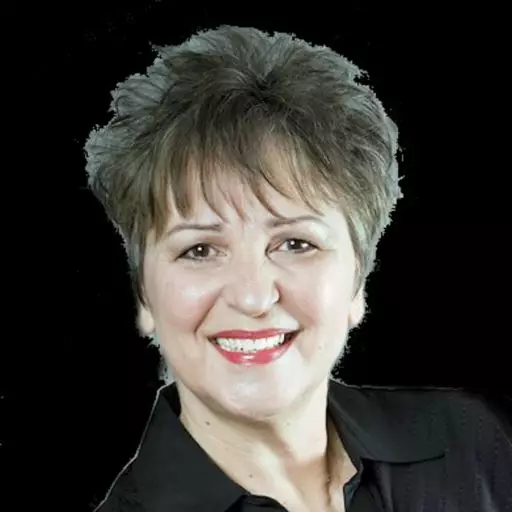
MEMORIAL DAY - Giving Honor Where Honor is Due


Join Sharon and her Guest, Historian & Author William Federer, as we give honor where honor is due, discuss the Tomb of the Unknown Soldier and more on this Memorial Day Special. Greater love has no man than this - that he lay down his life for his friends. So, we pause to remember those who have done that for our freedoms...for us.
Special Song: The Star Spangled Banner by Sandi Patty
Guest (Male): Welcome to Changing Worldviews podcast with Sharon Hughes. Broadcast journalism you can trust to bring you the truth regarding the issues of our day and the worldviews behind them.
Ronald Reagan: The price for this freedom at times has been high, but we have never been unwilling to pay that price. Those who say that we're in a time when there are no heroes, they just don't know where to look. The sloping hills of Arlington National Cemetery, with its row upon row of simple white markers bearing crosses or stars of David, they add up to only a tiny fraction of the price that has been paid for our freedom. Each one of those markers is a monument to the kind of hero I spoke of earlier.
Sharon Hughes: Hello everyone. Thank you so much for tuning in for our Memorial Day special as we remember the heroes and heroines who paid the ultimate sacrifice on the battlefields of earth for our freedom.
Sharon Hughes: You know the custom of honoring ancestors by decorating graves is an historical and worldwide tradition. But after the Civil War, America began honoring its fallen soldiers, and as monuments were erected and ceremonies of decorating soldiers' graves increased in cities across the nation, after World War I, the day grew to honor those who have died in all American wars.
Sharon Hughes: While we at Changing Worldviews have always promoted the true meaning of Memorial Day, it's more than about picnics or store sales. Not that these are wrong, but to leave out paying tribute to our fallen troops is like observing Christmas and leaving Jesus out of the event.
Sharon Hughes: So, I encourage you to make a special effort to not just think about, but to actually do something that gives honor to those who deserve it, even if it's just the honor of their memory. If you have someone in your life that paid the ultimate sacrifice, talk about it at your gatherings. Talk about it at your Memorial Day picnic or barbecue or in your activities with your children or grandchildren. Be deliberate about it. Be intentional.
Sharon Hughes: For it's absolutely true that those who forget history are doomed to repeat it. But even more so, those who do not pass on the legacy of the price for freedom do so to the detriment of the next generation and the future of our nation. History is more than just some record of the past. It has great value for us today.
Sharon Hughes: So, I want to encourage everyone to read some history and also write down the significant parts of your history for your posterity to read someday. Your values, what's important to you, and why they are important to you. Write those down as a legacy. Write letters to your sons and your daughters because if you don't tell them, how will they know? A short slideshow at your funeral is not going to communicate what's in your heart and that you want to pass on to the next generation.
Sharon Hughes: Dwayne and I saw a great movie. It's called The League of Grateful Sons. I highly recommend it. You can watch it online. You can purchase it in DVD form. You can probably watch it on some other outlet. But The League of Grateful Sons, well-done, moving, and well worth the watch.
Sharon Hughes: So stay with me as we remember and we give honor to those who paid the ultimate sacrifice. And part of my conversation with author and historian William Federer on little-known facts about the Tomb of the Unknown Soldier and more.
Ronald Reagan: If we look to the answer as to why for so many years we achieved so much, prospered as no other people on earth, it was because here in this land, we unleashed the energy and individual genius of man to a greater extent than has ever been done before. Freedom and the dignity of the individual have been more available and assured here than in any other place on earth.
Ronald Reagan: The price for this freedom at times has been high, but we have never been unwilling to pay that price. Those who say that we're in a time when there are no heroes, they just don't know where to look. The sloping hills of Arlington National Cemetery, with its row upon row of simple white markers bearing crosses or stars of David, they add up to only a tiny fraction of the price that has been paid for our freedom. Each one of those markers is a monument to the kind of hero I spoke of earlier.
Ronald Reagan: Their lives ended in places called Belleau Wood, the Argonne, Omaha Beach, Salerno, and halfway around the world on Guadalcanal, Tarawa, Pork Chop Hill, the Chosin Reservoir, and in a hundred rice paddies and jungles of a place called Vietnam. Under one such marker lies a young man, Martin Treptow, who left his job in a small town barbershop in 1917 to go to France with the famous Rainbow Division.
Ronald Reagan: There on the Western Front, he was killed trying to carry a message between battalions under heavy artillery fire. We're told that on his body was found a diary. On the flyleaf, under the heading "My Pledge," he had written these words: "America must win this war. Therefore, I will work, I will save, I will sacrifice, I will endure, I will fight cheerfully and do my utmost as if the issue of the whole struggle depended on me alone."
Ronald Reagan: We must realize that no arsenal or no weapon in the arsenals of the world is so formidable as the will and moral courage of free men and women. It is a weapon our adversaries in today's world do not have. It is a weapon that we as Americans do have. Let that be understood by those who practice terrorism and prey upon their neighbors.
Ronald Reagan: As for the enemies of freedom, those who are potential adversaries, they will be reminded that peace is the highest aspiration of the American people. We will negotiate for it, sacrifice for it, we will not surrender for it, now or ever. We are Americans.
Guest (Male): Stay with us, we'll be right back.
Guest (Male): My name is Ron from Smithton, Missouri. I've had a lot of digestive problems all my life. Got on the AloeApex, within a week to 10 days' time, I started noticing a tremendous difference, and suddenly I could begin to digest foods. And I would very much encourage anyone if they have given a thought to trying this product, to absolutely do so. This stuff has a tremendous healing effect. God bless you all.
Sharon Hughes: If you go to apexhealth.live/sharon, you can order your first bottle or bottles of AloeApex at a special introductory price. Just click on "Order Now" and use the promo code "Sharon Special." Or call 833-334-5433. Again, 833-334-5433.
Sharon Hughes: Our special offer this month has to do with the whole idea of governments, and my special guest, the late Hilmar von Campe, who was a Hitler's Youth. But no longer as he became a Christian and wrote about what he saw, what he experienced, what he was told to do as a Hitler Youth.
Hilmar von Campe: We have the government now in Germany, they're called the Social Democrats. They refuse to have God mentioned in their oaths. Normally, when you think of the Nazi in the war, you look to the criminals, but the really responsible people for what's happening are the appeasers, the bystanders who don't want to risk anything and look in the other direction.
Sharon Hughes: So you can get his book as well as my exclusive interview with him for a donation of $25. Just go to changingworldviews.com and click on "Special Offer" or send a check to Changing Worldviews, PO Box 211, Chicago Park, California, 95712. Again, PO Box 211, Chicago Park, California, 95712. His voice was and continues to be so important for what's going on in the world today.
Guest (Male): You're listening to Changing Worldviews with Sharon Hughes.
Sharon Hughes: In 1994, Marion G. Mahoney wrote the following, entitled "Those Honored Dead."
Sharon Hughes: "Why do you fly the flag today?" my grandson wants to know. I fly it for the graveyards where the countless crosses grow. I fly the flag for children whose fathers are a name, a half-remembered memory of a face within a frame. I fly it for the families of sons and daughters lost. They know the price of liberty, how terrible the cost.
Sharon Hughes: I fly the flag for veterans who lost their youth in blood and saw their comrades slaughtered in the carnage and the mud. I fly it for the ones who marched in cadence off to war, to close their eyes forever upon some foreign shore. I fly the flag for grief poured out upon a granite wall, the laying on of hands that heals the scars within us all. I fly it for the sound of Taps, that melancholy tune, that lays to rest those honored dead, who always die too soon.
Sharon Hughes: Calvin Coolidge said, "There can be no peace with the forces of evil. Peace comes only through the establishment of the supremacy of the forces of good. That way lies through sacrifice, for truly greater love hath no man than this, that a man lay down his life for his friends."
Sharon Hughes: Beginning in 1921, the sacrifice of America's military has been recognized by the president laying a wreath on the Tomb of the Unknown Soldier, which is inscribed: "Here rests in honored glory an American soldier known but to God." The tomb is guarded 24 hours a day, 365 days a year.
Sharon Hughes: Memorial Day itself began at the end of the Civil War when southern women scattered spring flowers on the graves of both the northern and the southern soldiers. From the Spanish-American War to World Wars I and II, Korea, Vietnam, Desert Storm, the war against Islamic terror, up through the present, all who gave their lives to preserve America's freedom are honored. On Memorial Day, we are to give honor where honor is due.
Sharon Hughes: The Washington Monument, the Lincoln Memorial, the Jefferson Memorial, and even Plymouth Rock are all memorials, monuments to, I believe, the good hand of God in making a way for the freedom and liberty that are found in our nation, that are the very bedrock of our nation, under God. Now my interview with William Federer, author and modern-day historian. I was able to talk to him earlier about the Tomb of the Unknown Soldier and more.
William Federer: We've mentioned the Tomb of the Unknown Soldier has a soldier from each war, from World War I, World War II, then a Korean War, and then Vietnam. And there's a family that asked for there to be a DNA test done on the soldier that was in the unknown tomb, the Tomb of the Unknown Soldier, for the Vietnam War. And they went ahead and did the DNA test, and sure enough, they found out that it was Michael Blassie, who was a pilot, and he died in 1972. He was 24 years old, and he was shot down in North Vietnam.
William Federer: They found out that he was from St. Louis, Missouri, which is a city I'm from, and he went to the same high school that I went to. He's about 10 years older than I am. But anyway, they moved his body to Arlington Cemetery, from Arlington to Jefferson Memorial Cemetery in St. Louis. To this day, there's no soldier representing the Vietnam War, and the story is that they will not be adding any more soldiers because of the ability to do DNA tests, it won't be unknown anymore.
William Federer: Interesting right there on the Tomb of the Unknown Soldier, it says: "Here lies in honored glory an American soldier known but to God." The tomb itself is fascinating. It's guarded 24 hours a day, 365 days a year. While on duty, the sentinel walks exactly 21 steps, faces the tomb for 21 seconds, turns again and pauses for 21 seconds, and then walks 21 steps back. And he does this for a 24-hour shift.
Sharon Hughes: What's the significance of 21?
William Federer: Well, 21-gun salute. So 21 steps is referring to the 21-gun salute. It's important for us to have a memorial to remember the price that was paid because indeed, there is a war going on for our culture. When Daniel Webster spoke at the memorial dedicating Bunker Hill in 1825, it was General Marquis de Lafayette attended and 200 Revolutionary War veterans were there.
William Federer: And he said, "We wish that this column rising toward heaven among the pointed spires of so many temples dedicated to God, that this may contribute to produce in the minds a pious and feeling of dependence and gratitude toward God. Let us thank God we live in an age when something has influence besides the bayonet." So this is an important time in our country.
William Federer: Realize, you know, there's an effort going on. I was just with a newspaper publisher from England and he was talking about the EU, and he was talking about the European Union and how all these countries are laying aside their sovereignty and they're working together. And the EU is in the process of coming up with an army of their own, and they're taking away sovereignty.
William Federer: One story he said, a guy that sold fruits and vegetables in London was using a pound scale. They blow their whistles, the EU police. They rush in there, they handcuff him, they take his scale away, and they put him in jail. And he's fighting this for three years, they had the trial behind these glass windows like he's a terrorist. And he finally dies of a heart attack at 39 years old, and all the newspapers in Britain call him the metric martyr.
William Federer: But it just brings out the fact that here is this EU group that's basically taking away rights and freedoms and it's a juggernaut, it's just growing bigger and bigger. And now they have more members of the EU than we have citizens of America. It's getting close to 500 million. And so they want to do the same thing in America. They want us to lose our national identity. They want us to get rid of the Mexican border, the Canadian border, and all the Latin American borders.
William Federer: They want us to be a trading block like the EU is. But you know, I am old-fashioned and I believe in America. There are people that want to diminish these holidays where we have pride in being patriotic. And I think it's important that we remember the patriotic price that was paid for our country.
William Federer: One of my favorite speeches is from Calvin Coolidge on Memorial Day in 1923. And he said, "Settlers came to America for mixed motives, but most came here, they set their imperishable mark upon the institutions for a higher motive. Generally defined, they were seeking a broader freedom. They were intent upon establishing a Christian commonwealth in accordance with the principles of self-government. They were an inspired body of men. It was said that God sifted the nations that he might send choice grain into the wilderness."
William Federer: And then he ends by saying, "There can be no peace with the forces of evil. Peace comes only through the establishment of the supremacy of the forces of good. That way lies only through sacrifice. The people of our country, they might live in the knowledge and truth that these countrymen are dead. Greater love hath no man than this, than he lay down his life for his friends."
Sharon Hughes: Stay with me, we'll be right back. We're just proud of you men and women that are serving, and we're praying for you, believing God's best in your lives. Thank you for your service. We appreciate you. What does it mean to support our troops? It means to support them when they're overseas in battle, and also, when needed, when they come home.
Guest (Female): I just want to thank you guys so much. My dad, he was a Lieutenant Colonel in the Air Force. He was a pilot, he served in World War II and Korea and Vietnam, and you guys are amazing. Thank you.
Sharon Hughes: Sharon Hughes, your genuine alternative voice, bringing you commentary on the issues that matter most. If you'd like to change the world, won't you partner with us? For a donation of $15 a month, you'll receive our monthly "Best of the Best" program on CD and Sharon's monthly "Say It Like It Is" letter, plus our facts, stats, and other helpful info booklet.
Sharon Hughes: Just go to changingworldviews.com/donate-page and sign up online to begin receiving all these benefits now. You'll not only help us stay on the air in your area, but it's a way to let Sharon know you're standing with her.
Sharon Hughes: I want to give a special hi to everyone of our oneplace.com listeners from all over the world, such as the Philippines, Saudi Arabia, Australia, the United Kingdom, and all across America. So glad to be a part of the lineup and connecting with all of you at oneplace.com, part of the Salem Web Network. Coming to you from the Sierra Nevada foothills of Northern California, you're listening to Sharon Hughes, saying it like it is. My interview with William Federer, author and modern-day historian.
Sharon Hughes: Bill, I just want to give you a few minutes here to fill us in on whatever else you'd like to share about Memorial Day that you think would be important to know.
William Federer: Well, reading through the former addresses are inspiring. In fact, I came out with a book called Treasury of Presidential Quotations. It's 500 pages and it has quotes from all the different presidents, but it has a lot of Memorial Day addresses. And of course if anybody wants that, they can either contact through you or we have the americanminute.com website.
William Federer: But here's the address from Ronald Reagan on Memorial Day 1987. He says, "We pray for peace and devotion and strength. We pray for resolve to keep holy the memory of those who have died for our country." And he says, "We pray and promise so that one day taps will sound again for the young and the brave."
William Federer: You mentioned taps, too. The story behind that song was during the Civil War, 1862, an officer at nighttime heard the soldiers groaning out on the battlefield and he went out there and was dragging them back in. And he dragged one of them in and it was a Confederate soldier, and he was Union. And he pulls the lamp out and holds it over the face and finds out it's his son.
William Federer: And this officer, Robert Ellicombe, asks if he can give a military funeral and they say, well, no, because he was a Confederate. But they said, we will let you have one instrument. And so he chose the bugle, and he wrote the song. And the words to the song: "The day is done, gone the sun from the lakes, from the hills, from the skies. All is well, safely rest, God is nigh."
William Federer: Really, the words to that song, the last is "God is nigh." And so again, I think that in this effort nowadays to pull away our faith, that at Memorial Day, that we can honor our faith and honor those that are dead and realize that one of the things that they died for—and I had an uncle who died as a in a B-17 over France in World War II and he was an Eagle Scout and a church attendant—I know that one of the things he would have given his life for is for us to have the freedom to keep God in our lives and in our country.
William Federer: I think he would be shocked to see some of the stuff that's being promoted nowadays from gay marriage to taking the Ten Commandments down and saying that that's what these guys died for. I don't think so. I think that they died to keep our country traditional, strong, American, and with Godly values.
Sharon Hughes: Yes. Well, Bill, I just want to thank you for sharing with us today about this. You always have really good things to say.
William Federer: Sharon, you're tremendous. God bless all the listeners.
Sharon Hughes: Thank you.
Sharon Hughes: Well, without a doubt today, those that deserve recognition are all of our brave men and women in our military. And that's what we do through Operation Heartlift, part of Changing Worldviews' efforts to honor our troops. And we have participated in welcoming home our troops back from Iraq, back from Afghanistan, and sending care packages and all of that. But here is some of the shout-outs from the community thanking our troops.
Guest (Female): I'm just so thrilled to be able to come to this event and honor our troops. They have a big job to do for our country, and it's nice to have the community show them their appreciation. So we love you guys and hoorah! I love them all. Thank you guys and gals out there serving our country.
Guest (Female): I'm involved in Operation Heartlift because I really appreciate all the things that the troops have done for us, giving us the freedom to live our lives free. And we couldn't do that without the troops, so I really appreciate everything they've done.
Guest (Male): I'm very thankful that people like you won't let this die. This is a different time and there's a new era of respect being shown to the service man that hasn't been shown in the past, and I'm most thankful it came during Jesse's time. Thank you.
Guest (Female): All heroes are local. Aren't they? Not a doubt. And that's where they are appreciated and applauded the loudest. And your son will always be honored in our hearts. Thank you very much.
Sharon Hughes: Here are a few ideas to make your Memorial Day tribute meaningful and educational for your kids and grandkids. I put this in my email newsletter. Here's a few suggestions:
Sharon Hughes: Help your local veterans' groups, your VFW, American Legion, and so forth, to replace worn-out grave markers and flags of deceased veterans at your local cemetery. Pause at 3 p.m. local time on Memorial Day for the duration of one minute for the national moment of remembrance to honor those who have made the ultimate sacrifice.
Sharon Hughes: Pledge to support the widows, the widowers, and orphans of the fallen, and don't neglect Gold Star parents, siblings, and others who grieve. Pray for them. Commit to support them in tangible ways. Support organizations that support the Gold Star community.
Sharon Hughes: And by the way, don't say "Happy Memorial Day." Pull that phrase from your vocabulary. It actually is disrespectful. I mean, would you really say that to a war widow or a Gold Star family? As one military spouse said, it's like saying, "Happy lots of people died day." Yikes.
Sharon Hughes: Because it is Memorial Day, and because I always like to close out with a favorite song, this is Sandie Patty singing "The Star-Spangled Banner."
(Sandie Patty singing "The Star-Spangled Banner" and patriotic songs until 29:55)
Sharon Hughes: Well, there you have it, ladies and gentlemen, that's it for today. And I encourage you to check out our website changingworldviews.com. You can find links to our archives, you can sign up for my free email newsletter, and much more. So until I see you next time, this is Sharon Hughes saying it like it is.
Guest (Male): Thank you for tuning into this episode of Changing Worldviews. You can follow Sharon on social media or listen to her on many online platforms. Just go to our website changingworldviews.com for all the links. And until next time, stay informed, stay alert, because we are indeed living in a changing world.
Past Episodes

Featured Offer

About Changing Worldviews
About Sharon Hughes
Sharon Hughes is the Founder and President of The Center for Changing Worldviews, and 15+ year Investigative Journalist and Talk Radio Host. Saying it like it is on the most critical issues of our day to conferences, on television, and on the radio interviewing well-known authors and film producers, public policy and pro-family experts, and government and religious leaders, Sharon's column has also been published in print media and on numerous online news sites.
In addition, Sharon is the Founder of Relationships Seminars, Co-Leader of Women In Christ, an outreach to women, and Bible Teacher. She has served in various capacities in her church, on community and state boards, and has been the recipient of several Leadership Awards. A wife, mother, and now grandmother, Sharon loves to cook and fly fish with her husband, Duane.
Contact Changing Worldviews with Sharon Hughes
Email: info@changingworldviews.com
Mailing Address
Changing Worldviews
P.O. Box 211
Chicago Park, CA 95712
Phone: 707-322-3632