
THANKSGIVING 2026 LEGACY SPECIAL


Guest William Federer, Historian and Author shares some fascinating and often unknown history of the first Thanksgiving. While revisionists have sought to rewrite this holiday, William Federer tells the real story from original documents. This is history to gives thanks for to the God who blesses no matter what goes on in the world.
Song: "Thanksgiving Legacy" by Sharon via AI
William Federer: Exposing the changing worldviews behind the issues that are fundamentally changing our nation and world, The Sharon Hughes Show starts now. So the pilgrims got ashore, and the first winter was terrible. Half of them died. There was 102 of them, and half of them died the first winter. They would not have made it past that, but the next spring, somebody tells Squanto was their interpreter and put them on good terms with the Indians, so there was never any Indian problems with the pilgrims.
Sharon Hughes: For most of us, the American tradition of Thanksgiving means a day or hopefully even a weekend off, a gathering with family and friends over a much anticipated delicious turkey dinner, and a time to reflect and express gratitude to God for our many blessings. You know, that's really not too different from how the Pilgrims celebrated, despite what the history revisionists say. As a matter of fact, how aware are you that Thanksgiving has fallen into politically correct disrepute, as many other elements of our society have? Just visit a Barnes and Noble or other major bookstore, and you'll find lots of books on Thanksgiving, especially for children, but many of them give a distorted view of this all-American holiday.
Why, after reading them, if you didn't know better, you'd believe that the Pilgrims were secularists because all mention of God has been removed from many of the accounts, and also that Thanksgiving was designed by the Pilgrims to thank the Indians. Well, how can we know what the true history of this or anything is? Original documents. Go back to the original documents written by those that lived in and shaped whatever event we're talking about. So today we're going to talk turkey with author and modern day historian and friend William Federer about some of what the revisionists have written and is being promoted not just in bookstores, but in classrooms about the first Thanksgiving that differs from the original accounts.
And why does this matter? Because it's not about holding on to traditions or fondly held beliefs. It's about holding on to the truth. The majority of Americans consider Thanksgiving one of their favorite holidays, but there are those who are rewriting its history, but also there are those who want the United States to stop celebrating Thanksgiving Day, quote, and its self-indulgent family feasting altogether. So how important are worldviews when it comes to history? Extremely important. I think that goes without saying. And whether you enjoyed history when you were in school or not, I think we all recognize now that we have to understand history if we want to understand what's going on in our world today.
Author and modern day historian William Federer to set the record straight about the true origin of one of America's favorite holidays. Well, welcome, Bill. It's great to have you with us again.
William Federer: Sharon, it's great to be with you.
Sharon Hughes: There's a war on Thanksgiving.
William Federer: We've seen our history revised and changed, sort of like that 1984 novel where they had the Truth Committee, but the Truth Committee kept changing history to meet whatever it is that the agenda was. What we're seeing is a cleansing of our heritage of anything that acknowledges God, deity, providence, religion, morality, and in its place, we're seeing a new religion of secular humanism. I debated the head of the Council for Secular Humanism one time, and he said, well, I'm not pushing a religion. And I said, well, in fact, you are, because if you get a dictionary and you look up the word religion, about the fourth definition down it says religion, a system of belief.
And then you look up the word belief and it says thoughts or opinions upon which one bases their actions. So as long as you're doing actions, you have thoughts or opinions that precede those actions, and that collection is your belief system, is your religion. And so when the ACLU and groups like that say they just want the government to be religion neutral, in actual fact, what they're really saying is we want your belief system out, and we want our belief system in, a new religion, a new belief system, which is different than the founding fathers. And so, as a consequence, they're rewriting our history.
Sharon Hughes: Yes, and the Supreme Court acknowledged the fact that secular humanism was a religion anyway, so.
William Federer: Yeah, it did in several cases, and I cite that in my book in 1982 in a case, and then also later in a district court case, Crockett versus Sorensen. It says that the First Amendment was never intended to forbid religion or God or the Bible. It says when such a prohibition exists, a new religion such as secular humanism is effectively established. And so we're seeing this happen, and you know, one of the things was the Thanksgiving holiday, how they wanted to change it from thanking God to thanking the Indians. And I pulled off the internet from a US embassy website, and it said this: Thanksgiving was a public acknowledgment of the Indians' role in the first Thanksgiving 350 years ago.
It says, until recently, most school children believed that the Pilgrims cooked their entire Thanksgiving feast and offered it to the Indians. In fact, the feast was planned to thank the Indians for teaching them how to cook those foods. Without the Indians, the first settlers would not have survived. It's true, without the Indians, the first settlers would not have survived. That Thanksgiving, you go back and you read the documents, which I've put in my book, America's God and Country, William Bradford says that to all ye pilgrims, in as much as the great Father has given us an abundant harvest of corn, wheat, peas, squash, and Indian corn, so forth, that I request that all pilgrims establish and assemble at ye meeting place to give glory to God for this abundant harvest.
So the Thanksgiving was to God, and now it's being changed.
Sharon Hughes: Basically, if you go to the encyclopedia or the dictionary, revisionist history is a history that has been revised to support a particular political or social agenda. That is what it is. It's not the same as if a historian now finds a new piece of evidence that brings a different light to something. Revisionists, they're doing it for a specific purpose with a specific bent for a particular political or social agenda. I mean, they're writing it through the lens of a perspective rather than just factual, documented evidence. So as someone who obviously appreciates accurate accounts of history, what do you make of the increasing efforts of revisionists to rewrite American history?
William Federer: You know, Karl Marx basically said that whoever wins gets to write the history. What happened is without God, there's no eternal life, there's no absolute truth, so then history has no purpose outside of itself, so you may as well promote an agenda with it.
Sharon Hughes: Very interesting.
William Federer: And one of the founders said that we draw our identity of who we are from the past. In other words, whoever controls the present controls the past. Whoever controls the past controls the future. You know, we have found in the prison system that 70% of the convicts are from broken homes. They don't have an identity, they don't have a background, and so as a consequence, they're subject to peer pressure, to the gangs and so forth. But you take somebody that's from a home with an intact, you know, family structure, they have an identity of who they are, they're not as subject to being manipulated through peer pressure.
When we don't know our roots, we're subject to the peer pressure of the public opinion, the media, the educational establishment. If we know our history and the price that was paid for our freedoms, then we're not easily as apt to let go of those freedoms.
Sharon Hughes: Yes, and that's what we're talking about today, and we're going to talk more about that. I also, I mean, let's just face it, folks,
Guest (Male): revisionists were the ones that have been trying to say that the Holocaust never happened. I mean, it gets that extreme. But when we come back, we're going to talk more about some of those revisionist claims and what the Pilgrims themselves said and what Bill thinks about why they want to change the Thanksgiving story. So stay with us. We'll be right back.
Announcer: Want trustworthy and concise coverage? Sharon delivers, and check out her website at changingworldviews.com.
Guest (Male): I remember a kid in Bosnia that didn't have a coat, and it was wintertime, and we were in a school, and the windows were blown out, and it was cold. His box had a coat in it.
Sharon Hughes: The Lord is mobilizing his people.
Guest (Female): It's child to child, it's person to person, it's church to church.
Guest (Male): It's a simple project. Churches love it because this is a tremendous opportunity for evangelism. And we ask families, as you pack a box, put that box in the middle of your living room and pray.
Guest (Male): Delivering millions of shoeboxes every year is not an easy task.
Sharon Hughes: How do you distribute a million anything?
Guest (Male): We've done it by plane, by boat.
Guest (Female): Camels, donkeys.
Guest (Male): Helicopters, and then see them just up on people's heads. Canoes, riverboats. And so the churches are giving the boxes and we're distributing them through the churches so that whenever those boxes arrive, trust me, it is Christmas for the kids when those boxes arrive. This is Christmas. This is the first time they have got the gifts ever in their lifetime. We need more churches, more individuals, more volunteers. I want the children of the world to know, I want their parents to know that God loves them, he hasn't turned his back on them, he cares for them, and he wants them to be with him in heaven.
That's what it's all about. Absolutely. Samaritan's Purse, Operation Christmas Child, it's about evangelism.
Sharon Hughes: When we talk about wars and rumors of wars and the infiltration of our enemies, we can't not think about our troops. And I don't know if you're aware of it or not, but there are 22 suicides a day committed by our troops back from war. Now, there's an organization called Mission 22 that is working to help prevent that from happening, working with our troops back from Afghanistan and Iraq. Here, take a listen.
Announcer: A veteran, the flash of a firework can be a flashback to war. While you're looking for the cereal, he's looking for an ambush. Our soldiers are leaving one battle and coming home to another. We're fighting a war against veteran suicide, and we're losing. In fact, 22 veterans take their own life each day. I know because I was almost one of them. I was US Army paratrooper, Green Beret, eventually in Delta Force. I did 40 months of direct action combat, but I didn't come back the same man who had left two decades before. Everyone says, we're glad you're home safe. I wasn't, and many of our veterans are not.
They're still at war. So this is your mission. Help us claim the 22. You can give our vets the hope and encouragement they need to get well, and it's as simple as a post or a tweet. Let's turn every 22 into a show of support. When you do, you're letting our vets know they have an army behind them. Let's win the war against veteran suicide. Your mission begins at Mission22.com.
Sharon Hughes: So I hope you will help Mission 22 or any organizations in your local community or just personally reach out to those who are back from war that you know of, and be a part of saving the lives of our troops who fought to help protect us. I'm talking with William Federer about Thanksgiving. Now, I am all for, and I know you are, for bringing out the facts that have been hidden or ignored, and, you know, that's what our show is all about. But some of those who are trying to rewrite our history have not only added interpretation to factual occurrences, but they put such a spin on some of the events that they hardly resemble the actual accounts.
Thanksgiving is one example, and it appears, at least in some instances, to be packaged as, you know, good Indians, bad pilgrims. Read last night where they say the pilgrims scalped the Indians. Now, you know, what do the records show here?
William Federer: Well, the Pilgrims never did. There was never any violence between the Pilgrims and the Indians, partly because of Squanto, one of the most miraculous stories of God's providence. The eastern seaboard of America was occupied with Indian tribes, and the Pilgrims realized that, you know, they had been persecuted in England, so they fled to Holland, and then they were thinking in going to British Guyana in South America, the northern coast of South America, but they thought it was too close to the Spanish Main. The Spaniards were known to butcher settlements of other countries, and so they decided to go to Jamestown, but were blown off course and landed there at Plymouth Rock.
Well, this is interesting because just three years before the Pilgrims landed, a French ship ran aground at Plymouth Rock, Cape Cod, and William Bradford writes that the sailors got ashore with their belongings, but the Indians never left watching them and dogging them till they got the advantage of them and killed them all but three or four, whom they sent from one Sachem to another, making sport with them, treating them worse than slaves. The Cape Cod area was a dangerous, violent tribe. Well, it was the Pautex tribe, and a plague had swept through that area, and it wiped out that entire tribe.
But before that happened, the Spanish boat and the French and the English and the Dutch would come by the coast and lure Indians on board and then take them to Spain and sell them as slaves. He had done that to some Indians, and one of them was Tishquantum. He had been captured, taken to Spain, he was bought by some monks, he got his freedom, found his way back to England where he lived for 9 years. There, after 9 years, he found another fishing boat to drop him back off on the shores of America, and he gets off at Cape Cod only to find that the tribe was wiped out by a plague. So terrible was the plague that the other tribes didn't take over that land, thinking some great spirit had driven them out.
Squanto was living with the next tribe over. Well, lo and behold, the Pilgrims land at, they were blown off course from Jamestown, where they were having all kinds of Indian problems, and they landed at Cape Cod, the one spot on the eastern seaboard where it was unoccupied. So the pilgrims got ashore, and the first winter was terrible. Half of them died. There was 102 of them, and half of them died the first winter. They would not have made it past that, but the next spring, somebody tells Squanto what's going on, that there's some Englishmen trying to start a colony on his old stomping ground.
You can imagine the dismay on the pilgrims' faces to see this wild Indian walk out of the woods speaking to them in perfect English, because Squanto had lived for nine years in England, and then Squanto knew the Indian languages and was their interpreter and put them on good terms with the Indians, so there was never any Indian problems with the pilgrims. So also taught them how to catch beaver, which they used to pay back their debt. You know, we never ask ourselves who paid for the trip of the Mayflower. Well, the pilgrims went in debt. It took them 40 years worth of beaver skins to pay off the debt for that boat ride.
Sharon Hughes: Very interesting, you know, I, and for those revisionists that say that the Pilgrims came here for economic reasons, they never did recuperate all the losses that they experienced, who nevertheless set aside a day of Thanksgiving. Now, this depicts the Pilgrims as I think of them, as I understand them, have read about them encountering tremendous hardships, and yet they still acknowledged God and were grateful for their blessings, and that seems to be what the revisionists want to remove. Is that right?
William Federer: Well, it is. Matter of fact, I saw a school textbook where they had the Mayflower Compact, which was signed by the Pilgrims in 1620, and it said, having undertaken dot, dot, dot, a voyage to plant the first colony on the northern parts of Virginia. And you think, gee, what did they leave out with the dot, dot, dot? The complete text, which is in my book, America's God and Country, it says, having undertaken for the glory of God and the advancement of the Christian faith, a voyage to plant the first colony on the northern parts of Virginia. They just censored out references to faith out of this public school textbook.
That's the type of revision that we see happening. And then you see the Disney movie Squanto. At the end of it, it almost looks like the Indians have converted the Pilgrims to their nature religion. But you look at the history books, and Squanto taught the Pilgrims how to fish and plant and grow corn and traded with the Indians. And Squanto's last words says that they went on a trip and a cold freezing rain came and they had to put ashore on an island, and William Bradford writes, here Squanto fell ill of Indian fever, bleeding much at the nose, which the Indians take for a sign of death. It says he begged Governor Bradford to pray for him that he would go to the Englishman's God in heaven.
I mean, here's Squanto's last words was to pray that he begged Governor Bradford to pray for him that he would go to the Englishman's God in heaven. In other words, Squanto was attaching himself to the nature religions. He had witnessed the pilgrims, he had witnessed their faith, and he wanted to go to their Christian God. And I believe he did with that desire in his heart. But you see that Hollywood and so forth has tried to take the nature religions, the diversity to this extreme extent of downplaying the role of Christian faith. And we see that all throughout history. Another I saw with the Declaration of Independence.
There was a, you know, Tom Brokaw standing in front of Mount Rushmore, and he was reciting the Declaration, and he says, all men are endowed with certain inalienable rights, among them are the right to life, liberty. So say, wait a second, what did he leave out? Go back and you read it, it says all men are endowed by their creator with certain inalienable rights, the right to life, liberty. Left out that creator part. They actually used my book in Kentucky to help pass a law to prohibit content-based censorship of historical documents. These public schools were putting up historical documents, but they were taking out the references to God.
For example, every one of the 50 state constitutions acknowledge God. All 43 presidents mentioned God in their inaugural addresses. And so these schools were like editing out those references, but they passed this law in Kentucky saying you can't have content-based censorship of historical documents. Karl Marx once said, the first thing necessary to control a people is to separate them from their heritage.
Sharon Hughes: Yes, we've got all kinds of cases all over the nation where people want to take out the city emblems and so forth because they might have the word Christos in it or a cross or something like that. It's ridiculous.
William Federer: It really is, and I'm amazed because the ACLU is getting away with it. Our public is so devoid of knowledge of our godly heritage. I mean, I put together a dozen books. I mean, I did one on There Really is a Santa Claus. It's the history of Saint Nicholas and Christmas holiday traditions, and it goes back to the original Saint Nicholas, who was the bishop of Myra over in Turkey in Asia Minor. He was a Christian. He was imprisoned by Diocletian, the Roman emperor, to persecute Christians. But I went back and pulled this out. You know, every president from Abraham Lincoln until now has issued an annual national day of Thanksgiving to Almighty God.
And I've read through them all, and I compiled them all into a CD-ROM called American Quotations. It's a word-searchable database of quotes. But you have every one of the presidents acknowledging God with Thanksgiving since Abraham Lincoln till now. Now, prior to Lincoln, presidents did it sporadically whenever they, you know, felt that there needed to be a day of Thanksgiving. After the Constitution was written and Washington was sworn into office, he declared the first national day of thanksgiving to Almighty God, and then he did another one a few years later, and then, you know, different presidents did, but you even had days of prayer being declared.
Harry S. Truman made a national day of prayer an annual event, so every president from Truman until now has had a national day of prayer. Ronald Reagan made it the first Thursday in May, and then you had days, believe it or not, of fasting. It was James Madison declared a day of fasting during the War of 1812. Abraham Lincoln declared a day of fasting during the Civil War, and even up to Woodrow Wilson declared a day of fasting and prayer to Almighty God during World War I. The public papers of the presidents, and I put all those in the book Treasury of Presidential Quotations.
Sharon Hughes: Okay. John's moving his hand telling me we are out of time. I can't believe it, it goes so fast because we have so much to talk about, but for sure, Bill, I want to thank you. I want to wish you and your family a happy Thanksgiving, and also please tell our audience your website address where they can get your books.
William Federer: Oh, thanks, Sharon. AmericanMinute.com, AmericanMinute.com. They can also sign up for a free email called an American Minute. And then also 888USAWORD, 888USAWORD, and they can order my books there as well.
Sharon Hughes: Great. Well, thank you so much again, Bill. It was just great.
William Federer: Thank you, Sharon.
Sharon Hughes: Well, I hope that you found that as interesting as I did. I love history, and I think Bill Federer does a wonderful job of making history come to life. He's got a gift, I think, for the retelling of history. Got to take another quick break, and then our wrap up.
Unidentified Speaker: You're listening to Changing Worldviews with Sharon Hughes.
Sharon Hughes: This month's special offer is the book, How to Overcome the Most Frightening Issues You Will Face This Century. This book has 20 experts in fields of science, politics, warfare, finance, ethics, theology, and much more who offer experienced advice, and you can order online at our website, ChangingWorldviews.com. Just go to the store donate page, and you'll be able to order it there. We'll get it right out to you.
Guest (Female): I so appreciate your radio program. You are out there every day educating people and helping them to find the truth and know what's really going on, and what a difference you have made in this world.
Sharon Hughes: Thank you.
William Federer: Won't you help us stay on the air in your area? Just go to changingworldviews.com/donationpage.
Sharon Hughes: I, like you, want our donations to go where it will make a difference, where it will really do some good to those people that you're giving your money to benefit from. And so it's really important for us to think before we donate, and I thought this would be kind of my own public service announcement to help all of us know where our money can best be used. Number one, the American Red Cross president and CEO has a salary of almost 652,000 dollars a year plus expenses. The United Way, the president of the United Way gets 375,000 dollars a year. UNICEF president, part of the UN, receives a hundred thousand dollars per month, a million dollars a year, plus expenses, and less than five cents of your donated dollar goes to the cause of UNICEF.
The March of Dimes, sad to say, only a dime for every dollar that is given goes to the need. So where can you feel confident about your money going to those that you give your money for. The Salvation Army commissioner receives a small salary of only 13,000 dollars a year, plus housing. 96% of all donated dollars, 96%, go to the cause, to feed the poor, to take care of the homeless, to help rehabilitate people that are alcoholics or drug addicts, and they have over an 80% success rate in that effort alone. The American Legion, the Veterans of Foreign Wars, the Disabled American Veterans, and the Military Order of Purple Heart, the National Commanders receive zero salary.
So your donations to those veteran organizations, all of it goes to our vets and their families, and that also includes the Vietnam Veterans Associations. And one of our favorites is Samaritan's Purse. 88% of the funds that they raise go to the cause, a little over 4% to administrative costs, 7% for fundraising. So that's just some information to help you determine where you're going to put your holiday contributions this year, and I'm sure if you did more research, you could find even more.
Guest (Male): And so, in the theme of history and Thanksgiving, I hope that no matter what your situation is, that you will go vertical and you will give thanks, not just be thankful, but give thanks like the pilgrims did for your blessings despite whatever hardship you may have experienced. In the warmth of the sunlight, we gather round, Thanksgiving table set, love and joy abound. With heads bowed low, we pause and reflect, to the God of all blessings, our hearts connect. Grateful hearts, we lift our praise for the gifts we cherish in so many ways. In the legacy of pilgrims, we stand hand in hand, thankful for the journey across this blessed land.
Even in the struggles through trials we face, we find hope in our hearts and love in this place. With every heartbeat, in gratitude we sing, for the joy and the blessings that each moment brings. Grateful hearts, we lift our praise, for the gifts we cherish in so many ways. In the legacy of Hill
Sharon Hughes: Thank you for joining me today, and I want to wish you a very happy Thanksgiving. There's always something to be thankful for. So until I see you next time, this is Sharon Hughes saying it like it is.
Unidentified Speaker: Thank you for tuning in to this episode of Changing Worldviews. You can follow Sharon on social media or listen to her on many online platforms. Just go to our website, changingworldviews.com, for all the links. And until next time, stay informed, stay alert, because we are indeed living in a changing world.
Featured Offer

Past Episodes

Featured Offer
About Changing Worldviews
About Sharon Hughes
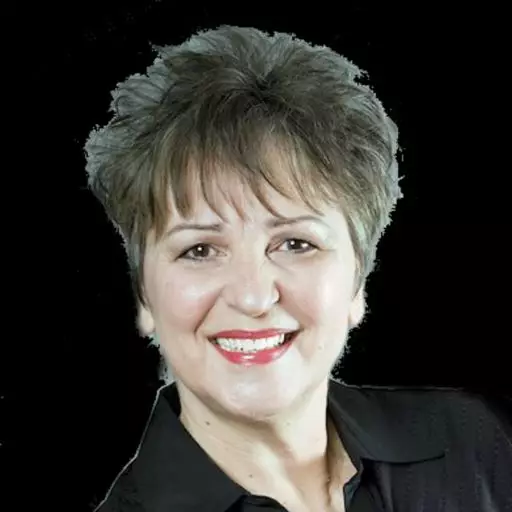
Sharon Hughes is the Founder and President of The Center for Changing Worldviews, and 15+ year Investigative Journalist and Talk Radio Host. Saying it like it is on the most critical issues of our day to conferences, on television, and on the radio interviewing well-known authors and film producers, public policy and pro-family experts, and government and religious leaders, Sharon's column has also been published in print media and on numerous online news sites.
In addition, Sharon is the Founder of Relationships Seminars, Co-Leader of Women In Christ, an outreach to women, and Bible Teacher. She has served in various capacities in her church, on community and state boards, and has been the recipient of several Leadership Awards. A wife, mother, and now grandmother, Sharon loves to cook and fly fish with her husband, Duane.
Contact Changing Worldviews with Sharon Hughes
Email: info@changingworldviews.com
Mailing Address
Changing Worldviews
P.O. Box 211
Chicago Park, CA 95712
Phone: 707-322-3632