
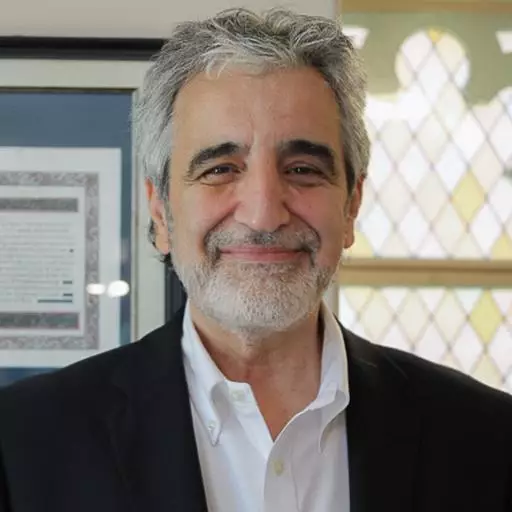
The Book of Revelation, Part 8


We are starting a new section of the Bible, a seasonable one, a book for today, the Book of Revelation. The word Revelation, apocalysis, means the unveiling, the uncovering of something that was hidden and now revealed, and while it is a word that is often associated with chaos or calamities, this is only a part of its scope, The rest of its content reveals to us some great and profound eternal truths unseen anywhere else in Scripture. It will supply great details for us concerning the eternal home of those who’ve trusted their lives to God and His Messiah. This then is what the Book of Revelation is really about; the uncovering of the facets of our God that is so powerful that it will energize us and make us whole and confident. Thank you for joining us in this study.
Guest (Male): Welcome to Shalom Ariel as we are studying the book of Revelation with Messianic leader Jacques Isaac Gabizon. To the church at Smyrna, God said, fear not any of those things which you shall suffer. We would be unwise to think that we will not suffer. Even to the most famous faithful rabbi Shaul, the apostle Paul, God said, I will show how great things he must suffer. Shall we fear suffering? Who wants to suffer? But we are consoled that God will never put us through more than we can handle. We read that from 1 Corinthians 10:13 which says, no temptation has overtaken you except such as is common to man.
But God is faithful who will not allow you to be tempted beyond what you are able, but with the temptation will also make the way of escape that you may be able to bear it. Consider this that if we are fearful and we run away, we might never face the challenge that would otherwise make us strong in our walk with the Lord. He has overcome the world. So in him we can stand in his victory, remembering that his grace is sufficient. Where lies our hope? We remember Hebrews 4:15 which says, for we do not have a high priest who is unable to empathize with our weaknesses, but we have one who has been tempted in every way just as we are, yet he did not sin.
Thank you, Lord, that you are there for each and every one of our trials and temptations, and you will find a way out for us. We simply need to as children trust and hope in you alone. Be blessed as you listen into today's teaching in the book of Revelation with Messianic leader Jacques Isaac Gabizon. Shalom Shalom.
Jacques Isaac Gabizon: Now before speaking to the congregations of God in the next verse 19, now Yeshua introduces the book of Revelation by giving us a table of contents so that we don't get lost and misinterpret the times and the seasons in this book. See what he says, verse 19. Write the things which you have seen and the things which are and the things which will take place after this. The verse speaks of three parts of time, past, present, future. The past, the things which you have seen, the present, the things which are, and the future, the things which will take place.
The things which you have seen, where are they? These are referring to this powerful and for the most part new revelation of the person of the Messiah that we have in chapter one. This is our anchor for the end times. He is the one who without doubt or defeat has complete authority over this world and is completely sovereign. Next, we come to the present, the things which are. This takes place during the time frame of the seven churches that we have in chapter two and three. This is the history where we're living today and the description are not confined to just the seven churches, but it is a reflection of the condition also of the world.
The things which will take place after this are the things of the future which will come to pass very soon. It is a future exposé of what the prophets of the Hebrew scriptures have begun to speaking about. Here we will be given all the necessary details of the end times. This is the period of time, they labeled as the day of the Lord or the seventh of the 490 weeks of years as described in the book of Daniel in chapter nine. The future period of time, the things which will take place really begins in chapter four in verse one right after the rapture which we see right in the verse verse verse.
This is where John is called. The voice comes and says to him, come up here and I will show you things which must take place after this. This is what will happen very soon when the same words will probably hear and up we go. And from there he gives us a description of the throne of God and with the believers sitting on the throne as we will see very soon. And it doesn't stop here. Beginning in chapter 19, we have the description of the return of Yeshua at his second coming on this earth to establish his kingdom.
Then in chapter 22 and 20 from 20 to 22 and I can't wait to get there. We have a further description of heaven. Do you know that it give us so many description of how heaven looks like? All these things are the things which will take place after this after this. So the things which you have seen are explained in chapter one. The things which are explained in chapter two and three and the things which will take place from chapter four to 22. It's not that complicated, is it? But again, it's not that simple. It's not that simple.
For while we are going to see that the past, present, and future are well defined here at some point in time and I want to tell you their defined borders of time become hazy and puzzling just like when we see it in a wheel. Take a wheel and write past, present, and future all at equal distance from each other and let the wheel roll. The faster it rolls, the less recognizable their position become. This is how we may best understand time perhaps in eternity. For instance, when John was told of the things which you have seen, although it is past for John, it is still future from our standpoint.
The son of man had not come yet. He has not appeared in the clouds yet. When we consider the things which are things which are describing the seven churches, though referring to the present tense or the present state of things, there is still an element of future prophecy in there. We will soon see how together the seven congregation describe the history of the church in the last 2,000 years including the time of Laodicea, which I believe will be the church of the tribulation, but we see being formed right in front of our eyes. And the things which will take place after this, while the tribulation is yet future, heaven is a present day reality.
The new Jerusalem is there right now and beyond the universe that we see. And it is there that the new Jerusalem where all true believers go after death. And so while the book contains some very difficult passages in many ways, we are being led like school students and even explained many symbols just like it is in the last verse. Look at the last verse of chapter one, verse 20. The mystery of the seven stars which you saw in my right hand and the seven golden lampstands, the seven stars are the angel or the messengers of the seven churches and the seven lampstands which you saw are the seven churches.
There Yeshua explained to us what the seven stars and the seven golden stand are and I'm glad he does, otherwise we'll go on and on to figure out what it is. The rest of the symbol in Revelations are either explained in the book itself or somewhere else in the Bible. If they're not explained, we're going to leave them there. Maybe they're there for the people in the tribulation. All these things then are mysteries revealed. Only the spirit of God can reveal these mysteries to us. And I want to ask you one question before we go on.
How come there are so many symbols in this book? There are a multitude of symbols in Revelation, the locusts, the scorpions, the lions, the leopard, the bear, the frogs. Okay? There are allusions to the botanical world, the trees and the grass, all references to astronomy as well, speaking of the sun, the moon, the stars, the heavens. How are we to understand all these things? Again, they're not secret codes. I want to tell you that only an elite group can decipher. These references can be understood within, like we said before, the framework of scriptures. The reader again is never left to guess, right?
But why do we have to work so hard to understand? That was the question, right? How come the Lord didn't make it simple for us to just read on? The symbols are like parables. They are there to protect or to confound. The simple reason of all these symbols may simply be to protect the book of Revelation. This is what I believe. The book of Revelation is open for anyone to read, but many read it for other reasons than to give glory to God. Many try to understand by natural means and put off the spirit's version.
That reminds me of the disciples' question to Yeshua when they ask him why and at a certain point in his the Gospel, why he spoke only in parables and to the answer he gave in Matthew 13:11 he says, because it has been given to you to know the mystery of the kingdom of heaven, but to them it has not been given. But who are the them? Those who refuse to repent and confess their inability to know the things of God apart from the spirit of God who searches and the thoughts of men. Just imagine that the book of Revelation was given to us with specific dates and very clear names of countries and men and very accurate geographical points of reference.
Some people would make havoc of the prophecies of God. Already there's so much in Revelation that one may ask if those prophets around are reading the same books. There's one verse or part of a verse which we should use as our shield as we go to go through this book. This is 1 Corinthians 4:6 which says, not to think beyond what is written, that none of you may be puffed up. So let's do that, right? And so it is my prayer that the Lord will guide us through these books so that we may increase in our love for God and also for our neighbors.
Love, if given in sincerity and truth, is not confused and should be most easily comprehended. So let's resume before we go forward. Chapter one, this is how Jesus is portrayed right from the outset for us. He's seen in the congregations of God. He's seen in the middle of the lampstand. He is not a visitor. He's the first and most important member of any local congregation or assembly. This is how we should look at his presence. All things should be done or decided based on how he would cast his own vote. What would Jesus do? Remember this bracelet they used to wear.
He is a priest. Verse 13, for he is now fulfilling his priestly office until we reach heaven. He's divine. There's no way to comprehend the person of the Messiah if we live his divinity on the site. He's not a mere teacher or religious authority. We are here given the same description of God that we have in the Hebrew scriptures and he is a judge, the judge. For all these terrible descriptions given in chapter two and three of Revelation are for the church, not for the nations. Later, however, we're going to see other judgments involved, but these are for us now.
And now we have enough time to open up chapter two for introduction to see what is and what lies ahead for us in the seven churches. Let us begin by looking at these seven churches from its practical aspect as well as from theological standpoint. There's one important fact by the way we're going to learn here. Theology, the study of God and faith cannot be separated from action and deeds. Theology and action work as a duo. False doctrines, false doctrines will erase all kinds of good actions and proper doctrines without the correct actions is all for nothing.
So we have a lot to learn from these seven churches. In the overall, by looking at these letters to us, we can discover some important question such as what does Jesus expect from us today? What disturbs him in the churches, in the congregation? What does he despise? What rewards has he prepared for those who follow him? This is important as well. And what action does he take for those who do not follow him? These two next chapters contains Yeshua last word for us. If your Bible has the words of Jesus in red, all the words in chapter two and three are in red and these words still speak today.
To begin, while each letter is addressed to a specific congregation, at the end of each of these letters Yeshua says, he who has an ear, let him hear what the spirit says to the churches. Now notice the word churches is in plural. Yeshua expected all the churches to read each other's letter. Yes, even those addressed to others, just as it is also addressed to us today. He who has an ear, how many ears do you have? Two, which makes our excuses not to follow even more difficult. And following the sevenfold commands, there's another very important.
We remember that his first appearance in Revelation, he's seen what? Walking among the congregations of God. And you know what he says to each one of them seven times? I know your works. I know your works. Again, this is repeated seven times, one for each of them demonstrating are thoroughly implicated in the workings of the congregation is Yeshua. To Ephesus, he says, I know your works, your labors, your patience. He noticed all that they were doing for there is no action done for the Lord that he forgets. To Smyrna, the persecuted church, he says, I know your works, tribulation, and poverty.
Even to those churches who really went up in the left field, he noticed the wheat in there, the workers among them and to Thyatira he says, I know your works, love, service, faith, and patience. To the godly congregation of Philadelphia which I believe were coming out of, he simply says, I know your works. There were many and he noticed them all. And the last church Laodicea, he says, I know your works that you are neither cold nor hot and I wish you are called nor hot. He even notices the evil works. Jesus knows all that what his subjects are doing.
The word for to know in Greek, oida, refers to complete full knowledge. Powerful is enough. He's seen walking in their midst. He's in the middle of them all. This is how the scriptures present Yeshua. This is how we ought to think of him as the one who has such an intimate knowledge of what we say, what we do, or even what we think. And this one last thing I want to bring to you today are the things which pleases him, pleases him. What are the things that he notices that brings joy in his heart? Okay, I'm just going to do one or two.
There are many more. Let's go back to the previous sevenfold saying, I know your what? Works, your deeds. What does the Yeshua says first? The works, the works, ergon in Greek, which is different word than the one before, right? Which are actions that come out of hard work. One lexicon speaks of works or deeds of war. This is how they used to call it like a soldiers coming back from a battle. Ergon, this is where we get our word ergonomics, which is the study of people's efficiency in the working environment. But why focus on our works?
Would you not have expected him to focus on our faith first? The fact is that one cannot separate action from faith. Didn't the spirit of the Messiah two times inspired James to say that faith without works is dead? And so Yeshua is looking at the works to evaluate your level of faith. Two gentlemens, this is a story where crossing a river in a little boat. They began to argue about faith and work. The man who was rowing, the one who was rowing them across the river was a believer in the Bible and on hearing their discussion, he turned to them and said, I believe I can solve your difficulty.
I hold in my hands two oars. This is the long pole with a broad blade that used to propelling or steering a boat. So he says, the one oar I can call faith and the other I'm going to call works. Now watch it, he says. I pull the oar of faith alone. You see, we can only go around and around. We cannot go forward. Now I pull the oar of works. Again, we move around and around. Now see, I pull them both together and where we going? Forward. And then he quoted James 2:26 and said, in my opinion, a faith without works is dead or works without faith will not suffice.
This is when the question that the seven churches which represents all churches in history need to ask themselves, what are your works? Individually, we need to ask ourselves, what are my works? What are your deeds, actions with the Lord? To say that one believes is good, but this is translated into ergonomics, into action. And I will close with that one other item that's so important to God. I should have put it first before the deeds, but I followed the chronology of the text and I wanted to leave it for the end like the exclamation mark of the end of the statement.
What is the foundation word? Love. Love. While Ephesus had all the right doctrines and all the proper labors, Jesus says to her, nevertheless, I have this against you that you have left your first love. It's not that they lacked love after they were believers, right? They surely had some measure of love, but they lacked what? The first love. First love. To those who are married, do you remember when you first met your spouse? How much she or he meant to you and how excited you were when you saw him or her again? That was the first love.
And there's no reason why it should not be this way now and all the time, really. Now, do you remember when you first met Yeshua and believed? For most of us, we are so excited about it that we wanted to break all the doors and tell the whole world. But after a while, in many many many of us, it died out. It should not be this way. This is what Jesus is telling us. Your first love, this is the love we first displayed when we believed in Yeshua. But he himself did not change. He is, you know, as excited as he was the first day when you believed, but we changed.
And so despite all these great blessings, they had lost their enthusiasm and passion for God and his word, perhaps the entanglement of the world reduced their field of vision. They blinded them from seeing heaven in a near distant future and so they lost their favor. Yet the believers in the city of Ephesus, I want to tell you in history they begin very well. You know when Paul preached there, listen what he wrote to them in Ephesians 1:15 16 he says, therefore, I also after I heard of your faith in the love of Jesus and your love for all the saints, do not cease to give thanks to you.
What happened to them? 30 years later, the next generation forgot about it completely. Losing our first love is losing touch with God. For God is what? Love. If we believe him, we ought to reflect him. And how do we reflect him? Through love and also through deeds. John says, he who does not love does not know God. For God is love. He goes far, but he's right. Our love for others, all others, is very much a gauge of the level of our knowledge to God. However, as we consider the rest of the letter, we conclude that love cannot be separated with deeds.
Let's not forget and I will tell you this next week as well. The church of Thyatira had some love. God says to them, Jesus says to them, he says, I know your works and your love, agape. Okay? Your service, your faith, they had works, they had love and everything, right? But their love was misplaced. Why? Because they had this woman Jezebel in them. When we have love, we have to measure it by the knowledge of God, by the doctrine of God. Otherwise, it'll be misplaced and we'll go to love even those who promote sin in our own congregations.
But true love from God should always be present. It is at the foundation of all other things. Let us remember the words of Paul. We'll close with this. 1 Corinthians 13 when he says, though I speak with tongues of men and of angels but have no love, I have become a sounding brass or a clinging symbol. And though I have the gift of prophecy and understand all mysteries and all knowledge and though I have all faith so that I could remove mountains, but if I have not love, I have what? I am nothing. And though I bestow all the goods to feed the poor and though I give my body to be burned but have not love, it profits me nothing.
Love is more than feelings. It's not always pleasant to begin to love. It is often difficult. We don't always have it in us, but this is what is required of us. And when we do, windows of heaven open up and blessings begin to pour. There are so many more things in these letters which are written for us so we can learn what Yeshua expects from us. And while the demands are often very high and while the rewards are far far outweigh the works, he's asking us to do these things, but let's just remember his spirit is with us to guide us into doing these things.
To close, I want to tell you that the haftarah of this Saturday, of the eighth day of Sukkot, the the portion in the synagogue, the portion that is read is 1 Kings 8. Okay? This is when Solomon actually brought the ark of the temple which he had finished building and there he dedicated the temple to God and he gave such a beautiful prayer. I will play only part of it. This is in 1 Kings chapter 8. You can read it later on if you want. Let's bow head in prayer. Lord God of Israel, there's no God in heaven above or on earth below like you who keep your covenants and mercy with your servants who walk before you with all their hearts.
Heavenly Father, regard the prayer of your servants and all their supplications. Oh Lord my God and listen to their cry and and the prayer with which they they they they bring to you before you today, especially in these times of turmoils. When they pray to you here in heaven, your dwelling place, and when you hear, forgive and bring them back to you that they may fear you all the days of their life. Blessed be the Lord God who has given rest to all who believe in his son according to all that he has promised. May the Lord who does not forsake those who earnestly seek his face, who provides a safe retreat for weary souls in trouble times, show us to be a stronghold for the oppressed, a stronghold in time of trouble.
May the one who sent his son with power to save from guilt and darkness and the grave whose ways are mercy mercy and truth. Now to all you from him who is and who was and who is to come from Yeshua Mashiach. The Lord bless you and keep you. The Lord makes his face shine upon you and be gracious to you. The Lord lift up his countenance upon you and give you peace. Yeshua Mashiach. Amen and amen.
Guest (Male): Shalom Ariel is a daily radio program emphasizing the Jewish perspective of scripture. God is not through dealing with Israel nor will he any of the promises he has made to her. Our teacher for this program, Jacques Isaac Gabizon, is a Messianic Jewish believer and Messianic leader at Beth Ariel congregation right here in Montreal. If you've been encouraged by the messages, we'd love to hear from you. Give us a call at 1 888 685 5902 or you may write us at info at Beth Ariel, b e t h a r i e l all one word dot c a.
You are also welcome to join us for our Saturday morning services. We are located at 6297 Monkland Boulevard, corner of Madison in NDG. The message is given in English, but we do offer simultaneous translation into French and Russian. Services begin at 11 a.m. We have Shabbat school for children of all ages up to and including teens. You may also download audio messages from our website at betha riel dot c a and enjoy other in-depth teaching from Jacques Isaac. If you would like to sign up for informative newsletters, log on to our website and add your name to our email list.
Shalom Ariel is a listener supported program. If you have it on your heart to donate, it will be a great blessing for the continuing ministry and outreach of Beth Ariel. Thank you and shalom shalom.
Guest (Female): The Lord is my light and my salvation. Why should I be afraid? The Lord is my light and my salvation. Why should I be afraid? Woah woah woah woah woah woah woah woah The Lord is my strength and my strong tower. Why should I be afraid? The Lord is my strength and my strong tower. Why should I be afraid? Woah woah woah woah woah woah woah woah woah He will hide me in his sanctuary in the day of war. And I will stand to see the victory for the battle is the Lord's. Woah woah woah woah woah woah woah
Featured Offer
Prophecies take up about ¼ of the Scriptures so we cannot simply ignore them. Knowing prophecy enables us to give a clear presentation to others of why things unfold the way they do in such areas as politics, morality, technology and global ecological changes. It also helps us to rightly place Israel in God’s prophetic plan.
Past Episodes
- The Armor of God
- The Believers in the End Times
- The Book of Daniel
- The Book of Deuteronomy
- The Book of Ephesians
- The Book of Esther - Purim
- The Book of Exodus
- The Book of Ezekiel
- The Book of Ezra
- The Book of Genesis
- The Book of Hebrews
- The Book of James
- The Book of Jeremiah
- The Book of Joel
- The Book of John
- The Book of Leviticus
- The Book of Numbers
- The Book of Philippians
- The Book of Revelation
- The Book of Romans
- The Book of Ruth
- The Book of Zechariah
- The Feast of Passover
- The Feast of Purim
- The Feast of Shavuot - Pentecost
- The Gospel of Mark
- The Gospel of Matthew
- The Letter to the Galatians
- The Messiah in Isaiah
- The Messiah in the Book of Isaiah
- The Messiah's Prayer
- The Nativity: The Unwrapped Gifts of God
- The Resurrection of the Messiah
- The Sermon on the Mount
- The Tabernacle

Video from Jacques Isaac Gabizon
Featured Offer
Prophecies take up about ¼ of the Scriptures so we cannot simply ignore them. Knowing prophecy enables us to give a clear presentation to others of why things unfold the way they do in such areas as politics, morality, technology and global ecological changes. It also helps us to rightly place Israel in God’s prophetic plan.
About Messianic Viewpoint
About Jacques Isaac Gabizon
Contact Messianic Viewpoint with Jacques Isaac Gabizon
info@bethariel.ca
http://www.bethariel.ca/
Beth Ariel Congregation
CP 46521 CSP Boul. St Jean
Pierrefonds, QC, H9H 5G9
Toll free (888)-685-5902