
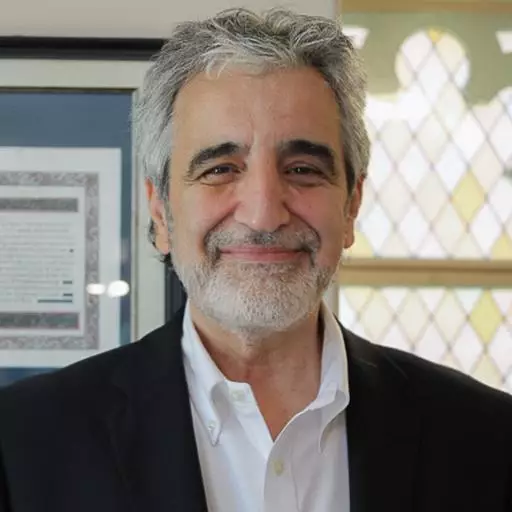
The Book of Revelation, Part 4


We are starting a new section of the Bible, a seasonable one, a book for today, the Book of Revelation. The word Revelation, apocalysis, means the unveiling, the uncovering of something that was hidden and now revealed, and while it is a word that is often associated with chaos or calamities, this is only a part of its scope, The rest of its content reveals to us some great and profound eternal truths unseen anywhere else in Scripture. It will supply great details for us concerning the eternal home of those who’ve trusted their lives to God and His Messiah. This then is what the Book of Revelation is really about; the uncovering of the facets of our God that is so powerful that it will energize us and make us whole and confident. Thank you for joining us in this study.
Guest (Male): Welcome to Shalom Ariel and to part two of this second sermon on the book of Revelation with Messianic leader Jacques Isaac Gabizon. We know that on that great and awesome day, Israel will mourn for the Messiah as one grieves for a firstborn. What is the significance of the firstborn? The firstborn were the ones who were consecrated to God for service. If our firstborn is lost, then how do we offer our best to the Lord? And so the Jews will mourn that firstborn son of God who they rejected, who they lost, because the firstborn was going to render them a service that no other could.
That firstborn was to take the penalty of our sin and do the greatest service by reconciling man to God. Actually, Israel was supposed to be the firstborn of nations, consecrated to God to serve and be priests unto God for all the nations of the world, but we failed to do this. And so the ultimate firstborn, our Messiah, came in our place and rendered unto his heavenly Father the greatest gift, a totally obedient, pure, and unblemished sacrifice. Today, because of what the firstborn has done, we have become priests and our greatest service to God would be to render unto him a total sacrifice of our lives.
Oh, glory to God the Father who gave his son to be among us, our Emmanuel, who was the firstborn from the dead, who tore the veil that separated us. Welcome to Shalom Ariel with Messianic leader Jacques Isaac Gabizon and Shalom Shalom.
Jacques Isaac Gabizon: Let us look at each one of them. It is too precious to just let it go. He is the faithful witness or the faithful martyr, right? For this is what the word witness means. This title brings us to the time when he performed his office of prophet, when he proclaimed the word of God and was killed like the prophets of the Old Testament whose lives often represented prophecies or events pertaining to the coming of the Messiah. We remember when Jewish tradition tells us that all the prophets were killed, but who killed them? Who? They were killed by the then religious and civil authorities.
Then we are told that he is the firstborn of the dead. For the Messiah Yeshua, son of David, resurrected and he's the firstborn of the dead, meaning that he rose never to die again. And being the first means that there are others who will follow the believers in Yeshua will also follow very soon. And verse five tells us that Yeshua washed us from our sins in his blood. You know, these last words must be related to the word firstborn. Firstborn. And together brings us right into the Exodus. It was the blood of the lamb who protected the Israelites from the death of their what?
Firstborn. And why specifically the death of the firstborn and no one else? Because God was to give his firstborn and Yeshua was to be the firstborn of the dead for the salvation of all who come to him. And the motive of the firstborn is one that runs through the Scriptures as if to prepare the reader to meet the Messiah. For instance, the firstborn of practically everything, everything was to be offered to God first. That was the law. Our children, our child, if you want, our first child, the product of the earth, of the trees, and of animals, the first of everything was first to be given to God.
Even the priesthood, which was to act as mediator between God and men, was considered God's firstborn. We read in Numbers 3:12 and 13, Now behold, I myself have taken the Levites from among the children of Israel instead of every firstborn who opens the womb among the children of Israel. Therefore, the Levites are mine. Because all the firstborn, God says, are mine. They he wanted the people to stay with the memory of his firstborn to come to die for everyone. This powerful teaching of the firstborn in the Torah brings us right to the passage of Revelation 1:5 and links the firstborn of the dead with the blood of the lamb.
But see again what the whole verse says. To him who loved us and washed us from the sins in his own blood. See what is the basis of God's election? Love, his love for us. This is spoken to the seven churches and to them he does not say to him who's in whom I saw some super things, right? He didn't. His washing came from pure love, not merit or any kind, so that the fabric of our cleanness would match his quality and type. The basis of our salvation is simply his love, and this is very much what God told Israel when he elected Israel.
Do you remember what Moses told Israel or God told Israel through Moses in Deuteronomy 7, The Lord did not set his love on you nor chose you because you were more in in number than any other people. You were the least of all people, but because the Lord loves you. That's all, right? It's all because he loves us. We should remember that, right? I want to share this illustration about God's love for us, which we don't always see and at times we wonder, you know, if he is present in our lives. The life of a believer was once compared to like the dial of a clock.
Think about it. The hands are God's hands passing over and over again, the short hands of discipline and the long hand of mercy. Slowly and surely, the hand of discipline must pass because we don't always walk in his will, and God speaks at each stroke. But over and over passes the hand of mercy, showing down a twelvefold blessing for each stroke of discipline and trial. But hands are fastened to one secure pivot, right? The great and changing heart of our God of love. God's love covers us always, even when we don't see it. Let's remember that as well.
And the third declaration of Yeshua's work is seen in the words, And the ruler of the kings of the earth. That is his office of king of kings, the one that will be fulfilled at his second coming we'll see later on, especially in chapter 19 we are told that when he comes back, he's the king of kings and Lord of lords, right? I can't wait not to get to chapter 19, but for him to come maybe before chapter 19. And so we have here God the Father, his spirit, and his son well defined for us.
I want to tell you, enjoy this clarity for soon we will not be able to differentiate them for they are in fact one and the same Let us move further into the text and see how this clear description of the divinity ends, verse six. He has made us to be kingdom, priests to his God and Father. To him be the glory and the dominion forever and ever. Amen. Some translation have he made us kings and priests. Is it king or kingdom? I prefer to read it as kingdom for now. Yes, we will sit on thrones as we will see in chapter seven.
And yes, we are co-heir with Yeshua as promised. It is also true that this word can be translated king or kingdom. However, we're not kings just yet, but priests. We are. We are. We cannot afford to sit on our seat of glory until we have run the race, fulfilled the our office of priest, and after we have died to ourselves, then we can inherit all that belongs to Yeshua and sit on thrones. Unfortunately, many are acting as kings instead of servants, right? Have you noticed? And are judging things according to how they feel, how they are saved that is served, and how they enjoy.
Let us remember that Yeshua came not to be served, but to serve. And the full assurance of eternal blessings are for the workers, the servants, the doulas, not kings, not now. Furthermore, when Yeshua, when Jesus said that we are the light of the world, the whole idea of priesthood is defined in these words. As Israel was to be the light of the Gentiles, of the nations now that they are their temporary veil over them, we are the ones who are priests and the light unto the nation, proclaiming his word is part of our service here on earth.
Now these words must have had a great impact, you know, great impact in the first century, okay? Because the concept of priesthood was very strong then. Many religious factions then understood Israel's function of a priestly nation and tried to fulfill it the best they could, but without Yeshua it turned out to be a fiasco for them. To the Pharisees who were actually very evangelists, Jesus said, Woe to you scribes and Pharisees, hypocrites, because you travel around on sea and land and make one what? A proselyte. And when he comes, becomes one, you make him twice as much a son of hell yourself.
Matthew 23:15. These again were evangelists because they thought they represented the nation, the priestly nation as it is even today. This strong yearning drives them to make proselytes and not true believers in God in the Bible, the God of the Bible. That is what angered Yeshua. By definition, a proselyte is to recruit someone to joins one's body, institution, or religion. That is the best they could do, by the way. As for the Essenes or the Herodians, another major group in the first century, all their theology, did you know, all their theology is based on the priesthood.
For they thought they were the priesthood of Israel. They were waiting for the Messiah to come with whom they thought they would rule the world. See how they described the Messiah in one of their writings. I want to share with you that we find in the Dead Sea Scroll. There we can see the strong desire of finding the Messiah, okay? Of whom they call him according to what Joel calls him, the teacher of righteousness. There they wrote and God told Habakkuk to write all that was going to happen to the last generation concerning the teacher of righteousness to whom God has made known because the mystery of God are wonderful.
The word mystery by the way is mentioned four times in Revelation as if John called upon them. And John answered desire of these people then, and perhaps many many read the description and saw the true Messiah of Israel who is Yeshua Messiah. For the believers today, this verse six puts the bar very very high for us. And the last words are really a doxology, a prayer to God. To him, and by the way that's Yeshua. To him be the glory and the dominion forever and ever. Amen. Okay? This one again is for Yeshua, the and God the Father perhaps together.
They are for the unity of the divinity. After this great revelation, I think we're ready to affront all the apocalyptic prophecies of the end, but it's not finished yet. God is very generous. Let's see verse seven, which further links for us this the Hebrew Scriptures, okay? And also the words of Yeshua. It says, Behold, he's coming with clouds and every eye will see him, even they who pierced him. And all the tribes of the earth will mourn because of him. Even so. Amen. This verse brings us from the prophecies of Daniel to Zechariah to even Genesis and to Yeshua himself.
Behold, he's coming with the clouds. He's taken from Daniel 7:13. I was watching in the night vision and behold, one like the son of man coming in the clouds of heaven. He came to the Ancient of Days and they brought him near before him. This was such a well-known popular passage at the time of John. You know, at his own trial, Yeshua quoted this passage concerning himself. And they all understood what he meant. And you know what happened? The high priest tore his clothes because he knew he was talking about the Messiah. And when we read, Every eye shall see him in Revelation 1:7, this brings us to Yeshua's prophecies in Matthew 24:30 which speaks of the end time.
And he says then, the sign of the son of man will appear in heaven and then all the tribes of the earth will mourn and they will see the son of man coming in the clouds of heaven with power and great glory. Everyone will see he's coming when he appears. And when we read even those who pierced him, this brings us to the famous famous prophecy of Zechariah 12:10 where it says that when he appears, they will look on me, God says, whom they have pierced. And they will mourn for him. You see the two are there, but one.
And when we read that all the tribes of the earth will mourn because of him, this includes the whole world. For the word tribe freely in this passage is the same word the rabbis who translated the Bible into Greek, the Septuagint, used to translate this passage about the Abrahamic covenant when it says through Abraham that all the families of the earth will be blessed. The word tribe is the same as the word families as the Septuagint translated in their Greek Bible. Here it is. It is a beginning of a fulfillment of Genesis 12:3, the blessing of seeing Yeshua and mourning for one sin and coming to a saving knowledge of God.
Now let's take a minute. Did you see how in just four verses we had to refer to the Hebrew Scriptures so many times? John spoke to the Jewish community and then to all believers who knew that all the words of God are inspired. See how Jewish this book is. You know, E. W. Bullinger, a Scottish commentator who who who was actually one Hertzl's good friend and with whom he took long walks to encourage him to lead to the Jewish people back to Israel in the late 1800. Had this to say in his commentary of Revelation.
Bullinger thought that Revelation was such a Jewish book. There he reminds us that among the books of the New Testament they are considered the most Jewish, that is Matthew and Hebrews. He says that Matthew contains 92 references to the Hebrew Scriptures. Hebrews 102, but he counted himself 285 references of the Hebrew Scriptures in Revelation. But he was not the only one who saw the Jewishness in Revelation and in the New Testament. You know, at this time of revival of the word of God that is by the late 1800, just before the Jews began to move into Israel, a Bible distributing ministry led by Salkinson and Ginsburg who were, by the way, Jewish believers themselves, translated the New Testament and had 750,000 of them distributed in Jewish community.
That was a feast by the way because it cost money at that time. And Bullinger emphasized the revelation in the book of Revelation as one of whom he thought was spoken only to Israel. Among these Jewish people were the pioneers who began to immigrate in the land of Israel. They were well equipped having the New Testament in their hands. These were the ones, the Jews and the Gentiles like Bullinger and other who heard the bad call that is the voice of God and caused a great revival. It is my prayer that today as we are coming close to the coming of of the Lord that many will hear the bad call, the voice again and cause a great revival among us.
Amen.
Guest (Male): Amen.
Jacques Isaac Gabizon: Now let me bring you back in the way the Lord describes himself here. This is the last verse of this section eight. See what it says. I am the Alpha and the Omega, the beginning of the end, says the Lord, who is and who was and who is to come, the Almighty. But who is speaking here? God the Father or the Messiah? It's hard to figure out. Yet a couple of verses later we read the same description in verse 11 which says, I am the Alpha and Omega, the first and the last. But here again we don't know for sure if it's God or the Messiah until you get to verse 17 and 18.
And there is clearly Yeshua who speaks and says, Do not be afraid. I am the first and the last. I am he who lives and was dead and behold, I am alive forevermore. Amen. And I have the keys of Hades and of death. Here we see how the triunity is really one unity. The description of the Alpha and Omega, the first and the last is as well known in the description of the Almighty God in the Hebrew Scriptures. Anyone reading these verses should not have any problems seeing the divinity of the Messiah. Let us look into the Alpha and the Omega and the first and the last expressions and how it spoke to the people then because they knew what John was speaking about.
First, the idea and exclusivity of God being the first and the last as well stated throughout the Bible and especially in Isaiah. Let me quote powerful verses from Isaiah where God says, I the Lord am the first and with me the last. I am he. Isaiah 41:4. I am the first and I am the last. Besides me there's no God. Isaiah 44:6. And listen to this one which seals the description. I even I am the Lord and besides me there's no savior. Isaiah 43:11. If the Lord Jehovah is the first and the last and if he says that there's no savior besides me, who do you say that Jesus is?
John resolves this mystery when he says that Yeshua is our savior because in Revelation 1:5 he says that he washed us from our sins in his own blood and that Yeshua is also the first and the last. He is divinity himself. This is who the Messiah is. This is who Yeshua is and this is not really new by the way that what John is saying. What John is doing is really summing up all the teaching about the nature of God in the Hebrew Scriptures. Let's conclude this study by looking further into this last verse for today.
There is a way where Jewish tradition links up verse eight in its entirety. The and the which is the equivalent of the Alpha and the Omega, being also the first and the last letter in the Hebrew alphabet, that is the Aleph and the Tav. These two letters, the Jewish people of the time linked them with God's eternity and with the words who is and who was and who is to come. They knew what John was talking about. In Jewish tradition, the Aleph and the Tav did spell the word truth, by the way, which was understood as a way of describing God at the beginning, in the middle, and in the end.
This is what they understood. Emet, the word for truth, the word Emet, truth, was understood as a way of designing God as beginning again, middle, and ends. This is how the Talmud described this word. The Aleph stands at the beginning of the alphabet and Mem stands in the middle and the Tav stands at the end. Both the word and of the alphabet to indicate I am the first and I am the last. They understood. They understood. By the way, when you read the Hebrew is from right to left. Okay? So you have the Aleph, the Tav.
And with the letter Mem in the center, okay? Which is the middle letter in the Hebrew alphabet, by the way, we have the word truth who is God himself. And there's something even deeper with the letter Tav. You see the one at the end? In ancient Hebrew, the letter Tav was made in the form of what? Do you remember? Of a T, of a cross. At the time of Ezekiel it was the mark of salvation before the destruction of the temple. God asked the angels, they said, Go through the midst of the city, through the midst of Jerusalem, put a what?
A T on the forehead of the men who sight and cry over all the abomination that are done within it. The shape of this mark may have been inspired from the matter into which the Jewish people applied the blood of the lamb at the Exodus. Remember the lintel and the side, the door posts? Okay? It may be the same mark with which the 144,000 will be sealed with. This is why we often speak of the Tav as the synonym of the cross. One more word. We have already seen it a couple of times, we did not pay attention.
It is the word mentioned in verse six and seven and it appears 10 times in Revelation. Do you know that the word actually is Amen? Amen. The word Emet, truth, comes from the word Amen, okay? Which means to confirm, to uphold, to believe. And from it comes the word Aman which means sure, permanent, true. And so is our Lord faithful. And Amen is also the name of God. Did you know that? The name of our savior in Revelation 3:14 he is the Amen, the faithful, the true witness because our Lord is the same today, yesterday, and forever.
He is the Amen in that he is the surest foundation we can rely on. Amen.
Guest (Male): Amen.
Jacques Isaac Gabizon: Again to sum up, I sum up many times I but this one is the last one. To sum up, today we have seen how John describes God the Father, the and the Messiah, all being of the same nature, both the God of the Messiah are the Alpha and the Omega, the first and the last showing that equality. How could they be one and the same? This is actually we can say that is as Paul said. And without controversy, without any doubt, great is the mystery of godliness. God was manifest in the flesh, justified in the spirit, seen by angels, preached among the Gentiles, believed in the world, received up in glory.
As Micah said, the Messiah who's going forth for eternity was born in Bethlehem. But this is a great mystery, how the divine became man. Again, there's a great deal about God that we cannot understand. It was John Wesley very appropriately said, Bring me a worm that can comprehend a man and then I will show you a man that can comprehend the triunity of God. There's a certain, by the way, arrogance behind rejecting the Trinity like the case of a worm who understands, who pretends to understand the mathematics of heaven. Let me read you how Josephus defended the Scriptures of Israel against Apion, okay?
Who argued against the Scriptures because Apion at the time, talking about 2,000 years, was a great antisemite and he's tried to put down the word of God. And I will close with this for sure. So his defense of God, Josephus said, and I quote, The first commandment is concerning God and affirms that God contains all things and is obeying every way perfect and happy, self-sufficient and supplying all other beings, the beginning, the middle, and the end of all things. He's manifest in his works and benefits and more conspicuous than any other being whatsoever. But as to his form and magnitude, he is the most obscure.
Amen. Josephus was not a believer, at least as far as we know. Yet he understood the complexity of God. Let us pray. Again, our Father, this morning our hearts have been so filled, filled with the time of worship, filled with the wonder of your word and we're so grateful. We thank you for this great treasure that we have in your Scriptures and we want to understand that it is your word to us and that it carries power and blessing in ways that no document ever written can. We pray now that you'll confirm in our hearts all these things.
Give us a great love for your truth and a love that will lead us to want to share your word with the unsaved. We pray, Lord, that for that zeal and that passion, that people of God, prophets like Jeremiah, Paul had to the unsaved. Teach us, Lord, to allow us to to to to let your spirit guide us to bear those fruits. And to the congregation, the Lord bless you and keep you. The Lord make his face shine upon you and be gracious to you. The Lord lift up his countenance upon you and give you peace.
Amen and Amen.
Guest (Male): Shalom Ariel is a daily radio program emphasizing the Jewish perspective of Scripture. God is not through dealing with Israel nor will he renege any of the promises he has made to her. Our teacher for this program, Jacques Isaac Gabizon, is a Messianic Jewish believer and Messianic leader at Beth Ariel congregation right here in Montreal. If you've been encouraged by the messages, we'd love to hear from you. Give us a call at 1 888 685 5902 or you may write us at info at Beth Ariel b e t h a r i e l all one word .ca.
You are also welcome to join us for our Saturday morning services. We are located at 6297 Monkland Boulevard, corner of Madison in NDG. The message is given in English, but we do offer simultaneous translation into French and Russian. Services begin at 11 a.m. We have Shabbat school for children of all ages up to and including teens. You may also download audio messages from our website at bethariel.ca and enjoy other in-depth teaching from Jacques Isaac. If you would like to sign up for informative newsletters, log on to our website and add your name to our email list.
Shalom Ariel is a listener supported program. If you have it on your heart to donate, it will be a great blessing for the continuing ministry and outreach of Beth Ariel. Thank you and Shalom Shalom.
Guest (Female): As for me and my house, we'll serve you, Lord, lifting holy hands and worship. No, we will not bow down to the gods of men. We will worship the God of Israel. You are holy, holy. There is no one else like you. You are holy, holy. There is no one else like you.
Featured Offer
Prophecies take up about ¼ of the Scriptures so we cannot simply ignore them. Knowing prophecy enables us to give a clear presentation to others of why things unfold the way they do in such areas as politics, morality, technology and global ecological changes. It also helps us to rightly place Israel in God’s prophetic plan.
Past Episodes
- The Armor of God
- The Believers in the End Times
- The Book of Daniel
- The Book of Deuteronomy
- The Book of Ephesians
- The Book of Esther - Purim
- The Book of Exodus
- The Book of Ezekiel
- The Book of Ezra
- The Book of Genesis
- The Book of Hebrews
- The Book of James
- The Book of Jeremiah
- The Book of Joel
- The Book of John
- The Book of Leviticus
- The Book of Numbers
- The Book of Philippians
- The Book of Revelation
- The Book of Romans
- The Book of Ruth
- The Book of Zechariah
- The Feast of Passover
- The Feast of Purim
- The Feast of Shavuot - Pentecost
- The Gospel of Mark
- The Gospel of Matthew
- The Letter to the Galatians
- The Messiah in Isaiah
- The Messiah in the Book of Isaiah
- The Messiah's Prayer
- The Nativity: The Unwrapped Gifts of God
- The Resurrection of the Messiah
- The Sermon on the Mount
- The Tabernacle

Video from Jacques Isaac Gabizon
Featured Offer
Prophecies take up about ¼ of the Scriptures so we cannot simply ignore them. Knowing prophecy enables us to give a clear presentation to others of why things unfold the way they do in such areas as politics, morality, technology and global ecological changes. It also helps us to rightly place Israel in God’s prophetic plan.
About Messianic Viewpoint
About Jacques Isaac Gabizon
Contact Messianic Viewpoint with Jacques Isaac Gabizon
info@bethariel.ca
http://www.bethariel.ca/
Beth Ariel Congregation
CP 46521 CSP Boul. St Jean
Pierrefonds, QC, H9H 5G9
Toll free (888)-685-5902