
The Gospel of Mark, Part 98


The Gospel of Mark, Part 98
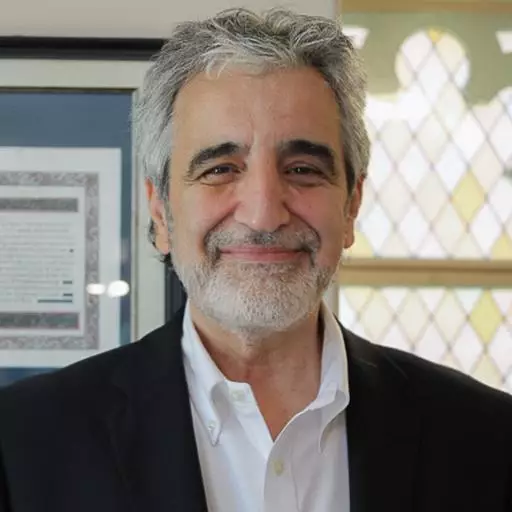
Messianic Leader J. Isaac Gabizon
https://www.bethariel.ca
https://bethariel.ca/donate/
Guest (Female): Shalom and welcome to Shalom Ariel and to this, our 98th message from the Gospel of Mark with Messianic leader Jacques Isaac Gabizon. In today's message of scripture in Mark chapter 15, we have three counterfeit attacks on Yeshua going on. First, we have the Sanhedrin counterfeiting the role of priest, pretending to assume religious authority when the one who is Lord of the Sabbath himself, the true High Priest, stands before them. Who is the counterfeit?
Then you have Pilate, the political leader, King of Swords, who dares to condemn Yeshua and has the banner, "King of the Jews," placed on his tav. Between Pilate and Jesus, who is the true king? It is the one who has the angelic army and who can disseminate any enemy with one quick command, for the Lord of Hosts is commander of his army. Who then truly rules, and who then is the counterfeit?
Then we have Barabbas, the third imitator. He not only steals Jesus's name and title, Son of the Father, because that's what Barabbas means in Aramaic, but he, Barabbas, will represent what counterfeit freedom is. Barabbas thinks he is set free from going to the tav and given a new lease on life, but only the true son of the Heavenly Father can provide true and not counterfeit new life.
Only the true King, Priest, and Prophet could stand on our behalf on that Passover some 2,000 years ago. Only divinity can take on the crimes of humanity and wash our conscience clean. Only he could withstand the anguish, the scourging, the mocking, and stay silent and in full control. For our sake, for love's sake, he did it, and we will worship no other and we will accept no counterfeit. His sacrifice was so very, very precious. Be blessed as you listen into today's program, and shalom.
Jacques Isaac Gabizon: Let's go directly to bless the Word of God together. You can say it with me in English. Blessed are you, O Lord our God, King of the universe, who has given us the word of truth and has planted everlasting life in our midst. Blessed are you, O Lord, who gives the scriptures.
The question we ask today is, what is the story of the death and resurrection of the Messiah? How did it all happen? Under which conditions? This is what we're about to look into today. So many prophecies were then fulfilled from the Nevi’im and the Ketuvim, that is from the prophets and the writings, and in particular from the Book of Psalms. You know, we see David giving such precise prophecies about Yeshua as if he was also carrying the tav himself.
The events concerning the death and resurrection of the Messiah are found in the last two chapters of Mark and they speak a great deal about Yeshua, the Jewish Messiah. Let us open our Bible to the Book of Mark chapter 15. You can also follow through the screen as the passages are going to be listed. Let us begin with Mark chapter 15 verse one.
Early in the morning, the chief priests and the elders and scribes and the whole Sanhedrin immediately held a consultation, and binding Yeshua, they led him away and delivered him to Pilate. Here we are brought at the end of the third part of the religious trial of the Messiah. After being tried and condemned at the home of both the high priests Annas and Caiaphas, Yeshua is brought to the Sanhedrin, Israel's Supreme Court, which immediately held a consultation and condemned Yeshua to death.
The Sanhedrin was situated on the side of the temple. It was composed of 70 men plus one, the High Priest, and while not all of them were present this morning, they actually condemned Yeshua to death. Who was missing? Nicodemus and Joseph of Arimathea, two members of the Sanhedrin who became believers. They were not there because they wouldn't have voted for the death of the Messiah.
The judgment was done very fast without a witness and the sentence of death was rendered even if their laws demanded that such a sentence could not be done on the same day. But we have previously seen how in less than 12 hours they had transgressed at least 27 of their own laws in order to condemn Yeshua, for he is innocent. He is the unleavened lamb of God.
This is when they bound him, as one bounds somebody with chains, and they sent him to Pontius Pilate. What it was not going to be easy, for the Roman law required witnesses and the only one they had, Judas Iscariot, had by now committed suicide. Pilate could not legally proceed to a judgment, but by this time, the law had no power anymore, for everyone was corrupt.
If one puts together from the four Gospels the account of the trial, one will clearly see that it was such a mess. It is even sadly comical to see how much they wanted the Messiah to be killed, but they themselves could not get along, how to do it and when to do it. In the background, one could also feel such relentlessness to have Yeshua die even before the tav, that is the cross, so to make his death void really.
At this point, it is important, for at the end, if it was not by divine providence, Yeshua would not have died at the proper time and at the proper place so to save us. One can see and feel the hand of God behind all these events in these two last chapters of Mark. All of this for our salvation.
Mark shortens the account here with Pilate and limits it to two of his questions. The first question that Pilate asks Yeshua is found in verse two. Are you the King of the Jews, he asked Jesus. Pilate was mainly interested in finding out if Yeshua was a rebel against the Roman authorities, as there were many uprisings at that time.
To this question, Jesus answered, it is as you say, meaning yes, I am the King of the Jews. We know from other Gospels that he explained that his kingdom is not from this earth, but it is from above and not to worry about an armed rebellion, something which satisfied Pilate. For he had no report of disturbances, for he had not even known who Yeshua was.
Let's take a minute because there's a lot we can learn from this short encounter. How come Pilate did not know who Yeshua was? Yet there were thousands of people who followed him for a period of three years. Remember the 5,000? Remember the 4,000 Jesus fed? Remember how the people of Jerusalem ushered Yeshua into Jerusalem just four days before this encounter?
And there they spoke of him as the savior of Israel. How come the centurions selected to follow Yeshua on this journey did not react or reported such big gatherings of people to their superior, Pilate? It was their job to make sure that any gathering of people would not turn into a riot or rebellion. The only reason we can figure out from this account is that they became believers themselves.
See, if you follow Yeshua and pay attention to his word and his acts of love, even the most hardened soldier will melt in front of this glory. Centurions were at the head of a hundred soldiers and they play a big role in the Brit Hadashah, that is in the New Testament. You know they're mentioned at least 23 times.
The first one was at Capernaum if you remember, when one of them implored Yeshua to heal his servant. This one had so much faith that he even told Jesus, you don't have to come to my home. Just say a word and he's going to be saved. How did he get this faith? One of the last centurions is found in verse 39 in chapter 15 of Mark, who gives us a conclusion of the crucifixion and says, truly, this man was the Son of God.
We'll come back to him very soon. This one must have been so touched and affected by Yeshua's love emanating even in suffering from the tav, for we will see that even in great suffering, Jesus's thoughts were always for the others. He cared for the salvation of a criminal who was crucified next to him and led him into eternal life.
He cared for his mother. He asked John, take care of my mom. He cared for each one of us on his tav. It must have shown in order to bring this centurion, who must have seen countless of crucifixions, to see him and to recognize who he was. And Yeshua's only words to Pilate here in Mark, when he told him that yes, he is the King of the Jews, for he is King of the Jews, I want to tell you, in all the senses of this title.
First, did you know that he was and is the last verifiable King of the Jews? Today many people pretend to be descendants of David, but no one can prove it. Jesus can. See the genealogies of Matthew and Luke. They retrace his ancestry up to Abraham and Adam, and one can validate this list by going through the many genealogies in the Tanakh, but you know the genealogies in the Bible are given for this purpose, so that we know who the Messiah is, even today, after 2,000 years.
And besides the Talmud itself, the book of the Sanhedrin in the Talmud chapter six, confirms that Yeshua is from the royal line of David. Yeshua then is the King of the Jews, and it is this very title that takes so much prominence in this chapter 15 of Mark. It is repeated five times. It is the cause of much mockery against the Messiah.
The Roman soldiers and the passersby scorn him because he said he is the King of the Jews, and it turned out to be the reason for his execution. We read in verse 26, by the way, that the inscription of the charge against him is the King of the Jews. Was it a crime to be a King of the Jews?
This is a title which brought so much contempt and scoffing, as if the forces of evil wanted to remove him from his position. But he is the King of the Jews, and not only that, he is the King of Kings and Lord of Lords. We know that. And again, if he accepted all this mockery and suffering and death, it was for our sake. We need to know that.
After this, Pilate asked him another question, but Yeshua did not answer anymore. And this is when something happens with Pilate. It says at the end of verse five, so Pilate was amazed. This speaks of one who marvels, who is in admiration, who is even afraid. But why was such a powerful leader in amazement?
Did he expect to see Jesus begging for his life? Crucifixion is considered the worst and most cruel way to die and Yeshua could produce enough argument to escape his death, but he did not. This also we need to know. And furthermore, by this time, Pilate's wife came running to him to tell him about a dream. She had something she dreamed about Jesus.
See what she says in Matthew 27:19. Have nothing to do with what, you see how she names him, this righteous man. And just before his wife, even Herod had an encounter with Yeshua and found him not guilty as well. This you'll find in Luke chapter 23. That must have added to Pilate's surprise, apprehension, and even fear. One cannot just condemn the Son of God and just feel free.
But don't feel bad about Pilate, for he is directly responsible for the death of the Messiah. For he could have got away from this situation. He had enough facts, enough signs, but he was too corrupt. I want to bring back a passage from Acts 4:27 to 28. Remember this famous passage who lists those responsible for the death of the Messiah?
It says, for truly, in this city they were gathered together against your holy servant Jesus, whom you anointed, both Herod and Pontius Pilate, along with the Gentiles and the people of Israel, to do whatever your hand and your purpose predestined to occur. See Pilate's name is particularly singled out as responsible for the death of the Messiah.
But so, I want to tell you, all our names are in there in this passage. If you are a Gentile, your name is there too, for you are responsible for his death. If you are a Jew, your name is there too, for you are responsible for his death. Like Isaiah said, all of us, like sheep, have gone astray. Each of us have turned our own way.
However, Isaiah also adds, but the Lord has caused the iniquity of us all to fall on him, so that we may have eternal life. Now following the account, there is something of an unusual story about a new individual named Barabbas. You know, every year at Passover, Pilate will free a prisoner who the people will choose.
Pilate gave them a choice between Yeshua or Barabbas, and unfortunately, they chose, of course, Barabbas. Now, this is not the same Barabbas as the movie with Anthony Quinn, if you saw it. It was actually a great movie because at the end, this Barabbas meets Peter and becomes a believer. I wish that was true.
But the biblical text says nothing of this sort, but it does give the story of Barabbas a lot of room from verse 6 to 15, and there must be a reason behind it, especially that in the text, there's a definite article in front of the name. It is "the Barabbas" and he's mentioned in the four Gospels. Who then is Barabbas?
He's so much closer to each of us that we might think. Notice one thing. He has the same name as Yeshua. Barabbas in Aramaic means son. Bar, son. Abba, father. So he is the son of the father, as Yeshua is the son of his father, the son of God. Furthermore, we are told by Origen, the second-century theologian, that Barabbas's first name was Jesus.
So in the ears of the first-century person, his name was Jesus, the Son of the Father, the same name as our Yeshua. Here's another Jesus and another father who is favored instead of the real one. But the people did not know. They were misled by their own teachers, the priests, who, according to verse 11, were stirring up the crowd to ask Pilate to release Barabbas.
The problem is that they have not stopped doing this. How many from among the Jews today know the Messiah of Israel in the way he's depicted in the scriptures? And who today knows the Jesus of the New Testament as the Word of God truly reveals him? Remember what scripture says in 2 Corinthians chapter 11. There are many Jesuses, there are many Gospels, many spirits, many Barabbases having the same name as the King of the Jews.
But the true antitype of Barabbas is still to come. The presence of this individual has also a long-range prophetic aspect. He is a type, actually, of the Antichrist, whom the world will choose and who is to come very soon on earth. Remember what Yeshua said in John 5:43. I have come in my father's name and you do not receive me. If another comes in my name, you will receive him. They did already.
The final Barabbas, the Antichrist, is the other to come in the world scene and already the people are asked to make a choice. Who then do you choose? Yeshua or Barabbas? Let us move on to what perhaps is the most poignant and moving part of the life of the Messiah, that is, how he suffered for us.
The account of Barabbas ends in verse 15 with these words: wishing to satisfy the crowd, Pilate releases Barabbas from them, and after having Jesus scourged and handed over to be crucified. Notice the two words, "scourged" and "crucified." This is when we come to begin to consider how much Yeshua suffered for us.
These two words, "scourged" and "crucified," brought such an image of cruel and inhuman suffering that some complain that there is not much mention of them, of these two words, in history. And it is surely because historians must have avoided speaking about such barbaric suffering and death. But a few gave us some information.
At the scourging, called flagella in the Greek, the man was stripped and bent over with his hand tied to a pole and beaten with a whip of nine leather straps. The whip had thongs knotted at regular intervals, attached with sharp objects like pieces of iron or bone. The whip was administered to the whole body until the skin hung in bloody strips and his bones laid bare.
After the scourging, the man was unrecognizable, but this is what Yeshua went through for us. There we can understand the prophecy of Isaiah chapter 53 verse five, that when it says he was crushed for our iniquities, and he adds, the chastening of our well-being fell upon him, and by his scourging, we are healed. It was all for us. This I want to tell you we need to know.
By this time, the person was in so much pain that they often died of this abuse, but Yeshua held strong for he had to die on the tav. As prophesied, however, he was so weak that we learn in verse 21 that they called an individual, Simon of Cyrene, to carry the tav for him. You know that Simon and his sons became believers as well.
As for the crucifixion, it was a horrible way to die. The crucifixion was described by those who witnessed it as the worst extremes of the tortures inflicted upon men. This is what Cicero, a Roman philosopher from the first century BC, described it. They used a 35-centimeter or 14-inch spike to nail the Messiah on the cross through his hands and his feet, and then the body was raised. At this point, every movement became so painful.
But this was only the beginning, for the most excruciating of it all, when during three hours of darkness, he took all the sins of the world unto himself. This I want to tell you we cannot understand. We cannot even fathom the extreme pain of the holy one receiving all the evil of the world unto himself. We need to ponder upon these things.
All of these things are given to us beginning in verse 16 and with such a concentration of prophecies, as if each moment seems to have been predicted. What is the reason, by the way, of these many prophecies we are going to encounter? It's that they're like a bump in the road for the people to stop and realize the great evil that was done and the great salvation which followed in Yeshua.
Let us look at this rich text. It all begins when the Roman soldiers started their mockery and verse 16 indicates that the whole Roman cohort took part. That's a lot of people by the way. You're talking about 600 people. But this may be an indication that it must have lasted a long time for all in turn to be present in a small courtyard of the Praetorium.
They dressed Yeshua in purple, the color of the king's garment. Then they addressed him as "Hail, King of the Jews." They began to beat him and spit on him, kneeling and bowing before him. But little did they realize that they were actually the subject of a prophecy that was given 700 years before.
Isaiah predicted this moment when he reported the words of the Messiah in Isaiah 50 verse six: I did not hide my face from insult and spitting. He did it for our sake. And at about the same time, Micah, speaking of nations laying siege to Jerusalem, as it was with the Romans, came to Jerusalem. He said, they have laid siege against us. With a rod, they will smite the judge of Israel on the cheek. And they did. He is the king and the judge of Israel.
Now notice what the Romans did. We learn from verse 17 that they made a crown of thorns and put it on Yeshua, and then we learn that they took a reed, a mock scepter, and beat him on the head. What happens then? The thorns must have pierced the skin and his face must have been all bloodied. We need to know that.
Isaiah spoke about this moment when he said in Isaiah 52:14: so his visage was marred more than any man, and his form more than the sons of men. This is what it took, the Messiah, to die for us. And the crown of thorns has its weight of significance. Do you remember what happened when Adam and Eve sinned in Genesis 3?
The ground was cursed and the Lord told them, both thorns and thistles it shall grow for you, and you shall eat the plants of the field by the sweat of your face. You shall eat bread. But this I want to tell you was the curse that Yeshua took upon himself. The Hebrew words, thorns and thistles, both refer to large and small thorns.
Yeshua, who is called the last Adam in 1 Corinthians 15, was here in Mark beginning his task to free the first and all the Adams in between and give them salvation if they desire it. After this mistreatment, we learn in verse 22 that they brought him to the place of Golgotha, which is translated the place of a skull. The word Golgotha is from the Aramaic Gulgalta or the Hebrew Gulgoleth for the word skull.
But where is Golgotha? No one really knows. But we know a few things. Now bear with me a little, there's something great in there. First, it was outside the walls of Jerusalem, for any execution was done outside the city to keep the sanctity of Jerusalem as prescribed by the law in Leviticus especially. Second, John tells us that it was near a garden or near a tomb, perhaps a cemetery.
Third, it was also on a busy road for the cross was clearly visible for there were many passersby and crucifixion was done so that they may be seen and be warned. Some believe that it could have been on the Mount of Olives, which was also a cemetery since the time of David. And if it was, could it have been at the same place where they offer the red heifer on the Mount of Olives?
From this vantage point, many passersby on the lower Jericho road could have seen the crucifixion. But why the red heifer? Among the sacrifices, the red heifer so well depicts the Messiah, the sacrifice of the Messiah. The ashes of the red heifer mixed with water were necessary for the functioning of the temple.
This is why today they are still looking for the perfect red heifer for the soon building of the third temple in Jerusalem. And up to this day, this red heifer is a paradox in Judaism, but can only be explained by the death and resurrection of Yeshua. The oddity with the red heifer is that the one who received the water of the purification was cleansed, but the one who applied it was unclean.
The question Rashi, Abarbanel, and many other rabbis asked, how can a clean thing come out of an unclean? They could not resolve this dichotomy. Who is this person who purifies while carrying evil in him? Look unto Yeshua and you will understand. He became sin for us so that we might be saved. Look at 2 Corinthians 5:21, the answer is there.
For he made him who knew no sin to be sin for us, that we might become the righteousness of God in him. There the red heifer fulfilled, who was crucified at Golgotha. You did not look for another. The truth is that Yeshua was sinless and he carried sin, our sin, everyone's sin, so we can have salvation.
Guest (Male): Shalom Ariel is a daily radio program emphasizing the Jewish perspective of scripture. God is not through dealing with Israel, nor will he renege any of the promises he has made to her. Our teacher for this program, Jacques Isaac Gabizon, is a Messianic Jewish believer and Messianic leader at Beth Ariel congregation right here in Montreal.
If you've been encouraged by the messages, we'd love to hear from you. Give us a call at 1-888-685-5902 or you may write us at info@bethariel.ca. B-E-T-H-A-R-I-E-L all one word dot CA. You are also welcome to join us for our Saturday morning services. We are located at 6297 Monkland Boulevard, corner of Madison in NDG.
The message is given in English, but we do offer a simultaneous translation into French and Russian. Services begin at 11:00 AM. We have Shabbat school for children of all ages up to and including teens. You may also download audio messages from our website at bethariel.ca and enjoy other in-depth teaching from Jacques Isaac.
If you would like to sign up for informative newsletters, log on to our website and add your name to our email list. Shalom Ariel is a listener-supported program. If you have it on your heart to donate, it will be a great blessing for the continued ministry and outreach of Beth Ariel. Thank you and shalom, shalom.
Featured Offer
Prophecies take up about ¼ of the Scriptures so we cannot simply ignore them. Knowing prophecy enables us to give a clear presentation to others of why things unfold the way they do in such areas as politics, morality, technology and global ecological changes. It also helps us to rightly place Israel in God’s prophetic plan.
Past Episodes
- The Armor of God
- The Believers in the End Times
- The Book of Daniel
- The Book of Deuteronomy
- The Book of Ephesians
- The Book of Esther - Purim
- The Book of Exodus
- The Book of Ezekiel
- The Book of Ezra
- The Book of Genesis
- The Book of Hebrews
- The Book of James
- The Book of Jeremiah
- The Book of Joel
- The Book of John
- The Book of Leviticus
- The Book of Numbers
- The Book of Philippians
- The Book of Revelation
- The Book of Romans
- The Book of Ruth
- The Book of Zechariah
- The Feast of Passover
- The Feast of Purim
- The Feast of Shavuot - Pentecost
- The Gospel of Mark
- The Gospel of Matthew
- The Letter to the Galatians
- The Messiah in Isaiah
- The Messiah in the Book of Isaiah
- The Messiah's Prayer
- The Nativity: The Unwrapped Gifts of God
- The Resurrection of the Messiah
- The Sermon on the Mount
- The Tabernacle

Video from Jacques Isaac Gabizon
Featured Offer
Prophecies take up about ¼ of the Scriptures so we cannot simply ignore them. Knowing prophecy enables us to give a clear presentation to others of why things unfold the way they do in such areas as politics, morality, technology and global ecological changes. It also helps us to rightly place Israel in God’s prophetic plan.
About Messianic Viewpoint
About Jacques Isaac Gabizon
Contact Messianic Viewpoint with Jacques Isaac Gabizon
info@bethariel.ca
http://www.bethariel.ca/
Beth Ariel Congregation
CP 46521 CSP Boul. St Jean
Pierrefonds, QC, H9H 5G9
Toll free (888)-685-5902