
The Gospel of Mark, Part 97


The Gospel of Mark, Part 97
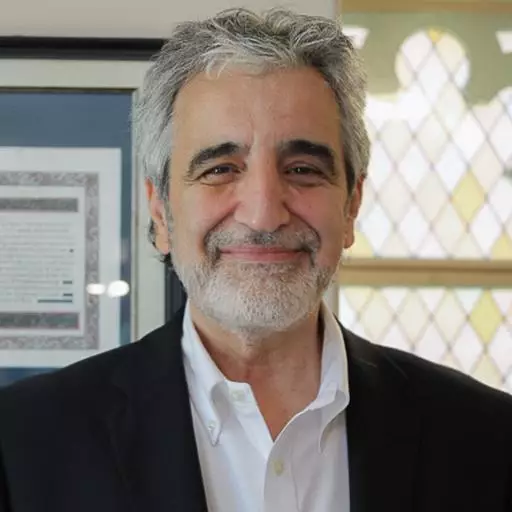
Messianic Leader J. Isaac Gabizon
https://www.bethariel.ca
https://bethariel.ca/donate/
Guest (Male): Shalom and welcome to Shalom Ariel and to this our 97th sermon from the Gospel of Mark with Messianic leader Jacques Isaac Gabizon. This section of the Gospel of Mark gives us a beautiful example of what true remorse is, something that Peter experienced after three times having denied knowing Yeshua.
How far does true remorse need to go to prove itself that it really is true? We know that reasoning our failures out in our mind is not enough. That's not true remorse. And we can also experience true heartfelt remorse that touches our emotions in a very deep way with plenty of tears and anguish that comes with it, but that might not still be enough.
How is true remorse really experienced? When we make a willful choice not to sin again, we exercise true godly sorrow. We exercise more than just regret. We exercise repentance. Peter wept regrettably for his denial of Yeshua, but it is the direction and the decision that he took afterwards along the banks of the Galilee that fully demonstrated his repentance.
Three times he agreed to take on the role of leadership, to actively protect the lambs, to care for the sheep of God, and to feed them. True remorse is played out in how Peter chose to actively serve God, not allowing his leadership role to flounder. Our true and godly remorse is seen in how we do not return to the sin, but we move forward along the Galilean shore attesting to our faith, walking close with the Lord.
Do you feel regret from some past sin just because you know it's wrong? That's a start, but guilt alone is not enough unless there is a change of heart. And that change of heart will lead to a new-found freedom, and that is what life in the Messiah is all about. Be blessed as you listen into today's program and Shalom.
Jacques Isaac Gabizon: Now, let's follow Mark. What comes next in Mark seems to be so unrelated, but there is something I want to tell you really great for us. Here we are faced with a fairly long interruption about the whereabouts of Peter. Why mingle such an important account of the trial of the death and the Messiah with what Peter was doing?
The point is that both are very important, especially that in the next story, we will see the power of forgiveness and the power of the Agape love in action under one situation many would have thought unforgivable because Peter denied the Lord three times. See the great contrast between evil and good here.
The next account is like a pause perhaps to tell us all that despite the attempt to hurt Yeshua, there's no limit to the effect of his work. There's no sin that he cannot forgive. The unforgivable sin is for those who refuse this forgiveness. And this forgiveness we're about to contemplate is for a man who was to be the head of the body of the Messiah.
However, he fell and rose again. And that he fell tells us that we too can find remissions of our sins and be cleansed forever, and we can rise over and over. This is the account of Peter's three denials. Jesus previously warned Peter and prophesied. He said, "Truly, I say to you that this very night, before a rooster crows twice, you yourself will deny me three times."
To this message, Peter responded, "Even if I have to die with you, I will not deny you." However, while Peter really meant well and was surely ready to die for the Messiah, he didn't have the strength to fulfill the second part of his promise. And so it happened just as Yeshua predicted. Peter denied him three times, but Yeshua saved him out of it for he knew Peter's heart and he had many projects for him.
Now, how could Peter fall so low? Have you ever asked yourself that question? At the end, this account asks more questions than it answers, perhaps to have us ponder on this situation. First, just this prophecy of Yeshua should have been enough to prevent Peter from following him and then entering the high priest courtyard. But he did not heed the word of God. That was the first mistake.
Second, what is strange is that once Peter got into the courtyard, he could have come out at any time, but he didn't. He could have come out after the first denial. He could have come out after the second denial. After all, the rooster crowed after the first denial as if to tell him to get out, but he did not. Why then did he stay every time?
And besides these things, there were many people around who recognized him, but he stayed around them. He was recognized first at the door. There was a servant girl, Matthew 14:67, and a second time, verse 69. And then in verse 70, a bystander. We learn from John 18:17 that another servant and officer recognized him.
And Luke 22:58 tells us that another man, another, did, and yet another man recognized him in the same verse. It was gradual. You know that he went from one person recognition to a full public recognition. This is when he denied the third time. And here we can see another miracle, by the way. Yeshua saved his life many times, it seems. If everyone who recognized him came to arrest him, he would have been arrested and wouldn't have heard of Peter at all.
But he saved Peter after every recognition. This is the second time Jesus saved him, once in the Garden of Gethsemane when Peter waved his sword, and second and perhaps many times again in the high priest courtyard. And what about the rooster's crow? That this is interesting. Why a rooster? The rooster begins to crow to announce the rising of the sun.
As the Talmud says, the beginning of a new day. And the sound of a rooster crow is very loud, actually, if you're next to it. They say that the sound is about 142 decibels. To realize how loud it is, a chainsaw produces something like 120 decibels, so it's blaring like it's very loud. However, the sound of the rooster must have been very far away.
Why? Because we learn from the Talmud again that roosters and fowls were not allowed to be reared in the city of Jerusalem on account of Leviticus defilement. But we learn of another sound that followed the crow of the rooster, a very loud one, that is the sound of the Shofar. We learn this time from the Jerusalem Talmud that when the rooster crowed, they sounded a sustained and quavering and a sustained note of the Shofar.
The Shofar then was sounded right after the rooster's crow, and this was to announce the opening of the gates of the temple. Both these sounds were as if the temple opened up to usher the Messiah in for him to be the last sacrifice. For very soon after, at the sacrifice of the first lamb, Yeshua was crucified, that is at the third hour, 9:00 AM.
So the rooster's crow sounded to announce of a rising sun of a day the Messiah who was to be crucified. And there's something else, by the way, that the Talmud required the people to do when they heard the sound of the rooster: to pronounce a blessing, a benediction. This is what it says: "Praise be Thou, O Lord, our God, of the world, that gives understanding to the rooster to distinguish between day and night."
And this prayer is taken from Job 38:36, which says, "Who has put wisdom in the innermost being or given understanding to the mind?" The word mind is the word "sechvi" from the word "suk," meaning to see. And so the rooster is chosen as the one who foresees the day. This must have been their first prayer, by the way.
Now, that speaks volumes, for the rooster saw further than Peter and so much further than the priest who were actually condemning the Messiah. And so like Balaam's donkey who stood as a witness against Balaam, so this rooster who rose as an onlooker to the false condemnation against Yeshua. As for Peter, he actually repented, deeply repented.
This is really poignant rendering in the way he felt the remorse of his denial. This we see in Luke chapter 22, verses 60 to 61. See what happened. "And immediately, while he, Peter, was still speaking, a rooster crowed. The Lord turned and looked at Peter. And Peter remembered the word of the Lord, how he had told him, 'Before a rooster crows today, you will deny me three times.'"
So just as the rooster crowed the second time, they were taking Jesus from the home of Annas to Caiaphas, and there he looked at Peter. No, it wasn't a look which kills. It was a look which heals. He was not angry at Peter, but he cared so much for him that it seems that this moment must have lasted an hour, for the word look is one that looks intently, and in this case, with forgiving eyes.
And from here, Mark takes over and ends the verse by saying, "And he, Peter, began to weep." Mark 14:72. Now, I want to tell you, the word began really means to throw over or to lay one's hand over, as Yeshua did his healing. The word actually "epiballo" in the Greek from the word "epi" means on or upon and "ballo" means to throw, to propel.
In this case, Peter must have thrown himself somewhere with perhaps his hands over his face. Only here out of the 72 mention of this word, it is here translated "began," which has nothing to do really with the context. And one more thing about the account of Peter. There's one thing that is recurring: that he was cold and that he went to a fire somewhere in the courtyard to warm himself.
However, this is where and how many people recognized him. This we gather from Luke 22:56 where we read, "And a servant's girl seeing him as he sat in the light, firelight, you have." And looking intently, the word fire is "phos," that is light. If Peter had stayed in the dark, he would not have been publicly recognized again, but it seems that he could not resist going where the fire was.
Did you know that we can count at least seven times through the gospel that we're told that he needed to warm himself? Why do you think that? Why then was he so cold? Do you remember the mention of a man in Mark chapter 14:51-52? It says, "And a young man," at the age of 20 to 40, as the Greek word signifies, "somehow left his linen sheet in the hands of the soldiers and ran away," and it says "naked," but it meant really poorly dressed.
This must have been Peter himself, who left part of his cover, and this is why perhaps he needed to be warmed up. In the first century, it was a garment that was wide enough to wrap oneself in it. So Peter's first attempt to save the Messiah brought him to flee without his coat. The second attempt to save the Messiah brought him to deny the Messiah three times. He should have listened to the word of Jesus.
Now, I want to tell you, anyone reading this account cannot miss it that it does not reflect very well on the church, on the Ecclesia, for here is its leader, and he begins to fall. But this is typically biblical in bringing out the best and the worst of man. Do you remember Abraham, the father of faith? He began his ministry by lying.
In the same chapter he received the covenant in Genesis 12, he went to Egypt and lied about his wife. He said, "She's my sister." David, do you remember? The man after God's heart committed adultery. Not a good reference as well. Solomon, the wisest man, did the silliest thing in the world. In history, I would say, he lost his wisdom and split Israel in two.
Why then are we having so many examples of failures? It is so that our eyes stay on the perfect man, that is Yeshua. He is the model to follow and no one else. And Peter is this last one, the last example we see before the spirit came to dwell in man. This is how Peter was before. But after, when the spirit came upon him in Acts chapter 2 at Pentecost, he changed. He was transformed. He was metamorphosed.
This is where all this brings us to consider the promise of a new covenant with the spirit. He gave then one of the best speeches that you have in the scriptures. And furthermore, in many ways, I want to tell you that Peter is so much like another prophet, the prophet Jonah. What is the relation between the two? Both disobeyed the Lord's command because of misplaced zeal.
Jonah wanted to save his people, so he went the other way to delay the prophecy of Nineveh that was to destroy the Northern Israel and disperse the Northern tribes. Peter, him, he wanted to save the Messiah. But both these men meant well. It was not a rebellion due to malice or evil. In fact, both were taken back by God, and both did so much that is for the Lord.
Jonah was instrumental to bring 600,000 Assyrian to repentance, something never seen before. And Peter was given the keys of the kingdom to the Ecclesia. What we learn from these two men is that God looks at the heart of man. God wants to forgive us, and he wants to make the best out of us, no matter what the past was, that is.
Furthermore, both Peter and Jonah are also types of Israel. Paul said something that fits both men and Israel in Romans 10:2. He says, "For I testify about them that they have a zeal for God, but not according with knowledge." Israel, as we can see today, she has a great zeal for the Lord. We can see them praying the word of God. They know the Psalms by heart.
Every day, every Shabbat, every feast, Israel is asking, praying for salvation. Yet they do not know Yeshua who will come to save them at the end. Like Peter, like Jonah, we too may have a great zeal for God, but we ought to also direct it to heaven, to do things according to what God wants as he reveals himself in the scriptures.
To conclude, had Peter listened to the commandment of the Lord and gone to Galilee right away, because this is what Jesus asked him, he would have spared so much trouble. Like everyone else who does not walk with God, he or she will surely encounter trouble. If you're a believer, the spirit will not let you be happy if you don't walk with God.
And Peter's action may remind us of the great advice that we find in the first Psalm, this one which opens up this book which speaks of our relationship with God. Proverbs is with man, Psalms is with God. Have you noticed how it starts? Psalm 1:1, "Blessed is the man who walks not in the counsel of the ungodly, nor stands in the path of sinners, nor sits in the seat of scornful."
Peter did all this, by the way, in one night. He walked, he stopped, and he sat with them. First, he walked towards the high priest courtyard. Second, he stopped as he entered the courtyard. And third, he was cold, so he sat with the people there and he was caught. He should have gone to Galilee. We should all be going to Galilee, by the way.
I want to close this with a story I often remember, one that I presented before, but it's worth repeating. It was about two young boys discussing life and especially their relationship with their parents and their mother especially. So one of them asked the other, "How do you get to have such a good relationship with your mother and receive so many gifts?"
The other boy answered, he says, "It's very simple. She tells me what to do and I do it." This, I want to tell you, is brilliant. This is one of the greatest theological ideas that you can have. We must first obey and follow God and we will enjoy this indescribable relationship we can have with him. Amen. Let us pray in light of what is happening in the world.
We pray this prayer, an ancient prayer that I'm going to start with. "May his great name be magnified and sanctified in the world which he created according to his will. May his kingdom rule and redemption take seed. May he lead his Messiah into our days. May his name be blessed, praised, be made known, exalted, elevated, and honored, and may it be above all blessings and songs and praises and consolations that are given in the world.
May our prayer be accepted and our petitions be efficient joined to the prayer of the whole body of the Messiah before our father in heaven. May it brings us to heaven, great peace, help, redemption, abundance, life, fullness, health, consolation, freedom, healing, for you, for us, and for the whole body of the Messiah, and to life and peace, and let them all say Amen."
And our Lord, our light, our father, we have seen through your word that you are full of compassion. Grant that our hearts might understand, might know, hear, learn, teach, serve, and do fulfill in love all the teachings that we have acquired even today from your word.
Guest (Male): Welcome to this segment of our program, the Q&A with Messianic leader Jacques Isaac Gabizon. And today we're going to discuss the question: what does the number 666 represent? Tune in and be blessed. What is the meaning of the number 666? The verse says, "Here is wisdom. Let him who has understanding calculate the number of the beast, for the number is that of a man and his number is 666."
Jacques Isaac Gabizon: What is the meaning of the number 666? So much has been said about this number. Let me begin by saying that there's something in this number that I believe is reserved just for the believers of the tribulation to understand. After 2,000 years of interpretations, no one has come up with a comprehensive or unanimous interpretation to explain this number in its entirety.
However, there's enough that is given to us in this single verse so that we can trim it down to a few ideas and then see how this number speaks to us today and how it prophesies the future. Let us first see what this number is not. This number is not given so that we find out the name of the Antichrist. Those who will be present in the tribulation will already know his name.
Daniel tells us that he will be the one who will sign a seven-year treaty with Israel. Furthermore, the 144,000 and the two witnesses will make sure that the whole world will know who he is. The number 666 is not given to find out the Antichrist's name, for it is not yet the appropriate time today. Why in the world would we need to know his name?
However, for 2,000 years, they attempted to figure it out using what we call gematria. Gematria is an ancient system of Hebrew numerology that dates back to the second century. There each Hebrew letter was assigned a numerical value. A for one, B for two, as you can see in the screen. And using this number of gematria, many believe that they would discover the hidden messages in the Bible.
With gematria and incorporating other languages such as Greek, Hebrew, Latin, and even today's English, one can find many names adding up to 666. From many Roman emperors to almost all the Popes. I read that most Protestant theologians in the early years of the Reformation thought that the Pope was the Antichrist, but the Catholics struck back in showing that the name of Luther adds up to 666.
Of course, this required a little tricking of his name. Today, this method is still being applied to different world leaders. The last, of course, was for Donald Trump. Some conjectured that he was the first beast and that his son-in-law, being Jewish, was the false prophet. Jared Kushner, if you remember, had the misfortune of buying a building whose address is 666 Fifth Avenue.
That convinced many that he's the false prophet. Many still think he is, actually, and expect them both to rise to power again. But if you doubt that perhaps your neighbor or even someone close to you might be the Antichrist, there is a website that will freely calculate using gematria any of the names you plug in.
While this number by the way in the Bible has its own significance, the numbers that is, gematria is not a reliable science at all. It is even very misleading. So how are we going to figure out what the number 666 mean? Let us see the text itself. See how this one verse 18 links both the beast who is the Antichrist with man. This is what it tells us.
The number 666 is, first, the number of the beast; second, the number is that of a man. How are the two, the beast and man, unified by this number 666? The number six in the scriptures is considered the number of man who was created on the sixth day. Since the first centuries, Jews saw the number attributed to man.
Philo of Alexandria, a philosopher and Bible commentator who lived in the time of Yeshua, saw in the Shabbat the seventh day of rest for man, who was to work for six days and concluded, and I quote, "Six was assigned to the earthborn man." As for the number three, the number is the number of God, as in the tri-unity of God, of God that is, as the scripture he manifests himself in the Son and in the Ruach HaKodesh, that is the Holy Spirit.
And so in this number 666, we have three times the number of man showing and demonstrating man's desire to always want to be like God, to replace God. And this time of the tribulation where Chapter 13 of Revelation brings us, will be a time of judgment for this distorted desire. But man is not the only one who desires to be like God.
Throughout history, man and the devil share that one common denominator: to be like God. This is where the Antichrist, who is energized by the devil himself, will appear as a man as we see it in Revelation chapter 13. For the devil we have seen, we have the moment actually of his fall that is recorded in Isaiah 14:14, where he is recorded saying, "I will make myself like the Most High."
He wanted to be like God. Once he fell and after the creation of man, he tried to instill in man through our first parents, Adam and Eve, that desire to be like the Most High. He is recorded saying to Eve that if she ate of the forbidden tree, she would be like God. Genesis chapter 3, verse 5. And throughout history, from Eden to today's day, the evil one keeps the same strategy trying to convince man that he does not need God, that he's totally sufficient without God.
And one example of this position, of this position of autonomy apart from God, is the famous theory of evolution, which erases God from history and replaces him with man's natural abilities to evolve, to persevere, to overcome. Evolution believes that man is in a constant growth and is progressing by a process of natural selection to even higher degrees. This is what they maintain, even as the whole world is falling apart around us.
So the number 666 then is according to Revelation chapter 13, verse 18, the meeting place of the evil one and man. This is when they both engage in their rebellion against God. It will be that period of time when man's self-imposed autonomy will be capped and judged for Yeshua comes back at the end to establish his kingdom.
This interpretation bypasses 2,000 years of multitudes of explanations and brings us right to the disciples of the apostle John, who wrote the book of Revelation. John actually had a student named Polycarp whose student Irenaeus spoke much about this very number that we find in Revelation. This is what he wrote, speaking of man, he says: "His name possesses the number 666 since he sums up in his own a recapitulation made of all sorts of iniquity and every deceit."
666 then is the number of rebellion of evil man and the devil, both created beings who decided to usurp the authority of the Almighty God by wanting to be like him. They both will fail at the end of the book of Revelation, as we see it in this great book.
Guest (Male): Shalom Ariel is a daily radio program emphasizing the Jewish perspective of scripture. God is not through dealing with Israel, nor will he renege any of the promises he has made to her. Our teacher for this program, Jacques Isaac Gabizon, is a Messianic Jewish believer and Messianic leader at Beth Ariel congregation right here in Montreal.
If you've been encouraged by the messages, we'd love to hear from you. Give us a call at 1-888-685-5902, or you may write us at info@bethariel.ca. You are also welcome to join us for our Saturday morning services. We are located at 6297 Monkland Boulevard, corner of Madison in NDG. The message is given in English, but we do offer simultaneous translation into French and Russian.
Services begin at 11:00 AM. We have Shabbat school for children of all ages up to and including teens. You may also download audio messages from our website at bethariel.ca and enjoy other in-depth teaching from Jacques. If you would like to sign up for informative newsletters, log on to our website and add your name to our email list. Shalom Ariel is a listener-supported program. If you have it on your heart to donate, it will be a great blessing for the continued ministry and outreach of Beth Ariel. Thank you and Shalom, Shalom.
Featured Offer

Prophecies take up about ¼ of the Scriptures so we cannot simply ignore them. Knowing prophecy enables us to give a clear presentation to others of why things unfold the way they do in such areas as politics, morality, technology and global ecological changes. It also helps us to rightly place Israel in God’s prophetic plan.
Past Episodes
- The Armor of God
- The Believers in the End Times
- The Book of Daniel
- The Book of Deuteronomy
- The Book of Ephesians
- The Book of Esther - Purim
- The Book of Exodus
- The Book of Ezekiel
- The Book of Ezra
- The Book of Genesis
- The Book of Hebrews
- The Book of James
- The Book of Jeremiah
- The Book of Joel
- The Book of John
- The Book of Leviticus
- The Book of Numbers
- The Book of Philippians
- The Book of Revelation
- The Book of Romans
- The Book of Ruth
- The Book of Zechariah
- The Feast of Passover
- The Feast of Purim
- The Feast of Shavuot - Pentecost
- The Gospel of Mark
- The Gospel of Matthew
- The Letter to the Galatians
- The Messiah in Isaiah
- The Messiah in the Book of Isaiah
- The Messiah's Prayer
- The Nativity: The Unwrapped Gifts of God
- The Resurrection of the Messiah
- The Sermon on the Mount
- The Tabernacle

Video from Jacques Isaac Gabizon
Featured Offer
Prophecies take up about ¼ of the Scriptures so we cannot simply ignore them. Knowing prophecy enables us to give a clear presentation to others of why things unfold the way they do in such areas as politics, morality, technology and global ecological changes. It also helps us to rightly place Israel in God’s prophetic plan.
About Messianic Viewpoint
About Jacques Isaac Gabizon
Contact Messianic Viewpoint with Jacques Isaac Gabizon
info@bethariel.ca
http://www.bethariel.ca/
Beth Ariel Congregation
CP 46521 CSP Boul. St Jean
Pierrefonds, QC, H9H 5G9
Toll free (888)-685-5902