
The Gospel of Mark, Part 96


The Gospel of Mark, Part 96
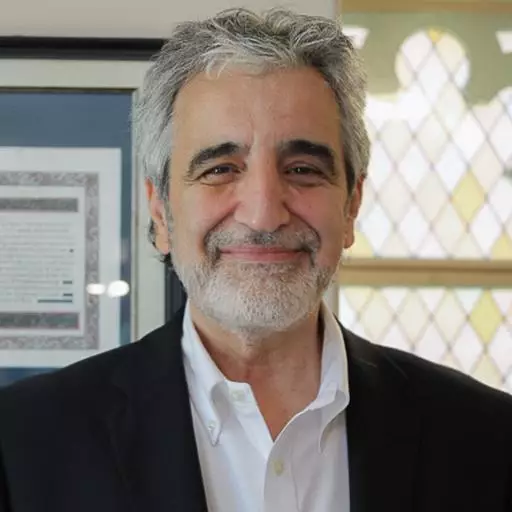
Messianic Leader J. Isaac Gabizon
https://www.bethariel.ca
https://bethariel.ca/donate/
Guest (Female): Shalom and welcome to Shalom Ariel and welcome to this 96th sermon from the Gospel of Mark with Messianic leader Jacques Isaac Gabizon. Israel commemorated her 50th anniversary of the 1973 Yom Kippur War just a while back. A war that because of poor leadership decisions caught her off guard. At first, she had many casualties, but after regrouping and gaining military help from the United States, she could have decimated the Egyptian army if it wasn't for a forced ceasefire agreement that they had to sign.
We see what failure of leadership can do to a country and we know that every country will have leadership failures. But we the believer stand on the dream that sits in our heart, in the hearts of those who wait for the Lord. He is the rightful King and He will be sitting over our city and over our country and over this world one day soon. And He will take His position on the throne of David and righteousness will rule and there will be judgment and fairness.
When we are His rightful servants, we walk behind Yeshua because He sets the road clearly for us. He walked the road from the upper room to the garden and then He walked the road from the garden to the trial. And then He walked the road from the trial to the tav. And then He rose from the tav and He asks each one of us to walk the road with Him through every trial because He was there, because He cried, because He died for our sins.
The leader who came to serve. What confirms a leader is when you have people who follow him or her. What confirms a good leader and a righteous leader is when he, the leader, is also the servant. Yeshua said, "You call me Teacher and Lord, you are right, for so I am. If I then, your Lord and Teacher, have washed your feet, you also ought to wash one another's feet. For I have given you an example that you also should do just as I have done. Truly, truly, I say to you, a servant is no greater than his master, nor is a messenger greater than the one who sent him."
We should not expect any different treatment than the Master Himself received. And we should be all the more ready to be that servant so that we too can gain the confidence of people and lead them to the Messiah. Be blessed as you listen into today's program and Shalom.
Jacques Isaac Gabizon: As we are about to enter into this, I want to tell you a very fascinating portion of the life of the Messiah. Let us first say this ancient prayer and bless the word with me. Blessed are you, O Lord our God, King of the universe, who has given us the word of truth and has planted everlasting life in our midst. Blessed are you, O Lord, who gives the scriptures. Let's open our Bible to Mark chapter 14.
So far, we've seen how those who condemned Yeshua had to resort to lies and illegalities and lawless decisions, and that they could not find anything wrong with Him. That they didn't find anything wrong with Him, by the way, was not enough because evil often convinces itself of its self-imposed righteousness. And there's a point that is impossible to convince evil, it seals itself. This is where we are here.
We have seen that in chapter 14, after that Yeshua was tried in the home of the two high priests, Annas and Caiaphas, instead of being tried in the court designed for trials, that is the Sanhedrin, they began to physically mistreat Yeshua. Let's read that one verse 65 which closes up the religious leaders' trial of the Messiah then. Some began to spit at Him and to blindfold Him and to beat Him with their fists and to say to Him, "Prophesy!" and the officers received them with slaps in the face.
Could you imagine? To mistreat and accuse was against God's law as well as their own law. But at this point, it was no more a question of justice but more of a display of envy and jealousy, as the Bible later will tell us. However, this verse is important because here begins the first mistreatment of the Messiah and from this point on, a flow of prophecies are unleashed.
Where are these prophecies? Let's begin with the spitting. Seven hundred years prior to this moment, Isaiah wrote a whole section on the righteous servant of Israel, the Messiah, consisting of chapter 40 to 53. In chapter 50, verse 6, he predicted this very moment of the spitting. And there the Messiah says, "I gave my back to those who strike me and my cheeks to those who pluck out my beard; I did not cover my face from humiliation and spitting."
There He was, being mistreated and not arguing or demanding justice, for He was righteous. And this itself is a fulfillment of another prophecy that we find in Isaiah 53, verse 7, when we read, "He was oppressed and He was afflicted, and He did not open His mouth; like a lamb that is led to the slaughter and like a sheep to its silent before its shearers, so He did not open His mouth." See how the Messiah is compared to a lamb and to a sheep because both have no defense except their shepherd.
But here the Shepherd Himself became the lamb and the sheep on our behalf. And see that He was silent, He did not open His mouth when He could have stopped the whole thing at any time. Even the high priest was surprised that He would not say anything. He asked Him in verse 60, "Don't you say anything? Don't you answer anything?" But the high priest himself should have remembered this prophecy.
Later we'll see that Pilate also was surprised that the Messiah was silent. In Mark 15, verse 4, he asked Him, "Don't you answer anything? See how many things they testify against you?" But during this time, Yeshua had one thing in mind: you, the believer, our salvation. This is why He endured all these things. And at the same time, another prophecy was being fulfilled: the one of Micah 5:1, very important point. It says, "With a rod they will smite the judge of Israel on the cheek."
What Micah is saying is that they will strike the true judge of Israel on the cheek, the true one as opposed to Annas and Caiaphas who condemned the Messiah. And this prophecy of Micah 5:1 is followed right away by this well-known prophecy predicting that the Messiah will be born in Bethlehem and that He comes from eternity. This is with whom they were dealing with.
Second, looking back at verse 65 of Mark 14, we read that they blindfolded Him. The actual Greek word means that they covered and hid His face completely. It is the same word that is used to describe a mask. This word was especially used to speak of someone's presence and countenance, because they couldn't see Him anymore. The Septuagint used this word exclusively to describe God's presence, panim.
And so by covering His face, the face of the Messiah, they showed their disdain and contempt towards Yeshua and towards all of the Torah. But see that unknowingly, they were fulfilling another prophecy in Isaiah 53, verses 2 to 3. This is what it says: "He has no stately form or majesty that we should look upon Him, nor appearance that we should be attracted to Him. As we hid, as it were, our faces from Him, He was despised and we did not esteem Him."
By putting a hood over His face, they literally fulfilled this prophecy. They were hiding their faces from the Holy One of whom they would later confess that they despised Him. And how ironic it is that some ask the Messiah, whose face they covered, to prophesy who slapped them when at the same time, there were dozens of prophecies over them, some as old as 1,500 years, which were predicting their very actions.
Third, we read that they beat Him with their fists and with slaps in the face. This is an action of degradation, an action of utter disrespect and scorn. This also was prophesied by Isaiah 50, verse 6, but this is not to hurt Him as much as to disgrace Him. In the Talmud, you know that striking with a fist or with a flat hand was regarded as an insult.
We read in the Tosefta that whoever strikes another with an overturned hand, he is punished not because it is a blow that causes pain, but because it is a blow of insult. This explains well what was happening actually in Mark 14:65. And considering these things, it brings us to see really the spiritual extent of their rejection and mistreatment of the Messiah. It seems that there was an evil plan schemed that is in the making there.
Have you noticed what this mocking that is focused on, on His prophetic mission? Moses predicted to Israel that a prophet will come to save them. Here they were literally belittling Yeshua who is the fulfillment of this prophecy. While the religious leaders of Israel were degrading the office of priest, later we see the Romans, they were degrading the office of a king, that is of the Messiah.
In the second mistreatment of Jesus, the Romans mocked His kingship. You have it in chapter 15, verses 17-18. They dressed Him up in purple, and after twisting a crown of thorns, they put it on Him, and they began to acclaim Him, "Hail, King of the Jews!" As for His office of priest, this comes after the people themselves when Yeshua was on the cross, the tav, they were saying, "Aha! You are going to destroy this temple and rebuild it in three days."
When Yeshua spoke of this temple, He spoke of His body which rose on the third day, but He being the high priest now became actually the new temple. These were then mocking His three offices. The office of priest was also mocked by the passersby, Jews and Gentiles, and by the nations. Here then we have the leaders of Israel mocking the work of the Messiah as prophet as it was prophesied by Moses and as he spoke about his first coming.
And after this, we have the nations mocking his office of king as prophesied by John, when he will be coming as King of Kings in second coming. And then all together, they mocked his priesthood. Looking at these things, it seems that behind this mistreatment and the mocking, there was again an evil scheme being realized. It is a seeming victory of the spiritual evil forces, but it was only an apparent victory.
No wonder that the account of the coming of the Messiah that we see in Isaiah 53 begins with the affirmation of these three offices of Prophet, Priest, and King. Isaiah 53 really begins in the previous chapter. We have in verse 14 and 15 of Isaiah 52 the three offices that are mentioned and confirmed even before the mistreatment that is prophesied in the rest of the chapter 53.
In verse 14, we have the office of Prophet where His rejection is predicted. It says, "Just as many were astonished at you, so His visage was marred more than any man, and His form more than the sons of man." Just like all the prophets of the Hebrew scriptures were rejected and they were all killed as well according to Jewish traditions. Little did they realize then that their own actions were fulfilling this very prophecy.
Then verse 15, where we see the other two offices, "He shall sprinkle many nations" when He comes back. "Kings shall shut their mouths at Him, for what they had not been told them they shall see, and what they had not heard they shall consider." First, His priestly office, He is seen as sprinkling many nations, which is the action of the priest at the temple, which He will perform in the Messianic times.
The middle part of verse 15 speaks of His office of King, as the kings of the earth will finally learn that full authority is given to Him at His return. Then again, He will be Lord of Lords. And it is at this point again that the prophecy begins to explain to us what happened right here in Mark. But this humiliation is not only seen in the mistreatment of the Messiah, it is seen throughout the time of tribulation.
I don't know if you noticed it in the book of Revelation. There is one word that comes back often and especially in chapter 13, where we see the rise and the fall of the Antichrist. It is the word blaspheme. See, when evil cannot be the opponent, they insult and blaspheme the opponent as they are doing to Yeshua here. Chapter 13 of Revelation, which begins with a description of the Antichrist, says that it symbolically has seven heads on which blasphemous names were inscribed.
He came to slander Yeshua. Then we read that the false prophet was given a mouth speaking arrogant words and blasphemies in verse 5. And in the next verse, we read that he opened his mouth and blasphemes against God to blaspheme His name and His tabernacle. You know why? Because he was losing the war. We also read that men follow suit and blaspheme the God of heaven in 16:11, 16:21, when it speaks about the war of Armageddon.
Here we have the spiritual forces of evil teamed up with men to utter profanities to God. That was the best they could do because they had nothing they could do against God. Now beyond the pain and the mistreatment and the crucifixion was the incessant attacks on God and on the Messiah. It was always there. Now let's follow Mark. What comes next in Mark seems to be so unrelated, but there is something I want to tell you, really great for us.
Here we are faced with a fairly long interruption about the whereabouts of Peter. Why mingle such an important account of the trial of the death of the Messiah with what Peter was doing? The point is that both are very important, especially that in the next story we will see the power of forgiveness and the power of the agape love in action and under one situation many would have thought unforgivable.
Because Peter denied the Lord three times. See the great contrast between evil and good here. The next account is like a pause, perhaps to tell us all that despite the attempt to hurt Yeshua, there's no limit to the effect of His work. There's no sin that He cannot forgive. The unforgivable sin is for those who refuse this forgiveness. And this forgiveness we're about to contemplate is for a man who was to be the head of the body of the Messiah.
However, he fell and rose again. And that he fell tells us that we too can find remissions of our sins and be cleansed forever and we can rise over and over. This is the account of Peter's three denials. Jesus previously warned Peter and prophesied. He said, "Truly I say to you that this very night, before a rooster crows twice, you yourself will deny me three times." To this message, Peter responded, "Even if I have to die with you, I will not deny you."
However, while Peter really meant well and was surely ready to die for the Messiah, he didn't have the strength to fulfill the second part of his promise. And so it happened just as Yeshua predicted. Peter denied Him three times, but Yeshua saved him out of it for He knew Peter's heart and He had many projects for him. Now how could Peter fall so low? Have you ever asked yourself that question?
At the end, this account asks more questions than it answers, perhaps to have us ponder on this situation. First, just this prophecy of Yeshua should have been enough to prevent Peter from following Him and then entering the high priest's courtyard. But he did not heed the word of God. That was the first mistake. Second, what is strange is that once Peter got into the courtyard, it seems that he could have come out at any time, but he didn't.
He could have come out after the first denial. He could have come out after the second denial. After all, the rooster crowed after the first denial as if to tell him to get out, but he did not. Why then did he stay every time? And besides these things, there were many people around who recognized him. But he stayed around them. He was recognized first at the door, there was a servant girl, Matthew 14:67, and a second time verse 69, and then in verse 70, a bystander.
We learn from John 18:17 that another servant and officer recognized him. And Luke 22:58 tells us that another man did and yet another man recognized him in the same verse. It was gradual, that he went from one person recognition to a full public recognition. This is when he denied the third time. And here we can see another miracle, by the way. Yeshua saved his life many times, it seems.
If everyone who recognized him came to arrest him, he would have been arrested and we wouldn't have heard of Peter at all. But He saved Peter after every recognition. This is the second time Jesus saved him, once in the Garden of Gethsemane when Peter waved his sword, and second and perhaps many times again in the high priest's courtyard. And what about the rooster's crow?
Why a rooster? The rooster begins to crow to announce the rising of the sun. As the Talmud says, the beginning of a new day. And the sound of a rooster crow is very loud actually if you're next to it. They say that the sound is about 142 decibels. To realize how loud it is, a chainsaw produces something like 120 decibels, so it's blaring, it's very loud. However, the sound of the rooster must have been very far away.
Why? Because we learn from the Talmud again that roosters and fowls were not allowed to be reared in the city of Jerusalem on account of Levitical defilement. But we learn of another sound that followed the crow of the rooster, a very loud one, that is the sound of the shofar. We learn this time from the Jerusalem Talmud that, and I quote, "When the rooster crowed, they sounded the sustained and quavering and a sustained note of the shofar."
The shofar then was sounded right after the rooster's crow and this was to announce the opening of the gates of the temple. Both these sounds were as if the temple opened up to usher the Messiah in for Him to be the last sacrifice. For very soon after, at the sacrifice of the first lamb, Yeshua was crucified, that is at the third hour, 9 a.m. So the rooster's crow sounded to announce of a rising sun of a day, the Messiah who was to be crucified.
And there's something else by the way, that the Talmud required the people to do when they heard the sound of the rooster: to pronounce a blessing, a benediction. This is what it says: "Praise be Thou, O Lord our God of the world, that gives understanding to the rooster to distinguish between day and night." And this prayer is taken from Job 38:36, which says, "Who has put wisdom in the innermost being or given understanding to the mind?"
The word mind is the word shevi from the word suk, meaning to see. And so the rooster is chosen as the one who foresees the day. This must have been their first prayer, by the way. Now that speaks volumes, for the rooster saw further than Peter and so much further than the priests who were actually condemning the Messiah. And so like Balaam's donkey who stood as a witness against Balaam, so this rooster who rose as an onlooker to the false condemnation against Yeshua.
As for Peter, he actually repented, deeply repented. This is really poignant to rendering in the way he felt the remorse of his denial. This we see it in Luke chapter 22, verses 60-61. But see what happened. And immediately while he, Peter, was still speaking, a rooster crowed, the Lord turned and looked at Peter. And Peter remembered the word of the Lord, how He had told him, "Before a rooster crows today you will deny me three times."
So just as the rooster crowed the second time, they were taking Jesus from the home of Annas to Caiaphas and there He looked at Peter. No, it wasn't a look which kills. It was a look which heals. He was not angry at Peter, but He cared so much for him that it seems that this moment must have lasted an hour, for the word look is one that does intently and in this case with forgiving eyes.
And from here Mark takes over and ends the verse by saying, "And he, Peter, began to weep," Mark 14:72. Now I want to tell you the word began really means to throw over or to lay one's hand over as Yeshua did His healing. The word actually epiballo in the Greek, from the word epi means on or upon and ballo means to throw, to propel. In this case, Peter must have thrown himself somewhere with perhaps his hands over his face.
Only here out of the 72 mention of this word, it is here translated "began," which has nothing to do really with the context. And one more thing about the account of Peter: there's one thing that is recurring that he was cold and that he went to a fire somewhere in the courtyard to warm himself. However, this is where and how many people recognized him. This we gather from Luke 22:56 where we read, "And a servant girl, seeing him as he sat in the light," firelight you have, "and looking intently."
The word fire is phos, that is light. If Peter had stayed in the dark, he would not have been publicly recognized. But it seems that he could not resist going where the fire was. Did you know that we can count at least seven times through the Gospel that we're told that he needed to warm himself? Why do you think that? Why then was he so cold? Do you remember the mention of a man in Mark chapter 14, 51-52?
It says, "And a young man, the age of 20 to 40 as the Greek word signifies, somehow left his linen sheet in the hands of the soldiers and ran away." And it says naked, but it meant really poorly dressed. This must have been Peter himself who left part of his cover and this is why perhaps he needed to be warmed up. In the first century, it was a garment that was wide enough to wrap oneself in it.
So Peter's first attempt to save the Messiah brought him to flee without his coat. The second attempt to save the Messiah brought him to deny the Messiah three times. He should have listened to the word of Jesus. Now I want to tell you, anyone reading this account may say that it does not reflect very well on the church, on the Ecclesia. For here is its leader and he begins to fall.
But this is typically biblical in bringing out the best and the worst of men. Do you remember Abraham, the father of faith? He began his ministry by lying. In the same chapter he received the covenant in Genesis 12, he went to Egypt and lied about his wife. He said she's my sister. David, do you remember? The man after God's heart committed adultery. Not a good reference as well.
Solomon, the wisest man, did the silliest thing in the world, in history I would say. He lost his wisdom and split Israel in two. Why then are we having so many examples of failures? It is so that our eyes stay on the perfect man, that is Yeshua. He is the model to follow and no one else. And Peter is this last one, the last example we see before the Spirit came to dwell in man.
This is how Peter was before, but after when the Spirit came upon him in Acts chapter 2 at Pentecost, he changed, he was transformed, he was metamorphosed. This is where all this brings us to consider the promise of a new covenant with the Spirit. He gave then one of the best speeches that you have in the scripture.
Guest (Female): Shalom Ariel is a daily radio program emphasizing the Jewish perspective of scripture. God is not through dealing with Israel, nor will He renege any of the promises He has made to her. Our teacher for this program, Jacques Isaac Gabizon, is a Messianic Jewish believer and Messianic leader at Beth Ariel congregation right here in Montreal. If you've been encouraged by the messages, we'd love to hear from you.
Give us a call at 1-888-685-5902 or you may write us at info@bethariel.ca. You are also welcome to join us for our Saturday morning services. We are located at 6297 Moncland Avenue, corner of Madison in NDG. The message is given in English but we do offer a simultaneous translation into French and Russian. Services begin at 11 a.m. We have Shabbat school for children of all ages up to and including teens.
You may also download audio messages from our website at bethariel.ca and enjoy other in-depth teaching from Jacques Isaac. If you would like to sign up for informative newsletters, log on to our website and add your name to our email list. Shalom Ariel is a listener-supported program. If you have it on your heart to donate, it will be a great blessing for the continuing ministry and outreach of Beth Ariel. Thank you and Shalom, Shalom.
Featured Offer

Prophecies take up about ¼ of the Scriptures so we cannot simply ignore them. Knowing prophecy enables us to give a clear presentation to others of why things unfold the way they do in such areas as politics, morality, technology and global ecological changes. It also helps us to rightly place Israel in God’s prophetic plan.
Past Episodes
- The Armor of God
- The Believers in the End Times
- The Book of Daniel
- The Book of Deuteronomy
- The Book of Ephesians
- The Book of Esther - Purim
- The Book of Exodus
- The Book of Ezekiel
- The Book of Ezra
- The Book of Genesis
- The Book of Hebrews
- The Book of James
- The Book of Jeremiah
- The Book of Joel
- The Book of John
- The Book of Leviticus
- The Book of Numbers
- The Book of Philippians
- The Book of Revelation
- The Book of Romans
- The Book of Ruth
- The Book of Zechariah
- The Feast of Passover
- The Feast of Purim
- The Feast of Shavuot - Pentecost
- The Gospel of Mark
- The Gospel of Matthew
- The Letter to the Galatians
- The Messiah in Isaiah
- The Messiah in the Book of Isaiah
- The Messiah's Prayer
- The Nativity: The Unwrapped Gifts of God
- The Resurrection of the Messiah
- The Sermon on the Mount
- The Tabernacle

Video from Jacques Isaac Gabizon
Featured Offer
Prophecies take up about ¼ of the Scriptures so we cannot simply ignore them. Knowing prophecy enables us to give a clear presentation to others of why things unfold the way they do in such areas as politics, morality, technology and global ecological changes. It also helps us to rightly place Israel in God’s prophetic plan.
About Messianic Viewpoint
About Jacques Isaac Gabizon
Contact Messianic Viewpoint with Jacques Isaac Gabizon
info@bethariel.ca
http://www.bethariel.ca/
Beth Ariel Congregation
CP 46521 CSP Boul. St Jean
Pierrefonds, QC, H9H 5G9
Toll free (888)-685-5902