
The Gospel of Mark, Part 95


The Gospel of Mark, Part 95
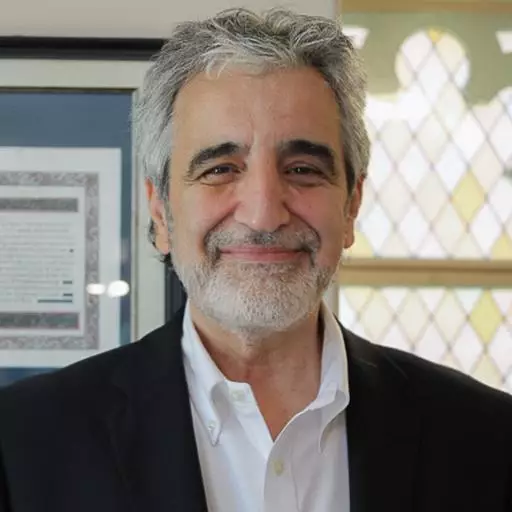
Messianic Leader J. Isaac Gabizon
https://www.bethariel.ca
https://bethariel.ca/donate/
Host: Shalom, and welcome to Shalom Ariel, and to this, our 95th sermon in the Gospel of Mark, with Messianic leader Jacques Isaac Gabizon. So then we ask, who stood to be encouraged when the cohorts and the temple guards all fell to the ground? Who stood to gain from witnessing Yeshua's healing of Malcus's ear? These events went by very fast, and we don't hear a lot about them. But Jesus gave his own disciples no doubt the encouragement they needed to have as they saw these men fall down. And certainly, the disciple who cut off the ear of Malcus knew very well what had happened. The disciples were there to witness both these events.
Host: This, by the way, would be the last miracle that Yeshua would do before his earthly departure, and the next miracle would be the greatest of them all: his resurrection. So while the disciples were not ready at this point to lay down their life for their master, they would no doubt remember Gethsemane in the future, and many of these disciples did remember and died as a result of laying down their life for their faith. How do we see Gethsemane? The promise is that one day every knee would bow, not just falling back for a moment as those soldiers did, but staying bowed. Every tongue will confess one day, the lordship and supremacy of the Messiah.
Host: What a taste of victory in that garden, when goodness and purity overwhelmed and caused evil to fall flat down on its face. Such is the power and wonder behind the glorious name of I Am, the one who will come back and one day judge the world when all evil will fall at his feet. Be blessed as you listen into today's program, and Shalom, Shalom.
Host: So they brought Yeshua to Anas's home, then Caiaphas's homes, and then by verse 55, as the sun rose, so they brought Yeshua to the Sanhedrin, and this is when they tried to indict Yeshua, but they were very unsuccessful. Look at the account, verse 55 to 59.
Host: Now the chief priest and the whole council kept trying to obtain testimony against Jesus to put him to death, and they were not finding any, for many were giving false testimony against him, but their testimony was not consistent. Some stood up and began to give false testimony against him, saying, we heard him say, I will destroy this temple made with hands, and in three days I will build another made without hands. Not even in this respect was their testimony consistent.
Host: Now, reading the last words here, the trial should have been deemed a mistrial, for there were no witnesses, no witness, and so it was a miscarriage of justice. But justice was not what they're concerned, for they had already decided to put him to death even before the trial began. And here they broke many of their own laws, and that of the Torah. At this point, one wonders whose trial it was, theirs or the Messiah's, for their own transgressions were accumulating verse after verse.
Host: First, no witness, so no possible trial and no condemnation. Let me tell you how the law of Moses and their own law puts so much emphasis on having a witness. Deuteronomy 17:6, whoever, it's written, is deserving of death, shall be put to death on the testimony of two or three witnesses, he shall not be put to death on the testimony of one witness, but they didn't even have one witness. This part of this trial ends by saying in verse 59, not even in this respect was their testimony consistent.
Host: However, it's interesting that the words of the false witness are reported to us, for he says, and surely and wittingly, something actually quite important. Jesus said in John 2:19, by the way, destroy this temple, in three days, I will raise it up. But this witness adds something else: and I will build another without hands. Where did he get that from? Made without hands. This expression was well known and used to designate a divine intervention.
Host: The people then, like those who wrote the Dead Sea Scrolls, the Essenes, they expected the next temple to be built by God himself, and used similar expression. And this phrase must have been taken from that one prophet who spoke at the time of and the death of the Messiah, that is Daniel. In the prophecy of Daniel, chapter 2, the prophet speaks of four kingdoms rising, and then he sees a stone which was cut without hands, same expression.
Host: And this, Daniel says it twice, Daniel 2:34, 2:45, and this stone, which is from God and destroys all these four kingdoms, is the Messiah, the stone without hand represents the Son of Man in Daniel, the title that Yeshua is about to give himself to the priests. Without hands, the false witness pronounced these words, even identifying Yeshua with the stone who will rule the world.
Host: His words could be compared to the words of Balaam, remember, who wanting to curse Israel ended up giving a major prophecy about the Messiah. And it is from Daniel that Yeshua will quote a passage showing that he is the Messiah, that he is the Son of God, and that he is the Son of Man. See what happens next in the trial. The high priest was about to commit what could be the biggest blunder in the history of Israel.
Host: Saying that there was no witness, and that it is indeed a mistrial, he changes his role from judge to prosecutor, asking Jesus if he himself could give him something to condemn with. And he's lucky, by the way, because Yeshua came for this purpose. But see the way he answers the judge, who now throws a sort of tantrum. Look, verse 60 to 61.
Host: So the high priest stood up and came forward and questioned Jesus, saying, "Do you not answer? What is it that these men are testifying against you?" But he kept silent and did not answer. Again the high priest was questioning him and saying to him, "Are you the Messiah, the son of the Blessed One?" While the answer to this question is written all over the Hebrew Scriptures, and was answered all through the life of Jesus on Earth, through the fulfilled prophecies, and through the unique and never-seen miracles before. Yeshua here decides to answer this individual in such a mighty way. See how he replies to the question, verse 62.
Host: And Jesus says, "I am. And you shall see the Son of Man sitting at the right hand of the power and coming with the clouds of Heaven." This is a powerful answer which leaves no doubt to his identity. He's not only confirming that he's the Messiah, the Jewish Messiah, but that he is the Son of God, and that is the Son of Man. And with this, he's also confirming his divinity, something that the high priest and the Sanhedrin had fully understood.
Host: Saying that he's the Son of God amounts to saying that he's divine, it amounts to say that he's God, in fact. The title of Son of God was one of divinity, and this is precisely how they understood this title at the time. Anyone saying that he's the Son of God made himself God. This is what they said in John 5:18. Therefore, the religious Jews sought all the more to kill him because he not only broke the Sabbath, but also said that God was his father, making himself equal with God, they understood that.
Host: But this is not all. Here in Mark, he even enhances his divinity by beginning his answer with the word I am. I am, which is the name of God. When Moses asked God, what is your name? He answers, thus you shall say to the children of Israel, I am has sent me. This shall be my name forever. Exodus 3:14. I am in the sense that I was, I am, and I will be. Like we read in the book of Hebrews about Jesus, Yeshua HaMashiach, he's the same yesterday, today and forever. He is the I am.
Host: Both then are one and the same, perfect and changing, eternal in one. I am is the same answer, by the way, that Jesus gave the soldiers in the Garden of Gethsemane, to which they fell backwards. But here the reaction is different, for at this point, nothing could make them change their minds. And to enhance this powerful answer, Yeshua quotes two Messianic prophecies in one verse, Psalm 110 and Daniel 7:13.
Host: First, Yeshua attributes to himself this well-known prophecy of Psalm 110 verse 1, which they knew was Messianic and which the New Testament actually cites 10 times. This Psalm sees the Messiah sitting at the right hand of God. Back in Mark chapter 12, Yeshua had already challenged them to explain how David can call him the Messiah Lord. It is because this Lord of David sitting at the right hand of the Lord is actually the Messiah himself.
Host: He then inserts a prophecy they knew very well, Daniel chapter 7:13, which says, "And behold, with the clouds of Heaven, one like the Son of Man was coming and the dominion will be given to him." This is the long-awaited Messiah of Judaism. It is none other than Jesus of Nazareth. That is the great surprise and oddity of history. And here he was, being tried and condemned to death.
Host: See now the reply. See the big boo-boo the religious leaders would commit. Verse 63, 64. Tearing his clothes, the high priest said, "What further need do we have of witnesses? You have heard the blasphemy. How does it seem to you?" They all condemned him to be deserving of death. This is their final decision, after this, they sent Jesus to Pilate to be crucified.
Host: And throughout this trial, they transgressed some major points of their own laws. Here we have a panoply, actually, of these transgressions. Let me give you a few of these 27 transgressions. First, when it comes to a judgment for capital punishment, the Mishnah, their Mishnah says, therefore, one judges neither on the day of preparation of the Sabbath, nor on the day of the preparation of a festival. This is a law they broke, for they did it on the day of the preparation for the Passover.
Host: Second, it says that when a judgment is rendered for capital punishment, the execution should not be done on the same day, but on the day after. They have to wait. Capital trials, it says, can be completed on the same day for only acquittal, but on the following day for a sentence of guilt. This means that if acquitted, the person is let go on the same day. If found guilty, the judgment should be rendered the next day, in case some new information emerges, but they could not wait. They had already decided at the beginning to put him to death.
Host: Third, they accused them only on the basis of Yeshua's own words. This was against their own law, allowing the accused to testify against himself. It was Maimonides, the renowned 12th century rabbi, in his interpretation of the Mishnah, he said, under strict law, the admission of an accused is not accepted if it involves self-incrimination. By these words, he himself condemns the Sanhedrin completely.
Host: Fourth, notice that they began the trial with an accusation right from the beginning in verse 2 of Mark 14. They set out to arrest him, to put him to death, but this goes against their own law, which says that capital cases must begin with the reason for acquittal and may not begin with reasons for conviction. Yet they begin with the trial with false testimonies, where the judge became the prosecutor and at the end, they all agreed to it, as we read in verse 64. They all condemned him.
Host: Fifth, and this is very damning, actually, for them. For in their own law, it says that in capital cases, all argue for acquittal, but all do not argue for conviction, right? Yet we read that they all agreed to kill the Messiah of Israel. The reason behind this law is that if all the council is in one accord to condemn one person, it's because there's a bias, there's a conspiracy. How ironic the manner in to which they the Rabbinical law condemns this group of judges.
Host: Six, the high priest accused Yeshua of blasphemy. But, you know, their own law specified that one can be accused of blasphemy only if he pronounces the name of God, the Tetragrammaton, as we see in the book of Sanhedrin 7:5. Yeshua did not pronounce the name of God. However, it seems that the high priest and the Sanhedrin and the and the people who were present, all understood that Yeshua proclaimed divinity either by his words, I am, or saying that he is indeed the Son of God, or that he is the Son of Man, all these titles brings us to understand his divinity.
Host: And Caiaphas must have lost it, by the way. It says in verse 63 that the high priest tore his clothes, in plural, many of his clothes. You know, he was not allowed to do that. It says that he's only able to tear a part of his clothes, it says. But he it looks like he tore more than his garment, and in his excitement he tore everything, even and eventually the temple itself was torn down, as well as his country was torn down. He was the high priest, the first in line with this decision, perhaps this is why the word garments, by the way, is in plural in Mark.
Host: This then is the end of the religious trial. They didn't get anywhere, by the way. What happened next is that this very Sanhedrin lost much of its power from this moment in, right? It seems that that same year, the high priests and the Sanhedrin begin to lose their powers, right, as the Talmud tells us. This is what the Talmud says. It says, 40 years before the destruction of the temple, the Sanhedrin were exiled and took place in Chanot, Chanot. This is in the in both Talmuds, by the way, Babylonian and Jerusalem.
Host: 40 years before the destruction brings us right to the time of Mark chapter 14, when they arrested, tried, and sent the Messiah to be crucified. See their own Talmud not only condemned them by its own laws, but tells us that since then the Sanhedrin, the Supreme Court, lost its power. The word Chanot, you know what it means? It's market. A word meaning shops, the place of the money changers, the sellers of animals. How ironic it is that the high priest was kicked out of the temple and placed among the sellers, where he belonged.
Host: Had this happened? We don't know, but it did, it did happen. Both the Talmud also tells us that this was the first of actually 10 different moves, right? It says from the regular hall of the market, Chanot, from the markets to Jerusalem, from Jerusalem to Yavneh, from Yavneh to Usha and so on, so forth. At the end, it was completely, it lost completely its power.
Host: Because they condemned the Messiah of Israel and fought against God, they were disqualified, and so they aired like Cain aired. Many more laws were broken, some others we will see next time we meet. Through this trial, we have seen some great facets of our Savior. This is actually who Yeshua is, right? He is God incarnate, like the Bible says. And this is not a new revelation that we have in the New Testament.
Host: Thousands of years before, Abraham saw him and he dined with him and conversed with him. Jacob struggled with him and said, I've seen God face to face and I did not die. Isaiah saw him sitting on the throne. Micah saw the one who comes from above coming as a baby, and Malachi saw him coming as a redeemer. If one removes the divinity of the Messiah, then this one's believe in a foreign Jesus. It is a foreign religion he would believe in, for Jesus himself confirms his divinity, I am, he said, to Caiaphas, to the 600 soldiers as well.
Host: We'll keep on again next time we meet. Let us bow our head in prayer. I will pray from a Hebrew prayer called True and Strong, as the words uplift our God and Savior. And so we thank you, Heavenly Father, for the great revelations we have in your mighty word, and indeed the God of the universe is our king. He is the rock of Jacob, the shield of our salvation from generation to generation. He endures and his name remains unchanged for eternity. His words are living and stable, ever faithful and desirable.
Host: From the first age to the last age, your word is good and during forever and ever. It is truth and fidelity. A law that will always endure. Truly, you are the Lord, our God, our Redeemer. True and strong, and impartial and stable, just and faithful, beloved and cherished, pleasing and agreeable. And all this we pray in the name who gave his life life for us, Yeshua HaMashiach. And to all the congregation, the Lord bless you and keep you. The Lord make his face shine upon you and be gracious to you. The Lord lift up his countenance upon you and give you peace. Amen, and Amen.
Host: Welcome to this segment of our program, the Q&A with Messianic leader Jacques Isaac Gabizon. And today's question deals with Heaven. What will it be like? Be blessed as you listen in. I understand that this is a vast question, but I would like to know if certain scriptures were given to us so that we might know what to expect or look forward to in Heaven. For example, what would we do in Heaven? Will we work? And are we going to recognize each other and even those from biblical times?
Host: Now, since the Old Testament doesn't seem to speak much about Heaven itself, how can we know if men and women in those days understood what Heaven was? Thank you.
Host: This is a great subject we do not emphasize enough, and yet the Bible has so much information about it, so much information about Heaven. Now, concerning the Hebrew Scriptures, it is true that they mainly emphasize the period of the Millennium, that is the Messianic age. However, there is a great revelation coming from the New Testament writings. A solid affirmation attesting to the fact that the Old Testament believers did have a deep understanding and faith in Heaven.
Host: In the Olam Haba, that is the world to come. These believers are mentioned actually in Hebrews chapter 11 as the great cloud of witnesses whose common hope was this city in Heaven, this city is Heaven. We are not told how they knew about Heaven, but they did, and this knowledge represented a great anchor of their faith in their everyday life. Now, consider Abraham, to whom the land of Israel was given from Egypt to Iraq. However, his future expectation went beyond, for what we read in Hebrews 10:11, it says, for he, Abraham, was looking for the city which has foundation, whose architect and builder is God.
Host: He had this hope in him, and beyond the earthly promises of the land of Israel, and he was not alone. Hebrews further tell us that the whole cloud of witnesses from the Hebrew Scriptures, and we're talking about Abel, Enoch, Noah, Sarah, even to the prophets and more. Then, speaking to the believers, the writer of Hebrews explains Heaven in more details, and he says in Hebrews 12:22-23 that this Heaven is the Mount Zion, the city of the living God, the heavenly Jerusalem.
Host: Then we're told who lives there. He says, myriads of angels, to the general assembly and church of the firstborn who are enrolled in Heaven, that is all believers, past and present, who have gone to their eternal abode. And that this place is God's dwelling. He writes, and to God, the judge of all, he is there, this is where he lives. This is the place that is prepared for those who believe that Yeshua is the Messiah, their Savior.
Host: Now, to answer just a few of your questions, for for for this is a vast subject, we unfortunately not have much time to cover it all. For instance, the question, will we know each other in Heaven? I believe the scriptures indicate that yes, we will. There are few hints given to us, for instance, on the Mount of Transfiguration, when Yeshua appeared with Moses and Elijah. What is interesting in this account is that all who were present on the Mount are seen as knowing each other. Moses died 600 years before Elijah, and yet here they are together, each one specifically identified, visiting with the Lord at this scene of glory.
Host: The disciples themselves intuitively recognized Moses and they recognized Elijah, and rejoiced in their fellowship. This tells us that we will not only know each other, but we will know everyone there once we get there. If earthly men like Peter, James, and John were able to recognize heavenly beings, how much more reasonable it is to expect that heavenly beings will know each other. Paul also gives us an indication that we will know each other. In some epistles, he expressed the assurance that he will see his converts in Heaven.
Host: It is in First Thessalonians, chapter 2, verses 19 to 20. This is what it says.
Guest (Female): For what is our hope, or joy, or crown of rejoicing? Are not even you in the presence of our Lord Jesus the Messiah at his coming? For you are our glory and joy.
Host: Paul as a pastor will rejoice with those he pastored and those who produced so much fruits on Earth. And aren't we told in the law of Moses and in First Corinthian 13:8 and 13 that love never fails, never fails, that is it abides forever. In verse 8, it says, love never fails. And now abide faith, hope, love, these three, but the greatest of these is love.
Host: The love we have for our spiritual family, we will be able to carry in Heaven, and it would be even enhanced, and we will live together for eternity with this love. And after all, Paul spoke of the whole family of God in Heaven and Earth. We are a family who will be bound, who are actually bound together by love. Another question that many ask is what will we do in Heaven.
Host: It is true that our labors here on Earth are limited almost entirely for the purpose of really making a living. But man was created to work. Adam and Eve before the fall were given work to do in the garden. And once we are there, just imagine how much we can produce and without, that is the hindrance of the curse, which fell on our parents, Adam and Eve. Let's remember that the word work in Hebrew is Avoda, which also means to worship, to worship.
Host: So we were created to both work and worship. So while restrictions such as sins have limited us in our earthly worship, we will in full sinlessness worship all wholeheartedly, and that in itself can be understood as work, heavenly work. And when we read in Revelation 21:3, we remember the gates, right? But if you have gates in Heaven, it is because we will be most likely going in and out. And I believe that this is so because we have an infinite universe to explore.
Host: Why did God originally create so many billions of stars? It was not for nothing. And we know that he wants to share his creation with us. So there will be a new creation of the universe, and I believe a great amount of new stars to explore. You know, there's so much more to say about Heaven, and since we are limited by time, I would refer you to the last two chapters of Revelation, where a detailed description of the city is given to us. We have gone through many of these details, and you can find the study on our website, study 34 on Revelation to study 37, that will cover it all.
Host: Shalom Ariel is a daily radio program emphasizing the Jewish perspective of scripture. God is not through dealing with Israel, nor will he renege any of the promises he has made to her. Our teacher for this program, Jacques Isaac Gabizon, is a Messianic Jewish believer and Messianic leader at Beth Ariel Congregation, right here in Montreal. If you've been encouraged by the messages, we'd love to hear from you.
Host: Give us a call at 1-888-685-5902, or you may write us at info@bethariel.ca, that's B-E-T-H-A-R-I-E-L all one word.ca. You are also welcome to join us for our Saturday morning services. We are located at 6297 Monkland Boulevard, corner of Madison in NDG. The message is given in English, but we do offer simultaneous translation into French and Russian. Services begin at 11:00 AM. We have Shabbat school for children of all ages up to and including teens.
Host: You may also download audio messages from our website at bethariel.ca and enjoy other in-depth teaching from Jacques Isaac. If you would like to sign up for informative newsletters, log on to our website and add your name to our email list. Shalom Ariel is a listener-supported program. If you have it on your heart to donate, it will be a great blessing for the continuing ministry and outreach of Beth Ariel. Thank you, and Shalom, Shalom.
Featured Offer
Prophecies take up about ¼ of the Scriptures so we cannot simply ignore them. Knowing prophecy enables us to give a clear presentation to others of why things unfold the way they do in such areas as politics, morality, technology and global ecological changes. It also helps us to rightly place Israel in God’s prophetic plan.
Past Episodes
- The Armor of God
- The Believers in the End Times
- The Book of Daniel
- The Book of Deuteronomy
- The Book of Ephesians
- The Book of Esther - Purim
- The Book of Exodus
- The Book of Ezekiel
- The Book of Ezra
- The Book of Genesis
- The Book of Hebrews
- The Book of James
- The Book of Jeremiah
- The Book of Joel
- The Book of John
- The Book of Leviticus
- The Book of Numbers
- The Book of Philippians
- The Book of Revelation
- The Book of Romans
- The Book of Ruth
- The Book of Zechariah
- The Feast of Passover
- The Feast of Purim
- The Feast of Shavuot - Pentecost
- The Gospel of Mark
- The Gospel of Matthew
- The Letter to the Galatians
- The Messiah in Isaiah
- The Messiah in the Book of Isaiah
- The Messiah's Prayer
- The Nativity: The Unwrapped Gifts of God
- The Resurrection of the Messiah
- The Sermon on the Mount
- The Tabernacle

Video from Jacques Isaac Gabizon
Featured Offer
Prophecies take up about ¼ of the Scriptures so we cannot simply ignore them. Knowing prophecy enables us to give a clear presentation to others of why things unfold the way they do in such areas as politics, morality, technology and global ecological changes. It also helps us to rightly place Israel in God’s prophetic plan.
About Messianic Viewpoint
About Jacques Isaac Gabizon
Contact Messianic Viewpoint with Jacques Isaac Gabizon
info@bethariel.ca
http://www.bethariel.ca/
Beth Ariel Congregation
CP 46521 CSP Boul. St Jean
Pierrefonds, QC, H9H 5G9
Toll free (888)-685-5902