
The Gospel of Mark, Part 93


The Gospel of Mark, Part 93
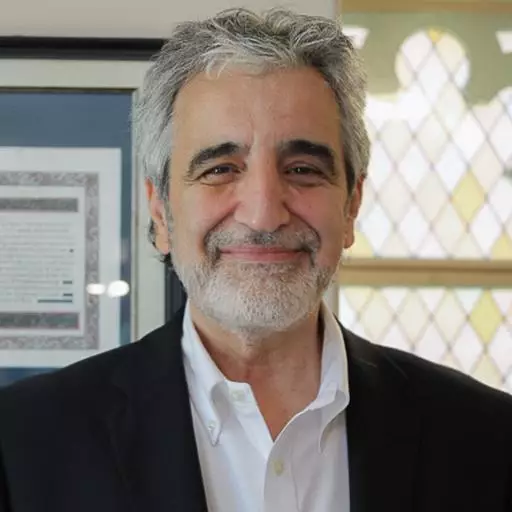
Messianic Leader J. Isaac Gabizon
https://www.bethariel.ca
https://bethariel.ca/donate/
Guest (Female): Welcome to Shalom Ariel and welcome to our 93rd sermon from the Gospel of Mark with Messianic leader Jacques Isaac Gabizon. We are so blessed as we continue to grow in greater knowledge of the Lord and His continued care. This is something that we see again and again through the lives of His disciples. Even though the sheep scattered when the Shepherd was struck and the disciples abandoned Yeshua, He still cared.
Have you ever thought, where did the disciples flee to after the garden incident? They were, after all, all Galileans, and they were far from home, strangers to Jerusalem. But Yeshua made sure all was in order even when He went to the trial and He went to the Tav. Who did these disciples know in Jerusalem where they could come together in their abandonment? The owner of the upper room, the man who called Yeshua the teacher.
This was the room Yeshua planned and chose for this Passover occasion, and it was likely the very place where the disciples would now find shelter with all the turmoil going on. In the same way, Yeshua prepares things for us in advance. We are reminded of Ephesians 2:10, which reads in the Amplified version: "For we are His workmanship, His own masterwork, a work of art created in Messiah Yeshua, reborn from above, spiritually transformed, renewed and ready to be used for good works, which God prepared for us beforehand, taking paths which He set so that we could walk in them, living the good life which He prearranged and made ready for us."
Deuteronomy 31:8 confirms that God is not only with us but goes before us: "The Lord himself goes before you and will be with you. He will never leave you or forsake you. Don't be afraid. Don't be discouraged." When we face our battles, let us remember that it is the Lord who goes before us and opens the way for us. He told Joshua that Jericho was already theirs before they even entered the land.
If we believe that God has prepared a place for us, a work, and a responsibility for which He has already equipped us, then it is our duty not to reshape God's thoughts and create new ideas and new directions of our own, but to seek His will, to seek His plans and purposes, and then choose to walk behind Him, knowing that He not only walks before us and with us, but He is above us and He girds us from underneath as well. We are surrounded by His care, guided through His omniscience and His compassion. That is the place where we should be. Be blessed as you listen to today's program, and Shalom, Shalom.
Jacques Isaac Gabizon: In the Bible, the word is used only three times. It is used two times, once here and once in Matthew, to describe the garden's event. But see the third time it is used. It is found in Philippians 2:26, where we see a man called Epaphroditus who was, at one point, very sick. Finding out that believers in the congregation of Philippi were worried and praying about him distressed him. So when he got better, he went to visit them. The longing love of Epaphroditus for others distressed him. It is in this same sense that the word is used here in Mark.
The thing that really disturbed Yeshua, as we will see in the rest of the account, was the disciples and how they would fare during this severe ordeal. In fact, from verse 37 to verse 42, this section is wholly consecrated to the disciples and for the disciples, to their welfare and protection. The shift is striking as Yeshua, three times over, rises from his prayer to see how they were doing.
Three times he goes to them and wakes them up. We read in Luke that they were sleeping from sorrow, which means it was because it was very difficult for them. This brought Yeshua to say in verse 34, "My soul is deeply grieved to the point of death." The term "deeply grieved" is one word in Greek which means sadness, even mourning. But sadness for what? For whom? It was for the disciples.
Going back to Yeshua's prayer to the Father, there is something very special that he says. See again what he says in Mark 14:36: "Abba, Father, all things are possible for You; remove this cup from me; yet not what I will, but what You will." Here, we are not only privileged to be able to hear this intimate prayer between God and His Son, but to realize that this is the first time that God is called Abba.
This is the first time that He is called Abba in the Scriptures, which is the Aramaic word equivalent to calling God "Daddy," as a child will call his father. This closeness and intimacy is brought out during one of the most trying times, for it is during these times that God is so present with us. In history, there is apparently no record of anyone calling God Abba before this place here in Mark.
It is not the last time this word is used. There are two other places I want to bring you to. In Romans 8 and Galatians 4, we have two passages addressed to all believers, encouraging us to speak and see our Father in heaven as our Abba. The Spirit of God says in Galatians 4:6: "Because you are sons, God has sent forth the Spirit of His Son into our hearts, crying, 'Abba, Father!'" As the Ruach HaKodesh is not only among us but in us, He is the one who leads us to the Father and allows this close relationship so that we can call our mighty God Abba.
The other passage is Romans 8. He says: "For you did not receive the spirit of bondage again to fear, but you received the Spirit of adoption by whom we cry out, 'Abba, Father!'" as Jesus says. The Spirit of adoption means that now we belong to a new family; that is why we can call God Abba. This chapter could be seen as a commentary of the threefold intervention of Yeshua at Gethsemane. Romans 8 is such a soothing chapter. It is like a letter that a man is writing to his bride-to-be; in this case, God is writing to us.
In His letter, He reassures her that He will take care of her and He will cherish her no matter what. The Spirit of God who dwells in us is mentioned 19 times. Nineteen times in all is a lot when you consider He is mentioned 22 times in the entire book of Romans. Here, the Spirit of God who dwells in us says that we can call our Father Abba. As we mentioned, the rest of the passage in Mark concentrates on the disciples, and there is so much to consider there.
This whole episode becomes even more enhanced when we consider that this night represented then, and today, a night of vigil for the people. The night of Passover was in the first century, and throughout the last 2,000 years up to today, a night of vigil. This is based on Exodus 12:42. When on the 14th of Nisan, that same calendar night at Gethsemane, it was said: "It is a night to be observed for the Lord for having brought them out from the land of Egypt. This night is for the Lord, to be observed by all the sons of Israel throughout their generations." Throughout their generations, this night became a night of vigil, a night of watching, a night of studying the Scriptures because the Jewish people believed that salvation would come on that very night.
As one commentator, Sforno, wrote: "They were redeemed in Nisan in the past and will be redeemed in Nisan again in the future." They were, because this is where Yeshua died and was resurrected. They believe that on this night all the power of Satan will be let loose, just as when the firstborn of Egypt were slain. In the garden of Gethsemane, Satan wanted to slay the firstborn of God.
This is why at the Passover table, there is always an empty chair and a full glass of wine to usher in Elijah if he came on that Passover. According to the prophet Malachi, Elijah comes first to announce the coming of the Messiah. They even named that night Leil Shimurim, the night of watching or the night of protection. Shimurim comes from the word Shamar, meaning to guard, to observe, or to watch, as Yeshua asked the disciples to do. This background enhances Yeshua's instance to pray and to watch. Three times over, we can appreciate the commandment to be watchful and in prayer because, in many ways, we are living the last moments of a night of history today.
After this difficult part of the evening, they came to arrest the Messiah. But it is also in this new section, still in the garden of Gethsemane, that we will see some of the greatest miracles yet performed by Jesus. These also were not that obvious, but they are there, showing how Jesus was Master of the events. We have just enough time to consider one verse, verse 43, which sets a precedence for the rest of the book of Mark. It clearly shows that those who persecuted the Messiah and delivered him to be killed had to resort to all kinds of illegal actions and lies to condemn the righteous one.
Let us read verse 43: "Immediately, while He was still speaking, Judas, one of the twelve, came up, accompanied by a crowd with swords and clubs, who were from the chief priests and the scribes and the elders." In just this one verse, there are a few illegalities that the chief priests, the scribes, and the elders committed. First, notice who is there: the chief priests, the scribes, and the elders. According to their own laws, and ours as well, and the law of common sense, the judges and the members of the jury were not to participate in the arrest of the accused. What were the chief priests doing there? They were actually the judges, and the others were representing the jury.
Furthermore, we learn that these religious authorities paid Judas thirty pieces of silver just before this to denounce him. This is a first transgression of the law of God and of their own laws, as it is written in Exodus 23:8: "And you shall take no bribe, for a bribe blinds the discerning and perverts the words of the righteous." Although, in this case, the religious authorities did not themselves take a bribe, they gave a bribe. They handed money over to Judas, coercing the truth and losing their status of righteousness. They therefore became perverted judges according to the law.
You know what other law they broke? The one they lived for: the Shabbat. Remember how many times they told Jesus that he broke the Shabbat, which he never did. This was their own law; this is what it says in the Mishnah: "Do not judge capital cases either on the eve of the Shabbat or on the eve of a festival." This is a double-hitter, for they not only broke the Shabbat, but it was exactly as the law says, the eve of the Shabbat. It was also a Shabbat Shabbaton, a great Shabbat, because it fell on a high holiday.
This is why they wanted to have the body of Yeshua away from the cross before the Shabbat actually began. And see that it was night; we read in another Gospel, in the Gospel of John especially, that they came with torches and lanterns. But this also goes against their own laws, one that we read in the Mishnah, Sanhedrin chapter 4. It says: "In capital cases, they try the case by day and complete it by day." But the arrest was done at night, and the religious people actually did go against their own laws. How many laws did they go against? In history, there were two Messianic Jews who looked into this matter and computed that there were at least 27 of their own laws they had to break in order to condemn the Messiah.
The first one was a Sephardic Jew named Joseph Salvador. He lived in the 18th century and was a physician living in Paris. He produced a work entitled, "History of the Institution of Moses and the Hebrew People." He listed all the laws. There, he went through the trial of Yeshua and found out that the two high priests, Annas and Caiaphas, had broken all of them. A few years later, around the year 1800, Salvador's study was discovered by an Ashkenazi Jew, a lawyer, then-professor of Harvard University, and Chief Counsel of the US Supreme Court. His name was Simon Greenleaf. I believe that his portrait is still hanging in the hall leading to the library of Harvard School of Law.
After reading Salvador's work, Greenleaf published a remarkable book titled, "The Testimony of the Evangelist Examined by the Rules of Evidence Administered in Courts of Law." This book is still on sale today. I have it in my library. In there, he shows how the trial of the Messiah was rigged and contained so many illegalities, and further shows that none of their supposed evidence could be admitted in a normal court of law. Of course, this was because Jesus is the righteous one; he never committed any sins.
In all of this, we see how the prophecy of Isaiah was fulfilled in Yeshua when we read that he was oppressed and he was afflicted, yet he did not open his mouth. Like a lamb that is led to the slaughter, he not only opened not his mouth, but he made it also easy for them to nail him on the Tav as the Lamb of God. Next time we meet, we will see how he made it so easy for them and how he performed such great miracles in order to save our salvation.
To close, this night was called Leil Shimurim, the night of watching. In many ways, we are also living not only a night of vigil, but again, a general time of vigil and watching. This is when we have seen that Yeshua went to the disciples three times over to ask them to stay watchful and to pray. Why were the disciples told to pray and stay alert three times over? The account actually tells us.
First, Jesus tells them at the beginning in Luke 22:40: "Pray that you may not enter into temptation." A second time, in Mark 14:41, he went to them and said: "Keep watching and praying that you may not enter into temptation." And again, a third time, in Luke 22:46, he tells them: "Why are you sleeping? Get up and pray that you may not enter temptation." Why three times? Could these three times be related to the three temptations of Yeshua in the wilderness? There, three times, the devil tried to dissuade Yeshua from his mission so that he would not die on the cross.
Speaking of temptation, the Scriptures also define for us the areas where the devil tempts us, and this is what I want to leave with you. We learn this from 1 John 2:16, where the Spirit says: "For all that is in the world—the lust of the flesh, the lust of the eyes, and the pride of life—is not of the Father but is of the world." This threefold temptation was the one which brought our first parents to sin. It was there when sin first entered the world.
We find these three in Genesis 3:6, a very short verse, but it relates it to us. When the woman saw that the tree was good for food (that is the lust of the flesh), that it was pleasant to the eyes (that is the lust of the eyes), and a tree desirable to make one wise (that is pride), she took of its fruit and ate. She also gave to her husband with her, and he ate.
Three times, Jesus interrupted his important prayer to go and encourage the disciples to pray and to keep guard on this very night of vigil, reminding us of the three great areas where the devil actually attacks us. He did this so that we stay awake always in prayer, knowing that we are under the full protection of love and of God. Amen. Let us bow our heads in prayer.
Our great and glorious God, remind us today of those old and sturdy words of Psalm 46: "God is our refuge and strength, a very present help in trouble. Therefore we will not fear, even though the earth be removed, and though the mountains be carried into the midst of the sea; though its waters roar and be troubled, though the mountains shake with its swelling." Lord, remind us to be still and know that You are God. Remind us that the Lord of hosts is with us; the God of Jacob is our refuge.
For those here today needing this very present help in trouble, I ask that You display Yourself to them. Dislodge fear from them, multiply grace and peace unto them, and may the evil be soon crushed under their feet. We pray this in Yeshua's name. And to the congregation: the Lord bless you and keep you; the Lord make His face shine upon you and be gracious to you; the Lord lift up His countenance upon you and give you peace. Amen and amen. May you be blessed by the Word of God.
Guest (Female): Welcome to this segment of our program where we have our Q&A with Messianic leader Jacques Isaac Gabizon. Today we are going to deal with the question: When will the Rapture happen? Before, during, or after the Tribulation? Be blessed as you tune in.
Some people believe that believers will go through the seven-year Tribulation period. Others believe that we will be raptured in the middle, and still others believe that we will be raptured before the Tribulation. What do you believe and why? Thank you.
Jacques Isaac Gabizon: This is a great question and a vast topic to cover. Just to situate the reader, the Bible speaks of the last seven of the 490-year period as spoken by the prophet Daniel. The question is, will the believer or the Church go through the Tribulation, which is the last seven years of Daniel's prophecies? As you can see from the chart, this 490-year period is divided into two main sections between the first and second coming. The last remaining seven years are the most terrible ones recorded in the history of humankind. This is what Yeshua said concerning these years in Matthew 24: "Unless those days had been cut short, no life would have been saved; but for the sake of the elect, those days will be cut short." So the question then is, are believers going to go through this period of judgment on the world?
This very question is the same which a group of believers asked Paul in the first century. Let us see his answer in the second letter to the Thessalonians, chapter 2. This is one of many answers we can find in the Scriptures. These believers in Thessalonica already knew about the Rapture, which Paul dealt with in 1 Thessalonians 4. However, they had the same question. They could not figure out if it would take place before, in the middle, or after the Tribulation. Paul clarifies these points, and these questions are marked in the chart with the three different question marks. Let us follow his argument. He will speak of three signs preceding the Tribulation and the one preceding the Rapture that will answer our question.
In verse 3, he mentions two things which will mark the beginning of the Tribulation times. He says: "Let no one deceive you by any means; for that Day will not come unless the apostasy comes first, and the man of sin is revealed, the son of perdition." The apostasy and the man of sin are signs and characteristics that we will find in the Tribulation times, something we see today coming on the horizon. The apostasy is that of the visible church whose history one can trace through the seven churches of Revelation. The last of which, if you remember, is Laodicea. It has Yeshua spewing them out of his mouth. This is the first indication that the true Church of God, the true believers, will not be in the Tribulation because Yeshua will not spew out his own body. He cannot do that.
This last church, which is described as the abomination of the earth in Revelation 17, will be composed of only non-believers. So the true congregation of God needs to be removed before the final apostasy occurs in its full form. Once this is done, we are told that the 144,000 Jews and the two prophets will take over the evangelism of the earth, and they will be successful. These 144,000 are not part of the Church, nor, of course, are the two witnesses. They are a separate entity, a newly formed spiritual army, for the Church itself is now gone, and these newly marked or sealed believers will continue the work, but under a different name—the name of saints, but not of the Church per se.
Paul's second argument about why the body of the Messiah will not undergo the Tribulation is very powerful. Let us follow him in the text. In verse 3, he gives two descriptive titles for the world leader who will come and cause the last wars. He is called the "man of sin" and the "son of perdition." He is the beast described by Daniel in chapter 2 and in chapter 7 especially, and by John in Revelation 13. However, see verse 4, which further describes this man of sin and places him right in Jerusalem at the third temple.
This is what Paul says: "He opposes and exalts himself above all that is called God or that is worshiped, so that he sits as God in the temple of God, showing himself that he is God." That he sits as God in the temple of God is in relation to the physical temple that is about to be rebuilt in Jerusalem. Today, there is a revived national desire to have this temple rebuilt. It is in the Jewish people's daily prayer; even the secular Jews want it, either because they believe it will represent a center of gathering of all Jews or that it will be good for tourism. But the desire is there. We see this desire present among many different Jewish communities.
It is in verses 6 to 8 where Paul gives a strong reason why the believers will be removed before the Tribulation: "As you know what restrains," he says, "him now, so that in his time he will be revealed. For the mystery of lawlessness is already at work; only He who now restrains will do so until He is taken out of the way. Then the lawless one will be revealed." Who, then, is the restrainer? That which is to be removed before the Antichrist and the Tribulation times begin? The answer is in the verse itself.
The verb "restraining" is spoken, on the one hand, as a neutral grammatical gender—not masculine, not feminine—so it is a thing, it is an organization. However, in verse 7, it switches to the masculine gender; that is, it is also a person. So it is both a thing and a person. What can have both the neuter gender and yet be a living organization? It was A.W. Pink, a late-1800s Bible commentator, a very perceptive one, who saw this difference and he wrote: "Undoubtedly the neuter pronoun here has reference to the Church of God, and the masculine one to the Holy Spirit Himself." The restrainer, then, is the Ecclesia and, at the same time, the Spirit of God. So both the body of the Messiah, in whom the Spirit of God dwells, will be removed before the seven-year Tribulation.
At the birth of the Church, the Spirit came to dwell in the hearts of the believers. At the end, both go away to let judgment fall on this earth. This does not mean that the Holy Spirit will completely disappear from the earth, for He will work with the 144,000 and other believers on earth. But His function of dwelling permanently in the hearts of the believers of the Ecclesia is something proper to the Ecclesia itself. This function will end at the end of the Church Age.
This, then, is the argument of 2 Thessalonians. We cannot be present for the Tribulation because the restrainer will be removed. And of the signs that Paul gives, we can already see them today. First, the apostasy will occur in its full form; that is, the church will be spewed out of the Savior who rejects this final form of the Ecclesia. Second, the coming of the Antichrist is something that we can perceive on the horizon as countries are getting ready for war. Third, the temple has to be rebuilt in Jerusalem, something again that Jews in Israel are increasingly desiring. This is one of many other arguments which demonstrates that the Church, the believers, will not go through the Tribulation. For more information on this very subject, you can go to our study of 1st and 2nd Thessalonians, part 7, on our website.
Guest (Female): Shalom Ariel is a daily radio program emphasizing the Jewish perspective of Scripture. God is not through dealing with Israel, nor will He renege on any of the promises He has made to her. Our teacher for this program, Jacques Isaac Gabizon, is a Messianic Jewish believer and Messianic leader at Beth Ariel Congregation right here in Montreal.
If you have been encouraged by the messages, we would love to hear from you. Give us a call at 1-888-685-5902, or you may write us at info@bethariel.ca. You are also welcome to join us for our Saturday morning services. We are located at 6297 Monkland Avenue, corner of Madison, in NDG. The message is given in English, but we do offer simultaneous translation into French and Russian. Services begin at 11:00 AM.
We have Shabbat school for children of all ages up to and including teens. You may also download audio messages from our website at bethariel.ca and enjoy other in-depth teaching from Jacques. If you would like to sign up for informative newsletters, log on to our website and add your name to our email list. Shalom Ariel is a listener-supported program. If you have it on your heart to donate, it will be a great blessing for the continued ministry and outreach of Beth Ariel. Thank you, and Shalom, Shalom.
Featured Offer

Prophecies take up about ¼ of the Scriptures so we cannot simply ignore them. Knowing prophecy enables us to give a clear presentation to others of why things unfold the way they do in such areas as politics, morality, technology and global ecological changes. It also helps us to rightly place Israel in God’s prophetic plan.
Past Episodes
- The Armor of God
- The Believers in the End Times
- The Book of Daniel
- The Book of Deuteronomy
- The Book of Ephesians
- The Book of Esther - Purim
- The Book of Exodus
- The Book of Ezekiel
- The Book of Ezra
- The Book of Genesis
- The Book of Hebrews
- The Book of James
- The Book of Jeremiah
- The Book of Joel
- The Book of John
- The Book of Leviticus
- The Book of Numbers
- The Book of Philippians
- The Book of Revelation
- The Book of Romans
- The Book of Ruth
- The Book of Zechariah
- The Feast of Passover
- The Feast of Purim
- The Feast of Shavuot - Pentecost
- The Gospel of Mark
- The Gospel of Matthew
- The Letter to the Galatians
- The Messiah in Isaiah
- The Messiah in the Book of Isaiah
- The Messiah's Prayer
- The Nativity: The Unwrapped Gifts of God
- The Resurrection of the Messiah
- The Sermon on the Mount
- The Tabernacle

Video from Jacques Isaac Gabizon
Featured Offer
Prophecies take up about ¼ of the Scriptures so we cannot simply ignore them. Knowing prophecy enables us to give a clear presentation to others of why things unfold the way they do in such areas as politics, morality, technology and global ecological changes. It also helps us to rightly place Israel in God’s prophetic plan.
About Messianic Viewpoint
About Jacques Isaac Gabizon
Contact Messianic Viewpoint with Jacques Isaac Gabizon
info@bethariel.ca
http://www.bethariel.ca/
Beth Ariel Congregation
CP 46521 CSP Boul. St Jean
Pierrefonds, QC, H9H 5G9
Toll free (888)-685-5902