
The Gospel of Mark, Part 9


The Gospel of Mark, Part 9
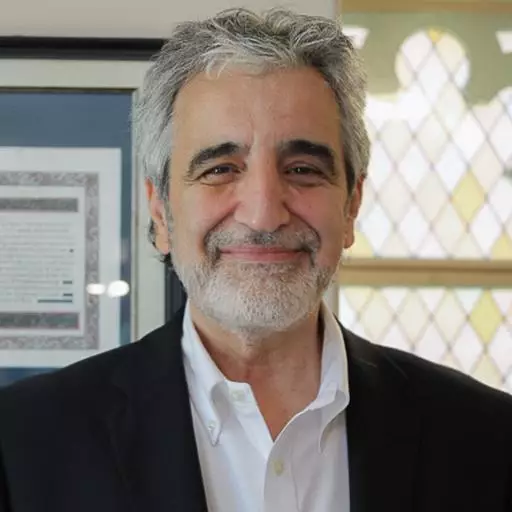
with Messianic Leader J. Isaac Gabizon
https://www.bethariel.ca
https://bethariel.ca/donate/
Guest (Female): Shalom, shalom and welcome to Shalom Ariel and to this our ninth message in our series on the Gospel of Mark with Messianic leader Jacques Isaac Gabizon. One thing that stands out in today's message is the apparent slowing down of time. We know Mark to be the quick storyteller, getting the facts out fast and promptly getting to the point. But now the river's current is slowing down a bit.
We have a moment to breathe and reflect as Mark takes the time to describe how Yeshua sought out four fishermen. And speaking of time, Yeshua took time in His ministry. He took time to rest, He took time to pray, and when He heard about Yochanan's beheading, He took the time to grieve.
But see how important it was for Yeshua to take the time and to deliberately seek out these two sets of brothers. He purposely passed along the seashore of the Galilee to find these men, and He will do His uttermost and in His time to seek out those who He has called to be fishers of men.
Blessed are those who respond to that calling without turning back to seek the things of this world. We often think of those poor fish in the sea who get caught in the net only to be eaten up. But blessed is the man and the woman who has been caught in the net of the Kingdom of God. For instead of being eaten, we will be eating at the wedding banquet, and we will be celebrating our salvation. For such a salvation as this has a net worth that cannot be measured.
Thank You, Lord, for behold, You alone are our salvation. Be blessed as you listen into today's program and shalom, shalom.
Jacques Isaac Gabizon: Shalom, shalom again, Beth Ariel and friends of Beth Ariel. One more time, welcome to our Shabbat service. I'm always looking forward to these times of gathering. They are like samples of a live illustration of what it will be like in eternity when we will all experience that never-ending Shabbat rest with the Lord and without any hindrance, and always learning and discovering and exploring. Amen and amen.
Let us open our Bibles to the book of Mark, chapter 1. In the first verses, we have seen the work of Yochanan Hamatvil, that is John the Baptist. We also were brought to the baptism of the Messiah and then to His temptation. But so far, no words of Yeshua were recorded in Mark until this section. And His first words are of great importance as they again open up and stamp a new era in history.
Let us begin with the introductory verse, verse 14. "Now after John had been taken into custody, Jesus came into Galilee preaching the gospel of God." Here we begin to see how Mark divided two portions of time: the pre-Messiah time from Adam to John, and our very time today until the Second Coming. It was only after that John was taken into custody or in prison that Jesus' ministry began. The first had to end before Yeshua's began.
Now it is true that John was taken to prison, as history testifies and as we were told in Mark chapter 6. But the Greek word here is translated "custody" or "prison" goes much further. Of its 117 mentions, only here and in Matthew is this word translated custody or prison in relation to John. But the word speaks further than just being arrested. It really means at the core: betrayed. That he was betrayed, that he was deceived. After that John was betrayed, Jesus came. The word brings us to see this ongoing battle against the Word of God and against those who proclaim it.
Who has betrayed John? But those who knew who he was but did everything to conceal his message. The other Gospels tell us about his constant arguments with the religious and civil authorities, and so, like most of the prophets of the Hebrew Scriptures of whom Yochanan Hamatvil represents here, he was betrayed and he was delivered to be killed.
Who was the final link in arresting and killing John the Baptist? It was Herod, and for a significant reason. Josephus, the first-century Jewish historian and a Pharisee as well, gives us the reason. He wrote, and I quote, "Herod," he says, "who feared lest the great influence John had over the people thought it best by putting him to death." According, he was sent a prisoner out of Herod's suspicious temper.
Here we learn something about John the Baptist. He must have been so popular and so well-liked and favored by the people. This made Herod fear that perhaps he would take over his kingdom, so he put him in custody and he killed them. This shows us how the work of the prophets from of old kept its course. But see that while the religious and civil leaders rejected both Yochanan Hamatvil and Yeshua, much of the population actually loved them. It's not the people of Israel who rejected the Messiah; it was the leaders over there.
But who was this Herod? There are many Herods in the Scriptures, in history, but in the Scriptures, they're rarely differentiated between each other because at the end, they're all the same. All of them were suspicious, distrustful, even toward their own families, surely because they all knew that they were not really supposed to be where they were. They were not supposed to be governing and reigning as royalty in the land of Israel. Their family line was appointed by the Romans. They were not Jewish; they were Edomites.
We can count at least six Herods. You have the first one, Herod the paranoid, called Herod the Great, who tried to kill Yeshua when He was a baby, if you remember. He killed his wife, he killed his sons because he thought they were conspiring against him. He had many children who also carried the title of Herod. Another one is Herod Archelaus, who apparently was worse than Herod Antipas. That is the one who killed John the Baptist, who ruled over Galilee and Perea.
Herod Philip II, or Philip the Tetrarch, Herod Agrippa, Herod Agrippa II, and after this, history speaks of the princes of the house of the Herods until they all disappeared. Concerning this Herod Antipas, there's even some irony concerning this one. In Mark chapter 6, verse 14, which later picks up on the story about John the Baptist, it opens up with the words "And Herod the king."
The point is that he was never king. He never obtained the title of king. He wanted so much to get it and he asked Tiberius Caesar in Rome to give him that title. He never got it. At the end, Tiberius got tired of him and fired him from his job and exiled him somewhere. More of him when we get in chapter 6, but that was the person who arrested John the Baptist. And so John the Baptist's arrest gave way for the Messiah to preach the Gospel of God.
What is the Gospel of God? Basically, it is the teaching found throughout the Scriptures. While it was said and adapted differently throughout the ages, the message is always the same: salvation by faith. Salvation by faith, which implies a recognition of sin attained through confession of these sins to God. This is something that Yeshua is going to bring back again. This is what was at the base of all the sacrifices and what is a fundamental doctrine of salvation we have in the New Testament.
At the time of Jesus, the Gospel of God actually needed to be emphasized again even more because Israel had fallen into the hands of another religion, that of man: the Pharisees, the Sadducees, the Essenes, who had moved away from the Word of God and devised new religions with new concepts. This is why they didn't recognize Jesus when He came. And while we also know that both the ministries of Jesus and that of John the Baptist overlapped for a while, here Mark sees them separate and distinct, most probably for the sake of emphasizing the opening new era of history.
This is what Yeshua does in His first words in verse 15. Listen to the first words: "The time is fulfilled and the Kingdom of God is at hand. Repent, believe in the Gospel of God." These are Jesus' first words to us in this book. Two things are spotlighted. First, the time is fulfilled and now the Kingdom of God is at hand. And second, repent and believe in the Gospel. These two statements set the stage for the ministry of the Messiah and ours as well.
Let's begin with the first: the time is fulfilled. Which time has been fulfilled? Historically, we can think of the many thousands of years which preceded His coming and which shows and demonstrates that man is not able to save himself. The nations from the Assyrian, Babylonian, Medo-Persian, the Greeks, the Romans, and not counting all the others who are not mentioned in the Bible, they all failed. Despite their grandiose power, they failed to bring salvation to man. They wanted to conquer the world; God allowed them to, but they made it worse instead.
And we can add with this long list of nations that of Israel, who in her case failed to conquer the world for God. So now with the coming of the Messiah, time is up. This is what it says. It has been completed, exhausted, finished, and this is why Jesus came to save man and to introduce what? The Kingdom of God. What is the Kingdom of God, which Yeshua says was and still is at hand?
What did Jesus mean when He said that it is at hand? Now this is when it becomes a little complicated, but if we get it, it will clarify so many things in the Scriptures and around us. The difficulty arises from the fact that Jesus speaks of the Kingdom of God as already present. And this is true. It is spiritually present for the believers because of the seed now planted in our heart and the presence of the Holy Spirit with whom we are sealed.
But on the other hand, Jesus speaks of the Kingdom of God as yet future, referring to a physical and spiritual kingdom in the Messianic time and the eternal state. I will show you two verses. On the one hand, Jesus says in Matthew 12:28, "If I cast out demons by the Spirit of God, then the Kingdom of God has come upon you." So the Kingdom of God has come. Then somewhere else He says in Luke 22:18, "For I say to you, I will not drink of the fruit of the vine from now on until the Kingdom of God comes." So the Kingdom of God still has to come.
While the Kingdom of God is present in us in a spiritual form and was established at His first coming, it will physically be established at His second coming. And that explains many things around us and brings us to consider another kingdom, a third one, the Bible speaks about and comes in between. One we are experiencing today, that is the kingdom of this world around us. Today if you ever wonder why things are so difficult, if you ever wonder why man has so much difficulties, it is because we are living within two parallel kingdoms.
The Kingdom of God and the kingdom of the world existing side-by-side is well, by the way, explained by Paul. When he says in 2 Corinthians 4:4, when he calls Satan the god of this world. He is called god just like, by the way, Herod Antipas is called king. And he says that he's the god of this world, but God says there's no other God. But you see two conflicting worlds together. This is where we're living in today.
This is in a nutshell what the problem is. And this struggle is reflected in the believer who is between the new nature, always struggles between the new and the old nature. It's always there, right? When we come to a saving knowledge of Yeshua, the old nature does not disappear because the Kingdom has not yet arrived. And so we have both nature in us, just like there is both the Kingdom of God and the kingdom of the world existing side-by-side.
The point Yeshua will explain through the parables, for instance, as He speaks of the wheat and the tares. The wheat being the believers and the tares the non-believers, both living together, both in the church and both also in the world, and yet belonging to different kingdoms. Jesus also will focus on the parable of the mustard seed in Mark, showing that the kingdom of the world will grow bigger and bigger and stronger until He comes back. And that is what we're seeing actually around us. They're winning, it seems.
So the recognition of these two parallel worlds helps us to see the great spiritual battle around us. There is one; there's always one going on. With the one, we have the promotion of evil, and then there are those who are fighting for truth, biblical truth. For instance, the battle between the pro-life who are fighting for the survival of the fetus, which the Bible considers as a human being.
And then there are the others who are really operating under the god of this age, who are fighting for what they call freedom of choice when they are entangled in the evil's net. Also consider the ongoing battle between those who belittle the great institution of the family and are promoting ungodly union and even the Assyrian and the Canaanites did not tolerate. These promotions, which is making evil more acceptable and tolerable, is something that the Lord, we've seen in history, will not tolerate for a long time. This is a sign of the end.
Now not differentiating these two aspects of the Kingdom of God has caused many problems within Christianity and has divided, in fact, Christianity into two camps. The church fathers, the most influential, believed and taught that the Kingdom of God had arrived right after the resurrection of Jesus. And at this point, they thought that Satan is bound, that the church was to convert the whole world, and that Israel has no longer any reason to exist since the church took over.
This theology was held especially from the time of Constantine and was held through the last 2,000 years, mainly through Catholicism. And today, as we're moving toward the end times, it is held with high regard with the majority of evangelical churches. This is the Church of Laodicea, who's actually growing. It is a fallacy to believe that the Kingdom is now and that the church will change the world, when after 2,000 years of church history, the heart of the world has not improved. Man's ego and his urge to war that is has not subsided.
We may be rich in technology and science and made great progress, but the heart of man remains the same. Only God can change that, and it will when Jesus will come back. For instance, let me give you one piece of information I read this week. I read that for the first time, the world is counting more than a hundred million displaced persons. In Ethiopia, in Burkina Faso, Myanmar, Nigeria, Afghanistan, Congo, Ukraine, clearly the Kingdom of God has not arrived yet.
And what shall we say of to the nominal church? Good job, you did a good job for the last 2,000 years? Yeshua will come back to establish His Kingdom. Then it will change. But there's good news. Good news in what Yeshua says in the words especially "at hand." The Kingdom of God, He said, is at hand, meaning that it's not yet, but it's coming very, very soon. That's what the word means.
The Greek word at hand, *eggizo*, it is from a root word meaning to squeeze, squeezing time so to speak, showing the close proximity this word conveys. And how close is it? In the New Testament, we read that Bethany was at hand from Jerusalem, and it's about eight kilometers. They were separated by eight kilometers. And so to give you an idea of the closeness of His coming, I looked at Google Maps and I saw that eight kilometers from this congregation is Pierrefonds-Sainte-Catherine.
So imagine Jesus being there and coming right here. That's how close the Bible says He is. He can come at any time. The words "at hand" speak of the immanency of the coming of the Messiah, meaning He can come at any time. But there's yet another aspect of the words of Yeshua when one considers the choice of words He uses for the word time. "The time is fulfilled."
The word used here for time that is is *Kairos*. *Kairos*, which is defined by a specific or a decisive moment as opposed to a more general word for time, which is *Chronos*. In this word are included all the biblical prophecies which are given to us, and they're not given amiss, but each of the hundreds of prophecies of the Bible are precise. They're pinpointing to a specific time.
For instance, when Yeshua wept over Jerusalem, He prophesied its imminent destruction, which occurred in 70 AD. And He specified that the things were prophesied actually by using the word *Kairos*. This is what He said in Luke 19:41-44. He saw the city and wept over it, saying, "If you had known in the day, even you, the things which make for peace, because you did not recognize the time (*Kairos*) of your visitation."
The time *Kairos*, the specific time of His first coming, His visitation was prophesied by Daniel as an exact time, by Micah as the place of His birth, by Isaiah as toward Israel's reaction toward the Messiah, by Zechariah as to Israel's reaction when He comes back, and to David in the manner in which He would be killed. These are the *Kairos* prophecies, accurate, detailed, and error-free.
It is the same way when Yeshua speaks of time in Mark. It's not general time, but very specific hours and eras that were prophesied. And the more we advance forward into the end time, which are unfolding in the specific time as well, the more the concept of *Kairos* becomes evident. This is why I believe in the inerrancy and the divine revelation of the Bible, every single word.
It was this particular exactness of the prophecies, the Messianic prophecies especially, which brought me to believe in the Word and in Yeshua. This is why I'm a dispensationalist. I believe in dispensations which teach that the Bible history and God's dealing with men are divided into specific portions of time. They're not giving a miss. They say that time is of the essence. This is an old expression by the way that is used in contract law, expressing the need for timely completion.
That is, time is running out and so it is the validity of the contracts that we should look at. So biblically we can say that *Kairos* is of the essence, right, not *Chronos*, where the contractor then no longer is bound by any obligation. The word is not fitting for biblical prophecies. *Chronos* is better translated "time at large." There's no such thing in the Scriptures. Everything is well-placed and well-timed.
Now that we realize that there are two kingdoms, the Kingdom of God and the kingdom of this world, the question that Yeshua now answers for us is: how to make the passage from one kingdom to the other? His answer has been the same by the way for thousands of years. They are found in the words "Repent and believe in the Gospel." Repent and believe. Repentance, that is true repentance, cannot be without belief or faith attached.
The word believe has the same root as the word faith. So without faith, repentance simply becomes remorse. And remorse will not get you to heaven. Remember Judas Iscariot. He confessed that he sinned after he delivered Jesus up to the priests, but this repentance was not accompanied by faith. It was merely a worldly contrition. So for true salvation to be realized, these two elements must be present.
But now there's another aspect for us. There's an important aspect in repentance and faith. While they open the Kingdom of God to everyone who believes, they do not stop at this point. They are daily necessary elements for the growth of every believer because sin is still present. Both repentance and faith are gifts from God, and the Bible encourages us to ask for them and to put them day by day into practice.
And unfortunately, not many believers have grasped that the key to everyday happiness is repentance and faith in God still. The difficulty some have in entering the doorway of the Kingdom of God and staying there is like the experience of the boy who got his hand caught inside an expensive vase. So his upset parents applied oil, they applied soap without success.
When they seemed ready to break the vase as the only way to release the hand, the boy, frightened boy said, "Would it help if I let loose the coins in my holding?" So it is too often with us. It's hard to let go of the things of this world. This is why daily repentance and faith will actually help you to open up your hand and let God hold it.
Jesus said it. He said "Seek ye first the Kingdom and I'll give you these things." Because He knows how tightly we hold some of these futile things in this world. And so after these two powerful verses, 14 and 15 of Mark chapter 1, it is at this time that things begin to slow down and rapidly. Imagine you're in a train going 100 kilometers an hour and suddenly it slows down to 30 kilometers an hour, and here you begin to see the details, more of the details.
But why the change? And this is beautiful. It has to do with the human element. It has to do with the believers. Here for the first time, Mark introduces the disciples. And these are so important to God, and so is every believer that everything stops. The Spirit slows down, takes His time and focuses on them and on you as well, who believe in Yeshua.
At the time when one became a disciple of a rabbi, this one always stayed close to his master. He often traveled with him, lived with him, and imitated him, observing his reaction in everyday life. And so from this point on, the disciples rarely leave Jesus' side. It is with verse 16 that the training of the twelve begins, and so is ours by the way.
Let us remember each of us is the 13th disciple, for all was set and done to them is also to us as well. Through His ministry, just want to remind you when Yeshua answered the Pharisees or when He answers the scribes' question, it was really for us to hear the answer. He knew the hearts of His opponents. He knew that many of them had made the decision to reject Him no matter what. But His answers were for the disciples; they were for our learning.
Now where exactly is this train situated and what point did the driver decide to slow down? It seems that as it is going around the Sea of Galilee, He slows down right where four disciples were, a set of two brothers. They were fishing or repairing their nets. Now let's read these short five verses, verses 16 to 20, and see how these follow Jesus so fast.
As He was going along the Sea of Galilee, He saw Simon and Andrew, the brother of Simon, casting a net in the sea, and they were fishermen. And Jesus said to them, "Follow Me and I will make you become fishers of men." Immediately they left their nets and followed Him.
Guest (Female): Shalom Ariel is a daily radio program emphasizing the Jewish perspective of Scripture. God is not through dealing with Israel, nor will He renege any of the promises He has made to her. Our teacher for this program, Jacques Isaac Gabizon, is a Messianic Jewish believer and Messianic leader at Beth Ariel congregation right here in Montreal.
If you've been encouraged by the messages, we'd love to hear from you. Give us a call at 1-888-685-5902 or you may write us at info@bethariel.ca. You are also welcome to join us for our Saturday morning services. We are located at 6297 Monkland Boulevard, corner of Madison in NDG. The message is given in English, but we do offer simultaneous translation into French and Russian.
Services begin at 11:00 AM. We have Shabbat school for children of all ages up to and including teens. You may also download audio messages from our website at bethariel.ca and enjoy other in-depth teaching from Jacques Isaac. If you would like to sign up for informative newsletters, log on to our website and add your name to our email list.
Shalom Ariel is a listener-supported program. If you have it on your heart to donate, it will be a great blessing for the continuing ministry and outreach of Beth Ariel. Thank you and shalom, shalom.
Featured Offer

Prophecies take up about ¼ of the Scriptures so we cannot simply ignore them. Knowing prophecy enables us to give a clear presentation to others of why things unfold the way they do in such areas as politics, morality, technology and global ecological changes. It also helps us to rightly place Israel in God’s prophetic plan.
Past Episodes
- The Armor of God
- The Believers in the End Times
- The Book of Daniel
- The Book of Deuteronomy
- The Book of Ephesians
- The Book of Esther - Purim
- The Book of Exodus
- The Book of Ezekiel
- The Book of Ezra
- The Book of Genesis
- The Book of Hebrews
- The Book of James
- The Book of Jeremiah
- The Book of Joel
- The Book of John
- The Book of Leviticus
- The Book of Numbers
- The Book of Philippians
- The Book of Revelation
- The Book of Romans
- The Book of Ruth
- The Book of Zechariah
- The Feast of Passover
- The Feast of Purim
- The Feast of Shavuot - Pentecost
- The Gospel of Mark
- The Gospel of Matthew
- The Letter to the Galatians
- The Messiah in Isaiah
- The Messiah in the Book of Isaiah
- The Messiah's Prayer
- The Nativity: The Unwrapped Gifts of God
- The Resurrection of the Messiah
- The Sermon on the Mount
- The Tabernacle

Video from Jacques Isaac Gabizon
Featured Offer
Prophecies take up about ¼ of the Scriptures so we cannot simply ignore them. Knowing prophecy enables us to give a clear presentation to others of why things unfold the way they do in such areas as politics, morality, technology and global ecological changes. It also helps us to rightly place Israel in God’s prophetic plan.
About Messianic Viewpoint
About Jacques Isaac Gabizon
Contact Messianic Viewpoint with Jacques Isaac Gabizon
info@bethariel.ca
http://www.bethariel.ca/
Beth Ariel Congregation
CP 46521 CSP Boul. St Jean
Pierrefonds, QC, H9H 5G9
Toll free (888)-685-5902