
The Gospel of Mark, Part 8


The Gospel of Mark, Part 8
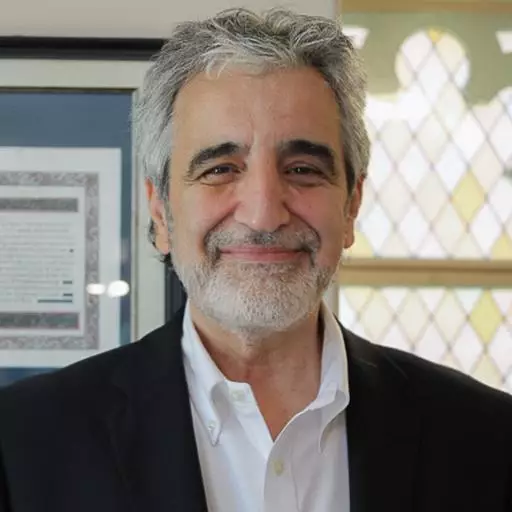
with Messianic Leader J. Isaac Gabizon
https://www.bethariel.ca
https://bethariel.ca/donate/
Guest (Female): Shalom and welcome to Shalom Ariel and to this our eighth sermon in the Gospel of Mark with Messianic leader Jacques Isaac Gabizon. Some say that the wild beasts which Yeshua faced in the wilderness were actual animals: serpents, leopards, or lions. But there are some who say that these were demons which he encountered.
But the Son of God, as the last Adam, would control these fallen beasts, even as the lions in the den had their mouths shut, and he would control the ultimate beast, the devil. The great battle ensued, and the Son of God would be victorious, for the spirit of God would now rest in the man who was a perfect recipient of all the available powers made through the spirit.
While we can grieve the spirit in many ways, Yeshua was the perfect vessel of righteousness because of the spirit who overshadowed him all the days of his life. And when Yeshua, the Son of God, went into the desert, we hear very little from the book of Mark about the actual temptation itself. Perhaps this shows us that God will not necessarily expose us to the many aspects of evil.
After all, who can understand the depth of evil? It's not our battle to bear; only the Lord knows that. We don't need to hear all the details, but what we do need to do is trust what he has already done for us. He has already defeated evil. So let's stand alongside the Great I Am. Be blessed as you listen into today's program, and Shalom.
Jacques Isaac Gabizon: But there's yet another passage I want to share with you, as powerful as those which precede. It is found in Genesis 22 in the Akedah, that is, in the attempted sacrifice of Isaac, which in fact was a type of the sacrifice of Jesus. Now see how verse two reads of Genesis 22. It says, "Take now your son," God speaks to Abraham and he says, "your only son whom you love, Isaac, and go to the land of Moriah, and offer him there as a burnt offering on one of the mountains of which I will tell you."
The unusual language here clearly tells us to look way beyond Isaac. That wasn't for Isaac. Isaac was not the only son. There was one before him, and there were many others after him. And Isaac was never given as a burnt offering on Mount Moriah, which is Jerusalem. But the other son did fulfill these two requirements: the Messiah, the only begotten Son of God, did fulfill these two requirements.
The Messiah is the only one who was offered as a sacrifice in Jerusalem on Mount Moriah. The Messiah is the only true beloved of God and begotten Son of God, and he fulfills all the requirements for our salvation. And when Mark spoke these words, surely many in Israel must have made the connection between Isaac and the coming Messiah. What is striking here is that the Septuagint for Genesis 22:2, instead of saying "your only son whom you love," translated it just like what Mark says, "your beloved one."
The same word that Mark uses, thus making the connection, perhaps wanting to bring the hearer back to the remarkable story of the Akedah and consider, could this be the one who fulfills the Mount Moriah sacrifice? See the progression? The progressive revelation of the Messiah from Genesis to Psalms to Isaiah to Mark. All of this brings us to the title of the Son of God.
Why this name right here, and what does it mean, at least in the context of Mark? The answer may be found when we consider those men who had this title in the Hebrew scriptures. There are two of them, by the way. The first one is Adam. He's called Adam, the son of God, in Luke 4:38. The second is actually Israel. The nation is called the son of God in Hosea 11:1. "When Israel was a youth, I loved them, and out of Egypt I called my son," it is written.
But what is the relation between Adam, Israel, and Jesus? Both Adam and Israel failed in saving the world. Adam, the son of God, failed in his obedience to God. Israel, the son of God, failed also in her obedience to God. Both represent humanity, and both were not victorious. So the third, the last Adam, came from heaven to save man. He did not replace Adam. He did not replace Israel, but he fulfilled the task that both could not do so they could live and do the things they were called to do. That's the story here.
Jesus attained and realized God's requirement for all of us, all of us. He did this through his sinlessness and his holiness and his power, and in so doing, he saved both Adam and Israel, that is, the whole world. Now both mankind and Israel can come back to resume their task, because in Jesus we find ourselves. In Jesus, we can be the best of ourselves, individually and as a nation, of course.
And then is the first mention of the title, Son of God, for we see that it is a major title of authority that Satan actually will challenge Jesus at the temptation. Two of the temptations begin with the words, "If you are the son of God." But Yeshua succeeded, and praise God for this. And his triumph at the temptation shook the demonic world.
For we read later on in Mark, who really looks at the demonic world, in Mark 3:8, that whenever the unclean spirits saw him, they would fall down before him and shout, "You are the son of God," confirming his victory in the wilderness. They were all compelled to declare their defeat by declaring Yeshua the Son of God.
You remember the words in Philippians 2:10 or in Isaiah 45, which says that every knee will bow, of those who are in heaven and on earth and under the earth. This has begun to be fulfilled when the Messiah was on earth, even before he was crucified, for at the temptation, he had already won the battle. This is the great news. And there's a beautiful truth, by the way, for us in the fact that Yeshua is the Son of God.
Let me give you a very simple story. Once someone asked a little boy, "How many brothers do you have?" So the child stated the number, adding, "And I have one in heaven." So his mother right away said, "No, no, my son, you have no brother in heaven; they're all here on earth." But the little boy responded, "Yes, I have. Didn't you tell me that God was my father and that Jesus is the Son of God? Then he must be my brother as well, right?"
As simple as this story is, there's so much truth in there we need to grasp. Have you thought of Jesus as your brother? Your brother in heaven who's always there to help you out? There's one saying of Jesus after the resurrection which enhances this. It is when he spoke to Mary. Do you remember Mary, when she recognized him, she held onto him and she didn't want to let him go?
Do you know what he said to her? Look at John 20:17, the second part. He says, "Go to my brothers and say to them, I ascend to my father and your father, to my God and your God." See how he makes himself so present? He says, "My father who is your father, my God who is your God." Only a brother in heaven could speak like this. And see that he calls the disciples brothers now. Go to the brothers, that is, mine and yours.
Here's, by the way, in this, the powerful Son of God who defeated the forces of evil, stooping down to us and saying, "I am your brother. I can walk with you all the way." This is such a great passage. You know that just before, Thomas called Yeshua God. And yet John has him refer to as Father and his God. This saying shows us how the divine being willed to come down to be like us, to have been tempted and to have and still be always available until we reach the eternal abode. This is a passage of humility we have here.
And this is when we enter this crucial passage about the temptation. Now, don't be misguided by its brevity, for though it is short, I want to tell you it conveys a lot. Let's read the words of Mark 1:12-13. "Immediately the spirit impels him to go out in the wilderness. And he was in the wilderness forty days, being tempted by Satan; and he was with the wild beasts, and the angels were ministering to him."
Here's another "immediately." Mark loses no time. He does not either give us much time to breathe. And I'm glad this is written down so we can stop when we want; in fact, we need to stop. But see how he carries us in the wilderness. First, the word "impels" is very powerful. It is like to throw somebody, to cast out somebody. Here Yeshua goes right away as his first duty to the wilderness to confront Satan.
And the Greek actually says that the spirit impels him to go out. Here we have the first historical present, because in your translation, you might have had it in the past tense. So here, the first historical present. But Mark wrote it in the present tense, as if he wanted us to live the moment with Yeshua and go there in the wilderness with him. It's like being drawn in, transported right into the scene of a movie and finding ourselves living with the actors.
And this is how it really should be, for this is who the believers are. We are not spectators or bystanders, especially when we read the scriptures, because this wilderness experience concerns us. And while the affirmation is scanty, but again, of what we are told, there's so much to pull. We're told that Yeshua was there for forty days. The number forty is the number of testing, and it reminds us of the forty years Israel was in the wilderness.
Jesus is walking the same path, by the way. Both went through the Jordan. In the case of Israel, the Jordan opened up, if you remember. In the case of Jesus, the heavens opened up. In the first instance, Israel enters to gain that physical promise. With Yeshua, believers now get permission to enter into a spiritual promise. Second, have you noticed those beasts and angels? Now, why mention the beasts?
Mark is the only one who mentions the beasts, and in relation to the temptation. Matthew, Luke, or John do not bring this word at all in their gospel. But the question is, how would the beasts, which really were very few in the wilderness, disturb the Messiah? The answer may be in the word itself. The one word in the Greek for wild beast is "therion," one that is used to describe the forces of evil, even the Antichrist himself.
The therion that comes out of the sea in Revelation 13, or the therion that comes out of the abyss in Revelation 11. Also, those who were familiar with the Hebrew scriptures and heard Mark, they must have made this connection with Isaiah 13, where the demons are found in the wilderness and are given names. Many commentators thought they were names of animals. And in Mark, they are put in contrast with the angels of God, indicating, I believe, that there was a great spiritual battle right there.
After all, the Messiah was coming to upset the demonic world. In the book of Daniel, for the delivery of just one prophecy, we read that the prince of the kingdom of Persia, a demon, he was withstanding Daniel for 21 days until Michael came to save him. But all of this was just for one prophecy. Imagine what must have happened when the Messiah came down to fulfill all prophecies.
Surely all the forces were mobilized to stop Yeshua, but they could not. The triumph at the temptation opened the way for the ministry of the Messiah and for each one of our salvation. Now, why is such an important account made so brief in Mark? Here, the spirit of God does not mention the conversation between Yeshua and Satan. Why? He doesn't tell us how Jesus used the word of God, which is important three times to confront the evil one.
He doesn't tell us that these three quotations were actually from the book of Deuteronomy, that book which triggers so many revivals. Why? But through the brevity of the account, he may very well direct us to another book of the Torah, that is the book of Leviticus. There is there a very similar account of confronting evil and taking all the sins of the people of Israel, and the account is also a very short one and a very important one. This is the account about the Azazel, if you remember.
In this account, a goat is let go into the wilderness to meet Azazel. And we are told that on this goat were all the sins of Israel. This is what it reads, Leviticus 16, just two verses, 21-22. "Then Aaron shall lay both of his hands on the head of the live goat and confess over it all the iniquity of the sons of Israel and all their transgressions in regard to all their sins. And he shall lay them on the head of the goat and send it away into the wilderness by the hand of the man who stood there. And the goat shall bear on itself all the iniquities to a solitary land, and he shall release the goat in the wilderness."
But that's all we have, by the way, in this account. All the sins of Israel is laid on the goat, the goat goes to Azazel, and then the account is cut short completely, just like in Mark. Is the shortness of the account in Mark pointing to this very crucial confrontation with Azazel done on every Yom Kippur, every day of atonement? The temptation then must be the final day of atonement, when the Messiah confronted Satan, who is here named by the name Satan.
He's the Anglicized form of the Greek use of a Hebrew word meaning adversary. This is what Satan means. And I would like to point out something very interesting here: a similarity that is seen when these two accounts are compared. Leviticus 16:21-22 and Mark 1:12-13. Both accounts contain the exact same number of words. Leviticus has 31 Hebrew words. Mark has 31 Greek words.
The number reminds us perhaps of the 31 nations present in the promised land where Joshua came to conquer it. 31 times Joshua, who has the same name as Yeshua, had to fight his way in the land and subdue one king after another, 31 times over, and transform this wilderness into a promised land. And beyond this, the number 31 is the numerical value of the name of God, El, El. Aleph for one, Lamed for 30.
The name El speaks of God's power, strength, and might. It is the singular of Elohim, which is a name attributed to God over 2,200 times in the Bible. This is who was sent to confront Satan. Furthermore, at the time Mark was written, there was a belief that Azazel was seen as a leader of all the demons and that he was bound somewhere in the wilderness. And here Mark says, here he goes to the wilderness to confront Satan, and he names him by name.
So the brevity of the account sounds so much like the account of the goat on Yom Kippur who went to confront the Azazel, who is Satan himself. It's not such a brief account, by the way. Now to conclude, what do we do with all this great account of the baptism and the temptation of Jesus? There's some great news behind this text. Yeshua went in the wilderness actually for us to confront Satan.
And today, knowing that he has been tempted in all things as we are, yet without sin, as Hebrews 4 tells us, he has become for us a refuge. After reading all this, you want to run to Yeshua, you want to make sure you sustain your relationship with him. He is the one person we can go to any time. He can sympathize, as the verse says, with our weakness. Why? Because he went there for us.
The word sympathize sounds the same as the Greek "sympatheo" from a root word meaning having great compassion for one another. And this describes one who is affected by the hardship of the others. Furthermore, at the temptation itself, something changed after Yeshua's experience. When he went to be tempted, it was Satan's aim to destroy him, by the way, because this is what the word "tempt" means in the Greek.
This term in the Greek is used when one wants to find faults in order to reject that person. But Yeshua had no fault at all. But for those who have put their trust in God since this time, Satan's power to tempt are limited and actually turned for the benefit of the person. Let us now remember that temptation in itself is not a sin, but falling in it is the sin.
Testing, on the one hand, is often allowed to better sharpen the believer. And this testing often comes on the heels of the ministry. Just before you start a work, you will find there's always going to be a lot of temptation. We remember that no sooner than David had been anointed king of Israel that for ten years, Saul was pursuing him to kill him. We remember that no sooner that Israel was formed and called a nation for the first time, that Pharaoh sought to kill all of them, to wipe out the nation itself.
Like a toolmaker, when he has finished an instrument, he tests it before he sends it out. Every believer, actually, is being always tested and for the better. And so for us believers, there's another word that is often used for a testing. The Greek word "dokimazo" is the term used in jewelry for testing the genuineness of the metal. The alloy or the extra metal is often burnt away so that what you find at the end is only the pure 24-karat gold.
And every believer, whoever he or she is, is becoming that precious piece of jewelry that is made out of this gold. Now to close, we've seen that the name of the Son of God was given to Adam, it was given to Israel, then to Yeshua who saves us. But one other group of persons is also called the sons of God. You know who, of course? The believers. Galatians 3:26, "You are all sons of God through faith in the Messiah Yeshua."
This is a great privilege we have been given here by being called sons of God. It means that the spirit is in us and working a new nature in us so that we can bless others. In C.S. Lewis' work, "The Lion, the Witch and the Wardrobe," the first place that the great lion Aslan, who typifies the Messiah, goes after his resurrection, he goes to the citadel of the White Witch. He then breathes on the statues, and the statues became living beings.
Actually, with this illustration, the author depicted the work of the believer. The Messiah will turn lifeless statues into powerful living beings, and he does it through us. This is our work. Go ahead and breathe the word. By the way, the word breathe is the same for the spirit, the wind, the Ruach, in Greek and in Hebrew. And so let's go and storm Satan's gates, because Yeshua has won already. Amen? Let's bow our heads in prayer.
Avinu Malkeinu, our father, our king, you've made us your children, and this is great. And now that we are your sons, Lord, and now that your Son also has paved the way for us. And so, Lord, make us ready and willing to be sent as well. Be now among us and teach us how we can keep your word and follow you every day, every hour, every minute of our lives. Help us to realize your full presence so that we can do this work, Heavenly Father.
As for the many temptations around, remind us today of those old and sturdy words in Psalm 46: "God is our refuge and strength, a very present help in trouble. Therefore we will not fear, even though the earth be removed, and though the mountains be carried into the midst of the sea, though its waters roar and be troubled, though the mountains shake with all its swelling."
Lord, remind us to be still and know that you are God. Remind us that the Lord of hosts is with us, the God of Jacob who is our refuge. And for those here, Lord, those here who are present, those who are listening today, needing this very present help in trouble, I ask that you display yourself to them, dislodge fear from them and undertake for them.
Multiply grace and peace onto them, and may the evil one be soon crushed under their feet. We pray in Yeshua's name. And to the congregation: the Lord bless you and keep you. The Lord make his face shine upon you and be gracious to you. The Lord lift up his countenance upon you and give you peace. Amen and amen.
Guest (Female): Welcome to this segment of the program, which is called Q&A, questions and answers, where we ask Messianic leader Jacques Isaac Gabizon some of the questions that have been sent in by you, the listener. Today's question deals with women and head coverings. So be blessed as you listen.
Today I read 1 Corinthians with another sister. We had a question about verse 10 of chapter 11, which says, "For this reason and because of the angels, the woman ought to have a sign of authority on her head." We don't understand why angels are mentioned here. Thank you for your help.
Jacques Isaac Gabizon: By the way, this is a very good question, and let us first put that verse in the context of the book of 1 Corinthians. In this chapter of 1 Corinthians 11, Paul was concerned with believers' behavior in the church and also in society. He stressed some of the society's norms, such as men not having their heads covered in verse seven, or keeping their hair long—they were not supposed to at that time—or that men would have short hair, that's in verse 14, or for women to have their heads covered.
These things were among the social norms of Paul's day, and he is reminding us that we should abide under these demands, which were considered proper at the time, so that the proclamation of the word of God will not be hindered. As for the angels, Paul reminds us that we are not only being examples to society, but to angels as well. The scriptures teach that angels are not only spectators, but they are also learning from the believer, always observing how we behave under the workings of the Lord in us and through us.
These beings who never sinned did work under Satan and know his powers, and here they are observing us, frail as we are, prevailing through the grace and power of God, and so they are amazed. They're amazed, not at us, not at us, but at how God deals with us. Which scriptures speak of angels observing us?
We read in 1 Corinthians 4:9, it says, "For we have been made a spectacle to the world, both to angels and to men." Furthermore, Peter reminds us that they are actually learning the graces of God through us. In 1 Peter 1, he speaks of how the prophets of the Hebrew scriptures were searching the spirit of Christ. And then in verse 12, he adds, "Things which angels desire to look into."
So these angels are looking at us and are being amazed at the way we grow in our sanctification under the Holy Spirit, even in such an evil world and under the god of this age. So Paul then asks us to live in such a manner as to always bring glory to God, whether at church, in the world, or by ourselves, when we are with ourselves, that is.
Guest (Female): Shalom Ariel is a daily radio program emphasizing the Jewish perspective of scripture. God is not through dealing with Israel, nor will he renege any of the promises he has made to her. Our teacher for this program, Jacques Isaac Gabizon, is a Messianic Jewish believer and Messianic leader at Beth Ariel congregation, right here in Montreal. If you've been encouraged by the messages, we'd love to hear from you. Give us a call at 1-888-685-5902, or you may write us at info@bethariel.ca.
You are also welcome to join us for our Saturday morning services. We are located at 6297 Monkland Avenue, corner of Madison in NDG. The message is given in English, but we do offer simultaneous translation into French and Russian. Services begin at 11:00 AM. We have Shabbat school for children of all ages up to and including teens.
You may also download audio messages from our website at bethariel.ca and enjoy other in-depth teaching from Jacques. If you would like to sign up for informative newsletters, log on to our website and add your name to our email list. Shalom Ariel is a listener-supported program. If you have it on your heart to donate, it will be a great blessing for the continuing ministry and outreach of Beth Ariel. Thank you and Shalom, Shalom.
Featured Offer

Prophecies take up about ¼ of the Scriptures so we cannot simply ignore them. Knowing prophecy enables us to give a clear presentation to others of why things unfold the way they do in such areas as politics, morality, technology and global ecological changes. It also helps us to rightly place Israel in God’s prophetic plan.
Past Episodes
- The Armor of God
- The Believers in the End Times
- The Book of Daniel
- The Book of Deuteronomy
- The Book of Ephesians
- The Book of Esther - Purim
- The Book of Exodus
- The Book of Ezekiel
- The Book of Ezra
- The Book of Genesis
- The Book of Hebrews
- The Book of James
- The Book of Jeremiah
- The Book of Joel
- The Book of John
- The Book of Leviticus
- The Book of Numbers
- The Book of Philippians
- The Book of Revelation
- The Book of Romans
- The Book of Ruth
- The Book of Zechariah
- The Feast of Passover
- The Feast of Purim
- The Feast of Shavuot - Pentecost
- The Gospel of Mark
- The Gospel of Matthew
- The Letter to the Galatians
- The Messiah in Isaiah
- The Messiah in the Book of Isaiah
- The Messiah's Prayer
- The Nativity: The Unwrapped Gifts of God
- The Resurrection of the Messiah
- The Sermon on the Mount
- The Tabernacle

Video from Jacques Isaac Gabizon
Featured Offer
Prophecies take up about ¼ of the Scriptures so we cannot simply ignore them. Knowing prophecy enables us to give a clear presentation to others of why things unfold the way they do in such areas as politics, morality, technology and global ecological changes. It also helps us to rightly place Israel in God’s prophetic plan.
About Messianic Viewpoint
About Jacques Isaac Gabizon
Contact Messianic Viewpoint with Jacques Isaac Gabizon
info@bethariel.ca
http://www.bethariel.ca/
Beth Ariel Congregation
CP 46521 CSP Boul. St Jean
Pierrefonds, QC, H9H 5G9
Toll free (888)-685-5902