
The Gospel of Mark, Part 71


The Gospel of Mark, Part 71
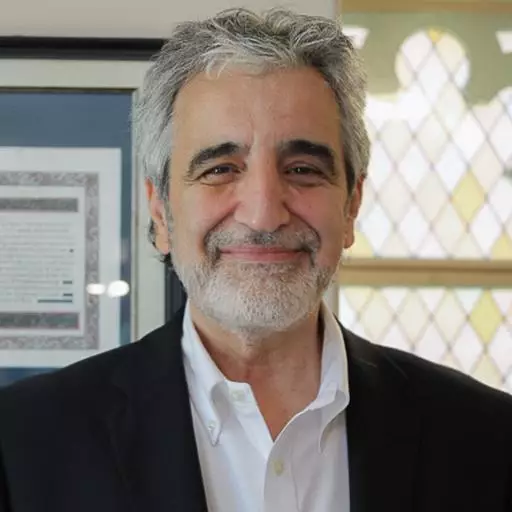
Messianic Leader J. Isaac Gabizon
https://www.bethariel.ca
https://bethariel.ca/donate/
Guest (Male): Shalom and welcome to Shalom Ariel as we enter into our 71st sermon from the Gospel of Mark with Messianic leader Jacques Isaac Gabizon. In Mark 11:25, we read a beautiful passage which says that whenever you stand praying, forgive. These two actions, each one so affecting the other. How can we consider ourselves to be praying the will of God and expecting answers to these prayers if our hearts are not firmly planted in the action of forgiving? Forgiveness is probably the greatest demonstration of love in action.
Love and forgiveness go hand in hand. Therefore, prayer, together with love and forgiveness, go hand in hand. And when we are praying, love for the Lord and love for the other must be at the root of the prayer, or the prayer becomes self-centered and earthly. If we cannot muster enough love to forgive another, then how can we expect to experience in our own lives the Lord's forgiveness?
Do you remember what Yeshua said of the woman who loved so much? Why did she love? Because she understood how much she was forgiven. Love and forgiveness and prayer. Have you forgiven so that your prayers may be established according to the will of God and therefore answered? We can see how forgiveness and prayer are so closely intertwined and that brings to mind another two terms, each one affecting the other in the same way that prayer and forgiveness are matched up.
In Psalm 85, it says that righteousness and peace will kiss. We see the outworking of that righteousness through the Messiah and what He did for us. His righteousness was imputed to us, and therefore we are made righteous in God's sight. Because of that righteousness, because the condemnation was lifted off from us, we have peace with God. Righteousness and peace kiss like separated friends, because when they meet, there is a beautiful union that takes place.
By His righteousness, by the stripes that He took on our behalf, we are healed and we have His peace. That peace of being forgiven enables us to love and therefore to pray as we should and ultimately see our prayers answered. What a beautiful equation that adds up to a successful and sanctified walk with the Lord. Be blessed as you listen into today's program, and shalom, shalom.
Jacques Isaac Gabizon: Never before in the history of Israel have we seen so many demons in Jerusalem. They must have all come down to try to prevent this great moment of redemption. I believe they felt it. It was also at this time that Yeshua spoke of the cup He was about to drink and the baptism He was about to be baptized with, speaking of His suffering and death. Already the priest thought of ways to kill Him. Already we learn from the Gospel of John that they had decreed that all who follow Yeshua will be excommunicated completely from the community. And to all this, Yeshua says, and I want to tell you so calmly, have faith in God.
All was already prophesied. All was known and well-planned by God, and nothing escapes His notice. Have faith in God, He says. And furthermore, considering the immediate context, this comes right after Yeshua cursed the fig tree. It was perhaps to remind all believers that judgment and vengeance is in God's hands, not ours. We are not called to imitate Yeshua here. We have no power to curse, but we have power to love. We have the power of faith. This is our work.
Prophecies speak of a great judgment to come. We are not to add to this but to warn, knowing that these things will happen and our warnings must be coupled always with love and with compassion for others. The next verses are so powerful as they speak of these powers that the Lord has given us, especially in difficult times. See what He says in Mark 11:23-24. These I want to tell you must be some of the most powerful verses here.
Truly, I say to you, whoever says to this mountain, "Be taken and cast into the sea," and does not doubt in his heart, but believes that what he says is going to happen, it will be granted him. Therefore, I say to you, whatever thing you ask when you pray, believe that you receive them and you will have them. This is the power of prayer that the Lord has given us. Whatever we ask in His name, we will have them. These are His words, by the way.
However, there are some things to consider, for this promise does not stand alone in the scriptures. Let me start by saying that this is not carte blanche, that is, freedom to wish what one thinks best and pray for it and get it. That's not what it says. You can pray for days and believe to the utmost that God will give you a Lamborghini, let's say, or a few million dollars. It won't happen unless you fulfill all the requirements.
There are many other places in the scriptures that complement this saying by adding some key essentials, some obvious things, in fact. What is clear and plain in the scriptures when it comes to prayer is that prayer must be according to the will of God. We read this in 1 John 5:14. This is the confidence which we have before Him, that if we ask anything according to His will, He hears us. According to His will, that is the first requirement. Anyone can pray, and some can pray the most beautiful prayer, but are they according to the will of God?
To know the will of God means to know God, as He reveals Himself in His word, as He lives in other people, and as He manifests Himself in prayer time. To know the will of God requires a person to have a close relationship with Him. It is only when we have met our Lord in the silent intimacy of our prayer and have learned to recognize His presence and have developed the fear, the great respect of the Lord, then you can move mountains.
It has often been said that the purpose for prayer is not to get man's will done in heaven or on earth but to get God's will done on earth. Prayer requires that we seek His will, not ours. So, prayer requires some work before we can expect a positive answer. This is why James meant when he says, "Don't ask amiss." Furthermore, the Bible says that our request will be granted if we don't live in sin. That is so obvious that it was known three thousand years ago.
We read this in Psalm 66:18, where the writer says, "If I regard wickedness in my heart, the Lord will not hear." Plain and simple and very logical. Of course, there's always some sin in our lives, but as long as we recognize the sins and confess them to the Lord and as long as we're on our way to remove them from our lives, then and only then our prayers will be answered. The Bible says that our prayers are fulfilled if we abide in Yeshua.
John 15:7 says, "If you abide in Me and My words abide in you, ask whatever you wish, and it will be done for you." This also is obvious. It's logical. But what does it mean to abide? It means to remain. It means to continue. It means to live with the Messiah at all times, not one day a week, not a few hours a day. In secular Greek, by the way, this word "abide" was first used to describe one who stood fast in battle. This was the first meaning.
The Bible says that prayer will be granted when we persevere. We're told in 1 Thessalonians 5:17, "Pray without ceasing." That doesn't mean that we should repeat the same words over and over. It means that we believe in it and we pull the rope nonstop. Remember the parable of the woman and the judge in Luke 18? This woman was so persistent that the wicked judge could not take it anymore and granted her wishes.
And so our righteous Lord, who is always looking to bless, will He not notice our persistence in our prayer? Will He not grant our requests? Prayer is such an essential element in the life of a believer. We're not told that Jesus ever taught His disciples how to preach, how to be hospitable, how to do so many things, but He taught them how to pray. If we get the prayer right, the rest will flow and also many blessings will come over. It shows when a believer has a life of prayer. It shows when a believer doesn't have a life of prayer.
But now there is one thing that the Lord adds to the requirements of prayer, something that we perhaps hardly associate with prayer. You know what? Forgiveness. See the next verse, Mark 11:25. I'm going to quote only the first words. Whenever you stand praying, forgive. What does forgiveness have to do with prayer? Have you thought about it? You know that the whole concept of prayer to God is based on the fact that He forgave our sins.
His forgiveness allows us to come to His throne with our prayers. And so if we pray and have not forgiven someone, then we're defeating the whole purpose of prayer. Do you remember the story of the man who actually owned something like 120 billion dollars to somebody else? That's a lot of money, by the way. But lo and behold, the person to whom the money belonged suddenly forgave him the debts and he says, "Go ahead, it's free."
And then, as the story goes, someone else owned this forgiven man an amount of about 20 thousand dollars. He got so angry that he laid his hand on him and took him by the throat and he said, "You better pay me that money." Is this fair? He was forgiven a debt of about the equivalent of 120 billion dollars and does not forgive a debt that was 6 million times lower. This is the story of the ten thousand talents in Matthew 18. When the person who forgave these ten thousand talents found out, what do you think he did? What do you think he should have done?
Let me tell you what Yeshua said in Matthew 18:33. "Should you not also have had compassion on your fellow servant just as I had pity on you?" That means forgive. And so forgiveness is one essential requirement for prayer to work. This is what Yeshua says. To read all the words of this text, Yeshua says in Mark 11:25-26, "Whenever you stand praying, forgive. If you have anything against anyone, so that your Father who is in heaven will also forgive you your transgressions. But if you do not forgive, neither will your Father who is in heaven forgive your transgressions."
Have you noticed the last words? If you don't forgive, neither will your Father in heaven forgive your transgressions. Now, I want to tell you something. This has nothing to do with your salvation. If there was a condition to salvation, then it would be salvation by works, so it is not. It has to do with the blessings we receive from the Lord. They are there in heaven and many must right now be held up because of an unforgiving spirit or perhaps given by droplets according to the way we forgive.
Have you ever thought of it this way, that our happiness depends on how much we forgive? And forgiveness goes both ways. We are called to forgive others, but we're also called to forgive ourselves. Many are living a life of self-condemnation, but why? Is the work of Yeshua on the Tav not sufficient enough? This is not due to humility, by the way. This is due to pride as well. Forgiveness should be applied to all whoever they are.
Let me tell you a story I just read last week. The story I read, it's about Napoleon in his victory on the Battle of Borodino against Russia. Losses on both sides were heavy. As Napoleon walked the battlefield the next day taking account of the dead, he heard a cry of pain from a fallen soldier and ordered a stretcher. So one of his aides pointed that the wounded man was a Russian. But Napoleon answered, "After a victory, there are no enemies, only men." How much more should we say this after we have the victory of the Tav of the cross on us? And how much more should we forgive and ourselves as well?
And so while these things were heating up in Israel, all leading to the arrest and death and of course the resurrection of the Messiah, here He brought out three things, right? Faith, prayer, and forgiveness. This is the formula in times of fear and anxiety and against all types of world commotion. Faith comes from God. You can ask for it. It is given so that we can develop this heavenly hope and this conviction of a better world out there. Hebrews 11 testifies of this. Praying and forgiving is what we ask to do ourselves so that we can receive blessing during our journey here on earth.
And there's yet one more, one more element to add to these things. Now considering how forceful Yeshua was in cleansing the temple from its sellers, the religious authorities actually came to him to ask Him about His authority. That was a legitimate concern of theirs. However, Yeshua, knowing that they have already made the decision to kill Him, does not answer their question. He answers by another question. See verse 29-30.
And Jesus said to them, "I will ask you one question and you answer me, and I will tell you by what authority I do these things. Was the baptism of John from heaven or from man? Answer me." I want to tell you there's anger, righteous anger in these words. And see that twice He tells them, "Answer me. Answer me," as if He was eager to have them realize, actually, the fundamental truth. And why did Yeshua answer this way? And why mention John the Baptist?
First, to answer a question by another question was a rabbinical way of conversing and it was a clever way to answer. But Yeshua used this method so well so that they couldn't actually find a way out. We read from verse 31-32 what they were thinking. They were debating among themselves and realized that whatever they answered, they would be trapped. And so they said, "We don't know." They lied. Their reasoning also reveals the condition of their souls. They did not care for the truth.
They were trying to find a way out of the truth. But why do you think that Yeshua mentioned John the Baptist? Why? John the Baptist represents the last of the prophets of the Hebrew scriptures and by mentioning him, Yeshua brings back the testimony of the whole of the Tanakh and of the Torah and of the Nevi'im and the Ketuvim. And He Himself embodied, and they rejected. That was His authority: the word of God that stood there as a testimony of who He was.
The word of God and all the sayings of the prophets, what they said about Him. That was His answer to them. And they knew Yohanan very well. He was one of theirs. He was a Levite. And his father Zechariah, who must have passed away by then, had a prominent role in the temple. And they surely remember his miracle birth, his mother who was like Sarah old and became pregnant. And they must remember Zechariah who became mute and deaf for the whole duration of the pregnancy. And the whole Jerusalem knew about it and they knew about it as well.
And so John the Baptist introduced something they had forgotten: the baptism of repentance. Like the prophets of old who also spoke of repentance, all sacrifices required repentance, otherwise it was for naught. So much so that we read that many Pharisees and Sadducees in Matthew chapter 3, they actually came to be baptized. They didn't realize, but they understood the core of repentance.
And so through all these things, Yeshua brings out four essential elements for our spiritual growth: faith, prayer, forgiveness, and the testimony of the word of God. In these four things, we find the way to greatly be blessed during the time of our journey here on earth. And I will close actually with a poem about prayer. It's called actually "And God Said No." For many times, God says no to our prayers, but with the aim to train us so that we'll be stronger and better.
This is the way it goes. I asked God to take away my pride and God said no. He said it was not for Him to take it away but for me to give it up. I asked God to grant me patience and God said no. He said that patience is a byproduct of tribulations. It isn't granted, it is earned. I asked God to give me happiness and God said no. He said, "I give you blessings, happiness is up to you." I asked God to spare me pain and God said no. He said, "Suffering draws you apart from worldly cares and brings you closer to Me."
I asked God to make my spirit grow and God said no. He said I must grow on my own, "But I will prune you," He said, "to make you fruitful." I asked God if He loved me and God said yes. He gave me His only begotten Son and I asked God to help me love others as much as He loves me. And then God said, "Aha, now you get it." That's the way. Let's bow our head in prayer.
Abba Father, You are the Alpha and the Omega, the beginning and the end. You are our Creator and our counselor guiding us daily to make wise decisions. You are our comforter in sorrows, in pain, in distress and we praise You for drawing near to us when we draw near to You. We praise You for being our helper and for Your Ruach HaKodesh, Your Holy Spirit's conviction, correction, and protection in our lives.
Father, we thank You so much for Your mercy and kindness toward us. We thank You for the way in which You've always demonstrated Your goodness and Your great love. And Lord, I pray that You will touch each and every one today who's present and who is listening. Perhaps some of us have a heavy heart, perhaps some of us are suffering. And Lord, we came here to be healed through Your Holy Spirit. Let Him come upon us and let Him increase our hope, our assurance so that we can be the salt of this earth, the light into this darkness. B'shem Yeshua HaMashiach.
And the Lord bless you and keep you. The Lord make His face shine upon you and be gracious to you. The Lord lift up His countenance upon you and give you peace. May the Lord bless you all. It is my prayer that you all be blessed by the words of the scriptures. Amen.
Guest (Male): Welcome to this segment of our program where we have Q&A, questions that we give to Messianic leader Jacques Isaac Gabizon. And today's question deals with timing and the resurrection. What day of the week did Yeshua rise? Be blessed.
Guest (Female): Shalom Pastor. This question concerns the number of days that Yeshua was in the tomb. The Bible says in Matthew 12:40, "For just as Jonah was three days and three nights in the belly of the sea monster, so will the Son of Man be three days and three nights in the heart of the earth." If Yeshua was three days and three nights in the tomb, He must have died on a Wednesday and rose on a Sunday. So He was in the tomb Wednesday, Thursday, Friday, and rose on a Sunday, making it three days and three nights. Many say that He died on the eve of the Shabbat on a Friday. How can you reconcile these dates?
Jacques Isaac Gabizon: Yes, you are right. If Yeshua died on a Friday and rose on Sunday morning, this hardly amounts to a full three days and three nights. Some try to resolve the problem by saying that Jesus died on a Wednesday, others say Thursday. So how do we resolve this dilemma? First, which day was Jesus crucified? The scriptures point to a Friday evening before the Shabbat began. This information we find in John 19:31, where it says and the Judeans or the Jews, because it was the day of preparation so that the bodies would not remain on the cross on the Shabbat, for that Shabbat was a high day.
John specified that day was a high day, meaning that the next day was a Shabbat, but it was not a regular Shabbat because it coincided with the Passover. In Judaism, even today, when a Shabbat coincides with the Passover, it is called Shabbat HaGadol, that is a high Shabbat, just as it says in John right here. So it was then both a Shabbat as well as the day of the Passover. This places the crucifixion on Friday, just before the high day of this Shabbat would begin.
Now that we have seen that the gospel account says that the crucifixion was on a Friday, how do we deal with the three days and three nights? You see, when we are in such a bind, one thing we are to do is go and ask the people who were there and ask them how they resolved this problem, and then we will see it works wonders. Let us first see what the people living then understood this expression "three days and three nights" and then we will see how the Bible supports their understanding.
We read in the Talmud this phrase, it says like this, "Part of a day is reckoned as equivalent to the entire day." This means that any part of the day is counted as a whole day. So when it says three days, we see that, first, it could involve any part of the first day, in the case of the crucifixion, that would be Friday. Add to that the full day, Saturday, and then any time on Sunday. In fact, Yeshua died in the ninth hour on Friday, that is 3 p.m., counting the whole day of Friday. And He rose after sundown on Saturday evening, when the day in the Bible begins. We often think of Sunday morning, but in the biblical calendar, according to the account in the gospels, Jesus rose before sunset.
So does the Bible support this kind of counting that we have seen in the Talmud? Yes, and in many ways. Let me bring you to the road of Emmaus, when the two disciples as we have seen of Yeshua were discussing the crucifixion, and suddenly Jesus comes and walks with them. They did not know who He was, but He was resurrected already. Now see what they say to Him in verse 21. "But we were hoping that it was Him who was going to redeem Israel. Indeed, besides all this, today is the third day since these things happened."
When did this meeting with Yeshua happen? The disciple gave the timeframe. They said, "It is the third day." It was not after the third day but during the third day that here was Yeshua already resurrected. So this supports our understanding of their way to count the three days and three nights. Any part of the first and the third day counts as a whole day. This will help us to understand the account of the resurrection when we read about all the information that the four gospels gave us.
But there is much more to it, for in the Bible the number three is used of both a short and even an eternal, so to speak, duration. When at the time of Moses, they used it in the same way. We remember when Moses said to Pharaoh that he was going to bring the Israelites on a three-day journey. But Pharaoh understood very well what Moses meant, that they were actually going and forever. And we know that in Semitic languages, there is no single word to describe the word "few" or "some" or "several," so it is often replaced by the word three. So Yeshua died at 3 p.m. on the 14th of Nisan and rose on the 16th of Nisan, perhaps in the first hours or minutes, perhaps seconds, for we see Him already walking on the road to Emmaus with two of His disciples on the third day.
Guest (Male): Shalom Ariel is a daily radio program emphasizing the Jewish perspective of scripture. God is not through dealing with Israel, nor will He renege any of the promises He has made to her. Our teacher for this program, Jacques Isaac Gabizon, is a Messianic Jewish believer and Messianic leader at Beth Ariel congregation right here in Montreal. If you've been encouraged by the messages, we'd love to hear from you. Give us a call at 1-888-685-5902, or you may write us at info@bethariel.ca.
You are also welcome to join us for our Saturday morning services. We are located at 6297 Monkland Boulevard, corner of Madison in NDG. The message is given in English, but we do offer simultaneous translation into French and Russian. Services begin at 11 a.m. We have Shabbat school for children of all ages up to and including teens. You may also download audio messages from our website at bethariel.ca and enjoy other in-depth teaching from Jacques Isaac.
If you would like to sign up for informative newsletters, log on to our website and add your name to our email list. Shalom Ariel is a listener-supported program. If you have it on your heart to donate, it will be a great blessing for the continuing ministry and outreach of Beth Ariel. Thank you and shalom, shalom.
Featured Offer

Prophecies take up about ¼ of the Scriptures so we cannot simply ignore them. Knowing prophecy enables us to give a clear presentation to others of why things unfold the way they do in such areas as politics, morality, technology and global ecological changes. It also helps us to rightly place Israel in God’s prophetic plan.
Past Episodes
- The Armor of God
- The Believers in the End Times
- The Book of Daniel
- The Book of Deuteronomy
- The Book of Ephesians
- The Book of Esther - Purim
- The Book of Exodus
- The Book of Ezekiel
- The Book of Ezra
- The Book of Genesis
- The Book of Hebrews
- The Book of James
- The Book of Jeremiah
- The Book of Joel
- The Book of John
- The Book of Leviticus
- The Book of Numbers
- The Book of Philippians
- The Book of Revelation
- The Book of Romans
- The Book of Ruth
- The Book of Zechariah
- The Feast of Passover
- The Feast of Purim
- The Feast of Shavuot - Pentecost
- The Gospel of Mark
- The Gospel of Matthew
- The Letter to the Galatians
- The Messiah in Isaiah
- The Messiah in the Book of Isaiah
- The Messiah's Prayer
- The Nativity: The Unwrapped Gifts of God
- The Resurrection of the Messiah
- The Sermon on the Mount
- The Tabernacle

Video from Jacques Isaac Gabizon
Featured Offer
Prophecies take up about ¼ of the Scriptures so we cannot simply ignore them. Knowing prophecy enables us to give a clear presentation to others of why things unfold the way they do in such areas as politics, morality, technology and global ecological changes. It also helps us to rightly place Israel in God’s prophetic plan.
About Messianic Viewpoint
About Jacques Isaac Gabizon
Contact Messianic Viewpoint with Jacques Isaac Gabizon
info@bethariel.ca
http://www.bethariel.ca/
Beth Ariel Congregation
CP 46521 CSP Boul. St Jean
Pierrefonds, QC, H9H 5G9
Toll free (888)-685-5902