
The Gospel of Mark, Part 70


The Gospel of Mark, Part 70
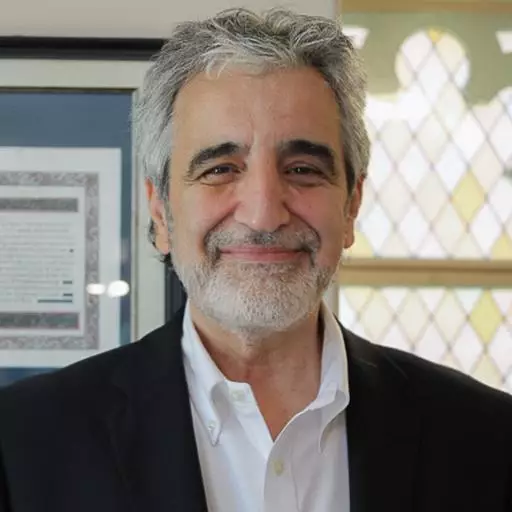
Messianic Leader J. Isaac Gabizon
https://www.bethariel.ca
https://bethariel.ca/donate/
Guest (Female): Shalom and welcome to Beth Ariel and to this, our 70th sermon in the Gospel of Mark with Messianic leader Jacques Isaac Gabizon. We all have our favorite foods, don't we? And in a sense, we are offering this food to our bodies, to our temples, to sustain it and to please it. In a religion such as Hinduism, there are offerings made to gods. To their god or gods, they offer foods that please them, foods containing milk and curds and honey and ghee.
But we are going to throw our concern right now on the Lord of heaven and earth, who we believe to be the only true God, the only one whom we worship and adore. And we ask ourselves, does my Lord of heaven and earth, my El Gabor, the mighty one, the self-sustaining one, really need any food offerings from my part? And if He so desired, what would we give Him?
The Lord does ask us to offer praise to Him by way of fruit, the fruit of our lips. Hosea 14:2 says, "Take words with you and return to the Lord. Say to him, 'Forgive all our sins and receive it graciously, that we may offer the fruit of our lips.'" But in the Hebrew, the true rendering of that word "fruit" is really "bullocks." We are offering the bullocks or the calves of our lips.
Guest (Male): In terms of sacrifice, the best that could be offered was the bullock. And our words, the words of our heart, is the greatest thanksgiving offering that we can give. This makes us think of the bullock, a sacrifice that could not be offered unless it was spotless and without blemish. Let's make sure that what comes out of our mouths and the sacrifices of praise to our God is like that.
We need to be filled with a harvest of clean thoughts, clean thoughts that stem from a clean heart, clean words to bring fruitful speech that is so powerful to restore a relationship with the Lord vertically and also to restore a horizontal relationship with a brother who might have been offended.
Guest (Female): From Psalm 51, we read the last few verses which say, "O Lord, open my lips, and my mouth will declare your praise. For you do not delight in sacrifice, or I would bring it. You take no pleasure in burnt offerings. The sacrifices of God are a broken spirit, a broken and a contrite heart, O God, you will not despise. In your good pleasure, cause Zion to prosper. Build up the walls of Jerusalem. Then you will delight in righteous sacrifices, in whole burnt offerings. Then bulls will be offered on your altar." When we are renewed and when the Lord receives pardon, our praises before Him are unmatched because of all the good that they can achieve.
Guest (Male): Blessed are you, O Lord our God, King of the universe, who has given us the word of truth and has planted everlasting life in our midst. Blessed are you, O Lord, who gives the scriptures. Amen.
Let us open our Bibles to Mark chapter 11, a very rich chapter filled with fulfilled prophecies, with conflicts and debates between Yeshua and the religious leaders, arguments which are for us a great source of instruction. And with these things, there is much practical advice from the mouth of Yeshua himself.
We will see that at some point, as things were getting very tense on the Temple Mount, the text itself abruptly changes its tone and there Yeshua begins to speak of what? Faith, prayer, and forgiveness. He will tell us that when these things are properly used, we could then move mountains and change the world around us. Faith, prayer, and forgiveness—this is the title of this study and this is the solution to counteract a tense and turbulent world.
Jacques Isaac Gabizon: Shalom one more time, Shalom Beth Ariel, and friends of Beth Ariel. Welcome to our Shabbat service where we're always looking and digging into God's word in order to discover more and more of our great and wonderful Lord. It was King David, if you remember the last study, it was King David in the longest chapter of the book of Psalms, which is chapter 119, where he fully dedicated that Psalm to the scriptures themselves. So he wrote towards the end of the Psalm, he says, "I have seen a limit to all perfection; your law is exceedingly broad." In his reading and study of the scriptures, David was overwhelmed by its depth, by its broadness. The Hebrew word he uses for broad is rechavah, which is the one that is used for the immensity, to describe the immensity of the ocean. The Hebrew again, this is what it says for God's written word. It is one of the most complex and profound of all His creations, and this is what we're about to look into.
Now before we get into the book of Mark and be refreshed, let us bless the scriptures. You can say the blessing with me together. This is an ancient prayer, by the way. Blessed are you, O Lord our God, King of the universe, who has given us the word of truth and has planted everlasting life in our midst. Blessed are you, O Lord, who gives the scriptures. Amen. So let us open our Bibles to Mark chapter 11, a very rich chapter filled with fulfilled prophecies, with conflicts and debates between Yeshua and the religious leaders, arguments which are for us a great source of instruction. And with these things, there is much practical advice from the mouth of Yeshua himself.
We will see that at some point, as things were getting very tense on the Temple Mount, the text itself abruptly changes its tone and there Yeshua begins to speak of what? Faith, prayer, and forgiveness. He will tell us that when these things are properly used, we could then move mountains and change the world around us. Faith, prayer, and forgiveness—this is the title of this study and this is the solution to counteract a tense and turbulent world. As it has been taught in the Hebrew scriptures and in the letters of the New Testament, we are to prepare ourselves to meet the Lord by working on our sanctification. I hear of many who are preparing for the coming wars by making ready a hidden place somewhere in the country and by accumulating lots of food and even arms. There's nothing in the scriptures that tells us to do such a thing. What the Bible does say, and in so many times, is to work on our character, to learn to love and to serve. I wonder what the people outside think of us when we hoard things instead of giving them an example of confidence and faith.
And in this section, we're about to look into, Yeshua draws so much from the prophets, and it is surprising actually to see how the events in both places are so similar. Remember, there's something that never changes: the heart of man and the love of God. We will look at three prophets—Micah, Jeremiah, and Isaiah—and when you compare their prophecies with the words of Yeshua, it was as if they were there standing with him on the Temple Mount and speaking along with him. Let's begin with the fearless and so bold prophet Micah. A last passage we have seen in our previous study is when Yeshua was coming back to the Temple Mount, and we read in Mark chapter 11, verses 13 and 14, that he saw this fig tree and he went to see if perhaps he would find something to eat. Why? It says because he was hungry.
He was hungry for fruits of the spirit in the people. And in so doing, Yeshua recalled an important chapter in Micah, who also when he saw Israel and Judah going to their fall, this is what he said. Micah 7:1, an important chapter, the last one. He says, "Woe is me! For I have become like one who after the summer fruits have been gathered, after the vintage has been gleaned, finds no cluster to eat; there is no first-ripe fig for which I hunger." And when you consider the context of both the gospel and Micah, we see the same cause, that is faithlessness, disregard of the word of God. And the outcome is the same in both cases: the temple was to be destroyed, and Jerusalem was to be destroyed, and the Jews were going to go into the diaspora.
And what we see is that these same symptoms are also found today in Israel. There's no third temple yet, but this one, once it would be built, will also undergo the same fate as the first and second temple until Yeshua comes and builds His temple. And to this hunger, the Lord in the Torah, we're told actually that He himself was hungry. You know, there's one sentence that recurs through in different forms and six times over between chapter 21 and 22 of Leviticus, if you remember when we studied that passage, the words "the food for God." Have you ever wondered what kind of food God is hungry for? The word for food in Leviticus is lechem, that is bread.
If our food is the manna being the bread from heaven and Yeshua was the manna from heaven, what then is the bread for our God? It is surely not the sacrifices, for the Lord said in Psalm 50, "I will not eat the flesh of the bulls, nor any other animal." The food for God is our fruit of the spirit of harvest. This is what He delights in—fruits like repentance, which opens up the storehouse windows of blessing in heaven; fruits like forgiveness, which frees us from bondage; fruits of kindness, hesed. It is through the prophet Hosea that the Lord said, "For I delight in kindness rather than sacrifice, and in the knowledge of God rather than burnt offerings."
The word for kindness, hesed, is actually a powerful word. It is from this word, Hasid, and means holy, godly one, for this type of kindness is from God and sanctifies the person. Hesed can also be translated as loyal, loving, stable. This is actually a description of people who follow the word of God. This then is the food for God. This is what Yeshua again was looking for when he saw the fig tree and could not find any of these fruits. And as he entered the Temple Mount, he saw, right in Solomon's colonnade, okay, this is the Court of the Gentile on the left of the picture, where today the Dome of the Rock and the Al-Aqsa Mosque are standing. In this same place were then those merchants that Yeshua chased away for they were desecrating the Temple Mount.
Jesus then recalled two prophets when he spoke these words in Mark 11:17: "Is it not written, 'My house shall be called the house of prayer for all nations'? But you have made it a robber's den." Are not these words even resounding today when you see what is happening on the Temple Mount? Did you know that at the construction of the third temple, when John measures it in Revelation 11, he is told not to measure the courts of the Gentile, where the Dome of the Rock and the mosque will still be there, I believe. And in pronouncing these words, Yeshua called on Jeremiah and Isaiah. The words "you made it a robber's den" comes from Jeremiah and brings us back to such a similar situation just before the destruction of the first temple in Jerusalem, something that was about to happen at the second temple.
The words of God in Jeremiah were, Jeremiah 7:11: "Has this house which is called by my name become a den of thieves in your eyes? Behold, I, even I, have seen it," says the Lord. The Lord has seen it, and twice now—then and now in Mark. And these words coming from Jeremiah must have impacted the people, for Jeremiah was considered actually the High Priest of the time. This is how the Targum of Lamentations calls him. So imagine the High Priest at the door of the temple and telling the people, "Don't come in." But see that while the High Priest could not perform his duty, for there was so much corruption, here in Mark comes the Messiah who was about to give His life to become our High Priest as He is today sitting at the right hand of God and being our lawyer.
And notice how much of a robber these merchants were. See what we are specifically told in verse 15 of Mark 11. It says that he, Jesus, overturned the tables of the money changers and the seats of those who were selling doves. Okay, see that they were selling doves. But why specifically mention the doves among the other animals they were selling? The doves were sacrifices for the poor. And these, because they were sold on the Temple Mount, they were at an inflated price so the people would be sure that the priest would accept them. And if there is something which touches the heart of God in the Torah, is the abuse of the poor. But this must have struck a sensitive chord in Yeshua, for he himself came from a very poor family.
When Miriam and Yosef, Mary and Joseph, offered a sacrifice at the temple, they offered the dove because a lamb was too expensive for them. And so as Micah and as Jeremiah spoke these words, the events were as similar as those of the preceding times, as at the destruction of the both temples. And it is in the same verse where Yeshua calls on another prophet, Isaiah, through whom God said, "My house shall be called the house of prayer for all the nations." This comes from Isaiah 56:7. This is what it says: "Even those I will bring to my holy mountain, that is Jerusalem, and make them joyful in my house of prayer," speaking of the temple to be built in the Messianic times. "Their burnt offerings," God says, "and their sacrifices will be accepted on my altar. For my house will be called the house of prayer for all people."
This is a prophecy that is yet to be fulfilled. There will come a time when all the world, all the nations, all people will worship one God, and that is the God of the Bible. And right where Jerusalem is today, and right where the Temple Mount is today. This is why today there's so much and growing anger against Israel and against the Jewish people, because it's coming very soon. Then there will be one faith for all and harmony between all the nations under the banner of the scriptures. It was Micah and Isaiah actually who were given the exact prophecy, almost word for word. And I want to tell you, if a prophecy is repeated like this, it's because it is something in God's heart.
You find it in Isaiah 2:3 and Micah 4:2. Both said, "And many people will come and say, 'Come, let us worship to the mountain of the Lord, to the house of the God of Jacob, that He may teach us concerning His ways and that we may walk in His path.' For the law will go forth from Zion and the word of the Lord from Jerusalem." It's about to happen. That speaks of the blessed time that awaits this earth, after the wars, of course. Yeshua will come back to establish His kingdom on earth. It is only at that time that our swords will be transformed into plowshares and our guns into instruments of holiness. Not before, not before—only then.
And so, following the text, it is right after the cleansing of the temple. The day after, we're told that they were passing by the same fig tree that Yeshua sought to find fruits, and then something important happened. We're told in verse 20 that it withered from its roots, right? And when Peter recognized it, he said to Yeshua in verse 21, "Rabbi," he says, "look, the fig tree which you cursed has withered." The tree withered, that is it dried out from the root, like it was in the parable of the seed. This tree, which represents the religious leadership, had not taken root. Why? Because there's no spirit. It was far from where the word of God was.
And it is at this time that something unusual happens in the text. Right after this, Yeshua answers Peter in what seems to be so out of context. Right away he told Peter in verse 22, "Have faith in God." Why speak these words of faith at this moment in time? What is the relation between that faith and the fig tree? First of all, I want to tell you there are many reasons we can find. The first obvious one is perhaps because the atmosphere was becoming very intense on the Temple Mount. Even on their way to Jerusalem back in chapter 10, we're told that they were fearful. Perhaps they already felt the demonic presence which descended over the city of Jerusalem where the Messiah was to perform the highest act of history—his death and resurrection.
Never before in the history of Israel have we seen so many demons in Jerusalem. They must have all come down to try to prevent this great moment of redemption. I believe they felt it. It was also at this time that Yeshua spoke of the cup he was about to drink and the baptism he was about to be baptized with, speaking of his suffering and death. Already the priest thought of ways to kill him. Already we learn from the Gospel of John that they had decreed that all who follow Yeshua will be excommunicated, completely from the community. And to all this, Yeshua says, and I want to tell you so calmly, "Have faith in God." All was already prophesied. All was known and well-planned by God, and nothing escapes His notice. "Have faith in God," he says.
And furthermore, considering the immediate context, this comes right after Yeshua cursed the fig tree. And it was perhaps to remind all believers that judgment, vengeance is in God's hands, not ours. We are not called to imitate Yeshua here. We have no power to curse, but we have power to love. We have the power of faith. This is our work. Prophecies speak of a great judgment to come. We ought not to add to this but to warn, knowing that these things will happen, and our warnings must be coupled always with love and with compassion for others. The next verses are so powerful, as they speak of this power that the Lord has given us, especially in difficult times. See what he says, Mark 11:23-24. These, I want to tell you, must be some of the most powerful verses here.
"Truly I say to you, whoever says to this mountain, 'Be taken up and cast into the sea,' and does not doubt in his heart, but believes that what he says is going to happen, it will be granted him. Therefore I say to you, whatever thing you ask when you pray, believe that you receive them, and you will have them." This is the power of prayer that the Lord has given us. Whatever we ask in His name, we will have them. These are His words, by the way. However, there are some things to consider, for this promise does not stand alone in the scriptures. Let me start by saying that this is not a carte blanche, that is freedom to wish what one thinks best and pray for it and get it. That's not what it says.
You can pray for days and believe to the utmost that God will give you a Lamborghini, let's say, or a few million dollars. It won't happen unless you fulfill all the requirements. There are many other places in the scriptures that complement this saying by adding some key essentials—some obvious things, in fact. What is clear and plain in the scriptures when it comes to prayer, that prayer must be according to the will of God. We read this in 1 John 5:14: "This is the confidence which we have before him, that if we ask anything according to his will, he hears us." According to His will—that is the first requirement. Anyone can pray, and some can pray the most beautiful prayer, but are they according to the will of God?
To know the will of God means to know God as He reveals himself in His word, as He lives in other people, and as He manifests himself in prayer time. To know the will of God requires a person to have a close relationship with Him. It is only when we have met our Lord in the silent intimacy of our prayer and have learned to recognize His presence and have developed the fear, the great respect of the Lord, then you can move mountain. It has often been said that the purpose for prayer is not to get man's will done in heaven or on earth, but to get God's will done on earth. Prayer requires that we seek His will, not ours. So prayer requires some work before we can expect a positive answer. This is why James meant when he says, "Don't ask amiss."
Furthermore, the Bible says that our request will be granted if we don't live in sin. That is so obvious that it was known 3,000 years ago. We read this in Psalm 66:18, where the writer says, "If I regard wickedness in my heart, the Lord will not hear." Plain and simple, and very logical. Of course, there's always some sin in our lives, right? But as long as we recognize the sins and confess them to the Lord, and as long as we're on our way to remove them from our lives, then and only then our prayers will be answered. The Bible says that our prayers are fulfilled if we abide in Yeshua. John 15:7: "If you abide in me, and my words abide in you, ask whatever you wish, and it will be done for you."
This also is obvious. It's logical. But what does it mean to abide? It means to remain. It means to continue. It means to live with the Messiah at all times, not one day a week, not a few hours a day. In secular Greek, by the way, this word "abide" was first used to describe one who stood fast in battle. This was the first meaning. The Bible says that prayer will be granted when we persevere. We're told in 1 Thessalonians 5:17, "Pray without ceasing." That doesn't mean that we should repeat the same words over and over, right? It means that we believe in it and we pull the rope nonstop. Remember the parable of the woman and the judge in Luke 18? This woman was so persistent that the wicked judge could not take it anymore and granted her wishes.
And so our righteous Lord, who is always looking to bless, will He not notice our persistence in our prayer? Will He not grant our requests? Prayer is such an essential element in the life of a believer. You know, we're not told that Jesus ever taught his disciples how to preach, how to be hospitable, how to do so many things, but he taught them how to pray. If we get the prayer right, the rest will flow and also many blessings will come over. It shows when a believer has a life of prayer. It shows. It shows when a believer doesn't have a life of prayer. But now there is one thing that the Lord adds to the requirement of prayer—something that we perhaps hardly associate with prayer. You know what? Forgiveness. See the next verse, Mark 11:25. I'm going to quote only the first words: "Whenever you stand praying, forgive."
What does forgiveness have to do with prayer? Have you thought about it? You know that the whole concept of prayer to God is based on the fact that He forgave our sins. His forgiveness allows us to come to His throne with our prayers. And so if we pray and have not forgiven someone, then we are defeating the whole purpose of prayer. Do you remember the story of the man who actually owed something like $120 billion to somebody else? That's a lot of money, by the way. But lo and behold, you know, the person to whom the money belonged suddenly forgave him the debt and he says, "Go ahead, it's free." And then as the story goes, someone else owed this forgiven man an amount of about $20,000. He got so angry that he laid his hand on him and took him by the throat and he says, "You better pay me that money, right?" Matthew 18:28. Is this fair?
He was forgiven a debt of about the equivalent of $120 billion and does not forgive a debt that was 6 million times lower. This is the story of the 10,000 talents in Matthew 18, when the person who forgave this 10,000 talents, what do you think he should have done? Let me tell you what Yeshua said. Matthew 18:33: "Should you not also have had compassion on your fellow servant, just as I had pity on you?" That means forgive. Forgive.
Guest (Female): Shalom Ariel is a daily radio program emphasizing the Jewish perspective of scripture. God is not through dealing with Israel, nor will He renege any of the promises He has made to her. Our teacher for this program, Jacques Isaac Gabizon, is a Messianic Jewish believer and Messianic leader at Beth Ariel congregation right here in Montreal. If you've been encouraged by the messages, we'd love to hear from you. Give us a call at 1-888-685-5902 or you may write us at info@bethariel.ca. You are also welcome to join us for our Saturday morning services. We are located at 6297 Monland Boulevard, corner of Madison in NDG. The message is given in English, but we do offer simultaneous translation into French and Russian. Services begin at 11:00 AM. We have Shabbat school for children of all ages up to and including teens. You may also download audio messages from our website at bethariel.ca and enjoy other in-depth teaching from Jacques Isaac. If you would like to sign up for our informative newsletters, log on to our website and add your name to our email list. Shalom Ariel is a listener-supported program. If you have it on your heart to donate, it will be a great blessing for the continuing ministry and outreach of Beth Ariel. Thank you and shalom shalom.
Featured Offer

Prophecies take up about ¼ of the Scriptures so we cannot simply ignore them. Knowing prophecy enables us to give a clear presentation to others of why things unfold the way they do in such areas as politics, morality, technology and global ecological changes. It also helps us to rightly place Israel in God’s prophetic plan.
Past Episodes
- The Armor of God
- The Believers in the End Times
- The Book of Daniel
- The Book of Deuteronomy
- The Book of Ephesians
- The Book of Esther - Purim
- The Book of Exodus
- The Book of Ezekiel
- The Book of Ezra
- The Book of Genesis
- The Book of Hebrews
- The Book of James
- The Book of Jeremiah
- The Book of Joel
- The Book of John
- The Book of Leviticus
- The Book of Numbers
- The Book of Philippians
- The Book of Revelation
- The Book of Romans
- The Book of Ruth
- The Book of Zechariah
- The Feast of Passover
- The Feast of Purim
- The Feast of Shavuot - Pentecost
- The Gospel of Mark
- The Gospel of Matthew
- The Letter to the Galatians
- The Messiah in Isaiah
- The Messiah in the Book of Isaiah
- The Messiah's Prayer
- The Nativity: The Unwrapped Gifts of God
- The Resurrection of the Messiah
- The Sermon on the Mount
- The Tabernacle

Video from Jacques Isaac Gabizon
Featured Offer
Prophecies take up about ¼ of the Scriptures so we cannot simply ignore them. Knowing prophecy enables us to give a clear presentation to others of why things unfold the way they do in such areas as politics, morality, technology and global ecological changes. It also helps us to rightly place Israel in God’s prophetic plan.
About Messianic Viewpoint
About Jacques Isaac Gabizon
Contact Messianic Viewpoint with Jacques Isaac Gabizon
info@bethariel.ca
http://www.bethariel.ca/
Beth Ariel Congregation
CP 46521 CSP Boul. St Jean
Pierrefonds, QC, H9H 5G9
Toll free (888)-685-5902