
The Gospel of Mark, Part 63


The Gospel of Mark, Part 63
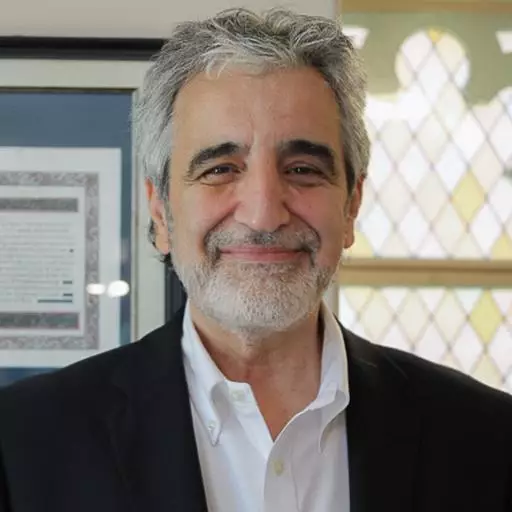
Messianic Leader J. Isaac Gabizon
https://www.bethariel.ca
https://bethariel.ca/donate/
Guest (Female): Shalom and welcome to Shalom Ariel and to this our 63rd sermon from the Gospel of Mark with Messianic leader Jacques Isaac Gabizon. And so we have learned from our last message that the Pharisees came to Yeshua, not to learn from him, but to tempt him, to trap him, with what they probably considered an artful question: is it right or lawful for a man to divorce his wife?
The intent of this trick question sounds much like what we will hear in chapter 12 of Mark, when they ask Yeshua if one should pay taxes to Caesar. Both these questions were developed so that in answering either way, it would give Yeshua trouble, either with one group or the other. But truth will find the solution that will quiet down both sides as long as ears and hearts are willing to listen.
Render unto Caesar what is his, and to God what is rightly his. Be obedient to Caesar and render the taxes that are asked for, because God is in control of all things, including all Caesars. And so for now Israel was under Roman law. Yet to God, whose stamp they bore, they were to render unto him all that was due to him: worship, honor, and their whole heart.
So what do we have here with divorce? Here's the trick they were setting up. If Yeshua says that no one can divorce, he would go against what Moses had said that God did allow for divorce. Yeshua was also in the midst of a theological fight going on between two ruling Jewish schools, House of Hillel and House of Shammai, each one with their own opinion of divorce.
Who would Yeshua now answer in order to still this storm? He brings them back to the garden, to creation, when the image of God was put onto man. This was the mark that men and women were to bear, the mark of marriage with their creator. As they were to be one with each other, echad, so was man to be one with his creator. And man was to stay married with one heart and soul for his creator.
This is the same unity we see when Yeshua prayed to the Father and said, that they may all be one, just as you are in me and I am in you. May they also be in us, that the world may believe that you have sent me. The deeper truth is that there are reasons for divorce because of the status of the human heart, but there should be no occasion whatsoever when we divorce ourselves from the living God.
He is our husband and he calls us to an everlasting union with him. Turning away from him constitutes idolatry which leads to adultery. Yes, he is our husband and nothing must replace this inseparable union. God hates divorce and the thought that we would choose to be separate from him. Be blessed as you listen into today's program and Shalom Shalom.
Jacques Isaac Gabizon: So Moses ordered a certificate of divorce to lower the rate and protect the woman and to protect the child. Yes, the children should not be forgotten. Even today we hear of many single-parent families. They're usually women and children, rarely a man with children. And it is at this time when Yeshua brings them further into the scriptures, back to the time when God created marriage.
By going to the roots, Yeshua not only enhanced the importance of marriage, but he goes even further to magnify every believer's standing with God. That speaks to us, by the way, for the Bible speaks of God as a husband. He is the husband of Israel, as Yeshua is the promised husband of every single believer. See verses 6 to 9.
From the beginning of the creation, Jesus says, God made them male and female. For this reason a man shall leave his father and mother and be joined to his wife, and the two shall become one flesh. And then they are no longer two, but one flesh. Therefore what God has joined together, let no man separate. Here Yeshua quotes from two passages in Genesis, Genesis 1:27 and Genesis 2:24, but he begins by only quoting the last part of Genesis 1:27. Why is that?
He simply says that God made them male and female. But how is this relevant to the subject of divorce, that God made them male and female? Some commentators have seen in this verse a statement against same-sex marriage, and rightly so, why not? The one who created marriage made it for male and female, not between male and male or female and female.
This precept is confirmed here and in many other places in the scriptures. Today the law of the country allows same-sex marriage, which we respect but disagree, and let it be known that the Bible is clearly against it. God in his word does not approve of it. But by stating just the last part of Genesis 1:27, I think that Jesus wants us to go right to Genesis and read the whole verse, for then we will see that marriage is so precious to God.
This is what it says, Genesis 1:27: So God created man in his own image, in the image of God he created him, male and female he created them. See the great difference between other creations of God and his creation of man. Do you know the difference? We were made in his image. This means that as God is a unity, so is man and his wife, and the woman and her husband are one.
The word one in the next verse, taken from Genesis 2:24, is echad in Hebrew, which is the Hebrew of a compounded unity, just like we have the tri-unity of God, especially in the Shema, in Deuteronomy 6:4, which says, "Hear O Israel, the Lord is our God, the Lord is one." Echad. The rabbi asked, why is it echad and not yachid? This is the indivisible unity of God. In the same way that originally man and woman were brought together to be the echad, it has become a plurality within a unity.
And have you noticed how many times the word created is used in verse 1:27? Three times, as if one for each member of the tri-unity of God, as marriage, I want to tell you, is of utmost importance to God. And the word here created is bara. Bara, that is created ex-nihilo, out of nothing, miracle creation. God made the body out of the dust of the earth later on, but his being, his soul and spirit were created in the image of God, new and exclusive to every created thing before him.
And the preciousness of this unity of man and woman is so pronounced that in Genesis 2:24, when it is written that man shall leave his father and mother, the word leave, I want to tell you, is not simply to go, to depart, it's actually to forsake, to abandon, to leave desolate. The word is rasav. Yes, there are passages which demonstrate that children are responsible for providing for their parents, but never at the cost of destroying their own marriage. This is when Yeshua ends his address to the Pharisees and says, therefore what God has joined together, let no man separate.
There's a way that this statement goes far beyond the marriage of man and woman, by the way, and this is where we come to the second reason why Yeshua brought up these passages. It has to do with a much greater divorce than that of a man and a woman, the one that was about to take place when the Messiah Yeshua was to be delivered to be killed, the one that affected every single soul.
The man, actually in verse 9, who separates could be understood as the religious leaders themselves. They were the ones responsible for recognizing the Messiah of Israel, something they failed to do, which caused the division between man and God. The man is not only the Jewish religious leaders there, but all leaders of religion who pull people away from God through their actions maybe, or their thoughts, or their precepts.
The wife is not only Israel, but all members of the humanity whom God created in his image. By the way, I want to tell you, I'm not suggesting that God divorced Israel. He never did and will never do it, for his union with Israel is based on an unconditional covenant. And this unconditional covenant is based on the preservation of the remnant. However, we have seen how God forsook so many people within this nation in history who did not follow his precepts.
This explains why the number of Jews are only a fraction of what they're supposed to be. Do you know how many Jews we have? 15 million. A proportionally very small amount, and yet it's not all these 15 million who are of the remnant of Israel. The remnant is within that small amount itself. You know that same word, rasav, forsaken, is used in this important book of Hosea.
Do you remember the book of Hosea, which describes the marriage of God with Israel and his forsaking of those who refuse him? We read in Hosea chapter 4 verse 10, which sums up the dilemma for us, this is what it says: They will eat but not have enough, they will play the harlot but not increase, because they have forsaken, rasav, giving heed to the Lord.
This verse is really addressed to the priesthood, by the way, in this passage. The religious leaders then, who were the man who separates the rest of the nation from God. The last words, they have deserted Yahweh in the same way they have deserted Yeshua. And so while this talk about divorce does not give much information about divorce and men and women in general, it does point to the great divide that was about to occur when Jesus was going to enter Jerusalem.
And so adultery, I want to tell you, has a far-reaching hand as Jesus says. In the previous verse we quoted of Hosea 4:10, Israel is accused of playing the harlot, playing that is meaning that she forsook her God for other things. You know in Revelation 17, the last world religion system is called the Mother of Harlots, same thing. Really anything that replaces God is close to adultery. And so as Yeshua said, let no man separate what God has joined together, that is even in the faith.
You know in Hebrew, at the time of the first century, modern Hebrew, a word for marriage they use at that time was nissu'im, which comes from the word nasa, meaning something heavy to carry. That's not very lovey-dovey, right? But this is what the disciple may have had in mind, but in reality marriage is not that heavy or difficult to carry, especially and only if God is within the marriage.
The overall divorce rate is said to be about 33 percent, not 50 percent, by the way. 33 percent, but 25 percent less for those who believe in Jesus, those who believe in God. According to statistics, couples who regularly practice their faith, who regularly pray, not necessarily together, but have each a daily time of prayer, or a time of reading, a time of study of the scriptures, and who are regularly attending a place of worship where they serve, these are, for the greater majority, success stories.
It's not true that marriages of believers end up in divorce as much as those outside, that is absolutely not. What is true is that it is better not to marry if God is not present. With God, as Yeshua later said, all things are possible, and a healthy and growing marriage is a miracle that's always in progress when God is present.
In fact, after speaking to some Pharisees, once they entered the house, the disciples asked a question about divorce. To them Yeshua answered, verse 11, 12, he said to them, whoever divorces his wife, marries another woman, commits adultery against her, and if she herself divorces her husband and marries another man, she is committing adultery. The theme of adultery is raised. Unless there's a valid reason for divorce, a remarriage is deemed adulterous and thus not recognized in the eyes of God.
Now I'm not sure what the disciple understood. You know what they said in Matthew, after they heard all this, they said, oh it's better not to marry. One thing they understood is that there's a high demand in marriage, but it is possible if God is present. To sum up marriage, as seen in the Bible, let's take a brief look at the law that Jesus and the Pharisees were referring to, the one that is found in Deuteronomy chapter 24. Look at verse 1. This is what Moses said, but he said it because of the hardness of the heart, see what he says.
When a man takes a wife and marries her, and it happens that she finds no favor in his eyes because he has found some indecency in her, and he writes her a certificate of divorce and puts it in her hand and sends her away out from his house. It is the word indecency which is not qualified and which brought much debate in the first century. Of course the house of Shammai, which was opposite to Hillel, understood it to be adultery, while the others added so many other things.
But see how Moses describes this sad state of affairs in just this verse. He said when a woman finds no favor. What does that mean? From being echad, one flesh in Genesis 2:24, now the whole institution is based on the husband's feeling. This is what it is. Since when is marriage considered a simple relationship based on the husband's sensations or perceptions of things?
Marriage is for life and it is not based on the moods of a husband or of the wife, for that matter. For today we can find some who are divorcing for more trivial causes. But that is not all that Moses says in Deuteronomy 24:1. We find that that man puts her away from his house. His house? Didn't the house belong to both of them? Is this now what the marriage is about? How did the man come to believe that it's his house now?
However, we find in this passage of divorce, and this is what I want to bring you, words that explain the true meaning of marriage and how the man had to treat his wife. This is one that is well expounded, by the way, in the letters of the New Testament, but listen to what Moses says in Deuteronomy 24:5. When a man has taken a new wife, he shall not go to war or be charged with any business. He shall be free at home one year and what? Bring happiness to his wife whom he has taken.
That is what marriage is all about for the man, to bring happiness to his wife. That is why God as a father gives his daughter, so that you men treat your wife and love her as Yeshua loves his wife and died for her. In fact, this is why he was where he was in Mark, to enter Jerusalem and to die for his wife. And to enhance all of this, the laws of marriage are so important that God gives a full year of vacation to the one who marries.
This is how God loves and respects marriage. In fact, there's a book in the Bible written for couples, Song of Songs. If you're married you can read it tonight together, but you can read it if you're not either. And we could have not concluded a better way, what comes next is about children. But why is it speaking about children here since we've talked about them in chapter 9? And with the same really teaching, why is it repeated?
They're brought back again because when a divorce occurs, women and children are the most vulnerable ones, and here Yeshua pours his heart on them. At first the disciples rebuked the parents, and most probably those mothers who brought their children to be blessed, and you know what? This brought Jesus anger. We read in verse 14, when Jesus saw this he was indignant and said to them, permit the children to come to me, do not hinder them, for the kingdom of God belongs to such as these.
Indignant means angry because the children were rebuked. But this is when he reminded them that these children were in fact an illustration of who the believers are. And he says in verse 15, truly I say to you, whoever does not receive the kingdom of God like a child will not enter it at all. The word truly in the Greek again is the Hebrew word Amen, thus emphasizing this truth with the word like a child. This is who a believer is, for a child fully relies on his parents.
Where does a child go when he's hurt? Usually his mommy and daddy. In this verse we are to be like a child to relate to God first and always, and so he concludes this talk on marriage with these powerful words: And he took them in his arms and began blessing them, laying his hands on them. That is a very tender image we're given here of the measure to which Yeshua loves the children and all believers. If you're ever depressed, just remember this beautiful image.
Let me close with a story, a very short story, which really touched my heart. You know last week one of my five-year-old grandchildren was watching a program on YouTube. It was about the bees. So they were showing hives and how the bees will come in and out, and then Sharon asked a question. She said, we know what is happening in the outside but we don't know exactly what's happening in the inside. How can we know what's in inside? If we put our hand in there we're going to be stung.
So my grandson answered and he said, we have to become like them. That is exactly what God did for us. He came in Yeshua and was like us and even died for us so we may have everlasting life. That's why Jesus is where he is in Mark. Let's bow our head in prayer. Now to us and from him who is and who was and who is to come, now may God grant us such that we may say like David, you are my hiding place, you protect me from all trouble.
And so heavenly Father, you did not leave the world alone, nor did you leave us alone, nor as a whole and not as a single one of us. You sought us out and found us by bringing about the reconciliation, opening a path to us and giving us a promise in your son, Yeshua HaMashiach. And so whatever we have learned today, whatever we have read, whatever we have heard, allow your mighty word to work in us.
And so today we ask that you renew our minds so that we live every day as the first day of our salvation. And for those who are hurting today, Father look upon their affliction, take up their cause and shower them with your presence. Blessed are you Lord, for you are a redeemer, our shield, our rock, our hiding place and help at all times. In Yeshua's name, and for the congregation, the Lord bless you and keep you, the Lord make his face shine upon you and be gracious to you. The Lord lift up his countenance upon you and give you peace. May the Lord bless you all.
Guest (Female): Shalom and welcome to this portion of today's program, the Q&A with Messianic leader Jacques Isaac Gabizon. And today's question deals with millennial sacrifices. Why will we be having them when we know that Yeshua has fulfilled and been the final sacrifice for us? Be blessed as you tune in.
Jacques Isaac Gabizon: We understand how central and final a role the sacrifice of Yeshua means for our lives. The book of Hebrews confirms that point when it's written in chapter 10 verse 12, "But when Messiah had offered for all time a single sacrifice for sin, he sat down at the right hand of God." And then in verse 14 we read, "For by a single offering he has perfected for all time those who are being sanctified." If this is the case and sacrifices for sins are no longer necessary, why will there be sacrifices in the millennium? Thank you.
Well, thank you for this question. This is an often-asked question: why are there sacrifices during the millennium or the Messianic times, a time when the Messiah will be present on earth? Didn't Jesus' death and resurrection put an end to the sacrificial system? Yes, his death and resurrection did put an end to sacrifices for the believers, but not for the unbelievers.
During the millennium both believers and unbelievers will live side by side, and God graciously reinstated some parts of the sacrificial system so that the unsaved will see the utter depth of sin through these sacrifices. The description of this era concerning the temple and the sacrifices are found mainly in Ezekiel chapter 40 to 48. Now considering the prophetic chart, after the seven-year tribulation times, only the believers will enter the Messianic era.
However, their children will have to come to a saving knowledge of Yeshua, for no one is born a believer. So they would need to understand what sin is, and there is nothing like the sacrifice of innocent animals to describe the ravages of sin. The fact that Yeshua will be present does not mean that everyone will automatically become to be a believer. In the same way when he was present on earth 2000 years ago, after a filled ministry of three years and an additional 40 days after his resurrection, and after fulfilling all prophecies of the first coming, only few men and women came to believe.
God never forces anyone to believe. In the Messianic times there will be sin. It is not the eternal state yet, when there will be no sacrifice at all and there will be no sin at all. So the millennium is not sin-free. Sin will be there to a smaller degree, but sin will be present. In fact, I just want to bring to you those many prophecies describing the era of the millennium or the Messianic age.
By the way, I use both terms. This speaks of a time still with many conflicts. For instance, in Psalm 2 we read that the Messiah will rule with a rod of iron, meaning that peace will still need to be enforced because rebellion will still exist. So far Yeshua never ruled over the nations. He will in the Messianic times. We read in the last chapter of Zechariah as well, which speaks of this millennium, that those nations who will not keep the feast of Tabernacles and not come up to Jerusalem on that day to worship the Lord will not receive rain but plagues instead.
We often confound the Messianic times with heaven, but they are very different. Peter actually puts the millennium time period within the time frame of the day of the Lord, and the day of the Lord is a term designating a time of judgment on sin. This is why at the end of the millennium, concerning 2 Peter 3:10, the elements will melt with fervent heat, both the earth and the works that are in it will be burned, giving way to the eternal state. Then God will erase every shadow of sin.
Another and last question along the same line is why the reinstatement of the Mosaic temple system during the millennium. This millennial temple will not be the reinstitution of the Mosaic law. Both systems are similar but they are different. For instance, in the temple area, in the holy place, there's no candlestick. The light of the candlesticks represents the presence of the Holy Spirit to the believer, and their absence may indicate that the law of the Lord will be in the heart of every believer as Jeremiah 31 prophesied.
There will be no table of showbread, for Yeshua will be there providing for every man. Yet many will still reject him. There will be no veil separating the Holy of Holies, for Yeshua will be present. Yet many still will still reject him. There will be no high priest, Yeshua will be there. And see how hard man's heart can be. All of these things make us appreciate all the more God's grace and the miracle of salvation.
As for the feasts of Israel, only two are mentioned. There will not be the feast of firstfruits, for Yeshua is resurrected and present there. There will not be the feast of Pentecost, for the bride of the Messiah will already be at home in the New Jerusalem. There will not be the feast of trumpets, for the resurrection of all believers would have already taken place by then.
There will not be Yom Kippur, for the nation and Israel would have been judged by then. But there will be the feast of Passover to remind the people of the death of the Lamb of God, and there will be the feast of Tabernacles to remind the people of the great blessings of being in Yeshua, a blessing they would be enjoying at the time. Yet not all will come to a saving knowledge of Yeshua.
It seems that the whole period of time is mainly there to show us the power of sin because in spite of the visible manifestation of the King of Kings' presence and authority during this time, people still will not come to faith.
Guest (Female): Shalom Ariel is a daily radio program emphasizing the Jewish perspective of scripture. God is not through dealing with Israel, nor will he renege any of the promises he has made to her. Our teacher for this program, Jacques Isaac Gabizon, is a Messianic Jewish believer and Messianic leader at Beth Ariel congregation right here in Montreal.
If you've been encouraged by the messages, we'd like to hear from you. Give us a call at 1-888-685-5902, or you may write us at info@bethariel.ca. You are also welcome to join us for our Saturday morning services. We are located at 6297 Monkland Boulevard, corner of Madison in NDG. The message is given in English, but we do offer simultaneous translation into French and Russian.
Services begin at 11:00 AM. We have Shabbat school for children of all ages up to and including teens. You may also download audio messages from our website at bethariel.ca and enjoy other in-depth teaching from Jacques Isaac. If you would like to sign up for informative newsletters, log on to our website and add your name to our email list. Shalom Ariel is a listener-supported program. If you have it on your heart to donate, it will be a great blessing for the continuing ministry and outreach of Beth Ariel. Thank you and Shalom Shalom.
Featured Offer
Prophecies take up about ¼ of the Scriptures so we cannot simply ignore them. Knowing prophecy enables us to give a clear presentation to others of why things unfold the way they do in such areas as politics, morality, technology and global ecological changes. It also helps us to rightly place Israel in God’s prophetic plan.
Past Episodes
- The Armor of God
- The Believers in the End Times
- The Book of Daniel
- The Book of Deuteronomy
- The Book of Ephesians
- The Book of Esther - Purim
- The Book of Exodus
- The Book of Ezekiel
- The Book of Ezra
- The Book of Genesis
- The Book of Hebrews
- The Book of James
- The Book of Jeremiah
- The Book of Joel
- The Book of John
- The Book of Leviticus
- The Book of Numbers
- The Book of Philippians
- The Book of Revelation
- The Book of Romans
- The Book of Ruth
- The Book of Zechariah
- The Feast of Passover
- The Feast of Purim
- The Feast of Shavuot - Pentecost
- The Gospel of Mark
- The Gospel of Matthew
- The Letter to the Galatians
- The Messiah in Isaiah
- The Messiah in the Book of Isaiah
- The Messiah's Prayer
- The Nativity: The Unwrapped Gifts of God
- The Resurrection of the Messiah
- The Sermon on the Mount
- The Tabernacle

Video from Jacques Isaac Gabizon
Featured Offer
Prophecies take up about ¼ of the Scriptures so we cannot simply ignore them. Knowing prophecy enables us to give a clear presentation to others of why things unfold the way they do in such areas as politics, morality, technology and global ecological changes. It also helps us to rightly place Israel in God’s prophetic plan.
About Messianic Viewpoint
About Jacques Isaac Gabizon
Contact Messianic Viewpoint with Jacques Isaac Gabizon
info@bethariel.ca
http://www.bethariel.ca/
Beth Ariel Congregation
CP 46521 CSP Boul. St Jean
Pierrefonds, QC, H9H 5G9
Toll free (888)-685-5902