
The Gospel of Mark, Part 62


The Gospel of Mark, Part 62
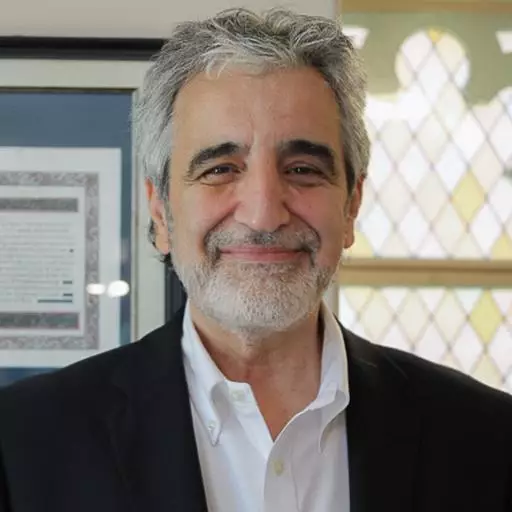
Messianic Leader J. Isaac Gabizon
https://www.bethariel.ca
https://bethariel.ca/donate/
Guest (Female): Shalom and welcome to Shalom Ariel and to this our 62nd sermon from the Gospel of Mark with Messianic Leader Jacques Isaac Gabizon.
Jacques Isaac Gabizon: Yeshua rose and left Capernaum. The city and the teaching that was done for those many years would now be concluded and he would now rise and depart from this area. This would be his final departure from Galilee, but he would soon return there after his resurrection. He rose and now he was on the way to the Tov, to that final act that would prove his commitment that he would always rise up and help us in every circumstance we face.
David, in Psalm 3, cried out, "Kuma Adonai," oh Lord arise and rescue me. For he felt desperate because he had enemies who were all around and many were spreading rumors about him that his God would not be there to help him. They were using the name Elohim, a name which connects the Lord more as a judge, and they were probably doing just that because they themselves had already judged David on the things that he had done wrong, perhaps even pointing the finger about the sin with Bathsheba.
The superscription of this Psalm says that it is a Psalm of David when he fled from Absalom. Imagine that your enemy has now infiltrated into the innermost circle of comfort, into your very own home. It is your very own son who is out to murder you. What a stark contrast we see here with Absalom who wanted his father dead compared to Yeshua, the son, who would die for the glory of his father.
But see how David cried out, and his appeal is not made to Elohim but is made to Yahweh, the covenant-keeping God. He says, "You, Yahweh, are the lifter of my head," and that term lifter of my head means that David had full confidence in the Lord. We must not believe in the lies that people may say of our Lord, that he does not have the sovereignty and yet the mercy and grace to hear our appeals, to hear our confessions, and to come and to rescue us.
So our focus must be on the Lord in our difficulties and challenges and not on the enemy. And our focus must also be on past circumstances, the past problems which God alone came to us in the past with his solution. We need to remember as David did that as God had also answered in the past, he will continue to do so today and in all our future needs. Let God alone break the enemy's power, for our trust must be in the Lord alone. He rose in the flesh that he might in the spirit come to our every need, to each one who calls upon him in spirit and in truth. Be blessed as you listen into today's program and shalom.
Before we open up the scriptures, let us first pronounce this ancient prayer together, the benediction over the word of God. You can say it with me. Blessed are you, oh Lord our God, King of the universe, who has given us the word of truth and has planted everlasting life in our midst. Blessed are you, oh Lord, who gives the scriptures. Amen and amen.
And so let's open up our Bible to Mark chapter 10. I'm going to have the passages on the screen as well. Let's begin to read just the first verse as Yeshua now has, and for the first time in Mark, gone south, that is toward Jerusalem. There's so much in this first verse that tells us about what is going to happen. This is what it says: "Getting up, he went from there to the region of Judea and beyond the Jordan. Crowds gathered around him again, and according to his custom, he once more began to teach them."
Now we're getting closer to Jerusalem, closer to Passover and the events of the triumphal entry and these coming chapters which describe the trials, the suffering, the death, and resurrection of Yeshua. We are now only a few days before his arrest. Here, Yeshua leaves Galilee, and the next time he will return there will be after his resurrection. But see, I want you to see the route that he took when he reached when he went to Judea. He could have taken the one through Samaria on the west.
He had no problem with the Samaritan. He could have visited the Samaritan woman and all those who came to believe in her village. But he chose the longest one, this path which is very significant as it follows the Exodus motive, that is the second Exodus, a path which Mark has consistently followed. From the beginning, we have seen how the events of the Exodus mirrored the account in Mark and how in the preceding chapter those events on Mount Sinai reflected the account of the transfiguration.
We have seen how in the seventh day on the seventh day, Yeshua went up the high mountain of transfiguration as Moses went up Mount Sinai on the seventh day to meet God. After Sinai, Moses began his journey to the promised land. As for Yeshua, once he came down the mount of transfiguration, like we see in Mark chapter 10 verse 1, he headed to Jerusalem. And for both the Israelites and Yeshua, the entry point into the land was at the same place.
As you can see in the map, Joshua led the Israel into the land of Israel, and the first city they conquered was Jericho. Yeshua entered at this point like the Israelite. He entered through Jericho. But there is another who entered Jerusalem at this very same point at a crucial time in the history of Israel, David, the ancestor of Yeshua. At the time, that is of the book of 2 Samuel, toward the end of his reign, his son Absalom succeeded in dethroning David and took over his kingship in Israel and Judah.
After a period of exile, David won back his place, and when he came back to Jerusalem, all Israel gathered to welcome him. He also entered the land from the very same place. And when David entered Jerusalem, he did so, remember, on a donkey, which was considered a symbol of royalty. In the same way, Yeshua too entered Jerusalem at the triumphal entry riding on a donkey. Both entered from the same point, and both entered riding on a donkey. Perhaps taking the longest route and choosing to enter Jerusalem from Jericho, Yeshua emphasized a new phase in the history of Israel.
The most major one, the major one where he was to save the nation and allow her a safe stay and ownership of this land, which they don't have yet. But there's more. In these two previous entries and that of Yeshua, we can see the three ministries of the Messiah: that of prophet stamping his first coming, that of priest stamping his current office as he is now sitting at the right hand of God, and that of king because this is how he's going to come back.
When Joshua entered the land, it was actually the priest who led the way as God commanded. He says the priest should go first. The moment the priest put their feet in the water of the Jordan, the waters opened up like a wall on each side. And as David entered from the same point on a donkey, it reminds us Yeshua's kingly office. And the third, the office of prophet he was about to fulfill in his death and resurrection, as we see it in Mark. And see, we see here the three offices in there.
And these things seem to have been well known by the people at the time of the first century. This road from Jericho was known as the road of the Savior and where the Messiah will enter Jerusalem. Josephus, the first Jewish historian of the first century, tells us that false messiahs who emerged at that time used actually the same path, and they entered Jerusalem proclaiming their leadership. Let's not forget that false messiahs began to emerge at the time of Jesus. They knew the prophecy of Daniel chapter 9, which refers to the timing, the exact time when Jesus was to come.
And just before, during the events of Hanukkah, this same path was also taken by one named Simon Maccabeus. The book of Maccabees, which is also an historical book with a lot of historical events, relates that this man entered and the people sang the Hallel, the same song we're going to hear later on at the triumphal entry. So they knew the path. And so this path described in Mark chapter 10 verse 1 has a lot of history behind it. And one thing, one other thing, all these heroes and both Yeshua and David must have used the same gate to enter Jerusalem.
Out of the 19 gates mentioned in the Bible, it must have been the Eastern gate from where it was expected that the Messiah would come in. This is the gate that gives access right to the Temple Mount, to the temple itself. In the gospel in Mark, Matthew, and Luke, the triumphal entry is followed by the cleansing of the temple. It must have been this gate that Yeshua took. And the Jews at the time expected the Messiah to come through this gate. This they believed from the prophecy of Zechariah chapter 14, which says in that day his feet will stand on the Mount of Olives, which is in front of Jerusalem on the east, and on the Mount of Olives will be split in two.
This picture on the screen is taken from the Mount of Olives in Israel, from this huge cemetery that covers much of the mount. Why a cemetery there? Actually, I think that the people wanted to be the first to resurrect when the Messiah comes back. So they knew the prophecy. You can see the gate on the right side under the red arrow. This gate gave access right to the Temple Mount. Today at the foot of this gate is a Muslim cemetery.
But Bible prophecy tells us that at his second coming, Yeshua will stand on the Mount of Olives. He will not enter this gate or the third temple that will be built soon in Israel. Both will be destroyed before he comes. However, Yeshua will build a new gate and a new temple, a huge one, as never seen before, as described in Ezekiel chapter 40 and 48. This will be the temple of the millennium. Of course, the Dome of the Rock that you see on this picture was not there at the time of Jesus. It was built some 600 years later.
More on this subject when we cover the triumphal entry. And so this is how far the information of verse 1 brings us to consider. So the path described is of great importance in the history of Israel, and with Jesus, a new phase was opened toward the establishment of the Messianic times. Now as Mark tells us, as he entered Jerusalem, we read that the crowds actually gathered around him. We will see that the crowd, the people themselves, believed that he was the Messiah. However, there was one group who did not accept him as the Messiah.
This is the subject of the rest of the chapter. See how verse 2 begins: "Some Pharisees came up to Jesus testing him and began to question him whether it was lawful for a man to divorce his wife." That's a good question. The problem is why did they ask this question? Why bring out the subject of divorce and marriage right at this time? That doesn't make sense really in the overall thing here. Was Jesus speaking on this subject at the time? Was it as he was teaching the people? We don't know that.
And we know they did not ask in order that they would learn something, but rather they asked so they can trap him. They were testing him. Actually, I believe they had a sinister strategy here. They knew that Yeshua was not for divorce, of course. And it is very possible that they expected him to give a statement against divorce so that they could actually denounce him to the then leader of the Jewish people, Herod the Tetrarch, who previously had John the Baptist killed for the same reasons because John the Baptist spoke against Herod's divorce and remarriage.
The reason John the Baptist was put to death was because he accused Herod of having stolen his half-brother's wife to marry her. The Pharisees actually believed they could repeat history. But prophecy had to take its course. The manner of the death of the Messiah was to be through Roman crucifixion as David prophesied, not under Herod. Later in just a few days from then, both Herod and Yeshua will meet, but not for what the Pharisees had wished for.
So they did not succeed in their plot, but Yeshua took this opportunity to bring out their guilt, that of themselves being responsible for a great division between Israel and God. The very religious institution that was to help the people toward God separated them, even divorced many of them from the Almighty who was there in front of them incarnate right there. And their action is also reflected in other religious institutions throughout history which followed. Here the Pharisees are only an example.
It is at this time that Jesus speaks of marriage and divorce, but what he is about to say is not really a treaty about divorce. There's not enough information in this section in order to formulate a law about marriage and divorce. There are some good things, though. In fact, when it comes to divorce and even bringing all the regulations together, it is one of the most complicated subjects to deal with because divorce cases are for the most part very unique. Each one is unique and needs detailed attention, needs much prayer and consideration before rendering some kind of verdict.
But the information chosen by Jesus in Mark seems mostly to point to the religious leaders as those responsible for the great divide between man and God. Now see how Yeshua begins to answer their objection. The first thing he does again is to bring them back to the word of God. His answer is found in verse 3. "What did Moses command you?" he says to them. In Matthew he says, "Have you not read what Moses said?" This then is the first thing to do, find out what God says in the scriptures. That is the safest approach.
Now before he expounds his answer, the Pharisees' answer is to the point, but you know what, it's not complete. They chose only one side of the truth, something that must have been due to their legalistic approach. See what they say, verse 4: "Moses permitted a man to write a certificate of divorce and to dismiss her." That's true. But that is all? What about God who said, "I hate divorce"? How do you put the two together? How is it that on the one hand God allowed divorce and on the other hand he cries when divorce occurs?
This is when Yeshua's answer their lack of knowledge of the scriptures and gives these powerful words. He gave the reason for the certificate of divorce in verse 5. He said, "Because of the hardness of your heart, he wrote these precepts." The law of divorce was formulated because of the unbelieving heart and the abuse of man toward woman and children. Hardness of heart, this is one word in the Greek, and it is used later in Mark to describe one's unbelief. The law regulated and appeased all these feelings that they had, and they also the law made it, we're going to see, very difficult for a man to divorce his wife.
Because I want to tell you at the time and very much in some cases today, when a man divorce his wife, the woman was left without any resources, thrown in the street by herself and often with her children. The law of divorce was created to protect her. God created marriage; men created divorce, and God regulates it. And at the time, the most dominant view on divorce, as it is today in rabbinic Judaism, is that of Hillel the Elder, who is associated with the development of the Mishnah and the Talmud. He lived just before Jesus. His leadership extended from 30 BC to 10 AD.
And so his views were predominant then. He formulated laws which allowed divorce for literally any reason. For example, in the section of the Mishnah, the oral law Gittin chapter 9, which is mainly concerned with the get, that is a document of divorce, accentuate this freedom given to man and says that a man can divorce his wife, and I quote, "even if she spoiled his dish." So the man had the freedom to put away his wife at any time he wished. Then another rabbi who came after Yeshua, Rabbi Akiva, so well quoted and venerated in the history of Judaism even today, he says, "even if he found someone else prettier than she."
And even later, the 11th-century Rashi, the well-known rabbi, wrote on this commentary on Deuteronomy 24, the section of divorce, that if the husband finds, and I quote, "something obnoxious about his wife, he shall write her a bill of divorcement." There was something that was obnoxious, something that displeased him, and so he's allowed to divorce her. But this is what Jesus was fighting against. This is what the scripture is fighting against today. And the law itself, the law was given and was designed in such a way that it made it very complicated for anyone to divorce.
That's a sign of protection. See what Moses says. In order that a certificate of divorce be given to the woman, he says, you have to have that certificate. That means that you have to find a scribe. Well, go and try to find a scribe to write down a certificate of divorce at this time. Not only were they very busy transcribing important documents, especially the scriptures, I'm not sure they were willing to transcribe to write down a divorce document. So just to find a scribe was a whole ordeal, and it became more and more a public affair because you know what, news traveled very fast.
All these things and the fact to have a third public party and more involved must have discouraged the man to pursue divorce. The law was designed in such a way that it was better to stay married. And these laws worked wonders even today, by the way. You know, I came across some recent statistics of the rate of divorce in Canada. You know, in Canada, the number of divorces recorded in 2020 happened to have been the lowest since 1973. Do you know why? They found the answer. It was due to the difficulties of accessing the courts during COVID-19.
And so divorce applications they dropped 25%, and the year after they resumed their normal growth. COVID did wonders, by the way, also. The reason is similar in that first-century society. There was the difficulty of finding scribes to write a bill of divorcement. The law again was there to protect the people. And furthermore, by the way, statistics show that the highest number of divorces recorded in Canada was in 1987, almost double than the previous years. Why? They figured it out. That year, the government amended the law of divorce, reducing the minimum period of separation required before being granted a no-fault divorce from three years to one year.
So the people were encouraged and jumped on it. See how the laws on divorce can affect the rate of divorce. So Moses ordered a certificate of divorce to lower the rate and protect the woman and to protect the children. Yes, the children should not be forgotten. Even today, we hear of many single-parent families. They're usually women and children, rarely a man with children. And it is at this time when Yeshua brings them further into the scriptures, back to the time when God created marriage.
By going to the roots, Yeshua not only enhanced the importance of marriage, but he goes even further to magnify every believer's standing with God. That speaks to us, by the way. For the Bible speaks of God as a husband. He is the husband of Israel, as Yeshua is the promised husband of every single believer. See verses 6 to 9. "From the beginning of the creation," Jesus says, "God made them male and female. For this reason, a man shall leave his father and mother and be joined to his wife, and the two shall become one flesh. And then they are no longer two but one flesh. Therefore what God has joined together let no man separate."
Here Yeshua quotes from two passages in Genesis, Genesis 1:27 and Genesis 2:24. But he begins by only quoting the last part of Genesis 1:27. Why is that? He simply says that God made them male and female. But how is this relevant to the subject of divorce? That God made them male and female. Some commentators have seen in this verse a statement against same-sex marriage, and rightly so, why not? The one who created marriage made it for male and female, not between male and male or female and female.
These precepts are confirmed here and in many other places in the scriptures. Today, the law of the country allows same-sex marriage. We respect but disagree and let it be known that the Bible is clearly against it. God in his word does not approve of it. But by stating just the last part of Genesis 1:27, I think that Jesus wants us to go right to Genesis and read the whole verse. For then we will see that marriage is so precious to God. This is what it says, Genesis 1:27: "So God created man in his own image, in the image of God he created him; male and female he created them."
See the great difference between other creations of God and his creation of man. You know the difference? We're made in his image. This means that as God is a unity, so is man and his wife, and the woman and her husband are one. The word one in the next verse taken from Genesis 2:24 is "echad" in Hebrew, which is the Hebrew of a compounded unity. Just like we have the tri-unity of God, especially in the Shema, in Deuteronomy 6:4, which says, "Hear, oh Israel, the Lord is our God, the Lord is one (echad)." The rabbi asks why is it echad and not yachid?
This is the indivisible unity of God. In the same way that originally man and woman were brought together to be the echad, it has become a plurality within a unity. And have you noticed how many times the word created is used in verse 1:27? Three times, as if one for each member of the tri-unity of God. As marriage, I want to tell you, is of utmost importance to God. And the word here created is "bara," bara that is created ex nihilo out of nothing, miracle creation.
God made the body out of the dust of the earth later on, but his being, his soul and spirit, were created in the image of God, new and exclusive to every created thing before him. And the preciousness of this unity of man and woman is so pronounced that in Genesis 2:24, when it is written that man shall leave his father and mother, the word leave, I want to tell you, is not simply to go, to depart, it's actually to forsake, to abandon, to leave desolate. The word is "azav."
Yes, there are passages which demonstrate that children are responsible for providing for their parents, but never at the cost of destroying their own marriage. This is when Yeshua ends his address to the Pharisees and says, "Therefore what God has joined together let no man separate." There's a way that this statement goes far beyond the marriage of man and woman, by the way. And this is where we come to the second reason why Yeshua brought up these passages. It has to do with a much greater divorce than that of a man and a woman, the one that was about to take place when the Messiah Yeshua was to be delivered to be killed, the one that affected every single soul.
Guest (Female): Shalom Ariel is a daily radio program emphasizing the Jewish perspective of scripture. God is not through dealing with Israel, nor will he renege any of the promises he has made to her. Our teacher for this program, Jacques Isaac Gabizon, is a Messianic Jewish believer and Messianic leader at Beth Ariel congregation right here in Montreal.
If you've been encouraged by the messages, we'd love to hear from you. Give us a call at 1-888-685-5902, or you may write us at info@bethariel.ca (B-E-T-H-A-R-I-E-L all one word). You are also welcome to join us for our Saturday morning services. We are located at 6297 Monkland Boulevard, corner of Madison in NDG. The message is given in English, but we do offer simultaneous translation into French and Russian.
Services begin at 11:00 AM. We have Shabbat school for children of all ages up to and including teens. You may also download audio messages from our website at bethariel.ca and enjoy other in-depth teaching from Jacques Isaac. If you would like to sign up for informative newsletters, log on to our website and add your name to our email list. Shalom Ariel is a listener-supported program. If you have it on your heart to donate, it will be a great blessing for the continuing ministry and outreach of Beth Ariel. Thank you and shalom.
Featured Offer
Prophecies take up about ¼ of the Scriptures so we cannot simply ignore them. Knowing prophecy enables us to give a clear presentation to others of why things unfold the way they do in such areas as politics, morality, technology and global ecological changes. It also helps us to rightly place Israel in God’s prophetic plan.
Past Episodes
- The Armor of God
- The Believers in the End Times
- The Book of Daniel
- The Book of Deuteronomy
- The Book of Ephesians
- The Book of Esther - Purim
- The Book of Exodus
- The Book of Ezekiel
- The Book of Ezra
- The Book of Genesis
- The Book of Hebrews
- The Book of James
- The Book of Jeremiah
- The Book of Joel
- The Book of John
- The Book of Leviticus
- The Book of Numbers
- The Book of Philippians
- The Book of Revelation
- The Book of Romans
- The Book of Ruth
- The Book of Zechariah
- The Feast of Passover
- The Feast of Purim
- The Feast of Shavuot - Pentecost
- The Gospel of Mark
- The Gospel of Matthew
- The Letter to the Galatians
- The Messiah in Isaiah
- The Messiah in the Book of Isaiah
- The Messiah's Prayer
- The Nativity: The Unwrapped Gifts of God
- The Resurrection of the Messiah
- The Sermon on the Mount
- The Tabernacle

Video from Jacques Isaac Gabizon
Featured Offer
Prophecies take up about ¼ of the Scriptures so we cannot simply ignore them. Knowing prophecy enables us to give a clear presentation to others of why things unfold the way they do in such areas as politics, morality, technology and global ecological changes. It also helps us to rightly place Israel in God’s prophetic plan.
About Messianic Viewpoint
About Jacques Isaac Gabizon
Contact Messianic Viewpoint with Jacques Isaac Gabizon
info@bethariel.ca
http://www.bethariel.ca/
Beth Ariel Congregation
CP 46521 CSP Boul. St Jean
Pierrefonds, QC, H9H 5G9
Toll free (888)-685-5902