
The Gospel of Mark, Part 60


The Gospel of Mark, Part 60
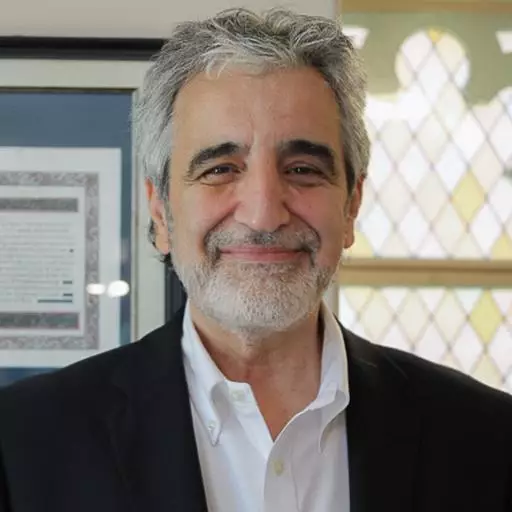
Messianic Leader J. Isaac Gabizon
https://www.bethariel.ca
https://bethariel.ca/donate/
Guest (Male): Shalom and welcome to Shalom Ariel and to this our 60th sermon from the book of Mark with Messianic leader Jacques Isaac Gabizon. How many times have we seen in the book of Mark how this gospel writer took special note of how Yeshua touched the people that he healed?
The touch of a hand that brought with it much compassion. That word compassion means "suffering with," and we can feel his compassion and how he was afflicted with those who were sick and with those who were lost without a shepherd. It’s a beautiful thing to be held in the hands of God, to be touched and kept by his grace and healed, like the man who was deaf and was healed by Yeshua's touch, or when Jesus took the hand of Simon Peter's mother-in-law and then the fever left.
And let's consider for a moment the leper who Jesus healed. Jesus touched him, yet the law of Moses forbade the touching of a leper. According to Numbers 5:2, a leper was to be put out of the camp and touching him would only bring possible spread of the disease within the camp. Could we suppose then that Yeshua had already healed him before he even touched him? Could it mean that he had already seen this leper as clean and therefore, when touching him, he was not breaking the law? The touch then was the sign that he had already been healed.
How does Jesus see us even when we are still in our sins, unhealed and unhealthy? We are clean in his eyes. Therefore, if anyone is in Messiah, he is a new creation. Ephesians 2:10 says, "For we are his workmanship, created in Messiah Yeshua for good works, which God prepared beforehand that we should walk in him."
God sees us as saved long before we ever were. Isn't that amazing? After all, we were formed in the womb and he was there to knit us together. He therefore knew and knows today every ailment, every genetic weakness, every emotional trauma that we face. He knows it all and sees us as healed in him. Is that how we should see ourselves?
He has a plan and a purpose for us from the foundation of the world, that we should be holy and blameless before him. He has already prepared works for us even before we knew him. No matter how leprous or sinful you feel, Yeshua can make you clean by the touch of his hand. Now that the leper was clean, he would be restored to the congregation, to family life, and to social functions. He would be given freedom to live his life again.
And as we consider that Yeshua was handed into the hands of humanity, we know the purpose that served. He would take upon himself the sins of humanity and free us from the grip of sin. Because of what he did for us, we can ponder over and over again and be so thankful concerning the promise given to us in John 10:28. "I give them eternal life and they will never perish for no one will snatch them out of my hand." Indeed, we are engraved in the palm of his hands forever. Be blessed as you listen into today's program and shalom, shalom.
Jacques Isaac Gabizon: One more time, welcome to our Shabbat service where we're always looking to discover some of these infinite facets of our Lord as he reveals himself through the word of God. And so today in our studies of this powerful book of Mark, Yeshua is about to emphasize that one element which constitutes the core of his nature, something which permeates throughout all the scriptures, that is love, love. This is into which our text is emerged. This is what links the different events of our passages for today and it is my prayer that we will all be blessed by them.
Now before we open up the scriptures, let's together bless the scriptures with this ancient prayer. Together, blessed are you, oh Lord our God, King of the universe, who has given us the word of truth and has planted everlasting life in our midst. Blessed are you, oh God, who gives the scriptures. Amen and amen.
So let's open our Bibles to Mark chapter 9. Here we're going to be brought to different events which may at first seem unrelated, but there is one common thread which links them. This can be seen in Yeshua's conclusion, the last words he spoke at the end of the chapter when he says, "Be at peace with one another." This was always his desire.
And at this time Yeshua was now preparing himself to be the lamb or going as a lamb to the slaughter, and literally so because the feast of Passover was drawing near and he was heading towards Jerusalem. And with all this going on and even knowing that he was about to encounter great suffering, his thoughts actually were mainly for his people, for his own ship. Even in Gethsemane and there before they arrest him, he told the soldiers, "Let these go their way," speaking about his disciples, and they miraculously did actually.
And so here, as the time was approaching, Yeshua was preparing his disciples for what was soon to come. So let's begin to read verses 30 to 32. It says, "From there they went out and began to go through Galilee, and he did not want anyone to know about it. For he was teaching his disciples and telling them the Son of Man is being betrayed into the hands of men and they will kill him. And after he is killed, he will rise the third day. But they did not understand this saying and they were afraid to ask him."
Now there's a sense into which these three verses open up a new chapter in the life of the Messiah. They're like an introduction to the passion story. The word passion refers to Yeshua's suffering on the tav, that is on the cross. And while this is the third time that Jesus is telling his disciples that he was going to be persecuted and killed, there are here some new elements.
First, we are told that he was teaching them. That is in the imperfect tense. It means that he kept on teaching them. Surely he must have gone through the messianic prophecies and the history of redemption found in the Hebrew Scriptures from Genesis up to the end. He must have attracted their attention to the way the Lord temporarily covered Adam and Eve with animal skins when they first sinned and how he, the final sacrifice, was about to provide the final succah, the final redemption for everyone as he was going to Jerusalem.
He must have gone through Genesis 22 with the sacrifice of Isaac, which never took place, showing them that Yeshua is the lamb that Abraham saw on Mount Moriah, and there he was heading to Mount Moriah. They must have gone through Genesis 32 when Jacob saw God face to face, and they were as well face to face here with the divine. And through Psalm 22, which describes the pain of the death he would be going through just a few days from then on. Then, of course, Isaiah 53, which explains how the Messiah was to suffer, and ahead of Zechariah 9, which they were to experience very soon when they would be asked to fetch a donkey on which he was to enter Jerusalem.
This precious time of teaching belonged just to this group of 12 and the Messiah. This is why they were traveling, for he did not want anyone to know about their whereabouts. But now why are we told that they did not understand this saying? Which part actually they did not understand? It cannot truly be the rejection, the death and resurrection of the Messiah because this is the third time they were told.
What was it that they did not understand and why were they afraid to ask? There's another new element in the words of Yeshua, a crucial one, which may explain why he will soon speak of hell, of Gehenna, of the unquenchable fire and eternal punishment at the end of this chapter. He says that the Son of Man is being betrayed into the hands of men. It is the fact that he will be betrayed that is new here and that this betrayal has already taken place. He was being betrayed; it had begun. But by whom?
We know that some of the religious factions were overtly against him and that they had already decided and plotted to destroy him. This we see in chapter 3 of Mark. But here the word betrayed is used, and this word describes a treachery that comes from someone who is close to you, from within his closed ones. Of whom could it come from? Among the 12 was standing Judas Iscariot. We were already told in chapter 3, verse 19, that Judas Iscariot was the betrayer and the same word is used here.
And we have a prophecy concerning him which says, even the Messiah speaking, "even my close friend in whom I trusted and ate my bread has lifted up his heel against me," Psalm 41:9. This prophecy will be read in his trial in Matthew 26:23. This may be why the disciples were confused. They knew of an inside betrayer, but who could it be?
However, we're told in Luke, by the way, chapter 9, that this very matter was hidden from them, that they were afraid. This is why they were afraid to ask. It was concealed from them, otherwise they would surely have tried to stop Judas Iscariot, but the prophecy had to take place. However, through these words we will see that Yeshua took every occasion he could to make an appeal to this man Judas Iscariot to reverse his decision. Yeshua's desire for Judas' repentance continues right on to the last minute even in the Garden of Gethsemane.
Let's keep our eyes on this very enigmatic person. You know these verses then open up a new page in the gospel, the passion page. The word "betray" is a word that will reoccur very often once Yeshua especially enters Jerusalem, as when Judas will betray him in chapter 14, his handling over to Pilate, chapter 15, then Pilate to the soldiers in Luke 23. But there is within the text a bright side, a great encouragement in these three announcements concerning his rejection, death and resurrection. Yeshua spoke of himself as the Son of Man.
There's a prophecy behind this title. It was a very well-known title at the time for the Messiah. The prophecy comes from Daniel chapter 7, which says that when he comes in power and to him was given dominion, glory and a kingdom. So it is the Son of Man who dies and by this name we know, we understand that he will resurrect and reign later.
And there's more to this title as it brings out his power and humility, especially when one considers the great emphasis on the word "hand." Have you seen it? As he's going to be handed down in the hands of humanity. Yet we remember that he used his hand to deliver, save and heal so many from actually what they had. Do you remember the manner in which he cured the people since the beginning of the book? The word hand comes back.
The first miracle here is when he healed Peter's mother-in-law and we read that he took her by the hand and the fever left her. And then in chapter 3 he healed a man with a withered hand. And in chapter 5 he resurrected a young girl taking her by the hand. Then in the same chapter there's a story of a woman who was ill for 12 years who thought to touch the fringes of Yeshua's garment. Four times the word touch is repeated in this account. It's only when she touched him that she was healed.
And then in chapter 7 he laid his hand on the man who was deaf and he healed him. Chapter 8, do you remember how he took the blind man by the hand and he walked with him and with his hands he put on his eyes and he healed him. And also in chapter 9, how he healed the poor young teenager who was deaf and mute. He took him by the hand and raised him and he got up. All these experiences had the touch of the Messiah.
But now we are told that the Messiah was about to experience the touch of man. He was being betrayed into the hands of humanity. This is what the Greek says. And falling into the hands of man in his carnal anger and lawlessness is actually a very frightening prospect. When David, if you remember, was asked to choose one of three punishments, he said, "I am in great distress," in 2 Samuel. "Let us now fall in the hands of God for his mercies are great, but do not let me fall into the hands of man."
But in order for us to attain salvation, Yeshua had no choice but to willingly fall into the hands of man so that we may be saved. This is the beautiful story of the gospel. And but for the better, for in so doing again it was for our salvation. As we read in Romans 5:8, "For God demonstrated his own love toward us that while we were yet sinners, the Messiah Christ died for us." It is this love which runs through the rest of our text today.
Now in the next section, it is actually our turn to be confused at least for a little while. Here we are entering what may be a most embarrassing moment within the gospels. It is unexpected, but Yeshua will take this situation and turn it into a great teaching for tolerance and love. See verses 33, 34. Says, "They came to Capernaum and when he was in the house he began to question them, 'What were you discussing on the way?' But they kept silent for on the way they were discussing with one another which of them was the greatest."
Imagine. They should have known that Jesus reads the thoughts. He did before. Through all that was said before, the disciples had a sense at least that they had reached a crucial point, an end and a beginning were at the corner, and so they began to argue about who will have the first place in the kingdom. How could they argue such a thing? Perhaps after the transfiguration when they saw Peter, James and John coming down the mountain with Jesus, they must have thought, "Who are they? Are they better than I?" Or maybe the three of them began to boss the others around. We don't know exactly what happened.
But see that when Jesus asked them what they were talking about, the 12 of them kept silent. Each must have had its own share of guilt. One thing is for sure, there was a lack of love within this group and this is what Jesus is about to deal with. And so after asking them the question, he doesn't wait for an answer. He comes up with this powerful statement, "If anyone wants to be first, he shall be last of all and servant of all."
This is revolutionary for this is not how the world thought then nor today. At the time the sayings of Plato, for instance, were prevalent. He wrote, "How can a man be happy when he has to serve someone?" But Jesus says that in the kingdom of God this is where true happiness is found. He also said ruling and not serving is proper to man. Jesus says this is precisely where man will find his greatest fulfillment in serving others.
See from what the new believers in Yeshua had to make an adjustment concerning his or her mode of thinking. They had to turn 180 degrees to that line of thinking to one that is lined up with God's perspective. This is why it's important to read the scriptures. And we have the perfect example in Jesus who left his glory, power and riches in heaven to come and to serve. And so he expects the same from us.
And the word serve by the way in this verse is diakonos, which designates actually those who waited the tables. Like this great team that we have downstairs in the kitchen who serve week after week. We ought to thank them. You know we consider so many of the teams who serve in this congregation. The sound and video team, the welcoming team, the children ministry, the evangelization ministry, the worship team including translation and scripture reading. All these when we serve together as echad, that is as one, the body functions well. And this, I am convinced and we know from the scriptures, pleases the Lord.
And to enhance his message, see what Yeshua says in verse 36, 37. Taking a child, he set him before them and taking him in his arms, he said to them, "Whoever receives one child like this in my name receives me and whoever receives me does not receive me, but him who sent me." Notice the last words, whoever receives me receives him, the father. So it is from the father to the Messiah to us to others. This actually is the path of love.
Notice that he took a child. Why a child? Because in children we find the antithesis of what is all boiled down to: the sin of pride. This is the first sin by the way; this is where Satan fell. A child symbolizes what is humble, what is lowly, modest and meek. Things that are essential for a believer in order for him to produce fruits. Being like a child applies the principles of love found in 1 Corinthians 13. That is to see the best of each one, as Yeshua did to all the 12 disciples, even Judas Iscariot. The principle here proclaimed that love believes all, love hopes all things, love endures all things.
That doesn't mean that the believer is gullible or childish, but that he or she is called to be like Jesus, like Yeshua in making the other person's situation our priority. This point, I would say, is over-emphasized in the epistles. Let's live for others.
I'm looking forward to our next trip in Israel in June and one highlight when I'm in Israel will be my first sighting of the Dead Sea. You know as soon as you leave Jerusalem, there it is, so beautiful, so majestic, yet it's dead. And one reason why it's called Dead or as modern Israel calls it the Sea of Death, is because of its high salt content which does not allow any aquatic organism such as fish or plants to survive, even though there are some minuscule quantities of bacteria present.
But I want to tell you another reason why it is called Dead. It is because it receives water but does not give back any. It takes from the Jordan River but keeps it, transforms it for itself, so it is dead even though it is of great beauty from the outside. But similar are those who receive and are not giving or sharing or serving. We want our service to be filled with living fruits which nourishes and encourages others. That's why we're here.
And one more thing about the child that Yeshua received to himself. One question we often ask is what language did Jesus speak at the time? Probably Aramaic, which was the common language at the time. However, some argued it's Hebrew and others say it's Greek. Or maybe the three of them. But a most beautiful thing I want to tell you is that when the illustration involving the child, whichever language one chooses the message is the same. In Aramaic, the word for child is talia, which means a servant. Child, servant was the same word.
And if he spoke Hebrew, the child is yeled, for the word for servant is yalad, it's spelled the same way. And if they spoke Greek, the word for child is paidon, which is also the word for servant. So whichever you look at it, the attitude of childlike humility is the best way to serve. Now this was a great class or lesson of love concerning those close to us, those in our immediate group. But what about the others who are outside our circle?
The next event also comes abruptly but it follows the trail of love and teaches us something very important. See what happens next and suddenly, verse 38, 39. Says John said to him, "Teacher, we saw someone casting out demons in your name and we tried to prevent him because he was not following us." But Jesus said, "Do not hinder him for there's no one who will perform a miracle in my name and be able soon after to speak evil of me."
So here is one person unknown to the disciples who was casting out demons in the name of Yeshua and he seems to be very successful. Who was this man? And how come he was not part of Jesus' inner circle? The Messiah's answer is an eye-opener. He knew this person and he told his disciple, "Don't hinder him." The Messiah's answer is to the point. This showed them and shows us that the Lord's hand cannot be confined to just one group of people, to just one congregation or church or one denomination.
From this verse, no organization has the right to call itself Catholic meaning universal and claim exclusivity. For the spirit works in many different ways and through other men and women of God around, given that they all have the scriptures as their foundation, of course. This instance must have been instrumental for the disciples when they were soon to face with a decision as to one person who was coming, a very influential person. Who was it? Rabbi Shaul, Paul.
Do you know that Paul came, it seems, out of nowhere? Even from the enemy camp and he began to teach the word of God. No man had taught him about the new faith, but the spirit only as he said in Galatians chapter 1. He was three years in Arabia. And when he started to influence the believers everywhere, the disciples in Jerusalem had to make a decision concerning his attachment to this newfound organization, the body of the Messiah. Surely they investigated. They determined that Paul was a man of God. Even Peter says that his words are inspired by God, are scriptures. This is why in Acts chapter 15 and 21, the Jerusalem councils, people are complaining about him, but they supported him.
And there was a similar incident with Moses and his disciples, if you remember in Numbers 11 with Eldad and Medad. They were proclaiming the word through the camp of Israel, but they were unknown actually to the leadership. So one day a young man ran and told Moses and said, "Eldad and Medad are prophesying in the camp." So Joshua, the son of Nun, Moses' assistant, one of the choicest men, answered and said, "Moses, my lord, you have to forbid him."
Then Moses said to him, "Are you zealous for my sake or that all the Lord's people were prophets and that the Lord would put his spirit upon them?" Like I wish everybody were like this man, he would say. Can you see how that story reflects what is going on here in Mark? No one from Moses' circle knew Eldad and Medad, and they were unknown to man but they were known to God. And that tells us that there are many out there who we do not know who are fighting also the good fight.
And do you know what the names Eldad and Medad mean? Actually they mean the same thing. Eldad means God loves and Medad means beloved of God. Which would you prefer? It doesn't matter, God loves them. That's the message here. Just this part tells us that God's arm is not short when he reaches everywhere and that is a great blessing knowing that God actually worked with other people as well, right? It relieves us of some responsibility.
But this doesn't mean that we are to accept everyone and everything with eyes closed. True love demands that we weigh out everything to see if the person is really from God. See the powerful statement Yeshua gives next. Not an easy one, verse 40. "For he who is not against us is for us." There's something very exclusive, very cutting about this declaration. It goes from teaching us not to think of ourselves as exclusive, but to being exclusive regarding Yeshua and his teaching. These words do not allow any middle point. One is either with or against Jesus.
Featured Offer

Prophecies take up about ¼ of the Scriptures so we cannot simply ignore them. Knowing prophecy enables us to give a clear presentation to others of why things unfold the way they do in such areas as politics, morality, technology and global ecological changes. It also helps us to rightly place Israel in God’s prophetic plan.
Past Episodes
- The Armor of God
- The Believers in the End Times
- The Book of Daniel
- The Book of Deuteronomy
- The Book of Ephesians
- The Book of Esther - Purim
- The Book of Exodus
- The Book of Ezekiel
- The Book of Ezra
- The Book of Genesis
- The Book of Hebrews
- The Book of James
- The Book of Jeremiah
- The Book of Joel
- The Book of John
- The Book of Leviticus
- The Book of Numbers
- The Book of Philippians
- The Book of Revelation
- The Book of Romans
- The Book of Ruth
- The Book of Zechariah
- The Feast of Passover
- The Feast of Purim
- The Feast of Shavuot - Pentecost
- The Gospel of Mark
- The Gospel of Matthew
- The Letter to the Galatians
- The Messiah in Isaiah
- The Messiah in the Book of Isaiah
- The Messiah's Prayer
- The Nativity: The Unwrapped Gifts of God
- The Resurrection of the Messiah
- The Sermon on the Mount
- The Tabernacle

Video from Jacques Isaac Gabizon
Featured Offer
Prophecies take up about ¼ of the Scriptures so we cannot simply ignore them. Knowing prophecy enables us to give a clear presentation to others of why things unfold the way they do in such areas as politics, morality, technology and global ecological changes. It also helps us to rightly place Israel in God’s prophetic plan.
About Messianic Viewpoint
About Jacques Isaac Gabizon
Contact Messianic Viewpoint with Jacques Isaac Gabizon
info@bethariel.ca
http://www.bethariel.ca/
Beth Ariel Congregation
CP 46521 CSP Boul. St Jean
Pierrefonds, QC, H9H 5G9
Toll free (888)-685-5902