
The Gospel of Mark, Part 59


The Gospel of Mark, Part 59
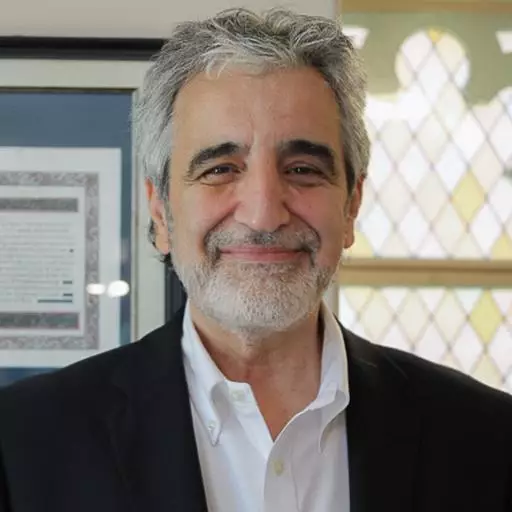
Messianic Leader J. Isaac Gabizon
https://www.bethariel.ca
https://bethariel.ca/donate/
Jacques Isaac Gabizon: Shalom, and welcome to Shalom Ariel, and to this our 59th sermon from the Book of Mark with Messianic leader Jacques Isaac Gabizon. Last week, we learned about Moses and Elijah, and the glorious countenance they had on the mount. This brings to mind the shining face of Moses when he came down the mountain after that second 40 days of fasting.
Jacques Isaac Gabizon: Imagine how the glory of God sustained Moses for 80 days without food or water. Did you know that it was no less than eight times that Moses climbed Mount Sinai and communed with God? He would go up, hear from the Lord, descend and relate to the people what God's desire was for them.
Jacques Isaac Gabizon: And it was on the sixth ascent that Moses invited Aaron, his two sons, Nadab and Abihu, along with 70 elders to join him on Mount Sinai. Imagine that after being in such close presence with the Lord, eating right there on the mountain, after such a revelation as this, those two sons offered strange fire to the Lord and were killed by the Lord for it. We are invited to come to the mountain of the Lord. We are invited to commune and feast with the Lord, with his presence and through his word.
Jacques Isaac Gabizon: But when we come down, we want to be changed, sanctified, and fearing him only. And it was on the eighth visit when God himself spoke his name twice to Moses. This experience must have added incredibly to the mouth-to-mouth and face-to-face communion that Moses already experienced with the Lord.
Jacques Isaac Gabizon: And it was after this eighth visit that Moses returned to his people with a face that shone the radiance of God. The more Moses communed with the Lord on Sinai, the more we see the results. And so we believers can hold fast to that same promise. As we continue to commune with the Lord daily, our face should shine with God's light. We should be reflecting the love and the joy of the Lord. We should be reflecting inner peace and assurance, contentment and confidence in him alone. And we will be changed from glory to glory as well.
Jacques Isaac Gabizon: Just as Moses was the mediator then and went up eight times, how many more times does the superior mediator, the high priest Yeshua, come before the Father and mediate on our behalf. Oh Lord, thank you. Let this new countenance that we have received from you so shine that we may give you and Yeshua all the glory. Be blessed as you listen into today's program and Shalom.
Jacques Isaac Gabizon: And it was only a few of them by the way, and definitely not all of them who opposed God. Let's keep in mind that it was because of the hard work and faith of many scribes that we have our Bibles today. And many Pharisees came to believe and help the formation of the early churches with Paul among the trailblazers.
Jacques Isaac Gabizon: So we are concerned here with a small group of rebels who bring us to generalize to represent a facet of the history of Israel. They do, but not all of Israel. So as James says, to paraphrase and apply his words to this case, let us not be like a man observing his natural face in the Bible. When reading the history of Israel, for he observes himself, goes away and immediately forgets what kind of man he was, and then criticizes Israel and criticizes the scribes and Pharisees.
Jacques Isaac Gabizon: When at the end, the Israel, the history of Israel is an illustration of who we are. And if the Messiah spoke these words to the scribes and said in Mark 9:19, "How long shall I put up with you?" This was in preparation, by the way, of the great miracle that he was about to perform, a Messianic miracle, something Israel never seen before.
Jacques Isaac Gabizon: But before we can appreciate this miracle, let us first see the text and how the text focuses on this father and son. I want to tell you so much is said about them and of their partnership in suffering. There is the main theme. Let us first consider the father, beyond history and the arguments and beyond the debate, there is in the background a very touching story of a hurting father.
Jacques Isaac Gabizon: Notice that the father spoke when he said at the end in verse 22, he says, "Take pity on us. Help us." Here we see a father suffering alongside his son and following him everywhere and trying to save him from the demon who would throw him into the fire and in the water, as verse 22 tells us.
Jacques Isaac Gabizon: And there the father must have been constantly after his son, surely putting him out of the fire, out of the water. Does that sound familiar now? And see the great emphasis that is put on the son's suffering. We're told that he was possessed by a spirit, a severe one, it says, which makes him mute so the person cannot talk nor express his sufferings.
Jacques Isaac Gabizon: And it says that whenever it seizes him, right? It slices him to the ground, and he foams that is at the mouth, and he grinds his teeth, and stiffens out. It has he says he was often thrown again in the fire and the water, and he was thrown into convulsion. You know that's a lot that is being said here, sounding like a full medical history being taken. As if it is the main theme. And it is.
Jacques Isaac Gabizon: Son and father. And Luke tells us that this man added that this was his only son. When he said, "I beg you to look at my son, for he is my only son." The last word, "only sons" are just one word, "monogenes" meaning one and only one, help me to save him.
Jacques Isaac Gabizon: Now, considering all these things, we're brought to see something of greater importance and brought to the other story. The story of the father, that is God and his son, but in this case, is also the son being Israel, right? And the Messiah, because both are called sons of God. For Israel, God was and is always will be with the nation, pulling it out of the fire and persecution. For Yeshua, God was always with him while on earth.
Jacques Isaac Gabizon: This is very much like the powerful passage from the book of Proverbs, where the spirit of God asks Israel if they know the name of the son of God. It is in Proverbs chapter 30 verse 4. After describing God's power over nature, it asks a simple question, "What is his name?" Or his son's name? Rabbinical commentators say that the son is Israel, and they are right. For this is how Israel is spoken of in Exodus, where the Lord says, "Israel, my son, my firstborn."
Jacques Isaac Gabizon: But why ask a question if the answer is so obvious? It is like asking Israel if he knows its own name. If the question is asked, it is so that we seek deeper into this name, and there we will find out that God has a son, who is the Messiah himself, who has been called the son as well, a child in Isaiah 9:6. And who has the very name of God, El Gibbor, Mighty God, Everlasting Father. And who, according to Galatians 4:4, when the fullness of time came, God sent his son, born of a woman, born under the law, so that he might redeem those who were under the law that we might receive the adoption as sons.
Jacques Isaac Gabizon: This is where the story of a father and a son, both suffering, encountered the son of God, who came from heaven, and who himself is a son, and here cures the young boy and saves him from demonic domination, and from destruction. Israel, the other son of God, was not able to do this for the boy, and so Yeshua came to save both. Might sound complicated, but Yeshua came to save both.
Jacques Isaac Gabizon: The healing of this boy was a prelude, as were many of the Messianic miracles, a prelude of the final act of healing and redemption when Yeshua would reach Jerusalem very soon at the Passover and die for the sins of the world. And so in this story, Israel is like the suffering son. And the earthly father, we can see a father in heaven, God who followed, is still and is following his son Israel. And as the spirit says, and we always quote that verse, Isaiah 63:9, "In all their affliction, he is afflicted." For in all this affliction, the son of God, the child that was born, we take fully on himself.
Jacques Isaac Gabizon: And the miracle of healing of the demon-possessed son that Yeshua here performs is not a meager or simple one. It was one which only God could perform. No other man could do it. It was actually a Messianic miracle. At the end, the disciples asked Jesus, "Why they couldn't drive this demon out?"
Jacques Isaac Gabizon: Speaking, of course, of the demon in verse 28. Prior to this, Jesus gave the disciples power over the demons, but how come they couldn't do this particular one? Yeshua then answered in verse 29, "This kind cannot come out of anything but prayer."
Jacques Isaac Gabizon: This kind, he says, but what kind is it? He himself identifies it in verse 25. He says, "a deaf and mute spirit." One that gripped the individual and did not allow him to express even a word, even confess the name of God. Something which would have actually chased the demon away. But how do we know it is a Messianic miracle? From two points of view. First the Bible and history as well.
Jacques Isaac Gabizon: In the Bible, we mean the same kind of demon in Matthew chapter 12, just before some religious leaders accused Jesus of working for Satan. They accused Jesus because they themselves could not perform this miracle, and they could not explain how actually he did this miracle. See how he performed it and see what the people said. Look at Matthew 12:23.
Jacques Isaac Gabizon: Says then one who was brought to him was demon-possessed, blind and mute, and he healed them so that the blind and mute man both spoke and saw. And all the multitude were amazed and what did they say? "Could this be the son of David?" "Could this be the Messiah?" They knew it was a special miracle, and they asked if Jesus could be the Messiah, and the answer is yes, he is, because he performed that very miracle. They expected only God to do.
Jacques Isaac Gabizon: But it was not only the Jewish people who looked for the Messiah, who could heal this kind of demonic possession. The whole earth, the whole world, Roman and Greek world knew about it. That is the second source. In the secular world, the description of these same symptoms we read in Mark, which the boy experienced, were like those which we would call today the epilepsy or seizures.
Jacques Isaac Gabizon: In fact, the word seizure stems from the fact that they thought that the person was seized by a demon. That is the origin of the name. This is how the father described the disease in Matthew 17. He speaks of his son as a lunatic or moonstruck. This is how they diagnosed epilepsy. Why lunatic or moonstruck? In the Targum of Psalm 121, it says, "By day when the sun reigns, the morning demons shall not strike you, but they will strike you at midnight. They will strike you when the moon reigns."
Jacques Isaac Gabizon: This is how they understood the origins of epilepsy. Now I want to tell you, today's epilepsy has nothing to do with demon possession. But at the time because they could not fully understand its disease and couldn't find a cure for it, it was believed that it was only God who could cure it.
Jacques Isaac Gabizon: In fact, epilepsy was called the sacred disease, precisely because they believed it was only God who could cure it. It was also called the child's disease because it began in childhood. And it was believed that it was not cured before puberty, it would never be cured. But the Greek word for the child is one who already reached puberty, right? From this belief we can understand the father's sense of panic for the child, right? And he went to Jesus, "Please do it."
Jacques Isaac Gabizon: It was also called a social disease because he would hit in crowded areas. So it was a well-known miracle from God, something they have never seen before, whether Jews, Greeks, or Romans. However, we have not yet seen the best part of the whole story, the healing of the boy itself and with which actually we will conclude.
Jacques Isaac Gabizon: First, why did Jesus wait so long before healing the boy? He could have done it right when he was down the mountain. Why while the young boy was suffering, he even waited and asked a question, "How long has it been?" he said. This sounds very much like a question we hear today, no? Like why does God take so long to subdue all evil? Why is it that while so many are suffering, he still waits?
Jacques Isaac Gabizon: While these are difficult questions to answer, the fact is that at the end Yeshua healed the boy. He did not wait long, but just enough to tell us that while it may appear long, at the end he is coming to bring peace and harmony. Now see how he healed the boy. It is when the father in desperation says in verse 22, "But if you can do anything, take pity on us and help us."
Jacques Isaac Isaac Gabizon: And Jesus answered, he says, "If you can, all things are possible to him who believes." Here Jesus was not only speaking to the father, but he was speaking to the disciples who were not able to cure the boy. They might very well have been able to if they used the proper method in this case. Simply, he's going to explain, just pray. That is call on Yeshua. He will do it.
Jacques Isaac Gabizon: But these words are also for us. "All things are possible to him who believes." If you believe, you can do marvelous things. Now this is again not a blank check to do whatever you think you should be doing, right? This is possible only if you do everything according to the will of God. Walk with God, and you will move mountains, for nothing is impossible when we walk in his will. To this, see the father's response, "I do believe. Help my unbelief."
Jacques Isaac Gabizon: Now I want to tell you this is truly beautiful, for it shows a sincere and honest faith. How could Yeshua not fulfill actually his prayer? If this father had no faith, he would not have said, "Help my unbelief." Through this statement, one can see that his faith was real and now present in him. However, he asked for more of it, as if he always should, right? For faith is given by God. And unbelievers will never ask anything like this because they don't know.
Jacques Isaac Gabizon: This moment was really between Yeshua and this father. Perhaps this is why Jesus waited so long. Perhaps he needed this confession to make sure the father and the son will both be in heaven with him for eternity. There's much more to this great encounter, something we will look into next time.
Jacques Isaac Gabizon: You know, to close, uh, staying on the subject of faith, that is our foundation, this past week, this past two weeks, and even today, we were all taken by the consequences of the earthquake in Turkey and Syria, which killed so far what 45,000 people, right? And many are still missing.
Jacques Isaac Gabizon: But when you look at the picture of the destruction, there's something that is striking. Not actually all buildings fell. Many stood firmly through the earthquake. But what made some buildings stand firm and the others crumble in the same street? It was the way they were built. Those who stood strong were those who were built in order to withstand these earthquakes.
Jacques Isaac Gabizon: This is why last week officials in Turkey produced 113 arrest warrants against builders in connection with the construction of buildings that collapsed. These apparently did not build these buildings according to code, yet for years experts warned that many new buildings in Turkey were unsafe due to corruption. It is sad to see so many people who could have been saved if only they had built it according to code.
Jacques Isaac Gabizon: In our story today, this father found the true foundation on which he could rest, not only for his life on earth, but for his son's as well and for eternity as well. This foundation the prophets have been proclaiming for thousands of years. Yeshua himself said, Matthew 7:26-27, "Everyone who hears these words of mine and those not act on them will be like a foolish man who builds his house on the sand. The rain fell, and the floods came, and the winds blew and slammed against the house, and it fell, and great was its fall."
Jacques Isaac Gabizon: But the one who builds his faith, his eternal dwelling on Yeshua, this one is the wise one, right? Who knows to recognize a treasure when he or she sees it. Let's bow our head in prayer. Heavenly Father, our Lord, our light, our Father, we have seen through your word that you are full of compassion. Grant that our hearts might understand, know, hear, learn, teach, and serve, and do fulfill in love all the teachings that we have acquired even today from your word.
Jacques Isaac Gabizon: Open our eyes, with your love, bind our hearts to your commandments, to your words, and bring together our hearts in love and in awe of your name, so that we always run, we run to you in amazement. And all this we pray in the name of Yeshua Messiah. Amen and amen. To the congregation, the Lord bless you and keep you. The Lord may see his face shine upon you and be gracious to you. The Lord lift up his countenance upon you and give you peace. May the Lord bless you all.
Jacques Isaac Gabizon: Welcome to this segment of our program where we have our Q&A with Messianic leader Jacques Isaac Gabizon. And today we're going to deal with the question, when will the rapture happen? Before, during, or after the tribulation? Be blessed as you tune in.
Guest (Female): Some people believe that believers will go through the seven-year tribulation period. Others believe that we will be raptured in the middle, and still others believe that we will be raptured before the tribulation. What do you believe and why? Thank you.
Jacques Isaac Gabizon: Well, this is a great question and a vast topic to cover. Just to situate the reader, the Bible speaks of the last seven of the 490-year period as spoken by the prophet Daniel. And the question is, will the believer go or the church go through the tribulation, that is, the last seven years of Daniel's prophecies?
Jacques Isaac Gabizon: As you can see from the chart, these 490 years period is divided into two main sections between the first and second coming. The last remaining again seven years are the most terrible ones recorded in for the history of humankind. This is what Yeshua said concerning these years. This is in Matthew 24. He says, "Unless those days had been cut short, no life would have been saved, but for the sake of the elect those days would be cut short."
Jacques Isaac Gabizon: So the question then is, are believers going to go through this period of judgment on the world? Now, this very question is the same which a group of believers asked Paul in the first century. Let us see his answer. It is in the letter to the Thessalonians chapter two. This is the second letter in chapter two. This is one of many answers we can find in the scriptures. So these believers in Thessalonica already knew about the rapture which Paul dealt with in First Thessalonians 4.
Jacques Isaac Gabizon: However, they had the same question. They could not figure out if it would take place before, in the middle, or after the tribulation. Paul clarifies these points as these questions actually are marked in the chart with the three different question mark. Let us follow his argument. He will speak of three signs preceding the tribulation, and the one preceding the rapture that will answer our question.
Jacques Isaac Gabizon: In verse 3, he mentions two things which will mark the beginning of the tribulation times. He says, "Let no one deceive you by any means, for the day will not come unless the apostasy comes first, and the man of sin is revealed, the son of perdition."
Jacques Isaac Gabizon: The apostasy and the man of sin are signs and characteristics that we'll find in the tribulation time, something we today see coming in the horizon. The apostasy is that of the visible church, whose history one can trace through the seven churches of Revelation, the last of which, if you remember, is Laodicea. It has Yeshua spewing them out of his mouth.
Jacques Isaac Gabizon: This is the first indication that the true church of God, the true believers will not be in the tribulation because Yeshua will not spew out his own body. He cannot do that. But this last church, which is described as the abomination of the earth in Revelation 17, will be composed of only non-believers.
Jacques Isaac Gabizon: So the true congregation of God needs to be removed before the final apostasy occurs in its full form. Once this is done, we are told that the 144,000 Jews and the two prophets will take over the evangelism of the earth, and they will be successful. These 144,000 are not part of the church, nor of course, the two witnesses. They are a separate entity, a newly formed spiritual army, for the church itself is now gone.
Jacques Isaac Gabizon: And this newly marked or sealed believer will continue to the work but under a different name, the name of saints. Yes, but not of the church per se. Now, Paul's second argument about why the body of the Messiah will not undergo the tribulation is very powerful. Let us follow him in the text. In verse 3, he gives two descriptive titles for the world leader who will come and cause the last wars.
Jacques Isaac Gabizon: He is called the man of sin and the son of perdition. He is the beast described by Daniel chapter two and in chapter seven, especially, and by John in Revelation 13. However, see verse 4, which further describes this man of sin and places him right in Jerusalem, at the third temple. This is what Paul says.
Jacques Isaac Gabizon: He opposes and exalts himself above all that is called God or that is worshipped, so that he sits as God in the temple of God, showing himself that he is God. That he sits as God in the temple of God. This is in relation to the physical temple that is about to be rebuilt in Jerusalem.
Jacques Isaac Gabizon: Today there is a revived national desire to have this temple rebuilt. It is in the Jewish people's daily prayer. Even the secular Jews want it. Either because they believe it will represent a center of gathering of all Jews, or that it will be good for tourism, but the desire is there. So we see this desire present among many different Jewish communities.
Jacques Isaac Gabizon: But it is in verses 6 to 8 where Paul gives a strong reason why the believers will be removed before the tribulation. As you know, what restrains, he says him now, so that in his time he will be revealed. For the mystery of lawlessness is already at work. Only he who now restrains will do so until he is taken out of the way. Then the lawless one will be revealed.
Jacques Isaac Gabizon: Who then is the restraine, that which is to be removed before the Antichrist and the tribulation times begins? The answer is in the verse itself. The verb restraining is spoken on the one hand as a neutral grammatical gender, not masculine, not feminine. So it is a thing, it is an organization. However, in verse 7, it switches to the masculine gender, that is, it is also a person.
Jacques Isaac Gabizon: So it is both a thing and a person. What can have both the neuter gender and yet be a living organism? It was A. W. Pink, a late 1800 Bible commentators, a very perceptive one, saw this difference and he wrote, he says, "Undoubtedly, the neuter pronoun here has reference to the church of God, and the masculine one to the Holy Spirit himself."
Jacques Isaac Gabizon: The restrainer then is the ecclesia and at the same time the spirit of God. So both the body of the Messiah, in whom the spirit of God dwells, will be removed before the seven-year tribulation. At the birth of the church, the spirit came to dwell in the hearts of the believers. At the end, both go away to let judgment fall on this earth.
Jacques Isaac Gabizon: This does not mean that the Holy Spirit will completely disappear from the earth, for he will work with the 144,000 and other believers on earth, but his function of dwelling permanently in the heart of the believers of the ecclesia is something proper that is to the ecclesia itself. This function will end at the end of the church age.
Jacques Isaac Gabizon: This then is the argument of second Thessalonians. We cannot be present for the tribulation because the restrainer will be removed. And of the signs that Paul gives, we can already see them today. First, the apostasy will occur in its full form and that is the church will be spewed out, out of the Savior who rejects this final form of the ecclesia.
Jacques Isaac Gabizon: Second, the coming of the Antichrist, something that we can perceive in the horizon as countries are getting ready for war. Third, the temple has to be rebuilt in Jerusalem, something again that Jews in Israel are increasingly desiring. This is one again of many other arguments which demonstrates that the church, the believers will not go through the tribulation. For more information on this very subject, you can go on our study of First and Second Thessalonians part seven on our website.
Jacques Isaac Gabizon: Shalom Ariel is a daily radio program emphasizing the Jewish perspective of scripture. God is not through dealing with Israel, nor will he renege any of the promises he has made to her. Our teacher for this program, Jacques Isaac Gabizon is a Messianic Jewish believer and Messianic leader at Beth Ariel congregation, right here in Montreal. If you've been encouraged by the messages, we'd love to hear from you.
Jacques Isaac Gabizon: Give us a call at 1-888-685-5902, or you may write us at info@bethariel.ca. You are also welcome to join us for our Saturday morning services. We are located at 6297 Monken Boulevard, Corner of Madison in NDG. The message is given in English, but we do offer simultaneous translation into French and Russian. Services begin at 11:00 AM. We have Shabbat school for children of all ages, up to and including teens.
Jacques Isaac Gabizon: You may also download audio messages from our website at bethariel.ca and enjoy other in-depth teaching from Jacques Isaac. If you would like to sign up for informative newsletters, log on to our website and add your name to our email list. Shalom Ariel is a listener-supported program. If you have it on your heart to donate, it will be a great blessing for the continuing ministry and outreach of Beth Ariel. Thank you, and shalom shalom.
Featured Offer

Prophecies take up about ¼ of the Scriptures so we cannot simply ignore them. Knowing prophecy enables us to give a clear presentation to others of why things unfold the way they do in such areas as politics, morality, technology and global ecological changes. It also helps us to rightly place Israel in God’s prophetic plan.
Past Episodes
- The Armor of God
- The Believers in the End Times
- The Book of Daniel
- The Book of Deuteronomy
- The Book of Ephesians
- The Book of Esther - Purim
- The Book of Exodus
- The Book of Ezekiel
- The Book of Ezra
- The Book of Genesis
- The Book of Hebrews
- The Book of James
- The Book of Jeremiah
- The Book of Joel
- The Book of John
- The Book of Leviticus
- The Book of Numbers
- The Book of Philippians
- The Book of Revelation
- The Book of Romans
- The Book of Ruth
- The Book of Zechariah
- The Feast of Passover
- The Feast of Purim
- The Feast of Shavuot - Pentecost
- The Gospel of Mark
- The Gospel of Matthew
- The Letter to the Galatians
- The Messiah in Isaiah
- The Messiah in the Book of Isaiah
- The Messiah's Prayer
- The Nativity: The Unwrapped Gifts of God
- The Resurrection of the Messiah
- The Sermon on the Mount
- The Tabernacle

Video from Jacques Isaac Gabizon
Featured Offer
Prophecies take up about ¼ of the Scriptures so we cannot simply ignore them. Knowing prophecy enables us to give a clear presentation to others of why things unfold the way they do in such areas as politics, morality, technology and global ecological changes. It also helps us to rightly place Israel in God’s prophetic plan.
About Messianic Viewpoint
About Jacques Isaac Gabizon
Contact Messianic Viewpoint with Jacques Isaac Gabizon
info@bethariel.ca
http://www.bethariel.ca/
Beth Ariel Congregation
CP 46521 CSP Boul. St Jean
Pierrefonds, QC, H9H 5G9
Toll free (888)-685-5902