
The Gospel of Mark, Part 57


The Gospel of Mark, Part 57
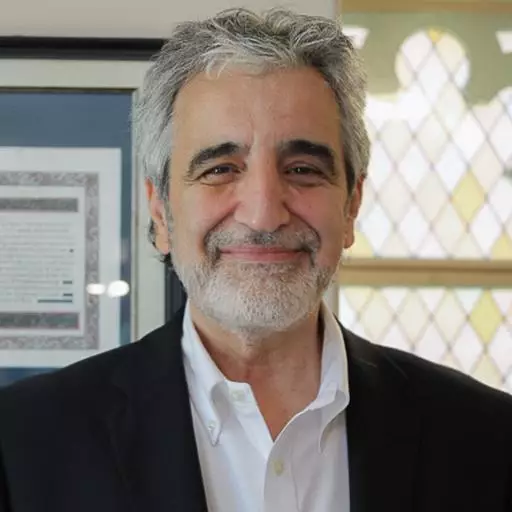
Messianic Leader J. Isaac Gabizon
https://www.bethariel.ca
https://bethariel.ca/donate/
Guest (Female): Shalom and welcome to Shalom Ariel and to this our 57th sermon in the book of Mark with Messianic leader Jacques Isaac Gabizon. Today, we're going to hear a powerful warning from the Bat Kol, that voice from heaven that says to Yeshua's voice we must give heed and pay attention. After all, in him is eternal life. Some of us might question where are we going after this life?
Daniel the prophet indicated that there is one out of two choices. Daniel 12:2 reminds us that there is everlasting life or everlasting contempt. Two choices and one of two resurrections. Yeshua said, "I am the way, the truth, and the life. No man or woman will come unto the Father except through me." And if those words draw your heart, don't just listen, but act and respond. Make him Redeemer of your life today and gain the Lord's assurance of your final destination. Be blessed as you listen into today's program, and shalom, shalom.
Jacques Isaac Gabizon: Now we come to a major message, I believe, of the transfiguration. This is what it says: "Then a cloud formed overshadowing them and a voice came out of the cloud, 'This is my beloved son, listen to him.'" Here we see the cloud, which is a recurrent motive of a theophany. A theophany is a physical manifestation of God that we see in the Hebrew scriptures, as when God was going before them on a pillar of cloud, or in Exodus 33 when Moses entered the tent, the pillar of cloud, the Lord would then speak to him.
And here the cloud descended on this high mountain and testified that Yeshua is God's beloved Son whom he sent for the salvation of men. Such an important moment that this is the third time that the Lord's voice is heard. His Bat Kol, daughter of a voice, came down to earth to witness that Jesus, Yeshua, is the Messiah of Israel. First at his baptism. Second here, before he went on the top. Third in John 12:28, right after the triumphal entry, just before his trial. It says then a voice came out from heaven, "I have both glorified it and will glorify it again," speaking of his name.
Notice the presence of the tri-unity of God in this most important historical event which changed again the course of this world. We have the Spirit in the cloud, which they call the Shekhinah glory. We have the voice of the Father and the Son, the Messiah himself. But there's something, and this is where we come to the core of the message here, there's something that the Lord says which is of utmost importance when it comes to Yeshua. The last words: "Listen to him."
In the past, they did not listen to Moses. Nor did they listen to the prophets who were standing there as witnesses with Moses and Elijah. But when the Messiah comes, God says, "Him you shall listen," for after him there's no one who can save you. Let us follow the history of these words. This is a quotation, by the way, of a prophecy of the coming of the Messiah given by Moses himself in Deuteronomy 18. When he says in verse 15, "The Lord your God will raise up for you a prophet like me from among you, from your countrymen. You shall listen to him."
And in verse 19, the Lord God adds, "It shall come about that whoever will not listen to my words which he shall speak in my name, I myself will require it of him." These are stern warnings here speaking about the coming of the Messiah. What, by the way, brought about this prophecy? At the time these words were pronounced, Moses was about 120 years old and his passing away was imminent. And that, of course, created a problem within Israel. What were they to do once he's gone?
Who is going to act as a mediator? Who would be able to speak to God and report back his word? Who would be able to pray for them when they sin and when God was to judge them? Deuteronomy 34 makes that clear. There has not risen a prophet since in Israel like Moses, whom God knew face to face. It wasn't Joshua. It wasn't Isaiah nor Ezekiel, but Yeshua himself. Only the Messiah could replace Moses and even more, take the sins of the people, which Moses could not do.
"Him you shall listen." It is because after Yeshua there will be no one who could save. He's the last link of a long chain of attempts to bring man to realize that he cannot make it by himself. "Him," God says, "you shall listen." And what happens when one doesn't listen to the Messiah? God says, "I will require it of him." That is, I will seek, I will search the reason. Judgment is in view here. This is a foretaste of the Great White Throne Judgment at the end time when everyone who refused the message of the gospel will be in front of that throne and one question will be asked: "Why didn't you believe in Jesus? What was wrong?"
And it is Peter himself, and this is great, who gives us a powerful commentary on the words, "I will require it of him," and their impact on one's eternal future. In one of his great speeches that we find in the book of Acts, in Acts 3:22-23, he recalls this prophecy and see how he explains it to us. He says, "For Moses truly said to the fathers, 'The Lord your God will raise up for you a prophet like me from your brethren. Him you shall hear in all things, whatever he says to you. And it shall be that every soul who will not hear that prophet shall be utterly destroyed from among the people.'"
Peter goes right to the point here, pointing to the person who does not hear or obey the word of Yeshua because the word "hear" in Greek is the root of the word "obey," just like in Hebrew. Those who do not obey, he says, will be utterly destroyed. This is strong. This is an interpretation of the words, "I will require it of him." These are strong words and no one should disregard this warning. "Utterly destroyed" is one word in the Greek. And I want to tell you, it's used only here and in secular Greek. It means to eliminate by destruction, to destroy, to put to death.
All of this begs the question: Who's the Messiah of Israel? Where, then, are you going to spend eternity? And see now how the next verse in Mark, right after the Lord spoke from the cloud, how it is formulated. Verse 8: "All at once they looked around and saw no one with them anymore except Jesus alone." It is these last words which are very weighty: "except Jesus alone." As the vision ends, they were with Jesus only because after the law, after the prophets, all is gone except Yeshua. That's the message, I believe.
Because there's no salvation in no one else, for there is no other name under heaven that has been given among men by which we must be saved except the name of Yeshua Hamashiach. These words are also from Peter, who must have been very impacted by the vision which he finally fully understood later on, that Yeshua is the only and true Jewish Messiah. The uniqueness and finality of the Messiah must continue to be affirmed to others. He is unique in his incarnation. He's the only one who comes from heaven.
Unique in his atonement. Only he has died for the sins of the people, no one else. Unique in his resurrection. Only he has conquered death. And since no other person but Jesus of Nazareth did God first, in God that became human in his birth, then bear all our sins, and then triumph over death, nobody else possesses the qualification of Yeshua. Now as they came down the mount of transfiguration, they came down to earth, so to speak, because a lot of things were happening.
And so we read in verse 9: "Jesus gave them orders not to relate to anyone what they had seen until the Son of Man rose from the dead." You see that it is not the first time he tells them not to tell the others about his identity as the Messiah of Israel, but it is here where for the first time he gave a time limit: "until I resurrect." Then you go and tell everyone. This news was to be kept until he died and resurrected and then it was to be spread abroad. This is what the disciples did, and in many ways these words are addressed to us as well.
He rose from the dead and he's coming back very soon and it has been given to us to proclaim this truth to everyone. That's why we're here today, by the way. And it's at this point that the disciples begin to understand something about the resurrection. And there in verse 10, they ask a great question. See what it says. It says they seized upon that statement discussing with one another what rising from the dead actually meant. Now it's not that they did not know about the resurrection.
It was a hot topic there, especially between the Pharisees who believed in the resurrection and the Sadducees who did not and they were at odds with each other. What the disciples were wondering is how come Yeshua would resurrect while they were to stay themselves on earth? "Are we not supposed to resurrect at the same time?" That's their question. Later Paul explains it well for us when he taught that each one in his own order, as explained in 1 Corinthians 15.
And so he says the Messiah first. He is considered the firstfruits, fulfilling the Feast of Firstfruits. That is, the only one who died and resurrected never to die again, and then we will follow. And when we will follow, it will be at the resurrection or the rapture, whichever comes first. What comes next in the text, and I will close with this, is a cryptic saying of Jesus which requires some searching and meditation. As the disciples finally begin to understand that the Messiah was to die, they ask another very pertinent question.
Look at verse 11-12: "Why is it that the scribes say that Elijah must come first then? And he said to them, 'Elijah does come first to restore all things. And yet how is it written of the Son of Man that he will suffer many things and be treated with contempt? But I say to you that Elijah has indeed come and they did to him whatever they wished just as it is written of him.'" Now the disciples were right to say that the scribes say that Elijah must come first. In fact, this is what they are saying even today.
It's based on the prophecy of Malachi chapter 4. Yeshua agrees Elijah does come first, but the problem is that this court is very selective. Jesus, in turn, he asks another question. "How is it written of the Son of Man that he will suffer many things and be treated with contempt?" The point is that how come they know that Elijah is coming and they don't know that the Messiah has to die when it is the same book that speaks about both facts? And this is what's happening in Judaism today.
They know about Elijah. At Passover, they always have an empty chair and a full glass of wine, but they don't know about the Messiah that he comes to die. This is Jesus' argument here. Why don't you read the whole of the scriptures, the whole of the council of God? How interesting that many pick what they want from the scriptures and choose what suits them best. It is not in Judaism only that we find this phenomenon. It is also, and especially in the cults, that we find it as well, and in many who try to press their doctrines on others.
And so Yeshua exposes their fallacy here and he adds this very cryptic verse, verse 13: "But I say to you that Elijah has indeed come and did to him whatever they wished, just as it is written of him." How would you explain this? You see, in this cryptic saying, the disciples did understand and they themselves give us the answer. It is actually found in Matthew 17:13. It says then the disciple understood that he was speaking to them about John the Baptist. That's quite something actually.
That's quite a jump from before what they did not understand much. Now they were beginning to understand the intricate ways of the word of God. How is John the Baptist and Elijah related? Both have the same mission. Both lives and ministry actually are so similar. Both were so courageous in standing for what is true. After the prophets of Israel were killed, Elijah stood up. He was the only one and confronted King Ahab. John the Baptist as well confronted Herod. Both these prophets denounced the king's evil way of living.
Furthermore, both the wives of these kings came after both prophets. Jezebel sought to kill Elijah. Herodias succeeded in killing John the Baptist. And in their mission, John the Baptist came to announce the first coming. Elijah will come to announce the second coming. Elijah is yet to come. This is why one of the two witnesses performs the same miracles as he did, the two witnesses that we find in Revelation 11. This doesn't mean that he will come personally, but perhaps a man who will represent him as John the Baptist represented Elijah.
But in many ways, each of us are Elijah. Each of us are John the Baptist when we courageously speak and proclaim the word of God. We are Isaiah, we are Jeremiah, we are Ezekiel when we quote one of these verses. We are Abraham when we encourage others in their faith and show our faith in the Lord. We are Paul when we staunchly proclaim the word of God regardless if it seems heartless or being an obstacle to many. Today, the message of the transfiguration keeps its course, even today and until the end.
Let me bring you to the passage of Revelation 11:6. It speaks there they have the power to shut the sky so that the rain will not fall during the days of their prophesying. That was the miracle of Elijah, by the way. And then it says and they have the power over the waters to turn them into blood. That was the miracle of Moses. So the prophecy is still going on. They're coming back, so to speak, to tell the world that Yeshua is the Messiah. Now to close, I want to share another powerful verse.
We've spoken about the cloud which came and hovered over the disciples to indicate the presence of God. This is the same cloud that hovered over Israel during their journey in the wilderness. Did you know that and very soon you will also not only see, but if you have accepted the Lord Yeshua as your personal Savior, you will get into a similar cloud? Did you know that? The word "cloud" in the Greek, nephele, is also used in a passage which speaks of our gathering with the Lord.
This is in 1 Thessalonians chapter 4:17, where Paul speaks of those who will be present at the rapture. And he says then we who are alive and remain will be caught together with them in, where? The cloud. Same word. To meet the Lord in the air and so we shall always be with the Lord. I believe we are this generation who will experience this great trip. The word "rapture" comes from the word, the Latin raptura, which means caught up. And so it came to describe this doctrine of the resurrection or the rapture. And so it says that we will all be caught, that is, in the clouds to meet the Lord. Are you ready?
Guest (Female): Welcome to part two of our Q&A with Messianic leader Jacques Isaac Gabizon on the subject of the two genealogies of Yeshua. Be blessed as you listen in.
Jacques Isaac Gabizon: However, when we come to the other genealogy of Luke, this one is the real human genealogy of Yeshua. There, Jeconiah is not present at all. Turning to this less expected and less known genealogy, Luke's genealogy in Luke 3:23-38 gives us Miriam's or Mary's lineage. She comes from David through Solomon's brother Nathan, not Solomon. The line is given from David to Adam, a path that can be checked by all the other genealogies in the scriptures.
It is the last biblical genealogy we have in the scriptures. It links all of them together. In this genealogy, Luke follows the tradition. He does not mention any woman or does not skip any names. And see how this genealogy really begins. It says in verse 23 that now Jesus himself began his ministry at about 30 years of age. By the way, this is the age when the priests begin their ministries. It then goes right into genealogy and ends with the words, "Adam, the son of God."
I think this is very significant since Jesus is called the Last Adam. This genealogy goes from the first Adam to the last Adam, as we read in 1 Corinthians 15:45. And so it is written the first man Adam became a living being, the last Adam became a life-giving spirit. It is important to notice that even the Talmud recognizes that Jesus is from the tribe of Judah and that he is from royalty. Royalty. We read in the book of Sanhedrin, with Yeshua, it is written, however, it was different for he was connected with government, that is, royalty.
Here's actually, this is an added unexpected bonus, for right and after this, no one could know from which tribe they were expected to come except of course the tribe of Levi. Now we can return back to Genesis 49. There are two more points I want to add from last week's studies where one more time the Talmud has so much to say. It's incredible how tradition sometimes supports the scriptures. In this important prophecy, we find one more important word along that of the scepter that is given to us in verse 10 of Genesis 49.
One last word because it seems that we can go on and on. It says the scepter shall not depart from Judah, nor a lawgiver from between his feet until Shiloh comes. Let's look at the word "lawgiver." Who were the lawgivers of Judah before Shiloh came? Who were the judges and lawgivers at the time of Jesus? The Sanhedrin. The Sanhedrin, the body of teachers and leaders who judge matters in Israel and who judged also the Messiah. But did you know that at the crucifixion of the Messiah, about 40 years before the destruction of the temple, they too began to disappear from the scene as it is reported from the Talmud?
We read in the Talmud, the Babylonian, in the book of Shabbat, in the book of Sanhedrin, in the Jerusalem Talmud, it says 40 years before the destruction of the temple, the Sanhedrin went into exile and took its seat in the trade halls. This is quite significant. We're told that the Sanhedrin which always and for many hundreds of years gathered at a place called the Hall of Hewn Stones, a place built into the north wall of the temple mount, moved out right after the crucifixion of Yeshua.
They were moved actually where the trades were being done, where the sellers were. All 70 men of the Sanhedrin had to move out of the temple to a place called Hanuth on the Mount of Olives. And we understand that through this move, their influence diminished. They could not judge or condemn anyone to death anymore. While before this, they could not put someone to death, the Romans had to do it as it was the case with Jesus. After the crucifixion, even the right to condemn someone to death was removed from them.
There were no more the lawgivers, just like Jacob says. And this must have been such a blow to them since this move is mentioned in both Talmuds. We read again in the Talmud, Sanhedrin 7:2, Talmud of Jerusalem. It says it is taught 40 years before the temple was destroyed, the right to judge capital cases was taken away from the Israelite courts. In the time when Rabbi Shimeon ben Shata, the right to judge property cases was taken away from the Israelite courts.
Not only were they no longer in the temple compound, but they were not allowed to judge cases pertaining to capital judgment. From 30 AD approximately, the Roman removed their right to judge these cases. We're not told why, but after they misjudged the Son of God, they were demoted and rightly because they made the worst judgment possible at this time. Just like Genesis 49 said it will happen. See the power of prophecy here.
This added to what we mentioned before, that the rabbis before the time of Yeshua knew very well that Shiloh, Shiloh was the Messiah. Some have even noticed that the numerical value of Shiloh was equal to the numerical value of the word Messiah. The Targum of Onkelos, the one which rabbinical Judaism agrees with the most, renders Genesis 49:10. It says the ruler shall never depart from the house of Judah nor the scribe from the children's children for evermore, until the Messiah comes to whom belongs the kingdom and him shall nations obey.
How much is needed to show that Yeshua is the Jewish Messiah? And one more thing about Judah. It is the tribe of the Messiah. The proper name of God is in the name of Judah. I don't know if you ever noticed this. Judah has one more letter in its name. You have YHVH, but it has the Dalet, the D, okay, that is the fourth letter of the Hebrew alphabet added to it. If you have a screen, you can see the letters themselves.
The rabbis noticed this and simply said that if a Dalet is added, is because Judah is the fourth son. However, there is even more to it than that. The number stands as the number of creation, number four. Four are the regions of the earth: the north, south, east, west. Four are the seasons of the year: spring, summer, fall, and winter. Some have understood the number four as being three plus one. Three the number of God, that is of the triune God, and the one, his creative work.
But perhaps this is too in line with the Dalet in God's name. The Dalet is there as if to show, as if to show that the Lord himself came down to his creation through the tribe of Judah exactly as it happened. God then is in Judah. God is in Israel, for we know Judah as Israel today. Furthermore, Judah further speaks of Jesus as the tribe's position in the wilderness vis-a-vis the Tabernacle. And we're going to close with this, by the way.
When Israel was traveling in the wilderness, this tribe was always stationed at the door of the Tabernacle. That was a prophecy, by the way. That was a prophecy. We made an extended by saying that it was through Judah that Shiloh was coming. So the Messiah was to come from the tribe of Judah who was stationed at the door of the Tabernacle. And how many doors were there? Only one. There was only one door. This is why Yeshua said in John 14:6, "No man comes to the Father but by me." He's the only way to God.
By the way, if Jesus never said that, I don't think I would have believed in him. Because truth is narrow. Yes, it is narrow. One and one equal two and nothing else. This is then the Messiah in Genesis. While there are many passages which speak of the Messiah in this book, I will give you the main lines as a reminder. We began with the first animal sacrifices whose skin covered Adam and Eve, so that the full effect of their sin did not annihilate them at all.
We then move to the first Messianic prophecy found where? In Genesis 3:15, which speak of the seed of the woman. You know the rabbis at the time, the time of Jesus understood that. The seed of the woman, not of man, speaking of the miraculous birth of the Messiah who was to crush the head of the serpent. We continued on to the revelation of the nation through whom the seed was to come. It began with one of the sons of Noah. From Shem, where we get the word Semite.
And to Eber, where we get the word of our English rendering of Hebrew. By the way, they're spelled the same way in Hebrew. Let's continue on to Genesis 12 where he was promised a nation through whom the whole world was to be blessed through the nation of Israel. And we marched forward toward the miraculous birth of Isaac who typified the Messiah in the event of the Akedah, found in Genesis 22. There Abraham called this place Jehovah-Jireh, that means God will provide. For they sought for a lamb, but they could not find one.
Rather, the story pointed to the lamb that was to come at the proper time and you know what, at the same place, which was Mount Moriah, and give his life for the world. And we met also Joseph. Joseph whose godly character and life was such a great type of the Messiah. Joseph was rejected by his own brothers who sought to kill him, but in the end, Joseph forgave and Joseph blessed them and he fed them and he fed the whole world as well. Similarly, it will be like that when the Messiah, who was killed by his brothers, really, but yet forgave and will come back and will re-establish Israel.
And we finished with Jacob, who narrows down the genealogy of the Messiah to the tribe of Judah from where Yeshua was to come and this is where he came.
Guest (Female): Shalom Ariel is a daily radio program emphasizing the Jewish perspective of scripture. God is not through dealing with Israel nor will he renege any of the promises he has made to her. If you've been encouraged by the messages, we'd love to hear from you. Give us a call at 1-888-685-5902 or you may write us at info@bethariel.ca. You are also welcome to join us for our Saturday morning services. We are located at 6297 Monkland Boulevard, corner of Madison in NDG. The message is given in English, but we do offer simultaneous translation into French and Russian. Services begin at 11:00 AM. We have Shabbat School for children of all ages up to and including teens. You may also download audio messages from our website at bethariel.ca and enjoy other in-depth teaching from Jacques Isaac. Shalom Ariel is a listener-supported program. If you have it on your heart to donate, it will be a great blessing for the continuing ministry and outreach of Beth Ariel. Thank you and shalom, shalom.
Featured Offer
Prophecies take up about ¼ of the Scriptures so we cannot simply ignore them. Knowing prophecy enables us to give a clear presentation to others of why things unfold the way they do in such areas as politics, morality, technology and global ecological changes. It also helps us to rightly place Israel in God’s prophetic plan.
Past Episodes
- The Armor of God
- The Believers in the End Times
- The Book of Daniel
- The Book of Deuteronomy
- The Book of Ephesians
- The Book of Esther - Purim
- The Book of Exodus
- The Book of Ezekiel
- The Book of Ezra
- The Book of Genesis
- The Book of Hebrews
- The Book of James
- The Book of Jeremiah
- The Book of Joel
- The Book of John
- The Book of Leviticus
- The Book of Numbers
- The Book of Philippians
- The Book of Revelation
- The Book of Romans
- The Book of Ruth
- The Book of Zechariah
- The Feast of Passover
- The Feast of Purim
- The Feast of Shavuot - Pentecost
- The Gospel of Mark
- The Gospel of Matthew
- The Letter to the Galatians
- The Messiah in Isaiah
- The Messiah in the Book of Isaiah
- The Messiah's Prayer
- The Nativity: The Unwrapped Gifts of God
- The Resurrection of the Messiah
- The Sermon on the Mount
- The Tabernacle

Video from Jacques Isaac Gabizon
Featured Offer
Prophecies take up about ¼ of the Scriptures so we cannot simply ignore them. Knowing prophecy enables us to give a clear presentation to others of why things unfold the way they do in such areas as politics, morality, technology and global ecological changes. It also helps us to rightly place Israel in God’s prophetic plan.
About Messianic Viewpoint
About Jacques Isaac Gabizon
Contact Messianic Viewpoint with Jacques Isaac Gabizon
info@bethariel.ca
http://www.bethariel.ca/
Beth Ariel Congregation
CP 46521 CSP Boul. St Jean
Pierrefonds, QC, H9H 5G9
Toll free (888)-685-5902