
The Gospel of Mark, Part 56


The Gospel of Mark, Part 56
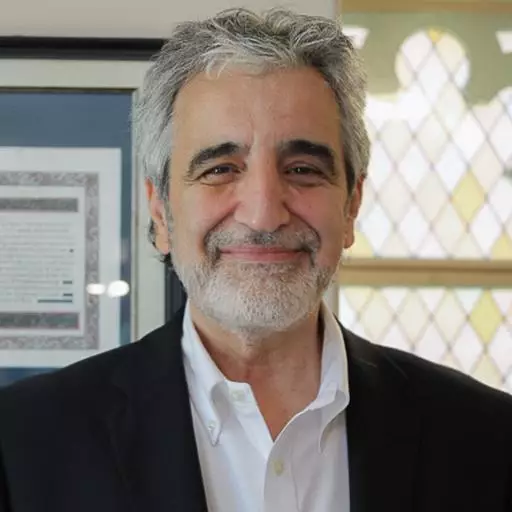
Messianic Leader J. Isaac Gabizon
https://www.bethariel.ca
https://bethariel.ca/donate/
Guest (Female): Shalom and welcome to Shalom Ariel and to this our 56th message from the Gospel of Mark with Messianic leader Jacques Isaac Gabizon. In spite of our fears or traumatic anxieties, God can still give us the calm in the storm and bring us through the spirit to utter some marvelous things.
We're going to notice in today's message that though Peter was overwhelmed and terrified when he saw the Transfiguration, he woke up from his sleep and said, "Let us build sukkahs," as if telling us that even when we are overwhelmed, we can still think of the future blessings in God because this was at the core of Peter's thoughts. He knew Yeshua was to establish the kingdom at some point and in some way.
So with that millennial and kingdom hope at the core, Peter was able to overcome the fear and allow the spirit to bring him to say something great. That's a good lesson for us. What is the core hope which stays anchored in our own hearts despite circumstantial changes? Our hope is in Messiah and bringing about His will and His kingdom. It's in that way that we could stay steadfast through many storms ahead. Be blessed as you listen into today's program and Shalom.
Jacques Isaac Gabizon: Shalom Bet Ariel and friends of Bet Ariel. Welcome to our Sabbath service. And so let us open our Bibles to the ninth chapter of Mark. As Yeshua was about to start out in His journey towards Jerusalem to give His life for the salvation of man, three disciples were given such a vision of encouragement at the Transfiguration.
This vision, however, was not only for them; it is for every reader, for it tells us that even though the Messiah was and still is rejected today by many, He would one day appear in such glory and majesty for all that is and all will see Him. We have covered a few points of this important event of the Transfiguration, but there are so many other facets to consider. Let us read again from verse 2, see what it says: "Six days later, Jesus took with him Peter and James and John and brought them up on a high mountain by themselves. And he was transfigured before them, and his garments became radiant and exceedingly white, as no launderer on earth can whiten them. So Elijah appeared to them along with Moses, and they were talking with Jesus."
So we have noticed in our last study that the opening words, "six days later," brought us to make a correlation between Moses and Jesus. It was also on the seventh day that Moses received the law on the other mountain, that is, Mount Sinai. It was also after the sixth day that Yeshua brought His disciples up on a mountain to witness the glory He would have after the resurrection. So we have the first Exodus with Moses and the second Exodus with Yeshua, with whom a new era of grace would begin. And we have also seen that both Moses and Elijah stand as witnesses of this new era, one representing the law and the other one representing the prophets.
And so, reading the account, we learn that Yeshua and Moses and Elijah were actually talking. According to the grammatical structure, it looks like they had a long conversation. But what was the subject? Luke gives us the answer. We read in Luke 9:31 that they were speaking of His departure, which He was about to accomplish at Jerusalem. Important words we have here. They were talking about the coming suffering and death and resurrection of the Messiah. Perhaps Moses and Elijah were ministering and they were encouraging Yeshua, for in His humanity, He was about to agonize. He was about to suffer as no other man suffered.
And here again, the theme of the Exodus is recalled, for the word departure is "exodos," where we get our word "exodus." This word is particularly chosen, for it occurs only three times in the New Testament and speaks of Yeshua's exodus from this earth, beginning the second Exodus for us. In Hebrews 11:22, we find the second usage of this word referring to the exodus of the sons of Israel. But the third time it is used, it speaks to all of us. It is used of Jesus' death and resurrection, so it is used of the death of a believer unto eternal life. It is Peter himself, in fact, who uses this very word and speaks in 2 Peter 1:15 of his own death, of his own departure.
And the use of these words opens a window of blessings for every believer. While we are also going through the wilderness, our journey here on earth is also an exodus towards our eternal abode. We're walking towards the New Jerusalem, as heaven actually is called. And so the book of Hebrews tells us in Hebrews 4:9 that there remains a Sabbath rest for the people of God. And he's talking about Jews and Gentiles who have come to a saving knowledge of Yeshua. There's a full Sabbath, a complete, a fulfilled Sabbath that is about to come.
And so some commentators have understood that the presence of both Moses and Elijah represents all believers from all ages in their transformation after their own death. In Moses, we have representation of all believers who died in the faith. And in Elijah, we have represented all believers who will be alive before the tribulation and would be taken at the Rapture, for he never died himself. This is a beautiful midrash which has a sense of bringing the resurrection close to us, for the Rapture actually is the next prophecy to happen. Nothing else could happen, right? The Rapture is.
It is now that we're about to read a very interesting part of the account, Peter's reaction as he is overwhelmed of what he sees. And so he says something quite important. Look what he says, verses 5 to 6: "So Peter says to Jesus, 'Rabbi, it is good for us to be here. Let us make three tabernacles, one for you, one for Moses, one for Elijah.' For he didn't know what to say, for they became terrified." You know, there's a sense that verse 6 actually disqualifies the words of verse 5, right? Because it tells us he didn't know what to say, meaning that he spoke out of emotion on the spot. So the question is: why are we having these words recorded here?
And see that he also and suddenly addresses Yeshua as "Rabbi" when he just said that you are the Messiah. Perhaps he was overwhelmed by the vision. So Peter acclaimed his wonder by using this title. You know, the word Rabbi comes from the word "rav" or "rab," which means big, great. The other time, by the way, Peter calls Yeshua "Rabbi" was in the withering of the fig tree. In both cases, it was a great event that Peter witnessed, and so submerged by awe, he calls him, "Hey, Rabbi." And furthermore, why did Peter say it is good for us to be there? It's hard to understand. What was it good for them to be there?
Perhaps because he had just woken up from sleep and saw them leaving, because Luke tells us that while they were talking, Peter and the disciples were sleeping. And as Moses and Elijah were leaving, they woke up. So Peter hurries and tries perhaps to retain them by offering them to build a tabernacle for each one of them. But there's surely more in this account. If Peter's words are recorded, it is perhaps to draw attention to one Hebrew word that Peter uses in verse 5, one that has been inserted into Greek language and where we can see a deep hope, understand the deep hope Peter must have felt on the Mount of Transfiguration, and which may have triggered all this emotion for him.
What is that word? It's the word tabernacle. The Greek word is "skēnē," which actually is the word used for sukkahs. Remember the sukkahs or huts used at the Feast of Tabernacles? This is the word the Septuagint translated in the Hebrew Scriptures as sukkah. And why would Peter want to build sukkahs and not just a tent, or maybe a hut? And what is the connection between the Transfiguration and the Feast of Sukkot? The Feast of Tabernacles or Sukkot symbolizes the Messianic times, the Millennium, when Yeshua will reign on this earth. And so this great vision of the Messiah transfigured may have brought Peter to believe that these Messianic times have started right there.
And so he proposed, he said, "Let me build some sukkahs." And this feast at the time, according to Josephus, the first-century historian, was considered the most sacred and greatest feast among all Israel. As Israel sought deliverance from the oppressors, they yearned for the coming of the Messiah and the establishment of the Messianic times. And this they showed it through the many celebrations during Sukkot at the temple. And I want to tell you, Peter was not the only one with this deep hope and redemption showed through the elements of the Feast of Tabernacles.
This reoccurs a few days later during the triumphal entry. Now, when Yeshua entered Jerusalem, have you noticed what they laid on the ground? John 12:13 tells us they took branches of palm trees and went out to meet him and began to shout, "Hosanna, blessed is he who comes in the name of the Lord, even the King of Israel." They speak of Yeshua here. The branches of palms were used to build the sukkahs Peter wanted to build, build it on the mount. As these were a symbol of the Messianic times as we see them all over the temple of the Millennium beginning in chapter 40 of Ezekiel. Did you know that just between chapter 40 to 41 in Ezekiel, the word palm is repeated 13 times? They knew the connection.
And the words again at the triumphal entry, "Hosanna, blessed is he who comes in the name of the Lord, even the King of Israel," is a Messianic greeting. You see the people recognized Yeshua, not the religious leaders. People understood that He was the Messiah. And so when Peter spoke of the word "skēnē," he brings us to read and recall all these great elements. And furthermore, this item are also seen in the book of Revelation. Do you remember what the martyrs of the Tribulation time were holding in their hands while waiting for them to return on earth?
Revelation 7:9, "After these things," John says, "I looked and behold, a great multitude which no one could number, from every nation and all tribes and people and tongues, standing before the throne and before the Lamb, clothed in white robes," and what was on the hands? Palm branches. They're holding palm branches, the same material used for the skēnēs Peter offered to build for Yeshua, Moses, and Elijah. This then was a manifestation of a long-awaited era. See, even though Peter did not know what to say because he was terrified, the spirit used whatever he said to convey this important message of hope.
And so Peter was not wrong actually in wanting to build some sukkahs. However, the timing wasn't right. The Messiah needed to come down the mountain, first die, resurrect, and then come back. He's about to come back, by the way, to do that. And since we are at it, by the way, why did Peter want to build three tabernacles? Why not one for all of them? Perhaps he was also influenced by a well-known story of hospitality and an illustration or friendliness and warmth and helpfulness well-known in the Jewish community then and now, which stems from the story of Abraham. Do you remember the story of Abraham? Genesis 18, it opens up with these words: "Now the Lord appeared to him by the oaks of Mamre while he was sitting at the tent door in the heat of the day."
And so as Abraham was sitting at the door of the tent, three individuals appeared who turned out to be God and two angels. The story, by the way, is very similar to that of the Transfiguration. And so Abraham welcomes them well; he prepares a lavish feast and so on and so forth. So much so that this story received the proverbial title, the tent of Abraham, as a symbol of hospitality. Now today when a Jew invites you to his home, he will often greet you with the words, "Welcome to the house of Abraham." In the Talmud, it is written that Abraham stands as the example of hospitality, Isaac for self-sacrifice, and Jacob for scholarship. And so Peter did show the hospitality of Abraham.
But this is when something even greater than all these things really comes out in verse 7. Now we come to a major message, I believe, of the Transfiguration. This is what it says: "Then a cloud formed, overshadowing them, and a voice came out of the cloud, 'This is my beloved Son, listen to him.'" Here we see the cloud, which is a recurrent motif of a theophany. A theophany, that is, a physical manifestation of God, that we see in the Hebrew Scriptures, as when God was going before them on a pillar of cloud. Or in Exodus 33, when Moses entered the tent, the pillar of cloud, the Lord would then speak to him.
And here the cloud descended on this high mountain and testified that Yeshua is God's beloved Son whom He sent for the salvation of man. Such an important moment that this is the third time that the Lord's voice is heard. His "bat kol" came down to earth to witness that Jesus, Yeshua, is the Messiah of Israel.
Guest (Female): Shalom and welcome to this part of our program, the Q&A with Messianic leader Jacques Isaac Gabizon. And we're going to be dealing with Yeshua's genealogy from the book of Matthew and Luke in a two-part series. So welcome to the first part. Why do we have two genealogies of Jesus in Matthew and Luke, and how do they differ?
Jacques Isaac Gabizon: This question, I will tell you, is very timely. We mentioned the two genealogies in Matthew and in Luke as being the only existing documents where one could see that Jesus, Yeshua, was from the tribe of Judah, as Jacob prophesied in Genesis 49, thus being the Messiah. In fact, the record of Jewish genealogy stopped at the time of Yeshua, and there are no others after Him. Why is that? Because the records of the genealogies were destroyed in 70 AD with the temple's destruction. The only tribe who could be identified today is the tribe of Levi because of the status they have in Israel; they were kept distinct even in the diaspora.
What is most noteworthy in all of this is that these records, destroyed in 70 AD, held the lineal descent of the tribe of Judah from where the Messiah had to come, just like Jacob prophesied it. Once that was destroyed, there would be no way to find out if one was to authenticate and without doubt from the tribe of Judah, except when we consider the two genealogies in Matthew and in Luke. I would like to spend a little more time on this subject, since it completes Jacob's prophecy. It brings Jacob's prophecies to our doorstep. Let me bring you back to Jacob's prophecy about Jesus' lineage found in Genesis 49:10.
It says, "The scepter shall not depart from Judah, nor the lawgiver from between his feet until Shiloh comes, and to him shall be the obedience of the people." Shiloh is the Messiah, and the verse reads "until Shiloh comes." The three Targums of Genesis—Neofiti, Onkelos, and Jonathan—have written like this: "until the time of King Messiah shall come." Even both Talmuds, the Babylonian and Jerusalem Talmuds, recognize that this verse speaks of the Messiah who is to come, and from where did He stem? From the tribe of Judah. But how would we know today? All they have is traditions and legends.
And this is when they should know about these Jewish men, these two Jewish men at the time who wrote these two genealogies, Luke and Matthew. And there, especially in Matthew, you're going to see that Yeshua comes right from David. And in Luke, He goes right to Adam. This is the main purpose, by the way, of many genealogical records in the scriptures; it is to point to the Messiah. Other genealogies were recorded to show who belonged to the different tribes of Israel. Of particular importance were the Levites, the only ones granted the permission by the Lord to care for the temple and its ministry, so they need to know who was from the tribe of Levi.
So when considering these genealogies, we ask one question: why do we have two genealogies? This is when we're going to see, I want to tell you, something wonderful. Why two genealogies? The usual answer is this: Matthew's genealogy gives the royal line, while Luke's genealogy gives the real line. But you know what? It's really the opposite. Now listen to this: Matthew's genealogy will show us that if Yeshua was indeed a true son of Joseph, He could not have been the Messiah. Why is that? Because there are elements within this list that makes this a Messianic genealogy that is impossible. There is a crucial message here showing the inability of men to produce a savior.
That's the message we have in there. This is why God intervenes right at the end of this genealogy with what? With the virgin birth. This is at the beginning where we see verse 18. God intervenes for all these kings, even the wisest man ever, Solomon, could not save us. Let us first and briefly consider the genealogy of Matthew and the reason for its existence. First, Matthew's genealogy is divided into three sections. We read in verse 17, "So all the generation from Abraham to David are fourteen generation; from David until the captivity in Babylon are fourteen generation; and from the captivity in Babylon until the Messiah are fourteen generation."
Why is the number fourteen given as the number of generation when we know that some generations have been left out, by the way, because it's more than that? One important reason is to identify the lineage with King David, who is in both genealogies. The Hebrew numerical value of the name David is 14. And this number highlights the fact that Yeshua is the true Shiloh, the last recognizable son of David. And in this list, we find 40 names, 40 ancestors of the Messiah, Him being the 41st. The number 40 rises out of the Hebrew Scriptures as an important number of trial and testing, like the 40 years in the desert before the nation of God reached the land. But it was a test which we failed and where God comes to the rescue here with a virgin birth.
But this genealogy is striking, for it is unlike any other. It contains a strong message to whoever reads it. For instance, while it is unusual to find a woman named in a genealogy, here there are four of them that are named. And for the most part, they are not the type of woman one would necessarily want mentioned in their nation's royal genealogies. And we know that at the time, and the rabbinical law, the testimony of a woman was not acceptable or valid in any Jewish court. If this genealogy was a fabrication, they would not have included women, which would then destroy its authority.
But the truth is truth. These genealogies are the true records. The first woman in this list is Tamar. In verse 3, "Judah begot Perez and Zerah by Tamar." But she was not the wife of Judah; she was only his daughter-in-law. Yet through him, she conceived Perez, who is in the Messianic line. The second woman is Rahab. In verse 5, "Salmon begot Boaz by Rahab." The spirit went out of His way to include naming Rahab, even though 360 years separate Boaz from Rahab. And who is Rahab? She is not even Jewish, but a Canaanite prostitute from Jericho.
And we have a woman Tamar, a non-Jew, and then add to that a Canaanitess, a questionable background incorporated into the Messianic line. Anyone wanting to impress upon the purity of the royal line would not include these women, right? The third woman is found in verse 5. There we read that "Boaz begot Obed by Ruth." Ruth is not only a non-Jew, but she was a Canaanite. But she hails from Moab, a nation on which God pronounced a particular curse in Deuteronomy 23:3. It says, "An Ammonite or Moabite shall not enter the assembly of the Lord; even in the tenth generation none of his descendants shall enter the assembly of the Lord forever."
But by the grace of God, Ruth not only entered the assembly of Israel, but is the great-grandmother of David. Are we not beginning to see God's presence in this precious genealogy where Jews and Gentiles, no matter their past, are welcomed into the fold of God? And this comes out strong when we consider the last woman mentioned in verse 6: "And Jesse begot David the king. David the king begot Solomon by her who had been the wife of Uriah." The "her" is who? Is Bathsheba, the wife of Uriah. Perhaps there's a good reason why her name is not mentioned, for her name, Bathsheba, while it means daughter of an oath, she is the subject of a breaking of the oath of marriage.
Bathsheba was the wife of someone else, whom David sent to the front line so he could be killed so David could take Bathsheba as his wife. But is this not the David from whom the Messiah was to come? See how the account is thoroughly sincere and forthright. But there is even so much more in this genealogy. After the mention of David, there follows a list of the kings of Israel. This list is divided between the good, the bad, and the not-so-good kings of Judah. This list is not exhaustive. We know that the names of three kings are missing when we compare it to 2nd Chronicles chapter 22. And God does that when people are deeply into sin; He just removes them for the genealogical record, here and elsewhere in the Hebrew Scriptures.
But see how far this genealogy goes. It practically annuls itself. Yes, it annuls itself, and if we understand this, we will understand its intent. The greatest contrast between the good king and a bad one is the difference between Josiah and the last king of Israel, his son Jeconiah, in verse 11-12. "Josiah begot Jeconiah and his brothers about the time they were carried away to Babylon. And after they were brought to Babylon, Jeconiah begot Shealtiel, and Shealtiel begot Zerubbabel." Josiah was a godly king, perhaps the best of all them. He produced great reformation all along, but he could not change the heart of man. Only God can do that. And with Jeconiah, everything stopped.
And what follows is purely by grace. There's a prophecy against this man Jeconiah which we find in Jeremiah 22:30. It says, "Thus says the Lord: 'Write this man down as childless, a man who shall not prosper in his days; for none of his descendants shall prosper, sitting on the throne of David and ruling anymore in Judah.'" So if Jeconiah is present in this list, it means that this entire list is not valid. Was it for nothing then? On the one hand, it is unlike all other genealogies as it includes four women of ill repute who are not of the stock of Israel. Then we come to Jeconiah on whom there was a curse.
It is at this point that we begin to understand the need of the Holy Spirit, the need of a virgin conception and birth, as Isaiah prophesied it in Isaiah 7:14. And it is with this very scenario that the genealogy ends in verse 18. For humanly speaking, the genealogy of Matthew through Solomon could not be valid at all. So how is this resolved? Look at verse 18. "Now the birth of Jesus Christ was as follows: After His mother Mary was betrothed to Joseph, before they came together, she was found with child of the Ruach HaKodesh," the Holy Spirit. To resolve the problem of inherited sin, we have here the virgin conception of the Messiah, something that is stressed at least three times in this chapter.
And here in verse 22-23, we have the fulfillment of this powerful prophecy of the conception of the Messiah which was given by Isaiah himself. This prepared us beforehand what was to come. Verse 22-23 says, "So all this was done that it might be fulfilled which was spoken by the Lord through the prophet, saying: 'Behold, the virgin shall be with child and bear a Son, and they shall call His name Immanuel,' which is translated, 'God with us.'" The point then is this: it is not from man; man cannot do it by himself. So here God comes to the rescue.
Now, the birth of Jesus Christ was as follows: it's written not according to the genealogy following Abraham and David, but according to God. For salvation is wholly from Him. For the verse says, "Before they came together, she was found with the child by the Ruach HaKodesh." The birth of Jesus is holy divine, from His incarnation to His resurrection. And so is our salvation when we accept Him as our personal Savior.
Guest (Female): Shalom Ariel is a daily radio program emphasizing the Jewish perspective of scripture. God is not through dealing with Israel, nor will He renege any of the promises He has made to her. If you've been encouraged by the messages, we'd love to hear from you. Give us a call at 1-888-685-5902 or you may write us at info@bethariel. You are also welcome to join us for our Saturday morning services.
We are located at 6297 Monkland Boulevard, corner of Madison in NDG. The message is given in English, but we do offer a simultaneous translation into French and Russian. Services begin at 11:00 AM. We have Shabbat school for children of all ages, up to and including teens. You may also download audio messages from our website at bethariel.ca and enjoy other in-depth teaching from Jacques Isaac.
If you would like to sign up for informative newsletters, log on to our website and add your name to our email list. Shalom Ariel is a listener-supported program. If you have it on your heart to donate, it will be a great blessing for the continuing ministry and outreach of Beth Ariel. Thank you and shalom shalom.
Featured Offer
Prophecies take up about ¼ of the Scriptures so we cannot simply ignore them. Knowing prophecy enables us to give a clear presentation to others of why things unfold the way they do in such areas as politics, morality, technology and global ecological changes. It also helps us to rightly place Israel in God’s prophetic plan.
Past Episodes
- The Armor of God
- The Believers in the End Times
- The Book of Daniel
- The Book of Deuteronomy
- The Book of Ephesians
- The Book of Esther - Purim
- The Book of Exodus
- The Book of Ezekiel
- The Book of Ezra
- The Book of Genesis
- The Book of Hebrews
- The Book of James
- The Book of Jeremiah
- The Book of Joel
- The Book of John
- The Book of Leviticus
- The Book of Numbers
- The Book of Philippians
- The Book of Revelation
- The Book of Romans
- The Book of Ruth
- The Book of Zechariah
- The Feast of Passover
- The Feast of Purim
- The Feast of Shavuot - Pentecost
- The Gospel of Mark
- The Gospel of Matthew
- The Letter to the Galatians
- The Messiah in Isaiah
- The Messiah in the Book of Isaiah
- The Messiah's Prayer
- The Nativity: The Unwrapped Gifts of God
- The Resurrection of the Messiah
- The Sermon on the Mount
- The Tabernacle

Video from Jacques Isaac Gabizon
Featured Offer
Prophecies take up about ¼ of the Scriptures so we cannot simply ignore them. Knowing prophecy enables us to give a clear presentation to others of why things unfold the way they do in such areas as politics, morality, technology and global ecological changes. It also helps us to rightly place Israel in God’s prophetic plan.
About Messianic Viewpoint
About Jacques Isaac Gabizon
Contact Messianic Viewpoint with Jacques Isaac Gabizon
info@bethariel.ca
http://www.bethariel.ca/
Beth Ariel Congregation
CP 46521 CSP Boul. St Jean
Pierrefonds, QC, H9H 5G9
Toll free (888)-685-5902