
The Gospel of Mark, Part 55


The Gospel of Mark, Part 55
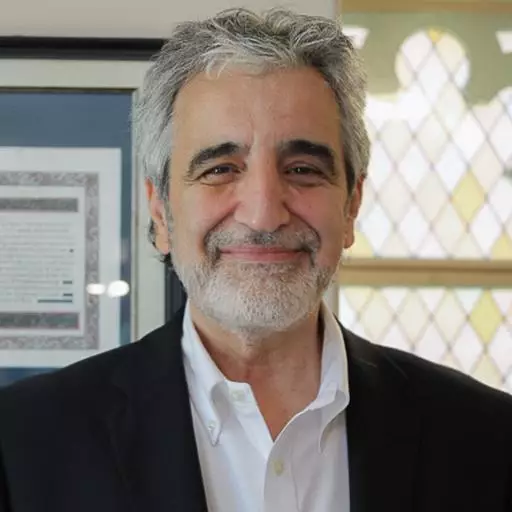
Messianic Leader J. Isaac Gabizon
https://www.bethariel.ca
https://bethariel.ca/donate/
Guest (Female): Shalom and welcome to Shalom Ariel and to this our 55th sermon from the Gospel of Mark with Messianic leader Jacques Isaac Gabizon. We may have seen many laundry detergents being advertised with many promises. Your clothes will be whiter than white if you use this brand or that brand.
But the Gospel of Mark tells us like it really is. God has the solution for our dirty, stained clothing. For Yeshua's clothes became dazzling white in the transfiguration, whiter than anyone in the world could possibly bleach them. No soap in the world, as Jeremiah said, can make us clean because we carry the stain of guilt.
Isaiah 64:6 says, "For all of us have become like one who is unclean, and all our righteous deeds are like filthy garments." Just look up what that Hebrew word for filthy garments really means, and it will help you understand how much God is repulsed by sin.
So many of us think that we are clean and white and bright because of the many works we do. But if they are done wearing the stained garments, if the lamb has not covered this vestment that we have on, our works are repugnant and useless to the kingdom of God.
We have a choice in how we're going to get dressed. Will we wear the garment of praise, the white robes of righteousness that have been cleansed by the blood of the lamb? Or are we going to wear self-proclaimed righteousness, seen by God as filthy garments?
The brightness of Yeshua's glory was a blinding brilliance. This was the glory, the brightness that will one day wash all sin from the earth. This kind of filthiness can only be washed out by the blood of the righteous lamb. The transfiguration was the unveiling of the greatest cleansing power we have.
And when that day draws near and our strength fails, we have a hope that is secured in that glory. For we will wear the whitest robes given to the redeemed of God to shine with him, bright and brilliant for an eternity. That is the kind of bleach we have been bought by and have been washed with. Thank you, Lord, that you are the one who cleanses us from all unrighteousness. Be blessed as you listen into today's program, and shalom, shalom.
Jacques Isaac Gabizon: At the time, they associated the Messiah with light and brightness. They knew of the prophecy, they knew very well the prophecy of Numbers chapter 24, verse 17, which speak of a star which will come from Jacob, and it says that a scepter shall rise from Israel. This is a Messianic prophecy of the coming Messiah who will come as a bright star. And at the time, one famous rabbi, if you remember, Rabbi Akiva, elected the false Messiah and called him Bar Kokhba, meaning the son of the star.
Both Bar Kokhba and Akiva brought so much havoc and destruction to the nation of Israel. It was easy for them to fool the people, for they were expecting a Messiah that would shine as a star. But the true Messiah, while bright above any star, was first coming to die. This is one thing they did not know or were not taught.
I just want to tell you today in Judaism, this Rabbi Akiva is regarded as a great scholar and often cited. But they must have never known, or they must have forgotten, that this man made a major mistake in anointing a false Messiah and thus causing so much trouble in Israel. This is another historical oddity.
And so, at the time, there were other traditions indicating that the Messiah will come with his garment bright and radiant, so it wasn't new to them. One is found in the Midrash Rabbah on Numbers, a commentary on Numbers. One writes, "God clothes the Messiah with God's garment." And so when they read the account of the transfiguration, they surely made the correlation between what they heard and the Messiah.
And so on Mount Sinai, it was a theophany, a revelation of God, and here on the Mount of Transfiguration, it was a Messiah-ophany, if you want. Because there the true Messiah, his nature, was shown to all of them. And as the emphasis is put on the garment of the Messiah, the text in Mark adds something unusual, by the way. It says that no launderer on earth can whiten them.
This puts the emphasis on the uniqueness of the salvation we have in Jesus. No other man can whiten and clean any garments, even our hearts, like he does. The final whitening, as far as we're concerned, would be when and finally at the end, at the resurrection or the rapture of the believer. Like it says in 1 Corinthians 15, he will take us and we shall be changed, right?
And the most beautiful thing is that this word, and I want to stress this, this word "transfiguration" is also given to us and attributed and used to explain our growth, our sanctification. Let me bring you right away to Romans 12:2, and how the same word is used. It says, "And do not be conformed to this world, but be transfigured by the renewing of your mind, that you may prove what is good and acceptable and perfect will of God."
You see, this word is used only four times in the scriptures, twice for Yeshua, twice for us. And here's the first. This speaks of a daily changes and growth. There's a transfiguration going on. This transformation or remodeling speaks of a gradual change taking place in the lives of the believers. Like a remodeling after a plastic surgery.
But here, when applied to us, it is like a spiritual surgery, which will also affect our physical appearance because when you have joy, it shows, right? And you actually show light to others. And notice that there are two words here: conformed and transfigured. It is either one or the other. We either conform or allow the Spirit to transform us.
Here the Greek word for "conformed" is schema, okay, meaning a picture, a copy. The idea here is that people who live by this world will reflect the image of the world, their countenance, such as that of Cain in Genesis 4 reflected his action. The other word, again, "transfiguration," as we are transfiguring into his image, this is a good illustration of our spiritual growth.
And I want to tell you, it's written in the present and imperative tense. That is, it's an ongoing change, daily, hourly, I would even say. It's an evolution of our being. And we find the other word, the same word that is in the other verse, 2 Corinthians 3:18, as it also refers to Moses' transfiguration. This is what it says.
"But we all, with unveiled face, beholding as in a mirror the glory of the Lord, are being transfigured into the same image from glory to glory, just as the Spirit of the Lord." Moses also experienced some type of metamorphosis, a physical one too. When he came down the mount after he encountered God, his face so shined that they had to put a veil over his face. This is in Exodus 34.
In the same way, every believer that comes close to God will then reflect the light of God to others. And you know what? People are attracted to this. They will come close to you because they want to hear how come you're so joyful. The world is crazy and you're good. What's happening? And so the transfiguration in Mark was also a promise for all the disciples of all time of the change which was to characterize the people who follow the Messiah.
It's like going through the life of a caterpillar. At first, the caterpillar is really not nice to look at, right? It is slow, it is slimy. It takes all day to go about two feet. But when it undergoes the process of metamorphosis and the caterpillar becomes a butterfly, something beautiful is born. Metamorphosis is the process of something at work on the inside trying to show up on the outside. This is the life of the believer.
Now, see that Yeshua is not alone on the mountain. Who was with him? Moses and Elijah. Again, let's read verses 4 and 5. Elijah appeared to them along with Moses, and they were talking with Jesus. And Peter said to Jesus, "Rabbi, it is good for us to be here. Let us make three tabernacles, one for you, one for Moses, one for Elijah."
Now, a first question we ask: How did Peter know it was Moses and Elijah when he never met them before? This may be an indication that in heaven, we will have such an identity that each one will be recognized by who he is. Perhaps we will recognize every other prophet and every other believer without even having known them before.
Those we knew and others we will meet who lived through the ages. Imagine you're there and you meet Paul, and then you meet Isaiah. They'll answer all your Bible questions, by the way, on their books, I'm sure. And this new identity may be related to the new name, by the way, and I want to bring that to you, the new name that Yeshua gives us, right?
We remember that the overcomers of Pergamos, this is what he promised to them. He said, "I would give some of the hidden manna to eat, and I will give him a white stone, and on the stone, a new name written, which no one knows except him who receives it." When a new name is given in the scriptures, it's because of a new mission, a new life, and it is usually because of something great which follows.
Abram had his name changed to Abraham, and the reason was given to him by the Lord when he said, "I will make you the father of a multitude of nations." And in that sense, he's the father of us all who are in the faith, as Paul says in Romans 4. Jacob's name was changed to Israel. For from him all issued the physical descendant of the nation of the Jews, Israel.
And so in heaven, there's a new era of work and growth that will open up to each one of us. Now, what do you think your name will be in heaven? It may be in the process actually of being decided. When God gave a new name to Abraham and to Jacob and to Peter, it was not right away, but it was after they had gone through many trials and persisted in their faith, even while they had been many failures. He then gave them a new name.
I often remember this story about this rich man who went to heaven and the angels presented him for a new home, and it looked small, like a shack. This is when he told them that he had a much bigger one on earth. And so they replied to him, they said, "But we build it with what you sent us." So we are building today our eternal abode.
And however it will be, and contrary to this illustration, really, it will be much better than what we have on earth. However, it will be built in accordance to what we produce here on earth. This is what the scriptures tells us. In 2 Corinthians 4, for we must all appear before the judgment seat of the Messiah, so that each one may be recompensed for his deeds in the body according to what he has done, whether good or bad. It's now that we're preparing ourselves.
And now, to close, a second question: Why Moses and Elijah? Let us just explore a facet of this question, for we would not have enough time to go deeper. We'll do it next week. There are many theories offered to explain the presence of Moses and Elijah on the high mountain. The most popular one is that each represents the law and the prophets.
The title "the law and the prophets" stands for all the scriptures. As Jesus uses this term in the Sermon on the Mount in Matthew 5, this expression also was used when Philip, in his excitement to have found Yeshua, he told Nathanael, "We have found him of whom Moses in the law and also the prophets wrote: Jesus of Nazareth, the son of Joseph." John 1:45. So Moses represents the law and Elijah, the prophet.
This I believe to be true. But the question is, in which sense does Elijah represent the prophet? Since he's not considered the first prophet, Samuel is considered the first prophet as we learn from Acts 3. Nor is Elijah considered a first prophet in the list of the writing prophets, as Isaiah is. In fact, he never wrote anything, really.
In the Jewish milieu, Jeremiah or Jeremiah is considered the first prophet. How does then Elijah get to be representing of all the prophets? Let us ask this question to the Jewish people of the first century. Because for them, it was no surprise to see both Moses and Elijah together, for they expected them right before the coming of the Messiah. They expected both of them to show up.
Their main connection between Moses and Elijah stems from the scriptures, right in the prophecy concerning the coming of Elijah. It is in Malachi chapter 4, verses 4 to 5, an often-cited passage by them. We read, "Remember the law of Moses, my servant, even the statutes and ordinances which I commanded him in Horeb for all Israel. Behold, I'm going to send you Elijah the prophet."
Here then, Moses and Elijah are put side by side. This proximity brought many rabbis to link both of them together in many of their writings. In the Midrash Rabbah, one imagine God speaking to Moses and assuring him that he will come with Elijah to usher the Messiah in the Messianic age. And he ends with this declaration with the words, "The two of you will be as one." In that hour, he will come and comfort Israel, but you will usher them.
In another writing, Pesiqta Rabbati, a collection of different interpretation, it says, "Two prophets arose for Israel from the same tribe of Levi: Moses was the first and Elijah the last, and both redeem Israel on a mission of God. Moses redeemed from Egypt and Elijah will redeem them in the future world to come."
Right, this is the answer, I believe. So it was no surprise to these disciples when they would be with both of them on the mount with the Messiah. So while Moses represents the word of God fulfilled in the Messiah, Elijah announces that all prophecies end with the Messiah, who signals the awareness of this new era to come. He is the lighthouse of the Messianic era.
We will see this subject more in depth in our next study and further see that both Elijah and John the Baptist were called to usher the coming of the Messiah. John the Baptist, the first coming, Elijah, the second coming, and both carry with them the message of all the prophets. In that sense, they and Elijah represents all the prophets.
Now, there's one thing I would like to close with. It's really a very encouraging message from Peter himself. You know the experience on this high mountain is one that Peter was not going to forget. He recalls it in his second letter, and there he says something of great importance. As he relate this experience, he says in 2nd Peter chapter 1:17-18, he says:
"For when he, Yeshua, received honor and glory from God the Father, such an utterance as this was made to him by the Majestic Glory: 'This is my beloved Son with whom I am well-pleased.' And we ourselves heard this utterance made from heaven when we were with him in the holy mountain." He was a witness, of course. So he testifies as a witness to this great events. But now see actually what he says in the next verse.
"So we have a prophetic word made more sure, to which you do well to pay attention as to a lamp shining in a dark place, until the day dawns and the morning star arises in your hearts." What Peter is doing here is putting side by side this great experience he had on the mount with the scriptures, the power that we can draw from that is the word of God.
He even says that above our experiences, we have the prophetic word made more sure, putting the word of God above all things. An experience is personal and many times difficult to explain. However, the scriptures are forever and great and available for all to come to investigate and find great blessing in there. This is his message.
And the word "more sure" is one word in the Greek. It describe what is reliable, abiding, true, and steadfast. Such is our scriptures. Amen. Let us bow our head in prayer. Now to us from him who is and who was and who is to come, from Yeshua Hamashiach, who is the faithful witness, the firstborn from the dead and the ruler of the kings of the earth.
Now may God grant us such that we may say like David, "You are my hiding place, you protect me from all trouble." Heavenly Father, you did not leave the world alone, nor did you leave us alone, not as a whole and not a single one of us. You sought us out and found us by bringing about reconciliation, opening a path to us and giving us a promise in your son, Yeshua Hamashiach. And so, whatever we have learned today, whatever we have read, allow your mighty word to dwell in us. Let us pray, Lord. Let us pray that it will stay in us so that we can share it with others especially. Beshem Yeshua Hamashiach, amen and amen.
Guest (Male): Welcome to this segment of our program where we ask a question to Messianic leader Jacques Isaac Gabizon. And today's program deals with the Lord's Prayer. Is this something we should be reciting every day? Is this in fact the Lord's Prayer, or is it rather an example of how we are to pray? Let's tune in.
Guest (Female): When it comes to believers and prayer, one thing that we are taught is that our prayers should be a personal petition before God. This brings to mind the Lord's Prayer that we find in Matthew chapter 6. Yeshua said we were to pray like this. Does it mean that this prayer should be memorized or recited daily? And if not, what instruction or purpose does this prayer serve?
Jacques Isaac Gabizon: This is a very important question. What purpose do these words serve? First, if you want to pray this prayer as is, it is a good thing. However, it was not necessarily meant to be prayed this way. The title itself, "The Lord's Prayer," is a loose term. If you want to see the Lord's Prayer, the one that he himself prayed, then read John chapter 17. This is a moving prayer of Yeshua.
However, the one in Matthew 6 is like a pocket edition on how our prayer should be. The opening words give us the purpose of the prayer. The Greek begins with the words "in this manner." And what follows is the model, the example to follow. Each step, by the way, speaks volumes. Let's briefly recognize the steps.
The prayer really begins with the words "Our Father in heaven." Right away, through these words, Yeshua solved an old long problem of our perception of God as being so far away, inaccessible. But here he addresses the God of heaven as our Father, in Greek is pater. This is the way a child calls his father. Pater is like calling God "Abba" or even "Daddy."
This is the beginning of prayer, getting close to God, our Abba. And when you realize this, you say, "Hallowed be your name." Then because we recognize more than the existence but his presence in our lives, we then say, "Your kingdom come, your will be done on earth as it is in heaven." By saying these things, we also recognize the many prophecies and promises of his soon coming and of his future kingdom.
And through the next verse, verse 11, the worshiper emphasizes the sovereignty of God in his own personal life by saying, "Give us this day our daily bread." Here we see the active presence of God in our lives. This is the moment we can dedicate what we possess and recognize that it is all from him.
Then the prayer turns to our relationship with others, beginning with forgiveness, moving from our physical need to our spiritual daily needs in verse 12. We read, "And forgive us our debts as we forgive our debtors." This is a powerful saying. First, if we ask for forgiveness, it is because we recognize that we are sinners.
This is when repentance, confession of sin should be offered. This should be done every day, and daily the Spirit will reveal to us things that we need to change in our lives so that we can have greater joy. And notice the second clause: we ask the Lord to forgive our debts as we forgive our debtors. To forgive, then, is the mark of a believer. This is important to the Lord.
He does not let it go so easily, knowing that it may become a big problem. He brings it back at the end, after really the prayer, in verses 14 and 15. This is what he says: "For if you forgive men their trespasses, your heavenly Father will also forgive you. If you do not forgive men their trespasses, neither will your Father forgive your trespasses."
See first that now the focus is on the individual. He goes from the plural to the singular. Before it was "Our Father," "Our daily bread," "Our debts." Now it is you who forgive and you who may not forgive. So what are we to understand by these words? First, what the verse does not say is that God's forgiveness towards us depends on whether we forgive our neighbor or not.
As far as we're concerned, we have been forgiven. This is our permanent spiritual condition. This forgiveness is not based on any work that we've done or that we're doing, but on his grace. And so the natural outcome from the believer is also forgiveness. All believers should forgive.
However, if Jesus' statement sounds quite harsh, it is perhaps because not all believers forgive. Many are taking too much time to do it. Others still harbor hard feelings because they have not yet forgiven. But this is inconsistent with God's plan, and unfortunately, it is too common.
If there is much emphasis on forgiveness here in this pattern of prayer, it is surely because when there is no forgiveness, there's no spiritual growth, and one cannot really or truthfully say, "My Father in heaven." Perhaps these words are here to alert us of this deep-seated problem. These verses should bring us to pray and make a balance sheet of all the people we have hurt and those who have hurt us, and pray for them by name.
And back to the prayer itself. It ends really in verse 13. It says, "And do not lead us into temptation, but deliver us from the evil one. For yours is the kingdom and the power and the glory forever, amen." "And do not lead us into temptation." We know that God does not lead us into this type of temptation, as James tells us in James 1:13.
"Let no one say when he is tempted, 'I am tempted of God,' for God cannot be tempted by evil, nor does he himself tempt anyone." So then, what does it mean when it is written, "And do not lead us into temptation"? Perhaps this refers to those difficult times of trial when we call on God, when he allows this time to come our way, that is to refine us, to refine us.
"Do not lead us to temptation" amounts to ask God to expose all this sin and these hindrances to our spiritual growth. And when there is temptation, "the evil one," notice, is mentioned. There is an article before the word "evil," often untranslated. It is the evil one. No, we're not in heaven now, and now the majority in the churches believe that Satan is bound, by the way, but he is very active.
He is the ruler of this world, as we learn in John 14:30. He is the prince of power of the air, Ephesians 2:2. And we are asked to pray for protection from him. Now, there is one more thing I want to bring out which stands out in this whole section of the Sermon on the Mount. We can recognize some words that are repeated, which will help us to understand the direction of prayer and also forgiveness.
One word is the word "secret." As in, "Your Father who is in the secret place," is repeated for each of the three subjects in the Sermon on the Mount here: prayer, fasting, and giving. This word is repeated six times in this chapter, and it has nothing to do with something secretive, but more personal. And this word is used to emphasize this close relationship each believer should have with God through prayer.
Another word is "reward." This one is repeated seven times in this chapter, as in, "Your Father who sees in secret will himself reward you openly." We are not looking for payment, but the teaching here is that these rewards are stored up, day after day, as if the believer is right now investing in the afterlife. This is a point Yeshua stresses here.
And there is another word: "heaven." It is the word repeated five times, in "Our Father in heaven" or "Lay up your treasures in heaven." And heaven is our eternal home. This is where we're going. In so many ways, this section speaks directly, of course, to us, and it is my prayer that through it we're able to gauge our relationship with our God and follow the Messiah's instruction so that we can further grow in our spiritual journey.
Guest (Female): Shalom Ariel is a daily radio program emphasizing the Jewish perspective of scripture. God is not through dealing with Israel, nor will he renege any of the promises he has made to her. Our teacher for this program, Jacques Isaac Gabizon, is a Messianic Jewish believer and Messianic leader at Beth Ariel Congregation right here in Montreal.
If you've been encouraged by the messages, we'd love to hear from you. Give us a call at 1-888-685-5902, or you may write us at info@bethariel.ca—that's B-E-T-H-A-R-I-E-L, all one word, .ca. You are also welcome to join us for our Saturday morning services. We are located at 6297 Monckland Boulevard, corner of Madison in NDG.
The message is given in English, but we do offer simultaneous translation into French and Russian. Services begin at 11:00 AM. We have Shabbat School for children of all ages up to and including teens. You may also download audio messages from our website at bethariel.ca and enjoy other in-depth teaching from Jacques Isaac.
If you would like to sign up for informative newsletters, log on to our website and add your name to our email list. Shalom Ariel is a listener-supported program. If you have it on your heart to donate, it will be a great blessing for the continued ministry and outreach of Beth Ariel. Thank you and shalom, shalom. Ends. Shared. Thank you, Messianic view. Amen and amen.
Featured Offer

Prophecies take up about ¼ of the Scriptures so we cannot simply ignore them. Knowing prophecy enables us to give a clear presentation to others of why things unfold the way they do in such areas as politics, morality, technology and global ecological changes. It also helps us to rightly place Israel in God’s prophetic plan.
Past Episodes
- The Armor of God
- The Believers in the End Times
- The Book of Daniel
- The Book of Deuteronomy
- The Book of Ephesians
- The Book of Esther - Purim
- The Book of Exodus
- The Book of Ezekiel
- The Book of Ezra
- The Book of Genesis
- The Book of Hebrews
- The Book of James
- The Book of Jeremiah
- The Book of Joel
- The Book of John
- The Book of Leviticus
- The Book of Numbers
- The Book of Philippians
- The Book of Revelation
- The Book of Romans
- The Book of Ruth
- The Book of Zechariah
- The Feast of Passover
- The Feast of Purim
- The Feast of Shavuot - Pentecost
- The Gospel of Mark
- The Gospel of Matthew
- The Letter to the Galatians
- The Messiah in Isaiah
- The Messiah in the Book of Isaiah
- The Messiah's Prayer
- The Nativity: The Unwrapped Gifts of God
- The Resurrection of the Messiah
- The Sermon on the Mount
- The Tabernacle

Video from Jacques Isaac Gabizon
Featured Offer
Prophecies take up about ¼ of the Scriptures so we cannot simply ignore them. Knowing prophecy enables us to give a clear presentation to others of why things unfold the way they do in such areas as politics, morality, technology and global ecological changes. It also helps us to rightly place Israel in God’s prophetic plan.
About Messianic Viewpoint
About Jacques Isaac Gabizon
Contact Messianic Viewpoint with Jacques Isaac Gabizon
info@bethariel.ca
http://www.bethariel.ca/
Beth Ariel Congregation
CP 46521 CSP Boul. St Jean
Pierrefonds, QC, H9H 5G9
Toll free (888)-685-5902