
The Gospel of Mark, Part 50


The Gospel of Mark, Part 50
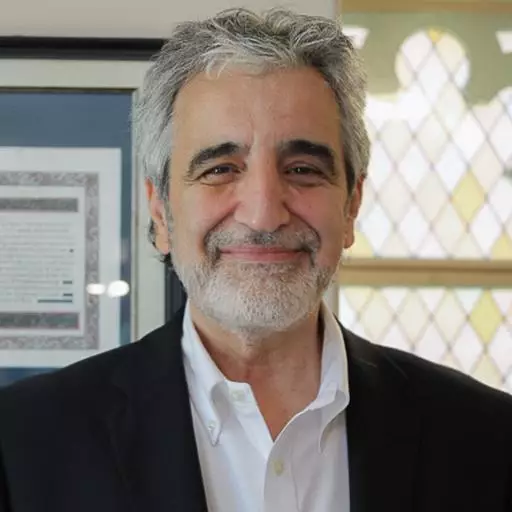
Messianic Leader J. Isaac Gabizon
https://www.bethariel.ca
https://bethariel.ca/donate/
Guest (Female): Shalom and welcome to Shalom Ariel and to this our 50th sermon in the book of Mark with Messianic leader Jacques Isaac Gabizon. Isn't it wonderful to consider that Yeshua wanted to extend the bounty of his goodness by again offering to feed such a large crowd of 4,000, more like 15,000 if you include women and children, not long after he had already fed 5,000, which was more like 20,000 if you are to include women and children?
Of course, the feeding of the 4,000 was in Gentile territory as opposed to Jewish territory where the 5,000 were fed. The beautiful thing we see is the compassion that Yeshua had in both those feedings. Compassion comes from two words, com meaning with and passi meaning suffering. So when we have compassion, we are suffering with those who are suffering. And in Yeshua's great compassion, he fed both crowds.
But notice a difference between the two events. The feeding of the 5,000 took place within a one-day period. Yeshua got off the boat, saw the crowd, began to teach them, and by late that day they were fed. And in this first event of the 5,000, Yeshua's compassion was based on the fact that they were lost and without a shepherd. In the 4,000-person event, his compassion was driven by the fact that they were so hungry because they had been with him for three days.
Certainly all their provisions by this time must have been used up, so they were even more reliant and in greater need. Why did Yeshua wait until the third day when their supplies were probably gone? Perhaps he wanted to test their faith. How long would they stay? And they did stay. It was quite a test of faith and amazing to see how the people were sustained for that period of time on the word, making the statement even more grand that man does not live by bread alone, but we are sustained and nurtured by the word.
So as Yeshua was there in his mighty compassion, so he is with us in our suffering, and we are told to be compassionate and bear the suffering with others. But notice that when Yeshua went through the ultimate passion or the ultimate suffering, he did it alone. There was no one who could be with him, no one who could bear what he bore. To bear the deepest passion or suffering, what love is that that he bore our sins that we might never be left alone or without him?
First John 4:10 says, "In this is love, not that we have loved God, but that he loved us and sent his son to be the propitiation for our sins." And from Hebrews 4:15, we read, "For we do not have a high priest who is unable to sympathize with our weaknesses, but one who in every respect has been tempted as we are, yet without sin." And altogether we can say how great is our God.
From John 3:16 we read and even say in Hebrew, "For God so loved," *Ki Ha-Ahavat Elohim*, "the world," *et ha-olam*, "that he gave his son," *asher natan et beno*, "his only begotten," *et yechido*, and together we say that whosoever believes in him would not perish but have eternal life. Whosoever, both Jew and Gentile fed on the mountains of provision some 2,000 years ago. Be blessed as you listen in to today's message and shalom, shalom.
Jacques Isaac Gabizon: And so here are perhaps some 15,000 hungry people. How are they going to be fed? That is actually the question that Yeshua is about to ask the 12 disciples and this is where we're going to learn something else. We could have expected when he asked the disciple to say, well, Jesus, you just fed 5,000 people. Why don't you now feed those 4,000, right? But that is not the response the disciples gave.
The disciples seem to have so soon forgotten about the 5,000 and they gave the wrong response. Look at verse four. This is when they said, "Where will anyone be able to find enough bread here in this desolate place to satisfy these people?" Don't they remember again that just a few days ago he fed 5,000 people? Don't they remember that just a few days ago Yeshua walked on the water? But here again, we ought to remember that these things are given to us as example, actually as a mirror of who we are, because we are also so prone to forget spiritual things.
This is written here and by the way, it's written all over the scriptures. Have you noticed, for example, in the law? You know, when God gave the law to Israel, he told them, and it shall serve as a sign on you on your hand and as a reminder on your forehead. They had to remember the word of God as if it was engraved in their hand or in their forehead. God would not have said this if they were not disposed to forgetting.
This is also why many times, so many phrases are repeated all over the Hebrew Scriptures. Have you noticed the number of times we find this phrase, for instance, or similar ones? "I am the Lord your God who brought you out of Egypt." He could have just said, "I am the Lord your God." But he reminds them at least 30 times in the Hebrew Scriptures that he brought them out of Egypt to refresh their memory of their past salvation. Why? Because they forget.
I don't want to tell you this is not a Jewish problem. This is a human problem to forget the goodness of God. This is what we have it here. And as you read the text of Mark, it doesn't get better by the way. A little later when they went out to Galilee, they got into a boat and you know what they forgot to bring? Bread. So they were worried. What are we going to eat? Imagine.
This is when Yeshua actually told them in Mark 8:17, "Why do you discuss the fact that you have no bread? Do you not yet see or understand? Do you have a hardened heart?" This is when he reminded them of the 5,000 and the 4,000 miraculous feedings. That's for us by the way. And again, it's not only spiritual things that we forget. Even in everyday life, we tend to forget so many simple things. Isn't that true?
Third on the list, according to a study, the most forgotten items are, well, the first one is names of people. That's high, 83%. And this is very embarrassing, isn't it? This is why I rarely call people by their names. Second on the list is when we forget where something is: your keys. Do you know where your keys are now? Cell phone, glasses. That's 60% of forgotten items.
The third forgotten are words, not finding the proper words to describe a thought. That's 57%. Then fourth, we often forget what we just said. This is when you get older, by the way. So that's 49%. And then again, if we forget the simple things of this life, how much more do we need to remember the words of God for every believer is fighting a spiritual battle. Let us not forget this bird. Remember the bird which typifies the devil as Yeshua said in the parable of the sower? It is the one who comes and removes the word. He's still flying around.
Let's not forget that this is in the context of the training of the 12, but remember there were not 12. How many were there? 13, because you were there with them. You are still walking with them. We, I, right? So the coaching, the teaching is about to reach now even a higher level. By the way, this forgetting God is also follows the Passover motif.
Do you remember the Israelites when they had the manna every day and the visible presence during the day, at night they had a cloud of fire and a cloud was following them all the time? They too forgot. And they asked in Numbers 11:4 at some point, "The sons of Israel were weeping and they said, 'Who will give us meat to eat?'" It was right here. God was right here and they forgot. The situation is similar to that of the 12 disciples, to that of so many believers even today. This is why we need the word of God as God said in our hand, in our forehead every single day to remember the good things of God.
Now in his answer to their forgetfulness, see how Yeshua linked together the two miracles, the one of the 5,000 and the 4,000 feedings, and there's something again powerful here. After that twice the disciples did not remember this great miracle of provision, first when they came to the feeding of 4,000 and second when they forgot to bring the bread, Jesus then quizzes them and we find it here in Mark chapter 8, verses 19 to 21. See what he says.
He says, "When I broke the five loaves for the 5,000, how many baskets full of broken pieces you picked up?" And they said, "12." They remembered this one. "When I broke the seven for the 4,000, how many large baskets full of broken pieces did you pick up?" And they remembered again. They said, "Seven." And he was saying to them, "Do you not yet understand what I'm trying to tell you?"
Why did Jesus ask these very questions? Here Yeshua puts an emphasis on two numbers, on the numbers of the baskets. First, the words for baskets are different for both events. For the 5,000, the baskets are very small, while for the 4,000 they were very big, so big actually that you can put a man in there. When Paul was at Damascus, they thought to kill him, so they lowered him from a wall in such a basket. This is in Acts chapter nine.
So while the number of baskets is lower for the Gentiles, the quantity of leftover bread is actually higher. But why these numbers? 12 baskets for 5,000 which typifies Israel, and seven baskets for 4,000 which typifies the Gentiles? What is the relation between these two numbers? When we consider these numbers, the message of proclaiming the word to both Jews and Gentiles is even more enhanced.
Seven is the number of spiritual perfection, and 12 is the number of governmental perfection. And here we find them both mentioned to describe the work of the 12 disciples who stand as the foundation of the body of the Messiah. That is our work, our work ourselves. Seven is the number of spiritual perfection in that we are to bring the perfect gift of God to all the nations.
12 is the number of governmental perfection in that it began with Israel, as the number 12 recalls the 12 tribes of Israel leading the way for the formation again of the body of the Messiah. It is like the union of God with man in the spreading of the good news. And we find these two numbers in harmony at the very foundation of the nations of the world in the table of the nations in Genesis chapter 10. These two numbers are all over the place in this chapter.
To name just a few, by the way, just to give you a background, when actually Noah came out of the ark, his three sons Japheth, Ham, and Shem came and from these three came all the nations of the world. So we have this table in Genesis 10 where you can find your pedigree there. And to name just a few, Japheth had seven sons and his grandsons also numbers seven. It's there.
Shem, his sons are 12 up to Peleg, and another line through the son of Joktan are 14, 7 plus 7. With Ham, they had four sons. The sons and his grandsons of Cush, by the way, were seven. Those of Egypt, Mizraim were seven, and so on and so forth. These two numbers bring us then to the formation of the nations, and the number 12 and seven baskets cover actually all the nations of the world.
Now there's more because, and somehow abruptly, the book of Mark brings forth a question asked by the Pharisees whose answer will wrap up the message of this portion of the scriptures. Again, this question comes abruptly. It looks like it comes out of nowhere, but it is very well placed, strategically placed. Look at what happens, verses 11 to 13. Out of nowhere we find this.
It says, "The Pharisees came out and began to argue with him, seeking from him a sign from heaven to test him." Sighing deeply in his spirit, he says, "Why does this generation seek for a sign? Truly I say to you, no sign will be given to this generation." Leaving them, he again embarked and went away to the other side. Here suddenly the Pharisees appear and begin to argue with him in order to test him.
What were they testing him for? The word test has an evil connotation. It conveys a testing to destroy, not to build up. The word speaks of an examination and trials for the purpose of finding fault. This is what they wanted. This is the one who wants to trap an individual would use, just like at the temptation of the Messiah. But what did they mean when they said or they asked for a sign from heaven? How is this related to the 19 baskets?
Looking at the historical context and the number of new false Messiahs which began to rise at the time and the type of sign they were promising the people, we can have a pretty good idea what they wanted. What the Jewish people were looking for at this time was a deliverance from the invader, from the Romans. Two of those false Messiahs, by the way, who came at the same time at about the same time as Yeshua, are mentioned in the book of Acts and by Josephus as well.
In Acts mentioned the name Theudas, and another name Judas of Galilee. And this Theudas promised a sign to the people. Josephus tells us that he wanted to bring them to the Jordan and would show them that he could open the Jordan, just like it was before, that God will do that for him. It never happened. Both these men, by the way, were killed by the Romans.
And Josephus tells us also that many others tried to perform what he calls miracles of deliverance, as he calls them. So the Pharisees were asking for a sign from heaven that will bring out what they expected, that is the establishment of the Messianic age, something that persisted until today, for even now they ask us for a sign from heaven, the same sign. Do you remember this question that people say? If Jesus is the Messiah, how come there's no peace on earth?
By saying this, they ask the same questions as the Pharisees. But the problem with this view is that they omit the many, many prophecies describing the first coming of the Messiah. He first comes and he first needs to be rejected. He needs first to die and resurrect. Jesus did all these things. And so by asking this sign from heaven, these religious leaders literally erased a good part of the scriptures by asking such a thing. This is why Jesus doesn't answer anymore. He just goes. He leaves them.
Verse 13 began with the words "leaving them," and he just left, for there comes a time when there's nothing much to say. He showed them in so many ways and words that he was the Messiah. And the very miracle he just performed, by the way, the feeding of the 5,000 and the feeding of the 4,000, was a sign from heaven. He brought bread to them, right, just like the manna that God gave to the people.
This they disregarded completely. The Pharisees knew very well about the 4,000. It happened in Israel. And while this request for a sign from heaven reaches our days today, it does in a much powerful way. You know, we've begun to talk about the building of the third temple, right? The scripture speaks of the coming of a world leader whom we commonly call the Antichrist. He may very well be in authority somewhere today in this earth, for the Western world needs a leader like this.
And along with him, the Bible tells us in Revelation 13 that a false Messiah, a false prophet will come with him. And this false Messiah will bring a sign from heaven. Do you remember Revelation 13:13? "And he, that false prophet, performs great signs so that he even makes fire come down out of heaven to the earth in the presence of men." His sign is here described. It is one that is even expected by many in Judaism: fire from heaven.
Why focus on this particular miracle? You know, the miracle brings us right to Jerusalem at the Temple Mount where the temple of the tribulation would have to be rebuilt. And this, according to Jewish holy books and tradition, is a Messianic miracle when the Messiah comes. He will bring fire from heaven to burn or to consume the first miracle, as it was with Moses, as it was with Solomon. And so they expect this temple, which they believe will be the temple of the millennium, to be actually the where the fire would come from God.
To give you one example, in one Midrash we read Messiah ben David, that is the Messiah who comes to establish his kingdom, will sprout out in Upper Galilee and will go up to Jerusalem and will build the temple and offer sacrifices and fire will descend and consume his sacrifices. And Israel will dwell safely in his days. Well, the last part is not true because there's going to be then there's going to be the time of tribulation.
This is the type of intensity of miraculous signs even the Jewish religious leadership is expecting. So the difference is the type of deliverance. For the first century, they looked for release from the oppression from the Romans. In the future temple, the third one, they will look for signs from heaven, that is fire from heaven. Remember what Jesus said in John 5: "I've come in my father's name and you do not receive me. If another comes in his own name, you will receive him." It's about to happen, I believe, very soon.
So in many ways, the story of Mark chapter 8 has not ended. While the last sign is yet to come, the 19 baskets, both the seven and the 12 baskets are still full by the way. And the pieces were broken by Yeshua and they still need to be distributed to all the nations and also Israel by the way.
And so today while there are so many things happening around us in the news, in Israel, let us keep our focus on who we are and what we are called to do. I will conclude this study with an illustration. It's actually a true story. It happened in the early morning hours of July 4th, 1952. A powerful swimmer named Florence Chadwick attempted to become the first woman to swim from Catalina Island to the California coast. It was about 34 kilometers or 21-mile swim through shark-infested waters.
And when she swam, it was very foggy. Less than half a mile from the finish, however, Chadwick had to be pulled from the water. Later, she said that she hadn't been defeated by fatigue, but she said by the fog, the fog. She said, "Actually I could not have seen the land, okay. If I had seen the land, I would have made it." Two months later, she made it. Again, fog limited Chadwick's vision, but this time she overcame despair by keeping a picture of the coast in her mind.
Anyone who has faced adversity knows how Florence Chadwick felt as she struggles to swim on without being able to see the goal. Hardship has a way of obscuring, if you want, our spiritual vision. The solution: focus on Yeshua and think on him and think of the great things he has prepared for us in heaven because he's coming very soon. Amen.
Our Lord, our light, our father, we have seen through your word that you are full of compassion. Grant that our hearts might understand, know, hear, even learn, and then teach, serve, and do, fulfill in love all the teachings that we have acquired today from your word. Let us be thankful as this Canaanite woman was. Open our eyes with your love, bind our hearts to your commandments, and bring together our hearts in love and in awe of your name so that we may never be reproached for eternity. Lead us in peace and help us to be free from the influences of this world. We thank you, for you are God, the God who has chosen us, who has led us to to your hope by your holiness and that in love we might freely confess you. Blessed are you, oh Lord, Be-Shem Yeshua Ha-Mashiach, Amen and Amen.
Guest (Female): Welcome to this segment of our program where we have the Q&A with Messianic leader Jacques Isaac Gabizon. And today the question revolves around the Moabites. We know that Ruth is very closely connected to the Jewish people via her marriage with Boaz and the descendancy of David and Yeshua. But the question comes to us from Isaiah chapter 16. Let's listen in to the question and to the answer. Be blessed.
Guest (Male): Shalom. I just read Isaiah 16. There are obviously parts that are clear to me, but can you explain the connection with Moab? I understand that Ruth was a Moabitess and that Yeshua's lineage is connected to her, but I don't know if this has anything to do with Isaiah 16. I don't have a good grasp on the other names and places in this chapter either. Please, if you have time to explain or can you direct me to some other reading?
Jacques Isaac Gabizon: Let me begin by giving you some guidelines when reading prophecies in the scriptures. This will help us to better appreciate the place and the time of these predictions. The prophecies of the Hebrew Scriptures which deal with a certain people or country will usually have a double reference. Many will remember this graph on the screen. We can see this in what we may call a telescopic view of the prophets.
The concept of double references teaches that for most of the prophets, their eschatology or view of the future was divided into their "now" and "then". Certain prophecy point to the present time of the prophet and part of it refers to the future. So in other words, a prophecy may have a partial fulfillment at the time of the prophet and may find its chief fulfillment in an event far distant like unto the day of the Lord, the millennium, or the eternal state.
Now, this is the case concerning Moab in Isaiah, and this is why many people cannot put the things together in there. While the prophecy was a warning for the Moabites about the coming Assyrian invasion, this you can see in Isaiah 16:10 to 14, the prophecy reaches the event on the day of the Lord and the whole prophecy deal with the millennium when the Davidic line will be established. This we can see later on we're going to see in Isaiah 16:5.
Now, the verse says in Isaiah 16:5, we'll see it now, it says, "A throne will even be established in loving kindness, and a judge will sit on it in faithfulness in the tent of David; moreover, I will seek justice to be prompt in righteousness." See that we are first brought to the time of Isaiah and the soon Assyrian invasion, but also to the Messianic times.
Another question that arises when reading these prophecies is this: how relevant is it for us today to be examining predictions and futures about nations which are long gone off the map, nations such as the Moabites, the Edomites, the Philistines, and other of that same category? To answer this question, one will find that while these nations have by name disappeared, their territories have kept very much the same spiritual perspective even after thousands of years.
So we find in most cases in these same territories that same familiar hatred toward Israel. In that sense, these future judgments are for them as well. And so the future judgment are for those who would actually hate Israel and who will be in these territories. You asked about books. You can refer to and read to get a good grasp of end-time prophecy, I suggest a book written by Dwight Pentecost. It's called "Things to Come". As for a good general commentary on prophecies and on the scriptures as a whole, I would recommend two-volume book, Bible Knowledge Commentary by Zuck and Walvoord, Zuck, Z-U-C-K.
Guest (Female): Shalom Ariel is a daily radio program emphasizing the Jewish perspective of scripture. God is not through dealing with Israel, nor will he renege any of the promises he has made to her. Our teacher for this program, Jacques Isaac Gabizon, is a Messianic Jewish believer and Messianic leader at Beth Ariel congregation right here in Montreal.
If you've been encouraged by the messages, we'd love to hear from you. Give us a call at 1-888-685-5902 or you may write us at info@bethariel.ca, that's B-E-T-H-A-R-I-E-L all one word. You are also welcome to join us for our Saturday morning services. We are located at 6297 Monland Boulevard, corner of Madison in NDG.
The message is given in English, but we do offer simultaneous translation into French and Russian. Services begin at 11:00 AM. We have Shabbat school for children of all ages, up to and including teens. You may also download audio messages from our website at bethariel.ca and enjoy other in-depth teaching from Jacques.
If you would like to sign up for informative newsletters, log on to our website and add your name to our email list. Shalom Ariel is a listener-supported program. If you have it on your heart to donate, it will be a great blessing for the continuing ministry and outreach of Beth Ariel. Thank you and shalom, shalom.
Featured Offer

Prophecies take up about ¼ of the Scriptures so we cannot simply ignore them. Knowing prophecy enables us to give a clear presentation to others of why things unfold the way they do in such areas as politics, morality, technology and global ecological changes. It also helps us to rightly place Israel in God’s prophetic plan.
Past Episodes
- The Armor of God
- The Believers in the End Times
- The Book of Daniel
- The Book of Deuteronomy
- The Book of Ephesians
- The Book of Esther - Purim
- The Book of Exodus
- The Book of Ezekiel
- The Book of Ezra
- The Book of Genesis
- The Book of Hebrews
- The Book of James
- The Book of Jeremiah
- The Book of Joel
- The Book of John
- The Book of Leviticus
- The Book of Numbers
- The Book of Philippians
- The Book of Revelation
- The Book of Romans
- The Book of Ruth
- The Book of Zechariah
- The Feast of Passover
- The Feast of Purim
- The Feast of Shavuot - Pentecost
- The Gospel of Mark
- The Gospel of Matthew
- The Letter to the Galatians
- The Messiah in Isaiah
- The Messiah in the Book of Isaiah
- The Messiah's Prayer
- The Nativity: The Unwrapped Gifts of God
- The Resurrection of the Messiah
- The Sermon on the Mount
- The Tabernacle

Video from Jacques Isaac Gabizon
Featured Offer
Prophecies take up about ¼ of the Scriptures so we cannot simply ignore them. Knowing prophecy enables us to give a clear presentation to others of why things unfold the way they do in such areas as politics, morality, technology and global ecological changes. It also helps us to rightly place Israel in God’s prophetic plan.
About Messianic Viewpoint
About Jacques Isaac Gabizon
Contact Messianic Viewpoint with Jacques Isaac Gabizon
info@bethariel.ca
http://www.bethariel.ca/
Beth Ariel Congregation
CP 46521 CSP Boul. St Jean
Pierrefonds, QC, H9H 5G9
Toll free (888)-685-5902