
The Gospel of Mark, Part 49


The Gospel of Mark, Part 49
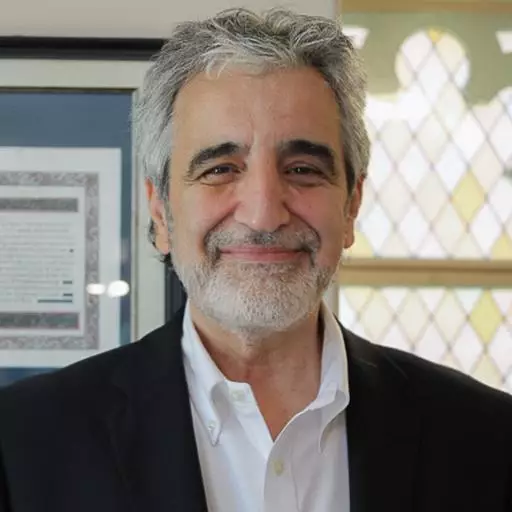
Messianic Leader J. Isaac Gabizon
https://www.bethariel.ca
https://bethariel.ca/donate/
Guest (Female): Welcome to Shalom Ariel and to this our 49th sermon in the Book of Mark with Messianic Leader Jacques Isaac Gabizon. Have you ever met someone from your past, maybe a childhood friend, and after just one or two minutes speaking with them, something becomes clear? Oh, you say, they haven't changed a bit. And so the question comes up, can we or do we really change?
With therapy, some of us can change our responses to circumstances, we can learn to control anger or other emotions that battle within us. That's called behavior modification, and it does have its positive points. But when it comes to real change, deep change, circumcised heart change, we cannot do it. It is only the Holy Spirit through the word of God that can make this heart of stone into one that is different in every way, that it become a heart of flesh.
It is by the Holy Spirit's work that we become new creatures in the Messiah. Second Corinthians 5:17 says if anyone is in Messiah, he or she is a new creation. That word new is the Greek word kainos, from kainos, and it means unprecedented, new and fresh, uncommon, never heard of before. When we speak about the word, the logos, we do so with the greatest esteem because it is what changes our heart into something new.
It is what changed the Syrophoenician woman into a daughter of Abraham. And here is the next step of what should happen after we are changed into something new. Changed by faith, we now put our faith into action, and then these actions become something new, never been seen before. This Syrophoenician woman put her faith into action by being persistent, by her unrelenting ways to get her daughter cured, and Yeshua confirmed that this was a great act of faith.
We too need to put our faith and our changed persona into action. When Yeshua said to us, love your enemies, did it mean okay, go and have a warm and fuzzy feeling about them? That was not enough. Yeshua requires action. He said, pray for your enemies, and greet your enemies. The Book of Proverbs says feed your enemy and give drink to your enemies.
So while we are changed into something new, this new faith, this anchor becomes the springboard that calls us into action. James, Ya’akov, said faith by itself without works is dead. So Lord, we ask that You help us make visible that invisible confession we made in our hearts to You. Words alone will not clothe the hungry.
So Lord, our souls cry out for Your righteousness, Your work in us through Your word and by faith. We ask that You would convict and direct and change us so that we may honor You in a renewed way because we are new in the Messiah. We want to walk into Your courts and even into today's message and walk out changed even more. Be blessed as you listen into today's message and shalom shalom.
Jacques Isaac Gabizon: Shalom again and welcome to Beth Ariel, where we are always striving to know more of these eternal truths found in the scriptures and to always uplift the name of our Creator. It's always good to look up and lift up our souls to know and remind ourselves that He is sovereign and that His kingdom is soon coming.
And so let us open our Bible to the Gospel of Mark chapter seven. You can always follow through the screen. This is when Yeshua brought his disciples to a place within the territory, gentile territory, north of Israel, in the cities of Tyre and Sidon. It was part of their training and for the preparation of the spreading of the gospel to all people of the world.
There they met a great woman of exceptional tenacity, the Syrophoenician Greek Canaanite woman, who turned out to be a true daughter of Abraham by faith. This is what we saw last time. We saw that after being completely ignored and told that the Messiah came only for the lost sheep of Israel, all of this was but really a test of faith, for she did not take a no for answer.
She persisted until she received what she came for, the healing of her daughter, not for herself, she came for her daughter. But see what Yeshua told her after he saw her powerful faith. He said to her in verse 29, "Because of this answer, go, the demon has gone out of your daughter." But what was the answer which Yeshua is referring to here?
It was not only in the words she spoke, but in her very being, in the totality of who she was because the Greek word for answer is the word logos, which brings us beyond her words and her simple understanding of a situation. As Yeshua being the logos of God is the express image of His person, of God's person, so in this woman he must have seen the full force of her faith in her being.
The very word logos has as its first sense that which is collected, that which is gathered, like a bank account. And so the logos is the sum of a person's being and this is what Yeshua must have seen in this individual more than her words, more than her action. He saw the condition of her heart and he granted her what she wanted.
In one Bible translation, I remember the word logos is rendered as the verb, as in John 1:1, we read that Yeshua is God's verb. A verb is the action of a subject and when it concerns us, this is what Yeshua is looking for: how we transform, how we convert our faith into a state of being and how we reflect it to others.
After reading this, the question we ask is how does our faith fill every facet of our lives? And when it does, this is when prayers, as we see with the woman, this is when prayers are answered and requests are granted. This woman has so much to teach us. But there's still something else that brings us to consider the long reach of God's blessings in Yeshua.
The woman is called actually a Canaanite. We already have so much information about her origin: she's a Syrophoenician woman, she's Greek, she lives in Sidon. But why the title Canaanite? This brings us to consider the origin of this name, a dark incident now turned bright.
When Noah came out of the ark, he did so with his three sons: Japheth, Ham, and Shem. Ham had a son, Canaan, and there was a particular curse on this man and upon his descendants. We find it in Genesis 9:25. This is what it says: "Cursed be Canaan, a servant of servants he shall be to his brethren."
Here we see a curse over the descendant of Canaan, but that is many countries. But here with this Canaanite woman, we are reminded that this curse is here fully removed when we are in Yeshua. Today we don't know who the Canaanites are, but we know one thing from this text: that no curse can hold anyone back from knowing Yeshua as the Son of David as she called him.
No curse can affect one who is in the Messiah of Israel. What a great truth for every believer no matter what our ancestry is. We are under God's full protection when we follow and when we live by the word of God. Now the training of the 12 disciples in foreign territory keeps its course.
In the next verses, there is something actually that Yeshua does which is quite unusual. And when he does such things, it's surely to attract our attention and to learn something even deeper. Let us read on and try to figure out what the message is. Look at verse 31.
It says, "And he again went out from the region of Tyre and came through Sidon to the Sea of Galilee within the region of Decapolis. They brought to him one who was deaf and spoke with difficulty, and they implored him to lay his hand on him." So from Tyre, Yeshua went north to Sidon and then south to the Sea of Galilee.
At some point they brought him a man who was deaf and mute, whom Yeshua heals. We understand that he was mute, for at the end the people in verse 37, they were so astonished and they said, "Look, he was deaf and mute, and now he's healed." But see how he cures him. You may be surprised in the way he does it.
Look at verse 33 and 34. "So Jesus took him aside from the crowd by himself and put his fingers into his ears. And after spitting, he touched his tongue with the saliva. And looking up to heaven with a deep sigh, he said ephphatha, that is, be opened." Why is Yeshua using these very methods and only here?
He first put his fingers in both ears and then he spits, he took some of the spit and he put it in the tongue of the person. There's something we can learn here. In going through this process, it is possible that he was teaching and showing his disciple, who must have asked the same question, to adapt their ways to whomever they were required to.
Notice that at the end, it is not the method which cured the man, but it was the word of God, his own words. Now concerning the saliva, in history and especially among the nations, saliva was used as a curative agent. Remember when you cut your finger, what's the first thing you do? Put it in your mouth. It has some kind of curative agent.
Even as far back as the Assyrian, they spoke of saliva of life and saliva of death. And there were as well ancient accounts of the use of saliva, especially in curing blindness as well. So here Yeshua uses a means they were familiar with. And so the disciples were learning a valuable lesson when sharing the word of God.
God's word and the message of salvation never changes, but as we see in the Hebrew scriptures, God's ways do change depending on to whom it is addressed. To Nebuchadnezzar, God spoke through dreams. To Pharaoh, he spoke through dreams and diverse miracles. To David, he spoke through the word of God.
The disciples did grasp this concept when they went to the nations. We see this influence especially in Paul. Even though he was not part of the 12 disciples, being an apostle to the Gentiles, we pick up on how he understood and how he preached differently to different people. He often varied his approach.
For instance, when he preached in a synagogue in Antioch in Acts chapter 13, he reviewed the history of Israel and then led them to Yeshua. Some were very angry, others followed him, but they all understood what he was saying. When he was in Athens, in Greece, we see him in Acts 17 addressing them in their own backyard.
He first established a common ground, speaking of their belief in God, and brought their attention to one of the many statues actually they had over there. They had one, actually, that was known or given to an unknown god. And from there he proceeded to tell them about the unknown god by speaking of the very well-known God of the scriptures.
Many understood and they followed him. And so each nation, each person has a soft spot. Each one has a way to grasp a truth. And through the help of the Spirit who really and always prepares the way, he will help us to bring the word effectively. That is part of the gift of sharing, the gift of evangelization.
And notice the words used by Jesus here before healing: ephphatha, that is, be opened. And so it was. This is an Aramaic word. Aramaic was the language spoken in this region and also in Israel at that time. As Mark tells us, it means be opened. This was a well-known word at the time, and in rabbinical writing, ephphatha was used also as a salutation, probably to express joy.
You say ephphatha to a person, that means as if something has just opened. The word actually comes from the word pathach, to be released. Now they get it. So that means to be released, pathach, to part. And you know this word in the Aramaic Bibles that they were using at that time, that was the word used by Moses when he opened up the sea there.
But now notice the people's reaction when they saw the deaf and mute person cured. Now we find something interesting. Look at verse 37. They were utterly astonished, it says, saying, "He has done all things well. He makes even the deaf hear and the mute speak." Utterly, which is actually beyond measure, they were astonished.
But why were they so astonished by this particular miracle? We know that in Israel, to heal a man who is deaf and mute, it was taken as a Messianic miracle, not a simple miracle, because they decided that only the Messiah could do that. We see it in Matthew 9:33. See what it says.
After the demon was cast out, the mute man spoke and the crowds were amazed and were saying nothing like this has ever been seen in Israel. It was new, it was an exceptional miracle, and so the people of Tyre and Sidon also knew that it was an exceptional miracle and so they were utterly astonished and they could not stop proclaiming it.
This turns out actually to explain the next verses for us because there we see such a big amount of people following Jesus. It tells us the number of people. He tells us that there were 4,000 of them. And much more than 4,000 for Matthew adds that besides the 4,000, there were men and children, so that brings us maybe to a number perhaps as high as 15,000 people.
Imagine so many people following one Jew, in fact. They were in foreign territory and this surely must have attracted the attention of the Romans who were at this time subduing many revolts. But Yeshua was in full control. There was a revolution going on. It was not a physical one but a spiritual one, touching many hearts, including I believe those centurions who came to believe in the scriptures.
These gatherings may have been their source where they heard the words and the actions of Yeshua. Now this feeding of 4,000 is different from the feeding of the 5,000 in chapter six. What is the difference? The feeding of the 5,000 was directed to the Jews, while the feeding of the 4,000 was directed to the Gentiles, he was in Gentile territory.
These two events taught the disciples that both Jews and Gentiles must be saved or must be proclaimed the gospel, they must be saved and fed by the Messiah of Israel. So while the procedure is the same, there are marked differences between the two feedings. Let us see how this is brought to us as Jesus saw the big crowd.
He says in Mark 8:1-3, "I feel compassion for the people because they have remained with me now three days and have nothing to eat. If I send them away hungry to their homes, they will faint on the way, and some of them have come from a great distance." Like it was with the 5,000 and as Yeshua saw that the people run out of food, he decided to feed them because of his compassion.
Not because he wanted to sustain a number of people to follow him, but it was simply because he has pity, he had a deep empathy for each one of them. This I want to tell you is grace. It is common grace to everyone, no matter what they believe. Even our English word for compassion testifies of the spread of love to all.
Compassion is formed by two Latin words, cum meaning together and pati or passio meaning to suffer. Here Yeshua felt their suffering and wanted to alleviate it. And this last word, passio, came to be associated with the suffering of the Messiah. You surely heard of the passion of the Messiah.
This is the compassion we're called to have for the world around us, whether they're believers or not. We owe them this love, this compassion. And notice that they were following the Messiah for how many days? Three days because their provision was depleted at that time. Travelers were known to carry with them at least a three-day provision.
Josephus writes that the Roman footmen were ordered to always carry provisions for three days. But there is much more to these three days. The whole text follows the Passover motif where Israel was delivered from slavery and here the same motif of deliverance is brought now to all the nations of the world.
In the bread he will multiply, we remember the manna, which miraculously fed at least three million people, three million Jews, and for 40 years. As it was for the 5,000, we are told that they were in the wilderness. Two groups were in the wilderness, that is, deserted area, like the Israelites were.
The mention of three days reminds us of the same amount of time Moses asked Pharaoh to allow the Israelites to go and worship their God. This time marks the beginning of their deliverance. And so here are perhaps some 15,000 hungry people. How are they going to be fed? That is actually the question that Yeshua is about to ask the 12 disciples, and this is where we're going to learn something else.
We could have expected when he asked the disciples to say, "Well, Jesus, you just fed 5,000 people. Why don't you now feed those 4,000?" But that is not the response the disciples gave. The disciples seemed to have so soon forgotten about the 5,000 and they gave the wrong response. Look at verse four.
This is when they said, "Where will anyone be able to find enough bread here in this desolate place to satisfy these people?" Don't they remember again that just a few days ago he fed 5,000 people? Don't they remember that just a few days ago Yeshua walked on the water? But here again we ought to remember that these things are given to us as examples, actually as a mirror of who we are, because we are also so prone to forget spiritual things.
This is written here and by the way, it's written all over the scriptures. Have you noticed, for example, in the law, when God gave the law to Israel, he told them: "And it shall serve as a sign on you on your hand and as a reminder on your forehead." They had to remember the word of God as if it was engraved in their hand or in their forehead.
God would not have said this if they were not disposed to forgetting. This is also why many times so many phrases are repeated all over the Hebrew scriptures. Have you noticed the number of times we find this phrase, for instance, or similar ones: "This is the Lord your God who brought you out of Egypt."
He could have just said "I am the Lord your God." But he reminds them at least 30 times in the Hebrew scriptures that he brought them out of Egypt to refresh their memory of their past salvation. Why? Because they forget. And one thing, this is not a Jewish problem. This is a human problem to forget the goodness of God.
As you read the text of Mark, it doesn't get better. A little later, when they went out to Galilee, they got into a boat and they forgot to bring bread. So they were worried, "What are we going to eat?" Imagine. This is when Yeshua actually told them in Mark 8:17: "Why do you discuss the fact that you have no bread? Do you not yet see or understand? Do you have a hardened heart?"
This is when he reminded them of the 5,000 and the 4,000 miraculous feeding. That's for us, by the way. And again, it's not only spiritual things that we forget. Even in everyday life, we tend to forget so many simple things. According to a study, the most forgotten items are or the first one is names of people. That's high, 83%, and this is very embarrassing, isn't it?
This is why I rarely call people by their names. Second on the list is when we forget where something is: your keys—do you know where your keys are now?—cell phone, glasses. That's 60% of forgotten items. The third forgotten are words, not finding the proper words to describe a thought.
That's 57%. Then fourth, we often forget what we just said. This is when you get older, by the way. So that's 49%. And then again, if we forget the simple things of this life, how much more do we need to remember the words of God, for every believer is fighting a spiritual battle.
Let us not forget this bird. Remember the bird which typifies the devil as Yeshua said in the parable of the sower. It is the one who comes and removes the word. He's still flying around. Let's not forget that this is in the context of the training of the 12, but remember, there were not 12. How many were there? 13 because you were there with them. You still walking with them.
The coaching, the teaching is about to reach now even a higher level. By the way, this forgetting God also follows the Passover motif. Do you remember the Israelites when they had the manna every day and the visible presence during the day, at night they had a cloud of fire and the cloud was following them all the time?
They too forgot. And they ask in Numbers 11:4 at some point it says, the sons of Israel were weeping and they said, "Who will give us meat to eat?" It was right here, God was right here, and they forgot. The situation is similar to that of the 12 disciples, to that of so many believers even today.
This is why we need the word of God, as God said, in our hand, in our forehead every single day to remember the good things of God. Now in his answer to their forgetfulness, see how Yeshua linked together the two miracles, the one of the five and the 4,000 feedings, and there's something again powerful here.
After that twice the disciples did not remember this great miracle of provision, first when they came to the feeding of 4,000 and second when they forgot to bring the bread. Jesus then quizzes them, and we find it here in Mark chapter 8:19-21. See what he says. He says, "When I broke the five loaves for the 5,000, how many baskets full of broken pieces you picked up?"
And they said, "12." They remember this one. "When I broke the seven for the 4,000, how many large baskets full of broken pieces did you pick up?" And they remembered again. They said, "Seven." And he was saying to them, "Do you not yet understand what I'm trying to tell you?" Why did Jesus ask these very questions?
Here Yeshua puts an emphasis on two numbers, on the numbers of the baskets. First the words for baskets are different for both events. For the 5,000, the baskets are very small, while for the 4,000 they were very big, so big actually that you can put a man in there. When Paul was at Damascus, they thought to kill him, so they lowered him from a wall in such a basket.
This is in Acts chapter nine. So while the number of baskets is lower for the Gentiles, the quantity of leftover bread is actually higher. But why these numbers 12 baskets for 5,000 which typifies Israel and seven baskets for 4,000 which typifies the Gentiles? What is the relation between these two numbers?
When we consider these numbers, the message of proclaiming the word to both Jews and Gentiles is even more enhanced. Seven is the number of spiritual perfection and 12 is the number of governmental perfection and here we find them both mentioned to describe the work of the 12 disciples who stand as the foundation of the body of the Messiah, that is our work ourselves.
Seven is the number of spiritual perfection in that we are to bring the perfect gift of God to all the nations. 12 is the number of governmental perfection in that it began with Israel as the number 12 recalls the 12 tribes of Israel leading the way for the formation again of the body of the Messiah.
It is like the union of God with man in the spreading of the good news. And we find these two numbers in harmony at the very foundation of the nations of the world in the table of the nation in Genesis chapter 10. These two numbers are all over the place in this chapter. To name just a few, when Noah came out of the ark, his three sons, Japheth, Ham, and Shem came, and from these three came all the nations of the world.
So we have this table in Genesis 10 where you can find your pedigree there. To name just a few, Japheth had seven sons and his grandsons also numbers seven. Shem, his sons are 12 up to Peleg and another line through the son of Joktan are 14, seven plus seven. With Ham, they had four sons.
The sons and his grandsons of Cush were seven, those of Egypt, Mizraim were seven and so on so forth. These two numbers brings us then to the formation of the nations and the number 12 and seven baskets cover actually all the nations of the world.
Guest (Female): Shalom Ariel is a daily radio program emphasizing the Jewish perspective of scripture. God is not through dealing with Israel, nor will He renege any of the promises He has made to her. Our teacher for this program, Jacques Isaac Gabizon, is a Messianic Jewish believer and Messianic leader at Beth Ariel congregation right here in Montreal.
If you've been encouraged by the messages, we'd love to hear from you. Give us a call at 1-888-685-5902 or you may write us at info@bethariel.ca. You are also welcome to join us for our Saturday morning services. We are located at 6297 Monkland Avenue, corner of Madison in NDG.
The message is given in English, but we do offer simultaneous translation into French and Russian. Services begin at 11 a.m. We have Shabbat school for children of all ages up to and including teens. You may also download audio messages from our website at bethariel.ca and enjoy other in-depth teaching from Jacques.
If you would like to sign up for informative newsletters, log on to our website and add your name to our email list. Shalom Ariel is a listener-supported program. If you have it on your heart to donate, it will be a great blessing for the continuing ministry and outreach of Beth Ariel. Thank you and shalom shalom.
Featured Offer

Prophecies take up about ¼ of the Scriptures so we cannot simply ignore them. Knowing prophecy enables us to give a clear presentation to others of why things unfold the way they do in such areas as politics, morality, technology and global ecological changes. It also helps us to rightly place Israel in God’s prophetic plan.
Past Episodes
- The Armor of God
- The Believers in the End Times
- The Book of Daniel
- The Book of Deuteronomy
- The Book of Ephesians
- The Book of Esther - Purim
- The Book of Exodus
- The Book of Ezekiel
- The Book of Ezra
- The Book of Genesis
- The Book of Hebrews
- The Book of James
- The Book of Jeremiah
- The Book of Joel
- The Book of John
- The Book of Leviticus
- The Book of Numbers
- The Book of Philippians
- The Book of Revelation
- The Book of Romans
- The Book of Ruth
- The Book of Zechariah
- The Feast of Passover
- The Feast of Purim
- The Feast of Shavuot - Pentecost
- The Gospel of Mark
- The Gospel of Matthew
- The Letter to the Galatians
- The Messiah in Isaiah
- The Messiah in the Book of Isaiah
- The Messiah's Prayer
- The Nativity: The Unwrapped Gifts of God
- The Resurrection of the Messiah
- The Sermon on the Mount
- The Tabernacle

Video from Jacques Isaac Gabizon
Featured Offer
Prophecies take up about ¼ of the Scriptures so we cannot simply ignore them. Knowing prophecy enables us to give a clear presentation to others of why things unfold the way they do in such areas as politics, morality, technology and global ecological changes. It also helps us to rightly place Israel in God’s prophetic plan.
About Messianic Viewpoint
About Jacques Isaac Gabizon
Contact Messianic Viewpoint with Jacques Isaac Gabizon
info@bethariel.ca
http://www.bethariel.ca/
Beth Ariel Congregation
CP 46521 CSP Boul. St Jean
Pierrefonds, QC, H9H 5G9
Toll free (888)-685-5902