
The Gospel of Mark, Part 48


The Gospel of Mark, Part 48
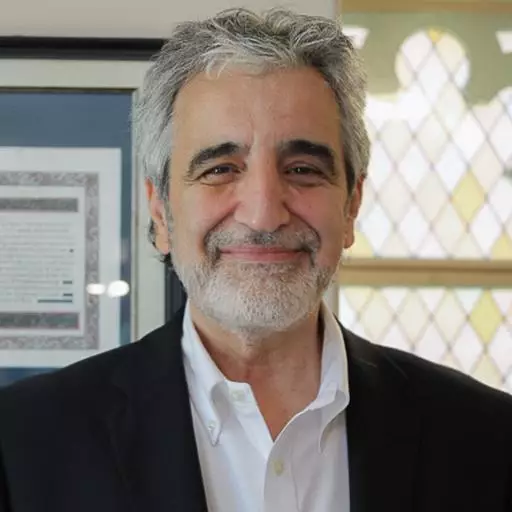
Messianic Leader J. Isaac Gabizon
https://www.bethariel.ca
https://bethariel.ca/donate/
Guest (Female): Shalom and welcome to Sholom Ariel and to this, our 48th sermon in the Gospel of Mark with Messianic leader Jacques Isaac Gabizon. In Psalm 3, David lamented before God about his situation. His own son, Absalom, and many others are rising up against him.
Now, perhaps it was because of the sin with Bathsheba that slander and gossip spread like wildfire, which can cause kings to rise and kings to fall. But look how David responds to the slander. While the people said that there is no help for him, for David, in Elohim—they're using the name of God, Elohim, as the judge—David responds by saying, "You, Yahweh, are a shield, my glory, the lifter of my head."
David appeals to Yahweh, the God in whose name David's dynasty is secure. So while others might slander us, reject us, belittle us, God is our salvation. And we learn in this section of Mark that our Syrophoenician woman, who was most likely slandered like David was, claims that Yeshua ben David, Son of David, is her salvation by faith.
Jew or Gentile, the Lord tests and tries the heart. She was an unnamed woman, a Gentile from the nations, but no matter what all the odds were against her, she was worthy of redemption and salvation because of the incredible gift of faith she received and chose to exercise.
Before we think of ourselves any higher than this woman, let's instead embrace the grace that brought salvation to each one of us, enemies of God until His wonderful reconciliation. By grace, this woman's daughter was healed, and so were we. Be blessed as you listen into today's program, and shalom, shalom.
Jacques Isaac Gabizon: And see that Yeshua gives the reason for his exclamation, for his surprise, really, because he says, "Because of your answer," he says to her. The word answer is logon, from the word logos. This really implies that the woman's words are the fruits of much thinking, even study and prayers.
The word logos is from the root word meaning to collect, to gather, as Yeshua is the logos, the full representation of the divine. Yeshua was really saying, "Because of your word and your studies and your prayers, you won. You won your case." Are we not learning more about the Lord as we get deeper into the Gospels?
Yeshua Jesus will often bring us to think out of the box, to have that thinking that runs against the grain. He brings us to explore the different thought processes by bringing us to the frontier of our traditional understanding and comfortable boundaries. "Move out of there," he says.
Some of the things Jesus says throughout the Gospel will bring us to a standstill, to stop and rethink what he meant. Remember when he said, if you're willing, about John the Baptist? He said, "If you're willing, he is Elijah who is to come." But we know he is not Elijah. He even said he's not Elijah. So how do we read what he says?
And just before, he says, "There has not risen one greater than John the Baptist." What does he mean by that? Does he mean that he's better than Moses, better than Isaiah and the others? No. What did he mean by that?
And just before in Mark, Yeshua spoke about the important commandment, "Honor your father and mother," no matter what. And then he tells us, if any man comes to me has to hate his father and his mother. Luke 14:26. How do we put the two together? He challenges us to go deeper.
Again, at the same point, he told the crowd, and really out of nowhere, "Whoever eats my flesh and drinks my blood has eternal life, and I will raise him up in the last days." So offensive, by the way, that many people left Jesus at that time. Why did he say these words? This is what he wants us to go and dig in.
If you recall how he spoke much about the value of marriage, that the disciples said, "It's better not to marry. Forget it. The bar is too high." When he spoke about salvation, the disciples said, "Who can be saved? No one can be saved," right? So because Jesus put the standards so high, we need to move out of our comfort zone, our regular way of assessing things around us.
But here with the Syrophoenician woman, Yeshua really went so far as to instill in us to always rely on him, no matter what, even when the circumstances tell us otherwise. Now, one last word about dogs before we close. Surely many of you who love your dog were perhaps a little taken by this passage, right?
So while Yeshua used the term dog as it was used by others to drive the point across, let's not forget that he spoke of puppies who were eating crumbs, right? These puppies were in the house, and being there, they were part of the family. As it is written in Proverbs 12:10, a righteous man has regard for the life of his animal and the life of your dog, of course.
And there are blessings which flow from taking good care of God's creation. While some in Israel have gone too far in forbidding dogs in some cities, yes, let's not forget that it was in Israel, in Tel Aviv, where there was created a very well-known and now worldwide Dog TV. Have you heard of that? The first cable television network made specifically for dogs. It comes from Israel.
So Dog TV was designed with the help of dog behavior specialists—yes, they have their own psychologists—and it is color-adjusted for dogs, and it features some three-to-six-minute segments to relax the dog so he can watch a few of them and be relaxed, right? I think that this fully compensates of how others in Israel are degrading dogs.
Now, to close, there are many practical applications we can draw from these great seven short verses. First, it encourages us to pray for others, right? This woman did not come for herself, but she came for her daughter. This by itself must have touched Yeshua's heart.
And we know from this passage and others that the prayers of parents are very powerful prayers, for God hears the parents' prayers. This woman was driven by her love for her daughter. And it's not the first time that a parent comes to Jesus for healing.
And you know what? When you look at all these passages, it seems as if these stories were particularly selected among many others in his ministry. They must be among his favorite ones.
We read about Jairus, remember in Mark 5, who came for his daughter, and how much faith he showed. And we remember how Jesus called Jairus' daughter "daughter," as if she was his daughter. And indeed, our children are his. And we'll meet another father, by the way, in Mark chapter 9 who was so devastated to see his son suffering. Yeshua comes and he heals him too. So Yeshua is present for all parents.
A second practical application is that we cannot afford being impressed by other religions or traditions when such a great message of love was given to us to spread around. With all due respect to all, we must see them as God sees them—people in need of salvation, no matter what they were, no matter position they have. They need Jesus to be saved.
A third application is how we appreciate when Yeshua came and he's still today on the lookout for the lost sheep of the house of Israel who need to go back. That is the house of Israel. They need to go back to their roots, that is the pure word of God. And this task is given to the body of the Messiah, to the Gentiles especially, to bring them to jealousy. Romans 11:11.
And so let us do the work so that we may be blessed and bless them, and of course, put into effect Genesis 12:3: "I will bless those who bless you." Let's bow our head in prayer. I will pray an ancient Jewish prayer to begin with.
Yitgadal v’yitkadash sh’meh raba. Exalted and hallowed be His great name in the world which He created according to His will. May He establish His kingdom in our lifetime and in our days, and in the lifetime of the whole house of Israel, speedily and at a near time. May His great name be blessed forever to all eternity.
Avinu Malkeinu, this morning we praise you and glorify you, for you are the unsearchable God beyond every created being's comprehension. We thank you for your spirit of light who dwells in every believer so that we may know you, the true God, and know Yeshua HaMashiach, whom you have sent.
He is the one who allows us to be able to proclaim and explain your great mystery. Fill our homes with your power and your participation, for we have offered to you praises and love this morning. Heal those who are sick. There are so many, Lord, who are at home today who are sick. Put your healing hand upon them. Comfort the weary. Give us all joy from heaven so that we can be the salt of this earth and bring light and blessings wherever we go. Beshem Yeshua HaMashiach, Amen.
Today we had a rather short portion to finish off this segment of Mark so that we could bring you a longer Q&A that deals with the Book of Enoch and asks the pertinent question: Is this inspired material, and how relevant is this in our study of the Word of God? Be blessed as you listen in.
Guest (Female): Hello and shalom. Can you give us some information on the Book of Enoch? I know that it's not part of my Hebrew or Christian Bible. Nevertheless, it seems to be a popular read among many these days. Is it inspired, and how might we know? Also, why has it become so popular these days? Thank you.
Jacques Isaac Gabizon: Thank you for this question. When approaching the Book of Enoch or similar books like any of the apocryphal books or even recently written books like the Book of Mormon, we must first ask a question as Isaiah the prophet teaches us to: To the law, he says, and to the testimony—that is, to the Word of God—if they do not speak according to this word, it is because there is no light in them.
This is Isaiah 8:20. Here Isaiah was speaking to his students, students of the Word, just like we are. This is a gauge that must be set in every generation to clarify whether what we hear is truth from God. We must judge everything, especially that which is new, according to what the Scriptures teach. Now, how does the Book of Enoch fare according to the Bible?
It fails and falls very hard. Let me bring you to one quotation from the first Book of Enoch, for there are three books, three of them. Here in this quotation, Enoch is presumably the Messiah himself. We read from 1 Enoch 71, verses 13 to 14.
Guest (Female): And the Head of Days came with Michael and Raphael and Gabriel and Phanuel and thousands and tens of thousands of angels without number. And he came to me and greeted me with his voice and said to me, "This is Enoch speaking: You are the Son of Man who was born for righteousness, and righteousness dwells on you, and the righteousness of the Head of Days will not forsake you."
Jacques Isaac Gabizon: Here Enoch is identified as the Son of Man. As we learn from the Gospels and other historical books at the time of the first century, the Son of Man was a well-known title for the Messiah.
There is a translation that of R.H. Charles which changes this part of Enoch and renders it as if Enoch sees the Messiah. But the original ancient copies say it as it is in the Hermeneia translation. Doesn't this claim of Enoch's messiahship render this as impossible to be inspired?
One may read this book if one wishes to, for there is much insight into the Second Temple Judaism from a historical point of view. We can read it. But it cannot be inspired, for only Yeshua is the Son of Man, and only He is the way, the truth, and the life.
And through the book, we also see how this new person of Enoch, which has nothing to do with the Enoch of Genesis, is taking the place of Yeshua. He is given to sit next to God, and every secret, it says, is revealed to him. He is even called the lesser Yahweh, that is, the smaller God, that is, he is given divine attributes.
Now, there's nothing original about the story of 1 Enoch and how the story can develop about a man such as Enoch who then turns out to be the exalted Messiah. This book is to be among the many which came out at the time to confuse and to lessen the importance of the coming Messiah.
Let us look at the historical context into which this book and others similar ones were written. At the time preceding the second coming of Jesus, there was a Messianic fever in Israel based on the prophecy of Daniel chapter 9 where the date of the first coming of the Messiah is given.
Then many false prophets and false Messiahs knew about this prophecy. And as we have mentioned in recent studies, at the time of Jesus, we see the first false Jewish Messiah rising up. Josephus, the first-century historian, spoke profusely about the upheaval in Israel in Jerusalem at that time.
Gentile first-century historians such as Suetonius and Tacitus spoke of the Jewish belief of the coming Messiah and how it disturbed the society of that time. Tacitus spoke of a belief of a—and I quote—"powerful ruler coming from Judea were to acquire universal empire." This is what the Jewish people think of the Messiah. This is what they expected.
And the Book of Enoch followed the flow, like the many other apocryphal books, in presenting their own version of the end time and of the Savior to come. And the Book of Enoch puts so much emphasis on the coming Messiah. In there, we have the word Messiah mentioned over 110 times, while the well-known title Son of Man is used over 45 times.
And while it refers much to the Hebrew Scriptures, at the end, the book presents not only a foreign Messiah but also presents many false teachings, of which we will see a couple of them at the end of this study. But the story of Enoch, again, is not original at all. It is, to say the least, confusing to the unwarned believer.
Furthermore, the story itself not being original, we can see it in the first century. This story follows a legend concerning the Messianic figure of the time called Metatron. Many historians have identified these two figures, Enoch and Metatron, as being the same one.
Metatron was a mysterious Messianic figure who is believed to be second to God himself in glory, wisdom, and strength. This belief may have stemmed from the physical manifestation of God in the Hebrew Scriptures who was worshipped as God and called by the name of God, such as the Angel of the Lord, we spoke so much about.
The Rabbis then came out with this Metatron to resolve this problem of the physical manifestation of God. Metatron is mentioned in the Talmud and also in the Targums. And one writer in the Targum of Jonathan actually identifies Enoch with Metatron, but in a different way than the Book of Enoch actually does. This is what we read in the Targum of Jonathan on Genesis 5:24.
Guest (Female): Enoch worshipped in truth before the Lord, and behold, he was not with the inhabitants of the earth because he was taken away, and he ascended to the firmament at the command of the Lord, and he was called Metatron, the great scribe.
Jacques Isaac Gabizon: And you know what the Book of Enoch did was to take a current legend of Metatron and then put it into a story and made his hero a Messiah. Very foreign, very foreign than the one we know from the Scriptures.
Furthermore, the Talmud does mention Metatron, and referring to Exodus 23:21 which speaks of the Angel of the Lord, it actually names the Angel of the Lord Metatron. This is what it says.
Guest (Female): "Be on your guard before him and obey his voice; do not be rebellious towards him, for he will not pardon your transgression, since my name is in him." The Talmud says, "He said to him, 'This refers to Metatron, who is called by the name of his Master,' for it is written, 'For my name is in him.'" If so, let us worship him.
Jacques Isaac Gabizon: The unknown writer of the Book of Enoch, for it is surely not Enoch, the Enoch of Genesis, who wrote this book, took this legend of the time and exploited it, and in so doing, confounded and still confound today's believers.
But one important question is concerning the Book of Jude in the New Testament, which many say quoted from the Book of Enoch. Is it possible that a book of the Bible would quote such a book as the Book of Enoch, which presents another Messiah? Let us hear what Jude says.
Guest (Female): It was also about these men that Enoch, in the seventh generation from Adam, prophesied, saying, "Behold, the Lord came with many thousands of His holy ones to execute judgment upon all, and to convict all the ungodly of all their ungodly deeds which they have done in an ungodly way, and of all the harsh things which ungodly sinners have spoken against Him."
Guest (Male): And we read from 1 Enoch 1:9, which many believe it was taken actually from there. It says, "And behold, he cometh with ten thousands of his holy ones to execute judgments upon all and to destroy all the ungodly."
Jacques Isaac Gabizon: How to explain this, who really quoted whom? Some who believe that Jude is quoting this unknown writer of the Book of Enoch say that it is fine for the New Testament to quote external sources. Of course it is, but to a certain point.
Let us begin to say that the New Testament would never quote from a book which pretends that the Messiah is another than Yeshua. It is not like quoting a philosopher like Paul does.
What we can say is that the Holy Spirit did inspire Jude on a prophecy that the person Enoch from Genesis pronounced, and it is very possible that the writer of Enoch quoted Jude to give more value to his prophecies. It is interesting that since this book was not accepted by the Rabbis at all, the author was probably hoping that the Gentile side would accept this, and in many ways, they did.
The point is that we do not even know when the Book of Enoch was written. According to a well-respected dictionary, Anchor Dictionary, 1 Enoch is, and I quote, "a collection of traditions and writings composed between the 4th century BC and the turn of the era, mainly in the name of Enoch the son of Jared."
So we have here over 400 years where we can place this writing of this book. Furthermore, this book is among the pseudepigrapha books, meaning that the author is unknown. A pseudepigrapha is defined by the designation of false names of authors to certain works. This is how historians characterize the Book of Enoch because we don't know who wrote it.
So not only we do not know when it was written and by whom, but this book contains clear anti-biblical teachings. Would you ever change a hundred-dollar bill for a 25-cent coin? The Bible has nothing to do with the legend of this book.
We may notice as well that the Book of Enoch is among many pseudepigrapha written at the same time, like the Testament of Moses—which has nothing to do with Moses—or the Ascension of Isaiah, or the Psalm of Solomon—which have nothing to do with Isaiah or Solomon.
But there is something, there is something we ought to consider here. Many of these books known especially through the name of the apocrypha were beginning their appearances at the very same time when the Hebrew Scriptures were closing in, right after Ezra and Nehemiah and continuing through to the time of the New Testament was written down.
These books, which contain much anti-biblical teaching, were there to perhaps confound, to deroute and disturb the proclamation of the message of the Scriptures. You know, this reminds me of the time when Abraham was given the Abrahamic Covenant and the promised land.
In Genesis 12, God says, "Whatever you see is yours." And as Abraham went in the land, we read these words: "And the Canaanites were then in the land." And how many Canaanites were there? One can count over 30 different states within this small country—states, 30 of them with their kings and so on. Was their presence not there just to discourage and confound these promises of God?
Likewise, when Yeshua came into the world and when the Hebrew Scriptures was closing and the New Testament was being written and endorsed, it seems that all evil awakened and these books surfaced at the same time. We can see this in the Gospels as well, in the way so many evil spirits suddenly found themselves in Israel to disturb the true Messiah and his work.
Interesting too is that this was the same time that the Romans began calling their leaders "sons of God" or "the Son of God," as if to diminish the Messiah who is the only Son of God and Son of Man.
And of course, these many apocryphal books which caused problems then do the same today as they are resurfacing in popularity. And that should not surprise us since we're coming close to the second coming of Yeshua. As it was for the first coming, so the confusion begins to rise again before the second coming.
Now, let me close by giving you other areas where the Book of Enoch subtly attacks and defames the Scriptures. At some point in the third book of Enoch, there's this idea of purgatory. Purgatory. This is when Metatron, who is here called the Prince of His Presence, speaks of two other great princes or angels named Irin and Qaddishin who are described as high, as honored, revered, beloved, and so on. See what it says in 3rd Enoch 28:1.
Guest (Female): Why are they called Irin and Qaddishin? By reason that they sanctify the body and the spirit with lashes of fire on the third day of judgment, as it is written: "After two days He will revive us, and on the third day He will raise us up, and we shall live before Him."
Jacques Isaac Gabizon: These are purifying angels, so to speak, those who purify the dead so they can enter heaven. This stems from the idea of purgatory adopted by many Jewish sects and by Catholicism, who took on many of these apocryphal books.
But the purgatory is an idea that is completely foreign in the Scriptures, in the Bible. If one believes that there is a cleansing of all the souls of all men, what do we need Yeshua then? Now, the Bible says, "Now," it says, "is the accepted time; behold, now is the day of salvation," in 2nd Corinthians 6:2.
The only way out, again as the Bible repeats so many times, is through Yeshua, as it is written in John 3:18: "He who believes in Him is not judged, but he who does not believe has been judged already because he has not believed in the name of the only begotten Son of God." There's no place in the Bible which approves the idea of purgatory. All the cleansing is done now. This is why we need to preach, proclaim His Word.
Another counter-biblical concept is found in 1st Enoch 7:4. Here we see the demons actually they're asking Enoch to pray for them. Another foreign idea of the Bible, and it is here where we read Enoch says, "And I felt great pity for them. And they saluted me and said to me, 'Man of God, pray for us to the Lord.'"
That is so different, foreign from the biblical text, which speaks of these demons, for example, from Genesis 6 who are right now bound and then later to be thrown into the lake of fire. Ironically, it is Jude himself who speaks of these demons. Let's see what he tells us in Jude verse 6.
Guest (Female): And angels who did not keep their own domain, but abandoned their proper abode, He has kept in eternal bonds under darkness for the judgment of the great day.
Jacques Isaac Gabizon: And Peter as well. Peter as well, also speaking of demons, adds in 2nd Peter 2:4.
Guest (Female): For if God did not spare angels when they sinned, but cast them into hell and committed them to pits of darkness reserved for judgment...
Jacques Isaac Gabizon: Nowhere in the Bible are we called to get in touch with angels, and even less to pray for them. The Book of Enoch then is nothing to compare with the Scriptures. Again, one may read it to learn much about the era with Yeshua. There's a lot of value into it, but there's no theological value to it. May the Lord bless you.
Shalom Ariel is a daily radio program emphasizing the Jewish perspective of Scripture. God is not through dealing with Israel, nor will He renege any of the promises He has made to her. Our teacher for this program, Jacques Isaac Gabizon, is a Messianic Jewish believer and Messianic leader at Beth Ariel congregation right here in Montreal.
If you've been encouraged by the messages, we'd love to hear from you. Give us a call at 1-888-685-5902, or you may write us at info@bethariel.ca, B-E-T-H-A-R-I-E-L all one word, .ca. You are also welcome to join us for our Saturday morning services. We are located at 6297 Monkland Boulevard, corner of Madison in NDG.
The message is given in English, but we do offer simultaneous translation into French and Russian. Services begin at 11:00 AM. We have Shabbat school for children of all ages, up to and including teens. You may also download audio messages from our website at bethariel.ca and enjoy other in-depth teaching from Jacques Isaac.
If you would like to sign up for informative newsletters, log on to our website and add your name to our email list. Shalom Ariel is a listener-supported program. If you have it on your heart to donate, it will be a great blessing for the continuing ministry and outreach of Beth Ariel. Thank you and shalom, shalom.
Featured Offer
Prophecies take up about ¼ of the Scriptures so we cannot simply ignore them. Knowing prophecy enables us to give a clear presentation to others of why things unfold the way they do in such areas as politics, morality, technology and global ecological changes. It also helps us to rightly place Israel in God’s prophetic plan.
Past Episodes
- The Armor of God
- The Believers in the End Times
- The Book of Daniel
- The Book of Deuteronomy
- The Book of Ephesians
- The Book of Esther - Purim
- The Book of Exodus
- The Book of Ezekiel
- The Book of Ezra
- The Book of Genesis
- The Book of Hebrews
- The Book of James
- The Book of Jeremiah
- The Book of Joel
- The Book of John
- The Book of Leviticus
- The Book of Numbers
- The Book of Philippians
- The Book of Revelation
- The Book of Romans
- The Book of Ruth
- The Book of Zechariah
- The Feast of Passover
- The Feast of Purim
- The Feast of Shavuot - Pentecost
- The Gospel of Mark
- The Gospel of Matthew
- The Letter to the Galatians
- The Messiah in Isaiah
- The Messiah in the Book of Isaiah
- The Messiah's Prayer
- The Nativity: The Unwrapped Gifts of God
- The Resurrection of the Messiah
- The Sermon on the Mount
- The Tabernacle

Video from Jacques Isaac Gabizon
Featured Offer
Prophecies take up about ¼ of the Scriptures so we cannot simply ignore them. Knowing prophecy enables us to give a clear presentation to others of why things unfold the way they do in such areas as politics, morality, technology and global ecological changes. It also helps us to rightly place Israel in God’s prophetic plan.
About Messianic Viewpoint
About Jacques Isaac Gabizon
Contact Messianic Viewpoint with Jacques Isaac Gabizon
info@bethariel.ca
http://www.bethariel.ca/
Beth Ariel Congregation
CP 46521 CSP Boul. St Jean
Pierrefonds, QC, H9H 5G9
Toll free (888)-685-5902